0:00 / 0:00
Your Body Remembers EVERYTHING | 10 Minutes of Meaning | Tanya #37
424 views
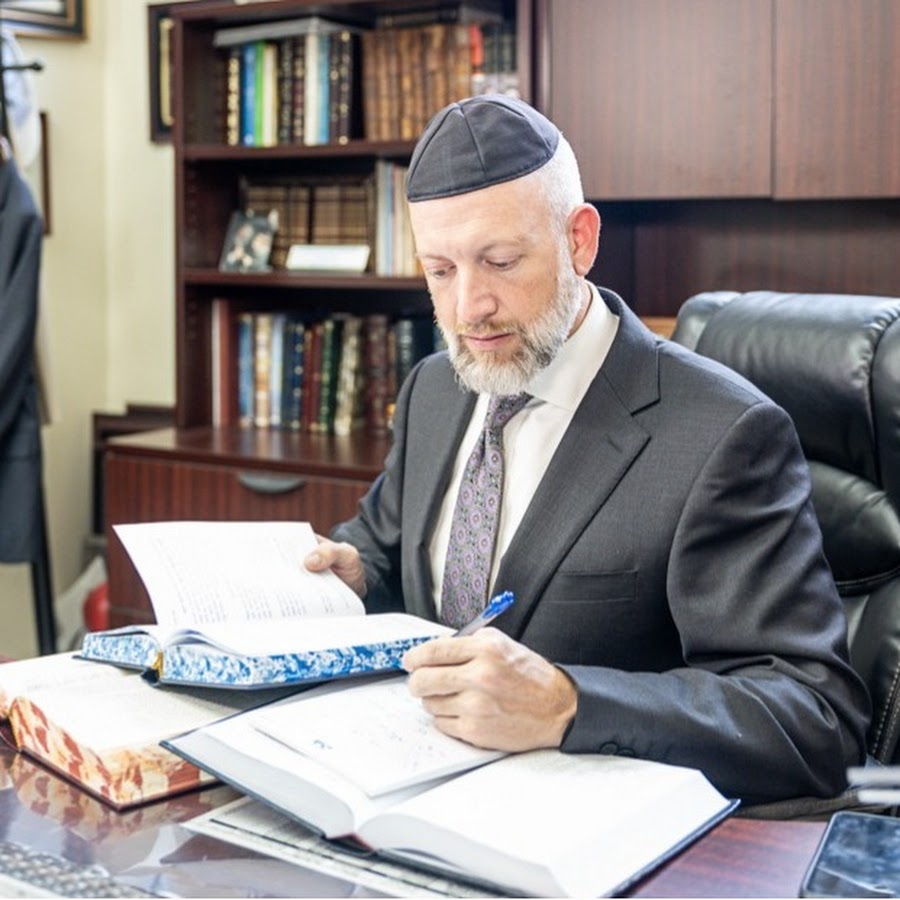
We assume teshuvah erases everything. But what if something still remains? === Sponsored by Marilyn & Michael Fedak === In this week’s Tanya class, Rabbi Efrem Goldberg examines a difficult idea: that even when the soul is repaired, the body may still carry residue. Drawing on the concept of chibut ha’kever, this shiur challenges the assumption that indulgence simply disappears. Some effects linger. As you listen, ask yourself: What do we assume leaves no trace? ➡️ Subscribe to @rabbiefremgoldberg for weekly Tanya learning.
Comments(0)
Transcript
Auto-generated transcript. Not time-synced to the video.
The until now we're
until now the batan has been telling us
about the three negative kipos the
categorically negative kipos that are a
total eclipse of the orient of the light
of the ribon
and uh and that automatically inculc
within us a negative residue that we
keep and we'll talk about in this paric
is going to tell us what's necessary to
atone to erase to repair for the damage
done and what we absorbed in the residue
that we carry from having engaged with
that which is categorically also again
the alterba introduced us to the idea
the t of the language that which
forbidden is also that which is
permissible is mut also and mut mean
bound and unbound tied and untied that
which is forbidden is tied to the world
of sitra to the other side to the dark
side and that which is permissible is
tied to the world is untied it's unbound
and therefore it is dependent on our
intention so kipas noa which is a
partial eclipse the orient can peak
through does come down to our intention
and the attitude the mindfulness the
intention we give it will determine its
value or not so but we did talk about
there are limits to good intention when
a person engages in negativity when we
indulge the when we indulge that alter
ego, the sahara, the sitra, whatever
name you want to give it, but that voice
that sabotages our own success. When we
give into that negative energy, then it
leaves its impact on us and therefore it
needs to be repaired. And that's what
we're up to in the second section here
of it says the
shimmenu
even after kipos noa experience has
reverted to holiness from the domain of
the three kipos a trace of it remains.
Because if you eat forbidden food, if
you eat for food that food that's it is
bound and tied to the other world to the
other side, our eating it actually
becomes absorbed into us. The food, the
drink, they become part of our flesh and
part of our blood. It's not just the
pleasure from it has been impacting our
nishama, our soul, but it means we
literally absorbed it. And so whatever
negative experience that we received
from absorbing it into the body, it
needs to be purged. It needs to be
repaired. It needs to be removed. How
does that happen? So says the
the body was temporarily home to these
three negative kipos. The body is the
place that absorb these three negative
kipos. So the body has to undergo.
What's
is the cleansing after death? The body
was a vessel was a cle. The goof was the
vessel. It was the vehicle through which
we experience free will in this world.
The nishama is the engine. It is the
computer that drives the free will. But
the gof is what is the vehicle, the
instrument through which we express the
free will in this world. That free will
can help us make the right choices.
choices that transform and elevate
choices that can do mitzvah, but it can
also lead us astray to choices that are
negative, to choices that bring us down,
to choices that contaminate. So the body
that might have been a vehicle or
instrument for the wrong choices, that
body needs to be purged. It needs to be
cleansed before that body can really
return to the dust from which it was
formed. The body needs to experience
something which will cleanse and which
will per which will purge it. And that's
the
to cleanse it and purify it from the
So if we misuse this vehicle, this
instrument called the body, if it leads
us to make choices that weren't in the
realm of permissible where we could give
good intention, but we're in the realm
of that which is forbidden, that which
were tied to the other side, the dark
side. If the body was the instrument or
vehicle through which we expressed free
will to indulge in worldly pleasure, so
needs
from the impurity of if we engaged even
in the neutral things but with the wrong
intent or without the right intent or if
we indulged the
Jewish demons which is what we call the
dark side the other side the alter ego
the
self-sabotaging voice so we need to do
something in order to remove it what is
this
what's this idea of the that if with our
body. We watched, we ate, we said, we
did the wrong things. So our soul
ascends on high and our soul under goes
its own process which the alterba will
elaborate on. But the body also needs
its cleansing process. So according to
our tradition, after a person passes
away, after the soul is extracted from
the body, we don't use the word death.
If you look in the Garaz did not use the
word death described death as
a person doesn't die, the body dies. The
soul never dies. The soul is extracted
from the body. The soul has existed
since creation itself. And the soul's
existence is eternal. We are immortal
because we are
a piece of Hashem. And we can't die by
virtue of the godliness in us. We are
eternal. We are immortal. So we existed
since creation and we will exist
eternally. We have immortality. But
we're partnered with the body for a
finite short certainly relative to
eternity a short amount of time. And why
is the soul put in the body? Because the
body only has the soul only has free
will through the instrument in the
vehicle of the body. And that's what
gives life meaning. making the right
choices or the wrong choices, drawing
closer to Hashem, of becoming more
distant from Hashem, listening to that
impulse or overcoming the
dictating over thee of the nephselves.
Those are all the choices that we make.
So when it's time not for death because
people don't die, bodies die, but what
and that moment of can be by the way a
moment of tremendous bliss or a moment
of extraordinary excruciating pain. what
determines which it is
our relationship to it. So a person who
spends their time here in this world and
a person who thinks I am a body and I
have a soul. So when you discover no you
are a soul that has a body that's
painful. It's a painful reality. And
when the soul is extracted from the
body, the body then is in pain. The soul
is in pain because the soul has this
harsh realization, this reality check
that I thought all along I was a body
that had a soul. And now I come to
realize I am a soul that has a body. And
that harsh reality check can be
unbearably excruciatingly painful.
That's why in that moment we don't leave
somebody alone. Somebody now recently
said vid for who's in the hospital maybe
hospice of course we wish them well. But
I told the family it's a they person
should not be left alone. If a person
anticipates that the end is near because
of the pain that the soul might go
through and extracted from the body,
they shouldn't be left alone. On the
other hand, a person who spent their
time here on earth knowing that all
along they knew they're a soul and they
have a body. They're a soul. And just
like the clothing I'm wearing, the tie
I'm wearing doesn't define me. It's not
me. It's something external to me that
I'm wearing. So to the body writes like
this, the body is a garment that we
wear. And just like I care for my
garment and I'm grateful to my garment
and my garment protected me from the
elements and my garment was the uniform
that identified me and the garment
played a role but it's not me. I take
good care of it but I take it off
because it isn't me. So similarly and so
too the body is not me and I'm grateful
to it and I'm thankful to it and it
serves a role and it serves a purpose
but it's not me. So when a person all
along knows I am a soul and I have a
body and now we see as shama the souls
extracted from the body that moment if
they knew that all along what they
really were and they were living for
eternity not the here and now and they
were not indulging in the shadim the
sitra the dark side of kipos noa three
kipos certainly so such a person when
the soul is extracted from the body not
only is it not painful what is it how is
it described the raam writes this many
others write this It's described as
nishika misas nishika the kiss of death.
Kiss of death is glorious. Kiss of death
is incredible pleasure. The kiss of
death is when the soul is no longer it's
unbridled, unbounded from the body. The
same way when I get to go home at night
and I could take my tie off, finally the
day is over and I could take my tie off,
my uniform off and I can enjoy and I can
get more comfortable. So to the soul
when it's able to undress from the body
writes he longs for it not for death of
course we don't glorify or long for
death but he says I wait for when my
soul can take the body off just like I
wait for when I can take the clothing
off. So the body whatever the body did
live in its lifetime certainly a body
that was less than a misus nika a body
that did indulge and engage in the shiny
in the kipa in the kipas noa that body
needs to undergo its purification. It
has to purge whatever it had previously
absorbed through the pleasures of this
world that were off limits that were
user that were bound to the other world.
How does the body receive that that
purification? Through what's called
what is
so four angels come to the person and
they beat him until the kipa has been
broken and removed from the soul. That's
called
It doesn't sound so good, right? That's
the idea. That's the idea. doesn't sound
so good. That's supposed to motivate us
in life. If you picture, if you have
that image, that's why tell us that when
a person is tempted to give give in to
indulge that
we're tempted to indulge and give in to
that alter ego or that voice, think
about
if that doesn't work. If that doesn't
work, think about ya. Why should it help
to think about the day of death? The
finality of the day of death, the
permanence of the day of death, the of
the day of death. Do we really want
someone coming and beating the kipa out
of us? That's a new expression.
Beating the kipa out of us because
that's exactly whatever is. It's beating
within the grave. It's described as
length in
and uh and uh it's something that a
person has to undergo if their body
engaged in things it shouldn't have. In
all the worlds the is about to elaborate
here in the world of speech in the world
of action in the world of thought the
body has to undergo something to beat
that out of us after after the soul's
extracted from it that's how do we get
out of so we have tradition this is
brought down in Miller's uh commentary
those who live in the land of Israel or
those who pass away on a Friday are
spared
another maybe should promote that benef
should put that in the advertisement
make aliyah and don't get the kipa
beaten out of you. Move to Israel and
you don't have to have the kipa beaten
out of you after death. Um oral already
told us
a person who passes away in Shabas it's
a good simmon and they avoid
others can avoid it the
seventh of writes loving justice loving
rebuke loving acts of kindness bringing
guests to one's home and praying with
concentration another suggestion spend
four hours a day saying words of Torah
and
>> four hours a day saying words of Torah
and that's how you can avoid in the next
world. But in any case, the is telling
us we don't know exactly what this looks
like, how we experience it, does
how do we measure if we did the things
we need to in order to make sure to
avoid it. All of this we don't know
exactly, but it should incentivize and
motivate us to realize don't give in to
the kipa. Don't give in because if we
don't want the kipa having to be beaten
out of us later, don't give into it now.
Now, if you say, "I can't relate to
this." You certainly can because we know
this was the old adage in exercise was a
moment on the lips, a lifetime on the
hips. When you eat the wrong food, so
you're going to need a bigger belt. And
when you do the wrong things with your
body, your body absorbs the wrong things
that you've done. In fact, by Stein, in
his commentary, when he talks about
this, he says um he he he compares it.
In order for a person's eating to be
holy, there must be holy intent.
Otherwise, he allows the sitra to
infiltrate. When that happens, the fact
of his profane eating is impressed
within reality. A stain is formed which
is never completely removable. If the
deed was permissible, it can be
rectified. But the profanity it spawned
remains ingrained in the person's body
like the blood and flesh. By way of
analogy, exposure to radiation above a
certain intensity can prove fatal. But
also, a lesser dose is destructive in
the long term. Although the person is
not immediately killed, the steady
process of deterioration begins from the
time of the exposure and onward. Or to
site another example, some poisons like
lead ingested even in the smallest
quantities can never be removed. Any
immediate damage can usually be
overcome. But the cumulative effect over
time as more and more of that material
enters the body can be extremely
dangerous. In the same way, even
non-holy act even if permitted, even if
rectified and elevated to holiness
leaves a mark of profanity. So a person
can degenerate spiritually merely by
doing things that are permitted by the
steady accumulation of mundane actions
is liable to draw him out of the realm
of holiness. A decent person who never
deliberately commits a sin, who merely
allows himself a so-called normal life,
can in the half hour or afternoon he
devoted to activities devoid of
holiness, create a mark of profanity in
his body that cannot be removed. It's
very startling and it's very a powerful
image and that's not accidental. That's
intentional and that's by design. Meant
to motivate us, meant to incentivize us,
meant to inspire us, meant to be mindful
and conscious and conscientious and
present in what we're doing.
And then the says the only one who
doesn't have to avoid is somebody who
lived their entire life and derived no
pleasure from this world. Somebody who
lived his whole life. And what does that
mean derive no pleasure from this world?
So the tells us an example like whom
like auadi
the great publisher and redactor the
editor of the Mishna who koval tells us
said on his deathbed that he never
enjoyed any pleasures from this world.
Now we know tells us elsewhere that was
extremely wealthy. He was very rich man.
He lived in a palace and he served and
he had all the delicacies in the world.
What does that mean that he never
enjoyed the pleasures of this world?
He was a wealthy man. But the votar
tells us from whose table neither
lettuce nor radish nor cucumber was ever
absent either in summer or winter. Okay.
Today that we wouldn't be so impressed
that what you said. Today we'd said he
had the the most expensive tequilas and
single malt. He had shakureri and
meatboards. He had herring stations.
Nothing was ever missing. It never in
those days lettuce, radish, and cucumber
didn't grow in every season. How did you
have it? Unless you're incredibly
wealthy, somehow you accessed it. So if
he was so wealthy and his table always
had these delicacies, how could he say
he never benefited from this world? So
the reason the bal gives us as an
example is because kipas no those things
radish, lettuce and cucumber represent
that which is permissible. It's not a
mitzvah. It's not it's not tied to the
dark side. It's a that's unbound, but
it's all the intent you gave. So here
the is testifying about
he's rebi he's our rebi he's called he's
rebi because he enjoyed the pleasures of
this world but always did it to serve
hashem he endowed it and imbued it with
the meaning of a hashem he didn't live
an aesthetic life he didn't deprive
himself of pleasures here is a perfect
example of the permissibility of
enjoying this world
a good meal a good a good suda enjoy
this world but the kavana the
mindfulness the presence while we're
enjoying it is to serve hashem I'm
telling divor I'm singing beautiful I'm
hosting guests I'm energizing myself to
go back to learning and to do I'm doing
it because I'm finding hashem in this
food the magnificence of its
deliciousness the it's giving me the
life force that is hashem and the food
that I'm eating so is the prime role
model of a person who was wealthy and
who had access and who enjoyed this
world but didn't enjoy it from the
perspective of he didn't absorb it into
the bus of his body that he needed he
was so present and so mindful in all
that he did that he didn't enjoy any
pleasure ever in this world that wasn't
part of the formula of so much so that
he didn't need any he didn't need the he
didn't need the kipa beaten out of him
because he never gave in to kipa he
lived his life without ever having given
into kipa so we'll pick up next week
that now turns to another activity which
is permissible according to but it's
spiritually damaging and requires
cleansing and that is
things that technically are permissible
to speak about technically but they're
not part of the holy realm of learning.
So if you're analyzing the Super Bowl
game and you're talking about how
terrible the Patriots are and how the
guy streaker got more yardage than they
did, I didn't watch the game. I just
found out afterwards and I admit I'm
gonna have to have the clip of beaten
out of me. I got a little hana from
hearing the patriots lost. I got some
hana from that. I have to do chuva for
that. I have to do tikllin for that. I
got some hana from that. I admit it. I'm
a work in progress. I'm working on
myself. So those are
there's nothing. It's not it's not
gossip. It's not it's notif it's not
it's not part of the realms of that
which is it's
but it's not elevated. That's noa. So
what's the repair? That's not we're
gonna get to the next. It's not so much
better than
>> it's not so much fun.
>> Chuva said
>> chuva can. Yeah. So chuva can help.
Chuva helps. What exactly helps the gof?
The gof still needs to go because the
radiation. You could do that's exactly
what was giving as the mush. You could
do all the chuva in the world over the
fact that you ate lead. You could do
chuva on the world of the fact that you
were exposed to radiation. But the
reality is your body doesn't care about
your chuva. The facts of the lead and
the radiation don't care about your
feelings of the chuva that you did. The
reality is you absorbed it and it needs
to be purged. There are these other ways
to purge it. The body can be repaired. I
guess there's I don't know I'm making
this up but if a person were exposed to
radiation or lead maybe there's some
oxygen chamber they can go in and get
better. So our oxygen chamber
is four hours a day. That's our oxygen
chamber. We need to do things that's our
so however the radiation was absorbed is
there's some formula for the way it's
purged. That's not the same as chva.
Chuva effects on but these other things
lofty things they affect the g to avoid
the later on in life will pick up with
this next week. Stay happy, stay healthy
and stay holy.
and get that body.