0:00 / 0:00
Yesod of Malchut - Counting the Omer - "Connect to the Tzadik" - Rabbi Alon Anava
3,239 views
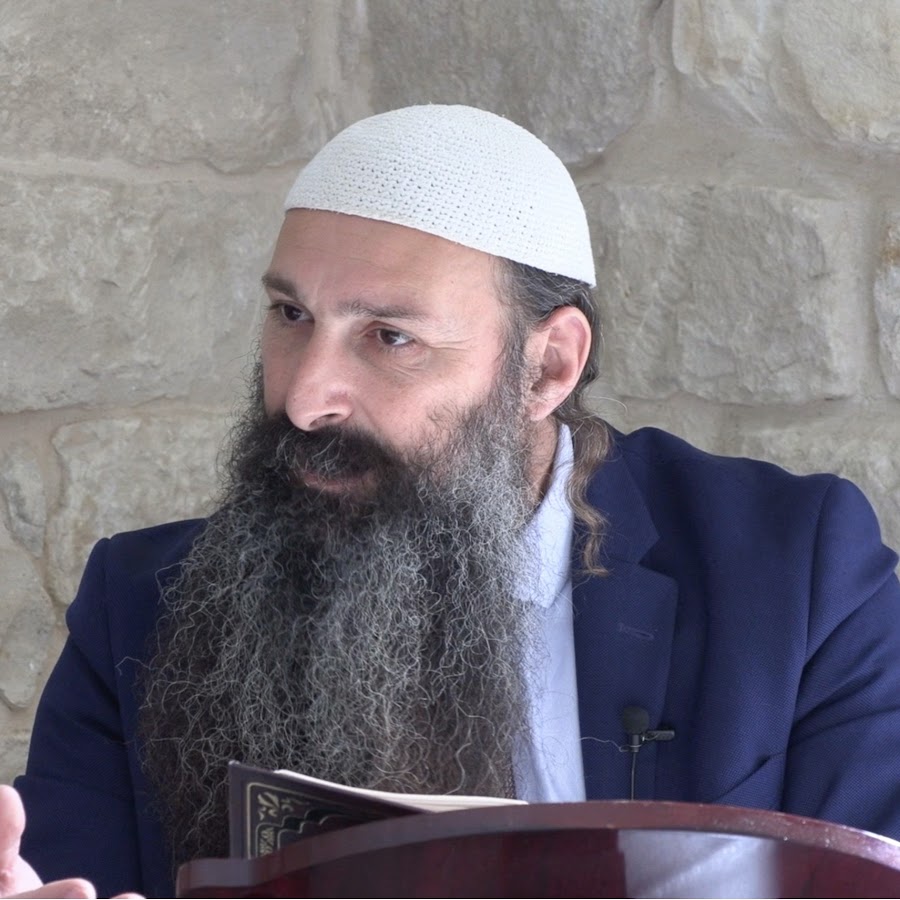
48th day of the Omer
Categories:
Torah
Comments(0)
Transcript
Auto-generated transcript. Not time-synced to the video.
Almost done with Sefirat Omer, two more
days.
We're going to be learning about this
Sefirah that is called Yesod shebe
Malchut.
And
the Sefirah of Yesod in my soul, we
spoke about that the Nefesh is built
from the 10 Sefirot that has 10 Kochot
haNefesh. The Sefirah of Yesod in my
Nefesh
is the power to get connected to
something else.
And
specifically, the Sefirah of Yesod is my
connection to a Tzaddik.
We know that the Sefirah of Yesod is
directly connected to a Tzaddik. As we
say about a Tzaddik, Tzaddik Yesod Olam,
the Tzaddik is the foundation of the
world.
So, the Sefirah of Yesod in my soul is
the ability to get connected to the
Tzaddik.
And
now is definitely don't have the time
why specifically I need to be connected
to the Tzaddik, but the Tzaddik should
say in a very short way, the Tzaddik is
my mediator to the Kadosh Baruch Hu, the
link that allows me to connect to the
Kadosh Baruch Hu.
So, I need a the way that I will have
this connection, this Hitkashrut, and
the Sefirah of Yesod allows me to get
connected to the Tzaddik.
We are counting Yesod shebe Malchut, so
that's already kind of Wait a minute.
That Yesod is the Tzaddik, when the
Malchut is the king. So,
isn't the king the Tzaddik?
So, we know that there
can be two at the same time. Can be a
king and a Tzaddik. Doesn't have Doesn't
mean that they're the same one.
So, and in many cases, there's a king
and there's a Tzaddik. And we see in
history many times that there's a king
and there's a prophet. The prophet is
the prophet and the king is the king.
It's not one has nothing to do with the
other.
Now, a real king, since we're focusing
on the sefirah of malchut,
and I'm going to already say that now,
so it will be fresh in our mind, even
though we're talking constantly about
king and the sefirah of malchut, this is
also related to me. I'm also a king in
my small domain. I am the king of my own
domain.
A real king has the desire
to be humble
in front of his spiritual leader, even a
king.
Now, in our generation, the king, so to
say, a prime minister or a president, he
thinks he's the top.
The real king, he knows he's the king,
but he's still humble and he says
there's somebody above me.
Uh spiritual leader, my teacher.
So, a real king
still has the desire and the ability to
be uh subdued and to say there's
something above me, a higher level than
me.
And that's the tzaddik, cuz the king is
a job, is a position, and the tzaddik,
that's the spiritual leader.
So, I mean, even all the leaders besides
Moshe Rabbeinu that we can really think
about, all the leaders had a uh rebbe,
uh
a spiritual advisor.
So, nevertheless, even David HaMelech,
as great as a king as he was, he had a
He had a teacher. He was also humble in
front of everybody. He says, "Mi kol
melamdai iskalti." I've learned from
everybody.
But nevertheless, a real king, a true
king,
as great as he is and as powerful as he
is, he still has the ability and the
desire to be humble in front of a
spiritual leader.
This means to be connected to the
tzaddik.
Now, the power of yesod, the sefirah of
yesod is this power to be able to have
this hitkashrus.
Now, for example, with Lag B'Omer,
600,000 people
600,000 people went to Lag B'Omer in Lag
B'Omer to Meron.
600,000 is the biggest event we have in
Israel, bigger than any show, any
football game, no no such a thing. Can
you imagine? This is just physically.
Just imagine how many other millions saw
it in front of a screen and so forth.
But there were 600,000 lucky people who
went there. Why do you go there?
I mean, we know we can go there every
day. A lot of people told me, "No,
you're going to Meron on Lag B'Omer?
Well, I can go there every day." I of
course I go on Lag B'Omer, don't get me
wrong. But I can go there every day, but
why do you go there? Because there's a
tzaddik staying there.
And I explained that I have a few times
throughout the week
you go to the grave of a tzaddik, the
nefesh of the tzaddik is there all year
round. The nefesh, which means that I go
and pray there and I have to pray to the
God to God, not to the tzaddik. That's
the fine line where some people make a
mistake and that's why a lot of people
say, "I don't want to go to a grave of a
tzaddik."
So, but nevertheless, you go you pray to
Hashem, but nevertheless in in the
presence is the soul, the nefesh of the
tzaddik. Of course you pray in the merit
of the tzaddik. You're not allowed to
pray to the tzaddik. This is a bigger
sin to go to the grave and pray to the
grave.
But nevertheless, throughout the week
the nefesh is there. On Shabbos, on Rosh
Chodesh, and
other auspicious times, then the nefesh
and the nefesh, the ruach, and the
neshama is there. But on the hilula, on
the day of the passing, the nefesh,
ruach, neshama, chaya, and yechida is in
the tziyun.
So, you're in the presence of the soul.
What happens is that you get attached.
Remember last week we talked about that
if you attach yourself to a good
neighbor, it will affect you in a good
way. Sit now amongst of 10 righteous
people, you become righteous, too. It is
not going to be lashon hara. You're not
going to be slandering or anybody. All
you're going to be just talking good and
learning Torah. So, you attach yourself
to something good. Same thing here. You
want to attach yourself to a tzaddik.
And you see it's pretty common in many
different groups that they attach
themselves to the a certain tzaddik,
whether that tzaddik lived 20 years ago,
whether that tzaddik lived 500 years
ago. But, nevertheless,
the yesod is the power that allows me to
have a connection to this spiritual
leader. Now, why do I one of the many
reasons why I want to be connected to a
tzaddik,
Moshe Rabbeinu was the ultimate leader.
That's why we call him Rabbeinu.
And Rabbeinu means my teacher.
I mean, everybody in the in the past got
a title.
Not everybody, but many got a title.
David got the title David Hamelech. We
always say David Hamelech. Which David?
David Hamelech. Shmuel Hanavi, Yosef
Hatzadik, Aaron Hakohen, Avraham Avinu.
Many people got a certain title. Moshe
got Rabbeinu, our teacher.
So, Moshe's called in the Zohar Raya
Mehemna.
Raya Mehemna means a trustworthy
shepherd. That all our leaders were
trustworthy shepherds in the eyes of
Hashem that they can lead the nation.
But, also, the way to explain the name
Raya Mehemna
means Ro'eh Ne'eman that he feeds the
people emunah. Mehemna is emunah. It's
belief and faith.
The leader is able to feed you emunah.
When I have a lack of faith, then I need
I need some type of a what's called a
chizuk. I'm sure you are
registered to at least one group online.
The daily chizuk.
All right, chizuk means to strengthen
something. The bolt is a little bit
loose, strengthen it.
So, we need emunah. The tzaddik is able
to give me the emunah. He's the
spiritual leader.
So, why why for me to have this in my in
my spiritual path?
Because a real king knows that there's
something above him. Talking about now a
physical king, David Hamelech, Moshe
Rabbeinu, they always knew there's
something above. They were humble.
As called the leader of spiritual
leadership.
You know, even David Hamelech, I said
this is a perfect example of a king. He
used to
humble himself in front of his rabbis,
and
and he considered the Sanhedrin above
him. He listened to the Sanhedrin. I
mean, how many kings we had that didn't
listen to the Sanhedrin?
Not only that, a good king, a real king,
he listens to the prophet. How many
times we see in our path that there was
a king who didn't listen to a prophet.
And they had to pay for that at the end.
A real king says, "Yes, I am the king,
but there's somebody above me,
especially in the spiritual space, which
can be the prophet, the Sanhedrin, and
so forth." So, what does that got to do
with me? That I have to understand that
there's something spiritual above me
constantly. And I'm not the last word.
I'm not the authority.
In general, when we sing the word yesod,
yesod, the translation means a
foundation. And the foundation, a good
foundation, is promising that the
building, the structure, is stable.
So, the yesod sheba'malchut is the
connection
to the leadership that is above me.
That's is what's going to make me stable
and strong.
You know how many people, unfortunately,
if Mashiach comes today, you know how
many people will not accept him?
Will say, "No, I don't want you as my
Mashiach."
That's how sad the situation is.
And even we see in history that
situations like that that there There a
leader, and somebody says, "I'm not
accepting you as my leader."
And and now we're going to read very
soon about Korach and many other
situations. But nevertheless, where we
spoke about it also in the previous
classes about Sefirat Omer, when there's
a leader above me, you have to recognize
who's the leader, and you accept that is
that is a person above me.
So, the Malkhut the social of Malkhut is
coming to emphasize that as great as you
might be, and if you reach to great
levels, there's always somebody
uh spiritual leadership that is above
you, and you have to accept it. When you
accept it, and you're humble,
then that's what will cause this Yesod
the foundation to be strong and you're
stable.
That you know there's an authority above
me. You don't make up rules. You don't
come and say, "I don't like what you're
saying here. I'm going to do it my way."
It doesn't work like that in the Torah.
So, a person, if you want to take the
the Sefirah practically, a person has to
find himself a leader, a spiritual
leader.
And specially in our generation, baruch
Hashem, there are thousands of people
who find their path to the Torah, both
Jews and non-Jews. You need a leader.
You need a guide. You can't just do
whatever you want. There are a lot of
people they go to a bookstore, they buy
a a pile of books, they start reading.
Very good. But you need somebody to tell
you, "You didn't understand this right.
This is not how you interpret it."
So, that's why one cannot learn by
himself.
And one cannot grow by himself. Because
when I'm now stuck in a certain level,
you know what I need? I need somebody to
pull me up.
Practically saying, it's not only that I
have to humble myself in front of the
right authority, and I have to find the
right authority, because 90% of what's
out there is all fake. You have to kind
of sift through the dark and say, "This
is fake. This is fake. This is fake."
And I'm talking about in the religious
world. I'm not talking right now in any
other place.
I told you many times that when I became
observant, it took me a long time till I
found the right one. And I was very
disappointed. I went to one
rabbi. He I constantly saw that he's
lying. This rabbi is cheating. This
rabbi is slandering. What's going on
here? So, you have to find the right
leader, and then
you have to make that person your
spiritual guide. That he's my link to
the next level.
And needless to say, it has to be the
right person, not somebody fake.
Sometimes it's very hard to find, but
one needs to pray to the Kadosh Baruch
Hu to find him the right leader. Because
if you have the wrong leader, then he
leads you to the wrong place. He takes
you if you follow somebody blindly, and
he's going somewhere, then he's going to
take you to the wrong place.
Yesod Bamalkhut is that you have the
ability to connect yourself to somebody
higher than you. And not only that, by
having that connection, that's what
stables you. That's what makes the
ground firm. If the ground underneath
you is shaking, then your whole
structure is shaking. So, now is a good
time to concentrate, to meditate, and to
pray to Hashem, "Find me the right
person that would lead me to the right
place." I mentioned that in the
different in the last class. Who do you
are obligated to give more respect, to
your father or to your rabbi?
So, our sages say to your rabbi. Because
your father brought you to this world,
your rabbi will bring you to the next
world. That's why you want to make sure
you're finding the right person. You
know how sometimes you're lost, so
you're saying, "Let me go after the one
in front of me." But what if he's lost,
too?
Then you both go to the wrong place.
So, you want to make sure that the one
that you're following is the going to
take you to the right place. And there's
a few key notes, a few things that you
have to focus on to recognize in the
right person to say that person is going
to take me to the right place. This
person is just going to take me and when
I'm when I
when he can't get anything more for me,
then I'm going to be getting kicked to
my tuchus.
So, practically saying, the person any
person has to find himself the right
person the right spiritual guide that
will able to affect him and needless to
say that's what brings uh great
stability in my spiritual spiritual
work.