0:00 / 0:00
Why are Jews getting excited about this book?
248 views
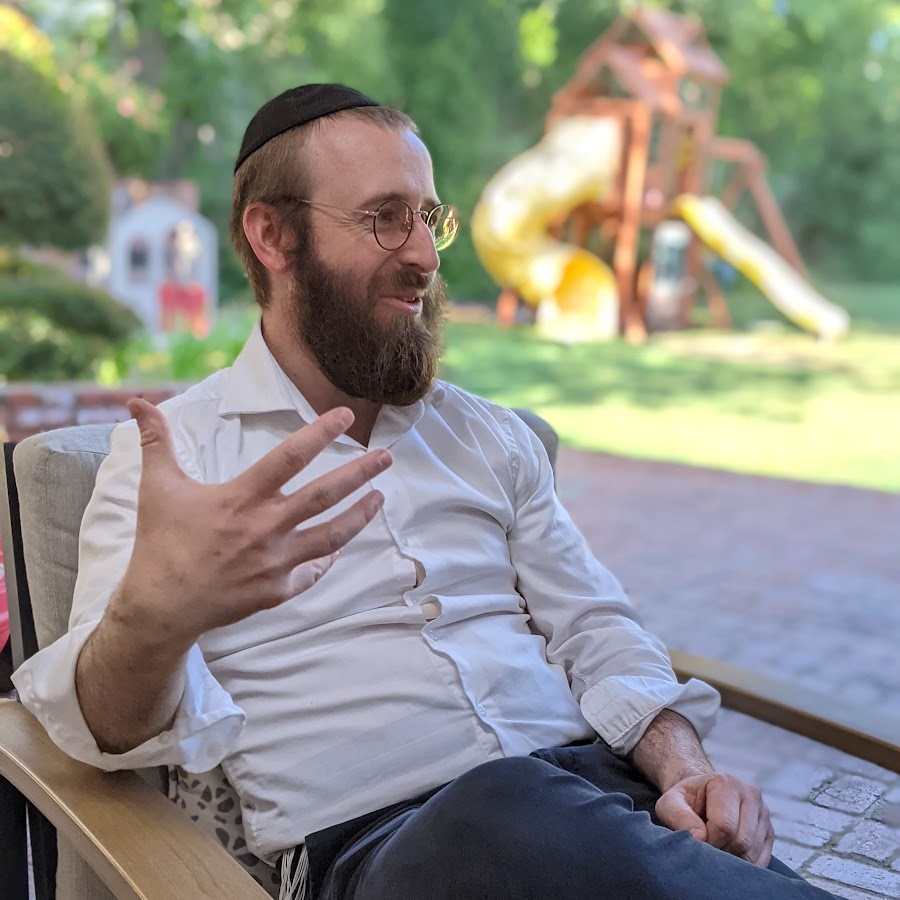
The Tanya's secret to joy and deep-living exposed! You can study the Tanya in greater depth here: https://www.soulcasts.org/tanya-the-story-of-you
Comments(0)
Transcript
Auto-generated transcript. Not time-synced to the video.
we completed the study of the
The 53 chapters of Tanya Very
timely. Uh in one week from
tonight is the nineteenth of of
Kislev. Which is the
anniversary of the what's known
as the Rosh Hashanah of
Hasidas. So this is a very
timely time to be talking about
to be summarizing or getting a
fresh perspective on on the and
I recently heard Rabbi
Zimmerman speak about Tanya and
I liked what he had to say. So
I ambushed him. And he very
politely agreed to to be
laywayed and brought into our
conversation. So Rabbi Josh is
primarily, you'll correct me if
I'm wrong but primarily the
adult education in Chabad of
the Tri Valley in Pleasanton.
And I'll share some of that
wealth with us. Rabbi Zeverman,
it's all you. Okay, it's an
honor and a pleasure to be part
of this celebration,
culminating celebration. the
the Tanya is I I use this word
lightly, but the word life
changing, the word life
changing is scary, really is a
scary word, and especially when
you hear it from a rabbi,
right? It's like, it's really
bad for marketing. It's one of
those words rabbis don't
want to use in any of their
marketing material. But, but I
really think the, Tanya is life
changing or perhaps life
clarifying. Little less
intimidating, right? It
clarifies what life is all
about. About nine years ago, I
was working in a Yeshiva, a
Jewish educational center in
Florida. It was a Yeshiva for
young college-aged students who
didn't have a formal education
growing up and they wanted to
kind of catch up. These were
students between, you know, 18
to like thirty. There was this
one student there. He was
twenty-four years old at the
time. And he found out he was
Jewish 6 months prior. He
didn't know he was Jewish
growing his whole life growing
up. He had a wacky He grew up
in a he was part of a gang Um
in Los Angeles. had this whole
epiphany. He was able to escape
the gang. Was raised as a
Christian by his parents. And
he ended up leaving the gang.
He ended up moving to Vegas
getting his life on track. And
he always felt like he was
connected to God. He always
felt like this and and his
connection to God felt
different than everybody else.
Everybody else is like dude why
you're talking about God all
the time? And he always just
felt this, this, this deep
connection. and what happened
was his mother unfortunately
got ill. Um at the time when
when this was taking place she
thanked God got better. But she
had a tumor. and the the doctor
told her that, you know, her
time is coming near, although
thank God it wasn't. Uh, I
guess that was God's decision.
The doctor told her her time
was coming near and she was
adopted, She didn't know her
her her real parents were and
the adoption agency decided to
release a packet of her entire
genealogy. She finds out she's
Jewish. This boy finds out he's
Jewish. He goes off to Yeshiva.
I'll be honest, it wasn't like,
I'm Jewish. Let me start
embracing everything. That
wasn't his perspective.
Everything was, you know,
starting from scratch. Like,
what is that squirrel that
you're pulling out of that
closet? In the sanctuary. What
are those boxes on your head?
It it really challenged me to
think to answer questions that,
you know, kind of grew up with
and it's like, no, you really
gotta go back to basics. To,
you know, to, to raw Judaism.
And by the he was out of there.
He ended up moving to Israel
and he was on fire. He was
passionate about his Judaism.
He was always passionate about
God. But he didn't understand.
He had a hard time with
understanding the framework of
Judaism. Why the structure you
know why can't they just
connect to God? But eventually
he got it. And he was on fire.
The guy gets married. And he's
living in Tel Aviv. We have
somebody here from Tel Aviv,
right? Visiting us from Tel
Aviv. We have a Tel Aviv
visitor. So he's living in in
Tel A and he's working at a
security company. And this is a
fellow, again, just just to
give you the imagery here. he's
a nice Jewish boy chick. He
really is. But he didn't grow
up that way. So he grew up as
part of a gang. A Mexican gang
in Los Angeles. So he's covered
in tattoos. He has a stellar
vocabulary. If you know what I
mean. Um which is why he
prefers speaking in Hebrew
because he's able to speak a
little bit more refined in
Hebrew. Because you know he's
kind of starting over. And he's
wearing a Kipa in seat seat at
work in Tel Aviv. And there's a
co-worker there that's kind of
trying to read him. Trying to
figure out what his deal is.
And he says can I ask you a
question? I'm I'm I'm sorry. I
hope this doesn't come off
judgmental but who are you? Are
you are you religious? Are you
secular? What like what what
are you? He says, I'm certainly
not religious. Says, you're not
religious. He says, why are you
wearing a Kipa and CT? He says,
look, I wear a Kipa. I wear its
teeth. I put on the filling
every day. I keep kosher. I
celebrate Shabbat. I celebrate
the holidays. But I'm not
religious. So, the guy says to
him, you're not religious. Why
are you doing any of this? Why
would you put yourself through
all this? You're not even
religious. He says, I don't
have to do this. I get to do
this. I'm in love with god I'm
not in a religion. I'm in a
relationship. This Israeli
fellow who is trying to figure
out who he was was just
floored. His mouth was dropped.
He says, whoa. He says, can I
put on filling with you? That's
what he says. This gentleman
had filling in his car and they
ended up putting on film
together and he was able to to
share the embrace, the love,
the warmth of Judaism with this
other guy. It it to me, this is
exactly the message of what the
Tanya is. I'm not in a
religion. I'm in a relationship
I don't have to do mitzvahs
although I do. I get to do
mitzvahs. I get to be a part of
this relationship. You know
what this reminds me of?
Chapter 33 of Tanya. Chapter 33
of Tanya talks about faith. And
it quotes the famed prophet
Havakuk. Havakuk says wait a
minute. There's a lot of
mitzvahs. 613 mitzvahs. That
could seem like a that could
that could seem pretty heavy
and by the way, each mitzvah
has so many details. Each
mitzvah has hundreds and maybe
even thousands of details on
how to do it right. That's
pretty burdensome or could seem
burdensome. So, says and this
is what it says in the Tanya
the says, I have an idea. Let
me just narrow it down to to
the core, one mitzvah. If you
really analyze it, it's really
all one mitzvah. It's not 613
mitzvahs and that's faith.
There's really one mitzvah,
faith, our connection to God.
There's 613 ways of expressing
those mitzvahs. And the Tanya
there says adapt that attitude
and now you've you've brought
life To our observance. We've
brought life to the
relationship. The Tanya is an
incredible paradigm shift from
seeing Judaism and by the way
you see this immediately in
chapter one of Tanya. Where he
tells us that there's this
shift. From Juda him being a
point system Focusing on how
I'm rewarded to a relationship.
Focusing on who I am at my
core. It is a relationship but
even the most beautiful
relationships can have tension.
And
one of the functions of the
Tanya is to help us resolve
that tension. There's this
tension between what I value
and the reality of, of, of how
I seem to what I seem to be
drawn toward. I value God. I
value his Torah. I value what
seems to be a higher purpose
and a truth and a mission in
life. But that doesn't seem to
be what I crave. So between my
values and my cravings, there's
this incredible tension. and
that hurts. That's painful. And
then the Tanya was actually
authored originally Natanya
wasn't originally written as a
book. It was it was Rabbi
Schneider Zaman of the Hadith,
the author. People would come
to him for advice. Cuz people
were experiencing inattention.
and he would give them advice
based on Torah wisdom and
eventually put it into a book.
So, it could be meaningful to
us from generations, you know,
many many generations later and
relevant to to generations, the
future, in the future to come.
One of my favorite analogies of
this is you have a rubber band.
Imagine you had a rubber band.
I don't have a rubber band here
so I can't give you the actual
imagery. I was giving a class
on this couple couple years ago
and like I don't have a rubber
band and somebody says oh I
have one and they literally
pulled the rubber band out of
their back pocket. Like no way.
Um so, if anybody is a rubber
band in their back pocket, no,
I'm kidding. But imagine you
have a rubber band, right? The
inside of the rubber band
represents, let's say, your
internal self, the outside of
the rubber band is your
behavioral self. And as you in
Jewish observance. If that
doesn't in line with who you
feel on the inside, what are
you going to have? Right? That
tension gets tighter and
tighter and tighter and one of
two things are going to happen
if we don't deal with this.
Either we're going to slowly
revert back because we can't
handle that kind of pressure or
we're going to snap. but
there's a third option. And the
third option is pick up the
inside. Tanya helps us relieve
that tension by picking us up
from the inside. By helping us
become more comfortable with
the soul, with the divine soul.
In 1906,
Rabbi Shalom Dover of Labovich.
He was the rabbi of the Chabad
movement back then. He had
health complications. So he
went to have a meeting with
Doctor Freud. Doctor Sigman
Freud who was a Jew by the way.
That's why all psychologists
are Jewish, I think, and many
of them are Jewish, right?
Doctor Sigman so he went to a
meeting with Doctor Sigman
Freud. He was having health
complications. It's unclear
what these complications were.
But he went to Doctor Sigman
Freud for a meeting and Freud
wanted to get a good
understanding of what his daily
schedule was like. So, he could
kind of, you know, if you
want to help him, see what, see
where he's, what are you up to
all day? A big chunk of his
schedule revolved around
learning acidic teaching,
teaching Hacidicism such as the
Tanya and and had many of his
own works and other things like
that. And it it very much
intrigued Freud. Freud was
again was a Jew. He was
somewhat alienated. From his
from his Judaism. There's a
fascinating article about that
on Chabad. org. He's never
heard of acidic teaching. He
wants to know what it was. And
the rabbi saw this as a perfect
opportunity to explain what
Hasidic teaching was but he
knew he had to be succinct. He
knew it had to be an elevator
pitch. He didn't have, you
know, he wasn't wasn't going to
be a a lecturer. So, he had to
really succinctly tell him what
it was. So, he said, Hasidic
teaching, unites the mind and
the heart. so that the mind
directs the heart. Which means
what I what I feel should be a
product of how I think. Rather
than a rather than control how
I think. I should see truth
objectively and that should
impact what I'm passionate
about As opposed to becoming
what I'm passionate about
becoming the truth. Right the
other way around. Freud didn't
understand. He said the
psychologically these are two
different worlds. How could you
unite the two? And the rabbi
told them they are two
different worlds. And that's
what we're here to do. We're
here to either build a bridge
between the two. And if we
can't do that that that's kind
of advanced. at least a
telephone wire between the two.
Guessing telephones came around
right around before. When did
Alexander Graham Bell exist? I
think around the late
18hundreds, right? So this was
nineteen oh six. So he said at
least put a telephone wire. At
least there should be some sort
of communication. Between
objective truth and passion.
And we should be passionate
about the truth. As opposed to
making our passions true. Freud
was was was enlightened by this
idea.
this is a, this takes a, this
is a simple paradigm shift.
Switching from body to soul. If
you look on the very first page
of Tanya, the cover page of the
Tanya. Where he tells us what
the goal of Tanya is. It's a
couple of lines. When we were
in Rabbinical School, we were
studying this, our our rabbi
gave us like a three-hour
lesson on those couple of
lines. He tells us that the
entire Tanya is based on one
biblical verse. Moses is about
to pass away and he's giving a
pep talk to the Jewish people
toward the end of Deuteronomy
and he tells the Jewish people
that you don't have to travel
far. You don't have to travel
across the street of the sea
for a relationship with God.
You don't have to go across go
to heaven for a relationship
with God.
This matter is actually very
close to you. This relationship
with God is very close to you.
And the Tanya is here to
explain how it's close. Because
it's within us. We just need to
make a paradigm shift. A shift
from being more body oriented
to soul oriented, right?
Chapter 32 of Tanya. When we
shift from being body oriented.
The soul oriented. When we make
that shift we become more
comfortable with our values,
less comfortable with our
cravings We identify more of
what we value than what we
crave. Ultimately, we crave
what we value. Because our
values are stronger. With the
mind rules the heart.
about a year and a half ago,
two years ago, I was counseling
a couple coaching them. And I
was trying to coach them in
becoming more essentially soul
oriented. Which in that context
of their relationship meant
don't focus on what you
experience from your spouse.
Focus on what your spouse is
experiencing. How is your
spouse feel about this? Not how
do you feel about this? Like
the body is what you see, the
souls, what you have to believe
in. Try to believe in a deeper
part of your spouse. Not just
what you get from them. and
they said to them, this is just
a shift from body to soul. They
said, Rabbi, our our issues are
so complicated. Isn't this just
a so oversimplification? Aren't
you over simplifying this
issue? And I told them, yes, I
am. I am over simplifying this
issue. Because it's simple.
It's not easy. You know, so
I'll give you that. It's not
easy. This is so difficult.
This is challenging. This takes
work. This takes effort. This
takes exertion. But it's
simple. It's in the sense that
this is all you need to do.
It's it's hard because it
unfortunately is is going to
take work or not unfortunately.
Fortunately, it's going to take
work to get there. and what if
I don't get there? Okay, we
talk about that in Tanya as
well. We talk about that in
chapter twenty-seven. We talked
about that in chapter
thirty-five. Value in the
action itself, value in the
effort itself.
Bottom line, what is the
ultimate goal of Tanya
to serve God with joy. Which in
English means become more
comfortable with our soul, with
our relationship with him. To
relieve that tension. I'll tell
you two stories. Conclude with
two stories.
Story number one Rabbi
Friedman's father, Rabbi Manis
Friedman, tells this story. He
had a friend back in Minnesota,
who was a Holocaust survivor.
He unfortunately was quite
hostile toward Judaism.
Understandably so with what he
went through, right? No
judgement there. He had a close
relationship with Rabbi
Friedman and but you know, he
he he liked Rabbi Friedman. He
didn't particularly like
Judaism. given, you know, he
was burned. I get it. He was
flipping to the TV one evening
and this was in the 80s and he
sees the from Chabad World
Headquarters. Being
broadcasted. Teaching Torah. In
Yiddish. And the guy was
mesmerized. He's just watching
it. Watching, watching. And he
calls up Rabbi Friedman. He
says, you'll never guess what
happened I'm flipping through
the screen and I see mister
Rabbi and his teachings were so
inspiring and this was so
enlightening and Rabbi Friedman
says, wait, wait a minute,
what, what, what changed? What
happened? You used to be so
hostile toward Judaism. He
said, for the first time in my
life, I see somebody who's so
public about their Judaism. And
so comfortable with their
Judaism. They're just
comfortable in their own skin
about. It's just natural, it's
seamless. It's not forced
That's some, that, that's what
we aspire toward to become
comfortable in our own skin
comfortable with our own souls.
I'll tell you one more story.
And this story really really
hit home for me. I I was almost
in doubt whether the story
even, you know, like something
happens and then a couple years
later, did that really happen?
It did happen. You'll soon see
why. About seven years ago, six
years ago, seven years ago. I
was living in Los Angeles and I
was studying in what's called a
Koelel. Koelel is an
educational center. Where, you
know, like us, we're we're
kind of like a synagogue but
it's open for study. It's like
a live, basically like a Jewish
library where people come and
study.
the the attendance of this and
the people that ran it, the
study center, were not Chabad
by any means. They were
traditional Jews but not Chabad
by any means. And they were
unfamiliar with the study of
the Tanya. and I I don't
want to use the word hostile
toward Tanya. Cuz that that's a
little extreme but they were a
little bit I would say
apprehensive toward Tanya
because they didn't know what
it was. They came you know they
they weren't familiar with
Hasidic tradition although they
although they were traditional
Jews.
and things that you aren't
familiar with can be scary
sometimes. I get it I was there
studying Tanya with somebody at
this educational center and
this young man at the time
twenty-four years old overhears
us and he's intrigued. And he
just says, can I interrupt you?
Can I talk to you afterward? I
said, sure. Afterward, I go up
to him. What's going on? He
says, what you're studying is
is quite intriguing. Can we
study together? Sure. Love to.
I said, when are you available?
Can can we do mornings?
Services at that point, there
was a daily services there at 8
o'clock. I said, maybe we can
do like 7 30. He says, I'm not
a morning person. I said ehm
what time are you up in the
morning? What's the earliest we
can do? He says let's not talk
about that. Let's do something
in the evening. Said okay. We
ended up doing it. We ended up
studying in the evenings
together. I met and and by the
way, as we started studying, I
I said to him like, well, we
got in conversation, you know,
what are you doing these days?
Not much. Okay. I'm at one of
the morning services at 8
o'clock. An older gentleman
comes up to me and says, excuse
me, sir. Are you the guy who's
studying Tanya with my son?
Said, yeah. like what's
going to happen now? He says, I
need you to do me a favor. I
don't know what you're doing
but you gotta continue. So,
what do you mean? He says,
there's something you don't
know about my son. He's
clinically depressed. He's
going through a really hard
time. I don't know what it is
but he dropped out of school.
He's not in any Yeshiva in any
formal Jewish educational
center either. He was dropped
out of college too. He's not he
he can't hold a job. He
literally sits in bed every
single day in the dark. At
least till noon. And for
whatever reason I don't know if
he wasn't taking medication or
the medication didn't agree
with him but for whatever
reason, medication wasn't an
option. He says, you started
learning Tanya with my son the
past few months, past few
weeks. And I've seen a light
bulb go on in him. The guy has
life. He's coming to the
services in the morning. He
didn't even wake up in the
morning. He's literally out at
synagogue in the morning. He
says, my son bought an English
Tanya from Amazon with his own
money. He says, my kid never
bought a book in his life. He
says, I don't know what you're
doing but I need you to please
continue. You're saving my
son's life. I said, whoa.
Several years go by. and I I
kind of forgot about the story.
and I find out a year and a
half later, actually, I find
out that this guy is in Israel
studying in Yeshiva. He ended
up getting his life together
and he's back and and he's in
Israel and he's studying and
he's taking a study seriously
and he actually called me to
reach out
the father.
The he he called me to let me
know how he's doing. A year or
two after that. I went back to
that same educational center. I
went there to pray in the
afternoon. And I showed up the
services a little bit early. It
was a mistake. Um showed up a
little bit early. Since since
when are we early at the no.
I'm a Jew. I don't do things
right. So I showed up a little
bit early. And right before the
service there's a a group of
like six people studying. And
there's somebody leading
studies. I couldn't see who it
was because I walked in and his
back was to me. I see
afterwards when the service
starts, it was this guy. He was
leading a study session on his
own. He was teaching other
people Torah. The guy pulled
himself through law school and
he's now a lawyer working in a
firm and to me, that was just
like, wow. The the Tanya
literally turned, yeah, they
gave this guy life because he
he made this shift in his life
from being body oriented to
soul oriented. It really really
hit home for him and that to
me, that was something that was
was quite inspiring. I want to
just end off with perhaps a
suggestion. If I may, The new
Tanya cycle. There's a Tanya
cycle every day. Daily Tanya
cycle and you end up finishing
study a little bit 10 minutes a
day, and you end up finishing
the whole Tanya in one year.
And that cycle is coming up in
just about a week from now.
Starting next Monday or Monday
night. So that's my story and
I'm sticking to it.
Yas My pleasure. Your the story
about that guy reminds me of an
incident. Um Those that know me
here know I work in in the
prison system. So there was a
Jewish fellow who got into a
little bit of a tussle with
some of the prison staff and he
ended up in solitary in the
segregating housing unit for
about two months. And after
that from there he was
transferred to immigration and
I don't know what happened to
him after that. But while he
was in the segregating housing.
Segregated housing unit. I
would come to see him two or
three times a week to do to put
on to film with him which he
had he had been doing every
day. But there he wasn't
allowed to have us feeling with
him. and every time I would
come to see him, he would be,
he would be stand, you know,
waiting for me to get there. He
had questions. He wanted to ask
me because he was doing a lot
of reading and he was always
reading The Daily Tanya.
Questions and I would say, I
haven't read the Tanya for
today yet that you're ahead of
me. I don't. But in one of the
conversations I had with him
about Tanya, he said We need to
teach this to kids. He said, I
swear on my life if I had
learned this when I was
younger, I wouldn't be in
prison now. Wow.
Tanya's powerful stuff. Wow.
and we thank you very very
much. This is it's a beautiful
treat. I'm going to disconnect
from the live stream and we'll
take the rest of