0:00 / 0:00
Who Really Wrote the Bible? Rabbi Singer Exposes the Truth
543 views
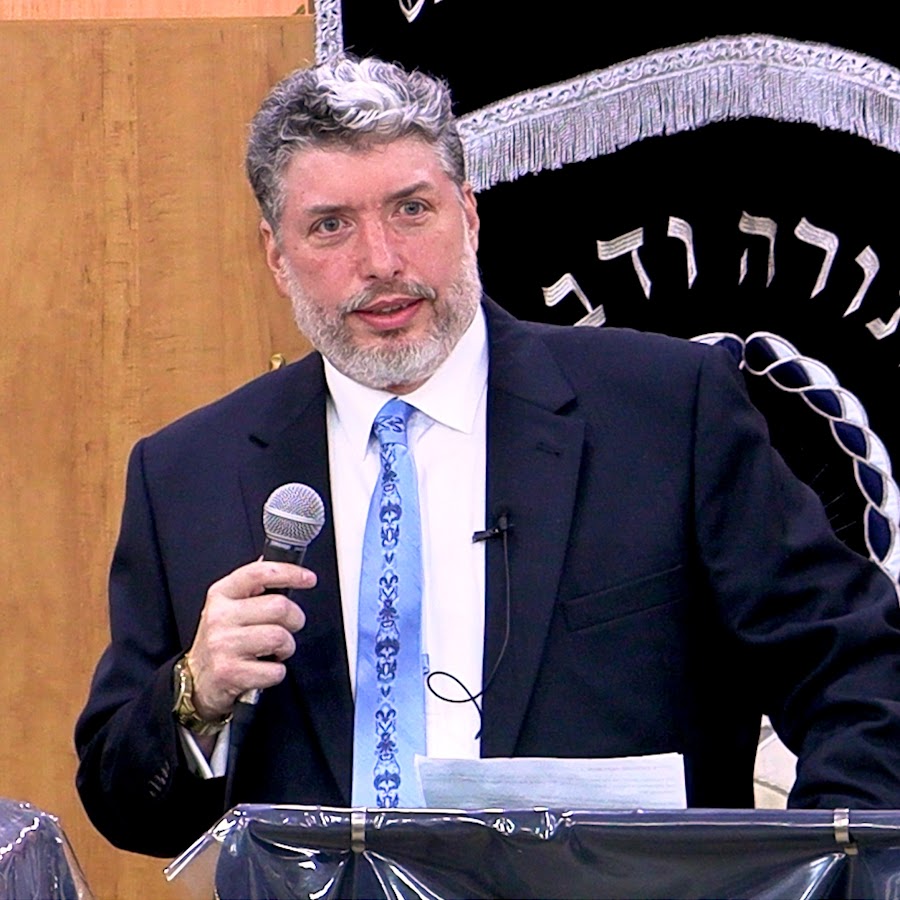
Help us combat aggressive Jewish evangelism in Israel: https://outreachjudaism.org/partners/ Let’s Get Biblical Study Guide (Volume 1 & 2) https://outreachjudaism.org/shop/lets-get-biblical-expanded-2-volume-study-guide/ https://outreachjudaism.org/ www.videvo.net https://www.youtube.com/user/tenaktalk Music: https://www.purple-planet.com Use in accordance with Israel's Copyright Law 5768-2007 section 27a. Music at the end: Adon Olam https://youtu.be/a6oS9N0hJTY http://www.toviasinger.tv/ #toviasinger #Judaism #Christianity #Messiah #joerogan
Comments(0)
Transcript
Auto-generated transcript. Not time-synced to the video.
Neoablonian Empire was destroyed,
but the Jews did not yet return because
it'll be another 20 years. Make their
mind. You would be very alarmed at that.
That would be of enormous concern to you
and you would scream to heaven and say,
"What went wrong?"
It's funny. Okay, we got Okay, we have
Jacob from Toronto, Canada. welcome to
the show. Go ahead and present your
question to Rabbi, please.
>> Hi, Rabbi. Um, I have a question. I I
noticed that um when we talk about the
New Testament, you use the um the
scholarly interpretation of the dating
of the books, but you don't use a
scholarly dating of the the Tanakh,
which I also accept.
>> I'll tell you honestly, I I started to
lose you. Like first Corinthians is
written during the 50s. I just like keep
it simple because I'm I find myself
following you down a a rabbit hole. Just
the question is why do I date like
Daniel when I do and why do I date the
Gospels when I do? Is that your basic
question?
>> We we talked about it before. He's he's
he basically said that you you're um
your viewing of rejecting scholarly
dating from Tanakh which he agrees on.
He says, "But you don't reject the
scholarly dating from the New Testament,
which puts Paul's writings way earlier
than the Gospels."
>> My view of Paul's letters, the dating of
Paul's letters that are written during
the 50s, everybody holds that view. I
don't know anyone. The only thing the
only question is there are six letters
of Paul
which um are disputed over whether Paul
actually wrote them or not. And this is
going to u surprise you. So you have the
pastoral epistles first and second
Timothy and Titus. So those there's
really a somewhat of consensus those
were not written by Paul but that
falsely ascribed to him and they're
really really late
and probably that's why Marcion 2
century didn't even include them in his
letters of poly possibly didn't know
about them. So there's there's they were
certainly written by the same person. If
someone wants to believe that it was
rewritten again, whatever. That's
somewhat the consensus. You don't have
to believe that. I can buy it. As far as
my belief about Paul's the other three
letters like Colossians, like Ephesians,
and 2 Thessalonians,
the scholarly consensus is that Paul
didn't write them, but they are in fact
a
also falsely um ascribed to Paul. I do
not think that's a very strong argument
because as it turns out all of Paul's
letters this is a consensus went through
an editing process in the first century
and therefore the fact that the language
used in
Ephesians 2 Thessalonians and Colossians
this is not the only reason that but
this is one of the chief reasons that
differs from the seven letters that Paul
wrote
could easily be ascribed to the fact
that they went through some editing
process which virtually everyone knows
they did. As an example, I'm just going
to give you really simple example and
I'm going to move on from this. I mean 2
Corinthians is no doubt multiple
letters. It's not one letter. It's
multiple letters. Okay? 1-9 is a
different letter than 10 through13. It I
think it's written by more. That means
they're all written. Second
Thessalonians, excuse me, second
Corinthians was written by Paul.
No question about it. However, how many
letters were pasted together to produce
second uh Corinthians? Quite a few.
There's a difference. So therefore, it
obviously went through a a redaction
process. And therefore, I believe
personally that the argument used by sec
I think the evangelicals or the
conservative Christians are right on
that. So I judge texts
based on the evidence I have and I I now
this is the humanities.
So in the humanities it's just a sense
of how confident are you. This is not a
hard science. We can never there's no
bulletproof way to know and everyone
will tell you that. But in my view I
feel a a certain level of confidence
that Colossians was written by Paul and
just went through some editing process.
I don't want to get more complicated
than that. Leave that alone. Moving on
to the gospels. So the gospels, my view
is,
so I used to hold that Mark was written
about 70, which is the the standard
scholarly view. I think it probably
written a little later. I think about
this all the time. But given Mark 13
where we have destruction of the temple
in view or Luke 21 or Matthew 24 alvet
discourse therefore it's written after
the destruction of second temple. We'll
leave it there. Go all the way there.
Now as far as Tanakh goes well here
first of all the massive number of
scholars of Tanakh are not found in
academic circles. The vast vast bulk of
people who are schol are I'm going to
say it and if I offend people so so be
it are orthodox Jews the if you take
punovich
if you go to the mirha that's where you
have scholars of that could blow away
the academic world so this making a big
mistake that means there's no question
that the and I'm saying orthodox and I
if you're a former conservative and
you're a former conservative rabbi and
watching me. I thank you. Please don't
be offended. But it this is transparent.
The massive volume of scholars of the
Torah today, people who could
there's nothing to say. There's no in
the academic world. The academic world
are reading what the rabbis are saying
and quoting it and trying to figure it
out. They understand who the scholars
are. But let's leave that all alone.
As it turns out, the Torah tells us who
authored it. You could clearly not
believe it, but at least the text says
it. Matthew, Mark, Luke, and John does
not say who wrote it. That's a later
invention. Do you understand the mass
difference in that? When a book says
like I don't want to say it out of my
mouth. God forgive me. Laabdul, the fact
that
letters of Paul at least Paul whoever
wrote it says Paul wrote it. So that's
enormous.
Matthew, Mark, Luke, and John have no
inscription to it. They don't claim to
be written by them. And the early church
fathers that means early second century
did not quote Matthew, Mark, Luke, John.
They quoted the text. So it's there. But
they people like Justin doesn't doesn't
refer to them as Matthew, Mark, Luke,
and John because that's in Justin is mid
2nd century. Okay? He's written in the
mid-second. At the end of the second
century, it's the bishop of Leon that
ascribes Matthew, Mark, and Luke and
John to those names. Okay? So, so you do
not have early early church fathers like
the bishop of Antioch. We have a lot of
his he doesn't refer to Matthew, Mark,
Luke, and John.
Drop that. Now, as far as Tanak goes,
you could use your brains more. For
example, I just want to I want to steal
man this and there's not enough time to
go through all this, but say Daniel.
Okay, Daniel, we have
incredible evidence for Daniel's
authorship during the Babylonian exile
than any other book in Tanakh. Meaning,
we have an eyewitness account of Daniel
in the book of Ezekiel. Three times
Daniel was mentioned passingly.
The book of the book of Daniel describes
the destruction of the second tamuel in
Daniel 9:26. Not the abominations of of
Kaneka. It's not true. It's the
destruction of Jerusalem, destruction of
the temple. And I show you this antio
did not destroy his temple. He defiled
it. He did grotesque things. But he
didn't want to destroy temple and he
didn't want to destroy Jerusalem. On the
contrary, he was going to use that as a
center for his idolatry. Moreover, we
have eyewitness accounts during the time
of Kaneka. That means during the time of
Antioch's epiphanies that Daniel was an
ancient book. So what I'm doing is I
want to steal men. I want to take the
most controversial and I want to use
that. So we have Ezekiel lived at the
same time as Daniel and we have Ezekiel
test. You know how hard that is to find.
We have Ezekiel speaking about Daniel in
passing. He's not even making a He's
just saying, "Do you think you're as
smart as Daniel?"
It's there.
We have the book of Mcabes. The first vi
Mcabes 1 was written around the time of
Kaneka in biblical Hebrew. It did not
survive in biblical, but we know it was
written biblical Hebrew and it's written
during time of Kaneka. Everybody admits
this means happened at the time of the
event. The key point is chapter two.
verse 50- 60. 50- 55. Pretty sure that's
correct. Explicitly when enumerating
the great miracles of the past,
comparing them to the current miracles,
the author, whoever it is, looks back to
the children of Israel going out of
Egypt, looks back to the great miracles
when the Jews were saved, and looks back
to the time that the companions of
Daniel was saved from the fire and the
and the den of lions. So we have an
eyewitness
account during the time of Kaneka that
Daniel was an ancient book. I I'll do
one last thing and then we'll cut it up
because this is really a long long. So
I'm thinking very critically here. I I
just share something with you that's
very important again. We are discussing
a topic of the humanities. So, but
how do scholars look doesn't matter if
they believe how when looking at an
ancient text, how do they know like when
it was written? Like h how do you know?
So there of course you have eyewitness
people who wrote about it. We don't want
to talk about there is another
methodology
that's fairly rigorous and the
methodology goes is simply like this.
The author is expressing concerns in the
text. Do those concerns
identify when he lived? The answer is of
course it does. In fact, in fact, the
Ipologist searching back and forth. The
New Testament scholars that say that the
disputed letters of Paul were not
written by Paul. There are a number of
reasons why they assigned to it. One of
them is that the author is addressing
issues that would not have related to
someone writing during the 50s but much
later. This is really a none of these
are bulletproof but these are all our
methodologies and these are like the the
really strong methodology. So a meth if
the author of Daniel is expressing a
concern about something a crisis and
that would not be a Babylonian exile
person well that would be very
significant. Conversely if it was an
issue that if only if you were alive at
the time when the Persian Empire emerged
that means during the time of the
Babylon exile that would be a massive
proof massive. Do you understand now?
Daniel 9, how does it begin? Daniel is
writing in the first year of Darius the
me. Stop. And what is he concerned
about? Stop. He's concerned about two
prophecies in Jeremiah. I'm just going
to tell you, I'm not going through it.
Jeremiah 25:12. Jeremiah 29:10. His
problem was 25:12 was filled, meaning
the Babylonian Empire collapsed. And
29:10 was not filled. Meaning that the
Jews did not return back to the land of
Israel. not going further. Okay, he is
alarmed by that. You understand? That
means Darius/ Cyrus emerged a half a
century after the first temple was
destroyed. If the neoablonian Empire was
destroyed,
but the Jews did not yet return because
it'll be another 20 years. Make their
mind. You would be very alarmed at that.
That would be of enormous concern to you
and you would scream to heaven and say
what went wrong. You follow the fact
that Daniel is concerned that the
Babylonian Empire has been destroyed but
the Jews have not returned is explosive
that it could have only been written by
someone who was concerned about this. It
couldn't have been written in the second
century BC during time of Khaneka. The
time of Khaneka that was not a concern.
This is to say that somebody I just want
to say this and I'm going to go. To say
that somebody during time of Kaneka
would have been concerned about the Jews
not returning back from Bavville would
be like saying that Mahm Abbas is the
chief rabbi of Israel. It's not even
wrong. It's so detached from reality. It
you can't even use the word wrong. Can't
even apply to it. So therefore, we can
use the rigorous methodology. I'm not
saying there's no faith involved. So all
this talk of scholar which scholar oh
only the scholars that you believe that
it's all silly look at the text the
rigorous methodologas are all there and
incidentally that's why in the gospels
you have the destruction of the temple
and the book of Hebrews
whoever wrote it we don't know whoever
wrote the epistle to the Hebrews did not
know that the temple was destroyed why
didn't he know it because he didn't know
because it didn't happen yet why didn't
that's why Paul doesn't know anything
about destruction of temple why doesn't
he mention it he doesn't mention it cuz
he didn't know anything about it. So
Paul's written before the book of
Hebrews written in ' 64 before even the
war and therefore doesn't know it. This
is all very transparent stuff. Thank you
very much for your question. If you
enjoyed this program,
please like and subscribe.