0:00 / 0:00
What Happens When Nothing Is Hidden? | Parsha Perspectives | Terumah 5786
1,951 views
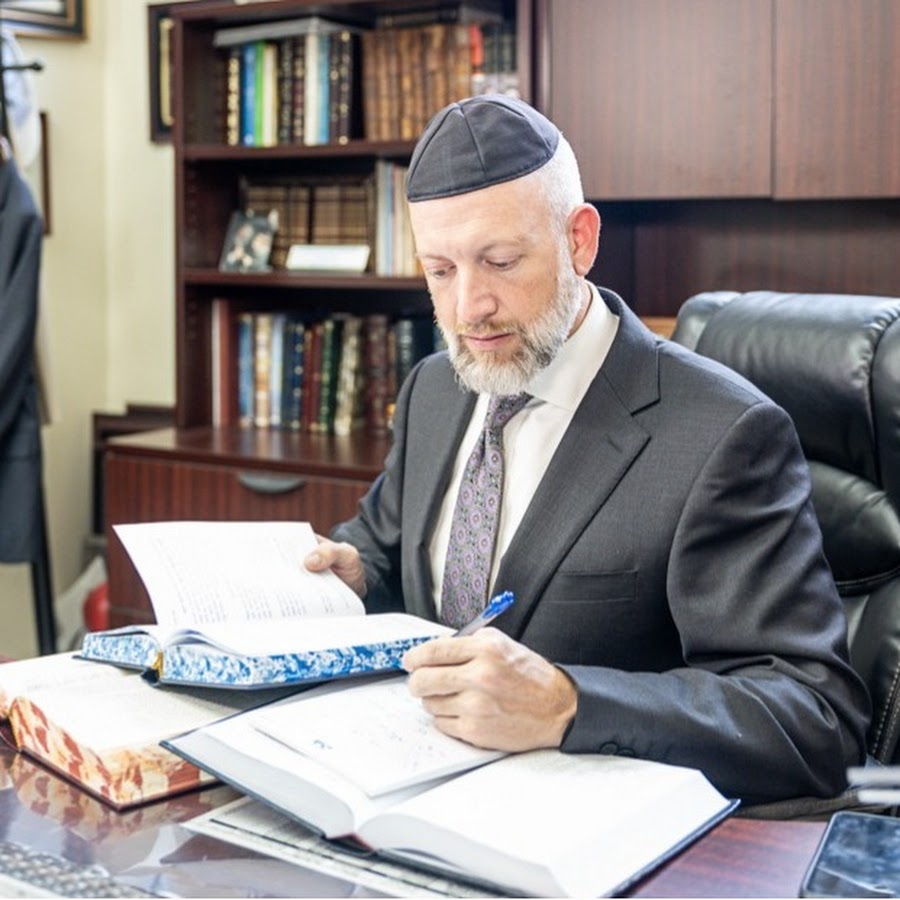
What do we lose when everything becomes visible? === Series generously sponsored by Becky & Avi Katz and Family in memory of David Grossman z"l, Dovid ben Menachem Manis z"l, their beloved father and grandfather. === In Parshas Terumah, the holiest space in the Mishkan was hidden behind a curtain. Access was limited. Boundaries mattered. Today, we live in a culture where nothing stays concealed: thoughts, relationships, struggles, sacred moments. Rabbi Efrem Goldberg explores what it means to protect your own “Holy of Holies..." and what happens when the curtain is removed. Some spaces are meant to remain sacred. 💬 What part of life deserves more protection?
Comments(0)
Transcript
Auto-generated transcript. Not time-synced to the video.
Good morning, Boca Tow. Welcome back to
Parsha Perspectives for today.
Want to thank our generous Parsha series
sponsors.
Becky and Avi Katz and family in memory
of Becky's father the neshama of
Menachem Mendel David Grossman. Today's
sheer is also sponsored by the Ashman
family in honor of Yossi Leib ben Chava
on his yahrzeit. By Jared Schar. Thank
you to Parsha Perspectives the strength
to complete his race to the base half
marathon. Oh, listen to Parsha Beshalach
and Yisro made it to the finish line.
Amazing.
And by Jay Lerman for the four children
of Menucha bas Menachem and Devorah
Shmuel ben Rivka and Dovid Yitzchak ben
Blima. Anonymously in the merit of
Avraham ben Avraham HaCohen shlit"a and
Dovid ben Shmuel ben Dovid ben Shmuel
ben Yisroel ben Shimon for Chaim ben
Dovid and Asher ben Yitzchak ben Yisroel
HaLevi. May their neshamos have an
aliyah. Thank you to all of our generous
sponsors. I have amazing news to report
today.
And the amazing news is I am done
muttering you.
We have reached our goal and surpassed
it by far and I want it from the bottom
of my heart.
From the bottom of my heart thank each
and every one of the nearly 800 families
who contributed to our global campaign
to enable us to continue to learn and
teach. I told you two weeks it was two
weeks and not a day more. You made that
happen from the bottom of my heart.
Really with the greatest sincerity and
gratitude I thank you for your
generosity. Thank you for making it
happen. I have to tell you I'm
incredibly proud. 800 nearly 800
families from 167 different cities
around the world
participated which means that our
learning is global indeed. It's
worldwide. There's I I can't describe
how gratifying and satisfying that is.
It means the world to me. I'm sorry that
I muttered you. I'm not sorry I muttered
you because we needed to make it happen.
I thank you for responding. Page 444.
And you saved me from having to weave it
into this parsha even though it's the
perfect setup.
Hashem spoke to Moshe
spoke to Moshe and he said, "Speak to
the Jewish people and let them take from
me a portion. From every person whose
heart motivates him you should take a
portion." Yikchu li truma. We know
famously it should say
viyitnu li truma. Give. Why does it say
viyikchu? And we all know these divrei
Torah.
Because every time we give we really
get.
Every time we think we're giving we get
the experience of dedicating and
allocating our resources and the gifts
we have towards good and indeed we're
getting more than we're giving. And
since we're getting more than we're
giving the Torah formulates it as
viyikchu li truma. There was a great
rebbe who used to say not I give tzedaka
I take tzedaka. I'm taking tzedaka. When
he would give tzedaka he'd say I'm
taking tzedaka. I'm not taking
receiving. I'm taking mean through the
act of giving. Nebach there are people
who don't know this joy. There are
people who don't know the incredible
pleasure there is. They think the harder
they tie it the tighter they hold it
the longer they'll have it the more they
can enjoy it and they don't realize they
can't take it with them. And the only
thing that we really ever have the only
thing that actually defines our worth is
what we give away cuz what we have
what we have can disappear. What we have
what we have we can lose. What we have
we can't take with us but what we give
away that's that's who we are forever.
So Hashem tells the Jewish people and
it's not a coincidence it's soon after
being a slave nation. Slaves hold on
tight to what they have they have so
little so meager. They have nothing of
their own.
They borrowed money on the way out of
Egypt and they lapped up money at the
banks of the sea and they have a small
fortune and now the slave nation who had
financial insecurity and financial
anxiety are now being asked viyikchu li
truma. It's time to give because at the
very beginning of our becoming a people
what defines us as a people is not what
we earn and what we take and what we
have even though you know our enemies
like to talk about Jews are rich and
what Jews have.
There's a um
there's a podcast that is very popular
called Kosher Money
and it was designed for the Jewish
people. How do you have a large family?
How do you save? What do you do to
invest? How do you ensure you could pay
tuition? But it turns out that there are
non-Jews all over the world
who would love to listen to a podcast by
Jews about money.
So non-Jews those who admire and flatter
us for having money and those who use
that as a meme of their anti-Semitism as
a trope about how we have all this money
they shouldn't highlight what people
have. What makes the Jewish people
different what should differentiate us
is not what we hold on to but what we
give away.
Let them look at the statistics which
are publicly available about how much
Jews give the philanthropy the
generosity the charity. What
differentiates us is not wealth what
should differentiate us is what we share
what we give the yikchu li truma the
yikchu not viyitnu because when a person
is charitable they're not giving they're
getting much more than they're giving
away cuz we only ever really have what
we give not what we not what we hold on
to. And nebach are the people who don't
know that the incredible joy the
satisfaction the meaning the purpose to
allocate and dedicate our resources to
good and to see.
Why did Hashem have to say dabber bnei
Yisrael? Listen, Moshe.
Be gentle.
Go lightly.
Take it easy.
People they're not going to part with
their money so easily. You're running a
campaign the campus campaign the global
campaign the base medrash campaign that
there's always a campaign. It's just
which one this week.
So be careful Hashem tells Moshe. Dabber
gentle sweet sweet talk gently talk
sweetly ease them into a belashon piyus.
Sorry not Rashi's the Baal HaTurim. Says
the Baal HaTurim you're asking for money
it's easier to ask them for their
kidney.
Their kidney you can be strong and harsh
and tell them they have to give but
money gentle sweet careful piyus.
You have to appease them. Speak gently.
Baal HaTurim says you have to why?
Because there's chisaron kis. Anytime
that we're out of pocket anytime that we
have to spend anytime that it costs
>> [snorts]
>> people are going to hesitate they're
going to resist so speak gently. Dabber
dabber alav Yerushalayim dabber is the
language of gentle sweet sweet.
There wasn't anyone in the nation who
didn't have 90 donkeys laden with the
gold and silver they took out of Egypt.
They had incredible wealth. We walked
away with everything that washed up on
the bank of the of the sea. We walked
away with everything that we borrowed
really were compensated from the
Egyptians. Everyone had 90 mules 90
donkeys schlepping the gold and silver.
So that should be the easiest appeal in
the world.
Right?
The wealthier someone is the easier it
should be for them to give away money.
Because they couldn't possibly spend all
that money in their lifetime the
lifetime of all their descendants that
will come after them with that money
will earn on its own passive income they
couldn't possibly spend so it should be
very easy to ask such a person for
money. Cuz they couldn't possibly spend
it.
Why? Why tread lightly? Why be careful?
Why be cautious? Why speak gently?
You think if you got a meeting with Elon
Musk he's closing in on the first
trillionaire ever.
Said Elon
living with emunah
you know $1,800.
I can't describe how little that is to
him if you're worth nearly a trillion.
So you'd have to be gentle. I don't mean
if it's okay there's no pressure please
possibly if you don't mind. Really?
Someone's worth almost a trillion?
When it comes to so many other mitzvahs
in the Torah there are expenditures.
There is a cost to it. There's a budget
needed for it.
Giving tzedaka in general tzedaka
tzedaka tzedaka tzedaka
you got to spend money on dollar a
minute. Got to spend money on kosher
food. Got to spend money on tuition. I
don't have to tell you what you have to
spend money on.
And yet there it doesn't say listen
Moshe you tell them about that mitzvah.
It's an expensive one.
Break it to them lightly. Go gentle.
Doesn't say that. So why specifically
here when it came to raising for the
Mishkan all of a sudden lashon piyus the
piyus
you got to be gentle got to be careful
got to be sweet got to be endearing.
wedding tonight I'm officiating we're
going to and at the benching at the end
of this wedding we'll say sha'simcha
bima'onau that the joy is up in the
celestial heavens.
But we don't say that at a bris. Why
don't we say sha'simcha bima'onau at a
bris?
Isn't Hashem happy and joyous? A new
young boy entering the covenant of the
Jewish people?
Because this baby just had surgery with
no anesthesia. This mother's cringing.
If you look I'm pointing there cuz
usually when the bris right here in this
spot, the mother's standing right there.
She's in more pain watching the bris
than she is delivering the baby.
Delivering the baby without an epidural
would be less painful than watching her
son get this bris.
The
oy, the look on the face. How can you
make a bracha
joy and happiness as a baby in pain?
And if we down here can't be fully
joyous then up there Hashem can't
either.
We
have a least
we don't make a bracha
want to make a
bracha
want to make a bracha
You take the for the first time that
you're making a bracha
It's in the circle the first time that
you're making a bracha and a bris
probably not having more than one a year
you don't make a bracha
Why not? For the same reason. You're
going to MAKE A BRACHA
BABY'S LOOKING UP SO YOU HAVE A BIG
BRACHA
OUCH.
IT'S also maras.
You know, the baby, the boys, when we
open the door for Eliyahu
last time we saw him we were sitting on
his chair, we cringe a little bit.
Some bad memories triggering.
You know, bris is a big thing, very big
thing. To bring someone in the covenant
of Avraham Avinu
on bris mila it says this is like 13
covenants formed with Hashem. There's
only two positive commandments that if
you don't fulfill it, you get the
punishment of kares, spiritual excision.
The korban Pesach and bris mila. And
despite its uniqueness and
distinctiveness, despite its
significance, nevertheless, we don't
make this bracha.
You know why?
Cuz if we can't fully be joyous down
here then Hashem is not fully joyous up
there. How could you say
oh no
that Hashem is so happy in the heavens
if there's any pain in this process down
here.
You know, the day that we built the Beis
Hamikdash is an incredibly joyous day
for Hashem. Like the learns on the pasuk
in Shir Hashirim that's the pasuk in
Shir Hashirim on the day of your wedding
and the day of the joy
of your heart. So
what
is the day that is the most joyous and
happy
for Hashem is the day of the building of
the Mishkan.
So Hashem says I want this to be an
incredible day. Opening day of the new
shul of the expanded shul, I want it to
be the most joyous happy day. Hashem
says it's my joy my happy. The learning,
the davening, the communion, the
conversation, the connection that we're
going to have there, the coordination of
the chosson and kallah happen there.
Unbelievable. I want to be completely
happy. But here is the problem. I can't
be completely happy up there if there's
anyone unhappy down here.
If anyone has tarumos
If anyone feels you instituted a
building fund, you forced them, you made
them, you coerced them, you took that
money, they're going to have
they're going to be miserable. They're
going to say they couldn't afford it.
They're going to say it wasn't
necessary. They're going to say it was
unfair. Hashem says if anyone's
miserable down there, I can't be happy
up here. So here's the deal, Moshe. You
need to run a campaign where everyone's
giving out of the will of their heart.
You need to find a way to run a campaign
that everyone's invested, everyone's a
stakeholder, everyone cares, everyone
wants to give.
We didn't institute with this big campus
that's going up. Parsha Shiur is going
to be in a new location. Unbelievable.
We'll be able to fit three times as many
people. Baruch Hashem. We'll stream it
with greater technology and reach more
people. Can't wait. Super exciting. I
hope it's going to give nachas ruach to
Hashem.
But we didn't institute a building
campaign. That was our promise and
pledge to the community. We want
everyone to we want everyone to give.
We're going to do a campaign for 100%
participation, but voluntary. Because
just like the original, just like the
Mishkan, it's got to be out of the will
of one's heart.
Person should have to want to give. They
have to want to say I want a chelek, I
want a part, I want to walk through that
door and say I also made this happen. I
don't just come in as a shlepper. I
don't just come in as a taker. I don't
just come in as a free loader. I don't
just benefit from it all. I had a part
in it. I contributed to it. I helped
make this happen and I did it not
because anyone made me. I did it because
I wanted to.
So dafka here, dafka here says
dafka when it comes to the Mishkan
building a house for Hashem, Hashem says
I don't want to be in that house if
someone thinks I made them contribute to
it. I want to be there when everyone
gave of their own will, their own
volition, with their own excitement. And
therefore Moshe, daver bnei Yisrael,
speak gently, speak softly, speak
affectionately, win them over, persuade
them, convince them, don't compel them
so that they want to give. It's a good
word.
Hashem doesn't want to be in a place
where there's pain. He certainly doesn't
want to be in a place where he feels he
caused the pain. His mitzvah or his
Mishkan created the pain. He doesn't
want to be there. And therefore dafka
here, just like a bris mila, you can't
say
oh no.
Hashem wants to be able to say there's
here and the only way to do that is if
what? Everyone gives of their own,
everyone gives of their own will. Good.
Parsha pasuk
hey
There's so much I want to repeat cuz
there's such incredible divrei Torah on
parshas Terumah. You're going to have to
listen to previous years. It's all
there. It's all available. It's all up.
Find it. Listen to it cuz they're not my
own ideas. There's so many incredible
ideas from so many others. I'm going to
hold back so that we learn new ideas
this year. Pasuk says
we're not going to go through the
measurements, the materials, the
Mishkan, the kaylim, the utensils,
everything that's going to go into this
house of God.
Interrupted by Ki Sisa the eggel we'll
get to in a couple weeks.
But by the way, no shiur next week. I'll
be traveling in Israel. So no shiur next
week. We'll resume in two weeks. Please
note no shiur next week.
We'll resume in time for the cheit
ha'egel.
So for Ki Sisa. So these measurements
and these materials. So among these
materials pasuk says red dyed ram skins,
tachash skins, acacia wood, oil for
illumination, spices for ointment oil,
and the aromatic incense.
What are tachash skins?
What are tachash skins? Anyone know?
A rose tachashim. The skins of the
tachash.
Zakta Rashi
Zakta Rashi tachash skins. Rashi is the
small print.
Makes us look old.
Pasuk hey
min chaya v'lo hayisa ela sha'a
shishim mispar begavna shel lo Says
Rashi quoting the Medrash Tanchuma the
Gemara in Shabbos
that tachash was an animal that existed
only at the time of the construction of
the Mishkan. Gemara Shabbos chof chof
tachash skins. That's why
if you look at the ArtScroll, I don't
know if anyone's looking at a Rabbi
Sacks Chumash
ArtScroll writes tachash
ArtScroll writes a rose
tachashim, tachash skins. What are
tachash?
Even ArtScroll doesn't try to translate.
Does Rabbi Sacks try to translate?
Anyone have the Chumash?
The Rabbi Sacks Chumash tachash skins.
So Rashi says this was an animal that
existed only at the time of the
construction of the Mishkan, had many
colors, very colorful, very beautiful.
And this says Rashi is why Targum
renders it sasguna. Sas u'mispahar,
joyful and proud of its colors. This
animal was joyful and proud of its
colors.
Now, why would the tachash take pride in
its colors?
I thought pride is a bad thing. We're
not supposed to be proud. We're not
supposed to be arrogant. Pride pride
leads to arrogance, leads to
misbehavior. Isn't pride something
negative? Don't we work on pride? Don't
we suppress pride, overcome pride? And
yet here Rashi somehow is complimenting
this tachash, this colorful animal that
existed only at the time of the
construction of the Mishkan, that was
sas u'mispahar, joyful and proud.
Listen to this inside of Rabbi Shaul
Alter. Says the Gaon Rosh Yeshiva
because it existed only at the time of
and for the purpose of the Mishkan it
was entitled to be proud. You know what
you see and you learn from here this
Rashi?
Someone whose entire existence is
dedicated to avodas Hashem.
Someone whose entire existence is to say
what's my mission? What's my purpose?
How do I serve Hashem?
That person can be proud. What they're
proud of is not their ego, they're proud
of their
Elokus. This is going to go in the book.
They're proud of not their ego, they're
proud of the Elokus. When a person says
look at my wealth, look at my house,
look at my car, look at my good looks,
look at my charm, look at my spouse,
look at my children, look at my athletic
prowess, look at my artistic, look at my
song, my voice. When you say ego, me,
look at me, pride that's negative. That
is something that's destructive. When a
person says I'm so proud to dedicate my
life to Hashem.
So proud of the impact, of the
influence. I'm proud of my mission, I'm
proud of my purpose, I'm proud to be
dedicated to Hashem. that's a pride
which is permissible. That's what the
tachash is called for joy. Sas
u'mispair. True joy is experienced as of
Shulchan Aruch, in his Bnei Yisrael and
Shulchan Aruch page base, true joy is
only by a person whose every action is
taken
l'shem shamayim. Somebody can look at
their life, their actions, their
behavior, how they use their resources
and say, "It is all entirely and
uniquely, it is entirely dedicated to
the service of Hashem." Such a person is
ta'am entitled to be proud. So, this
tachash that existed only
It's an animal we don't know of.
It's an animal we have no evidence for
before or after. The only thing we know
about this tachash, this animal, is it
existed when?
At the time of the building of the
Mishkan. It's many colors and it's sas
u'mispair. It's proud
and it's colorful. Why is it entitled to
be proud? Because anything that exists
solely to serve Hashem can be proud. And
we, too,
ego, don't be proud. The I, don't be
proud. That's arrogance. That is
something that will interfere.
That's the anochi omed beini
u'veineichem.
That's the ego, the I, that stands
between us and Hashem.
But, if it's the Elokus in us, avodas
Hashem, that we're entitled to be proud
of. Parshas Terumah
The also in Mishkan k'negdi We've spoken
about this so many times before. Says
Hashem Moshe to the Jewish people, "Make
for me a sanctuary v'shachanti and I
will dwell b'socham in
them." Our Rabbis darshan, the Aruch
Hashulchan quotes this,
b'socham lo ne'emar ela
b'
socham. It doesn't say b'socham, it says
b'sochum. I'm reading to you now from a
new sefer, I'm very grateful. The one
who published the new version of it,
who is a grandchild, great-grandchild of
the Kol Aryeh, who was here last week
and gave me a copy. Who is the Kol
Aryeh? Anyone know the Kol Aryeh?
The Kevin and I were at his kever in
this past summer.
The Kol Aryeh was the Rav of Mad.
Rav Avraham Yehuda HaCohen
Schwartz, he was the Rav of Mad.
Mad is near Kerestir. Everybody knows
Rav Shayala Kerestir, the Khasid. What
you may not know is a short drive from
there, there was a shul in Mad.
Magnificent. Was restored after the war.
And
there's no hachnasas orchim there,
there's no stuffed cabbage and the
chicken soup and rugelach and like the
other stops we made in our trip through
Hungary and Ukraine.
Magnificent, beautifully redone.
And we met the great grandson there, Reb
Aaronreich,
who goes every summer to bring that shul
back to life. And this is his brother,
who wrote the Kol Aryeh Torah Mordechai
and put out a new version of it, a
beautiful Kol a beautiful Kol Aryeh. And
there's a cemetery there that goes back
hundreds and hundreds of years. People
buried there, and it's intact. And it's
really extraordinary. There's actually a
little museum attached to it. You can
get a book about the history of the Jews
of Mad and the Rabbanim of Mad and going
back really, really special. So, the Kol
Aryeh, the holy Kol Aryeh here writes,
Parshas Terumah she kavanos Hashem
Yisbarach cheftza v'ratzon Hashem
Yisbarach hu ya'avish
shemiya ma'on ha'Shchinah. Einam b'soch
kol echad einam b'arichus. Noam d'var
ha'Kadoshim. The Kol Aryeh quotes the
Aruch Hashulchan who says, "Why does it
say God tells Moshe, 'Build for me a
sanctuary and I'll dwell in' What should
it say? b'socho in it. It doesn't say
that. It says, 'Build a sanctuary I'll
dwell b'socham in
them.' Who's the them?
Who's the them?"
The Aruch Hashulchan says the them is
us.
The sanctuary are the bricks and mortar.
But the
the actual place that Hashem wants to
dwell is in our hearts. b'lavavi Mishkan
evneh In our hearts we build a Beis
Hamikdash. We are the Mishkan. We are
the Mikdash. We are what make the shul
come alive. The Admor of Belz says the
Kol Aryeh,
ha'kasuv
k'chol asher ani mareh oscha tavnis
ha'Mishkan u'tavnis kol kelav v'chein
ta'asu Parshas Terumah, the very next
pasuk, read it inside. Turn the page.
k'chol asher ani mareh oscha The whole
everything I'm going to show you, tavnis
ha'Mishkan the form, the architectural
plans of the Mishkan, tavnis kol kelav,
I'm going to give you the detailed
drawings of the utensils, v'chein ta'asu
so shall you do. Zocher Rashi, v'chein
ta'asu l'doros and the design, v'chein
ta'asu so shall you do l'doros. For
generations to come.
Generations to come?
What do you mean the Mishkan wasn't
permanent? The Mishkan wasn't forever.
The Mishkan was just a precursor for the
Mikdash. So, what do you mean l'doros?
All these details, all this
architecture, all of these all of these
diagrams, all these materials,
everything about the Mishkan and in it
is not l'doros. It's not for generations
to come.
It was just while we wandered through
the desert, when we first came into
Israel, and until we set up and built
the Beis Hamikdash. So, what do you mean
v'chein ta'asu l'doros? It doesn't for
generations.
Zefima she kasuv b'Zohar ha'Kadosh
d'tziyura d'alma u'tziyura d'var nash
u'tziyura d'Mishkana achadi.
Says the Zohar ha'Kadosh,
and it's referenced, says the Kol Aryeh,
in the writings of the Rambam,
that the designs for the world and the
designs for the Mishkan and the designs
for man achadi.
Says Zelbazach, it's one and the same.
One and the same.
The architectural plans and designs for
the world
and for the Mishkan
and for people, every person, it's the
same thing. It's the same design.
ki adam hu olam katan Because a person
is a world in miniature. k'mo she kasuv
b'Rabbenu Bachya like the Rambam writes,
k'mo she yesh b'olam yesh b'adam,
whatever exists in the world exists in a
person. dugma ramach eivarim u'remech
shasagidim Our 248 limbs and 365
gidim yesh lahem gam b'olam b'tziyur,
k'mo chein haya b'Mishkan dugma zo
she'yesh lahem gam b'olam. Everything
about the makeup of a person, our
anatomy,
our build,
is synonymous and has a parallel in this
world and a parallel in the world of the
Mishkan. k'mo avur l'ma'an olam
u'l'Rabbenu Ramah she'mish l'zeh echa
Mishkan k'mo olam she'yesh b'adam.
Everything we're going to read,
everything we're going to read about the
design. The Mishkan had beams and it had
curtains and dividers. It had a private
area, a holy of holies, and a holy.
Everything about it is not a building.
Everything about it is a design and an
architecture for a person. There's depth
to it. There's profundity to it. There's
a design for it, for us, and the way
that we're meant to live our lives.
u'mishkan k'ein Mishkan acher, and a
person who in fact is living a life of
service to Hashem, a person who has
turned their body into a vehicle to
serve Hashem, u'm'sakein kol eivarav
u'gidav shel b'shleimus
havei b'dugma Mishkan v'rosh tishkon
Shchinah b'socho They are a moving,
walking Mishkan. Moshe shalem b'emtza'im
b'li chisarom, l'chein Mishkan atzmo
b'tziyur l'gamrei
u'tishkon Shchinah alav k'mo b'Mishkan.
Just like Hashem dwelled, His intense
presence could be felt through the
Tabernacle, the Mishkan,
similarly through a person who is a
living, animated Mishkan, Hashem is
mashreh Shchinah Hashem also dwells on
and is visible and accessible on and
through such a person. So, what's the
point? What is the Kol Aryeh getting at
is, as we read this parshios, as we read
this psukim, we're not supposed to think
we're just reading about measurements
and materials, something outdated,
arcane, archaic, it doesn't even exist.
It's not even extant. We're reading
about ourselves. We're looking in the
mirror. We're understanding who we're
supposed to be and how we're supposed to
live and what is our best selves. Our
best selves in our lives, our homes,
will have a shulchan and a mizbei'ach
and a menorah and all the vessels and
utensils of the Mishkan. We ourselves
will be made up of curtains. There's
privacy, there's humility. We'll be made
up of sockets, we'll be made up of
hooks. All the materials and all the
dimensions of the Mishkan are not
speaking only about them and that. It's
speaking to any and every one of that's
why it says v'shachanti b'socham
God dwells in each and every one of us.
We are the moving Mishkan. We are the
animated, living Tabernacle. That's how
we're supposed to channel and direct and
live our lives that people will see and
comment that that's what people will
say. Parshas Terumah pasuk chof beis So,
first we have the ark. v'asu aron atzei
shitim
It's in the plural
because the aron holds the Torah belongs
to all the Jewish people. Many years
ago, towards the beginning of Parsha
Perspectives, we went through these
parshios with the commentary of the Kli
Yakar, Rav Luntschitz. The Kli Yakar has
magnificent interpretations that each of
the dimensions here are not accidental.
They're by design and they have a
meaning. Each of the materials,
everything, all the language, singular
or plural, it's worth reviewing the Kli
Yakar on these parshios. Magnificent.
Amos chaitzi amos, amos chaitzi amos,
amos chaitzi amos Why are the dimensions
of the aron, for example, integer?
They're fractions, they're not whole.
Why are they one and a half,
two and a half? Why not whole?
Why half?
Because if the aron represents Torah, we
need to know that we're incomplete.
We're not a whole number. We're a work
in progress. We're on our way. We should
never feel we've arrived. We're never
done, we're never finished, we're never
complete. We're like a fraction. First
of all, we only, like we read last week,
Parshas Shkalim, it's only when we
combine, complement with another that we
become whole. We're only a fraction. But
we're also only a fraction of who we
could be.
We're only using a fraction of our time.
We're only using a fraction of our
memory. We're only using a fraction of
our capacity. We've only achieved a
fraction of our potential and
possibility.
We're not a whole number, we're a
fraction because we're just getting
started. Our best is yet to come. We're
on our way and we're never done, we're
never finished. And all that says the
Kli Yakar is just alluded to when the
dimension of the Aron is given in that
way. That's just an example. It's
layered with gold on the outside, the
inside. There are three bins or boxes,
one put inside the other. So much to
talk about. Parshas Ki Tisa, Parshas Ki
Tisa, but turn the page, 448. Because on
top of we're going to skip, on top of
the Aron, V'asisa Kapores Zahav Tahor.
On top of the Aron, the ark, is the
cover of pure gold.
And it has on it the Keruvim. It has the
childlike Keruvim. Last year we spoke
about it in Parsha Perspectives at
length. That's the image we chose. Why
not Gedolei Yisrael? Why not great
people? Little children? They've earned
being the image. They're the brand and
logo of the Jewish people. That's who's
on the holiest vessel that sits in the
holiest place, the Holy of Holies, the
Kodesh Hakodashim. Why the Keruvim? What
are we invoking about the childlike
purity, innocence, excitement of
children? You could listen last year,
that's what we spoke about last year.
And it says, now get to our pasuk, it's
what I want to get to. Chaf Beis, 22.
Says Hashem, "It is there that I will
set my meetings with you and I will
speak with you from atop the cover, from
between the two Keruvim that are on the
Everything I will command you." Says
Hashem, "Whenever I'm communicating to
you, Moshe, I will appear to you from
where? Between the Keruvim. That's where
I'm coming to you from, between the
Keruvim." Between the Keruvim.
V'no'adti.
V'no'adti. When we have an appointment,
a set time, a rendezvous. What's the
root of the word no'adti?
We're familiar with it. What do we call
a Jewish holiday?
Moed. Moed, no'adti means an appointed
time, a set time, a rendezvous point.
That's when we're going to meet, that's
when we're going to connect. V'dibarti
I'm going to speak to you from where?
From between the Keruvim. Listen to this
insight from Rav Yosef Serotzkin in the
Meged Yosef.
I love this insight.
What was between the Keruvim? That's
where the place of Shechinah was.
The Medrash describes as if God said,
"I'm going to go down and I'm going to
constrict myself so that I can appear to
you from between the Keruvim."
If you were going to designate a place
from which
it would appear that God is speaking to
Moshe, to the Jewish people, to the
world, what would be the place that you
would say that's where it should seem
like God is speaking from?
Like l'havdil today, in these theme
parks, you'd embed the speaker somewhere
so it would seem and feel like that's
where the voice is coming from.
Where would you put that speaker, that
microphone speaker? Where would you have
the sound come from that it would feel
like God's speaking from there?
Where would you choose?
For sure you would choose the Aron.
The Luchos.
There's nothing holier than the Luchos.
And there's no holier vessel than the
Aron, the ark. And instead we say, "No,
we'll leave that. Where does God talk
and appear from? On top of the ark."
The cover.
Between the Keruvim.
That's where?
Why there?
B'eir Hadavar says the Meged Yosef near
Leket M'Divrei Bala Turim, Shnayim
Keruvim. So one image we have is that
the two Keruvim represent two children.
But there's another image the Bala Turim
quotes, that the Shnayim Keruvim K'mo
Shnei Chaverim She Nos'im U'Nos'nim
B'Divrei Torah.
The image of the two on top of the Aron
is two friends sitting and schmoozing.
Two friends, a cup of coffee. Two
friends connecting and caring about one
another. Two friends
talking Torah.
Living for the next world, not this one.
Two friends achieving immortality
by nourishing their souls through Torah.
That was the image of these Keruvim.
These two
images on top of the Aron were two
friends, two friends.
You know, the angels said, "Why are you
giving the Torah to people? They're
fallible. Why are you giving the Torah
to people? They're incorrigible. Give it
to us, we're perfect, we're the angels."
And God says, "My Torah is meant for
this world, it's a Toras Chaim. The
Torah informs and inspires life. That's
why it's so precious and so dear that
it's been the secret to our survival."
You see the segments of the Jewish
people who've given up Torah, who
neglect Torah, who don't study it or
live it. And you know what happens?
Sadly, tragically, with no triumphalism,
they disappear. They disappear. Eitz
Chaim Hi L'Machazikim Bah. Torah is what
we hold on to.
With the winds and the waves of this
world that are trying to wash us away
with assimilation, anti-Semitism, the
only thing that keeps us going is our
commitment to Torah.
That you know what parsha it is. That
you could talk about who Moshe is. That
you know what the next Jewish holiday
is. That you understand Shabbos and
kosher and davening and staka. And true
that we know what a Mishkan is. This is
what grounds us, this is our anchor,
this is what holds us, this is what
saves us, this is what nourishes us. In
a world in which people, as we saw when
the Jewish people went three days
without water,
and our rabbis instituted we can't go
three days without Torah because without
it we're dehydrated and malnourished.
Torah is what keeps us alive. And there
is no greater use of or expression of
friendship than talking Torah. Talking
Torah.
Sitting and asking a friend, "What do
you think of this? Listen to this D'var
Torah. Listen to what I heard at the
parsha shiur."
And I will even use the term Torah here
more broadly, not specifically a D'var
Torah, not a gematria or a vort,
but Torah means asking a friend, "How's
your neshama?"
How's your neshama?
Not how's your guf, I saw the car you
drove up in.
And I see the fancy credit card you're
going to pay for the coffee at Starbucks
with.
And I see you look better than ever, you
had some work done, you didn't have work
done, you just look great. You look
fantastic.
Your body I can fantastic.
But how's your neshama doing? Usually
when we get together and we talk to one
another we say, "How you doing? How am I
doing? I'm great. Yeshiva week we went
to Panama. Pesach we're going to
Malaysia." I don't know if it's
Malaysia, there's probably a program
there. Croatia. And the stock market,
have you seen what's happening? My net
worth, it's through the roof. And look
at me, I look fantastic. On the way I
stopped in Turkey and I got hair plugs.
I look amazing.
That's what we think we talk about when
we say, "How are you? How are you?"
But that's not what we mean. What we
should mean,
Shnayim Sheyoshvim B'Eim U'Veinem Divrei
Torah. What it means to have Torah
between us means you say, "How's your
neshama?"
How's your davening? How's your emunah?
How's your neshama doing? What's your
neshama?
So the two Keruvim on top of the Mishkan
were the image of two friends who are
asking each other, "How's your neshama?"
In Kein Ashrei Kedushas Luchos M'Yaldus
Nikor, Aval HaShechinah M'Chapeses
L'hiyos Davekah Bein Chaverim She Nos'im
U'Nos'nim B'Divrei Torah. Hashem says,
"I don't want to be within these two
stones.
I don't want to appear to you from two
rocks inside a box. You know where I
want to be? You know where I want my
voice to come from? I want to be with
the chavurah.
I want to be with the chaverim."
Because Hashem says there's nothing
holier in the world than chaverim, than
friends.
Friendship is unbelievable.
Kol Ashrei Toras Chaverim.
Re'eh Chibas Am Yisrael Gam L'Chvod
Hashem Az Zeh Merubah K'viyachol
M'Tzudak Bein Shnei Keruvim. Chibas Am
Yisrael U'Chaverim She Nos'im U'Nos'nim
B'Divrei Torah, Chavevin L'Hakadosh
Baruch Hu Yoser M'HaLuchos Atzmam.
Holier to God than the Luchos, than the
tablets themselves,
are two friends
talking about their neshama.
Two friends nourishing the neshama. We
sometimes underestimate.
We sometimes fail to recognize the value
of friendship.
Friendship is holy. Friendship is the
holiest of holies. Friendship is in fact
even a mitzvah. It's a mitzvah.
The Gra,
the Vilna Gaon teaches, you know,
on Shabbos there's a mitzvah of tchumin.
You're not allowed to walk more than
2,000 cubits, amah, outside of a
settled area.
However, if you put an eruv tchumin,
then you buy yourself an extra 2,000
amah.
Why are you allowed, when are you
allowed to put an eruv tchumin in order
to buy more space? So the halacha is it
has to be for the purpose of a mitzvah.
So you can expand your boundary for the
purpose of fulfilling a mitzvah, then
you're allowed to put an eruv tchumin.
The Vilna Gaon says, "You're allowed to
put an eruv tchumin for sake of a
mitzvah,
two Jews meeting each other is
considered a mitzvah."
Someone's on the other side, you're on
this side, you want to be able to meet
in between, so you need an eruv tchumin
to get there.
Two Jews meeting. Two Jews getting
together. Two Jews expressing
friendship. Two Jews nourishing each
other's neshama. That itself is
included. That's called a tzorech.
That's called a need. That's called the
tzorech mitzvah. Two Jews, two Yidden
meeting each other. For that you could
put an eruv tchumin. That
[clears throat] for the Gra is a
mitzvah. That's a mitzvah. Friendship
[snorts] is a mitzvah. And not only is
friendship a mitzvah, friendship is the
holiest thing. So when Hashem says, "My
voice, I am going to be present and
appear to you," you know where I'll
always look like I'm speaking from? Not
inside a box, not among tablets. I'm
going to speak to you from two haverim,
from two friends, because that indeed
that taka is precious. Friendship is
holy, friendship is real, friendship is
precious. The friendship is something to
cherish, to nourish, to not neglect.
What we call
even just to talk about
casual conversation is holy when it's
between two friends and when it's
bringing friends closer together. What's
the Hebrew word for friend?
What's the word chibur? Friend is
someone you make a connection with. You
share a commonality with.
Chaver is someone with whom you have a
chibur.
You're all my friends.
I was blown away. I literally got
emotional when we hit our goal because I
really felt
that nearly 800 families from 167 cities
these are my friends.
These are my friends. I'm not saying a
prerequisite to be my friend is to give
and donate to my causes. I'm not not
saying that. I'm just not saying it.
I'm undecided on it.
But my point is
you're my friend if we care about the
same things.
It's not that you're my friend cuz you
took me to the front row at a heat game.
You're not my friend cuz you took me out
for dinner and paid for it or you
dropped off a bottle of my favorite
Lagavulin smoky peaty scotch. It's not
what that's not what makes you my
friend. That's also a way to become
That's not friendship. Friendship is we
care about the same things. We're
working on the same projects. We want to
make the same reality happen. We have
the same dreams. There's a chibur.
There's a chibur. There's a connection.
You're a chaver because there's a
chibur. There's a connection. There's a
connection. So says the Ribono Shel
Olam, when it's time for me to appear
and to talk, you know where I come to
you? I'm coming to you live from between
the two keruvim.
Says Hashem I'm coming to you live from
between two haverim cuz that's the
holiest holiest place.
That's the holiest holiest place. Okay.
Isn't that geshmak?
Isn't that beautiful?
Rabbi Soloveitchik also has a comment on
Says Rabbi Soloveitchik in this Chumash.
The command to build the sanctuary is
very difficult to understand. It's
linked to a great and sublime secret. A
expressed this tfila after he
completed the first Beit Hamikdash. It
appears in Melachim Aleph. said
but will God indeed dwell on Earth? The
heaven and heaven of heavens cannot
contain you much less this temple I've
erected. said the whole heavens
can't hold you. You're going to come
dwell here on Earth? If the entire
universe is insufficient to contain him,
how can he dwell in such a small limited
space? When posed the question,
Hashem apparently no response. Instead,
continued with a request.
There's a possuk in Melachim Aleph
perekh ches. And you shall turn towards
your servant's prayer and to his
supplication Hashem to hearken to the
song to the prayer that your servant's
praying to you today. Instead of
searching for an answer to how infinity
can dwell in a place of finitude,
requests that Hashem accept our prayers.
Don't get stuck on the question.
Don't get stuck on the riddle. Don't be
puzzled. How could it be the infinite
can live and dwell here in the finite?
Channel and turn the question into a
tfila. Why does Hashem want a house? So
he can dwell among us. This is the true
intent of the mitzvah.
What do we say? Where they live
is where I want to live in a home next
to them. At any time you may knock on my
door and talk to me to tell me your
worries, your dreams, your desires
without hesitation, without shame.
That's the very reason I contracted my
glory. It is appropriate for me to dwell
between the the keruvim atop the aron.
The infinite being limited to the finite
ark for it is my will that my house will
be called a house of prayer. This is
very similar to the Meged Yosef. Says
Rabbi Soloveitchik.
Why does Hashem choose between the
keruvim? Cuz that's why he's down here
to begin with. He doesn't just live
upstairs. He comes down here.
I saw a beautiful Kotsker. Shamayim
Hashem
v'ha'aretz natan livnei adam.
Says the Kotsker la'asot bahem shamayim.
The heavens belong to God and the Earth
belongs to man to turn it into heavens.
The heavens that's God. The Earth he
gave to us. Why did he give us the
Earth? To turn it into heaven.
Be his angels. Make space for him. Be in
conversation with him. So that's what
taught us in his tfila.
Throughout our exile they direct our
hearts times of prayer to his house
as if they are there and divine presence
is right next to them. It wasn't only
true when we had a Beit Hamikdash even
now when we lack it, when we daven,
where do we still turn? To Yerushalayim,
because we're still focused on that's
where Hashem is.
Prayer requires a feeling of closeness
as if one is standing opposite him, in
his embrace. Such intent is a central
idea and a fundamental principle of
prayer
writes Rabbi Soloveitchik. Parshat
Terumah perekh lamed aleph.
Now we move over to the menorah. So far
we covered the aron, we covered the
kapores on top of it and now we talk
about the menorah. The
We have all the details of this menorah.
This menorah was uber super complicated.
There's no picture here, maybe in the
back. This ArtScroll has magnificent
colored pictures in the back. But if you
look at this menorah you'll see it's
really complicated and the hardest part
about it is page 1358.
Page 1358 in the back and you have both
versions. The Rambam Chabad version with
the straight arms, the curved version in
case that's the case it was. Debate.
But you see there are flowers and bowls
and protrusions and details and
ornaments and it all is made out of one
solid piece of gold. Super complicated
so much so that Mosha Mosha said I don't
know how to make this.
I don't know how to do this. This is
super complicated. How do you build
this?
And Rashi tells us it will be made on
its own.
On its own.
Mosha looked at me said I'm not a
silversmith. I'm not a goldsmith.
I'm not a Goldberg. I have no idea how
to make this.
Hashem
said relax. I got you covered. I've got
your back Mosha. Take a solid piece of
gold, throw it in the fire and
the menorah will come out on its own. It
doesn't say therefore. It says
it says on its own. On its own. Picture
ask the Brisker Rav.
Once it was so hard, once it was so
complicated, once it was so detailed, so
much so that Hashem had to make a
miracle and make it on its own, why do
you have to give us the details?
If Hashem made a miraculous
[clears throat] menorah on its own, what
do I need the diagram? What do I need
the instruction manual? What do I need
the dimensions? What do I need all the
details? Hashem made it happen on its
own.
Im kein
Hashem b'atzmo.
Why
do I need the command? Why do I need the
details? Why take up so much space in
the Torah with these psukim?
You're going to produce and provide the
menorah miraculously on its own, good
just give the menorah.
As I frecht the Brisker Rav.
That's his question.
So here's the answer.
Had Mosha Rabbeinu not learned, not
seen, not held the diagrams in his hand
specifically how to make it with all of
its
details, all of its flowers, all of its
bowls, all of its
everything, cuz he says oh when he when
he threw the gold into the fire, it
wouldn't have
only when he worked to study, to learn,
to examine, to analyze, it's only when
Mosha Rabbeinu learned up the sugia of
the menorah that he merited the miracle
of the menorah being made on its own.
You see from here
>> [clears throat]
>> Without
learning and studying, without wanting
to understand it, you can't merit the
miracle of it.
So maybe it's inefficient. You don't
need to take up space and give it. Once
you're making the miracle
but you see the miracle couldn't have
and won't have happened had Mosha not
first learned up the sugia of the
menorah. So Hashem said here are the
details, here are the rules, here are
the verses, here's what's going to
happen. And only after Mosha said ah,
let me study it, let me learn it, let me
analyze it, let me seek to plumb the
depths of it, then he merited the
miracle of it. And we need to learn from
here
If you want to merit
divine providence, if you want to merit
divine assistance
if you want Hashem's help with anything
you're going to do in life, you have to
work.
It doesn't come handed on a silver
platter. You don't get a silver spoon in
your mouth. It takes work. It takes
study. It takes plumbing the depths. It
takes caring about it. If we take those
first steps towards, then Hashem will
meet us halfway and Hashem will help us.
Sfas Emes has a similar idea.
This is one of my favorite insights.
I've shared it before. Sfas Emes the
holy Sfas Emes says
same question. Why
did he have to? He he highlights a
different thing.
Chazal tell us not just that a miracle
happened and the menorah came out
but first Hashem showed him a picture of
the menorah. He said oh you see? You see
the picture?
See page 1139 in the back of the
ArtScroll? You see it Mosha? See what it
looks like? Give it a kick. Look. That's
what it looks like.
Now throw the gold in the fire it's
going to come out one menorah.
Says Sfas Emes why do you have to see it
first?
Why do you have to look at it first?
Listen to what he says.
I'll just tell it to you outside. He
says in life if you want to merit divine
assistance,
you first have to have a picture of what
you want to be.
Without having a picture, a vision, a
plan
you won't merit divine assistance in
getting there.
I'm working on a project right now I'm
really excited about about spreading and
bringing greater Torah out there.
Someone has become a great mentor of
mine has said, first you have to ask
what's the mission. Do we have a picture
of what we're trying to accomplish?
If you don't have a picture of what
we're trying to accomplish, if there's
no strategy of how you're going to get
there, then you're not going to get
divine assistance to make it a reality.
The only way to merit Hashem's help to
bring it into reality, the only way to
merit that miracle of it coming to be is
to first have a picture of who we want
to become.
It's not going to just happen sitting
back comfortably reclining in our chair
on the couch.
It's not the way it works.
We have to have a picture, a plan.
How are you going to finish Shas? How
are you going to volunteer for that
chesed? How are you going to be in a
position to get much tzedakah? How are
you going to have that health? How are
you going to sleep that much, lose that
weight, exercise that way? How are you
going to make your marriage better than
ever? How are you going to spend that
time with your children and
grandchildren? What's the plan? What's
the picture?
Hashem first Hashem is baruch. First
Hashem showed it. He said, "Moshe,
look." Cuz until you first look, until
you have a picture, a dream, an
ambition, until you have a plan, a
resolution,
then Hashem says, "I can't step in and
bring a miracle."
The first step is first you have to have
a plan. Only once you have a plan can we
then bring the miracle and make it a
reality. Only then can we make it
happen. Meged Yosef also has a comment
here, but we're going to skip this Meged
Yosef. The Yassi says Nerot Perek Chaf
Hey Pasuk Lamed Zayin.
Top of 452.
Build the menorah.
And you should make V'asisa Nerot Sheva.
You should make seven branches to this
candelabra. V'el Nerot Evar Paneha. And
all the branches of the candelabra
should face and be inclined towards
the center branch, towards the center
branch. The Perush Shmuel says Rav
Shmuel Berenbaum, the great Rosh Yeshiva
in the Mir, Brooklyn, he quotes Rashi.
Asah Pishshesh Nerot
Musavin K'neged Amtzai. You see from
this Pasuk that the six branches of the
menorah all face towards the center
branch. K'dei Sheya Nerot Mishtadlin
Mishtadlin L'eiram Evar Paneha. So that
the branches would illuminate, spotlight
the center branch. Musav Oram Al Tzav
Paneha K'naim Tzvi Shehu Guf Hamenorah.
The simple understanding of Rashi is
that the key or the core, the center
piece of the menorah is what? The center
branch. So just like a person l'havdil
has art hanging on their wall in their
home, so they install a special light
above it that shines on that art,
so the center piece of the menorah was
the center branch and the other branches
are like the spotlight that you shine on
the center branch cuz that's the guf
hamenorah. That's the core of the
menorah. That's the most important part
of the menorah. That's the Rashi. That's
the simple understanding of Rashi. But
there's nothing simple about Rav Shmuel
Berenbaum.
And he says Tzarchin
Sheyadafkin L'eiram Makom Acher K'mo
Chandelier.
If you go buy a chandelier,
you would never choose the chandelier
where all the lights
are bent towards the center light.
Cuz the whole purpose of the chandelier
is to illuminate the room. Illuminate
your dining room table.
Not to turn towards the center light.
V'lamah Kan Kol Nerot Hamenorah Konim
Ner Amtzai Shekol Ha'or Yadafkin Makom
Hamenorah? If you have a designer
working, a contractor working, you walk
in the room and they put in all these
lights and they all focus on one light,
so what are you doing?
Give me my money back. You messed up.
The whole idea of the lights is to cover
the whole space. It's to illuminate the
whole space.
So why here the menorah is different
than any other chandelier, any other
light fixture,
unlike the way we light any other room,
where all the branches are leading
towards the center. What's going on?
P'shuto D'Chazal Omru K'ilu Ha'or Hu
Tzorech.
Halo Kol Arba'im Shana Shehayu Yisrael
B'midbar
B'veit Olam She'ashkinu Sh'ar B'Yisrael.
The menorah altogether was not needed
for its light.
Hashem miraculously lit up
the Mishkan.
So why do you need a menorah?
Why do you light a candelabra in a lit
room?
The room was lit.
Not like the kids say lit, like actually
lit.
The room was lit.
So why do you need a menorah in a lit
room?
Eidus Shehayu Olam She'ashkinu Sh'ar
B'Yisrael.
It was a testament
that anybody would see it would say God
dwells among the Jewish people. Ikur Or
Hamenorah Hu Semel L'chochmah Sheba'al
Torah.
The menorah stands for Torah Sheba'al
Peh.
The menorah stands for our holy and our
precious Torah.
Chazal Say Rotzah Sheyachkim Yadrin.
Chazal D'Gemara Bava Basra Chaf Hey says
that if you want to become wise, you
move to the south. South Florida.
South of Israel.
Rotzah
Sheyashir Yatzpin. You want to become
wealthy, you face the north.
How do you know that? Cuz the Shulchan
was in the north and that stands for
wealth. And the menorah was in the south
and that stands for wisdom. So if you
want we- wealth,
then when you davven, you face a little
bit the north. If you want wisdom, a
little bit when you davven, you face the
south. The name of our Torah journal,
the new volume is coming out soon, it's
called Yadrin.
That's the Torah journal of the Beis
Medrash Boker Tov Synagogue. It's called
Yadrin. It's coming out the new volume
soon. Why is it called Yadrin? I wrote
L'chacham Yadrin. Turn to the south.
Yesodah Davar says Rav Shmuel Berenbaum,
D'chedei L'hashpia Al Acherim Tzorech
La'asos Zeh Atzmo Kulo Lichtig.
She'or Gadol Shetorah Etzlo.
The best way that you can light up
others
is to be lit up yourself.
So therefore the menorah's message is
get lit.
The [clears throat] message of the
menorah is be lit and get lit. Get all
lit up. Be lichtig. Be a source of
light. Be on fire. Aidei Zeh Yashpia Or
Torah She'al Acherim.
That's how you can
illuminate and impact and influence
others.
It's not by telling other people what to
do, but by being the example. If we're
on fire, if we're on fire, if our
children, if our neighbors, if our
community see us on fire in emunah, if
we're on fire in our davvening, if we're
on fire in our learning, then they will
be too. That's what will illuminate them
and their space as well. And therefore
they faced the center so it would be as
lit up as possible cuz the more lit up
it is, the more it can light up others.
So unlike our candelabras that face out
and illuminate outwards, it faces in
because the more it is lit up, the more
it will illuminate and that is a message
for us.
Um Perek Chaf Vav
Pasuk Chaf Ches.
V'asisa Krashim.
No.
Pasuk Yud Ches.
Asher Kemach. Chaf Vav
Yud Ches.
Yud Ches Chaf Ches.
Ches.
Now, let's go to Chaf Vav Chaf Ches.
Chapter 26 verse 28. Ha'briach Hatichon
B'toch Hakrashim U'vriach Min Hakatzah
El Hakatzah.
And the
the middle bar in the midst of all the
planks should extend and penetrate from
one end to the other. Ha'briach Hatichon
B'neisaya Omed. It stood up
miraculously.
You had the planks that stood up, right?
A bar that ran between them and that was
the
outer wall of the Mishkan that held it
in place. And Rashi tells us it stood as
a miracle.
Rashi in the Gemara Shabbos explains
what the miracle was.
Shach She'krashim Kulu Asun B'dono
Tzelem L'ma'alah U'dono L'ma'atah Lo
U'vriach Shlosha Amot U'chotzei In
L'chum U'nyach Al Hasis Kein B'neisaya
Shpach Beilav.
The miracle of it was there were sockets
that these planks stood in, but it was
done in such a way that no contractor
today can make it happen those
dimensions in that manner, in that way,
and nevertheless Hashem did and it stood
as a it stood as a miracle.
What does it mean B'neisaya Omed?
B'neisaya Omed. It should have said
B'neisaya Nichnas.
It entered as a miracle. Why the
language B'neisaya Omed? It stood as a
miracle. It stood as a miracle. So says
Rav
Rav Druck,
what did they make these planks from?
Min Ha'eitz Shenata Avraham B've'er
Sheva.
When Avraham was in Be'er Sheva, he
planted.
And when that wood
grew,
those tree, those planks grew,
Yaakov took them down to Mitzrayim.
And the Jewish people took it out. And
that became the basis, the foundation of
the Mishkan.
Yatzminu U'vriach Amtzai Orach Hashem
Omes.
V'nifla'os Nasu B'krashim She'kimu Es
Hamishkan Im Isgagel K'mo Nachash Al
Hasulam M'toch Krashim Mishkan.
V'shayim Isbarech Mispar She'kmo Makel.
Ha'briach Hatichon Zeh Yesodo Min
Ha'eitz Shenata Avraham Avinu. This
plank, this miraculous one that wrapped
around, this miraculous one that stood
even though it defied physics,
this came from the wood that went back
all the way to Yaakov, all the way to
Avraham.
So Eish Shalom Shitas K'vanos Gemara
Shabbos L'ma'alah Kol Briach Hatichon
B'neisaya Omed. B'neisaya Nishmar Min
Zman Avraham Avinu Ad B'niyas Hamishkan.
She'itzrich L'oman B'chol Hazman Hazeh
Ad She'banu Oso. The miracle was that we
kept it. We held onto it. We believed in
it. We knew one day we would use it.
Intergenerationally, the miracle and
understanding what gets transmitted.
What holds us up, what makes us firm,
what allows us to stand is that
intergenerational commitment.
Unlike the people who care about and
live for the here and now, we're focused
on a future, on a continuity. We plant
so that our great-grandchildren can
harvest. And that's
that is the miracle of what stood. One
last idea, just so relevant for today.
Parshat Vov Pasuk Lamed Gimmel.
Vov Lamed Gimmel.
There was a curtain, a paroches, that
stood between the holy and the holy of
holies.
A paroches between the holy and the holy
of holies. Listen to the words of Rav
Soloveitchik. I've quoted them before.
I've written about this before. And it
remains as relevant today as when he
said it many years
ago.
We'll end with this, but listen to these
words because I have to tell you
technology
is destroying this.
Social media,
technology,
even podcasts, and I'm part of that
world, and I'm trying to leverage the
best of that world, but this comment I'm
about to read you is what gives me
enormous pause.
It is a word of caution. It's what we
have to be careful about.
Says Rav Soloveitchik, "From the time I
was young, I learned to restrain my
feelings and not demonstrate what was
happening in my emotional world. My
father would say that the holier more
intimate the feeling, the more it should
be concealed. There's a hidden curtain
that separates between one's interior
and the exterior.
Just like this paroches, the dividing
curtain to separate between the holy and
the holy of holies. What location is
more sanctified than the inner sanctum
of one's emotional life? If all is going
well and one's heart overflows with
happiness, he should reveal the deep
interior of his soul to God,
but he should not reveal it to others
lest the stranger profane his holy of
holies.
If on the other hand someone is in dire
straits mired in a cloud of pain and
suffering, finding himself abandoned
alone, he should reveal his thoughts
before the creator. He should cry to him
and supplicate behind the curtain. A
stranger should not approach the holy of
holies lest then his apathy profane the
sanctity of the mute pain that burdens
the sufferer."
Lo yavo, that's why the pasuk says,
you can't just come to the holy of
holies. Going God's rendezvous with his
creator is in solitude.
Listen to what Rav Soloveitchik says.
I'm not endorsing this. This is Brisker,
and this is a little extreme.
My father never kissed me.
When he took leave of me, he would press
my hand and say, "Go in peace and may
God watch over you." A casual onlooker
were to hear these routine words might
be taken aback and mumble, "Dry Brisker
coldness."
But that observer witnessed only the
exterior, that which was outside the
curtain of my father's personality, and
did not comprehend that his interior,
his holy of holies, was full of mercy
and compassion, contained a refined and
bold love for his children, incessantly
concerned about their welfare,
sacrificing himself for their future.
His entire being was overwhelmed with
love. At the same time he was careful
not to violate the warning, "And no man
shall be in the tent of meeting,"
protecting the modesty of emotional
life.
I'm not endorsing not being
affectionate. I think it's critically
important to be affectionate and loving
today.
But what Rav Soloveitchik is pointing
out is we need a paroches, a curtain,
between the kodish and the kodish
hakodashim of our lives. Just like the
Mishkan had that curtain separating,
the holier it was, the more separate it
was. The holier it was, the less
accessible to the public it was.
Today people post every thought, every
feeling, every experience.
People are interviewed about the details
of their marriage,
how they almost got divorced,
of their parenting, of their courtship,
of every detail of their lives. Nothing
is sacred. Nothing is holy. Nothing is
holy of holies. There's nothing left
just between them. Every thought is
shared. Every experience is shared.
Every emotion is posted about. Every
experience you're interviewed and you
share.
Dating, marriage, parenting, hardship,
good. Now, I I understand there's value.
There's value. Other people can learn
from our experiences. It can be mechazek
other exp- people. I get it. I get it.
And there are times
we've participated in podcasts about
things in our lives that we thought
could be helpful to other. A stillbirth
we experienced and so on. It was in a
closed Zoom, and it was for people in
that particular case, and it didn't
include every detail of how we felt or
how we experienced. There are things
that have to be held back.
There are things that are private. There
are things that are emotional holy of
holies.
If we live in a world where there are no
emotional holy of holies,
if we live in a world where everything
is secular and profane and shared to the
public,
then what's left of our lives?
There's no holy of holies. There's no
intimacy between us.
There's no intimacy between us and God.
If every conversation you have with God,
you're also willing to have into a
microphone and a camera,
then is there any real intimate
connection with God?
If every conversation you're willing to
have with your spouse, you're willing to
have into a microphone and a camera, do
you have any emotional intimacy with
your spouse?
If every feeling and thought you have
that you'd share with your closest of
friends, on top of the chruvim, on top
of the aron,
you'd share with a microphone and a
camera, you'd post on your page,
then there's no holy of holies.
There's nothing left.
We're in danger.
Our generation has to restore the
paroches.
Put back the curtain.
Section off and remember that there has
to be that which is personal and
private,
our holy of holies.
If everything is holy of holies, nothing
is holy of holies.
So we have to have that curtain, that
area, that section that is our holy of
holies, and find that balance. I want to
be very clear. I'm not criticizing,
certainly not anyone in particular, but
find that balance between what we can
share in a way that helps others, but
what we also hold back, that we preserve
and protect because we need our holy of
holies. We're not on next week. We
resume in 2 weeks. Once again, an
enormous thank you, a mazel tov, and a
thank you to all those who helped, all
my friends, my chaveirim, who helped
make our global campaign happy. Stay
happy. Stay healthy. Stay holy.