0:00 / 0:00
Vayakhel - Winds of Moshiach Blowing
579 views
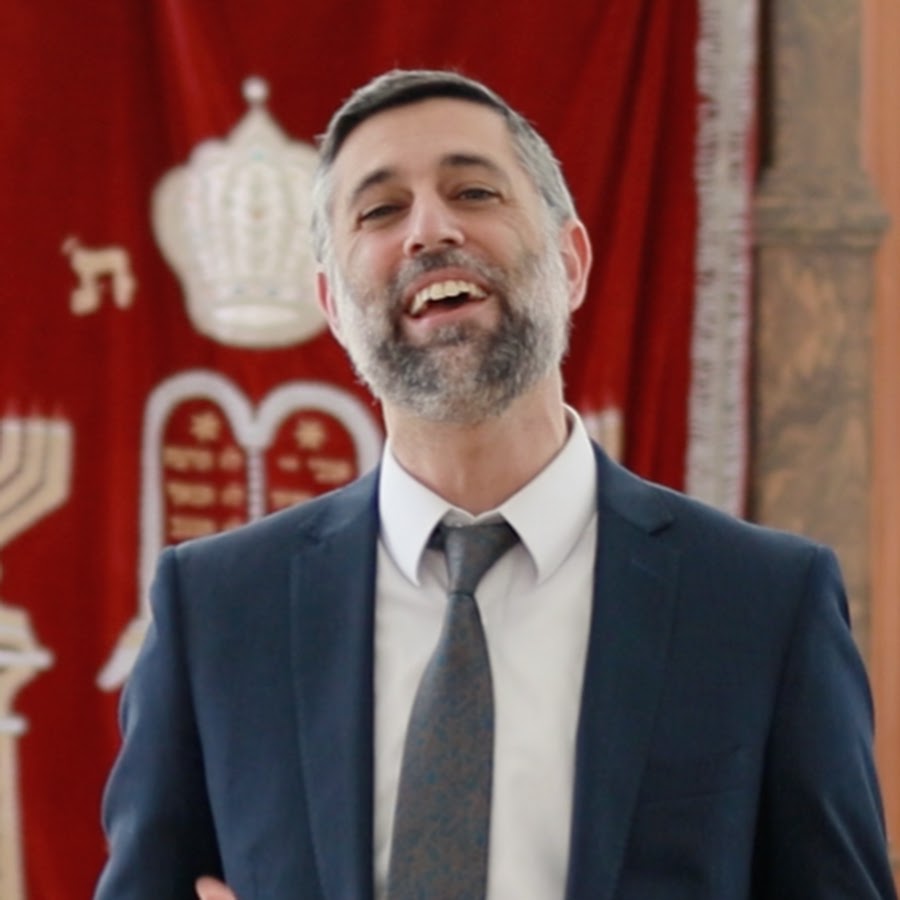
What is the idea of the 'wind' or 'spirit' that Hashem placed in Betzalel that inspired him to wisdom so that he could design the Mishkan-Tabernacle? How does this 'wind' parallel the wind that was present at the very moment of Creation? How does this wind animate and propel forward the creation of the world, and the parallel creation of the Mishkan? How does this power serve to move forward the Moshiach process as it prepares the way for the building of the Beis Hamikdash? How does it ultimately bring us 'back from the dead' and remind us of our true spiritual purpose? Find out in this week's Parsha Podcast.
Comments(0)
Transcript
Auto-generated transcript. Not time-synced to the video.
You're listening to the weekly partial
podcast with Ari Goldwag, recorded with
the Sham's never-ending assistance in
Ramat Beit Shemesh, Israel, 5786 2026.
This week's parsha is parsha Vayakhel
and I'd like to share with you a
thought.
Usually we get I've looked back at what
I've spoken about in previous years.
Hashem, we've been doing this a long
time.
And um
often I've spoken about and I will speak
about again
the concept of Betzalel.
Betzalel was the one, the young man, he
was 13 years old according to Chazal,
who was chosen. He was a grandson of
Chur. Betzalel ben Uri ben Chur
tribe of Yehuda.
And he was chosen to be the one who
would oversee and design
the different parts of the Mishkan, the
sanctuary.
And when the possuk talks about him, it
says "Ruach Hashem b'shem
Betzalel ben Uri ben Chur
l'mateh Yehuda."
He was called out as this name, he was
called out by his name.
Interesting. Doesn't say "b'shem
Betzalel." It says "b'shem"
There's a pause there. Hashem calls out
the name.
And the concept of a name
as we know has to do with essence.
The essence of the thing in the Torah
when Hashem creates the way that he
creates everything is by calling it by
its name and then
that's the essence of it and it comes
into being.
Vayo'mer Elokim "Yehi or." When he said
the word "or"
"Vayehi or." There was light. So so
Hashem creates with a word and the word
denotes the essence of the thing that's
being spoken of.
And so when we speak about Betzalel, we
speak about his name, Hashem calling out
his name, we speak about the essence of
who he is.
But not just that, we speak about where
he comes from.
We speak about his father, his
grandfather, comes from the
tribe of Yehuda.
And there's a lot of beautiful midrashim
here.
We could we could look at a few of them,
but I want to focus in
on a certain aspect, which is in the
continuation of the pasuk. The pasuk
tells us
that Hashem fills him.
Hashem fills up Betzalel.
And uh I don't see it in here, so I'm
just Oh, Vay'male Osei Ruach Elohim.
He is filled with the spirit of God.
B'chochma, b'tvuna, uv'daas.
With wisdom, with intuition, and with
intimate knowledge.
Okay, so
he is able
Right? And this is a very important
essential
concept that we all need to know.
That Betzalel is able how
to accomplish this amazing feat?
As my fortune point out, Jewish people
have been slaves for
100 200 years.
And um
they were not used
to creating things with their hands.
Very fine things with their hands. They
were used to brute labor.
But still,
and then no one ever trained
No one trained in the arts.
But where does it come from? And I like
to think about this as a musician.
Where does the talent come from? Where
does the music come from? Where does the
art come from?
This is the answer. Ruach Elohim.
It's a spirit or wind of God.
And that God fills the person with
chochma, [snorts]
with wisdom,
tvuna,
intuition, and daas,
intimate knowledge.
Now, the midrash says like this.
B'shlosha eleh nivra olam.
These three things, chochma, bina, and
daas.
These three types of wisdom, which we
need to understand what they are.
And we need to understand that they
manifest There's one more thing I want
to say before I continue, and that is
that
what it comes down to is that when a
person, and this is my experience
of creating music, it's my experience of
of art
that it's not that I created it. That's
not how it feels. It feels like
I found it.
I found the music.
I'm looking when I'm creating a song,
I'm looking for the music. I'm looking
for the sound of the music.
So
So, it's it's like I'm searching for the
voice of Hashem or the song of Hashem as
it were.
And Hashem is
I'd like to think filling me with
the the wisdom or the intuition to
create a song.
And here with Bezalel, who is
designing a Mishkan, which
as our sages say, it's it's a place
which encapsulates the entire universe.
It's the place, our universe, where we
connect to Hashem, the creator of the
cosmos.
We connect and we serve Hashem in that
space.
So, it needs to be created
with God's guidance, with Hashem's clear
instruction.
But the way that it works,
it doesn't It's not like Hashem speaks
and says, "Here, Bezalel, put your hand
here." And shows him, per se, a picture
of what it looks like. It's just
intuitive.
It's just he knows what to do. He just
knows what to do.
And I would say
that the person who's inspired is moving
out of the way, moving his own ego out
of the way, his own sense of how things
should be
in deference to
in recognition of
the wisdom, the Ruach Elohim, the the
spirit of Hashem, the wind of Hashem
that's flowing through him.
So, again, the Medrash says the Shloshah
Devarim she Halal Lo Nivra Ha'Olam.
These three things the world was created
with and I I was looking at the words
Ruach Elohim, Hashem blesses him with a
spirit of God and I couldn't help but
think about the second pasuk in
Bereishit that says, "V'Ruach Elohim
Merachefet al Pnei Ha'Mayim." Bereishit
Bara Elohim Et Ha'Shamayim V'Et
Ha'Aretz. Hashem creates the heaven and
the earth and then there's a Ruach
Elohim, the same maybe the same Ruach
Elohim and the Meforshim there explain
that
this was the Mayania. What's a Ruach?
It's a wind. Right? A wind moves things.
Wind blows through things. It It's the
It's that which uh
What's the word? I had it for a moment.
It's that which propels things forward.
The Ruach Elohim is that which propels a
person forward.
Propels creation forward.
It makes creation happen. It's Hashem's
active force.
Active force within reality.
And it's the inspirational force that we
feel when we're interested in doing
something good.
When we're interested in creating
something.
There's a a force that flows through us.
And it's manifest through Chochmah,
Binah, and Da'at, interestingly. That's
what we're talking about here.
And I want to point out that
as it As we just said, it's the creative
force of the world.
And it's the It's that which is present
forming the world. The The Ramchal says
that the soul is the creative force that
forms the body.
Right? It's the It's that which propels
and compels
the
the cells within one's body
to do their thing.
Gives them life. It's the life-giving
force, the propulsion force.
And there's Hokhmah and there's Binah
and there's Da'at. That's one way of
talking about it. There's also Keter.
And the concept of Keter is an important
concept and it has to do with the name.
It has to do with the concept of a name.
Right, the name of the person
is the person at their essence.
It's the person who they are.
It's the life force of the person. It's
Shema'i.
The gematria of the word Shemo, shin mem
vav is 346.
It's the same gematria as the word
makor, which means the source.
The source for all you are is in your
spiritual DNA and it's contained in your
name. Your name is the essence, the the
core essence of your DNA.
>> [sighs]
>> It's also the same
gematria as the word ratzon.
Ratzon is also 346.
And the idea is ratzon means will, means
desire. It means the thing that Think
about it, what is will and desire? It's
that which
propels me forward. It's that wind.
It's the ruach Elohim. It's the mene'a.
It's the that which gives movement. But
how does it express itself? So first it
expresses itself in Hokhmah, Binah and
Da'at. That's how I experience it. There
there's a wisdom, there's an intuition,
there's an applied wisdom, that's what
Da'at is, intimate wisdom I call it or
applied wisdom.
But the idea is that it starts up here,
it starts in the mind.
And then it comes down to the physical
body through the arms, through the legs,
through that which
the the kelim, the vessels through which
the human being expresses and brings out
into the world the idea.
So Hashem creates the world with these
concepts. Shema' Hashem Hokhmah yasad
aretz.
Hashem established the world with
wisdom. Konein shamayim one of
Sham
established the heavens with tuna.
Interesting that the earth which is the
more
the the physical realm is created with
Hakma
and the heavens are created with being a
with intuition but they tight
plus 6 says they're also in Mishlei but
they tight which is the the concept of
dust which is applied wisdom to highness
of coal
the
the deepest depths
were split open.
Right? You come to the Grand Canyon. How
did it get there?
It got there through a Sham's
a Sham's dust.
Mishawaka not so Mishkan
and these three things
were that which was
that which was used in order to create
the Mishkan as well Sham Amalie I say
walk like him.
I filled him a Sham says I filled with
Solomon with a spirit
with a wind of God Hakma but tuna with a
dust
with with knowledge intuition and and
applied wisdom.
Mishawaka
Dwar Malala never never be so Mishkan
and with these three things the base of
English as well was built Sham Amalie
been each other one of whom you might
have told me
in reference
to the one it seems who was
hired by Sham Amalie to build the base
of English it says about him
he was the
daughter of a of a sorry the son
of a woman who was in Almana
a
a widow from the tribe of Naftali by
Amalie Hakma but tuna with a dust and he
was filled with these three aspects of
Hakma being a dust.
Mishawaka
Now
we often hear that the base of English
the holy temple, is going to come down
from heaven
and it's going to land, as it were,
and
it's going to land on the Temple Mount,
on Har HaBayit, and maybe it will
squash the Dome of the Rock, or maybe
the Dome of the Rock will get
incinerated by a ballistic missile,
hopefully soon.
But in any event, we think of it as
something that falls from heaven, which
there are sources that say that.
However, the Rambam says that part of
the job of Mashiach is to actually
build,
physically build the base hamikdash, the
holy temple.
Right?
But here the measure says when Hashem is
going to
stand up, as it were, to build it in the
future,
livno,
it will be built with these three,
shemama, chachma, bina, and da'at,
vetuna ikoynom.
We see with da'at chadam imalu. Posuk
says in in Mishlei, of course written by
HaMelech who built the base
hamikdash,
that it's with wisdom that the house is
built,
with intuition it's established,
and with da'at the rooms are filled. The
rooms are filled with applied wisdom.
Very interesting.
So, but the idea here is that no matter
how the base hamikdash is going to be
built, by whether it's by Hashem
himself, as it were, or or by a human
being who is filled like Betzalel with
this great wisdom of chachma, bina, and
da'at,
either way,
it's going to involve these three
aspects.
And it has to have all these three
aspects.
Broad wisdom, chachma, which we spoke
about previously is related to the
concept of sight, which is big picture.
Bina, which is related to sound, which
is applied in a certain way, it's one
word after another word, that's to do
with hearing.
And thus is how it's brought down
and it actually unfolds.
That's filling up the rooms.
The
Vamalyosai
Kola Kokma Zemi Nai, where did all this
wisdom come from?
Where Where does
Betzalel get his
great talent?
Min Hakadosh Baruchu, comes from
Hakadosh Baruchu.
From the Holy One, as it says in the
Ruach Elohim.
The spirit of God.
Ken Atam Yeshua, Shuba Meosif. We find
this as well
in regards to Joshua.
It says about him, he came from the
tribe of Yosef. Okay, so this is
something this level of Chochma, Bina,
and Daas is something that we find
Betzalel has, he's from Yehuda. We said
earlier in the Medrash, which we didn't
read together, but Medrash said that it
had to do with his familial ancestry.
Had to do with the fact that he was from
Yehuda. Yehuda is a king.
Ata Yeduha Melech.
Right. Yehuda is the king. David
Hamelech comes from Yehuda. Betzalel
comes from Yehuda.
And the king has that ability to lead
others, to guide others, to recognize
the the unique abilities of others in
their service of Hashem.
That's what his job is. That's what a
Jewish king is meant to do.
Okay, so
Betzalel has that.
And Yehoshua had that as well. Yehoshua
was the leader of Klal Yisrael, who led
Am Yisrael into battle, into the land of
Israel, conquering, killing out the
seven nations of Kenaan that were here
in Israel at the time.
And how is he able to do that? Yehoshua
Bin Nun Malei Ruach Chochma.
He was filled
with the spirit of wisdom.
Ken
The the measure also tells us about
another leader of Israel.
It was at a time when the Jewish people
were under the dominion of Moab, the
Moabites. They were oppressing the
Jewish people and Hashem
gave them Othniel Ben Kenaz. Othniel was
the brother of
I think uh
Caleb. Am I right?
I'm not sure.
And he
he came to be Messiah so he came and
became a leader
and he was able to conquer the Moabites
and
bring about I don't know if it was 40 or
80 years of peace.
The verse says, how did he do that?
He had a spirit of Hashem.
What is the concept of the spirit of
Hashem? What is the concept of Elohim?
The concept is the person is moved
moved into action
moved not by his own ego, not by his own
mental ability but it's all moved by a
heavenly spirit by Hashem.
All of the miracles that happened to
Israel
were were done
in the merit of the blessing that Moshe
gave to the nation.
It's very interesting here. The measure
says clearly saying
that Joshua and Othniel Ben Kenaz
so we kind of moved on to a to a new
concept here. It's important to
understand and notice
that the power that they had to
overcome the enemies of Klal Yisrael.
That power
was inspired by not just inspired by but
moved by moved through them
because of Hashem's ruach, because of
Hashem's divine spirit.
And where did it come from? How did it
come? And I'm going to bring it back to
the Mishkan in a moment cuz it's
important to understand how this has to
do with the Mishkan and Betzalel.
It came from the bracha of Moshe
Rabbeinu. Moshe Rabbeinu gave a bracha
to Yehuda ben Yaakov.
What does it say? B'shasham mitzarav
mitzar of tiah.
Yehuda has this power, the power of
leadership, the power to overcome
because Hashem gives him strength and
help to be able to overcome his enemies.
Right? And if we think about it, it's
very interesting.
Whenever the Jewish people would go out
into battle, they would bring along the
Aron Habrit.
They would bring
Excuse me, the ark of the covenant. That
was their power.
That was their spiritual power. As long
as they were being moved
As long as they were being moved by the
ruach Elohim, the godly spirit within
them, they would have success in battle.
Right? As long as we say b'ezrat Hashem
netzach, as long as we're saying that
it's Hashem who's helping us to succeed,
we can succeed.
In fact, the Medrash in the Yeshayahu
perek sameach,
and I spoke about this in the Mashiach
podcast, but it's worth mentioning now,
especially in light of current
circumstances, the Medrash tells us that
Mashiach ben Yosef
has power over the evil Persians.
He's the one who is
motivated
and inspired and moved by the ruach
Elohim. Hashem manifests through
Mashiach ben Yosef. Hashem says to
Mashiach ben Yosef,
"Do with the Persians and with the world
as you wish. All the nations are in your
hands."
That's what the measure says in
Yeshayahu Samech. Check it out.
But,
that is the power.
The power and we talk about Beit
Hamikdash, Beit Hamikdash is built when?
After the battles. After the battles are
won, the war of Gog u'Magog. When is the
When is the second Beit Hamikdash built?
After the battles. We just experienced
Purim. It's after those battles,
Esther's child, Esther's son is the one
who tells the Jewish people build that
Beit Hamikdash.
And it's after the battles. We have to
In order to build a Mishkan,
in order to have that sanctuary, which
is about our relationship with Hashem,
we have to first do battle.
We have to first succeed in battle. And
how do we succeed in battle?
Sh- Shin
Daber Achashverosh al Yehudah she nasah
me ruach hakodesh u'misgaber bah.
Hashem put He gives a ruach hakodesh.
Hashem places within him a holy spirit.
And we find also by by Esther Hamalka
that
she is walking towards batil bash
malchus.
>> [clears throat]
>> And the pasuk says that Esther Hamalka,
she put on her royal garments. And the
Gemara says, "Tilbash malchus means that
she wore the malchus, the royal spirit
of Hashem."
Hashem inspired her and was moving her
towards Achashverosh's inner sanctum.
When we are inspired by moved by the
ruach Elokim,
greatness comes.
Right? Esther's about to walk into her
history by walking into Achashverosh,
saving her people.
Yehudah has that
as well. The Yehuda
that he gets his greatness, he gets his
leadership, he gets the ability to stand
up and David Melech not only does he
fight the wars of Klal Yisrael, he's the
one who lays the foundations of the Beis
Hamikdash.
Right? Where does that power come from?
Comes from the Ruach Hakodesh
that's misgaber by that is strong and
within him.
R' Chanina says Ruach enosh.
Chanina says that's what it says in the
pasuk. There's a spirit that moves the
human being.
Klal Yisrael
Bezalel Mishkan Shakai.
All of the bina, all of the intuition
that he had, this ability that he had to
create this unbelievable structure, this
unbelievable location in space where
Klal Yisrael would connect to the master
of the world, the creator of the
universe.
All that power came of course
from Hashem himself, from Shakai.
And if I'm not mistaken, it says Ruach
Elokim be chochma.
She chochma chochma Torah. Interesting.
Uh this sounds like out of our reach,
right? How do you get How do you get
Ruach Hakodesh? Can we all have Ruach
Hakodesh?
The answer is yes. Anybody can have
Ruach Hakodesh.
The The Sefer Shaar Hakdusha says and
I've mentioned it
a number of times, Shaar Hakdusha says
anybody can have Ruach Hakodesh.
How do you get Ruach Hakodesh? Here it
is, my friends, shaliach chochma Torah.
Bezalel was wise in the wisdom of Torah.
When you are trying to understand
Hashem's will, when that's what you're
going after, when that's what you're
looking for, when that's what you're
pursuing.
If you're a chochma in Torah,
so then you're going to be moved by the
Torah. When you learn a word of Torah,
when you hear a dvar Torah, when you
hear a partial podcast,
it moves you. It
makes you want to change. Makes you want
to be better. Makes you want to be more
aligned with Hashem's will.
It's one of the fact that he was filled
with
intuitive understanding. It refers to
the fact that he knew Halacha.
He knew what it says in the Shulchan
Aruch. This is what a Jew does. This is
how a Jew behaves.
What is applied wisdom? It means the
Gemara. Right? The Gemara has to do with
how do you figure out what is Hashem's
will?
Right? That's what Talmud means. Trying
to understand, trying to plumb the
depths
of Hashem's will.
Hashem says to the Jewish people, "I say
in this world,
so
our experience of Hashem's ruach is
through wisdom. It's through matters of
the mind. You want access to Hashem's
will, you got to study Hashem's will.
You got to
if you want to have ruach, you want
Hashem to be moving through you,
motivating you,
your actions are motivated by Hashem's
will, you got to learn.
You got to have that wisdom. You have to
have your mind has to be
has to be directed.
And we choose that direction.
Of all the the us to love for you.
Which is very interesting.
The Medrash finishes off by saying
something
mysterious.
The Medrash finishes off by saying that
in the future, it's not just going to be
that Hashem
looks at us,
fills us with
this movement, this godly movement, this
godly propulsion
through wisdom. There's going to be
something else. That that Ruach Elohim
is going to to give us life.
>> [snorts]
>> Right, this the came in Ezekiel,
I'm pretty sure
are speaking about the fact that there
was a valley of dry bones.
And the valley of dry bones Hashem says
to Ezekiel, "You see these bones? Can
they come to life?" And he says, "I
don't see how they could come to life."
And Hashem
puts his spirit into them and they
they
flesh goes onto them, sinews, skin, and
they come to life.
And it's a moshel the Ezekiel are a
moshel for the fact that Klal Yisrael
will seem to be spiritually dead
before Mashiach comes. Before the
Messiah arrives, we'll we'll seem to be
so far from Hashem.
If you look and read about how the what
the situation was 100 years ago in the
yeshivas,
the enlightenment movement had really
taken hold and the Jewish people were in
trouble.
But from the the spiritually dead
dry bones,
Hashem
blows his Ruach Elohim
and and
takes away the death
and gives us life.
And that's a spiritual life.
That's what we're talking about here.
There's a wisdom and there's an a
knowledge and understanding, but there's
something that's even more fundamental,
my listeners saying.
And that's life itself.
To be alive, to be spiritually alive.
To to care about ruchniyus, to even
Right, what do we even call
spirituality? The word spirituality is a
spirit. The word ruach means spirit. It
means
that which moves within us and motivates
us to be spiritual. Spirituality means
ruchniyus. The word ruchniyus, which is
spirituality, is from the word ruach,
which means this power of the wind.
The ability of spirituality to move us,
to wake us up, to give us life,
>> [snorts]
>> to take away all the all of the
spiritual death that's around us,
from the cultures around us, from from
the the things that the in the physical
realm that motivate us, whether it's
parnassa, whether it's
other things that we want wealth, we
want
all these kinds of
physical aspects.
Hashem is saying, "I'm going to blow
through you with my wind.
I'm going to blow through you. I'm going
to inspire you. I'm going to make you
want to have a real connection to me.
I'm going to give you real life."
And nasati ruhi bakhem vekhisem, I will
put my wind, my wind, the ruach Elohim,
that same wind that was at berashit,
that was in Genesis, right at the very
beginning.
The whole menia, the whole propulsion of
the world was because of this ruach
Elohim, this spiritual
wind
blowing through the world saying,
"Connect to me."
Hashem was saying, "Connect to me."
That's what the world is about. Connect
to me.
Come back to life.
Create for me a sanctuary, Hashem says
to us. That's
that's the
mission of the hour. Create a sanctuary.
Create a place where Hashem can dwell. I
want to bless you and ask you to bless
me. Hashem should help us to hear this
message, to sense the wind that's
blowing through us. This is the time to
recognize that the wind that's blowing
klal Yisrael, moving us into battle.
That wind is Hashem's wind, and the
success comes because Hashem is helping
us to succeed.
And that's preparing and paving the way
for a Beit Hamikdash. Hashem should help
us to merit to see that Beit Hamikdash
being built.
But, what is the essence of it? The
essence of it all is
should bless us to be able indeed to
experience
the real life that comes when his wind
blows through us. Thank you so much for
listening. A wonderful shabbos.
>> This podcast was made possible [music]
through the gracious donations of
listeners like you. For more podcasts
like this, please visit
www.arigoldwag.com
[music]
or search on iTunes Ari Goldwag.