Preparing video...
0:00 / 0:00
Why Celebrate the Day of Judgment? Rosh Hashanah Reveals the Answer—Rabbi Singer
4,637 views
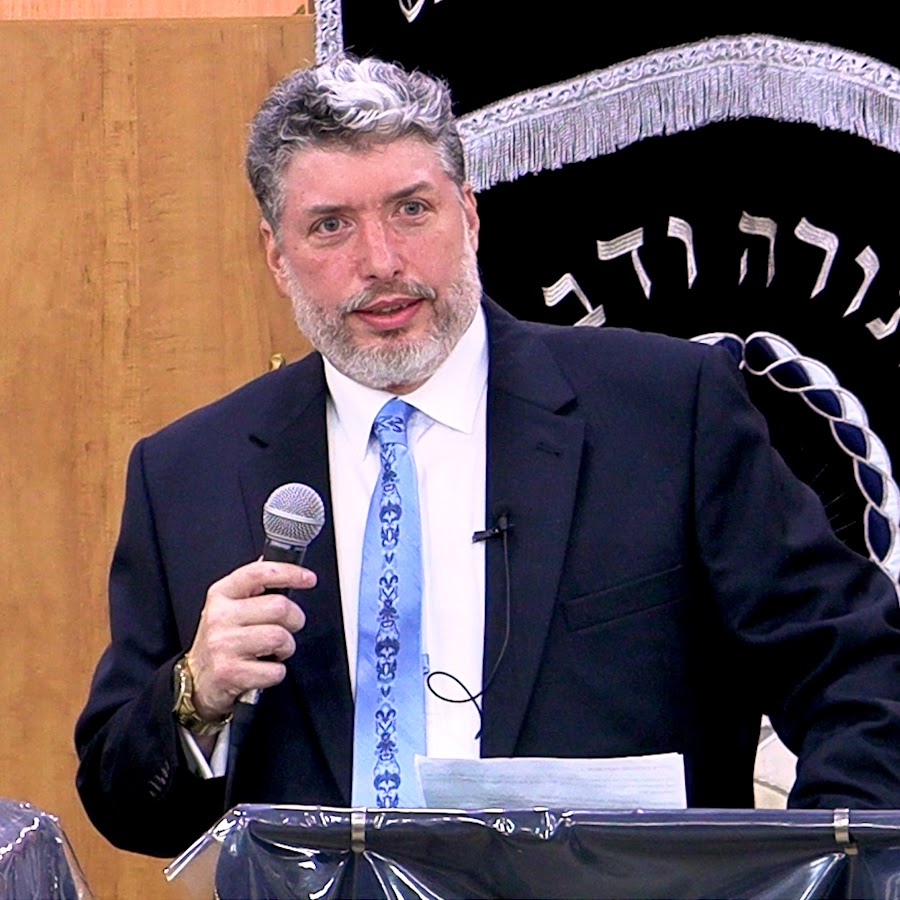
Rabbi Sokol engages in a powerful interview with Rabbi Tovia Singer as he explores the marvel of Rosh Hashana @RabbiAronSokol Help us combat aggressive Jewish evangelism in Israel: https://outreachjudaism.org/partners/ Let’s Get Biblical Study Guide (Volume 1 & 2) https://outreachjudaism.org/shop/lets-get-biblical-expanded-2-volume-study-guide/ https://outreachjudaism.org/ www.videvo.net Music: https://www.purple-planet.com http://www.toviasinger.tv/ #toviasinger #Judaism #Christianity #Messiah
Comments
Transcript
Auto-generated transcript. Not time-synced to the video.
Welcome back to the podcast. My name is
Aaron Solo and you're watching Passion
Inspired. My guest tonight is Rabbi
Tovia Singer. Rabbi Singer, it's an
honor to have you back.
>> It's great to be with you. Thank you.
>> The book of Nehemiah
chapter 8:12
describes a scene where Jews who were
not so Torah observant came to the
temple on Rosh Hashanah and they learned
the Torah and they were crying and they
felt really bad.
And Nehemiah and the priests both told
them not to be sad, to go eat, enjoy,
have a good time on Rosh Hashanah.
So, maybe you can lead us out with just
a thought on Rosh Hashanah about, you
know, many times people they are afraid
of going to show on Rosh Hashanah. So,
maybe you can just lead a message about
what Nehemiah's message was to those
people.
>> Those people made a lot of sense.
I I'm going to say this, but this can't
be too quick.
Rosh Hashanah is transparently obviously
the most complicated
holiday on the calendar. Every other
Jewish holiday is very simple. If I ask
you what what exactly is going on Rosh
Hashanah is not simple to understand.
Moreover, if Rosh Hashanah is a day of
uh well, we crown it God as king, for
sure.
Uh the day which Adam was created, the
day which God is judging
the world. Even the trees the angels are
shaking. Everybody What Why is this a
day that's a festival? Why are we happy
on Rosh Hashanah? Like it should be that
we should be petrified on Rosh Hashanah.
What Now, just know this clearly. It is
a mitzvah from the Torah to rejoice on
Rosh Hashanah and that's what's going on
in Nehemiah chapter 8. It means we are
supposed to celebrate. What are we
celebrating exactly?
Even the fact it's a day of judgment,
then
this should be a day that's actually
terrifying.
And the audience in MI8, and as you
pointed out, these were not very
knowledgeable Jews. We'll call them they
were like Zionists. They some were
aware, but many were not. They didn't
know. And they got scared. And they
started shaking, but they were doing
what was forbidden. That means you're
not allowed to be sad on Rosh Hashanah.
It's a really a festival. You have
You're not allowed to be sad on Rosh
Hashanah. And they did. So right away he
said, "Go home and have a festival."
What are we exactly celebrating? So I
want to share this thought with you. And
this explains why Rosh Hashanah would
come before the Day of Atonement, Yom
Kippur, which doesn't really make sense.
You should first plead your case and
then God renders judgement, right? So
this is explains that part as well,
which is very odd.
So if we can think of Rosh Hashanah
differently,
if we can think of it as a day of
judgement in that God looks back at the
world and sees his creation.
And a married imagine a married couple
that uh contemplates their marriage.
And imagine a woman who looks at her
husband or
they look at each other and they go,
"You know what?
While
if I could do it all over again before
our first date, I would go on on that
date with you and I'd marry you all over
again.
But our marriage needs a little bit of
work.
Let's get to work."
So if God really is in a sense judging
his creation and going, "You know what?
If I could start all over again, I would
create the world all over again, but we
need some work." So we wreck on Rosh
Hashanah with really the central piece
of it is that we're recognizing God as
Melech, as king. There's very little,
almost nothing to do with atonement in
our prayers on Rosh Hashanah, very
little of it. It's all about
remembering, it's about coronating God
as king and blowing the trumpets.
So, Hashem said, "Oh, you're recognizing
me as a king? Okay, our relationship
needs work. There's your 10 days. Start
working on it." So, then we say, "Ah,
this is really This is very moving. So,
this is really a festival of great joy."
Cuz Hashem is saying, "I love you." And
that's why Yom Kippur comes after.
That's the culmination of the 10 days.
And then, what's Sukkot? That's why
Sukkot is an extra happy time cuz since
we're getting married all over again
under the chuppah, in the wedding
canopy, on the Festival of Tabernacles.
That's why it's all breathtaking. But,
Rosh Hashanah needs to be understood in
this filter, or else it is it is very
difficult. We may wind up like the
people in the audience in Nehemiah who
didn't understand and got petrified
became petrified but was supposed to be
happy. What am I happy about? Thank you
so much for having you on.
Good Shabbos and a happy, healthy New
Year. See you at the simcha.
>> If you enjoyed this program,
please like and subscribe.
>> Adonai echad.
>> [music]
[singing]
[music]