Preparing video...
0:00 / 0:00
The Messianic Age Is Before Us—How Does It Unfold?
504 views
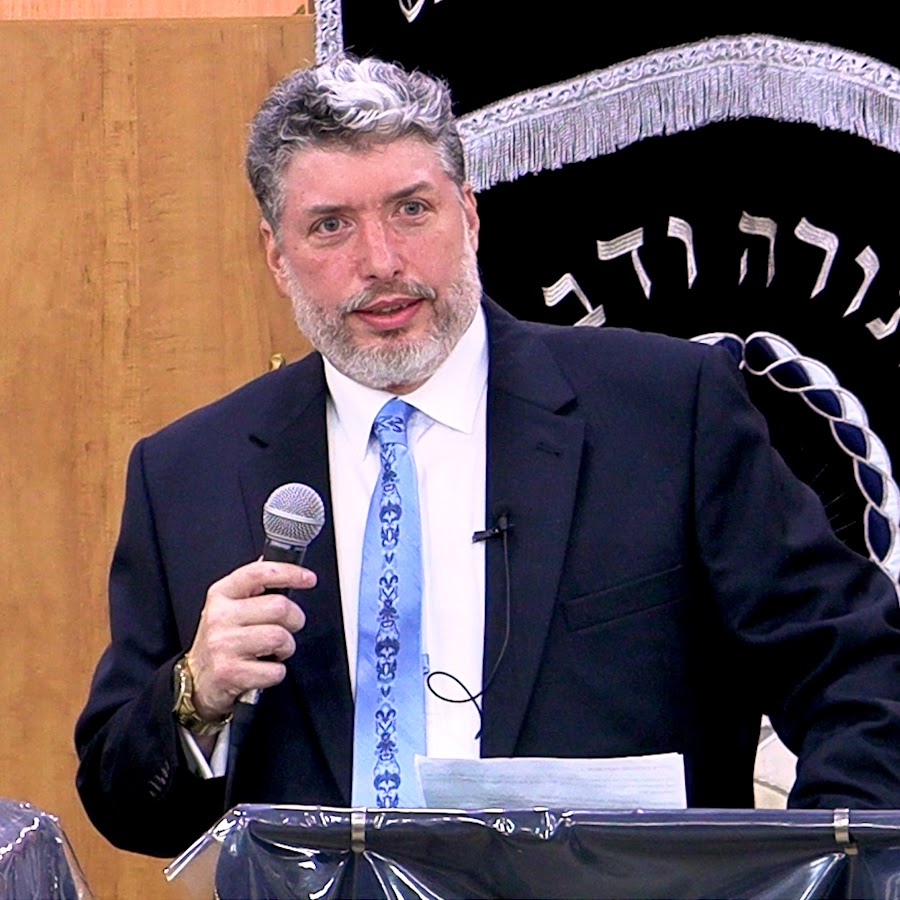
Rabbi Sokol sits down with Rabbi Tovia Singer for a compelling exploration of how the Messianic Age unfolds according to the Hebrew Bible. @RabbiAronSokol Help us combat aggressive Jewish evangelism in Israel: https://outreachjudaism.org/partners/ Let’s Get Biblical Study Guide (Volume 1 & 2) https://outreachjudaism.org/shop/lets-get-biblical-expanded-2-volume-study-guide/ https://outreachjudaism.org/ www.videvo.net Music: https://www.purple-planet.com http://www.toviasinger.tv/ #toviasinger #Judaism #Christianity #Messiah
Comments
Transcript
Auto-generated transcript. Not time-synced to the video.
[music]
Daniel, he miscalculated. Doesn't
matter. He
Rabbi Singer, welcome to the program.
We're right now again in the war of
Goumog, which the redemption is
unfolding. We're living through Ezekiel
36 and 37. And Ezekiel 37 talks about a
time when Judah and Joseph unite. and
maybe you can explain to us how this
actually is going to transpire. I want
to expand that a little bit because this
is a very critical element to religious
Zionism and it really goes to Tanakh
specifically Naveim and this also is the
fundamental shish the entire foundation
of Rav Taktel
who was a giant and he was an Avzden in
Hungary who was fiercely anti-Zionist
but reversed his position and wrote a
very important work before he was
murdered by the Nazis
called Amhabanum
and it's the fundamental theme of Rav
Cooko who was the first chief rabbi
state of Israel everything ties into
um Ezra Nehemia and Ezekiel 36 and 37
and I want to make this easy for the
viewers cuz I think people are so um
overloaded with information and
sometimes I would imagine
people go like what is the thinking that
uh separates
um religious Zionism as expressed by Rav
Tartel
and Ravk Cook as opposed to other views
that not only were seen in the late uh
19th century but certainly early 20th
century. What is what does it come down
to at the de Gula in the state of
Israel? If I expand it that way, I think
it'll make it very easy for our viewers
to understand what is happening on a
granular level. There are two different
models that are in view. How does the
messianic age unfold? There is one view
that people are very familiar with and
that is that Torah grows in eras outside
of the land of Israel and then the
nation that's filled with Torah from
different parts of the world from New
York this tremendous terra in New York
and from Chicago and LA and London and
Gates and so on and then Messiah comes
and these Torah giants come into the
land of Israel and Messiah the messianic
age unfolds.
The issue with that model is it's not
compatible at all. And this is the point
of these giants and other giants as
well.
people no less than the
than the nitiv I mean giants was they
noticed something that was very very
striking and that is exactly the
opposite model of what we find in Ezra
Nehemia and in the book of Ezekiel
you the viewer have no idea how
important this is because first of all
Ezra is really one book and it really
was the church that divided them and I'm
not going to talk about why the church
would separate them and why it would go
along with it. It's not germaine at all.
But what is very important is that the
kuim and is very unique because in the
what's called the writings
is a historical narrative of the return
of the Jewish people to build the second
temple. And why that's germanine is on
multiple levels because we have the
talumar tell us openly
that the messianic age or the
information necessary to know when the
end would be is found in the kuim
famously the gumar and migill and
therefore no tarum was made for it
because the talmmet itself the garra
itself tells us that msiah could have
come during that time it's a very
important thing Because if the Gmorra is
saying in the Gumar in Sait that Messiah
could have come during the days of Ezra
the context of the Talmud is why do we
have the real Nak I know today we call
the latter prophets like Isaiah Jeremiah
Ezekiel and the 12 that's not the way
Khazal viewed it that means the sages of
blessed Mary when they said the latter
prophets they really talking
and Malachi and the Gumar wants to know
why did we need prophets
for the early Persian period. So the
Gmorra says very specifically that
Messiah could have come be made Ezra. So
no this is not this is all like the
foundation for this is so transparent
it's like a rock and the garra further
tells us that the reason it did not
happen why didn't it happen is because
Jews because the Jews were and the marsh
explains explicitly because very few
Jews came from above alter we know the
number 42360
Ezra chapter two that's very very clear.
So just understand that these giants
were looking at Ezra/hemia
and they were looking at so in Ezra the
overarching issue something that we you
and I have spoken about is that the Jews
who came to the land of Israel to build
the second temple were largely not
religious. They were very committed to
the land. They had a promise from Cyrus.
They had a prophecy from
Isaiah/Jeremiah.
And they came. But no nephesh benef. And
we are told exlessly Ezim goes out of
its way in both of these works to tell
us that a very significant number of
these Jews were not observant.
And you have to answer a question. And
for you my holy brothers and sisters
whenever you're studying the nimsu if
you come upon information
that you does while gripping and
intriguing but why is this relevant to
me it's very it's vital to stop and
ponder this because it cannot be there.
This is like the fundamental laws of
thermodynamics. is so fundamental that
if you don't understand why it's there,
how it is relevant to you, I mean you
just don't understand it. So what's
happening is we are told clearly that we
I mean that the Jews weren't keeping
Shabas. We find that in
they were buying and selling on Shabas
and they're being told why didn't you
listen. It's also striking to notice
that in Ezra Nehemium,
they weren't punished very severely when
they were taking non-Jewish women. And
we have a list of a whole more than a
hundred such men in Ezra chapter 10 as a
response to intermarriage was nothing
like what happened with the Midianite
women in the desert. He put ashes on his
head. He mourned for it. He said, "Get
rid of these women with their children."
They were able to bring this is
unbelievable. They're able to bring a
carbon which is mindblowing. So this is
very critical that in the order that we
have in Ezra a people come back to the
land not all they're led by great people
in that case Yahua Ben Sodak who's the
nephew of Ezra and Zurubl who was from
the house of David they were giants but
the people no one knows for sure what
percentage was what but
the the these holy the author of wants
you know there were a lot of irreligious
Jews there and one other point my holy
brothers and sisters I want to uh
italicize
this is not the way Naveim spoke meaning
in Isaiah as an example Jeremiah as an
example you have very little I there's
hardly any it would be very hard to find
anywhere where the Jews are criticized
for not keeping chabas so I want you to
at how outrageous this is and the kind
you should now be on the floor. Those of
you are familiar with NIM Isaiah, it
would be very hard for you to come up
with an example. It wouldn't be
impossible, but you would really have to
search the prophets. Meaning,
let's just take the 15 from Isaiah all
the way to Malachi. You would be very
hardressed to find where the Jews are
confronted and not keeping Shabas or
marrying non-Jewish women. You would be
and is all over this. So that should
explode in your face. This is like Shi
pulling at you. What is happening here?
So that means this is all Msiah. Okay.
And then what happens following that is
there's a there's a lot of turus in Ezra
but ultimately there's a spiritual
revolution but the second temple was a
difficult time for sure but now we go to
Ezekiel 36 and 37 we find the exact same
pattern so I want to just view this
through the redemption process. What is
the order that we find in Ezekiel 36 and
I beg you the viewer to read the 36th
chapter of Ezekiel? It's very easy to
understand. I'm going to say you really
don't need commentaries. I mean the
barbell will help you but you can read
right through it. It's not like Isaiah
where you have it. There are chapters in
Isaiah where you just don't even know
what you're reading or what he's talking
about. That is not the case here. So
don't be afraid. And those of you who
got scared in chapter 1 with the divine
chariot, don't be afraid. These chapters
are very clear. What I want to show you
with Ezekiel 36, and this is repeated
over in 37, is first the nation is
restored. Take a look at Ezekiel 36:2
for example. I will take you out of the
nations. I will gather from all the
countries and bring you back to your own
land. There's no way you cannot
understand what exactly is in view
there. Right? Okay. Incidentally, for
those who don't know, big full
disclosure,
Ezekiel 34 to 48 is all Messiah. All
Messiah. That's just so you know. Okay.
Sweet children from who are born from
above. Look at the next verse. Then the
next verse and this is the whole
foundation of Ravtel and Rafuk. They all
pointing to Ezra and to Ezekiel. Verse
25 then says I will sprinkle on them
clean water on you. You'll be clean and
I'll cleanse you from all the impurities
from all your idols. So we see Hashem's
gathering and then healing them in the
land. And that's the same thing. God is
gathering in the lost tribes. You talk
about Ephraim and and Yehuda on 26 they
become one. That's the restoration. And
then later on we have the Messiah in
verse 24 and 25. Ezekiel 37 is the same
deal. And look at 26 27 28. That's the
building of the bases and everybody
knows the truth. So the gathering in I'm
not going to pretend to tell you how is
Shvet Ruain going to be identified. I
don't have access to that information
but we are promised by the prophets of
Israel that this will happen and we are
witnessing it now. So this does not
require a lot of faith. 150 years ago in
vill no one figured out how what was he
talking about now we see this clearly.
Let's continue. So the putting a new
spirit is after the gathering and and
look at 27. I'll put my spirit in you
and you'll follow my decrees and my
laws. And following this, God takes a
heart of stone and gives you a heart of
flesh. That happens in Israel. And
tragically, the Christian Bible
misappropriates this. And you'll keep my
decrees and my laws. Therefore, what I
want to do is something we have never
done before because we have viewed the
messianic age and we are part of it. is
happening now through a uh in different
lenses. We've talked about the the war
between Persia and the land of and
Israel. We talked about Persia will not
be able to stop. We talked about so
we're not going to exhaust that. Ezekiel
38:4
he God's going to drag Persia and its
yoyam and its proxies with them. They
Iran just so you who are nervous Iran is
going to save us from ourselves in a
sense and you don't I mean they're like
all they have to do is stay out leave
alone the streets of Hamuz and get rid
of the rich man they're not and they're
getting pounded to death we're going but
we're not going to go there because
we've done that in previous shows what's
fundamental to everything is that the
return of the Jewish people in the
messianic age is first a return and in
the land will be Torah and therefore
something you said to me which is a
theme and that is that the grandchildren
of great leaders of Clausro they will
look if you I remember I think a last
show told me about R was
uh grandson who told you if he would
have known how much ty there is in the
land of Israel his view might have been
very very different so that's the theme
is you're right now in New York and
every day you can't wait to see Gracie
Mansion's doors open up with your hero
Dani coming out. It's Hashem is pushing
the Jews out coming here to the land of
Israel and here in the land of Israel
there's so much tighter and God is
sprinkling the water and he's turning
the heart of stone into heart of flesh.
Heart of flesh means I just want to
explain that because this is a theme
that comes up in Ezekiel 11 and 36. same
words.
The theme behind that is listen very
carefully.
The idea is that essentially that misses
really all made for the land of Israel.
That's what's very critical and it's all
based on this. Now of course tuk I don't
need to tell you all hell like Ramban
did that living in a mid but no one
disagrees that there are mitz you can
perform here in the land of Israel that
you can't perform perform in far away
you know it was a big shock to you
that's the way it is but the key for
them is the order of events that happen
first they come in that's what Raf Cook
figured out these men were not inventing
their own religion these men were in the
case of Rafael a blessed memory Hashem
should avenge his blood he turned
changed his view 180 degrees but this is
the foundation not just living in the
land of Israel is a mis but in fact the
restoration comes first and then once
they're in Israel in the land of Israel
then God sprinkles the water and having
a heart of flesh means that you have
full this is very critical and a heart
of stone which is the heart that one has
in g is one where you're basically a
slave only here are you free to honor
Hashem properly when Ezekiel says that
these two sticks become one
>> does that mean that everybody becomes
the same or what identity do the tribes
have if we're all one
>> okay it means that we're of one purpose
like look at um Ezra chapter 3 right how
does it end it begins with the nation as
with one heart as one man united. It
does not mean that there will not be a
division of tribes. In fact, this may
surprise many of the viewers, the tribes
of where they live, what plot of land
they're given is reorted in the
messianic age. We're not going there
now, but I encourage you, the viewer, to
look at Ezekiel 46, 47, and 48. So the
tribe and the priests will have a
special role and the family at Sodok
because they're very famous they'll give
a special role. They also are given land
incidentally which is was not prior to
the messianic age. So it's not that
somehow we assimilate our ecclesiastical
role. The kahana will have a role. The
lv will have a role. It's all there. I
beg every person should start with
Ezekiel 34 and move on. Every yeshiva
has to do this now. But it does not mean
to diffuse. It only means that the unity
of the Jewish people is vital. And if
every person who went to Shiva knows the
second temple was destroyed because of
basil sat. Those of you who have a
prefuncter knowledge of Jewish history
and you and I, we spoke last time I last
week that the entire war with Rome from
66 to 70 there was a civil war. So there
has to be a unity of the people and it
is true that what unifies our nation is
in fact the anti-semitism which doesn't
really make sense and that's the view of
Tanakh. It's always if you look at the
it's always that the nations of the
world will pursue you but nevertheless
at the end you're going to do chuva the
end of Leviticus 26 Deuteronomy 28 is
very very hard but ultimately it
resolves itself in 29-30
but ultimately it's the non-Jews will
give you no peace in the land will you
will go Deuteronomy 28 verse uh I think
is it's between uh I think is 60 through
65.
>> So let's go back to Rabbi Tel. You had
mentioned Rabbi Tel um he had what
seemed like a novel theory because until
Rav and maybe maybe wasn't so novel but
for the world that he lived in to tell
people that you know the perfect
redemption meaning King David uh came
from Rus who was a convert who Mahung
and Kilon those two boys intermarried
and had they not intermarried we would
never have King David. Meaning if Lot's
wife wouldn't have looked back and
turned into a pillar of salt, we
wouldn't have Moab and Ammon. Meaning a
lot of things in Judaism are
specifically designed like the book of
Roose to show us precisely that King
David does come from a convert. And this
unification of
the world is somewhat, you know, there's
the world unifying, there's the
Israelites unifying, and then there's
the tribes unifying. So maybe you could
speak about that.
>> When it comes to the redemption of the
children of Israel, it is not a a fellow
learning in Panovich and a girl who's
who's the best girl in no class in Basu.
Let's talk about the most embarrassing
chapter
definitely in the book of Genesis in the
safer bacius. He's chapter 38.
That's pretty embarrassing. Well, you
didn't
that story. You can't even believe what
you're reading until you get to the end
of the chapter. You have to hang on.
Then you realize what's happened is that
uh Tamar the she's waiting to die. She
does not embarrass Yehuda who
impregnated her and Yehuda confesses at
all. That's really
that's really a rather uncomfortable ch
like who would have invented that? You
know there's a criteria if you know that
the text is if if an event recorded in
ancient Americal
a major criteria is called the criteria
of embarrassment.
And there are many scholars often say
that the Torah is so embarrassing that
no one would have invented it had to be
true. Like who would have come up with
that story? Like who would have invented
that? It has to be historical. But the
key is in every point with D with David
is like I mean this doesn't even require
explanation. So in every case where
there's a uh the redemption is what you
do not expect and one thing this will
surprise you and fits seamlessly into
our conversation and that is that when
we find in Tanakh where I have to be
very careful when you listen to me when
prophets who were not receiving nva at
the moment but were asked a question
about redemption and made a mistake and
the novi records it.
Daniel chapter 9, Daniel misread
two passages in Jeremiah. I'm not going
into it now, but you'll look it up on
your own time. Daniel Jeremiah 25:12
was conflated with 29:10. It's two
different 70-year periods that overlap
by 50 years. We're not going to talk.
The point is he made a mistake. He was
one of the greatest people that ever
lived. and I pray to I should merit to
greet him in the in the resurrection of
the dead. And the angel Gabriel very
sweetly explains to him his mistake
after he prayed to God to uh to not uh
prevent the Jews to return. But why we
have to know that a holy person like
Daniel who was just using the best
that's why there's a big mistake out
there and that is if someone made a
mistake in calculation therefore they're
wrong and they're defective as giants.
I I'm saying this for a reason that
people think that how could somebody who
was a great Torah scholar be wrong and
if he's wrong then does that diminish
from him? Do you know I want to say
this? We've never said this on air and
we're going to do it now for a moment.
Do you know that when Daniel
miscalculated, meaning he conflated two
prophecies, which is easy to do, do you
know that Hashem
sent Gabriel to tell him to correct him,
which he does, but you know Daniel
soarses into a prayer. It's one of the
great prayers in Tanakh. Daniel thought
that the return of the building of the
second temple was was delayed seven
times the sin. So instead of a 70-year
exile is all you have to know. Leviticus
26:18, he applied it and thought it
would be a 490 year exile. That's all
you need to know. I'm not going more on
that. You want, you can look up other
lectures I do in Daniel 9. The key is
that Hashem was enjoying Daniel who had
made a mistake. This is why you have to
rethink that this rabbi can't be wrong.
If you say that and equate that, you are
going against the Nvi. You know what
Hashem does? I just need to say this cuz
you need to fall in love. It's about
time. No, Hashem holds back the angels.
I mean the angels already launched to go
to tell Daniel to correct him. But
Hashem and you look up all on this.
Hashem said, "Wait, let him finish his
prayer. I want to hear the whole thing."
And that's why Gabriel says at the
beginning of your prayer, I was already
given this message to tell you. And
because you are beloved Hashem. So sweet
children who are born from above not
from below. The
Daniel was aim
and hashem loving him. He miscalculated.
Doesn't matter. He loved him. So this is
a false equation. Same thing with Natan.
When he told David do to build the B
mikdash, she wasn't speak. That's all.
So that that solves for everything. And
there this is very deep and I'm glad
that you're pointing me in this
direction because you need to because
this is a blocker and that is this is
dash terra it's more dy than Daniel more
dyra than than
this can't be and why is the ni saying
this why is this na to me that Daniel
miscalculated
the the time when they would return well
mashia could have come the reason is for
our purpose today this for everything.
It's really very very magnificent.
>> Last time we spoke you uh the RV had
mentioned that
had and I think we we we touched on in
the beginning of the interview that had
the Jewish people in the times of the
destruction of the of the second and
first temple had had unity particularly
in the second temple then we probably
could have defeated the Romans. And I
kind of think that that's what's
happening today. That and I think you've
touched on this before that had the
Jewish people had unity, we could
assemble the Jewish people in Israel, we
can develop technologies for people to
move here quickly and easily. We can all
these things just require the will of
the people and how that like you know
when the Jews became together.
Unfortunately, as you mentioned just now
in the show that the war has always
brought and anti-semitism has always
brought unity. Uh unfortunately after
October 7th, there was a tremendous
unity in the Jewish people. Uh and uh we
we somehow uh I don't want to speak
badly about the Jewish people. How do we
retain that? How do we how do we hold on
to that
>> that idea that secular historians hold?
We talked about Barry Shrauss's epic
work on this his I want to make clear I
don't want people to misunderstand the
Roman Empire in the first century was
the golden age of the Roman Empire. The
Roman Empire was about 3,000 miles east
and west. So when we you're going to
hear Gurav and I speak about what the
Jews could have done if we would have
been unified
the the this is a very strong view and
this man Barry Strauss is a giant I mean
a giant as a historian
um what they mean is that the Roman
Empire as I said about 3,000 east to
west but how their their standing army
is very impressive about 300,000 th000
we have a lot of a lot of sources for
about 300,000 men but they were so
thinly stretched that if the Jews would
have been unified so he feels most
likely is that the Roman Empire would
have been forced to just make
concessions the temple would have stood
that is something that's could they have
actually defeated the empire so that
could have been but at least the empire
would have to pull back from the whole
deal in fact when
will war with the empire 60 years later
they will the empire was losing they had
to bring in their best best general from
Britain in order to hold back to Bakuro
when Jews are unified
there's nothing to stop them if they're
in Burough Park then up the non-Jews
will come cross McDonald Avenue God help
those yeshiva boys but once they're
unified in the land of Israel there's
something very unique about them we're
the opposite of the Italians
>> [laughter]
>> Italians could hit you in the nose in
Flatbush, but you put them in the army,
it's a different story. So, this is a
very critical point.
Who was a and this is his topic. He's in
his lane, meaning he's a historian of
military. I don't even know he wrote
probably wrote more than 40 books in his
life. So, that's critical is the unity
of the Jewish people. And I beg you, the
viewer, please,
Ezra is easy to read. It can't be any
easier. Ezra 3:1, just read it. It tells
us we came to the land of Israel to this
project as one man with one heart. Can't
have anything better than that with
these people who are all very very
religious. It's very transparent that
Nhemia and Ezra want us to know that
they're deeply problematic as I said and
just so you know you have to solve a
problem and that is Isaiah chapter one
which we're going to read in the haftur
before tishov I mean it's coming right
up if you read it if you can hang on to
that ha it's tough but what are the what
are we told there God is saying when you
come into the temple you trample my
course and you bring me I don't want it.
I won't listen to you. I don't want your
holiday. I don't. It's disgusting to me.
Why? Because you're not treating each
other properly. There's no social
justice. Okay. And verse 27 of chapter
1, just so you know, it's all in
context, is that only that Jerusalem
will ultimately be saved, Zion will be
redeemed through uh uh justice and
repentance. Just clear. So look at that.
And contrast that with where the whole
book is going on with problems problems
problems of people who are shabas and
you don't find that in the I know it's a
big statement for me to make it would be
very hard for you to find anywhere in
the corpus of the prophets with the you
by the way it's not impossible you could
find in Jeremiah where the Jews are
warned by Jeremiah that they're not
allowed to carry from a
you do have that. That's Jeremiah 17. I
don't want to say it never happens, but
it is rare. Okay. So, I know those of
you who are learning, you will be able
to find, but as is loaded. It's it's as
though I want to say this, this is
critical. That's the point. like when
that the Jews were not observant on
issues of shabas and issues of marrying
out of the faith. It was a rampid
problem in the naveim. It's very hard to
find. Most of them are slanted all
they're all slanted in social justice
the issue and if you're not there's no
social justice I don't want the rest of
it. And that's why my friends that's why
Isaiah chapter 1 is so hard to read.
You're going to hear it in the tune of a
it's a it's a lament. It's so powerful.
Even you know the the the donkey, the ox
and the donkey are loyal to their
master. But a peop and God speaks of the
Jews in third person like I don't want
to talk to you. It's really horrible.
It's terrible. He said I can't even talk
to you in the you know in second person.
He talks about the Jews in third person
this nation.
So that's what it is. So think about the
difference between the two and we should
be to see the basically
in our time. If you enjoyed this
program,
please like and subscribe.
[singing]
[music]
[singing]
>> [singing]