Preparing video...
0:00 / 0:00
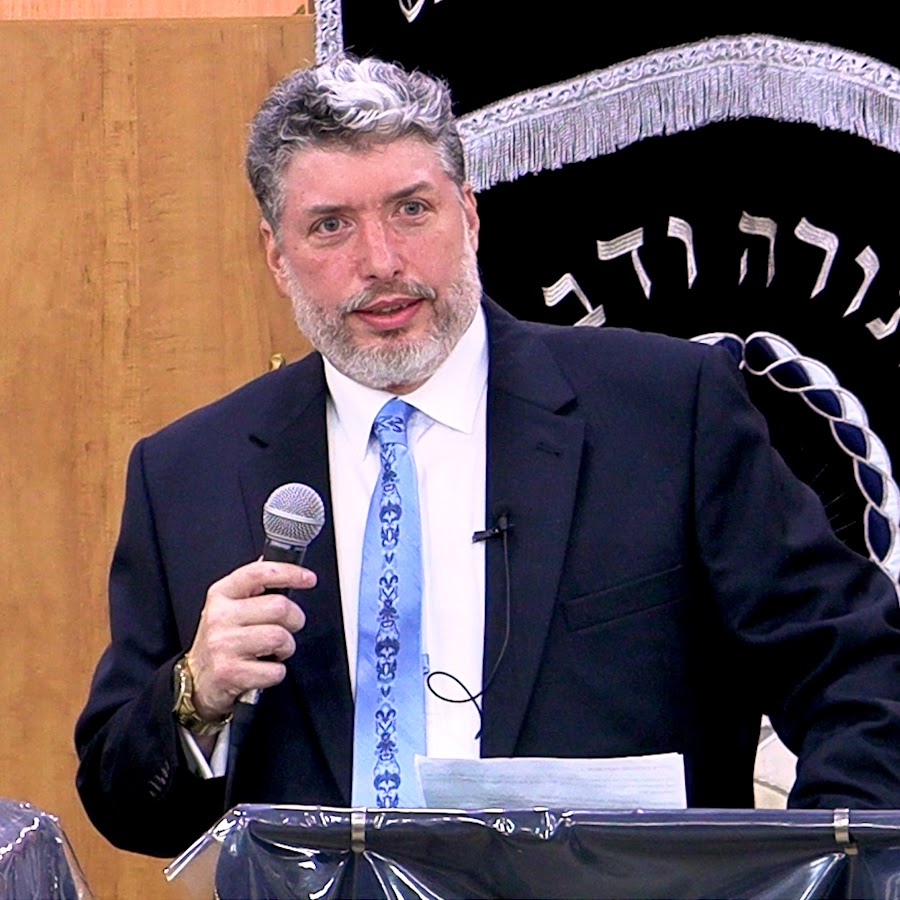
Powerful Lecture! Isaiah 38—Hezekiah’s Healing Reveals the Mystery of Redemption
6,835 views
Let’s Get Biblical Study Guide (Volume 1 & 2) https://outreachjudaism.org/shop/lets-get-biblical-expanded-2-volume-study-guide/ Help us combat aggressive evangelization in Israel: https://outreachjudaism.org/partners/ https://outreachjudaism.org/ http://www.toviasinger.tv/ www.videvo.net Music: https://www.purple-planet.com #RabbiToviaSinger #matthew #Messiah #jewishgospel Analyzing the prophets Hezekiah and Assyria The king's illness A divine response The Talmudic perspective Modern applications
Chapters
Categories:Religious Education
Comments
Transcript
Auto-generated transcript. Not time-synced to the video.
How many problems do we have in this
chapter? The problems are so astounding
that it's hard to comprehend it. What
did this man do wrong?
More astounding when Isaiah left his
presence and is now walking through the
palace.
What does Hezekiah say to God?
You think he repented. He doesn't do any
of that.
meant it was shame she shayan he didn't
want to get married and have children
because he understood what would come
from this and in fact we know very well
what exactly came from it who does get
married and his child Mina is the most
wicked king of all even though they knew
that Zachchariah says that the Ezekiel
says that the Jews have to be back in
the land of Israel before the Messiah
comes nations then come to attack Israel
over the stats of Islam and the Jews
defeat them. David the Jews have to be
near so a large number with an army
but they said this cannot be it.
This is a an inopportune time
because we are immediately before the
yim
particularly
before
and kipper.
This is really an opportune time to
explore one of the most fascinating
and perplexing chapters in all of
Tanakh.
I was interviewed last week
and as we were going through Tanakh,
which I typically do in our interviews,
exploring the time we are in now,
we are now in a shas.
I know some of you sitting here tonight
and I'm grateful to consider you
friends. There are some faces here that
I don't recognize
and nevertheless
I feel a certain sense of confidence
that all of us have wondered why are we
of all people
not our great grandparents
not Ela Ela Za
not a saba
why are we za
Why are we do we merit to live Bishas
Msiah in a time of the redemption which
is unfolding now? It's not it's going to
unfold. It's happening now in real time.
It is according to God's eternal purpose
and his plan that we are here today. The
generation that mymonities pointed to
that are sages of blessed memory
declared that only we would understand,
grasp the nuinous passages that told of
a messianic age that all our
grandparents prayed about, longed for,
hoped for, and we are now bearing
witness to it.
As my manity says to his contemporaries,
he encouraged them to not speculate very
much upon messianic passages. Of course,
we know what will happen when the
Messiah comes. We have Isaiah 11. We
have Ezekiel 37. Very clear, numerous
passages that tell us what will occur in
the messianic age. However, there are
many passages that no one could have
imagined
in the ancient world in the medieval
world that the Jewish people would be
here in the land of Israel
and Persia, a benevolent nation, a
benevolent empire towards the Jewish
people with a few exceptions
that they would be our chief adversary
at the end of days. Ezekiel 38 verse5.
After all,
Persia
produced a king that God called my
anointed, my Messiah, Isaiah 45:1, who
had given the command of the Jews to
rebuild the temple, to rebuild
Jerusalem. How is this same nation going
to be the one that will go to war
against the land of Israel, against the
people of Israel at the end of days?
How would our prophets be able to even
what information do they have in front
of them that they possibly could
extrapolated from to predict that Persia
will be your arch enemy at the end of
days? And the nations will see this.
They will see the glory of God and they
will know that Hashem is Lord. That will
be the trigger for Chuva.
They're not even Arabs. Meaning whereas
our forefathers
and
had a tedious relationship, had a
tenuous relationship, a problematic
relationship which does solve itself at
the end. But
with the Arab world, it was a little
complicated. Moreover, the Arab lands
that are around us, they have border
problems with us. They have some sort of
complaint. They would rather have the
golden heights than us. For us, it's
shave man. It's part of the land of
Israel. But at least I understand what
their issue is, why they're angry with
us. At least I understand it. At least I
can. There are points of contact which
make it but
Persia.
We are now in Israel.
Iran is nearly a thousand miles east of
where we are right now. Roughly the
difference between New York and St.
Louis. An enormous distance.
The Talmud Bali,
the largest piece of religious
literature from the ancient world was
written, compiled and edited in the
early 6th century under which empire?
The Persian Empire known as the Cisanian
Empire which emerges in 224. By the
early 500s they were in charge and life
was good in southern Mesopotamia in
Beloved in Pmpadisa where the Talmud was
edited and placed in an order that we
today have in our hands. It was good.
It's according to God's plan
and the prophets make it clear.
I have
when I do interviews so very often an
interview will ask me a question.
Why is the safer that we are going to
explore tonight?
Why is it so difficult?
And it is
when I when I was in yeshiva,
I was fairly confident that there were
many young men
who were much smarter than me. And I'm
not being self-deprecating. I I really
was sure that they were much smarter
than me.
And yet
many have told me that when they went
through Tanakh,
they went through the Torah. We all are
familiar with that. They went through
what is called the Nim.
That is a misnomer. It's a 600y old
mistake to classified books like
Joshua, Judges, Samuel, and Kings as the
early prophets. It's a 600year-old
mistake.
It's not accurate. After all, there are
many things that are in Isaiah that are
way before what we find in the book of
Kings.
However, the these early prophets, what
we call Nvim,
we're stuck with the name, it happens,
are fairly easy to follow in that they
they are written in a way that uses that
marshals a a historical narrative. You
can read the book of Joshua, follow it
through. You'll have questions, but it's
fairly easy to grasp what is it going
on. The stories are gripping. They're
powerful. And generally speaking,
there's very little if any poetry. There
are there are passages there are chap
that contain poetry in the book of Jud.
We have it, but it's rare. Those are the
historical Nim
and they're fairly easy. I I I retract
that. They're easy to understand what
you're reading. It's easy to understand
what you're reading.
However, the last 15,
the last 15 books of the Nvim, which we
call the Nim,
they are really what are called in
scholarship the oracular prophets.
Meaning they were people who walked
around and gave oracles,
wisdom.
Usually
they're very difficult and Yeshuanovi
is extremely difficult. And there are
many of you sitting here tonight who
have gone on this journey with me
through the book of Isaiah or watched
this on television or YouTube and have
followed the earlier chapters of the
book of Isaiah and it is written almost
all using poetry with almost no
historical narrative. Moreover, the book
of Isaiah is completely out of
chronological order. I want to make sure
you understand what I just said. I do
not mean the principle which every one
of you is familiar with that in the
Torah there isn't necessarily a direct
chronological order and you may have
chapters that are out of order. This is
true. We can think of a hundred examples
of this. However, when this statement is
made that the terror doesn't have a
precise order, it does not mean the
thing is completely out of order. Quite
the contrary, it really does follow a
chronological order. I'll take a safer
in Tanakh and I feel a certain amount of
confidence
that you're more familiar with the book
of Genesis with safer than any other
safer inh. I'm just going to assume that
we're more familiar with the events that
follow throughout the book of Genesis,
possibly after there's good reason for
it. We have the history of the world,
the creation, the the the flood, the
story of Abraham, the progenitor of the
Jewish people, and the forming of a
Jewish nation,
a Jewish family. We're very familiar
with the book of Genesis, and it follows
a chronological order. does it always
well in chapter two of Genesis. The
chapter sort of rewinds the tape and
revisits exactly what happened when Adam
was created. But it's transparent that
chapter 2 of Genesis is just zooming in
and what was covered from Genesis
chapter 26 forward. It's all in
chronological order. Basically,
you must know kind you must understand
my holy brothers and sisters
that it's not that the book of Isaiah
it's not that saiyahu
is not necessarily in precise order or
half of it is out of chronological
order. There is not even a shemoth.
There's not even a hint of order. It's
all over the place. What guides the book
of Isaiah
in its chapters
is completely theological.
Chapter one did not happen first at all.
It happens to be chapter 6 which it can
be said I am certain you are more
familiar with that chapter
than any other chapter in Isaiah. It's
the kaduca kadesh kadesh. That was
really the first chapter of the book of
Isaiah. Why is chapter 6 not chapter 1
beyond the scope of this thing. There's
no hint. There's nothing. It's very very
important.
Isaiah is out of order and the vast
majority of it means more than 90% of it
is poetry and it's not easy. So this
host asked me a question. Why is it so
hard? Because friends of mine
start, they finish with Kings, they go
to Isaiah, and it's I've heard this so
many times in my life where they simply
say after a few chapters, I simply close
the book and walk away.
It's too it's impossible to penetrate.
It's impossible to understand.
Why is this?
This fellow who asked me a question.
He's a big who lives here in he's very
devoted to the land of Israel, Judea and
Samaria. He asked me this question in an
interview last week. So I said to him
and I thought he would drop the mic when
I said it to him. As it turns out
is
it is exactly the opposite. And I
submitted to him a reason why one would
easily say
that the book of Isaiah,
this is rather counterintuitive,
that the book of Isaiah is much easier
to understand than the early historical
prophets.
I I know that right now many of you
sitting here tonight listening to my
voice
are confused.
This must be this Rabbi Singer must be
engaging in some sort of hyperbole.
Maybe this is some sort of
way that he teaches to make a point
that's weird. Well, it's not the case at
all. And I'm fairly confident that I can
convince you of this.
What is recorded in Nak.
Why were these oracles preserved in our
sacred cannon? Why? After all, I'll make
the case
there were in Jewish history
1.2 two million,
twice as many that went out of Egypt.
However,
the vast majority of their nva
was never preserved.
Those nuote that were given to Kal
Israel
48 men seven women were preserved.
What was the methodology that the great
assembly the anesaka
preserve certain nu and the vast
majority imagine walking the streets of
this holy city right here. Nim walked
down these streets. Sana Yeshayu Yeru
walk right here. Mish here and preach
these eternal oracles. M is where we are
right now. The majority of the Nim will
preach here
and I have no words. I'm not going to
say it's a big because no my vocabulary
is not extensive enough to be able to
describe what that means where we are
and the danger of living in
is that we're so acclimated
to Nissim to marvels that we can't even
absorb it and sometimes we wake up oh
okay you know another miracle and let's
move done.
So what was preserved? What was the
methodology used to preserve the nim
that are in our hands?
This is very important. those nvos
that were only relevant to the
generation in which they were preached
but not the future generations were not
preserved in the canon in Tanakh.
In contrast,
those prophecies that would not just
gerine relevant to the generation in
which they were preached
but to all future generations
are preserved in the canon in Tanakh.
This is very important.
This is everything
because of this. If you are reading
Tanakh, if you are reading about an
event in our holy scriptures and the
story is gripping, it is fantastic. But
I have no idea what this has to be to do
with me today. It means you mish don't
understand it. And you have to pray for
wisdom.
Great. You look at the book of judges
just gripping tragic stories whatever.
But what does this have to do? How is
this gay to me? If you don't know, you
don't understand it.
And I think now you are beginning to
sniff out where we're going with all
this.
Whereas in the what's called
whereas in the earlier prophets, the
stories are fantastic. They grip us.
Wow. Look at this. As they're filled
with passion and there's a protagonist
and a v. It's all there. The character
development is mindblowing.
But what does it have to do with me
today?
We may not be sure. In fact, I would
submit that for most of the events that
are recorded in the Nim Shainan,
many people will not understand what
does this have to do with me today? How
does this make me a better Jew, a better
child of God? I don't know.
Conversely, my holy brothers and
sisters,
in contrast, we're as in the book of
Isaiah, it is all poetry with very
little exception. And our chapter is the
exception.
And don't say thank God yet.
I heard it from this section. Don't say,
listen carefully.
although safer
is loaded with poetry and moreover when
you're looking at a peric at a chapter
at a section
you may not be sure when Isaiah preached
it moreover you may not be sure who he's
speaking to which king is he speaking to
what is his audience which tua Isaiah of
blessed memory who lived right here who
walked down these streets and preached
He will preach for a very long time. He
was a n from time of yahu which is a
quarter of a century through yo to yam
through a
massive amount of time. He walked right
here. He preached right on these
streets.
Although it is difficult, it's not
impossible. Don't get scared. We have in
fact been able to bur Hashem been able
to parse out these chapters and untangle
that whereas you may not understand
exactly when he said it to whom he was
speaking you're 100% sure what the
message is.
You're 100% sure when reading Isaiah
chapter 1, although you're not certain
when exactly did the
first painful chapter which is read
before tish, you may not be certain, but
exactly when did he say that?
But what is the what are we supposed to
learn from it? It's transparent.
If you're going to dive in every day and
you're going to walk and trample the
temple, but there's no social justice,
there's no sudaka.
I don't want it.
When you pray, I'm going to hold my It's
a very painful chapter.
If I didn't make a covenant with you,
you would be like Saddam and I get rid
of you alto together. It's like bow.
And then he promises, however, this is
an example very famous. He says,
"However, if you will clothe the naked,
if you will feed the hungry, if you'll
care for the weakest members of society,
the widow, the orphan, although your
sins are as red as scalt, I'll make it
as white as snow." Wendy, right? That
doesn't matter. It matters, but it
doesn't matter. You see what I'm saying?
There is no parallel to Yeshu. There is
no use of the Hebrew language with the
depths of lashes are marshaled in the
way that
did 2700 years ago. There's no parallel
to it. So it's transparent that Isaiah
is easy to understand. If the goal is
that I just want to understand how am I
supposed to be a better Jew? Isaiah is
much easier than safer
shimua
transparently. So,
and I have news for you.
The news that you might think is good
news is
that as it turns out our chapter
Isaiah chapter 38
is one of those few chapters well Isaiah
the book of Isaiah is written in a way
that you would recognize immediately
and with the exception of prayer which
is also easy to understand you'll
understand exactly what's going on.
There's no poetry. It's using a standard
historical narrative.
And I would also submit to you,
don't feel like you're off the hook
because it may be said,
fact, I could say it with confidence. It
is the most incoherent
perplexing chapter in all the book of
Isaiah.
It's not that you may you have
questions.
It's simply as I don't even know what
I'm reading.
The text simply on face value. It's not
only it doesn't make sense. It blows up
everything I know about Jewish history
and the great men that lived during this
time.
The time period what we're about to read
when discovers he's terminally ill.
He's about to die.
This occurs
on the 12th day of Nissan in the 14th
year of's reign. Keso was 39 years old
will reign well giving it away for 29
years.
This happens if you heard the 14th year
of and you also heard the 12th day of
Nissan just a few days before
a very important event because the last
time we were together we learned in
chapter 36 and 37
about what San planned to do and that is
to destroy Yushim. The Neo Assyrian
Empire had already destroyed everything.
The Neoasyrian Empire had already
destroyed the 10 northern tribes. They
were carried off in three devastating
waves gone.
To this day, it's a mystery what
happened to them. We are promised in the
book of Ezekiel chapter 37 and others
serum including Isaiah 43 that they will
be restored. We're not going to go
there. Moreover,
not only was did Assyria
destroy the northern kingdom, meaning
essentially everything north of where we
are right now. That means Shallayam is a
city where has two tribes. The border of
two tribes are right here. Yehuda and
Binyam and literally the city is cut in
half. It's the only city like that. All
other cities in
a it's cut around it. A tribe goes
around it right down the middle over the
Harabayas.
Everything north is destroyed.
And you might think, well, Judah sort of
dodged that bull. They did not.
More than 40 series cities in Judah
including the famous Lish
was destroyed by Sanv.
You can go with the tour guide to Lish
today a very important strategic city
and you can see its destruction. There
is in archaeological record a massive
amount of information on this both from
what's on the ground here and both that
are sitting in museums around the world.
Your shalim is in grave danger. Imagine
you're sitting in the city. It's walled.
It's not the same walls as today.
However, there is some of the wall that
is you can see in the Jewish quarter
right behind the open square that's
there. So behind like the the antique
shop and so on, you can actually see the
walls that go back to the first temple
period. Meaning during that time, what
is today called the Muslim quarter, the
Christian quarter, all that stuff was
not a part of your not a part of the old
city. The old city wasn't necessarily
smaller. It simply was much further
south. And there's a wonderful display
there to see what was then and what is
now. The Jewish quarter and the
harabayat incidentally are the only
parts of the old city today that were
also part of during this time
because the Jewish quarter is the
southwestern part of the old city and
Harabas was part of all that other stuff
Damascus gate was not part of it. This
is so interesting but beyond the scope
of this evening's program. What happens?
You can imagine
185,000
Assyrian soldiers. The Assyrian Empire
had the greatest army that the world had
ever known until that time.
The greatest standing army in history at
that time 2700 years ago.
185,000
soldiers surround the Yishlim and you're
inside the walls. And if you look at
those walls in the Jewish quarter, what
is immediately striking is how thick
they are. You know how thick these walls
are by that were built in like 1440 or
by Sulleon. Those are thick. They're
nothing compared to how thick those
walls were. Those walls are designed,
I'm guessing. I don't know this, but
they're it's like 25 feet thick. It's
something. It was a Syria proof.
It's just massive. It was designed to
hold back an army such as the Assyrian
Empire. So, imagine you're here in your
everyone else is finished. You have a
army of 185,000. Who today in our day
what country has 185,000 soldiers in
active war? That would be mind-blowing
in our time, let alone the ancient
world.
Pesak is coming
and people are trembling in the city.
And now it only gets worse.
Yes Hanovi
comes to in his palace
and he tells him
put your household in order meaning put
your palace in order. I'm choosing those
words carefully.
He doesn't say put your children in
order or your wife in order or your
family in order. It's put the house in
order.
because you will die and you will not
live.
Let me just remind you that Ramelik
Hezekiah a blessed memory was the
greatest dividic king in history that
ever was and ever will be. How do I know
that? It says it openly in Tanakh 2
Kings 18:5
tells us that was the greatest king that
ever lived and ever will live.
essentially one of the greatest people
that ever lived
in the midst of a crisis of a order of
magnitude that none of us could even
imagine were about to die
crushed by Assyria that had a very good
track record of destroying everyone.
The king who was advising the nation is
now about to die imminently.
What did he do wrong? What happened? I
want to read to you this text and see
how problematic this becomes. In those
days
became terminally ill. How 38 begins. By
the way, when we talk about out of
order, this happens before 36 and 37. 36
and 37 we were together and we found
that the Assyrian army was destroyed. So
just to show what I'm what I want to
convey to you is Isaiah is so out of
order that 38 chronologically should be
before 36 and 37. 38 Keso becomes
terminally ill. We'll see what happens.
And then 37 and 36 and 37 occur and then
39 occur. So it's way out of order. Why?
Because Isaiah wants to juxtapose 38 and
39. That that I want to prepare you for
this. You should never think that Isaiah
has any kind of order based on
chronology at all. Has nothing to do
with it. It's only theological that
guides what's happening in the book of
Isaiah.
Isaiah the son of Amos the Nvi comes to
him. By the way, they were related.
Isaiah was first cousins with
grandfather. Usyahu
and Isaiah were first cousins. Their
fathers were brothers. So was to Isaiah
first cousins I think twice removed.
Thus sayaith Hashem instruct your
household for you will die and you will
not live. The Gurra tells us you will
die and not live. Why do you need to say
that? Now in biblical Hebrew we often
have something repeating itself. Rifka
was a virgin. She didn't know a man. But
kazal nevertheless always understand why
there's a double language a double lion.
It means that you will die in this world
imminently and you have no place in the
world to come.
Imagine the time. Imagine the moment
Hezekiah then turned his face to the
wall and pray to Hashem and he said
please Hashem remember me. It said that
incidentally in
when we pray when we daven we try don't
do this in shul but if we can we pray
with a wall in front of us or at least
not with something that would be
distracting. You don't d it in front of
a car that doesn't belong there. If
you're in a synagogue and it's full of
people you don't try to make yourself
well. Not not the whole place could fit
in front of wall. But when you see a
rasha praying and diving in front of a
wall, it's derived from here that you
dive and you don't have obstacles in
front of you that are extraneous. That's
the key op in it is optimal when
praying. You should pray facing
something that's nondescript.
And says remember now that I've always
walked before you faithfully,
wholeheartedly in truth and I was I
always did what was good in your eyes.
and
wept a great cry. In the meantime,
Isaiah, the novi says, walked out of the
palace. He walked out and Isaiah is
making his way to the complex of the
palace. He doesn't even leave yet. And
comes to him and says to him, you got to
go back and tell
that 15 years have been added to his
life. There's a corresponding text to
this which has more material in it and
that's 2 Kings chapter 20.
Then asked for a sign that he will
recover.
Isaiah said to him, "Okay, we can make
the sund dial that was there from the
days of your dad was a very wicked man.
We can make the sund dial go forward."
Well, backward says, "Well, sundials
ordinarily go forward. Let's do the
opposite. Let's make it go back 10
degrees." And it does.
Isaiah then puts fig, a crushed fig cake
on his sore
and he is healed.
The problems in this chapter
are immeasurable.
What did Hezekiah do wrong? What sin did
he commit? Again, Hezekiah was the
greatest dividic king that ever lived
and would ever lived. In fact, the go
says the Tal says openly
that Hezekiah could have been Msiah.
That's how great it is. He was he wasn't
Messiah because he didn't when Sun's
army was destroyed. Again, that's
actually 36 and 37. He did not recite
Shir songs of thanksgiving.
How many problems do we have in this
chapter? The problems are so astounding
that it's hard to comprehend it. What
did this man do wrong?
More astounding when Isaiah left his
presence and is now walking through the
palace.
What does Hezekiah say to God?
You would think he repented. You would
think he said what King David said.
He would say, "I regret what I did. I
renounce what I did and I'm sorry."
He doesn't do any of that. He turns to
God and he says, "Remember that I always
was truthful to you. I was always loyal
to you." as though God forgot and I
always went in your path and he cried.
There's no truth there at all. There's
no repentance there at all. Nothing.
What was triggered? What was he even
saying? He was saying, you know, don't
you remember I'm a good person. Like
God, oh, I
totally missed that one. Didn't get the
memo. Thank you for bringing that up.
Let's send Isaiah back. See this is what
I mean when I suggest to you my dear
brothers and sisters that whereas the
poetic chapters or the historical
narrative chapters in Tanakh
we can understand and Isaiah is
particularly easy to understand. We
don't even understand what's happening
here. Moreover, what is Hezekiah doing
asking for a sign? He didn't believe
Isaiah. What does he need? sign and a
sign of such cosmic level that the sun
the dial of the sun is moved just
because you you getting away with
terminal cancer is a very serious matter
but a cosmic sign why
this is where the motor steps in
the
The Talmud explains as a braus
on chap page 10
folio a the first side tells us exactly
what actually occurred here.
Isaiah
comes to and tells him you are
terminally ill. You're about to die. Put
your house in order.
Hezekiah turns to Isaiah and asks
why Klehi
so much what did I do that was so
horrible
unbelievable punishment you'll die in
this world and die in the world no place
in the world to come
Isaiah then responds to him
because you were got Isaac in the
mitzvah of Purvu.
You never got married and you never had
children and
was a bachelor at the time.
Upon hearing this says to Yeshu,
"But the reason I never got married and
had children was I saw Kesh, I saw with
divine inspiration that the children
that would emerge from me would be
wicked.
And in order for me to prevent that from
occurring,
I didn't want to have children.
Isaiah then responds to him and says,
"You are not allowed to be Isaac.
You are not allowed to play with
the mysteries of Hashem
because you see a trajectory of where
this may be going.
You are not permitted to tamper with the
mitz or to have children
meant it was shame. He didn't want to
get married and have children because he
understood what would come from this.
And in fact, we know very well what
exactly came from it.
Does get married and his child Mina is
the most wicked king of all. If you read
chapter 21 of 2 Kings, if you read 2
Chronicles chapter 33, you would shake.
Blood in your schlam was running down
these streets.
Such idolatry,
such sin was exploding during the days
of Manasha.
Saw exactly what was coming. Someone who
brought so much idolatry and perversion
to this generation. Undid everything
that had done before him. A horrible,
horrible person.
was a giant and he saw what was coming
and Isaiah said to him, "You're this is
God's mystery. You can't tamper with it.
You leave that for God."
Hears this and he responds. He says,
"Okay, after all, Yesha is coming nua.
Nva can't be wrong."
So we ask
I would like to marry your daughter. The
garra says that he assumed that given
that this daughter has now that this
couple would have from both sides after
all she's the daughter of and
this would be a fantastic which they did
get married.
So they would have somehow there would
be enough that this could possibly
prevent it.
Isaiah, it's very shocking, turned to
him and said, "What are you doing?"
The decree has already been pronounced
on you. You're going to die. There's
nothing you can do about this. He says
to Ben Amote, he doesn't even say, it
doesn't call him cousin. He says,
"Benamote the son." It's a very turf
finish and go.
You learn out from here that even if a
sword is laying on your throat, you
never give up.
And that's when begins praying. Now
everything is coming into view in that
was loyal to Hashem.
His desire was
to prevent a wicked king from emerging.
It was all a shame Shmayam.
And we see this in history often when a
holy person, a God, a giant
sees something emerging in history
and he opposes it. He wants to cut it
off.
While it's true that there were in the
19th century, as an example,
religious Zionist groups like the Nits,
the the rashiva of the
religious Jews who supported a future
settle of the state of Israel for
messianic purposes
and Ravk of blessed memory who like a
novi saw exactly what was going to
happened. There were many many holy
people
that saw the trajectory of the
modern Zionist movement
and thought that it would destroy Tur
and destroy Kal and they opposed the
settle of a Jewish state. They looked at
Herszel. Herzel was a completely secular
Jew. Secular as you can imagine. I
believe he didn't even have a brisma. If
there ever was a case to be made of
someone who's a teen shinishba who
really knew nothing, he was a brilliant
man.
He observed anti-semitism exploding in
the dry face affair and he saw that Jews
had no future in Europe. They needed
their own state. So he responding to an
explosion of anti-semitism. That's what
was driving him. Jabatinski of blessed
memory saw what occurred in the Kishna
programs in April of 1903. Tectonic
event
where
Christians said that the Jews killed a
Christian boy. Typical was around Pesak
and all they the nations of the Gy went
out and just started killing Jews for
two days straight.
It was something so shocking these
pilgrims. Jabotinsky was not in Kishn.
He was a few towns over. But that's what
drove him. It's not that he was learning
Isaiah. It's not that he was reading.
It's not that he was examining
Zachchariah. He saw anti-semitism
respond to and says no more. We even see
today people are not religious at all
and they'll say I'm a Zionist. I'm not
because they see that there's no
possible answer.
Many now there were religious Zionists
there were many giants
misrai movement 1906 there were but the
bulk of it was reactionary to
anti-semitism when he said and certainly
after the holocaust people understood it
is therefore understandable
that holy people who were giants in Tyra
saw this movement emerging most of them
were not religious and Even though they
knew Tanakh, even though they knew that
Zachchariah says that the Ezekiel says
that the Jews have to be back in the
land of Israel before the Messiah comes,
nations come to attack Israel over the
stats of Schlame and the Jews defeat
them. David said the Jews have to be in
a large number with an army.
But they said this cannot be it.
These people are literally destroying
Tyro and the Zidis move was entirely
pernitious.
People like the Satarba as an example
who marshaled three O's from the Talmud.
Was he a sadic? You better believe it.
But we see from here, my holy brothers
and sisters, that even if you see a
trajectory that's pointing in a
direction that's incompatible what you
think God wants,
do not play with,
do not try to figure out the mysteries
of Hashem. And as it turns out, the
Zionist movement that came here,
half of the Jews around the world are
here in the Holy Land speaking the
language of the Tyra, the holy language,
Hebrew. And there's more to in today
than has been since the days of
Hezekiah.
They didn't know it at the time. Do not
try to understand my mysteries.
It's very striking
that would ask for a sign from God. All
of you, I imagine, intuitively
find it
troubling or disorienting of why would a
person who is at sadic ask God for a
sign.
I'm sure you're saying to yourself, if
Novi came to me and told me something, I
would say, "Okay, I believe you. I'm
there." But as it turns out in Tanakh,
holy people ask for a sign from God. We
can go back to in chapter 15 of Genesis
when he's told about the destiny of the
Jewish people going to Egypt and so on.
He says, "Buddda, how can I know?" and
he's given a sign of the covenant
between the parts.
Gideon in the book of Judges when he's
approached by an angel told that look we
have terrorists in our midst who've been
making the lives of the Jewish people
miserable Midianites and you've been the
one who has been selected handpicked to
deliver the children of Israel. What did
he do? He says I need a sign. We're
going to put out a if it's wet and it's
dry. It's dry. It's wet. Why is he
asking for signs?
This goes on a lot in Tanakh. To make
this
problem even more challenging
and bothersome
is that wicked people don't ask for a
sign.
Moreover,
Hezekiah's father, who's a very wicked
man, Aaz, in the famous chapter 7 that
the church made very famous where they
mistransated the word virgin and all
that stuff when Isaiah approached Akaz
in the upper washers pool right here.
Mama, you can walk there in 5 minutes.
And he said to him, look, I know there
are two kings that are surrounding you.
It's a very similar story. In that time,
it was Pekk Ben Raalayahu, who is the
king of the northern kingdom of Israel,
and Ritin, who was the king of Syria,
not Assyria. Big difference at that
time. They surrounded Jerusalem at that
time. Aaz was here. And Isaiah says,
"Ask for a sign from the heavens above
below."
And Aka's
feigning piety says, "I don't want to
ask.
I don't want to bother the Lord." Now
really what he did not want is he did
not want to be guided by the Almighty.
He did not want to be under the rashiva.
He did not want to be under the under
the order of what the God of Israel is
saying.
I'll deal with this whole issue. And he
in fact deals with it by making a deal
with Assyria.
He makes a deal with Assyria that brings
in the enemy here into the land of
Israel. Mame brings in something
horrible.
He dies thinking he was a genius.
He was 36 when he died. he thought it
was brilliant because it worked to that
point. But the Assyrian Empire is now
here.
He doesn't want a sign and the great
people want a sign. The great people
don't feel worthy. And a cosmic sign was
even more important. A cosmic sign was
vital to because he had a bigger problem
on his hands.
The nation of Israel were here in your
schlim. That was all that was left.
We do not know the number of Jews that
were in your schlim at that moment. But
they were all looking to him. If it was
a personal sign,
if it was something maybe a writing on
the wall, which we see in Daniel in a
totally different context, he would see
it for sure, but the nation wouldn't see
it. The nation need to have confidence
to know that the advice he was giving to
turn your hearts to God that God will
save you would in fact transpire.
It's intriguing, sweet kind, sweet
children who are born from above, not
from below. We talk about you cannot see
the future. Don't play with the
mysteries of God in the 22nd year of
Manasha's reign. that wicked Manasha who
reigned 55 years. But in the 22nd year
of his reign,
he's captured by the Assyrians and he's
taken off captive to Babylon.
Interestingly, he's fettered in chain.
He can't even move
and he's set to die and he cries out to
Hashem and he does cha and God forgives
him
and he's restored back to the kingdom to
rule and he changes everything. Why is
I'm shaking now. Why is Masha so
important to us?
Why does Tanakh take so much time to say
you think you're bad? You think you've
made mistakes in your life?
Gather around, boys and girls. I've got
someone that is worse than you can ever
imagine.
And he repented and God forgave him. And
if God forgave Manasha, he can certainly
forgive you. As we approach Rashy
Kipper, many of us are looking forward
to the numinous prayers that will come
from our lips
as we announce that Hashem is king and
we blow the shaur followed by the 10
days of repentance. But in our hearts,
we wonder perhaps
our own personal little secret.
I have done things that no one knows.
And if my husband knew, if my wife knew,
she would throw me out of the house.
God, after all, knows everything.
Is he,
given that he knows every thought I've
had, is he really going to forgive me?
When I look in the mirror, I don't see
something attractive.
Perhaps
that mirror displaced you, your worst
critic. So, Tanakh is very careful when
marshalling the people who repented and
God forgave them. Hashem pulls forward
people who are much much worse than you
can ever dream to be. And if God could
forgive them, well, no matter how bad I
am, I never did that.
That's why kind we read the book of
Jonah on because they were the worst
people in the world. That was the
capital of the Assyrian Empire.
So
had imperfect information. These are
they shabas. Incidentally, if you look
at Ezra, it's one saver. You see that
the Jews, the 42,360
Jews who came here initially, no navish
benev,
no Jewish agency,
no stiper, no you know tax relief for
the first whatever nothing they came and
many of them were totally malabas and
it's in for you to see why why do I have
to know that the Jews who came to Israel
the Zionist who came here the first wave
when Cyrus gave the command
they were shabas. It's one of the rare
places in Tanak that Jews are criticized
for not keeping shab and they were
marrying non-Jewish girls
open. Why do I need to know it? I
understand it's interestant. It's
interesting historically, but why is
this no to me to know that when Zionists
come into the land
that the majority of the initial flow
are people who are not religious, why
does this have to do with anything? The
answer is that's the gula. That's why
the Gmorra migula says that there
couldn't be a tarum a a commentary
of the toim because it would give away
what's going to happen when mashia
comes.
Oh, now I understand. Don't be
distracted. But you're the you should
know you have imperfect information.
Understood
that his son would be wicked. He saw the
trajectory
but he didn't understand the end.
Sweet kind of our holy creator has a
great plan
who he starts off with.
Don't make the Tyra says the mitzvah to
have children.
Don't try to impede that process by
remaining alone.
If the Tanakh says the Jews will return
to the land of Israel and they'll have
an army and then nations will come up
against us and they will be defeated and
your will be a heavy burdensome stone to
all those who come against it. Don't try
to stop the Zionist movement by saying
don't go stay in the five towns.
You don't understand the end. It is true
that the early Zionists there were many
many many religious Jews. Don't make any
mistake about that. But predominantly
were not observant but you don't know
what's going to happen.
You don't understand. There were some
people who did
of blessed memory. He got it. He was
able to see not just the trajectory of
how this ends up in comporting with as
Rav Cook the first chief rabbi the state
of Israel. What we learn out from here
is do not engage in trying to figure out
the mysteries hashem because what will
happen is what happened to manasha
something great will come out
and I know you wonder as kipper comes
what will happen something marvelous
every prophecy The ant is true as the
word of God and the Lord is not a man
that he'll lie. I hope they hear that in
the Vatican. Hope they hear that in
Dallas Theological Seminary. Hope they
hear that in Fuller. The God of Israel
is not a man. He doesn't lie. He doesn't
change his mind.
Praise Hashem.
One final question.
It's a question that bothered me all of
my adult life. The Gor says
that was so great he could have been
Messiah.
And that that's meaningful. It's not
just a historical statement. If my
brothers and sisters, you want to know
like what will Messiah be like? What
kind of person will he be like? Look at
Hezekiah. That's a picture of Messiah.
It's very important. So what I'm
conveying to you is this is very
important. It's na to understand what
kind of person will he be? Look at
But the Gumotra says
that he didn't say Shira when the
185,000 Assyrian soldiers were killed
overnight on the first day of Pesak. 3
days later, this happens on the 12th of
Nissan. this interaction. Three days
later, the Jews in Usham had a Passover
seder
and they went to sleep. They sure
thought that they will be the last seder
they would ever celebrate.
And the next morning they woke up and
there was just silence.
They looked over the wall, 185,000
soldiers are dead.
Given incidentally was so great, I want
to just share this with you. We're not
going to go into it now. Time will
permitted. I encourage to look at his
prayer for his own illness which begins
in verse 9 and goes all the way to verse
20 of Isaiah 38. So he's seeing a praise
for his own rafu.
He's thanking God that he delivered him
that he delivered him from terminal
illness which makes the why didn't he
say Shira for a national salvation. Do
you understand how problematic this is?
By the way, we understand now when the
garra says that one of the things that
did that was great. Some things didn't
appreciate what he did, but there are
three things that they liked. And one of
them is he destroyed the book that had
all the remedies in it. So people will
not be able to use it and then heal
themselves and never turn to God. Now
that all wow makes sense because he
turns to God.
Incidentally, if you are moved tonight
to turn to the God of Israel,
read his his his Shira for his own
recovery. You know what he says there?
He thanks God for healing him. So he has
another 15 years. What reason? This was
it just simply my mind can't absorb it.
Maybe you can. He thanks God because he
now has 15 years to praise Hashem
because the dead can't praise Hashem.
Whatever that means, they can't. You
know the famous passages that people
don't have free will after they die.
They're very much then is alive but you
can only praise Hashem while you're
alive. And he thanks God. Why? Not that
I'm not dead. Not that I'm going to pass
away. Not that I have to go on
chemotherapy. Not anything. He says,
"Now I have 15 years to praise you."
This is the giant he was you our minds
keeping the rap. He never he's not
thinking God thank God I'm what no he's
saying thanking God that now I have 15
more years to praise you it's so a
person I just of on a scale of magnitude
that our minds can't even comprehend
now there are in kazal many explanations
it's a troublesome issue why didn't he
in fact say shiru why not or adequately
thank God
and I struggle with this
and who am I whatever I am
but sometimes
I just don't come upon
an adequate answer that I find
satisfying maybe that's meaningless I
assure you
I have never encountered After a
explanation, I said, "Okay, that
explains the whole thing." You have to
have a person who knows exactly how to
thank God and is the greatest
essentially one of the greatest people
that ever lived. Definitely the greatest
king. Why didn't he?
And I went through the words of our
sages and I just I
maybe it's a weakness
in me, but I couldn't get it.
I couldn't get it
until April 13th, 2024.
Iran
launches
for the first time a direct assault on
Israel in which 300 ballistic missiles
were fired at the Holy Land along with
drones.
130 of those 300 were ballistic
missiles.
I want you I don't know if you if you
understand if you comprehend the
magnitude of that this presentation is
being provided for you and to you in a
rocket proof room a miklot
a public rocket proof room which would
protect us from rockets from drones
from fragments from the pressure of a
missile.
However, if a ballistic missile were to
hit this Miklot,
there was one that hit the parking lot
of the old city and many of us were not
that far away and we could feel the
explosive pressure. Even if you're a
mile away, your chest heaved.
Others,
it wasn't the first time that I'd ever
come close to it. If a ballistic missile
were to hit this rocket proof room, we
would all be dead.
There are
provided for the head of the army, the
head of government
of special fortified rooms that can
protect the people who run this country
as in every country that can even
withstand a nuclear attack. But that's
for people who run the army, who run the
country, so that no matter what happens,
they can continue. But when we go into a
mammad, a personal rocket approach,
we are not protected from a ballistic
missile.
130 of those 300 were exactly that.
By the by April 14th, the next day, we
found out the news.
Not one person was killed.
The God of Israel, his hand was upon
this land. The God of Israel doesn't
lie. He protected us.
There was one Bedawin girl who was
injured from a fragment.
Most of you here remember that very
well. Looking at the skies and watching
the light shoot across and we're not
even sure. Like Joshua saw an angel.
said, "Are you with us or without?"
We're looking at said, "Is that a rocket
against us or for us?" We didn't even
know. And then we ran back like chickens
back into our room. We didn't want to
watch too much understood the danger.
Most of us here were there. What
followed?
This is the first time in history that
Iran
directly attacked us. Of course, Iran
has been attacking us using its proxies
for a long, long time. the shim the yoy
of these wicked ones. But this is the
first direct. What happened the next
day? Most of us were right there. We
said hashem. I did and I know you did
too.
Here's what they wasn't
dancing in the streets.
Hal Shyer. We were people who were
shaken and thanking God telling our
neighbors, "I can't believe what just
happened." watching the news in real
time and saying, "I just I'm shocked."
But where was the Shirro at the time?
And the answer is it wasn't really
there.
I remember as a little boy, very little
boy, the 67 war, I was a little boy and
hearing the outcome, the harabases in
our hands and the dancing in Brooklyn. I
remember as a little boy had a very big
impact on me listening to it on the
radio.
No, Shira. Why not?
That should have been a holiday.
It's good that we're like all included
on on this because it can really touch
it. What happened? Why we are people who
know how to say shar we do it. I would
submit to you my holy brothers and
sisters, my flesh and blood, my mishbuck
of my nation
that we were so traumatized by the other
events that had led up to it.
October 7th when our enemies, these
barbarians, murdered 1,189
people, took 251 hostage.
And at that time,
there were still so many hostages being
held and were mourning of so many people
who were murdered. And so many of our
soldiers, nearly over 200 of them had
been killed at the time. There was such
trauma at the time that essentially
we're in the midst of a process and
there was too much pain.
What where was at that critical moment?
It's true Hashem saved Jerusalem but
when he looked around all he saw was
devastation. All of Judah 46 cities
destroyed the north gone. So many
killed.
Shira, he wasn't ready for that.
We're living in a remarkable time, my
dear brothers and sisters.
We should never
try to understand the mysteries of God.
It is he alone that we worship. It's he
alone that every knee will bow. It's he
alone that every tongue will swear.
Isaiah 45.
We must be prepared now. Kind as Rashana
is upon us. Rashon is the moment in
Jewish history when the 42,000 Jews came
to with one heart as one person as of
chapter 3 verse one and started bringing
offerings. No Bikdash yet. We are living
in that time now. We trust that his
promises are forever. We know that the
holy one blessed be his name keeps his
promises.
will be to witness very soon
a of our time bring about a true
redemption
and as you turn to God trust him he'll
forgive you too.
Thank you.
If you enjoyed this program
please like and subscribe.
No love.
I share my love.