Preparing video...
0:00 / 0:00
Pastor Says Orthodox Judaism Is False—Rabbi Singer Shuts Him Down!
20,364 views
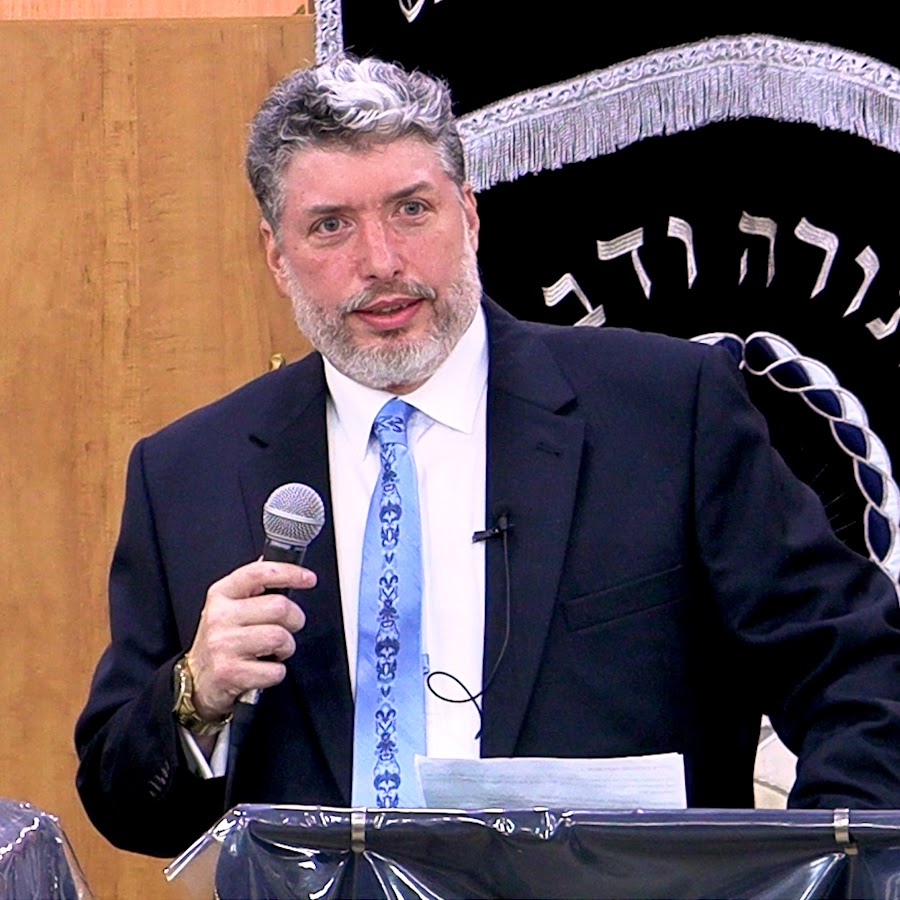
Help us combat aggressive Jewish evangelism in Israel: https://outreachjudaism.org/partners/ Let’s Get Biblical Study Guide (Volume 1 & 2) https://outreachjudaism.org/shop/lets-get-biblical-expanded-2-volume-study-guide/ https://outreachjudaism.org/ www.videvo.net https://www.youtube.com/user/tenaktalk Music: https://www.purple-planet.com Use in accordance with Israel's Copyright Law 5768-2007 section 27a. Music at the end: Adon Olam https://youtu.be/a6oS9N0hJTY http://www.toviasinger.tv/ #toviasinger #Judaism #Christianity #Messiah #joerogan
Comments
Transcript
Auto-generated transcript. Not time-synced to the video.
The Orthodox Jews are trying to obey the
Old Testament even though they can't
because in the Old Testament the center
was the temple. The priest would then
offer the sacrifices. This is the entire
Old Testament system.
All right. Pastor Mark Driscoll is a
pastor out in Arizona. He's very well
known. Has a a very large audience. He's
a he's a Protestant evangelical
Christian. I'm pretty sure he's
non-denominational.
And the key about it is occasionally he
says things about
Jews or Orthodox Jews or makes claims
about
the faith of Israel that
keeps me um scratching my head and not
understanding why he says the things
that he does. And just to be clear, um,
Pastor Driscoll is a Christian Zionist.
He ordinarily
these kind of things don't come from,
uh, evangelical pastors who are
premillennial, but this one did. The
Orthodox Jews are trying to obey the Old
Testament even though they can't.
Because in the Old Testament, the center
was the temple. The priest would then
offer the sacrifices. This is the entire
Old Testament system. After the death of
resurrection, ascension of Jesus in 7
AD, temple destroyed, no priest, no
sacrifices. You technically cannot be an
Orthodox Jew because you can't do what
the Old Testament says to do. You have
to ignore whole books like Leviticus
that are all about going to the temple
and offering your sacrifice. So there
are reformed Jews and reformed Jews
would say, "Well, we hold some of the
cultural Judaism, but we're not really
committed to the feasts and the holidays
and we're not maintaining any sort of
continuity with how Jews lived thousands
of years ago. We're going to just reform
and keep reforming." Right? So it really
is very striking that a person like this
as I said he's a premillennial uh
evangelical Christian and typically they
would be more uh mapped onto and in
contact with the Hebrew Bible and what
he's suggesting is that it's impossible
for an orthodox Jew to be observant
given that there's no temple. So if
there's no temple then we can't uh carry
out the laws outlined as an example in
the book of Leviticus he points to which
is correctly tas kohanim contains laws
many laws but part of those laws are the
laws of priests in the temple and he's
saying well if you don't have a temple
you cannot be a god-fearing loyal due to
the god of Abraham Isaac and and Jacob
I I really want to be charitable able
here and I will be and I'll just say
he's just regurgitating something he
must have heard from a missionary or
must have heard in seminary from his
pastor or from his prof I don't know but
there's almost no point of contact
between what he said and the Hebrew
Bible in a sense that this kind of a
statement
isn't just wrong u it's completely
detached from the reality that comes
isn't a full view in Tanakh.
As it turns out, Tanakh addresses this
issue quite directly and it ought to
because ask yourself the following
question. Let's talk about Daniel, a
prophet, a great man of God. And I'm
sure uh pastor Driscoll would agree that
Daniel was one of the greatest men who
ever lived, right? But when he lived,
when he devoted his life to the God of
the Almighty called him beloved and
there was good reason for that. After
all, Daniel, not just devoted his life
to God, but was willing to lose his
life, willing to die rather than worship
anyone but the true God of Abraham,
Isaac, and Jacob. I mean, Daniel was
thrown into a pit of of ravenous lions.
See Daniel chapter 6. A very moving
chapter which no doubt he's heard about.
Well, during this time when Daniel was
preaching and stood up for the God of
Israel, he was no doubt an orthodox Jew
by any measure. He would not eat of any
food prepared for him by Nvad's palace.
He would not he would only eat raw
foods. He would certainly wouldn't drink
wine that wasn't kosher. We find that
out. So he was as orthodox as possible.
Okay. So how was Daniel considered
beloved by God? He was certainly a
faithful servant of the Almighty. And
I'm I'm choosing Daniel because I know
that that Pastor Mark Driscoll believes
that Daniel was a faithful saint of God.
He was loyal to God. He was the
quintessential Orthodox Jew ideal. So
I'm I'm steelmanning this. So how how
was Daniel loyal based on pastor
Driscoll's standard? After all, there
was no temple during the lifetime of
Daniel. Uh temple had been destroyed.
Daniel thrived and preached during the
Neoablonian Empire. Meaning after the
temple had been destroyed by Nvadzar.
Well, how did he do it? Well, the answer
is the way religious Jews do it today.
We're told in scripture explicitly as an
example in first kings chapter 8 um the
context is that king Solomon was
inaugurating the first temple which had
just been completed. So this would be an
opportune time for King David's son to
tell us about what would happen if there
is no temple. And he makes that very
clear. I'd encourage you to read verse
46-50 as an example. So the context is
really important. He's inaugurating his
temple that he built the first temple uh
that would stand during the time of most
of the prophets and he says that one day
you're not going to have this. One day
because of your sins there'll be no
temple. You'll be driven into land of
your enemies far and near. It was almost
as if King Solomon anticipated Pastor
Mike Driscoll. And this is not about
him. Just a very important caveat.
His claim which is vacuous is in
although it's incompatible with the
Hebrew Bible, it is something that you
would find in the the claims of Jews for
Jesus chosen people ministries. And it's
the kind of claims that Augustine would
have made about Judaism. the kind of
claims that Sirill of Jerusalem would
have made in the 4th century. It means
Judaism is not possible. I mean serill
of Jerusalem was someone who did not
have a favorable view of Jews or Israel
any of those things. Um he was a
contemporary of the council of Na.
That's exactly the kind of claim that
the church fathers would have made.
[snorts] Incidentally uh as again pastor
Driscoll is a Protestant, not a
Catholic. Like why would you be
regurgitating
I want to be very friendly here.
Why would you be regurgitating the
rantings of the church fathers? That's
what they would argue. It's not
compatible with the Bible because King
Solomon says in these this very
important passage that when you're
exiled and lend to your enemies, you're
not don't have the template of any of
these things. What you do is you face
this place. That means this is why
religious Jews face the temple mount
um and the foundation stone where we
pray. So when I was in living in the
United States, I prayed east and when I
was in Indonesia, I prayed roughly west.
Well, this is the reason um and God will
hear your confessions in heaven.
God will forgive you for all your sins.
Well, there you go. Bingo. It's right
there. So the the sacrificial system
we're told by Hosea chapter 14 verse 1 2
3.
I encourage you to read it for yourself.
Hosea Hosea
was a contemporary of Isaiah. He's a
real prophet according to evangelical
Protestants. It's in their Bibles. It's
like one cannot claim that I I didn't
read it. Right? So Hosea says
explicitly,
Israel, you have stumbled in your
iniquity. Right? What incred
words and return to the Lord say you
shall forgive our iniquity and teach us
the good way. And let us render for
bulls the offering of our lips. Let us
render for bulls. which means instead of
a sacrifice,
one should pray. This is Hosea. This is
the Bible. This is Rabbi Hosa. This is
scripture. This is the inherent word of
God. And we have many passages like
this. Uh we have King David in Psalm 51
who understood this well. Why would he
understand this? Well, that the
sacrificial system while an important
mitzvah in the Torah, but when it comes
to sins, God prefers other things rather
than a sacrifice. Well, King David
experienced this in 2 Samuel chapter 12
when Nathan confronted him with his sin,
providing a jeritical parable, a famous
parable, the rich man and the poor man.
The rich man takes the poor man's only
animal.
King David when confronted with his sin
with bashva.
He didn't make excuses and he certainly
didn't say I need the blood of Jesus or
anything like that. He said two words in
Hebrew
which means I have sinned before the
Lord. And God forgave him. Nathan said
the Lord has already forgiven you. No
sacrifice none of those things. So we
have direct instructions from above that
when you don't have a sacrificial system
when you don't have any of the cushments
that will be associated with the temple
you must pray and God will forgive you.
You have to wonder out loud
the book of Jonah. Wonder about the book
of Jonah for a moment which appears in
the Christian Bible. So if you think
about the book of Jonah, what comes to
mind immediately? A wicked nation, not
any people, but rather the people who
lived in the capital of the Assyrian
Empire, Ninve. Okay, so this wasn't any
city and any people. And this is the way
Tanakh does things. When it wants to
teach us something, it takes the most
extreme case possible. Here we have
Ninve, the capital of Assyria. So these
are this is an implacable enemy of God.
This is a problem right there. Okay?
They were in sin. A reluctant prophet
comes to them and preaches to them. This
is the centerpiece of the whole book of
Jonah and it ends in a very moving way
where the people hear his preaching,
repent, turn away from the sin and God
forgives them. See Jonah 3:10. The book
of Jonah is striking because it appears
it's quoted in the Christian Bible.
But it's quoted for every reason but the
sin and atonement part. Isn't that odd?
I mean, Ninveet testifies against the
Jews. That's in the Christian Bible.
Matthew chapter 12 and other things, you
know, but not that that the sign of the
[snorts] three days in the belly of the
whale, all that stuff is in the
Christian Bible, but sin and atonement
aspect, which is the core centerpiece of
this numminous work that somehow doesn't
make it in New Testament and doesn't
make it into pastor Mark Driscoll's uh
preaching. So, what he's saying is
completely incorrect. is incompatible
with the Jewish scriptures. I think he
and other Christians are led to believe
this because authors in the Christian
Bible would claim that without the
shedding of blood there's no atonement.
And they think they're quoting Leviticus
17:11, but they're not. They're rather
quoting Hebrews chapter 9:22. Leviticus
17:11 is just telling us why blood
cannot be eaten, why it has to be
destroyed or covered over because it can
only be used for sin offering. It's not
saying without the shedding of blood
there's no atonement. That's a complete
misquote of the book of Hebrews. So, as
it turns out, Tanakh provides for an
epic of time when there is no temple.
And
most striking is that that book of Hosea
we're talking about which appears in the
Christian Bible is quoted by the New
Testament. Well, we're told in chapter 3
verse four and 5 about the last period
of Jewish history, the last epic of
Jewish history before the Messiah comes.
That should be really important.
So here's a man, a contemporary of
Isaiah, Micah, Amos,
peering into the far future, which is
the way the prophets spoke and says that
the children of Israel will remain for a
very long time.
This chapter 3 verse 1 and 5 without a
sacrifice, without a king, without any
decrements of a priest. How long until
the end of days when they will worship
the Lord God and David? They will serve
David who is the Messiah.
[gasps] Let's just stop that for a
moment. Just think about and it's easy
to remember. It's chapter 3 verse 4 and
5. So that's an easy way to remember
345.
So we are told by a prophet that the
last period of Jewish history will be a
very long span of time. 2,000 years
would qualify.
What would be striking about the period
of Jewish history immediately before the
coming of the messiahs there is no
sacrifice there's no king. The reason
why this is so germanine to this topic
is that this doesn't work in the
Christian religion. This doesn't work in
the religion of of Mark Driscoll. Why?
Because in the view of the Christian
religion, the Jews very much have a king
and the Jews very much have a priest. We
very much have a sacrifice.
And the answer to all three of those is
in the Christian view, Jesus king, Jesus
the high priest, see the book of
Hebrews, Jesus sacrifice all over the
Christian Bible. Well, apparently the
Jewish scriptures is incompatible with
the teachings of the Christian Bible. Of
course, it is. That's why we're not
Christians. The reason we're not
Christians is not because we have a bias
against the New Testament or something
other or it's not our none of those
things. It's because the the fundamental
claims of the church are completely at
odds with the core teachings of the
Hebrew Bible. So if we have to choose
between Isaiah, Micah, Hosea, and Amos,
they all live the same time. And Paul,
we're going with Isaiah, Hosea, Micah,
and Amos. Every time we're going with
Moses every time. Now, while it is true
that there will be a restoration of the
sacrificial system in the messianic age,
and please God, that's going to happen
very very soon, um it seems
there. It's not like it's going to
happen. It's like um the uh the
messianic promises are unfolding before
our eyes. A topic comes up frequently in
these teachings. This last period of
Jewish history is marked by not having a
king priest of sacrifice. So these are
these ideas advanced by the church are
completely incompatible with the Hebrew
Bible. And that's why we reject it. God
will forgive you if you repent like King
David. After all, that's why he's in the
Bible. Not that we should just look back
at a great hear of the Jewish people,
but learn from him and repeat his ways.
And we're told explicitly in Hosea
chapter 66 that God doesn't really need
the sacrificial system and that God
wants something better than that. Micah
chapter 6 verse 6 through8. Please God,
may we receive the restoration of the
sacrificial system quickly in our time.
If you enjoyed this program,
please like and subscribe.
[singing and music]
I share my love.
[music]
[singing]
>> [music]
[singing]