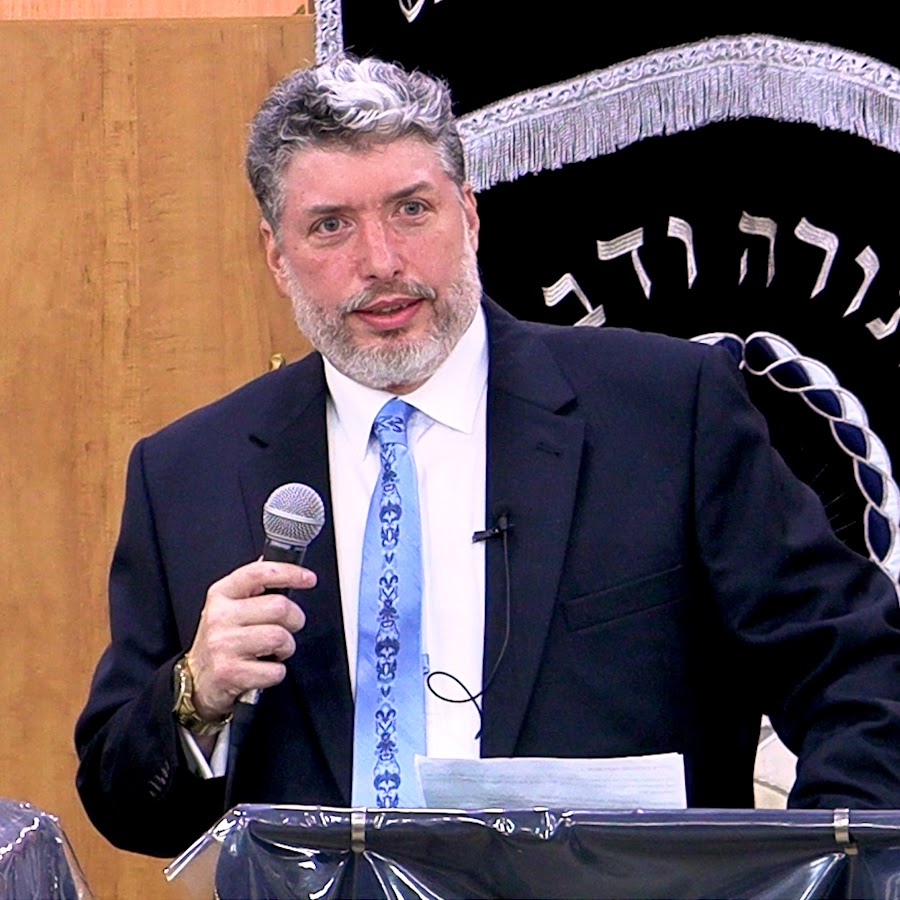
Transcript
Auto-generated transcript. Not time-synced to the video.
Why do we need to build the base of
Mdesh? Why do we need to come to Tisel?
We know that Msiah is going to come and
he'll take care of everything. He'll
bring us here. He'll build the base of
Mikdash. He'll show us what to do.
>> The answer to that question is vital for
your survival. It's very, it's
transparent that the people return to
the land of Israel before Msiah comes.
It's explicit. Why is it throughout the
Nim that there [music] are so many
prophecies, but they're written so
vaguely? Did did like Hashem or the
prophets themselves not [music] know so
much of the Naveim? You open up, you
just simply can't understand it. If you
read an event in Tanakh and you don't
know how this is relevant to you, that
means you don't understand it. We're
living it in real time now.
>> For joining us, Rivtovia, how's it
going?
>> Hey, doing great. I'm happy to join you.
We'll start from like just the very top.
Uh the the Tanakh you would think it
would be one of the most important
in uh in our religion and
it got to a point where you know it
seems to almost be on the back burner
for most ultraorththodox Jews. Uh
Gamarra in a certain sense got got
promoted to the top. Obviously we have
garam but the tarav which is obviously
like
such a crucial thing
um it's it's it's uh whatever it got it
got demoted. Can you can you tell us a
little bit maybe about the history what
you think about
what happened? How did how did something
so important like tars of exab like the
actual written Torah get to the point
where so many Jews literally don't even
learn it or even those who do learn it
maybe will go through it once twice it
won't be part of your regular uh
religious Jews learning seder and it and
most Jews really don't know 95% I think
of of the things that it says in maybe
in the kish and but but more in like I
would say the uh the nim and kuim
where'd it go what happened Yeah. So
that it's important for our viewers just
to understand the magnitude of your
question. So you're quite right. Tanakh
for those who don't know is an an
acronym. It means to Nim refers to Torah
Naveim and
what you're referring to really is the
dir of knowledge or lack of study of the
Nim
uh the prophets. Uh people are studying
Torah for sure. And we are in without
question the most literate generation
since the days of Hezekiah which a and
we have actual instant access to any
safer we want in in the ancient world.
If you wanted to study the book of
Isaiah it doesn't be the ancient world
just 700 years ago someone would have to
actually write one for you um before the
printing press. So we're in the most
literate generation, but somehow we've
totally dropped the ball on the Naveim
means the pro the the part that's called
the prophets and the historical
very important as
Daniel we dropped it. happened there is
in the Kazal knew Tanakh backwards and
forwards they the Abar Bernel wrote the
most important in my view the most
important or illuminating commentary on
the prophets in history but what
happened was with the emergence of the
enlightenment the Haskell movement
meaning in the let's just say 17th 18th
century 19th century [snorts]
um the enlightenment movement that
emerges
essentially is abandoning within the
Jewish people. It's not a monolithic
group, but among Jews in the let's say
from 1800 forward, um there there's an
emphasis there on learning Tanakh and
Jewish history and abandoning Talmud and
abandoning Jewish law. And it's a time
of massive assimilation. And if you're a
reform Jew, please do not be offended. I
think the reform movement today deeply
regrets many of the decisions that were
made. But the emergence of the reform
movement and the emphasis on learning
the nim sort of there was a backlash in
the in the Ashkanazi religious world in
that they were emphasizing uh Talmud
over the Nvim the prophets and the term
the latter prophets is a complete
mistake. It's it it refers to 15 books,
Isaiah, Jeremiah, and Ezekiel. And the
12 books that are bound together in
what's called Treyoso, the 12 um those
really um those really were
[sighs and gasps] tragically abandoned
in the Shiva world. What makes this so
painful
is our sages of blessed memory tell us
transparently
that while we can understand what will
happen in the messianic age we certainly
have massive prophecies like Isaiah 11
Isaiah 2 Ezekiel 37 but it's only
mymonities as an example in the laws of
kings famously says when criticizing his
contemporaries who were spec speculating
on dates and what will happen precisely.
He said it's only the generation of the
redemption, only those people who are
living in our time that will truly
understand these passages that are in
the prophets that are speaking about the
messianic age. So this is not just any
generation that ought to know the
Naveim, the prophets and Ezra.
We are the generation that could best
understand because after all, we can
read through Zechariah 12, which is an
end time prophecy. It's the end time war
before Messiah comes. Ezekiel 18, excuse
me, 38:39. We're actually living in it
now. So my monities, who would have
given anything to be alive during our
time, he was born in, let's say, I think
1135, he passed away in 1204. He lived
in the medieval period. He would have
given anything to be alive today. He
envied us. So here we are. Uh messianic
prophet is unfolding now and is our
generation. Not everyone the students
and follower of the vagon uh devoted
themselves to the learning of the nim
here and there. So there are many yeshiv
that really are studying nim. They get
it. But in the larger picture, it's very
it was a very it was a damaging
decision. And it's not easy to just pick
up Isaiah and learn it. I when I was in
in Yeshiva, there were guys I knew who I
was fairly certain were much smarter
than me. And yet when they came started
learning uh Naveim and came to the book
of Isaiah, within two or three chapters,
they just closed and said, "I give up."
It's hard. There are some that require a
global knowledge of Tanakh to get what
they're talking about. So it's a serious
matter that you're raising.
What would you like what would you say
is is really the the
from your perspective the damage that
has been done uh by you know by this
process of of really like you know
pushing uh you know the the Nvim uh kind
of as a as a side subject like what
would you say like
especially now as the Jewish people like
we're experiencing you know we're
clearly experiencing many of the
prophecies uh coming coming to
And you know, if you know what it says
in in the Nvim, you might be compelled
to do something about it as you're
watching these prophecies play out. So
like what would you say is the um is the
uh repercussions of of the fact that we
still haven't reintroduced uh tarshav
properly into mainstream learning. The
consequences are that people didn't
recognize that the Jewish people must
return back to the land of Israel before
the Messiah comes and the very Jews who
would come to the land of Israel would
many of them would be completely
irreligious in an observance. Let me
explain how important this piece is.
We are told explicitly in trackctate
Miguel Natalma that there was no tarum
which means a translation. But while an
Aramaic translation
could be the term used for tarum, a
tarum really means a com really refers
to a commentary
which is in Aramaic which uses a kind of
a translation. It's a loose translation
but that wasn't permitted for the
because in that in the this last part of
Tanakh contains the very description of
what happens at the end of days. It's
very famous Kamar McGiller right in the
beginning. So as an example the book of
Ezra and Ezra is one book and even the
church understood it was one book until
the medieval period. It's one safer. We
are told very clearly that number one, a
non-Jew tells the Jewish people, go back
and rebuild the Jewish state. That's how
the book of Ezra begins with a his
saliloquy of Cyrus who is an idol
worshipper. He was he was definitely not
Jewish. He's he has prophecy naming him
like Isaiah. He tells the Jews to go
back to the land. That's chapter one's
how it opens. Incidentally uh just soul
you know the book of Ezra we are not
introduced to Ezra until chapter 7.
Chapter 2 of Ezra tells us names all the
families that return back to the land of
Israel. 42,360
Jews make aliyah. No Jewish agency no
nephesh benef.
Chapter three is massive which tells us
that the Jews come
really in the in the month that's ahead
of us the seventh month with one people
as one person with one heart and they
start bringing sacrifice they start
bringing offerings and they were
terrified of the nations around them.
the temple had not yet been built and
they're bringing offerings on a misbehad
which means that they that they were all
unclean but because the this I want to
use English word so our all our viewers
get it now because this was a tumas
which means everybody was a state of uh
contamination they were able to move
ahead with bring offerings And in Ezra
chapter 3, we we see that they're laying
the foundation stone of building the
second temple in [snorts] verse 9 and
10. 8 9 10 which means they bring
offerings on the temple mount in the
proper place without a temple. So that's
an enormous amount of information which
there are many places in the gar which
cite this as evidence that you can bring
offerings without a temple but you need
a misbeh which is been built. I was
fortunate enough to watch them build it
in mitzvah
years ago. Uh we have kohanim. uh these
issues have been dealt with in in the
19th century between Rabbi Karen and
Michelle Salant addressing the issue of
bring for example a carbon pesak a paso
offering without a temple what would be
needed this is all been so if you're not
learning Ezra or you treat Ezra as
though this is a history book [gasps]
well it is filled with gripping history
but it also contains the script for the
messianic age so you have You're
clueless. And one point I want to share
with the viewers that will be very
surprised by this. I want you to listen
very carefully
in the prophets. I want to talk about
what's what we call the latter prophets.
The 15 books of the what's called the
latter prophets. the the criticism
that is levied against the children of
Israel
is almost entirely about how we behave
and social justice. So first point is
that the prophets will shock you if you
haven't studied Isaiah in that Isaiah
begins with an explosive chapter just
rips apart the Jewish people. It it's
the chapter that's read immediately
before tishabove and it's not possible
to read Isaiah chapter 1 and literally
not fall to the ground. And the
criticism is that it's not that you're
not keeping Shabas. It's not that you're
not praying three times a day. It's that
that you're not caring for the widow.
You're not clothing the naked. You're
not caring for the orphan. You're not
feeding the hungry. There's no social
justice. and I would have destroyed you
like Saddam if not the promise that I
made. And then Isaiah is saying let's
reason together. The key point is in the
Naveim in the prophetic part. It is very
rare. It is almost it's not impossible.
Those of you really study Nvie would
know there are rare occasions where Jews
are criticized for not keeping Shabas.
It's almost unheard of. Okay, that's
what I want to convey to you virtually.
Now what's striking is that we go to
Ezra again one book we are told that
these Jews who came to the land of
Israel to rebuild we're violating Shabas
openly in chapter 10 chapter 13 engaging
in in business practices that was
forbidden marrying non-Jewish women Ezer
chapter 10 marrying so it's very clear
[snorts] that the what's called theion
a considerable part of those Jews who
left Babylon
to come to the land of Israel after
Cyrus gives the command. So you
understand history. Cyrus emerges, the
king of um of Persia of emerges
about 50 years after Nvadar destroyed
the first temple. Just important for you
to know. And the Jews who said we loved
the land and we're coming to rebuild and
came back to nothing. There was nothing
here. There were no Jews in the land of
Israel for those 50 years. They a great
number of them were completely
irreligious Jews in terms of their
observance. Now there were giants among
them for instance. Their leaders like we
have a rough cook in had a rough cook in
our time the first chief rabbi of
Israel. So they had Ezra's nephew Yahua
Ben Yhot Sodok. Yahud Saddok was Ezra's
younger brother. You had Zuru who was
from the house of David. So you had
religious Jews among them like you had
Mizrai in the early 20th century like
you had the Nitv who was a Zionist like
you had Raf Cook who's a giant these
people knew Tanak cold and that was the
difference and therefore they picked up
and they understood exactly what was
happening and therefore I don't want to
talk about um Satmer and all that I I
don't want to get into that I'll get
into it if you want to but what happened
in from worlders they didn't pick this
up they didn't understand that the model
in Tanakh is Jews returning who are some
of them religious but many of them
clearly are not and Tanakh goes out of
its way to tell us be aware the
many of them are are not keeping Shabas
incidentally another interesting thing
is they're not really punished it's
weird but these Jews who are not
religious not keeping Shabas. They're
marrying non-Jewish women. If that
happened during the wilderness, I'll
tell you what happened to them. Jews who
violated Shabas in those 40 years in the
wilderness were put to death immediately
sleeping with non-Jewish women. We know
what happened to them. They'll put to
death for it. If you go to their
treatment in Ezra chapter 10, so Ezra
does put on sackcloth and ashes and he
cries out to them. He says, "Send away
these non-Jewish women with their
children because the children are not
Jewish. They have a Jewish father, not a
Jewish mother, but they're not punished.
They bring a carbon asham like nothing.
So you could see that they're treated
with kit gloves. They're not punished
severely like previous generations. If
you're not aware of this, if you're not
completely connected to this kind of
material as a pathway going forward,
you're clueless about what role does the
Jewish state have, when the Jewish
people supposed to return to the land,
the events that occur leading up to the
final redemption. And that's a I I
really never say such a thing. I will
say it now. I've never said this
publicly. This is really a miser sudden.
This is almost satanic meaning it seems
to me I can't come up with anything o
any other explanation because this is
Tanakh this is the this is the cannon of
our faith the whole world looks to it
the Muslims and Christians consider it
the word of God it it it could only have
been in my view this is my view
literally Satan's way of holding off the
redemption that people would not
recognize
that the Zionist movement that was
responding lar. So although we have in
19th century religious Zionists
we have many different groups and the
descendants of the the grow the vagon uh
time span the vagon lived during the
18th century his descendants his
students are coming in the 19th century
so they were very aware that this is
messianic but other people really were
clueless saw this as threatening because
the early Zionist movement were made of
people who
largely irreligious and were responding
to anti-semitism in the in in Russia and
in in Eastern Europe largely and so on.
So they didn't get it. There were some
who did. Ruff Cook did and that's why we
think of Rav Cook. People think of this
giant who we call him a ni a prophet but
what he was was a a walking Tanakh. He
got it all. He understood it in 3D and
he he completely he responded that way
because he was very aware of what the
core message was.
>> Why
these are a lot of these questions are
things I I talk about on my channel
because I also talk a lot about Tanakh
and and and and this uh you know similar
topics. Um but I'd love to hear these
things from your perspective.
Why why is the Torah given like the you
know the the
five books of Moses to why is it written
in even though it's got laws and
commandments but even those even the
laws and commandments everything in in
in the Tyra in seems to be given to us
through
um history like it's not a rule book.
We're not given a rule book. were given
a story of of Adam, of Noah, Ara, Jacob,
all the way down to, you know, Yeshua
entering the land, Ezra, every you know,
everything all the stories.
Um, and within the within the whole
stories when we're getting the
commandments, even the places even like
like these weeks, you know, these
parishes, these weeks, you know, and and
and
all that stuff.
Um there's a lot of there's a lot of
there's a lot of a lot of rules a lot of
laws but even there it's given to us you
know like in a story form that that
Mosherenu is telling Israel he's giving
them pointers on on things that has been
through and and then he throws in some
why is that why is that the the Torah is
given to us as as a history book with
all the laws just kind of dispersed
throughout. Uh first it should be said
because this you're asking very
sophisticated questions and I want to
make sure that the viewers understand
this. If Torah was first conveyed to us
orally the oral Torah preceded the
written Torah. So whereas at Mount Si
all 613 commandments were conveyed
[clears throat] to Moses.
It was only the book of Deuteronomy as
an example. So first of all in the Torah
uh Moses is commanded to write it all
down specifically in Deuteronomy
chapter 34:9 and then verse 24. That's
very critical. Moreover,
Moses had not revealed all. So the book
of Deuteronomy alone covers a span of
time of less than six weeks.
It's Moses's discourse. And in the book
of Deuteronomy, we have well over 70 new
commandments that were completely
unknown to the children of Israel, but
known to Moses. And it's finally
revealed as a lot much of it has to do
with how to conduct yourself when you
enter into the land of Israel. Ye many
other things. But the critical point of
let's take the book of Genesis because I
have a sense I feel a certain sense of
confidence that our viewers are more
familiar with the book of Genesis than
any other book in Tanakh. Um so in the
book of Genesis we want to know about
Abraham's life and why did God love him?
Isaiah 41 verse 89 called him my friend
like what was it and why we should how
we should emulate the greatest people
who will ever live. There are in those
who don't know there are uh 55 prophets
that were given to the children of
Israel. 48 of them men, uh, seven of
them women. But we want to know not only
of the Jewish law, but how do they live
their lives? And we want to make sure
that it's recorded properly. And let me
give you the a great example, the flood.
Genesis chapter uh, let's say 6, 7, 8.
Okay? The flood. Now, that's the best
example I can give you. Why? because
it's something that occurs globally as
far as we can tell over the course of
180 days from the 17th of the second
month to the 17th of the of the seventh
month. Okay? Now, because it was a
global event,
the eight survivors of that flood will
move on. Nations are dispersed in
Genesis 11 and they go on to record
about a worldwide flood. We actually
have that record in almost every culture
out there has a record of a of a flood
that occurred and a family that was
saved on a ship. This is the perfect
example because as we would expect
because this is a historical event. So
everybody who's a descendant of the of
the survivors of the flood which means
every person walking this planet um has
a story about a flood. However, while
the similarities are obvious, they're
talking about the same event because
it's historical. There are really some
very important differences like what was
wrong with the generation. How did they
mess up that would cause that bring
about that destruction? God's decree
upon man's lifespan which comes up
immediately in Genesis 6 as the
beginning of the flood. So, we could use
just using that as an example. We want
to make sure that the text is conveyed
in a cannon with with every single
letter is there. It was given over to
Mosher Abenu.
It's vital for the viewers to understand
that Moses of blessed memory, our
teacher, had no creative input into the
five books of Moses. He wrote whatever
Hakesh told him. Other prophets received
revelation and then recorded it in their
language, their style, and they have a
very distinct style. But Mosha wrote
down every word. But it's vital for us
to know exactly what went wrong. That's
Genesis chapter 6 as an example. These
men who are very powerful just raped
weak women and forced them to have
babies. That's not available in
Gilgamesh and other kind of texts out
there. So he wanted affirm what exactly
did Abraham do right like what made him
the progenitor of the Jewish people who
as I mentioned God says my friend nobody
is called my friend besides Abraham.
Well what exactly did he do? Well, we're
told, we're introduced to Abraham in
chapter 11 when he sought to perpetuate
the memory of his dead brother by
marrying her daughter, his daughter who
couldn't even have children, which means
Abraham.
So, I just going to do this and I'm not
because we couldn't do a show for five
hours, but I just want to take one
piece, the progender of the Jewish
people. So Abram technically wasn't
Jewish, but we could the word Jewish
wouldn't have existed then, but we're
just using these terms generically, but
he's the father of the Jewish people. So
he's So what exactly do Abraham do,
right? And why does he come up in
chapter 11 of Genesis? And it's
interesting there are two stories, two
prickies in Genesis 11. The first is the
generation that tried to build a tower,
a dora, but God then dispersed them all.
Why did they want to build a tower? This
is very critical. This is why you need a
Torah for this. It has to be written
down precisely. They wanted to build a
tower to really perpetuate their own
name. They wanted to build a monument to
themselves. That's what comes across in
the and then God disperses them
throughout the world. Okay, that's part
one of Genesis 11. Part two of Genesis
11 is a story about Abraham. And as it
turns out, many of the stories that we
know about him in the tomud are not
there about him uh being willing to die
for his faith. Nimro throwing into fiery
firm. That's not
the Torah is very interested in one very
important thing. Abraham
was interested in preserving the memory
of his dead brother by marrying his
daughter and thus perpetuating his
memory with no hope of having kids with
her. Meaning we're given Sarah's
medical record. She was in Nakuro and
therefore Abraham the story of a this
this very important event in Abraham's
career as a as a giant is that unlike
the generation of the tower of Babel who
sought to perpetuate their own name.
Abraham was not looking to perpetuate
his own memory and rather somebody
else's. And then God said to him in
Genesis 12, "You know what? you're the
kind of person I can work with and you
weren't looking to build a name for
yourself rather than somebody else.
Therefore, in your name all the nations
of the world be blessed. So that is an
explosion and that's why we need a
cannon to preserve these events and to
juxtapose these two stories that seem
dissimilar that happened. There's quite
a distance between the generation of the
tower of of Babel and Abraham. But the
Torah places them side by side. So we
must have a cannon that preserves
precisely that. So we say, "Ah, now I
understand what Abraham was. He wasn't
he it wasn't that he was a great person
and refused to worship idolatry and
broke all the idols in his father's
store, which doesn't come up in Tanakh."
That Abraham's father was an idol
worshiper does come up in Tanakh, but
not that he had the store. that comes
from other oral literature. The key what
the Torah wants you to know is Abraham
was not looking for a name for himself.
Ah that's why we need a written Torah.
We need the country precise to the
letter everything must be exact and
therefore we can learn out Jewish law
directly from the text itself.
>> So no my you addressed it partially. My
I my question was was more
I mean we can't really answer for God
but like why do you like why do you what
what benefit was there that you that you
can see to teach like if you were
writing a a book of rules for a company
you have you have workers and you want
to give over all the all the rules and
regulations um and the laws for your
company to the workers. So instead of
giving them a rule book where it says
you know 1 2 3 4 you know each each each
law you give them a story book and
within the story book there are all
these all these laws and rules dispersed
throughout the story. Like why do you my
question was more like what benefit did
it provide for the Jewish people
to to learn how to serve Hashem through
a story rather than giving them
just a book of laws because the story
the narrative preserves the national
corporate memory the Jewish people and
therefore if we were simply given laws
as we are Exodus chapter 20, the ten
commandments famously. But if the Torah
preserves the history and record of the
Jewish people, then we understand why
God made a covenant with the children of
Israel. And it was in the merit of
Abraham, Isaac, and Jacob. What kind of
people were these people? What made them
stand out? And why does God work with um
with Isaac rather than his brother
Yeshu? But Ishmael somehow figures it
out towards the end. And but Asov is
utterly corrupt and God hates him. Well,
what about Asv was detestable? What
could we learn from the uh from the life
of Jacob? And what could we observe
through the detestable life of Asop as
an example? So we seek to emulate them
and preserving it in a history of our
people is vital. And as it turns out
what I said you you no one is going to
push back. As it turns out
you and I could say with confidence
that our viewers are more familiar with
the book of Genesis than any other book
with any other work in Tanakh. Let's
just we'll call Genesis separate book
for for the purpose of this discussion.
That means as it turns out we can say
with with almost certainty that our
viewers who span a wide range of
education know more about the book of
Genesis any other book in the Hebrew
scriptures because it's conveying
everything through a narrative. And of
course these are the the the primordial
narratives of our people, how the nation
was formed or how the royal family was
formed through events. And moreover like
what kind of person was Judah? Why was
he so praiseworthy that all future uh
the the future members of the children
of Israel will call themselves Jews? Why
why would what what was made Judah so
unique? After all, he made very serious
mistakes and miscalculations in life.
But like you go to the end of Genesis
38, no doubt the most embarrassing
chapter in the Torah. No question.
Yehudin Tamar is like you read it and
go, I can't believe this happened.
Right? But what is so powerful about
that story, which would be lost if it
would just be a code of law, is Yehuda's
there. his the woman who he had slept
with who pretended to be a harlot in
order to bury his child's about to be
executed. This must have been in
incredibly embarrassing to him and she's
set to die with his dirty secret. She
doesn't turn him in but just puts down
his personal effects. I'm taking the
most outrageous chapter in the Torah by
any standard. It's the most outrageous
story. She
um she puts down his personal effects.
Any normal woman about to die would say
he did it. She didn't. Conversely,
Yehuda is watching this. He knows it's
him. He now sees what's there. And he
goes, he announces she's innocent.
Listens to this. I not only I'm the one
who got her pregnant. Moreover, he says,
I forced her to pretend to be a
prostitute by depriving her of my third
son after my first two children, my
first two sons died. So, it's not on
her. It's on me.
Wow. We can then go, okay, okay, okay.
We don't have a Jesus. We don't have a
Muhammad who are sinless, who make no
mistakes in other Abrahamic religions,
lav. No, our leaders are great heroes
are people that made mistakes, but at
the end they came forward and said, I'm
I blew it. And as it turns out, it is
not a coincidence. So that's the great
story of the Torah. Most embarrassing
story for sure. What happens later on is
in fact they they will have a great
grandson
David who is very prominent in Tanakh.
as I mentioned his name is mentioned
more frequently the other name and he
too engages in behavior that's highly
it's just horrible it's a nightmare but
when he is given a jeritical parable by
the prophet Nathan the rich man and the
poor man I'm not going to go into it now
rather than deny he goes when he's told
that he's the man because he took he
slept with BVA it was an illicit
relationship ship. He says two Hebrew
words.
2 Samuel 12:13, I've sinned before the
Lord. So if you have a greatgrandfather
like Judah, you're going to have a great
grandson like David. So what we're
trying to do in the Tanakh is not we're
not looking for people who don't make
mistakes. Our greatest heroes make
mistakes. Some of them incredibly
embarrassing. But what is conveyed
through the story is how do they handle
their mistakes? In contrast, take Sha,
the first king of the Jewish people,
anointed by Samuel, the last judge of
the Jewish people.
Sha was a giant.
But Shaul, when confronted with his
mistake, which one could easily argue
is a lesser mistake than David made.
It's certainly at first blanch it what
David did is worse by any measurement.
But when Sha is confronted also kind of
like a jeritical parable which asks him
why do we hear the bleeding of the
sheep? Why you know like it's indirect.
So what Sha does unlike David is he kind
of makes an excuse I was saving these
animals of malik to make offerings out
of them. That's why David and Sha
Avugim, they're couples. There's that's
why the text and the story is so
critical. You could never get this kind
of a teaching through just a a codified
law. So now we know the difference
between Sha and David. So whereas Sha
when confronted with his sin, he makes
an excuse and doesn't own it
immediately, David in contrast when he's
confronted with this very grave sin. He
rather says, "I sin before the Lord."
Oh, really? That's the kind of person I
can work with and I'm going to make a
covenant with him. This is why the
narrative is vital for our survival and
our ability to worship God in truth. Why
is it uh throughout the Nivea that there
are so many prophecies that uh you know
many of them quite crucial I would say
uh but they're written so vaguely that
um you know like like like you talk
about sometimes you know there there's
some there's some there's some chapters
in yesah or that are very are very clear
you don't need to know too much you can
read them you understand them and then
like you see some there's in some of the
later chapters in Yeshu uh it's
extremely vague, extremely difficult to
understand. Why is it that
that uh there are so many prophecies
that are written in a way that I mean
did the did did like Hashem or the
prophets themselves not know that
they're going to like so much of the
Naveim
you open up you just simply can't
understand it and then you what you end
up with is you have different uh
interpreters who are giving their input
as to how to understand it. So many of
them disagree with each other as to who
a certain prophecy is talking about what
age is is it something that already
happened you know during the times of of
uh you know
2 and a half thousand years ago. Is it
something that didn't happen yet? And
you know it kind of almost makes a lot
of the uh the prophecies somewhat uh
partially useless I guess because we
because we're not sure what it means.
It's hard for us to act on it or
understand what we should take from it
because we don't really know who it's on
and what it's about. Like why why do you
think that that that is?
>> I am interviewed
on average daily
and no one ever asked me that question
before that I can recall and I've
admired you for time. But I want you to
know this and then I'm going to address
your question. I don't know if anyone
said this to you today but I love you. I
love you my dear brother. I really love
you and I waited perhaps my life for
someone to ask that question.
So again, I just want to clarify for our
viewers because the answer to that
question is vital for your survival.
So the question essentially is I
mentioned earlier like the book of
Isaiah 66 chapters of it 90% is poetry.
Just just know that. That means there's
only one, two, three, four, five
chapters that you could read and just
understand what it's talking about. It's
read as a narrative. The rest of it is
all poetry. Some of it's easier than
other. When I say poetry, I mean is
biblical poetry. There's no parallel to
Isaiah. And in fact, people who are I
was fairly sure in yeshiva who were
smarter than me when they came to
Isaiah, they just couldn't do it and
walked away. So why is Isaiah written
that way and why is it so difficult? And
Jeremiah's
is a longer book although it has fewer
chapters very long chapters some of it
it's a easier but there's a difficult
Ezekiel all right why okay so let me and
conversely what are called in the
mishronm like Joshua judges Samuel kings
those are easy to read okay those
[snorts] are just they're they're a
basic narrative using standard pros
just standard language like and it's the
chronology and incidentally they they
are written somewhat in chronological
order. I actually want to retract the
word somewhat. For the most part they're
in chronological order and I know all of
our viewers who are scholars who went to
yeshiva know that well the Torah is not
necessarily in order. Well, it is in
order but sometimes the Torah will
change the order. it to make a very
important point but generally speaking
it is an order uh there can be there are
exceptions but that is an exception so
here's what I would like to do with you
and I would like to actually persuade
you the viewer that is the opposite is
the case and that is Isaiah Jeremiah and
Ezekiel and the 12 are much easier than
what are called the earlier prophets
it's really quite the reverse and you
say what are you talking about Isaiah is
so difficult and I assure you, you pick
up Isaiah, you'll get chapter one.
That's when say it's easy. It's painful,
but it's easy. You know what he's
talking about.
But I don't know exactly even what
period. Like when is Isaiah expressing
Isaiah 4 and five and so on. Like as it
turns out, by the way, Isaiah 6
chronologically is the earliest chapter,
the book of Isaiah. Why? I'm not going
into that now. Isaiah 6 happens first.
Let's just we'll leave it there for
right now. Just take my word for it,
okay? I he Isaiah chapter 38. Those who
are interested, by the way, I'm teaching
Isaiah 38 in two weeks in Jerusalem,
September 7th. Um, so Isaiah 30 Isaiah
38 happens before 36. It's completely
out of order. Completely. There's no
even attempt to keep it in order. It's
just w out of order. But I am want I
want to convince you. I want to persuade
you that Isaiah is much easier than
reading the book of Joshua, Judges,
Samuel, and Kings. And you're going,
Rabbi Singer, knock yourself out. I want
to be persuaded, but this seems seems
impossible. So, let me show you
what was preserved in the cannon of
Tanakh. Why is that there? After all, uh
there were according to our tradition
approximately 1.2 2 million prophets in
Jewish history, but the vast majority of
them,
their prophecies were never preserved in
the canon. And really, just a tiny
number of the teachings that were given
to the children of Israel are preserved
in Tanakh. That means how what what
determined what went into the canon,
what didn't go in. So this is very very
simple. So obviously everything that the
Nims expressed was the word of Hashem if
they got it from Hashem. Incidentally
there are times that Naveim spoke
without having Nva and they were wrong
and it's recorded in Tanakh and that's
for us to say but he was the god of
laora. How could he be wrong about
anything? There were nim there were
prophets who were wrong. They meant
their best but they got it wrong. That's
another topic. I don't want to I don't
want to stress you guys out, but it's
very important to understand. But he was
a great rabbi. How could he have
misunderstood what was happening? Well,
we had great rabbis in Tanakh who
miscalculated. Stay with me on this is
very important.
Everything that's preserved in Tanakh
means that it was uh preserved for all
future generations. Then we're to read
it and we are to un and it is na to all
generations that would follow. This is
the critical point. It means when you're
reading the Hebrew scriptures those
texts are as alive today as they were
when they were preached. Isaiah, Micah
as an example lived at the same time
here in Jerusalem. Uh they preached
here. um the their message is preserved
because it's Isaiah is relevant to us
today as the time it was given. Okay?
Same thing for Joshua and Judges. Now,
here's the part that's counterintuitive.
The prophets like Joshua, [sighs] uh
Judges, Samuel, and Kings,
there the stories are gripping.
I mean, you just can't get enough of it,
right?
But what is challenging, my brothers and
sisters, listen carefully, like you
never listen in your life, is what am I
supposed to do with that story? Okay,
great story, powerful, sometimes very
violent,
something very critical in Jewish
history. But how is this like how is
this relevant to me? What does this have
to do with me? And the answer is
in most cases you're going to sit there
and bang your head into a wall and you
don't know because you don't know how.
Okay, great story in the book of Jo.
What is Yifak the story of of Gideon?
What does it have to do with me?
Problem. You got it? So I would posit
that the what's called the Nimon of the
early prophets are easy to understand in
terms of they follow a a uh a a
chronology they're in generally in order
and they're using standard pros mean
just standard language senses predicates
the whole thing right standard language
the problem is that you read a story in
Tanakh in the early prophets it's a
story that you think is easy you have to
now figure out how is that relevant to
me? Oh, you got a big big problem. And I
want to tell you this, my brothers and
sisters, if you read an event in Tanakh
and you don't know how this is relevant
to you, that means you don't understand
it. Now, conversely, this turns
everything on its head. I grant you that
when you read Isaiah 4 or 5, you may not
know which king Isaiah is addressing.
You may not get it right away. It
doesn't matter. You pick any whatever
chapter you want. Chapter 10 doesn't
matter. Doesn't you may not know you
would know a 10. But the point is, but
what's the message? You definitely know.
That means there's no question that in
the chapter of Isaiah, he definitely
thinks you're an idiot if you're praying
and putting on films and keeping Shabas,
but you don't you're not caring for the
widow and the orphan and you're building
your homes wide and your your property
line is then being moved into the public
area leaving no room for other people to
live. So the beauty of Isaiah the reason
it's so easy is it is true that you may
not know the storyline like when to
which generation did he was he
addressing now that is very important I
don't want to say that it's not
important it's very important to know
Jewish history and to study this and our
sages are all looking at this I always
recommend to you my friends the Abrael
who makes everything that was very
difficult very very easy but putting
that aside the key of why Isaiah is so
easy to understand. It's all
counterintuitive. You may not know
exactly when it happened. Like Isaiah 6,
the time of the earthquake in the days
of Uzioo in the 27th year of Uzio. Like
what happened? Like the walls are
falling in. Holy, holy, angels are
flying up and down. A kaduca comes in
there. Well, what's the story? Go to 2
Chronicles 26. You can know the whole
story. In fact, in 2 Chronicles 26, it
tells if you want to know the whole
story, go to Isaiah. I'm not kidding.
It's so beautiful. So delicious. So what
my holy brothers and sisters who are
born from above, not from beloved,
listen carefully. Isaiah is much easier
than Joshua. Isaiah is much easier than
Judges. Much easier. Why? Because when
you're reading Isaiah, you may not know
the exact chronology of when it was
written or who he's addressing. You
definitely know what the message is. And
that is your behavior is deplorable.
Turn it around. And that's why Isaiah is
delicious. It's mamishly maly. Easy,
easy, easy, easy. Ezekiel is easy. It's
not easy in the sense that I know
exactly when Ezekiel wrote it to who was
he may not. But what is he conveying to
you? Definitely you get and that's why
the so-called latter prophets so-called
because it's really an error in Kazal
meaning in the ancient world the latter
prophets only refer to three books but
we'll use it because it's everyone's
used to it.
The latter prophets are much easier than
the earlier prophets, the nimish. Why?
Because you may not get when it happened
and in what order, but you definitely
get the message. And after all, Tanak is
not a history book, but rather it's
using history to convey eternal oracles.
[laughter]
What an answer, tell. Wow. Holy, that's
awesome.
>> That is so simple yet so deep. It's
really true. It's really true. It's
really true. Unbelievable. Um,
>> you know, I just say this to my my holy
brothers and sisters. If you're reading
a story in Tanakh and you don't know why
it's in Tanakh, why is it negating me?
Means you don't understand it.
>> I got you. Okay. Um, yeah. As as you're
talking, I ask so many more questions.
I'm going to ask you one more question
because otherwise uh we're going to be
going really long. So, and most people
don't don't like to watch two-hour
podcasts. I do, but a lot of people
don't. Um my last question, my most
important, my favorite question that I
want to ask you is
[sighs]
um I speak with a lot of people who uh
the the you know I try to promote gula
oriented subjects and try to talk about
it and
the the most common push back and
response that I get from your standard
uh from your standard uh you know
Lakewood Brooklyn Jew, whatever it might
uh would be why do we need to build the
base of Mikdesh? Why do we need to come
to we know that Msiah is going to come
and he'll take care of everything? He'll
bring us here. He'll build the base of
Mikdash. He'll show us what to do. Now,
you know, I am I I I've you know, you're
the you're the expert on Tanakh. So I
want to ask you from what I've seen just
you know from my reading of of Tanakh I
kind of feel like there like I want to
be able to tell uh my fellow Jew like
it's clear it's clear in the Nim that
that um
uh that we come to Israel the keeps
gullies then gathering of the exile
comes first building the base of mdash
might even come first and then Mashiah
might come now there are proofs to this
there are places in Tanakh where it does
seem to imply by this in the order that
it talks about it. There are gumaras,
midrashim that talk about this. But
there are also places in Tanak where it
seems to be that the way it gives the
order at least the way the sukim are
lined up and say it is that is that
sometime sometimes it it it mentions the
the the uh the engathering of the exile
before Messiah. Sometimes it mentions
Messiah and then the in gathering of the
exile. I I think I'm I don't know. Maybe
I'm mistaken. But is am I correct that
sometimes it implies the order in one
way and sometimes implies the order the
other way?
>> There are two and this is a good way to
uh observe this your your very important
way. There are two models that religious
Jews, God-fearing Jews have about how
this thing happens.
One view which is you refer to Lakewood
in Brooklyn and I we all get it. Nothing
disparaging meant here. There's one
model that says that the nation could be
at its peak outside of Israel and only
come to the land of Israel once it
happens once the the Messiah is here.
The other model and that is the model of
religious. model that the nitiv
understood. Rashiva,
they all un
what did Rafk cook understand is that
the people come into the land and then
the almighty works of the people that
are broken both physically and
spiritually and raise them up. And when
we look at Tanakh, and that's why it's
not the order of verses. I hope I
persuaded you in the answer to the
earlier question. If you're looking at
the order of verses, you're in a lot of
trouble. It's very it's transparent that
the people return to the land of Israel
before Messiah comes. It's explicit. And
I want to use just the mo the
a very clear chapter probably most clear
in. And I want to choose Zachchariah.
Zacharai is in general a hard safer fact
I rashi a blessing the memory
he the only book that he wrote that he
wrote that he authored an an
introduction a haktoma is to the book of
Zechariah he didn't write introductions
others did that was not his job but in
Zechariah he admits that Zechariah is a
very hard safer because it it begins
with eight visions that are not easy
they're not hard I don't want to scare
you. They're not incredibly difficult.
It's not nuclear, you know, chemistry,
but it you just got to really figure out
what what's going on here. Okay, set
that aside.
The the key point is Zechariah 12,
you would need no commentary at all.
Nothing. Nothing at all. I just I assure
you, the viewer, if you're watching this
show, it's because you care about our
shamros. What are you doing watching
this? You can go watch reruns of the
Flintstones.
So, Zechariah 12 as a n is so easy to
follow. The nation returns to land who
are kalash and who are broken people and
Jerusalem is now in the hands of of the
Jewish people.
Jerusalem we are told explicitly becomes
a heavy burdensome stone to all the
nations who attack Israel over the
status of Jerusalem. is all very
explicit. Incidentally, you could read
Zechariah 8, which also is very I'm
going to use this word generous. I don't
really mean it that way. We have to have
this copious information or else we
wouldn't know what to do. So, it's vital
that Zechariah 12 is written a way that
anyone could understand it. There's war
still going on
and Messiah is not here yet. How do I
know that? Because when Messiah comes,
the war comes to an end. See Isaiah
chapter 2:3 and 4. It is so simple. The
nation comes to Schlime is now in our
hands. Nations are unhappy with that.
And why they are is another show,
another conversation. And they go to war
and it's us that triggers everything.
The nation Novi says Zechariah 12 verse
78 really critical. God takes a people
who are broken. We now know why the
people of Israel broken. He says God
even takes the mo the most broken of
them and he gives them such strength
that they they fight like King David
even like the angels of the Lord of
hosts. Says it openly in love. Mashiah
is not here yet.
Verse 9. It'll be in that day.
She's not here yet. Oh, I translate.
It'll be in that day that I will destroy
all the nations that come up against
Jerusalem. All the enemies of are
utterly destroyed. And then there's now
Mashiah is not here yet. Zechariah 12:10
we introduce Mashia. We're not going to
go into on this show another show.
There's a cataclysmic trauma and attack
against the Jewish people between these
two points which causes and I am I feel
very confident this is October 7th. It
causes a massive mourning among the
Jewish people because of this attack and
the children of Israel mourn. It's
interesting the Novi says that men and
women mourned separately. And it's
interesting before October 7th, the
battles, the inner internal problems of
Jewish people were played out in the
streets of Tel Aviv where they just
wanted to put a makita for the high
holidays went to the Supreme Court. The
only source for a mis separation between
men and women in all of Tanakh, the only
reference to it is right here in
Mashiach Bose in Zechariah 12 and 11.
Mind-blowing.
This happens before Mashiah comes. After
all, Mashiach is the one who gives
rebuke to the nations, judge among
people. They'll listen to him and
they'll put down their swords and spears
and turn them into plowers and pruning
hooks. Nation will not lift up sword
against nation. That happens after it.
So therefore, this is very transparent
and that fits. You know, Tanakh is like
b like everything works like math. It
works seamlessly and that's what we have
in Ezra. It's not hard to learn, but if
you read Ezra chapter 3, Ezra chapter 3
verse one, what we're told is that on
the on the seventh month, which is tish,
that's like rash time, the nation comes
to here where we are. And they're one as
one person with one heart completely
united.
Hello. And they start bringing kabundas.
And these are Jews who we will find out
were not completely observant but they
were in love with the land. And then the
bid is built after that in um Ezar 3 8 9
10. Please look up everything I'm
saying. It's very easy. So therefore the
the what Rafuk understood completely and
that's why he's the great visionary.
what he first of all he knew Tanakh cold
he was a gift that Hashem gave us coldly
understood it to others they
now I want to just put in a point here
not to offend I understand any rational
person will understand why people will
be scared religious Jews would be
frightened of Herzel who was not a
religious Jew would be frightened of the
many of the early Zionists who generally
were not religious Jews I understand why
they were concerned after the trauma of
other movements that had taken Jews away
from Torah. They would look upon this
with tremendous suspicion. However, so I
wouldn't just say this unlike people
that didn't know they were concerned
about the well-being of the Jewish
people who were opposed Zionism in the
early stage. Don't make fun of it. But
we know much more. And if great people
and I heard this from the grandchildren,
if great people then would know how much
there is in now they would have
responded differently but they were not
the key point is the framework we're
given explicitly clearly transparently
and is the nation comes to the land of
Israel they're not perfected at all and
then the nation rises up and then ty
rise up and then is the coming of
Messiah that follows that with the bam
mikdash Now do not ask him comes from B.
No way in the world. I mean, for
example, we're introduced to the temple
in Ezekiel, very famously in the last
three passages of Ezekiel 37. It's
Messiah we're told about in verse 24 and
25 37. That's by the way the valley of
dry bones. Everybody knows that chapter.
No commentary necessary. Incidentally,
now you won't hear that from any
Orthodox rabbis, but you could read
Ezekiel 37. You know, Ezekiel is its own
commentary. It doesn't mean I'm telling
you don't read commentary but you really
can read to it and understand because he
see is explaining himself like you got
to know this to survive. So 37 is very
easy. It ends verse 26 27 8 28 the last
three verses with the my sanctu be in
your midst forever and there will be
peace in the world and all the nation
will know the truth. Full stop. That's
it my friends. That's it. So the bas
mikdash the building of the temple
itself which we we know exactly we built
comes at the same time as Messiah and
the universal knowledge of God and a
worldwide peace explicitly where again
Ezekiel 37 again the whole chapter read
it in context all Msiach uh but the last
three passages and then Ezekiel then
launches into the the war of gagumo 38
and 39 so he sort of back trace facing
it, the leadup war. Why? So the world
will know. Ezekiel always is your buddy.
Meaning Ezekiel
is always saying, um, let me explain to
you why this is going to happen. He's
very generous that way. He's always
saying, let me tell you why. So it's
there. It's not hard. It was hard to
imagine 150 years ago as a Jew living in
the pale of the settlement in Western
Russia. You had no how could Jews do
this? Now we know. We can see it with
we're living it in real time now. I
mean, after this broadcast is over, you
and I will very likely look at the news
at some point and find out who knows
what happened in in Iran. And in any
case, so Ezekiel is always generous with
information why it happens. And that
this point, we should just understand
this that Messiah, the building of the
temple, and world peace and the go
knowing are all happening at the same
time. And this is very critical,
very critical in the text. That's what
you need to know. So therefore, Jews
come in, they're not perfect, but what
emerges is absolute perfection. Thank
you so much for having me on. May we be
to see the true Mashiach
quickly in our time. Thank you so much
for really really appreciate your time.
>> Always. If you enjoyed this program,
please like and subscribe.
I don't know.
I share my [singing] love.
[music]
[singing]
>> [music]
[singing]