Preparing video...
0:00 / 0:00
If God Needs Nothing, Why Are You Here?
8,764 views
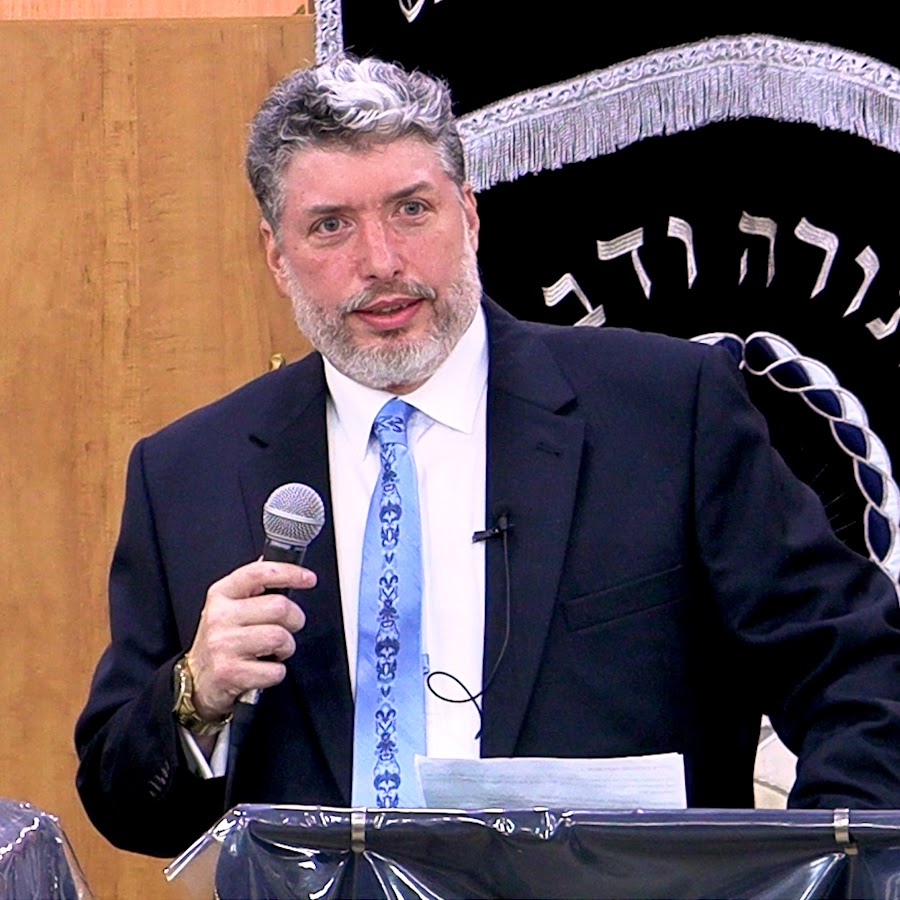
Help us combat aggressive Jewish evangelism in Israel: https://outreachjudaism.org/partners/ Let’s Get Biblical Study Guide (Volume 1 & 2) https://outreachjudaism.org/shop/lets-get-biblical-expanded-2-volume-study-guide/ https://outreachjudaism.org/ www.videvo.net https://www.youtube.com/user/tenaktalk Music: https://www.purple-planet.com Use in accordance with Israel's Copyright Law 5768-2007 section 27a. Music at the end: Adon Olam https://youtu.be/a6oS9N0hJTY http://www.toviasinger.tv/ #toviasinger #Judaism #Christianity #Messiah #joerogan
Comments
Transcript
Auto-generated transcript. Not time-synced to the video.
And that's why Deuteronomy 6:5 follows
6:4. Torah is so beautiful. It's so
delicious. It If you don't If you're not
now ready to bow before the God of
Israel, then nothing will move you.
People mistakenly think that Shema is a
statement of a creed about the oneness
of God. It's true. But what is the
point? The point is that means he loves
you.
>> The show, go ahead and tell me your
question, Rabbi.
>> Uh hi, good morning. Can you hear me
good?
>> Yeah.
>> All right. Um so, my question for today
is
on Deuteronomy
uh 6:4
about God being one. So, basically, you
know, for those [snorts] of us who have
you know, left idolatry or left the idea
that God is a man or
somebody in the clouds sitting on a
chair. Like, what does that mean in
Deuteronomy 6:4 that God is one? Like,
how do I perceive that? What What
exactly is it mean? Cuz I'm a bit
confused. If you could help me out,
thank you.
>> Well, thank you for your question.
>> Okay, go ahead and him now, John. Tune
in for your answer. Thank you.
>> So, at first blanch at first glance, one
would conclude that the most important
creed of the children of Israel stating
that God is one
is a enumerate issue. It seems that
Tanakh is very consumed with
the creed that the God is one and
there's no one else besides him.
Nehemiah chapter 9:6. There's nothing
besides him. Isaiah chapter 43. There's
no savior besides him, verse 11. No God
before after him, verse 10.
44:6-8.
All of that is that there is one God
alone. He's no other.
So, that comes up so often that people
ask the question frequently, "Okay, that
there's one God."
Okay, that is important and not to be a
polytheist, not to believe there are
many gods.
What I I would like to just convey to
you and just looking at saturating this
passage a little bit more
is that there is something being
conveyed in this sacred text that may
that many people miss and it's the thing
right in front of you.
If God is one and there's no other, it's
a radical monotheism,
then one has to conclude
the character of God. One must be then
know
that God is all loving. It His oneness
means that God must be all love.
Because if he is one alone and there's
no one be else besides him, then why did
he create us?
After all, there is nothing before
creation.
There is nothing that we possess that he
lacked. Now, after creation, we're
created in the image of God. So, God
then is very vested in us having a
relationship with him. And we would very
much see that God wants us to be
faithful to him and does not want us to
be disobedient to not injure that
relationship. That's after creation.
That's why this is very critical. Many
people mix this up. So, the question is
prior to the creation,
why would God create the world?
Obviously, the purpose of the world is
for mankind.
But why did he need it? He could have If
there's nothing you possess
that could in
uh make God's life better, his eternal
It doesn't make sense. God therefore
must have created man out of a complete
act of love and a complete altruistic
pure act of love. So, that's what should
come through with Deuteronomy 6:4. And
if God created you out of a complete act
of love,
then
when somebody
says to you, "I love you."
What is
he expecting to hear? What is she
expecting to hear? It's, "I love you,
too." Got it? You got that part? Then
God If God is one alone, that means that
he is all love. Because
there is nothing you have that he
doesn't possess. He created you. Now now
he's bound up in you, but before
creation, why did he do it? It must have
been an act of love. So, God is
literally saying, "I love you." What
would he want to then hear given that
he's created you in his image? He's
bound up in you. It's, "I love you,
too."
Hence the very next passage, Deuteronomy
6:5.
It's just beautiful. It begins with
V'ahavta, "And you shall love." Why do
we need "and"?
And what does this have to do with 6:4?
Well, now it has everything to do with
it. If God is saying, "I love you. You
exist out of a pure act of love because
I want alone. Therefore, I am
omniscient, all-knowing, omnipotent,
all-powerful, eternal, no beginning, no
end, immutable, unchangeable." Then he
doesn't need you. Therefore, he must be
saying to you, "I love you." What does
he want to hear? V'ahavta et Hashem
Elohecha, "And I love you, too." And
that's why Deuteronomy 6:5 follows 6:4.
Torah is so beautiful. It's so
delicious. If If you don't If you're not
now ready to bow before the God of
Israel, then nothing will move you.
People mistakenly think that Shema is a
statement of a creed about the oneness
of God. It's true, but what is the
point? The point is that means he loves
you.
Because what are you doing here? Why did
he create you? He then is in a a
relationship with you and he doesn't
want you to interfere with that. He
wants you to know the nature of the
relationship and it's love and therefore
for all days
therefore that's why it ends with that
and what do you mean and what is one
what does loving God have to do with
God's oneness? Everything.
Thank you for your question.
If you enjoy this program
please like and subscribe.
>> [singing]
[music]
[singing]