Preparing video...
0:00 / 0:00
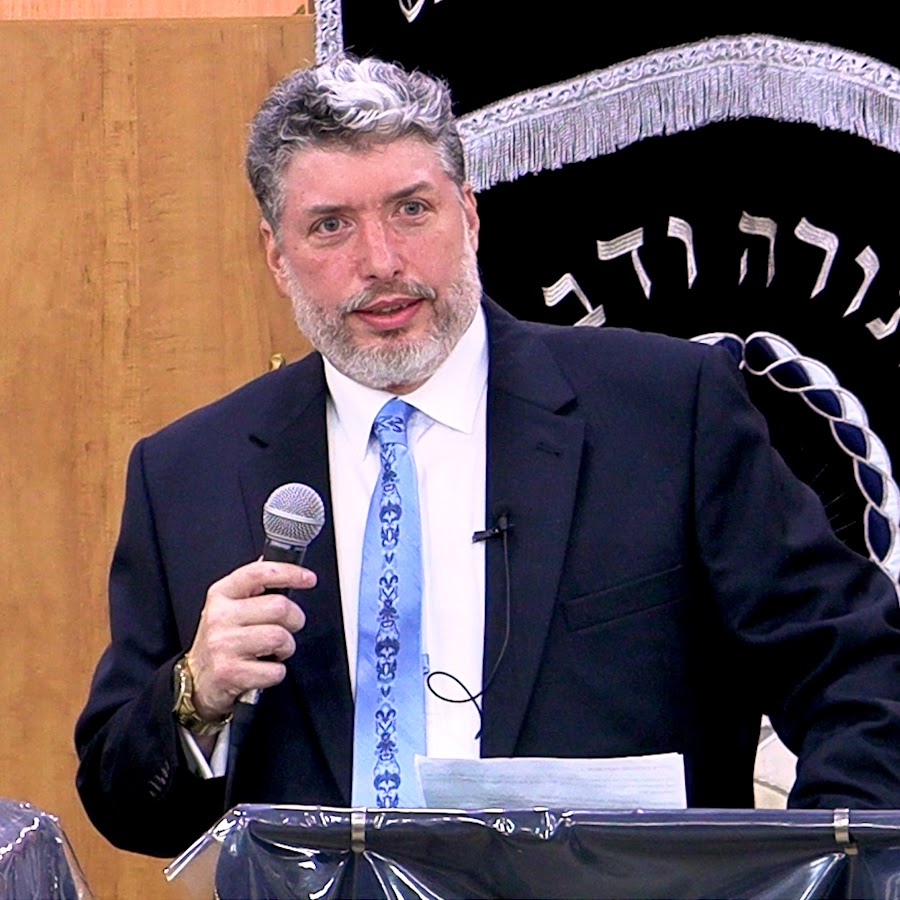
הרבי מליובאוויטש – האם הוא היה המשיח? הרב טוביה סינגר
6,562 views
Help us combat aggressive Jewish evangelism in Israel: https://outreachjudaism.org/partners/ Let’s Get Biblical Study Guide (Volume 1 & 2) https://outreachjudaism.org/shop/lets-get-biblical-expanded-2-volume-study-guide/ https://outreachjudaism.org/ www.videvo.net https://www.freepik.com/ www.youtube.com/@RAK_EMET הרשמו לערוץ חדש נגד המיסיון Music: https://www.purple-planet.com http://www.toviasinger.tv/ #toviasinger #Judaism #Christianity #Messiah
Comments
Transcript
Auto-generated transcript. Not time-synced to the video.
Call you live on the air. Go ahead and
present your question right away.
>> Hello Rabbi.
Thank you for taking my call.
I just
Sorry if I get any of the pronunciation
wrong, but I wanted to ask you about the
Lubavitch and Rabbi Schneerson.
It seems like it's
uh
it is quite a popular belief that he was
the Messiah. But it seems to me that
most of the objections people would put
against Jesus being the Messiah would
also apply to him. Like
he passed away without any gathering of
exiles and world peace and all of these
sorts of things. And from my
understanding, Chabad is an organization
that kind of like you helps bring Jews
out of Christianity. It helps them
become observant Jews. So it seems to me
that uh people in an organization like
that would be especially skeptical of a
seemingly Jesus-like claim like that. So
I just kind of struggle to understand
why so many people in Chabad seem to
believe he was the Messiah.
>> I had the opportunity to meet the
Lubavitcher Rebbe and be blessed by him
on many occasions. He was a very great
man.
And while he was alive
maybe he would have been that person who
was designated to be Messiah.
Maybe. In every generation, there's
someone who is set aside to be from the
who's from the tribe of Yehuda, from a
descendant of David and Solomon.
Who is ready to step forward in every
generation. That's why Messiah is called
the branch. What kind of name is a
branch for a Messiah?
Because like a tree that has hundreds
and hundreds of branches that come from
a root
in the same way from the root of Jesse.
This is the language of Isaiah chapter
11 verse 1 from the shares from the root
of Jesse
have all these branches which means
throughout history in every generation
there's somebody
who is ready to step forward as the
Messiah if the generation deserves it.
Meaning if Jacob repents, see Isaiah 59
verse 20.
The person is a mere mortal. He is not
only a descendant of David and Solomon
but is a righteous person. He's a
teacher in Israel.
These are the qualifications we have in
the Bible.
See Isaiah chapter 2 verse 3 and 4.
See Isaiah chapter 11 verse 1 through 3.
You see it very clearly. He's a person
that teaches and judges. He's not a
miracle man. He's not doing any of those
things.
So therefore it's possible and I thought
while he was alive that
maybe he is. You know, he certainly
seems to display
the
character that we expect from Messiah, a
great teacher. And
he uniquely was a person that preserved
the Jewish people and preserved Torah
during a very very difficult time
for world Jewry. During a time in the
United States when America was going
through a a tremendous upheaval. It was
tremendous upheaval in the United States
from from the moment really Kennedy was
murdered.
And it was just upheaval. It was just
constant upheaval. Vietnam
Watergate and that triggered all the the
assassinations
where JFK was murdered in '68 and Dr.
King of blessed memory was murdered in
'68. You know what this did? It ripped
the country to pieces.
And then you had a president who
resigned.
A president who resigned? I remember
watching it. I was shocked. A president
who just resigns and flies away in a
helicopter.
It's like he thought you were dreaming.
It was really there were just a few
people in America who kept the tire
alive. And he was someone that infused
Torah and Hashem. So, of course, that's
the kind of person
that could be Was he Was he Was he I I
have no idea. But let's just say he was.
I thought so.
And in fact, when the Rebbe had his
second stroke, which was catastrophic,
and he was at Beth Israel Hospital,
word was that he was not going to
survive that.
And I remember his followers saying,
and it was in the news,
that he will survive, and his survival
of this catastrophic stroke will damage
will be the miracle that he will
demonstrate that he is in the Messiah.
That's what went on at the time.
Nobody zero people in Chabad said that
he would die. None of them thought he
would die. And then he died.
And what that was a group then breaks
away and says, "Ah, he's supposed to
die." And look for these kind of
ways of showing that the Messiah is
supposed to die, and they look for
things that just don't appear in Chabad
literature prior to it. It means it was
nowhere. So, that's That was an
unfortunate move.
But I mean, the Messiah is It openly
says in the
in Mishneh Torah in Laws of Kings, that
the Messiah died. If the person dies,
then he's not the Messiah, period. End.
In Tanakh, when someone is given
an anointing for a certain mandate, they
fulfill it, or they die, and they're not
it. Moses was given a mandate to lead
the nation of Israel out of Egypt. He
did it. He didn't die.
When Joshua was given the mandate to
bring the children of Israel to the
promised land and cross the Jordan.
He did it. And he didn't die and come
back.
When Cyrus, the king of Persia, was
given a mandate to tell the Jews to
return to the land of Israel, he did it.
And he made the speech that you'll find
at the beginning of the book of Ezra. No
one dies come back. You do it or you
don't do it. If you don't do it, you're
not it. It is unfortunate
that there were many people who just
could not um
could not handle that. That would be
somebody else.
Maybe that's why he never went to the
land of Israel during his lifetime.
Maybe he was designated to be the
Messiah and coming to the land of Israel
might I don't know this at all.
Something I thought about, like why
didn't he go to Israel?
Means there's many mitzvahs he could
fulfill living in Israel. Like Moses
didn't come to Israel. If he would have
come to Israel in our thought, that
would have been it. Could it be? This is
my speculation personally. Maybe. I
don't know this. And I'm used to on this
show to only talk about things that I
know that are demonstrable. I don't.
It's just things I you might as well get
a peek into how I think.
But what happened is that when he died,
instead of just saying, "Okay, he was
the Messiah for that generation. It's
somebody else." They There were some
people who said they can't be the
Messiah anymore.
Like his assistant.
And there were others who just said,
"No, he's supposed to die and then he'll
return as the Messiah." And then what
they did was they found obscure
sources
like a
Talmud in in the
in Sanhedrin and Rashi offers two
explanations for so they
See, but the problem was is the claim is
fantastic
and the evidence
was not.
And something I've always told you, the
evidence
fantastic claims require fantastic
evidence. We don't have it here. And
I've had many people in Chabad tell me
over the years that why don't I speak
about this what's called the Meshichist
movement? And why don't you speak about
it? You should cuz they feel there are I
just met a fellow here in Jerusalem
who's the head of a Chabad
in the United States who I remember
lecturing for him many years ago in
America who said again to me what he
said to me many years ago. Said he he
felt it's his view that saying that the
Rebbe will resurrect and be the Messiah
he feels is a disgrace to the Rebbe's
legacy. And he asked me in a friendly
way exactly what he asked me years ago.
And he's a very famous guy in Chabad,
very famous. He says, "Why don't you
speak about it?" La Havdala, one should
never compare this to Christianity.
Never do that. Cuz Christianity
was a religious movement that oppressed
the children of Israel. That's Edom
itself that did everything possible to
destroy Torah.
That it's the Christian canon that in
and of itself
instructs the Jews that they shouldn't
keep the mitzvahs anymore.
That brought was a a cancer that
transmitted
idolatry, the doctrine of the Trinity.
So, a person should resist this kind of
speech.
If you fear Hashem
if you've ever said such a thing, you
should repent of it immediately. You
should never God forbid compare the two.
You could say that what happens when
when hopes are dashed sociologically
that a person will not
have any word from Hashem from God
forbid comparing Chabad which is a holy
movement which spreads Torah all over
the world. Such beautiful people.
Are there some in that group that have
this view? They do.
I don't know what the numbers are.
Whatever it is. But you can kids go and
compare that to a movement that
oppressed the children of Israel, that
destroyed Torah, that says that Jews
don't have to keep any mitzvot and
shouldn't keep any mitzvot, and it's in
the Christian Bible. I know I'm going to
get Oh, that was later. It's not later.
It's in Romans chapter 7 speaking about
Jews. So anybody wants to say,
"Oh, they weren't real Christians."
You're making a big, big, big mistake.
Big, big mistake.
So the Christianity I'm not going to say
from the get-go. I can't tell you what
Christianity was like in the first few
years. Perhaps
originally originally it was just a a
mistaken
uh
heresy of Judaism. But they certainly
did believe in the Trinity and they
certainly kept Shabbos. And we know
that. How do I know that? Cuz we see
that in Paul's letters. Paul fought
that.
There's no way in the world Paul was
inventing that he was fighting
the notion that people should keep
Torah.
That means Paul was fiercely antinomian.
So why if they were if the earliest
Christians
opposed uh Torah means opposed Torah,
then what was Paul complaining about? So
it's very clear that's not the case that
the earliest Christians were. But it
very quickly cuz we see in Paul's
letters which were all written in the
50s, that the really it was by then a
non-Jewish project at the time. We see
who's becoming Christians in the 50s.
It's It's non-Jews. I don't mean
disparagingly. But so if Nick
Fuentes wants to go crazy with me, don't
go crazy with me. Means it was non-Jews.
Who's Gentiles? Not a Jewish word, but
it was non-Jews. Very clear. Doesn't
mean there were no Jews. There were, but
it was you could see from the text.
So, therefore, one should be very, very,
very careful if you cherish me. Don't
compare
Chabad movement, which is a holy
movement, which spreads terror around
the world,
is so instrumental.
If people are mistaken in it,
it's the same, but it's you can't ever
compare it to the ideology of
Christianity. That those words should
never come out of your mouth. Even me
saying this
is something that I'm reluctant to do.
But, I just say this to others, and that
is when you have a fantastic claim, you
better come up with fantastic evidence.
And moreover, Chazal very clearly stated
that if someone dies, then Jesus can't
be the Messiah cuz he died. That was it.
And Rabbi Akiva even the Rambam
demonstrates
from Bar Kochba after Rabbi Akiva was a
supporter of Bar Kochba, who rebelled
against the empire about 60 years after
the temple was destroyed in 132.
The Rambam proves Jewish law and
understanding of Messiah from how Rabbi
Akiva behaved. So, Rabbi Akiva
endorsed
this movement.
And he apparently didn't care about
three Os and none of that.
And then Bar Kochba was killed. The end
of it. And that's it. And we have
guardrails and playing tennis with a
net, not like the others. That's it. So,
we have such a massive evidence that all
goes in one direction, so that I hope
that we'll all
be together as one. And but one should
resist the temptation chos v'cholila to
ever mention
the Lubavitcher Rebbe of blessed memory
with anything to do with Christianity,
God forbid. Cuz it's a mistake to think
that the reason why Jesus is not the
Messiah is cuz he just simply died. It's
that he's everything the opposite of
Messiah. Everything is the opposite.
She's being the son of God all that.
That's what is really fundamentally
wrong.
Thank you very much for your thoughtful
question. May we be blessed to see the
[music] coming of the true Messiah and
may he be a man and quickly in our time.
Thank you.
If you enjoyed this program,
please like and subscribe.
>> [music]
[music]