Transcript
Auto-generated transcript. Not time-synced to the video.
[music]
Shalom friends. Welcome to the Prophets
of Israel Daily. This is the second book
of Samuel, chapter 21. My name is Ari
Bramson and I'm here with Jeremy Gimpel.
Shalom Jeremy.
>> Hey, how are you?
>> Good, good, good. It's good to see you.
Good to have you here. Okay, let's dive
in because I want to open up with
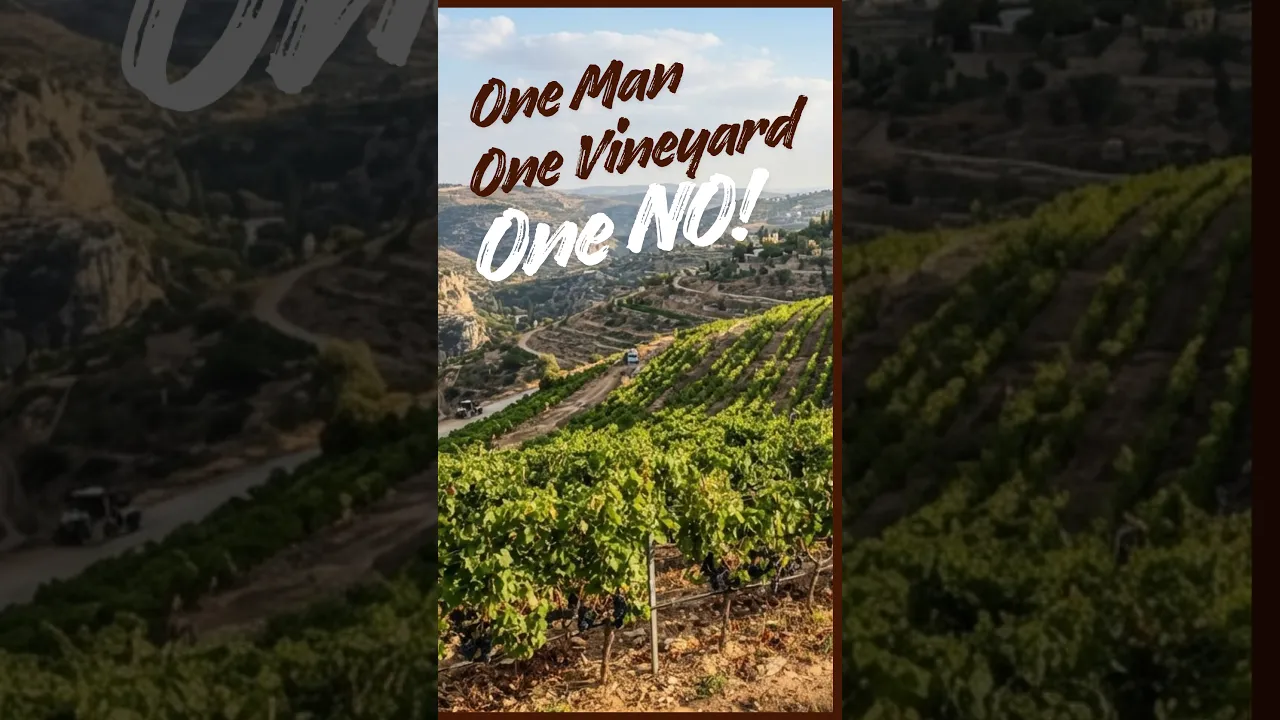
something every farmer knows in his
bones. Now, I'm not trying to make it
seem like I'm some great farmer. I know
very little about farming. I'm learning
and I have my crops and my whatever. But
just, you know, we've been out here in
Judea for a while now. Just imagine
watching the skies and nothing comes.
The first year, the wheat comes up thin.
The second year, the vines struggle and
the wells start dropping. And by the
third year, the entire nation
understands this is not the weather.
This is a message. And that is exactly
how our chapter opens. Verse one.
made shaloo shim. And there was a famine
in the days of David for three years,
year after year. And David sought the
face of Hashem. And Hashem said, "It is
for Saul and for his house of blood,
because he put the Gibbeonites to death,
the Givonim to death." Now, stop in and
let's just remember what David does
here. Three years of famine and David
doesn't convene an agricultural
committee, right? He doesn't blame the
climate. He seeks the face of Hashem
because David understands something that
we living in this land today are
relearning every single season. That in
the land of Israel, the soil itself is
spiritual. The rain is a relationship.
When the land closes up, the first
question is never what's wrong with the
clouds. It's what's wrong with us? And
the answer that comes back is shocking.
The famine is about the Gibeonites, the
Givonim, about the injustice from a
previous generation, right? Saul in his
zeal had put the Gibeonites to death,
violating the ancient oath Israel swore
to protect them. You know, Ari, I just
we just got to stop here for a second
because rereading this, I was honestly
taking it back because this wasn't even
anything about David. I mean, first, we
have to remember who the Gibbeonites
are. We met them all the way back at the
beginning of our journey in the book of
Joshua in chapter 9. And the ones who
showed up with moldy bread and cracked
wine skins, they tricked Israel into a
treaty. And then even after the
deception was exposed, Joshua refused to
break the oath because it had been sworn
in the name of Hashem. And so fast
forward now 400 years later since
Joshua, four centuries, kingdoms have
risen and fallen and heaven is still
holding Israel accountable to that
promise. And just think about what that
means in the eyes of Hashem. The word of
Israel has no expiration date. A
covenant is a covenant. And the text
doesn't explicitly tell us that King
Saul betrayed the G on before this
chapter. We only know that because
what's written right here. And even
though the oath was ancient, sworn under
false pretense to a Canaanite people,
Hashem held Israel to it centuries later
to the point of sending a famine when a
king broke it. And so the sanctity of an
oath sworn in God's name and the
obligation to protect those you've
promised to protect outlasts
generations. That is the power of the
word and the importance of the truth in
Israel. And that's really the moral
engine of this whole chapter. When Sha
when Saul violated that oath oath, he
was he wasn't just committing a
political wrong against a small
minority. He was tearing something at
the spiritual fabric of the nation in
the land itself. The expression of the
covenant God has with Israel, expressed
it outwardly. That famine, it wasn't
random weather. It was the covenant
demanding that Israel confront a broken
promise. no matter how many generations
had passed.
>> That's right. Exactly. And so David
summons the and listens carefully to
listen carefully the language that he
uses. Right. Verse three.
What shall I do for you? And with what
shall I make atonement that you may
bless the inheritance of Hashem?
Atonementap
not compensation or settlement. Here,
David is speaking covenant language
because he knows this is a wound that
can't be paid off, right? You can't cut
a check here. It has to be made right
before the eyes of Hashem. We're talking
about a covenant. And indeed, the Gonim
refuse silver and gold. Instead, they
ask for something something terrible.
Seven descendants of Saul to be given
over and hanged before Hashem. They say,
"Before Hashem, in Sha, Saul's own
hometown." And listen, I don't think
this is easy to digest for anyone. It
isn't. It It's a very challenging
incident, but watch what David does
inside this dark decree. Right. Verse
seven. Moamel al-Hib.
But the king spared me, the son of
Jonathan, the son of Sha, because of the
oath Hashem has between them, between
David and Jonathan, son of Saul. Right?
Because you could think, well, is he
going to give over mechett to the
Givonim, right? But he says no, he
spared him. Do you see the symmetry
here? The the entire crisis began with a
broken oath. And right inside its
resolution, David honors a kept oath,
right? His ancient covenant of love with
Yonatan. This entire event is really a
powerful demonstration of the gravity of
a promise. One oath broken brings famine
on a nation and one oath kept saves a
life. Right? And then then comes the
part of this chapter that really that
could really break your heart. Ritzpa
Batain a mother of two of the executed
sons. Verse 10. Ritzpahaya
and Ritzpah, daughter of Ayah, took
sackloth and spread it for herself upon
the rock from the beginning of the
harvest until water poured down on them
from the heavens. And she did not allow
the birds of the sky to rest upon them
by day, nor the beasts of the field by
night. Right? From the beginning of the
barley harvest. That's around Pesak,
Passover time, right? Until the rains
came. Do the math. Do the math here,
Jeremy. That's months. I think it could
be up to 6 months, half a year, whatever
it was. Month after month, this mother
sat on a rock on the hillside, waving
off the vultures by day and driving away
the jackles by night. She had no army,
no power, no legal standing to change
anything. All she had was a mother's
love that absolutely refused to let her
children be treated as if they were
forgotten.
>> And you know, Ari, what I want to point
out here is that again, nobody sent her.
There's no verse where God commands her.
No prophet who appoints her. She simply
climbs onto the rock and refuses to come
down. And in her vigil becomes a it
becomes a protest more powerful than any
petition ever brought before the royal
court. She can't reverse the king's
decree, and she can't bring her sons
back. But she can insist that their
humanity be seen with such unwavering
dedication that she's willing to endure
the unimaginable pain of seeing the
corpses of her sons day after day for
months on end, not leaving that place.
And that quiet insistence travels all
the way up to the throne of the king
himself. And it's the same pattern that
Tahila, my wife, teaches in the women's
fellowship. the women of valor. Last
year, she taught a whole series on the
biblical heroins in the Tanakh. And she
points out that when the moment demands
something without waiting for permission
or a command from above or a promise
that everything will be okay, the
righteous women of the Tanakh change
things, they shift the world. They bring
literal redemption when they rise up to
meet it just from their own inner
intuition. And that really is the power
of the biblical heroins of the Bible.
>> Yeah. Not only the Bible, but today. You
know, I can think of your wife Tahila
responding in such a way to various
things. My own wife Shaina, you know,
it's the strength of the spiritual power
of Beina of the woman. But anyways,
here's what I kind find comforting about
it. Ritzpah's visual works, right? Word
reaches David of what this dedicated and
loving mother has done. And it awakens
something in the king. And he sends for
the bones of Shaul and Yonatan, which
had been resting in Yavesh Gilad ever
since those brave men rescued them from
the Philistine wall. If you remember
that, right? And he buries them with
full honor in the tomb of Kish, Saul's
father in the land of Binyamin. And so
[clears throat] Jeremy, just like think
about that for a moment. David, the man
whom Saul hunted through the wilderness
for years, the man who slept in caves
because of Saul's spear and torment.
David personally ensures that Saul is
gathered to his fathers with dignity.
And only then, verse 14,
and God responded to the plea of the
land after that, right after that, read
it carefully. The reigns do not return
after the executions. They return after
the kindness, after the honor, after a
king that was humble enough to let a
grieving mother on a rock teach him that
the land was actually waiting for
something else. The famine began with
cruelty towards the powerless and it
ends with compassion towards the dead.
That is what unlocked the heavens. And I
think that um spiritually attuned
farmers in the land of Israel recognize
that the land of Israel doesn't respond
to force. It responds to faithfulness.
And here it is written in black and
white 3,000 years ago. The land of
Israel is not just soil. It's a covenant
partner. The land itself remembers.
And now, right, this chapter closes with
the sudden shift back to the
battlefield. War with the Philistines
again. And this time we meet the giants.
David goes out to fight. And the text
tells us plainly, David is wary. He is
not the shepherd boy anymore. and a
giant named Yishbi Benov armed with a
massive new sword closes in to kill the
king of Israel. And at that very moment,
Avishi Benuya
strikes the giant down and saves David's
life and and then the men uh you know,
they take David aside and they make a
vow and they refer to David with one of
these one of the most beautiful titles I
think that's ever been given to anyone
perhaps. And I feel like it really
reveals the deep love that they have for
him. Verse 17,
you shall not go out to to us with
battle anymore, they say, lest you
extinguish the lamp of Israel. N Israel,
the lamp of Israel, not the sword of
Israel, not the champion of the nation,
the lamp. Because David's greatest
legacy was never ultimately about his
military skills or political acumen. It
was about his light. Right? The psalms,
the yearning, the living soul of the
nation. His men are telling him, "Oh
beloved king, we can swing swords. We
can do it. We're on the fighting for now
on." But no one but you, your majesty,
can carry that flame. And now watch what
happens next. And I don't think it's a
coincidence. Three more giants fall in
this chapter. And not one of them falls
to David. Sibbeai strikes down one.
Elhanan defeats another, the brother of
Goliath himself. And Yahonatan,
Davidid's own nephew, takes down the
giant with six fingers on each hand.
Right. The generation that David built
is rising,
>> you know. And right there, Ari, that
right there is one of the signatures of
David's greatness. As a boy, he stood
completely alone in the valley against
Goliath the giant while the entire army
watched, just frozen in fear. And now, a
generation later, under his leadership,
giants are falling all around him, and
he doesn't even have to draw his own
sword. The shepherd boy became a king
who raised up an entire generation of
giant slayers. That's what real
leadership can inspire. And I feel like
we are watching that exact transition in
Israel today. the founding generation
that drained the swamps and fought
impossible wars. They're passing the
lamp to the children and grandchildren
who were born into the miracle of
Israel. And I think that every single
person in Israel would agree that this
young generation has proven on every
front through everything in these past
few years, all that has been demanded
that the light is burning brighter in
them than ever before. And somehow every
soldier in Israel has a touch of the
spirit of King David. And it's a spirit
that we haven't experienced within the
people of Israel in thousands of years.
And we're seeing it now more than ever.
>> We certainly are. We certainly are.
Beautifully said. You know, so many of
the weathered veterans of Israel's wars
have testified to the inspiring courage
and the valiant and the self-sacrifice
with which this young generation of sold
of soldiers have answered this very
intense, powerful calling of of the
generation, right? And perhaps that's
the message of this chapter for our
generation. Israel survives not because
we've never failed, but because we're
willing to remember and to repair and to
rise again, right? We remember the
promises made before we were born. We we
confront wounds that others would just
rather bury in the past and forget,
right? We honor those the world has
forgotten. And when one generation grows
wary, another rises to face those
giants. That's what we've seen in this
land. I'm just so proud. Just we just
had lunch with your nephew the other
day, Jeremy. He's a one of them. Just
these valiant soldiers, these young
guys. I'll I'll admit I thought they
were going to be Tik Tocked and and into
like social media that they weren't
ready to go out and to really fight and
I was so wrong. They've really been
impressive. Anyways, it was it was true
in chapter 21 and it's true today. David
is no longer standing alone in the
valley. The curry the the courage that
has once burned inside one shepherd boy
from Bethlehem has now spread throughout
an entire nation. Young men and women
who never imagined themselves as heroes
have stepped forward with the faith of
David, the devotion of Ritzpa and the
courage to stand between Israel and
those who seek to extinguish her light.
Right? The sword may pass from one hand
to another. Kings rise and fall.
Generations come and go, but the ner is
the lamp of Israel continues to burn. It
has survived exile, famine, war, and
centuries of darkness. And it burns
today because every generation has
chosen to guard it and to carry it and
to pass it forward. And now, my friends,
that sacred flame has been placed in our
hands. May we be worthy to carry it and
to see it all the way through to the
times of redemption. Friends, if you're
enjoying this message, please consider
joining our fellowship. There's a lot of
different tiers. There's ways to connect
to what we're doing. It strengthens us.
It connects you. And it's really a
calling of our generation right now to
come together in this way. We hope to
see you. Looking [music] forward to the
next chapter, Jeremy. See you tomorrow.
[music]