0:00 / 0:00
The Talmud's SHOCKING statement about JOY
97 views
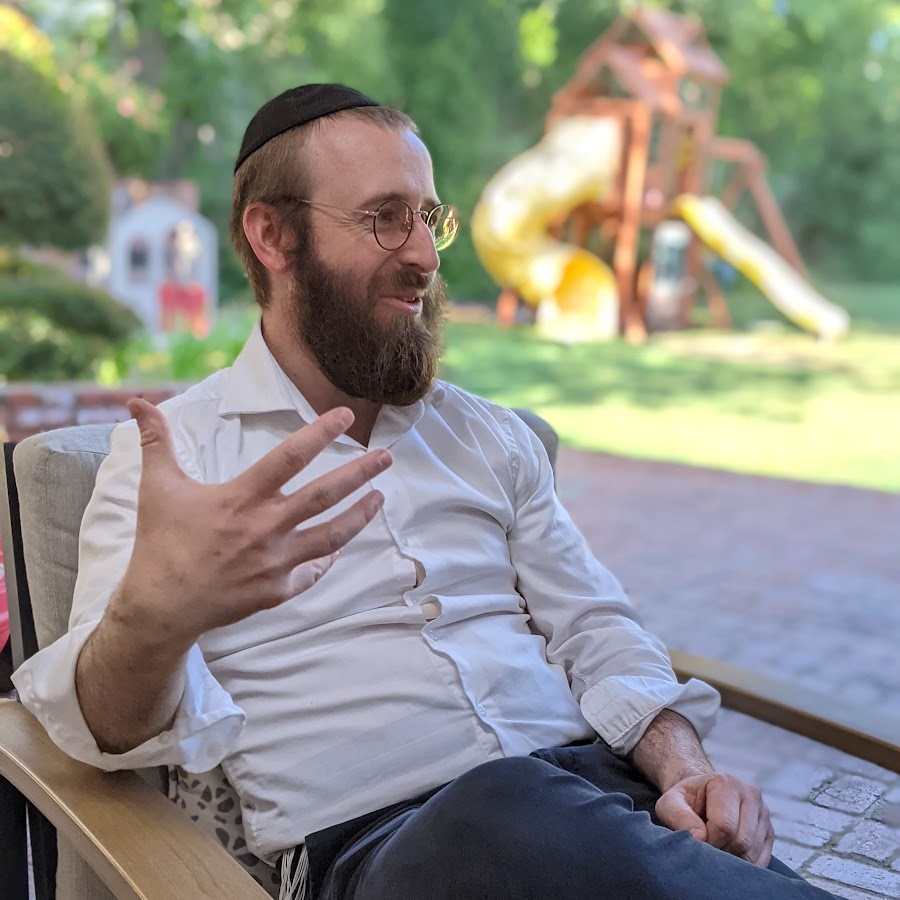
Your joy affects the people around you -- Unpack the Talmud and explore; How we can think about joy differently
Comments(0)
Transcript
Auto-generated transcript. Not time-synced to the video.
we're getting to a point where we're
getting closer and closer to the
messiah's arrival and as we get closer
to messiah's arrival we have to think
about Joy differently Joy has a new role
in Judaism okay friends The Story begins
we are starting the next passage in tal
mod we are going to explore the role of
joy in Judaism and believe it or not the
permissiveness of joy in Judaism we
start with a passage from the Tom in br
31a
in the link that we have sent should be
probably three paragraphs in um I don't
have the same exact English text is you
because I'm using a hard copy so the
translation is going to be slightly um
not congruent with yours but raban said
in the name of RAB
Shimon you guys see it it's prohibited
for a person to fill their mouth with
laughter in this
world a seemingly extreme statement it's
prohibited for a person to fill their
mouth with laughter in this world as the
verse states that
then our mouths will be fold filled with
laughter and our
tongues with singing then meaning the
future era right when Messiah comes in
the future era we're going to sing we're
going to be glad we're going to be
laughing implying that now is not the
time for laughter now is not the time
for
that when during the time that the
Nations will say that God is great with
all of these things they said concerning
Rees again this was a statement stated
by raban so concerning R who was a study
partner with raban and almost like a
student raban they said that in his days
he never filled his mouth with laughter
in this
world as soon as he heard this statement
from RAB he took it really seriously and
never
left okay this is a wild statement the
Tom's telling us don't fill yourself
with laughter don't be joyous be all
serious and this is gonna put kabad out
of business what are we gonna do
man um this this raises all sorts of
philosophical or theological questions
about Judaism
how are we supposed to
understand uh the role of joy in Judaism
based on this talmudic
statement to put things um in context
especially since the the way the
cabalists understand the role of
Joy I mean it's it's fundamental to
Judaism I have here a loose quote from a
teaching
by he writes in one of his
teachings
that sadness
Melancholy is not from a place of
Holiness is not godly that's not a Godly
thing it's not a holy thing it's not a
happy thing in fact that is the pathway
or the doorstep as it were to kipa but
kipa is what we refer to in cabalistic
lingo as the negative energy that makes
us see life
superficially as opposed to kadua
opposed to Holiness which gives us the
lenses of what life truly is the life of
God and truth and Hol and joy is going
to be holy it's going to be Godly
sadness is the gateway to kipa is the
gateway to a life that is superficial a
life that is
fake in fact the famed
Reon of Carlin once said that it doesn't
say anywhere explicitly in the Torah
Thou shalt not be sad right it's not an
explicit
sin he says however it is worse than any
sin it could take you down further down
than any sin can ever
take because when we have sadness and we
have Melancholy we don't mean being sad
over a specific situation me Melancholy
is really a better a better translation
when we experience
negativity especially when that
negativity disguises itself as something
holy and Justified it takes us towards
all sorts to dark scary places it's a
bad
thing um all this to highlight the role
of joy in
Judaism what do the talud say what is
this statement the
prohibition of filling our mouths with
joy our mouths with
laughter now I I just want to give some
more context over here to this
statement this is part of the a of the
talud right there's two parts of the
talud the a which means the more
philosophical parts of talud the the law
of
tal this statement happens to be both
because this statement in the talud
appears in the in the code of Jewish
law and the commentaries on the trace
this back to the tal and site the
application well when is it prohibited
to be um to fill our mouths with
laughter in this world when the T says
that what is it referring to there's two
opinions amongst the commentaries some
say it's referring to
Exile basas has been destroyed how could
we possibly
Rejoice which means during the second
temple ERA this would no longer this
would be a moot
point right
this the prohibition of laughter is
based on a verse that we had cited from
the book of Psalms by King David which
was prior to the second temple era
during the first temple era or
prophesizing that during the second
temple area the Temple's rebuilt maybe
you should be able to be happy some say
it has nothing to do with the temple it
has to do with the Yates or har up
apparently too much laughter can lead to
fraly and fraly being
frivolous invites the at har invites the
evil impulse invites sin invites
negativity
so the tal as well as the code of Jewish
law warn us don't laugh don't fill your
mouth with laughter again that leads us
back to the question well what is the
role of joy in Judaism both the
cabalists explain the important of Jud
of
Joy even in Hal talks about the
importance of Joy when doing Mitzvah
even in the Book of Psalms King David
says serve god with
joy so I'm going to share with you
a few answers answer number one is kind
of a technical answer and it's not going
to do justice but it is going to help a
little bit answer number one look at the
text of the tal because every single
word is Meaningful the text says I'm
going to read it in Hebrew then I'll
translate
it says the name
of I read in Hebrew and then I'll
translate it's prohibited for a
person to fill
laughter in his mouth in this world
don't be full of laughter have laughter
just don't overdo it don't be full of
laughter in other words everything in
moderation laughter joy that that those
are good things the moment we overdo it
it becomes excessive then there's the
concern that it leads to fraly inviting
thear up inviting the evil
impulse okay again that is an approach I
would not say that's that necessarily my
Approach just hold on here don't shut
off the vi if you're not watching this
live don't shut this off
yet another
commentary points
out again let's look at the words
persons shouldn't fill their mouths with
laughter implying that there is
something else that should be filled
with laughter just not your
mouth and that's your heart
and apparently based on the
Zohar there's this importance of having
deep inner joy in our relationship with
God our relationship with the soul our
relationship with Judaism our
relationship with each other but if it's
in the mouth but not in the heart if
it's external not internal we're missing
something and that's why it says don't
fill your mouth with laughter doesn't
say don't laugh doesn't say don't be
joyous it doesn't say don't
celebrate just shouldn't be filled in
your mouth to the exclusion of your
heart it should be deep should be real
should be something we feel in our
guts it should come from a deeper Source
it should come from our soul it
shouldn't just be an
outer
Behavior
otherwise it seems like it's prohibited
seems like this is a real
problem there's another explanation and
I think this is very in line with one of
the talks of the LA that I was reading
again let's look at the words a person
shouldn't fill their mouths with
laughter which means in this
world well where could you
laugh or in the next World so there's
another translation the
prefix B Be prefix be or B in Hebrew can
mean in so in this world it could also
mean with
with this world a person shouldn't fill
their mouths with
laughter with worldly
matters when it comes to being
worldly when it comes to worldly
pleasures when it comes to things that
our animal Soul draws us toward or our
Yahara draws us
toward that's not where we should be
experiencing laughter and joy with this
world in the world yes with the world
no our joy has to be toward uh um
Mitzvah and and in one of his talks I
was reading a talk from
the in
1953 where he explained he quoted this
talud and he says that a
person should have um
joy in this
world when it comes to serving
God because when it comes to serving God
that Joy is actually going to help when
it comes to serving God that Joy is
going
to
enable the relationship to be
complete in other words one of the
things that Joy does and other words Joy
is necessary just not with worldly
things but when it comes to a
relationship with God when we have joy
it turns the relationship into being
from being
behavioral to complete
to being
holistic from something that we do to
something who we
are that's a complete intimate
relationship without Joy there's no
intimacy because without Joy there's
simply just behaviors there's just
actions the moment we Infuse our service
with joy there's a holistic connection
an internal
connection very
important um one of the things that does
it does does two things number one it
motivates Us number two creates a
holistic
relationship the the
previous used to talk about this a lot
he used to say that when
soldiers go out to war they sing they
have a
March because that Joy creates energy
creates passion creates
motivation and he says as Jew
we're on a March because we're out to
war right to fight Darkness to fight
negativity to bring light and truth and
meaning to ourselves to the world and
like soldiers we have to have a March we
have to have joy we have to have SIM and
one of the things that's going to do is
that's going to carry us up that's going
to lift us
up number of decades
ago there was a rabbi named Alman
scherson related to the he was a rabbi
in France he was
visiting kabad world headquarters for
the high holidays he was there for he
was there
for and prior to the hakas the dancing
of with the
toras they had a little for praying in s
him get together they say they get in
the mood they Inspire each other they
encourage each other lalman was not in a
healthy condition at this point he was
not ambulatory he was in a wheelchair
couldn't
walk
and you know they're for
bringing he
requests that one of the student oh by
the way he couldn't have alcohol either
right so it's a bit of a dry for
bringing no alcohol and he can't even
walk so it's like what's this going to
look like
right he asks one of the Yesa students
to please get him a
Tanya he opens the Tanya to chapter
33 and he begins to read where the AL
the author of The Tanya addresses what
to do when somebody needs more Soul Joy
needs a soul charge needs a spark of joy
in their service to God and he reads
like those one or two lines and he was
just so inspired by it he literally
popped out of his chair and started
dancing without even realizing it people
were
shocked because the moment we have joy
in our relationship with God however
heavy it's going to feel it's it's going
to be lifted up we're going to lift up
we're going to take flight Joy makes
things lighter makes the relationship
lighter because it makes the
relationship more intimate because it
transforms the relationship from just
Behavior to being holistic and
intimate so when the talud says it's
prohibited to have
um to fill our
mouths with laughter in this world that
actually means with this world our joy
shouldn't be focused on the world our
joy should be focused in the world but
with
God I was recently reading a powerful
talk from
the in
1988 and you'll soon
see
how you know in general one thing you
see about the rebis talks you know
there's reoccurring themes whether it's
about the Messiah whether it's about Joy
whether it's about the soul connection
or whatever it may
be but starting from like 1987 maybe
1988 the reevis talks took like a new
shape a lot more powerful a lot
more I say this respectfully but
radical the Reit Shar sh a radical
approach to Joy very different than he
had been sharing until now the Reb said
this in 1988 he said we're getting to a
point where we're getting closer and
closer to the messiah's
arrival and as we get closer to
messiah's arrival he says we have to
think about Joy
differently Joy has now taken a new um
has a new role in Judaism this is what
he said there's a new role that Joy has
in
Judaism we used to think of joy as a
mechanism I have to do what I need to do
I have to do Mitzvah I have to study
Torah I have to connect to God I have to
do whatever I got to do and joy is a
mechanism to make it more pleasant to
make it more intimate to make it more
meaningful to make it more to make it
easier it's a
mechanism in other words technically you
don't need you know it's a means to an
end
in 1988 the Reb said we no longer we
have to stop thinking about joy as a
mechanism as a means to an end we have
to see Joy
itself as a service to
God Joy itself is what brings msia not
just doing a Mitzvah with joy but the
joy itself is Godly The Joy itself is
divine and here's the reason
why what is joy joy is true Joy the
truest pure there's different types of
Joy right even spiritually but the
purest form of
joy is experiencing the truth of
God in its purest
form not just how I like to experience
God the way I like to feel
inspired right which is subjective right
there's you ask every single one of us
what it feels like to experience God you
might have a different experience
different emotional right it's
subjective but if I can experience the
truth of
God which is what's going to happen in
the Messianic era I'm going to have true
Joy I'm gonna have the purest form of
Joy um in the mess when mhia comes as
Isaiah prophesies that the world will be
full of the knowledge of God we're
literally going to get to know God in a
deep intimate meaningful way and this is
going to be true with the experienced in
the Bas of Mikes the third Bas of mkes
and by the way just to illustrate
how pure This Joy is going to be the
talwood
says that the it's it's in toward the
end of tractate tius it says that the
construction of the B
mikash was done with
joy well here's the thing it didn't
last which means the joy wasn't so
complete the revelation of God it
represented wasn't so complete the first
Bas of M this last 410 years the second
420 years there was an incomplete joy we
know that the third Bas of mius is going
to last
eternally which means it's a complete
revelation of God a pure revelation of
God there's going to be this pure
meaningful Joy not a worldly Joy a Godly
joy and the Reb said when we start
experiencing that Joy now and when we
try to activate that Joy now not just do
a Mitzvah with joy but literally just
celebrate being Jewish celebrate the
soul celebrate our relationship with God
celebrate
truth we're starting to live the reality
of what's going to take place when mhia
comes and start and we Usher it in
closer we bring it closer literally just
having pure Soul Joy brings mhia closer
because that's what that era is going to
look like and we start living it now we
start bringing it in closer through
Joy the re that same talk points out
that the Hebrew word mashia and Sim
share the same root
word the same three-letter root sh
or because there's an intrinsic
connection between joy and mhia and
through joy we bring mhia through joy we
bring Redemption to the world through
joy we bring God to the world we tell
God hey we're starting to dance with you
without you you better get here
we're
ready we're
ready like going back to the statement
in the
tal says in the name of it's prohibited
for a person to fill their mouth with
joy in this
world not in this world with the world
our joy shouldn't be focused on the
world should be focused on
God in other words you have the capacity
for for Joy whether you like it or
not where are you going to direct
it are you going to direct it toward God
or are you going to direct it
toward our own you know
self-serving toward our purpose or
self-serving and that's why the T says
that in his days never filled his mouth
with laughter in with this world as a
worldly matter of course he was Joy you
have to be joyous but not as a worldly
thing as a Godly thing which is a big
statement for R lakish because R lakish
has his history he's known to have had
his past he's a balua he was a thief he
was inspired by RAB Yan to come back to
his
Judaism and he
embraced the true Joy embraced the true
Joy of
Judaism okay that's my
story sticking to it