0:00 / 0:00
The Talmud's secret to FEELING more ALIVE (and LESS self-consious)
96 views
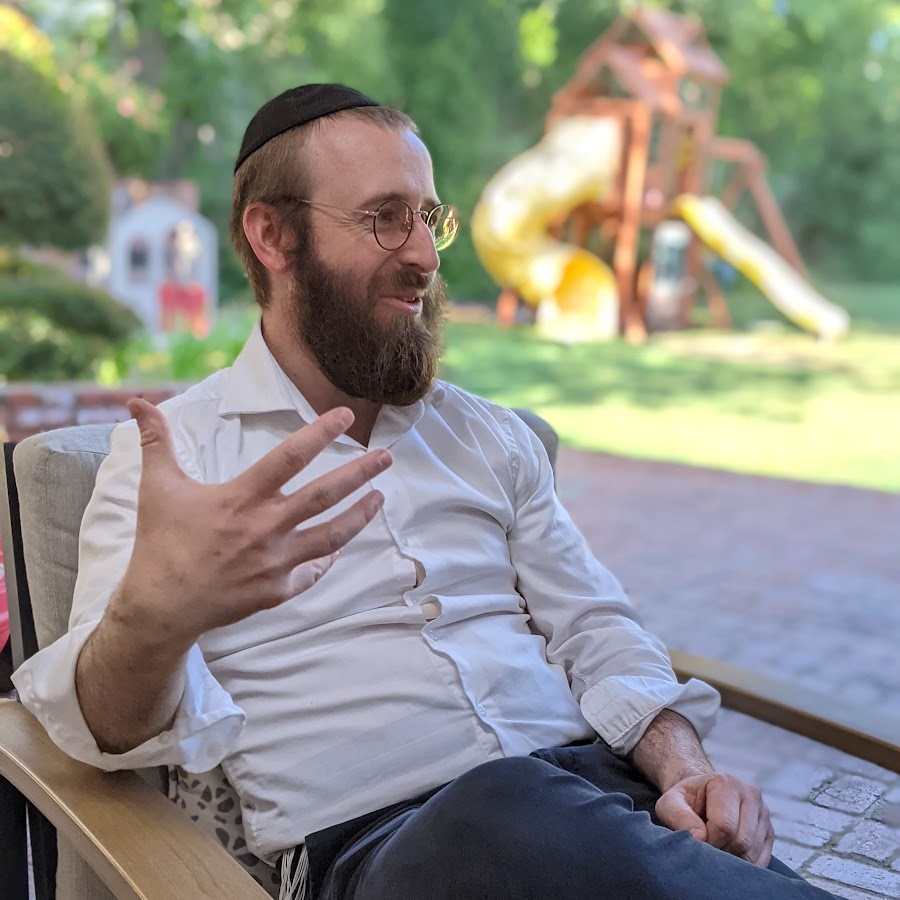
Feeling more alive starts with knowing what life and death realy is. -- Unpack the Talmud and explore; Why the rightious are called 'living' even while dead and why the wicked are called 'deceased' even while alive.
Comments(0)
Transcript
Auto-generated transcript. Not time-synced to the video.
we don't notice our body unless our body
is unhealthy unless there's something
wrong and that's because the soul is
what's dominant there a spiritual part
of us a Consciousness that's
dominant so we don't notice the body my
teenagers notice their bodies and
they're always looking in the mirror and
they're always self-conscious if
nothing's wrong you shouldn't feel the
body because you feel the soul okay
friends The Story
begins uh the next Passage of the T that
we're going to read analyze and pick
apart is BR 18a on the bottom and then
18b as well on the links that I sent
it's the second to last paragraph and
we're going to explore the Jewish value
of death and life how do we Define death
and
life um do does do the dead have
awareness do people who are alive have
awareness right one can be alive but
feel Dead one could be dead but actually
have a lot more life to them and we're
going to learn new definitions and
understanding of what life is all about
but let's start with this story in the
tal we're going to read from the second
paragraph second to last paragraph sorry
on the bottom of
18a and then it goes all the way to
we're going to switch to 18b as well
theor
relates that
Rabia and RAB yonatan were walking in a
cemetery and the sky blue string of RAB
yonatan's ritual fringes the T string of
his sitas was cast to the ground and
dragging across
Graves R said to him lift it so the dead
won't say tomorrow when their day comes
they'll come to be buried with us and
now they're insulting
us you can't do Mitzvah once you're dead
right we can only do Mitzvah once we're
only while we're alive in this world
right once we move on to the next World
we can benefit from the world to come we
can benefit from heaven from Paradise
but we can't actually do
anything um so actually to this day
there's a tradition to tuck in your
Titus when you go to a cemetery because
you don't want to be rubbing into their
faces the fact that um you know we're
wearing situs there's a whole question
by the way just parenthetically brackets
to what extent that applies these days
practically some say well we don't have
these days and the or many people don't
wearit these days and the talud used the
story ofit specifically does it apply to
regular tius does it apply to tius that
you would be wearing not specifically
for a Mitzvah but let's say you had a
four corner garment that you weren't
intending to specifically have a Mitzvah
with you know and you just happen to put
c on it so there's a whole question
about that but what does RAB yonatan
respond to RAB and yonathan said to him
do the dead know so much the dead are
aware
isn't it stated in the dead know nothing
that's from the book
of said to him if you read the verse you
didn't read it a second time and if you
read it a second time you didn't read it
a third time and if you read it a third
time well then they didn't explain it to
you properly you're not understanding it
properly the meaning of the verse for
the living now call it's the full verse
for the living now know they will die
and the dead know nothing and have no
more reward for their memory has been
forgotten what it means is for the
living know that they will die right
these are the Righteous who in
their death are called
living so when we say the dead don't
know
anything what it means is not
necessarily that they don't have
awareness but they're not aware that
their death is coming it's referring to
the wicked people because the righteous
people are actually called alive while
they're
dead okay let's Contra let's continue
the the uh segment on the top of 18b
have to kind of flip to the next page at
the top of the page he was referred to
in the verse as a son of a living man
and the talmud Wonders is that to say
that the fact that the Bible referred to
him with that appalation that all others
are children of dead rather the verse
should be explained as follows the son
of a living man who lives forever who
even in death is referred to as living
right righteous people are considered to
be living even while they're dead we'll
explain what that means
soon in contrast to the righteous who
are referred to as living even after
their death the verse explicitly States
the dead know nothing these are the
wicked who even during their lives are
called Dead
as the prophet jesel said in reference
to a king of Israel who is alive and you
are a slain Wicked Prince of Israel
right that's what it says in Ezekiel and
even if you wish to say instead that the
proof is from here at the mouth of two
witnesses or three Witnesses the dead
shall be put to death this is puzzling
as long as the accused has not been
sentenced to death he's alive right why
does it say put the dead to death right
we're referring to a wicked person who
merits the death penalty but why are we
calling dead if he hasn't died yet he
hasn't been killed yet rather this is a
person who is wicked who is considered
Dead from the
outset okay so the talmud is
asserting that somebody who is righteous
is alive even once they die and somebody
who's a wicked is
dead even while they're
alive yeah so in terms of like our our
learning of
Tanya um I'm trying to put this in that
context and I'm thinking okay well um is
somebody who's dead from the onet I mean
everybody's born with a
nshama um and
um they get to choose how they live
their
life but when you talk about who's dead
from the onset this is in my mind this
is a person you know who who's chosen
evil who's chosen to do the wrong thing
uh at every ter and is cons considered
Beyond
Redemption and I'm wondering if that's a
correct way to interpret Dead from the
onset well well the the onset of their
negative
behavior their wicked Behavior right
well well not not necessarily from birth
but they at you know from the moment
they are making choices that put them in
the category of quote unquote being
Wicked they are
dead and I I guess our question is what
does the talm mod mean when we say the
righteous are always alive even once
they die the wicked are always dead even
once they're alive what does that mean
practically and I'm going to share with
you four
interpretations um the literal
interpretation Rashi just on the tal
mode over here if you open up rashi's
commentary Rashi
says what does it mean that the wicked
sorry that the righteous are alive even
once they
die what it actually means and this is a
little bit more clear in the Hebrew when
you when you translate the words
literally even while they're
alive they are aware of
death and because of that there's a
certain fear that would prevent them
from
sin similar to the idea in pavas where
it says repent one day prior to your
death how do you know you're going to
die right exactly right the righteous
people always understand that their time
in this world is limited and that one
day they're going to face their maker
and there's a certain level of reverence
that they
have and that's why even while they're
they're dead they're considered to be
alive their life almost was was I don't
want to use the word anticipating death
because that has a almost of a positive
connotation but understood death as a
very real possibility and essentially
understood the value and preciousness of
life that's rashi's
interpretation there's another
interpretation by the gur arier the gur
arier is a commentary on Rashi himself
he's actually was actually authored by
RAB of prag the Mahal of Prague and he
points out a bit of a different uh
twist he says why are the wicked called
dead and why are the
Righteous called
alive the wicked are called Dead even
while they're
alive
because that's the
inevitable trajectory that they're
heading they're headed toward a life of
death in other words the life that
they're living right
now doesn't carry
value right life is assessed not
by the breathing not by your pulse and
your heartbeat but the value that it has
and somebody who's living a light a life
of wickedness A Life That's antithetical
to God antithetical to their mission
life is essentially dead they're not
doing what they should be doing
at least when you're dead you're not
doing anything wrong
right over here they're doing something
wrong so they really are living a life
of death whereas the
righteous always have some sort of
impact the gur
AR by the Mahar of prag in this book
deres this
from the Torah in the Book of
Genesis when Abraham first arises on the
scene end the par
Noah and we explore the genealogy of
Abraham and we learn about his father
aram's
father or ter that was his brother which
one is his brother now I'm lost okay
whatever his father
Nur the Torah tells us how long Nur
lived
for I see you're okay thank you thank
you for the correction so the Torah
tells us how long ter lived for and then
goes on to tell us about
Abraham and in the the context it sounds
like ter is still alive why did we just
talk about his
death like the Torah talks about his
death and then kind of rewinds to go
talk about seven years of Abraham's life
overlapping with
ter why so Rashi says over there because
Terra was an evil person he was a wicked
person who's an
idolater and an idolater is living a
life of death so even though he didn't
physically die yet the Torah insinuates
that his life was death and this is
where we actually derive this concept in
the Torah itself and on his commentary
on Rashi the G there explains
essentially ter didn't have a life that
was meaningful that was productive that
was bringing
value
although at some point right so there's
a big question about
that apparently his toua wasn't to where
it could have been that's what the
commentaries kind of
explain another commentary
the the is one of the commentaries on
the Torah as well he lived in the early
1700s right around the same time as the
bmov the orim is an interesting
commentary on the Torah by the way
because his I don't think his intention
was to sit down and write a Biblical
commentary he was a incredible scholar
and a cabalist and he used to study
Torah with his
daughters and his discussions turned
into a
book discussions with his daughters
learning Tor he had two daughters and
the or explains why are the Righteous
called
alive even when they're
dead he says it's actually talking about
the body of the righteous people
usually we understand death as the
separation of body and soul the soul
never leaves the soul Never Dies sorry
the body gets buried and at some point
the body
decomposes right so you die when we say
one dies we mean the body dies the soul
never dies for the righteous
people the body never really
decomposes and by the way there's
testimony about this they've there's
been times throughout history where they
had to transport and remove uh you know
transport Graves from one place to
another especially if Jews were you know
deported or you know kicked out of
certain places and they moved certain
people and righteous people righteous
Graves had intact bodies after many many
years there's the fam of eliin I'm using
him as an example he's one of manyin was
a student of the mag of mesich who was
the successor of the B
apparently they had to
movein
grave and they
said that his P his side locks was a
were still
wet from the Mikvah that they put dead
people into to purify
them so this this is a this is actually
a a I I can't say you could explain it
scientifically but it's a reality it's a
fact rightous people bodies don't
decompose because the body doesn't fully
leave which might explain by the way the
value you know we always visit Graves
even of our loved ones even if they
weren't righteous right to visit them to
but there is value in visiting the grave
of the righteous and um seeing that as a
portal to to to the Heavens to pray as a
special space and that might be the
reason why that sacredness is still
there so theim explains that when we say
a person who
is righteous never really dies even when
they're dead they're called alive it's
because the body and soul never fully
separated there's still Holiness in that
body I want to dive into the perspective
of the
Tanya that you mentioned earlier
Mike the Tanya references this section
of the talud in chapter
19 and he says why are the Righteous
called called alive even when dead why
are the dead called and why are the
right the wicked called Dead even while
alive so he says let's define life and
death let's understand our under let's
understand the definitions of life and
death true life what does true life
mean well what is the truest form of
life what is what do life mean
essentially what do how do you define
life and
death life
the truest form of life is
eternal AKA
God because that's that's the only um
entity that's
Eternal if it's Eternal it's truly
alive if it's
temporary it's on the trajectory of
death and may be may even be dead right
now the righteous people have have two
Li are are are are fully
Alive even while they're dead because
they're connected to something Eternal
their life is
eternal Wicked people are connected to
things that are
temporary I don't like the word Wicked
even in this context you don't have to
be Wicked but in Russia right the
definition of Russia in Tanya is not
necessarily a wicked person but a person
who's focused on things that are temp
orary well that's
dead focused on something dead you're
focused on the body rather than the
soul you know the the just a couple of
days ago we marked the 30th y site of
the
laab and I I'll admit us kabad people
are crazy about the
LA we are but why it was 30 years ago
right but when you hear a talk when you
hear a talk when you hear a person talk
or anybody who's really inspired by the
rebish teachings it sounds like it was
yesterday it sounds like it never even
happened people talk about the
connection with a as if
it's literally like this Gap in 30-year
Gap never even
happened why it's as though he's still
alive yeah because a truly righteous
person
everything they lived for every breath
they took truly still lives
on because their whole life was focusing
on things that were
eternal love of God love of Jewish
people the love of
Torah right making this world a better
place everything they lived and breathed
still lives on okay the body is not
there anymore but the but the values
which is what was the
priority is still there
the teachings still there the
spirituality of it is still there that's
true life and we can replicate that in
our own way we could replicate that on
some level in our own lives right when
our life focuses on things that are
Eternal so now we're truly alive and we
have a legacy to Le to to leave to
continue that will continue on whereas
when we focus
on temporary things we're living a life
that is just currently dead it's not
connected to God
we could still revive it by the way and
that that's normal that's default Human
Condition is to focus on temporary
things right it's easier to get out of
bed because of the iced coffee than
because of the tud study or opportunity
to pray in the morning or whatever it is
right that that's just human condition
but we're here to work on ourselves to
pray to learn to to to refine ourselves
to make a a paradigm shift focusing
on Soul not the body to focus on what's
Eternal not temporary when we do that we
become truly alive in one of his in many
of his teachings the rebit gave a
parallel for
this the parallel for this is a healthy
person a healthy person just physically
forget we'll talk about spiritually in a
second we'll draw a parallel from
physical health to spiritual health when
it comes to physical health the greatest
indication that you're physically
healthy is that you're not
self-aware right as we're speaking right
now hopefully you didn't notice your
left knee right did you notice your left
knee until I mentioned it prior to me
mentioning your left knee did you notice
it no right now do you notice it because
because I mentioned it right what if you
did notice your left knee left knee even
before I mentioned it well there's
probably something wrong with your knee
so you notice it right maybe it's in
pain maybe you right we don't notice our
body unless our body is unhealthy unless
there's something
wrong um and that's because the soul is
what's dominant even if it's not The
Godly Soul even if it's not the Divine
soul but there's a spiritual part of us
a
Consciousness that's
dominant so we don't notice the body
right teenagers notice their bodies
they're always looking in the mirror and
they're always
self-conscious because they're still
getting used to the souls and they're
still
developing right as the body develops
you feel
it but a you know normal on a normal day
when if nothing's wrong you shouldn't
feel the body because you feel the soul
in fact just to illustrate this
idea your body listens to your
soul it does right I move my arm right
now I didn't have to command my arm to
move I didn't have to think about it I
didn't have to process it I just did
it my arm is going to listen my nervous
system is going to listen to what my
desires are to what my soul wants and
the rebit gave this an Aly to draw a
parallel to spiritual health as
well if we're truly spiritually
healthy we should only notice what is
eternal and what is temporary shouldn't
really matter all that
much and the rebbit in one of his
teachings shared a story to illustrate
this and it may sound a bit of an
abstract story and it's like how's that
relevant to me but on some level it is
actually
relevant was having a
meeting with somebody and they were
going to be serving with with another
sadic another righteous person maybe you
as you see in the story maybe not quite
as righteous
right and
there was a big uh there was a mess up
in the kitchen when they were preparing
the
meal one guy was in charge of putting
salt guess he was in charge of like
spicing the the meal and I guess he
forgot so one guy says okay I'll fill in
I'll put in the salt the next guy says
I'll fill in I'll put in the salt the
next guy says I'll fill in I'll put
turns out like five different people
salt in this thing
it was some sort of
soup and it was
salty so this guy whom the AL is meeting
with taste the soup and he's just
like he couldn't handle
it and the alter says the alter just
eating it as if it's nothing he says
what's
wrong he says you don't taste the salt
he says no since I learned from the mag
of Mich again the successor of the B
I got myself to a place where I don't
really notice what how things
taste it's not like he's suppressing his
taste buds and he's suppressing himself
because I don't want to taste anything
and I want to live a life of P it just
wasn't important to him he was focused
more on the nutritional value on the on
the the essentially the soul of the
food then how it tasted right how it
tasted is temporary the nutritional
value is relatively Eternal the
spiritual value even more
eternal right soul food a comfort food
um now that the point is not that we
should stop tasting food right but the
point is we can get ourselves to this
space through learning especially
learning learning the soul of Torah
through doing through refining ourselves
we get ourselves to this space where
we're truly alive we're not living a
life of death we're not living a life
that focuses on what's temporary but
we're living a life of of life that
focuses on what's Eternal which will
carry on way after death that leaves
True
Legacy I'll tell you a story just to hit
the just just to um to round this
up the story is that there's a man who
apparently had a really beautiful Suka
it wasn't physically beautiful in fact
physically it was quite the crepet but
spiritually it was beautiful there was
singing there was dancing there was
energy there was vitality and you feel
your nsha when you walk in the Su it was
one of those
suas but again it was not very fancy the
guy didn't have a lot of money he would
go around every year collecting people's
old boards that they had left over from
their Suka and he would put together his
little Suka last minute he had a
neighbor who was well off and had a
physically beautiful
Suka and and he felt that the singing
and dancing and spirit the ruak the
Holiness it was kind of cramp in his
style you know he saw it as noise and he
didn't like it so the next year he went
around the town and paid
everybody not to sell their leftover
wood to this man for their Suka for his
Suka that way this guy won't have a sua
and he won't have any singing and he
won't have any dancing and I could live
in and I could be in my fancy schmancy
beautiful five fstar
Suka with nice couches and drapes and
everything with peace and
quiet and it comes suus and this guy's
going around can I buy your extra board
sorry can I buy your extra board sorry
nobody's selling to him he doesn't know
what he's going to do he wants to
fulfill the Mitzvah of the sua and he
wants to have his beautiful spirited sua
he doesn't have a lot of money and
nobody's even willing to sell to
him and he doesn't know what to do
he is finds
himself I'm missing a piece of the story
here but he finds himself in a
cemetery and maybe he went to go pray I
don't know he finds himself in a
cemetery and he sees a man carrying
Boards of
wood says to him what are you doing with
those Boards of wood he says I'm the Mal
I'm the angel of death and I'm preparing
a coffin
for so and so for this fellow who had
the fancy Suka that kind of didn't want
spirit
and he says you're preparing his death
for his death yeah his time has come and
he's we're going to kill we're going to
you know finish him off everybody has
their time in life his time has come
we're going to finish him off and this
is going to be his coffin he says do me
a favor the guy's dead already
why don't you just give me the
boards and you know he you don't need to
kill him trust me he's already
dead the he gives him the the angel
death agrees gives him the boards he
builds this
sooka comes suus and this Rich dead man
who's technically
alive is ready to have his peace and
quiet and his Suka and he hears the
singing he says what is going on he
pokes his head out and he says that the
guy has a Suka what happened how did you
get a
Suka and he tells him that the angel of
death was about to kill you and these
were going to be your this is going to
be your coffin I told him leave you
alone you're dead already he's good he's
taken care of and the guy understood the
point that although physically he had a
beautiful
Suka it was dead and although physically
this guy did not have a beautiful and
was quite decrepit it was totally
alive and I think this very much
reflects this tuduk statement that the
righteous even while
dead are alive because what matters to
them is what's Eternal not what's
temporary and the wicked even while
alive are dead because they're ignoring
what's Eternal and focusing on what's
temporary okay that's my story and I'm
sticking to it