0:00 / 0:00
The Greatest Problem We Face Today #1 - Eradicating Sinas Chinam
2,395 views
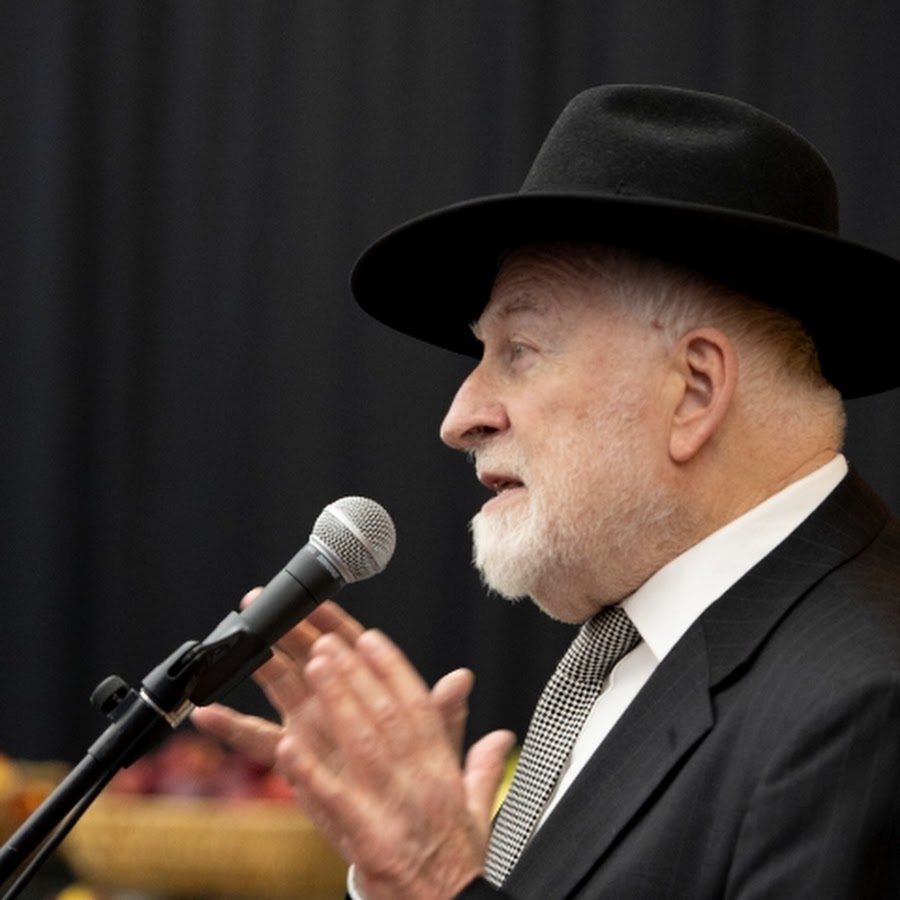
Recognizing the good qualities in other people. Rav Hershel Reichman Toras Chaim https://www.yutorah.org/lectures/lecture.cfm/1166518
Comments(0)
Transcript
Auto-generated transcript. Not time-synced to the video.
Shalom Torah viewers
with a
an idea on how to approach
perhaps the greatest problem we the
Jewish people face today and
according to our sages which we have
faced since time in memorial
that's the problem of sasina
Jewish selfhatred.
Sages say infall
on the ninth page of
that uh the three great sins of
idolatry, incest, murder
were the sins of the first temple and
cause its destruction. But the great sin
of the second temple was Jewish
internal hatred of one another
which uh caused the destruction of the
second temple.
And we have of course a very strong
tradition from the Torah and Nval
when we fix our sins we will be
redeemed.
So this sin of Jewish self-hatred
clearly has to be fixed for or should be
fixed. That definitely speed the
redemption. We are back in Israel today.
So it's a big step towards redemption.
Gibb scalote
and more and more Jews are coming, thank
God, and living there. But we're still a
far away from total redemption.
uh beta mikdash is far far from off the
horizon
and we do need a lot of uh dishaya a lot
of help from heaven to uh to get to that
final goal of mashiach and gula shalo.
So we still have to fix uh the sins of
our people and of course the great sin
of Jewish self-hatred.
Rashi says that when the Jews came to
uh the Torah has been using
they travel they camp but when it comes
to house the Torah all of a sudden
switches to the individual tents
the Jews camp as one by the mountain
says
that that mountain they were one person
one heart
even though all the other times they
were split.
So that we see that when we we have at
that time we have achieved total unity
we get the great gift of the Torah
greatest gift ever given to us or to
mankind.
Now um in the another source for this
idea it says
they camped as one camp which meant that
they decided to love one another and
that's how they merited to receive the
Torah.
So loving one another at that
great level as a person loves himself or
herself is the key to getting the gift
of the Torah. It's the key to
redemption.
And also says over there,
we see how great the power of repentance
is that they were divided
in Egypt leaving Egypt. But when they
got to Sai, they repented all of that
and they decided to unite and to love
one another. And it worked. that shuva
that repentance was accepted. That's a
model for all of us. We should not give
up should not say it's hopeless. We can
overcome Jewish self-hatred. We can
overcome division. We can become united.
It can happen in an instant the way it
happened at house ci. What I wanted to
do today is give the first of several
um several attitudes or strategies
and how one can approach this issue and
hopefully
overcome it. And I'm I'm using the safe
for shame
uh which I I love very much and which I
study often and even have a book
calledic legacy lessons of thatic work
written by Rabesh Bournestein itself and
he talks about this issue of sinam
Jewish divisiveness
and gives various ideas and strategies
which I would like to share some of them
and Today at this particular share
we'll talk about
how to appreciate every Jew's unique
goodness
because he mentions a few places. One
place is pious vigash
and the page shinhi 3305.
Now the Maharal explains that perhaps
the basic reason
for the enduring infighting and hatred
among Jews is because culturally
and nationally
Jews are extremely intellectual
and stubbornly ideological. Now we the
Torah describes us as an amache or as a
very stubborn people and being stubborn
has been a blessing because many times
we were outnumbered
by other people's who hated us, other
ideologies, other faiths. But we've been
very stubborn, thank God, and committed
to our beliefs in Hashem and God and the
Torah as we as we have it.
This plus this good part of Jewish
character though sometimes turns against
us because
a Jew, a group of Jews will
come up and invest in a certain ideology
and feel that that ideology is the one
and only way of of living a proper
Jewish Torah life and not accept accept
any other form of ideology.
For example,
um
the argument between
the original
and their opponents
where each side thought that the other
side was completely wrong because they
believe so strongly in their own side.
And we can show many many such
situations throughout Jewish history and
unfortunately including today.
Now when I have an ideology
which is sincere and I believe is Torah
based and maybe my friends and group
believes in this very strongly and
meanwhile you
have a different ideology which is maybe
even the exact opposite of mine
and you and your religious Jewish
friends believe strongly in your
ideology.
So does that mean that uh that two
ideologies
are impossible to coexist
and um one ideology must destroy the
other one.
It's against to say that is against the
Mishna which say that B Shami and Bel
back in the second bet mdash towards the
end of the second B mikdash
had many disputes many strong disputes
about
great and important matters. questions
of of Misa questions of whether if you
do it one way and you're wrong you get a
death penalty and BI says this and B
says that and the Gar says that even
though they had such disputes
nevertheless their love for one another
was
open-ended
and they were intermar with one another
I always think that that's a very good
sign that the dispute is the shame name
it's truly correct if the two sides can
intermar
so it's an intellectual difference but
doesn't turn personal
so what the shamish suggests is the
following
instead of believing that my ideology
which I really believe in is the only
possible ideology
realize that the other ideology the
other system, the other uh way of
thinking and even living has merit.
Has merit. It comes from a Torah
perspective.
My opponent believes in the Torah of
Hashem. My opponent is a God-fearing
Jew.
He and his group have a different view
of things from where they come from. It
might be their their historical
background which is motivating them
which is different than mine. It might
be that certain personalities
gravitate to one ideology and others
gravitate to a different ideology. We
have to realize
a statement of our sages.
There is no such a thing as a
god-fearing Jew who doesn't have a place
and a time.
Maybe it's not my place and not my time,
but it could be and we should believe it
will be and was or is a place for
someone else and for his time.
If we could learn
to respect and appreciate
the well-meaning
and sincere
beliefs of our opponents
coming from a good place. Even if I
think they're wrong, but they're coming
from a good place. And I should feel
that maybe there's a place in time for
their point of view rather than my point
of view. I will then have the ability to
respect them and then to love them as a
fellow Jew who believes in Torah.
It's hashem all of us will be able to
use this strategy
to help us achieve true
and shalu.
Amen. Thank you.