0:00 / 0:00
The Greatest Miracle of All - Rav Aryeh Lebowitz
860 views
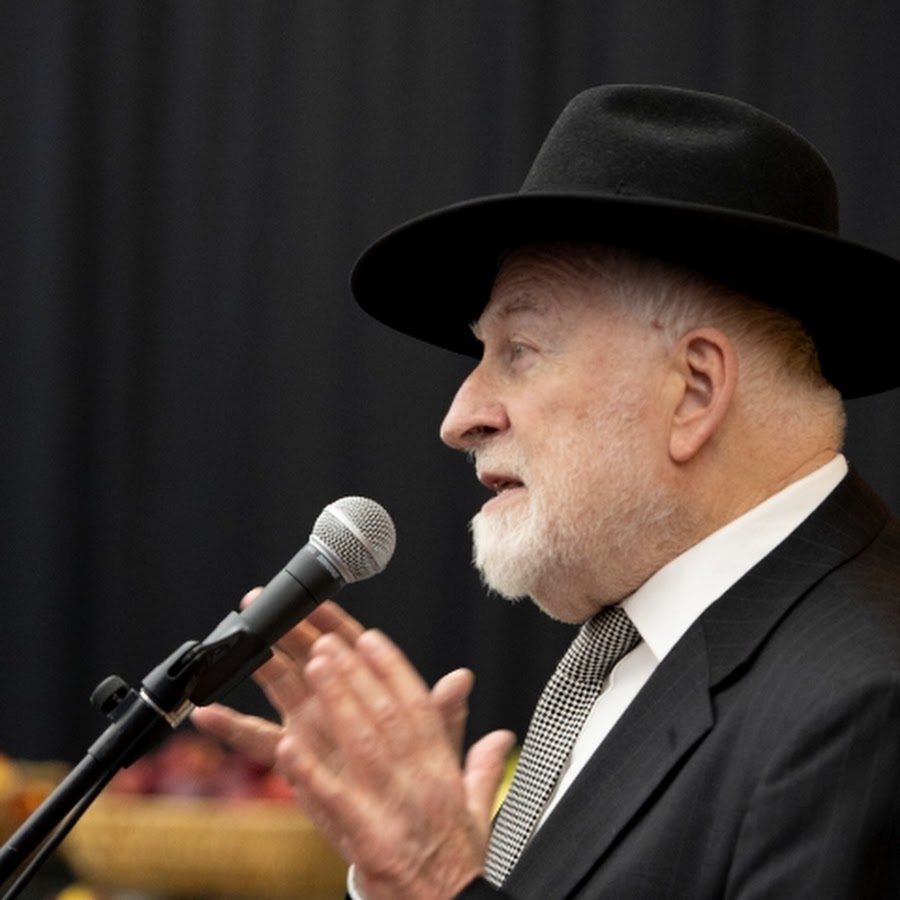
Chaburas Ohavei Torah https://www.yutorah.org/lectures/lecture.cfm/1164022
Comments(0)
Transcript
Auto-generated transcript. Not time-synced to the video.
There was a uh there was a Jew by the
name of Ra Khalan Herzman when he was a
bach he had gone to Grudna because he
wanted to learn by Rav Shiman. So he
wanted to at least be able to talk in
learning to be in the shadows of Rashimk
and he took the long journey from
wherever he was. I do not know where.
And he finally made it to Grudna and he
knocked on Rashimkab's door. And
Rimishkab saw that he was wary from the
journey that he was tired from his trip.
And he said, "No, no, we're not going to
talk in learning. First, we're going to
get you something to eat. We're going to
get you a little bit of rest. You're
going to take care of yourself and then
when you're uh when you have enough
strength, when you have your kos, then
we'll we'll talk in learning." And there
are similar stories about the and other.
And it's not surprising that there are
such stories because that's proper der
that someone comes from a long journey
before you hack them in learning and
before you engage them in what could be
an intense conversation you want to make
sure that their basic needs their basic
physical needs are taken care of. In
that context, it's a little bit
surprising what the target says about
Mosherenu when he greets. The says
he brings him into the says the sonish
that he brought him to the place to the
house of learning which essentially
means that Israel shows up and Mosha
says there's a place I got to take you
and he immediately schle him to the base
medish. What kind of is that? Why is
that the first location that Mosha
Rabenu is going to bring Israel is Davka
to the B medish? Second of all, you look
at how Mosha Rabenu relates to his own
children when he was to have that of
having children. So he and his wife give
them names.
The first one is named Ger because he
was a G in an in a strange lander
and the other one was alazer
of because who helped him and saved him
from the parro. So first of all you know
experiencing being saved from the parro
is a worthwhile thing to celebrate. It's
a worthwhile thing to commemorate to
memorialize in the name of your child.
That child will always walk around with
the pride of knowing that he was named
after a miracle that was performed uh
through his father for the Jewish
people. The other one is a little more
curious.
That child for the rest of his life is
going to walk around thinking I am the
one that represents the worst time in my
father's life. I'm the one that
represents being a stranger, being an
outsider, being someone who does not
belong and who was not welcome. And that
seems like a little bit of a burden to
uh to place on a child. In addition to
that, it seems that it's a little bit
out of order because what eritz nakria
was he was he actually in? Meaning, if
if you're born in America and you're
raised in America and you went to
yeshiva in America and your whole life
was in America, you got married in
America, you built a home in America,
your your your home is America. No,
that's where that's where you live. The
only that Mosher Raenu was in was in
Midan. That was after uh that was after
Mitim. So it seems that it's a little
bit out of order. Uh so has the
following uh the following mahalik in
answering these questions. He points out
he is from from the pusk in parasa
describes the aftermath of theel and
there's a very very curious in the
aftermath of the where hashem says
hashem says I'm going to make miracles
now the likes of which you have never
seen. There are going to be miracles
that far surpass anything that Clalis
has ever seen. And what is he possibly
referring to? This is after Esser Makos.
This is after Cassamsuf. What miracles
are going to happen after all of the
greatest miracles that we celebrate and
that we talk about in the night of the
the Seder and that we uh that we read
about in these these parios, these past
few parios that we just read. What what
are these what's this great miracle?
Hashem promises it's going to be the
greatest miracles ever. What exactly is
the uh is the miracle that he's
referring to and suggested based on what
writes in the introduction to his sitter
comments how amazing it is that is still
around and that we're still vacant by
Hashem that we're still connected to the
rebon and his Torah. the Torah in its
entirety, every nik, every o is fully
intact. It's amun that the Torah is the
Torah that was given to Mosha. We've
managed to maintain it to perfection
that we have the same Torah and not just
that we have it that it's off in a uh in
a museum somewhere that it's
in a very wellprotected place like the
Constitution or something like that. No,
the Torah is something I guess similar
to the constitution in a certain sense
that thousands of people are studying
every single day that that demands the
attention of so many people young and
old. And that says Ravakden is the
greatest miracle in the world. The
greatest miracle in the history of
mankind is not it's not the makos. It's
notigas.
The greatest miracle in the history of
mankind is the fact that there is a that
still exists today and is still and is
still connected to the Torah.
says,
"All of the miracles of Tanakh are
dwarfed by this miracle of the
continuation of the Jewish people in our
connection to Toras Hashem." And that,
Rashak says, is the miracle that Hashem
promises after all of the miracles were
over. He said, "The best is yet to come.
There's going to be a greater miracle.
It's just going to take a long time for
you to see how it plays out over the
course of history. And we've seen it
time and time again. When we are
connected to the Torah, we survive. When
we are not connected to the Torah, we do
not survive. Kimu is not a metaphor. It
is a reality. I was just reading the
biography of
Khook once had to present in the Knesset
about whatever hot button issue there
was of the day. So the gdole m asked him
to present because his last name is
cook. He had a little more street cred.
So uh sort of sumak went and he brought
a map with him and he showed various
communities that had yeshivas in
communities that didn't have yeshivas in
uh in different places and he showed
that survives when there is Torah that
is being learned. Clal does not survive.
I think so one of them told me I think
uh the name maybe Rosenwag that uh that
even when there's a a new uh uh uh you
know a new a new movement within
Yiddishkite that tries to push the
boundaries and that tries to stretch
where uh where where what a Jew is
allowed to believe and what a Jew is
allowed to do. They no longer call
themselves anything but Orthodox. They
have different names for it. This kind
of orthodox, that kind of orthodox, that
kind. Because once you call yourself
something that's not orthodox, you know
that you're done. That uh it's it's a
way of saying that we're a one
generation religion that it's not going
to last because we know. So, okay, will
they last? Won't they? But we know that
without a connection to it's we have no
chance
and everybody realizes that and based on
that says when Israel joins the Jewish
people, he does so because
he heard about great miracles. He heard
about Yamamsu. He heard about the great
miracles that happened to the Jewish
people. And Moshenu right away grabs him
and says, "You think you heard about
great miracles? I'm going to show you
the greatest miracle that happens to the
Jewish people." And right away he's bes
he brings him to the B madish. And when
Mosha names his children, he recognizes
the importance of being a G. Even before
he goes to to Midyan, even though he was
a prince of Egypt, as the movie title
has it, he was born in Mitzim. He was
raised in Parro's house. He understood
that he was a G. Why is he a G? Because
the Jewish people are not natives to
whatever country we are born in. We are
natives to Torah Hashem. We are natives
to the B madish. We are natives to this
island that's uh around everything else
that's around us. This is our native
home. Moshe in fact was a g before he
was saved from parro. He lived his
entire life as a gitria
because a Jew is a piece of hashem. We
in our times face a unique challenge
historically. Raasha Weiss once pointed
out that it's never been as easy to be a
as it is today. All thearim that we have
available, all the online sharim and the
apps and the great Torah teachers that
it used to be that you know your local
Reb was your Reb and if he was good, he
was good and if he wasn't so good, he
wasn't so good. Now you have access to
the greatest Torah teachers in the
world, the most clear, the most
brilliant, the most everything. And you
can you can access all of them. All of
them. It's it's so so easy to access the
Torah nowadays. Someone says to me, "Oh,
I listen to you. How do you know all
those marakos?" The answer is, "I don't
know any of them. I have a mifa in front
of me. I'm literally reading it out of
the uh out of the massa. You just have
all of this access to so much. There's
so much Torah that we have access to.
But it was never harder to want to
become than it is nowadays. to actually
become once you want it. It's never been
easier. What's hard now is to want to
become there are so many distractions,
so many things that are appealing to us.
So many things that distract us from our
essential goal. And the avod is to
realize that we are natives of this
room. We are natives of the bish. We are
natives of hashem. Everything else is
init.
Everything else is something that may
have value, but sometimes that value is
fleeting and certainly that value is
not.
You know, one of the things that I was
moved by over this past week when the
body of the last hostage was recovered
and many many people were making the
connection that it happened on the week
that we read about
that Mosherenu took these.
You know the gurin sult dafud gimmel
gives Mosher Abenu a lot of credit by
painting a contrast and it says yeah
Mosher Abenu was busy looking for the
atmosphere
they were busy with money and he was
busy with mitzvos and it's an amazing
compliment to Mosher Rabenu that that's
what he focused on and what that what
that compliment is is that everyone sees
the value in gold in silver in things in
stuff. Mosher Raenu saw eternal value.
He was able to realize what is fleeting
value and what is eternal value to be
able to realize that a Jew has kadusha
but he's a dead body but there's going
to be a person understands a person
understands that there's so much more
that there's something that has that it
could be you have a kef that people are
going to be able to det and then one day
there's going to be a this is a this is
going to be uh you know the the basis of
of kaduca and like it occurred to me
that at the uh at at at the beginning of
the war uh you know I I I I spoke to a
father of a sniper in the IDF and this
uh sniper had to go into buildings in
Gaza and it happened to be they took
over a certain high-end neighborhood in
Gaza. So the snipers have to go to the
highest place. So they went to like this
penthouse apartment and they sort of
took over the apartment uh when they
were uh when they were there. And he
said he opened the drawers in the
apartment and there was jewelry and
Rolex watches and all sorts of expensive
things. And you know what? You know
what? You know what happened to all that
stuff? To all of that money, to all of
those Rolexes. You know where they are?
They they they they stayed there. No one
was interested in them because they were
able to see that's not the value. That's
not what we're here for. We're here to
retrieve every last Jewish hero because
we appreciate what Kaduca is. That's
what we came for and that's what we're
leaving with. We're not leaving until we
get it, but we're not going to be
distracted by the narish kite. We're not
going to be distracted by the by the
gold and the silver. It's an amazing
full circle of khali coming around to
learn such a uh such a lesson. By us
being here, by us dedicating ourselves
to our lira in our base med, we are
showing that we understand what isu
what is of truly val what is of true
value to us and where we belong. And by
continuing to dedicate ourselves to it,
we are in in enacting and enabling the
greatest miracle in the history of
mankind.