Transcript
Auto-generated transcript. Not time-synced to the video.
speaks of two different types of
and they're both amazing. They're both
very accomplished but they are very
different in one specific way. You have
one type of
who focuses on himself, on his own
growth, on his own of improving himself,
making himself a better person, becoming
as great of a Talm as he can be.
And that's an amazing thing. And he's
able to reach very, very high levels.
And yet you have another Talm
who in addition to doing all that stuff,
working on himself, learning Torah. You
know what else he does? He tries to
focus on others as well. He tries to
share his knowledge, his wisdom. He
tries to inspire other people to do a
Hashem the way they the way they are
meant to be. Now if I was to ask you who
is going to reach a higher level what
would you say the first guy or the
second guy? The second guy all day he's
sitting and learning in depth working on
himself versus the other guy the other
who in addition to learning he's helping
others he's trying to inspire them to
become better people. You know what the
tells us? He says the first Talm is no
nearly on the level of the second one.
The second Talm who focuses on others in
addition to himself is able to reach
levels in Gan Eden that nobody else able
to attain.
Today we have the zus of having such a
person with us.
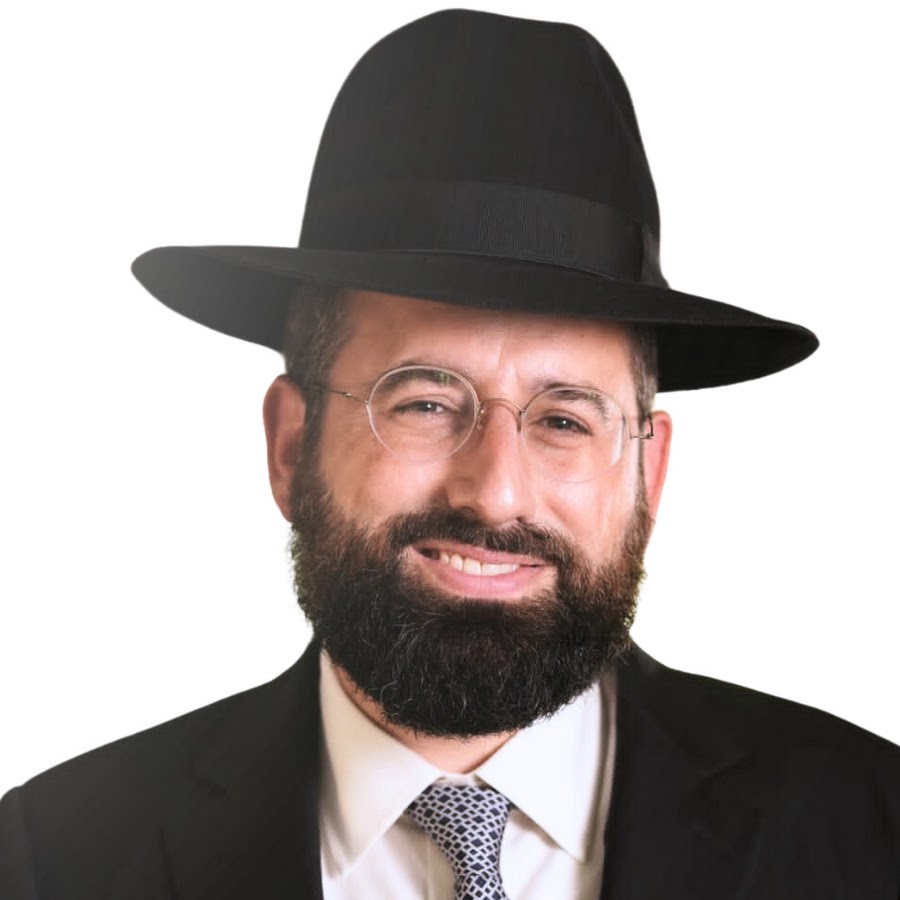
Rabbi Gladstein, in addition to being an
unbelievable talam, storehouse of
knowledge and depth and wisdom of the
Torah, he has dedicated his life to
inspiring others, traveling from place
to place, from city to city. It's hard
to leave Lakewood, you understand? I
mean, I'm sorry, Brooklyn, right? That's
where you were born. I stayed at your
house, Bashem.
I did. I when I was learning with your
brother, Ari.
>> Yeah. or hashem. So to come to LA it's
you know
but uh Rabbi Gladston is with us and we
have the to hear D bra and I owe you a
thank you because I went through half of
Tanak with your sh on the malim and uh
yesterday we're listening to your shir
on tshoua that you just gave in the
young Israel and it was fascinating
please give your full attention to gladi
Thank you very much Rabba Yusup for the
very kind introduction.
Was I there when you came to my house
for Shabas?
>> I don't recall.
>> I don't remember.
Brish Rabbi Goldberg.
I would like to perhaps elaborate on a
very important teaching that Rabbi Yusup
mentioned.
Presumably this is the very beginning of
the school year, right? When when did
you begin?
>> Two days ago.
>> Two days ago. And we sort of take it for
granted. We live in a Jewish community.
We live in an observant community. We
are have the opportunity to come to
yeshiva. And of course, we come to
yeshiva. Who which Jewish child doesn't
go to yeshiva?
And sometimes we don't have the proper
appreciation to really take advantage of
what it means to be in a yeshiva. I want
to share with you a story that as the
years go by, the story like produces
more stories.
It's interesting. A story sometimes has
a life of its own. I originally heard
the story when I was a little kid and
then I heard a different uh great RV
tell over the story and the impact it
had on him. And just this past Shabas I
read how this story has grandchildren
already.
Perhaps many of you heard about uh a
great RV who passed away recently.
Uh he was also a very interesting
personality. He was a historian. He was
a producer. He was a writer. Rabbi
Barlow Wine. And there's a story that he
tells over that he says actually was the
turning point in his life. But it's
something I heard when I was a little
child from a completely different
source. My grandfather
was a Holocaust survivor. He was the Tal
of Raim Za. For me to come here this
morning just so you should hear the name
Ramsemba
is worthwhile. Rabman Za was the
greatest God is before the Holocaust.
He was a Gassid. He would go to sit by
the GBA. But in learning Tory, he was
the acknowledged god Alhadar. In fact,
my grandfather remembers going to his
house and seeing a bookshelf. Most
people have in their house. Whether they
use thearim, that's a different story
entirely. Sometimes they say, you know,
maybe we should just sell book covers
and this way they'll look maybe instead
of buying the book for full price, you
should buy the book for half price,
empty on the inside. This way it looks
nice on nice on the shelf. But Raim Za
didn't just have a bookshelf of Raakim
Za had a bookshelf of that he wrote you
know he wrote a parish on the entire
Rambam he wrote a pair on the entire US
he was invited to be the rashiva of
yeshiva kaklin when Shapiro passed away
he was invited to be the chief rabbi of
he didn't accept any of the above and
when he was in the wars ghetto he had
the opportunity to save his life and he
would not leave the rest of his people.
So my grandfather was not only a student
of Raman Zamba, he was a Benbias.
Basically he came in and out every
single day.
And
after the Holocaust, my grandfather who
was a survivor, a Polish survivor was
made the head of the religious
department of the joint distribution
comm uh committee which means he became
part of the American army. He had
learned English in Poland uh before the
war. He was educated. He also had sika
and the army made him the gobetween
between them and the Polish survivors.
In fact,
when uh the cloenberba was in the camps,
my grandfather was the translator of the
cloenberba for General Eisenhower.
Eisenhower later became the president of
the United States. when Eisenhower came
in and he spoke to the survivors. My
grandfather was a translator between
Eisenhower and the Kenberger Rabbi.
Anyway, my grandfather's in the camps
and a great person was coming to the
camps. His name was Rav Isaac Halevi
Herzog who's the first chief rabbi of
Israel. And Rahers told my grandfather
that he just came from Rome. And I
remember hearing the story, my
grandfather wrote this story in his
memoirs. Rav Herdzog I actually my
grandfather published this story must
have been decades ago in a newspaper I
don't think it exists it doesn't exist
anymore it's called Yiddeshart it was a
Yiddish newspaper you know back in the
day everybody spoke Yiddish so they read
the the editor was Yasulen said and my
grandfather published the story that
Rhertz told him he just came from Rome
my grandfather what were you doing in
Romeog said in Rome I went to visit the
pope
And I brought with me a list of the
names of 10,000
boys and girls that during the Holocaust
their parents didn't know what to do
with them. They were afraid the Nazis
would come kill their children or take
them away. So they gave over their
children to churches to priests to
monasteries hoping that these Christian
institutions would save their children
and maybe the parents would survive the
war and they would come and retrieve
their children. And Rhertz came to the
pope. He says, "Pope, I have the list of
the names of 10,000 boys and girls. We
know they're our children. You know
they're our children. Give them back to
us. You're kidnapping them now. You have
to give us back our children." And the
Pope said, "We cannot even return one
Jewish child." You see, all these 10,000
children were baptized. They were
converted. And once we convert a Jewish
child to Christianity, you can never
take them back. We'll never never get
them back. And the door was slammed on
Rhertz's face.
This is what Rahertzag told my
grandfather in 1945.
Okay, let's fast forward a few years to
1951 or so. So there's this young boy in
Chicago. His name was Rabbi His name was
Barl Wine. He wasn't a rabbi yet. He was
11 years old. and his father said, "You
know, Barl, a big rabbi is coming to
Chicago today." Rabbi Wine said, "Who
who is this uh who's this rabbi?" Rabbi
Herzog. Now, I don't know if you ever
saw a picture of Rabbi Herzog. He wore a
a shiny top hat. He had a silver cane
and he would hold a Tanakh in his hand
and he comes off the plane and all the
yeshiva bakim in the Midwest came to
greet him. few hundred bakim and they
escort Rabbi Herzog to the yeshiva in
Chicago, the Skoi yeshiva and Ra Herzog
addresses all the Balabatim and all the
children in Chicago and of course he
spoke in Yiddesh and he gave a pilpir in
Yiddesh. When the Shir was over, Rhertz
says, "Now I would like to have a word
with the boys." He turns to the boys. He
says, "I just came back from visiting
the Pope. I had with me the list of the
names of 10,000 boys and girls. I asked
the pope to give us the children back.
The po the pope flatly refused. He said
they were all converted. They were all
baptized.
And the door was slammed on my face.
Revzag is standing there in front of 200
young men in the Skookoi yeshiva and he
breaks down crying like a baby for the
lost 10,000 children who are lost to
Christian families.
This young boy sitting there, he said he
was never so frightened in his life to
see a great RV, a great sadic, a great
God break down in such pain that these
children were lost forever. After
weeping and crying, he lifts up his head
and he says to the boys, "There's
nothing that I could do for these 10,000
children, but what are you going to do
for the future of the Jewish people?
You're here in the yeshiva. You're in
the sky yeshiva. You're still with us.
You're still part of the Jewish people.
You could still do something. You could
still accomplish. What are you going to
do for the Jewish people? And Rabbi Wine
would always say that whenever he's t
tired or he's a little down or he's a
little worn out, he would hear the cry
of Rhertz, what are you going to do for
the future of the Jewish people?
And that was the turning point in his
life. That's when he decided he was
going to commit himself to do whatever
he could to build the Jewish people. So
it's interesting. I happened to see
last Shabas
in I live in the five towns and before
Shabas I got a newspaper called the FJJ.
I don't think it makes it to uh
California, but it makes it to the
tri-state area. And they had different
tributes and obituaries and has spayed
them for Rabbi Barrow Wine. And I saw
one little clip uh or a tribute of Rabbi
Friend for Rabbi Barrow Wine. Everybody
knows Rabbi Friend. Actually, there's a
very funny story about the somebody once
met Rabbi Wine in the airport and they
said, you know, Rabbi, you changed my
life. Your books, your tapes, your
videos, your, you know, I'm a different
person. By the way, next time I know
behind every great man stands a great
woman. Next time you see Rabbitson Fran,
please tell her how much you mean to
him. How much you mean to me. In other
words, the guy thought that he was Rabbi
Fran, not Rabbi Wine. Anyway, so Rabbi
Wine said, you know, I don't usually
travel with her, but the next time I see
her, I'll be sure to let her know.
But Rabbi Fran said, you know, he wasn't
a student of Rabbi Wine. He didn't learn
by him. He didn't maybe know him
personally, but he was an admirer of his
shirim and his tapes and so on and so
forth. And that Rabbi Wine had a big
influence on him because in the era when
they invented a new technology, I don't
know if you know what this is. Tapes. Do
you know what a tape is? Yeah. You know
what a tape? You know, my kids always
laugh. I say, "Oh, did uh did Schweki
come out with a new tape?" They said,
"What are you talking about? What's a
tape? There no tape, you know." So I
say, "Oh, a new disc." They said, "No,
there no discs anymore either." You
know, everything is what is it? MP3
right when they invented tapes and
what's a tape nobody would go on a tape
Rabbi Wine was the first person to give
Shirim on tape I think rev Miller also
and Ray Fran said when he saw that Rabbi
Wine was trying to be Marbet's Torah
with tapes he said you know what you
know everyone should really do that so
think about it the words that Revzog
said to a boy in 1950
how it influenced him and Now 50 years
later it influenced somebody else
and it's really something that we should
all think about because you know we come
to yeshiv every day and we're going to
learnish and we're learn and we're going
to learn about we learn about the yumim
but sometimes we take it for granted
that do you know how lucky you are to
have the opportunity to learn Torah in a
yeshiva and then you're equipped to
actually go out and do something for
Kalisra. Well, did you know that even
though you look around and it looks like
every single boy has a has a yeshiva
education,
you're only a drop in the bucket.
Nine out of 10 Jewish kids today, they
don't know Shamal Israel.
Nine out of 10 Jewish kids today, they
don't know Abrainu from George
Washington. They don't know the
difference. They never heard of Rabenu.
They don't know the words.
So if you come to Yeshiva, Hashem gave
you a gift. Hashem gave you a present.
You're cherrypicked. You're from the mut
from this the drop in the bucket of Jews
who have the good fortune to be able to
learn Tyra to be able to come close.
So that gives you an it gives you a
responsibility.
It's not just for you. You know, Rafa
Belnner would say, "What if he had a
guy, he's sitting in his at his table
and he had a pile of hamburgers
and it's just him
and uh somebody walks in, he says, you
know, those hamburgers look good." He
says, "Sure, they look really good.
That's why I'm going to eat all of
them."
And the guy's looking at him, you know,
because this guy is pretty hungry. He
would also like to eat a hamburger. And
then another guy walks in and he would
also like to eat a hamburger. What would
you call a guy who says, "No, no, no.
It's just for me. It's only for me."
That's called selfish
children, right? In the introduction to
the Nephim
that their father taught them that the
same way in the physical world, if you
just take everything for yourself, it's
selfish. in the spiritual world.
Imagine if you just learned Tyra knowing
that the majority of Clal Israel does
not have that privilege.
It's selfish.
So you have really the opportunity of a
lifetime. When you come to yeshiva every
morning, you know, sometimes,
not in this yeshiva, but there's some
kids I heard in New York that when they
come to Yeshiva,
they're maybe not so much in the mood.
But when a s a kid in LA comes to
yeshiva, this is the most exciting
opportunity in the history of Kalisra
that you could learn Gamarra, you could
learn Kish, you could come close to
Hashem and you could equip yourself
to perhaps do something for Cla.
You know,
when my grandfather was in a
da,
he was on a selection line. You know,
these selection lines, they choose
whether you go to the right and they let
you live a little bit longer or you go
to the left and they put you in the gas
chamber. And my grandfather was on this
line and they said left and they took
him and they threw him in to the
crematoria. They threw him in
and at the last moment
a Nazi came, grabbed him by the top of
his head and yanked him out of the
crematorium. My grandfather would always
say it was an open miracle. It's an open
miracle. He didn't know who this Nazi
was. He never saw him before. He never
saw him after. Hashem saved his life.
And I always think to myself, yeah, my
grandfather was saved from the
Holocaust. He was saved from the
crematoria. But it wasn't only my
grandfather that was saved. Hashem saved
my father. Cuz if my grandfather
wouldn't have been saved,
my father wouldn't have been saved.
Hashem saved me. Hashem saved my
children.
I don't know. I guess Hashem wanted us
around. He must have wanted us. And you
know what? If you're here today in this
yeshiva, you need to know that Hashem
wants you. Because for a Jew to have the
opportunity and the privilege to serve
Hashem today after 2,000 years of gulos,
that means you've been cherrypicked from
and the crusades and the Spanish
Inquisition and the Pgrams and the
Holocaust. Hashem cherrypicked you to be
here today. You know, Rabb Yakobden
famously writes
that how can a disbeliever not be
utterly ashamed,
if you think about the miraculous
continuity of the Jewish people, Ryaken
writes after everything that has
transpired after all of Jewish history,
crusades, pagrums, Inquisition,
Rabyakden says,
he says, "I swear Rabyakden took an
oath. He took avoi.
That's a very strong terminology because
ofden didn't live so long ago.
writes the words that was
whatever that means on some level
says I swear
when I contemplate the miracle of the
eternity of
it's greater than all the miracles
Hashem did for the Jewish people when he
took us out of Egypt. Sometimes people
say, you know, if only I would see a
miracle, then I would Yeah. Then I would
really learn. Then I would really dive
in. You want to see a miracle? You come
to this yeshiva and you see a boy next
to you putting on fillin after 2,000
years of gulos. That's a bigger miracle
than the splitting of the yams.
Says of Jacob Emden, the miracle of the
eternity of Klis is the greatest miracle
in the history of the world. So please
take advantage of this wondrous
opportunity you have. It's a great
miracle to be here. It's a great miracle
to learn Tyra, to
have a to go to yeshiva every day. I
wish you all great in your learning and
all of your endeavors.
Thank you very much.