0:00 / 0:00
Terumah - Creating Space for Hashem
195 views
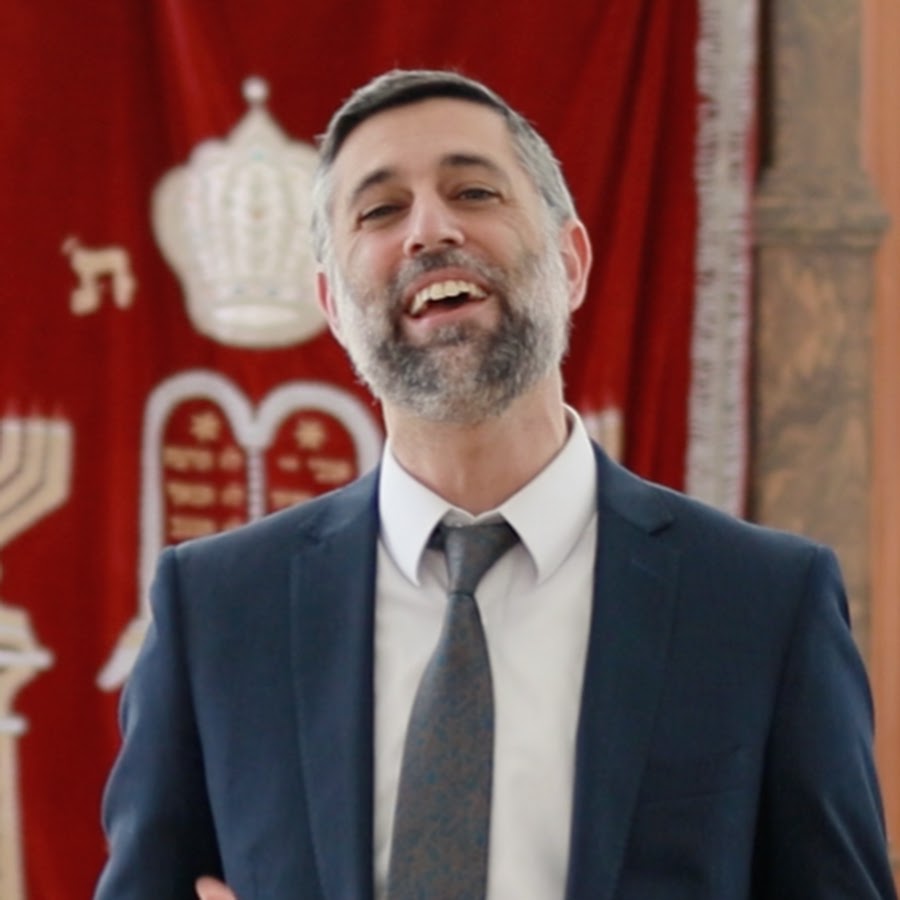
What is meant when we say that Hashem speaks according to 'our power' and not 'His own?' How can we create a Mishkan-Tabernacle to contain Hashem's presence if He fills the entire universe? What is the idea that Hashem 'dwells on high' and also 'resides in the shadow' of the Mishkan? What is the idea behind the fact that Hashem 'sees but is not seen?' How does Hashem make space for us, and how do we 'make space' for Him? Find out in this week's Parsha Podcast.
Comments(0)
Transcript
Auto-generated transcript. Not time-synced to the video.
You're listening to the weekly para
podcast with Ari Goldwag recorded with
Hashem's never ending assistance in
Israel C786 2026. This week's part is
Truma and we have the command to Mosha
Rabu to the Jewish people.
I want you Hashem says I want you to
create a sanctuary. I want to we want
you to create a space physical space
where I will reside and I will place my
divine spirit amongst the Jewish people
and the majish speaks about something
which we spoke we touched on two weeks
ago and we're going to expand upon it a
little bit more this week and it has to
do with how Hashem manifests in the
world because you know if Hashem will
manifest in an open And
as the med says according to his own
strength so we would disappear, right?
Hashem is the ultimate oneness. He
created us. He created a reality where
there's something separate from him as
it were. But he's the ultimate oneness
and where he exists in his dimension so
to speak. So nothing else exists. So the
moment that Hashem reveals himself, if
he reveals himself too strongly, we lose
our we lose our free choice and we lose
our very existence.
Because it's important to understand
and we're going to see how this has to
do with the concept of the Mishkan
because if we think about it, how can
Hashem ask us to create a space, a
sanctuary
where we're going to interact with him
and that's the only place where he is?
as we'll see Mosher Raenu asks this
question. But before we get to that, the
Mish brings a puss
says in a a very difficult to understand
statement, but as we explore it, we'll
see the depth of it. It's very powerful.
Pik says in chapter
37:23,
it sounds bad, but it's
Shakai is one of the names of Hashem and
we need [snorts] to understand why it
specifically chooses chooses this name
Shakai.
So, Hashem, we do not find that he has a
lot of power,
right? So, this sounds terrible. What do
you mean God has all the power? Hashem
is the ultimate power.
So, the the says like this.
You hear this, it sounds like it's
saying it's denying that Hashem has
power. It's saying something
blasphemous.
Aliu who was the the person speaking in
that this is what he meant to say he
didn't mean to say anything negative
about Hashem that Hashem is lacking
power
but rather what he means to say
Hashem does not allow his power he
doesn't unleash his power on his
creations
Hashem withholds his power right the
name Shakai Shindalud it denotes the
fact
was creating the world. So he let things
expand and expand and expand. He brought
all this power into the world. This or
this never ending light. But if he would
have allowed that light to just exist as
it was, so there would be no space for
us. There would be no room for free
will. So Hashem
the name denotes the fact that Hashem
creates a a limitation upon his power, a
limitation upon his revelation in such a
way that we can exist. We can be here
and even believe. There could be a
person who believes that there is no
God. Heaven forbid, right?
But how is that possible? Hashem is the
most real thing that exists, right? So
how could it be that we don't perceive
him even or it's difficult to perceive
him? So that is Hashem Shakai. That's
the name
means to say we don't find that he has a
lot of strength. It means he doesn't
overwhelm us with his strength.
Hashem reveals himself to us. He only
does it according to what we can handle.
Right? Hashem does not expect us to
overnight go from being a regular
mundane physical person to being a
spiritual person. He doesn't expect
that. It's a gradual process to become
more spiritual, to become more aligned
with Hashem's will, become more aware of
Hashem's presence. Right? We've been
talking in the be talking podcast since
2019. So we've been going at it for for
six years, seven almost seven years.
And uh the more you learn about, the
more you learn about connection with
Hashem, the more you become aware of it,
the more you see that he's there and
that he's interacting with us and that
he's manifesting in our lives. But it's
not something that Hashem is just going
to blow a person over with unless
they're ready for it.
This is what we mentioned two weeks ago.
We find that when Hashem gave the Torah
to the Jewish people,
if he would have come upon them with all
of his strength, with his full
manifestation, they wouldn't have been
able to stand it.
This is what we said two weeks ago.
Hashem's voice is
it doesn't say Hashem comes with his
strength. It says he comes with strength
because it depends on the strength the
ability the the the
I don't it's not the right word
sustainability but the the ability of
the person to receive and
to be able to withstand
Hashem's revelation. So Hashem reveals
himself to each person differently. Now
your experience of Hashem is different
than my experience of Hashem. And
according to how much we make ourselves
ready and of and and able to receive it,
sometimes we can't even control that.
But Hashem is gentle with us.
Okay. So that's the first concept. And
now we're going to talk about it in
terms in the context of the Mishkan.
When Hashem says, I'm going to manifest
my presence amongst the Jewish people.
I'm going to do so through the
which is it seems like a very strange
way of manifesting.
What does it mean that Hashem the one
the name is used is the name that
denotes his limiting himself. He doesn't
manifest his full power.
Hashem says to Mosher Ramu, I want you
to make me a tabernacle. I want you to
create something which
is going to contain my presence.
So,
so Moshenu heard this and he said, I
don't get it. I just I just don't
understand.
Is like look, the entire universe is
13.8 8 billion lightyears across. It's
huge. The Earth itself is
huge compared to us. And I think the
numbers 1.3 billion Earths fit in the
sun,
you know, and and the sun is just one
star in a in a galaxy called a Milky Way
galaxy. And it's just one galaxy in the
plethora of I don't even know the
numbers, millions, maybe billions of
galaxies.
So, we're a speck on a speck and a speck
and a speck and you could go on and on
about it. And Hashem fills this entire
universe, this huge awesome universe.
And you want to tell me that Hashem
wants to limit his presence to the
Mishkan
or I would say there's two different
ways of saying it really. You want to
tell me that it's only Hashem's presence
is only in one place, it's only in one
location, that it's centered there.
That's very hard to understand. How
could that be? Hashem is everywhere.
Hashem is is is [snorts] beyond. He's
transcendent.
Not only that
also saw that in the future he was able
to see with through his divine
inspiration his nu his prophecy that in
the future there's going to be a person
whose name king Solomon and he's going
to build a bdish a temple on
he's going to build it in Jerusalem and
it's going to be much larger than the
mishk the dimensions of the beast were
significantly larger than the Mishkan.
I think it was three times the size if
I'm not mistaken, at least in height,
but I might be mistaken.
It's
when he establishes the Bish, he
establishes the temple. He says, "Could
it be that the master of the universe,
God himself, the creator of all is going
to manifest himself exclusively in this
space of mish in this temple." So which
is he's making a much grander edifice
and he's saying how does Hashem manifest
in this space?
So sees that
significantly larger than the if you
think about it in terms of 13.8 billion
light lighty years across. So the the
difference is not so large. But let's
think about it in terms of ourselves.
You know a small a small little hut
versus a huge building. And even the
large building
is saying how could it contain Hashem
is certainly the tabernacle. How's it
going to contain as it were Hashem?
This is why Moshenu said
okay so it's not so clear what this is
saying. We're going to see another
measure in Barab. We're going to come
back to this point.
I'm going to finish the maj here. It's a
few more lines and then go to the raba
maj. But he brings the
which is very interesting because as
explained here
is a chapter of psalms that we say every
shabas but it was the chapter that mobu
said when the Jewish people established
the mishkum the tabernacle.
Pik says referring there's different
ways of understanding the but in our
context it's referring to Hashem himself
God himself as it were who dwells on
high
and he brings his presence into a a
place of limitation means mystery right
something that's we have limited
understanding about it
beser Elliot the one who sits It's on
high eye comes down in into a hidden
place. But Shakon, Hashem dwells in the
shade. Hashem places his divine presence
in the shade. You think about shade.
Shade is a lack of light, right? Shade
is a lack of light. Hashem is the
ultimate light is the
all-inclusive light. And who are we?
We're just a shadow. We're a shadow.
We're at the place where Hashem's light
doesn't shine unless we let it through.
Right? But still, Hashem wants to
manifest and show his presence in the
shade.
As we'll see, it's referencing the shade
of the Mishkan. And the Mishkin is a
tabernacle. What's the tabernacle? Bas
is also referred to as Sukas David.
It's the It's the
temporary dwelling place of King David.
the suka that there's going to be in the
mdish is referred to as a suka which is
as the suka says a place of shade
it
says speaking about the future time
that there's going to be a suka a mdash
that provides shade which means to say
pro protects us
that's the place where hashem manifests
Okay, let's hold on to that thought.
Who
says who
is obviously transcended beyond all his
creations?
Why does it say Shakai? Why does it use
the name Shindal which we spoke about
earlier? [gasps]
But
Hashem has many names. the mighty God.
Hashem is the compassionate God. Hashem
is the gracious God. Why do we say that
Hashem dwells in in the in the
shade of
God, the shade of compassion?
What? What's
in Shak?
Hashem specifically
dwells in the shade that was made by Bal
was the
person who oversaw the construction of
the Mishk, the design of the Mishkan.
Right? So the human being creates a
place for Hashem to dwell. That's
basically what we're saying which is the
question and we're not exactly doesn't
seem to be that we're answering the
question yet.
The question is Hashem how can it be
that you dwell in a limited way in the
world? The answer is Hashem does. Hashem
dwells in a limited way in the world
based on the creation that we create
based on the mishk the sanctuary that we
create.
Hashem is all powerful.
Hashem is in infinite light. Hashem
wants us to build
a mishk. He wants us to create a
sanctuary ces create a place within
ourselves to receive him to receive his
light. He wants to manifest in us
according to what we can receive
according to what we build according to
the space that we create within
ourselves. And how do we create that
space?
It's reciprocal.
It's reciprocal
to the degree that we
act in the same way that Hashem does.
Hashem says, "I'm going to limit myself.
I'm not going to overwhelm you with my
light to the degree that I'm willing to
limit myself. I'm not going to overwhelm
you, Hashem, with my demands.
Not going to over overwhelm you." Of
course, there's no such thing as
overwhelming Hashem.
When we create a space, when we hollow
out ourselves, hollow out our egos, and
that's how we let Hashem in. That's the
sanctuary that we create in that sail,
in that shade.
The shade I wrote here on the side just
a little, a little concept that
we find is our shade by our right hand.
It means
to the degree that we move our hand,
Hashem responds. Which means to say to
the degree that we create shade within
ourselves, within our egos, we stop
trying so hard to shine out our light.
Doesn't mean to have low self-esteem. It
just means don't be so grabby. Don't be
so grabby.
To the degree that we are more humble,
to the degree that we are less forceful,
to the degree that we create shade
within ourselves, a lack of light, a
lack of needing things to be our way.
That's how Hashem manifests in our
lives. We see more. We see more divine
providence. We see Hashem's divine
inspiration. We see his
clouds of glory.
It's not how you think.
Say, how can Hashem limit himself to
this small structure? Fills the entire
universe. It's not how you think.
cubits of of boards in the north, 20
cubits of boards on the south,
eight cubits on the west. That's it.
That small space,
that limited space which is what you can
build, what you can handle, what you can
create, the amount that you can limit
yourself
in deference to me, that's the space
that I will fill.
I can even make it smaller.
20 by 20 by seven cubits, forget it. One
by one, one by one cubit,
which the say here is referring to the
space above the ar the the
ark of the covenant had within it
the
tablets which I don't know the ten
commandments the and it had the
salmon and on top of it there were kuim
there were these angelic figures and
from between the kuim which is a small
space one cub by one cubit's voice was
heard.
Previously, Hashem would speak
to Mos wherever he was, any location.
Voice could be heard anywhere. But now,
it's it's
constricted into a small space. That's
the space that we can hear.
The space that we can hear is where
Hashem speaks to us. Such an important
idea. Hashem speaks to us. He does speak
to us all the time, but he only speaks
in a way that we could listen. He only
speaks in a way, he only speaks in a way
that manifests within the space that we
create for his voice to appear.
It's very deep. It's very true.
I want to read to you
and part
towards the beginning of that section.
It says like this brings our mishall
and I will dwell within him. Says
who can create a sanctuary for God to
manifest in? How could it be?
The heavens, the highest heavens,
nothing can contain your presence.
Maybe there's another that indicates
that fills all of the heavens and the
earth. that no matter what he's
definitely his presence is much bigger
than a mishkash
says the heavens are my my throne and
the earth is the foottool of my feet
how's it going to be that hashem is
going to manifest his presence ink
understand something
this goes back to what we said two weeks
ago but it's so important to reiterate
And understand that in this context,
Hashem says, I don't expect you to do
anything more than what you can do. I
want you I I don't expect you to do
according to who I am, the greatness
that I am, the awesomeness that I have.
I want you to create a space that you
can create.
I can decide that the entire universe
cannot contain me.
When when I want to
the sun even even the sun which is a
huge huge
fireball cannot be contained cannot be
contained by anything.
I just want a small space.
I just want you to create what you can
create and I will manifest there as I
wish.
So again this message brings our the
which is that Hashem the one who dwells
on high manifests in a mysterious way in
a compact constricted area
[snorts]
says it in a beautiful way.
Hashem,
Hashem is a transcendent being. He sees
everything, but we can't see him. Hashem
is the most anonymous.
Hashem is the most humble. Hashem does
not allow himself to be seen lest we be
overwhelmed by him. He's
he sees everything, but he can't be
seen.
The mushel I heard, I'm sure you've
heard this kind of mushel, is a fish in
water, right? And some other fish come
and tell the first fish, "Hey, did you
hear about this thing called the sea?
Did you ever see the sea? Did you ever
feel the do you know about the water? I
heard there's something called the
water. We believe in the water." And the
fish says, "Where's the water?" [cough]
The fish goes on and search for the
water.
That's us, my friends.
Hashem is
he made this entire reality. He sees
everything and he can't see him. He's so
close. He's so close. You can't see him.
He want
He wants to dwell in our shade.
And the bottom line here of this message
is
the message here is that Hashem is so
humble. Hashem is so humble. And to the
degree
that we make ourselves like that,
we make ourselves like that.
So then we become aligned with, we
become
a manifestation of Hashem.
Hashem is seen, but he's not seen.
That's what humility is. Think about it.
Be seen, but I can see but not be seen.
I remember my bubby, my grandmother
Allah Shalom, she used to see, she used
to say, she was sitting at the table,
kids are fighting, and she would say in
her Yiddish accent, I see everything,
but I don't mix. I don't mix in. I don't
get involved. Of course, Hashem is
involved, [sighs]
but she would say, I see everything, but
I don't I see the big picture.
And I have learned from my lifetime my
bu was saying I think that it's not
necessary for me to take care of the
problems. The problems will resolve on
their own.
And Hashem sees us and he sees
our efforts to draw close to him, to try
to have a relationship with him,
to learn his Tyra, to fulfill his will
through the mitzvah, from being through
kindness to others.
And Hashem sees it, but he's not seen.
And to the degree that we see and are
not seen, to the degree that we have
that humility, so we create that space
within our hearts that can be filled by
Hashem manifests in the world according
to our strength, according to what we
do.
Does not overwhelm us. created a space
for us to be able to
create a space for him
created a space for us to be able to
create a space for him. So when we act
in this way, when we create miktosh,
it's a sal it's a it's an individual
named who creates the shade
who is looking to create a space for
hashem. That's where hashem manifests. I
want to bless you and ask you to bless
me. Hashem should help us that we should
be able to see
this amazing idea, this amazing
potential that we have.
B mikdash mishk was for those times
existed afterwards inside of for a few
hundred years mikdash is another
opportunity
to create a space 2 years we haven't had
a bas mikdash hopefully soon we will
again but in any event
we still even now can create this
mishkon should help us to be able to
create this space to be able to
give up ourselves in service of him so
that he will manifest and shine his
light, his shina, his divine presence
will shine into our lives. Thank you so
much for listening. A wonderful Shabas.
This podcast was made possible through
the gracious donations of listeners like
you. For more podcasts like this, please
visit www.argoldwag.com
[music]
or search on iTunes Ari Goldwag.