0:00 / 0:00
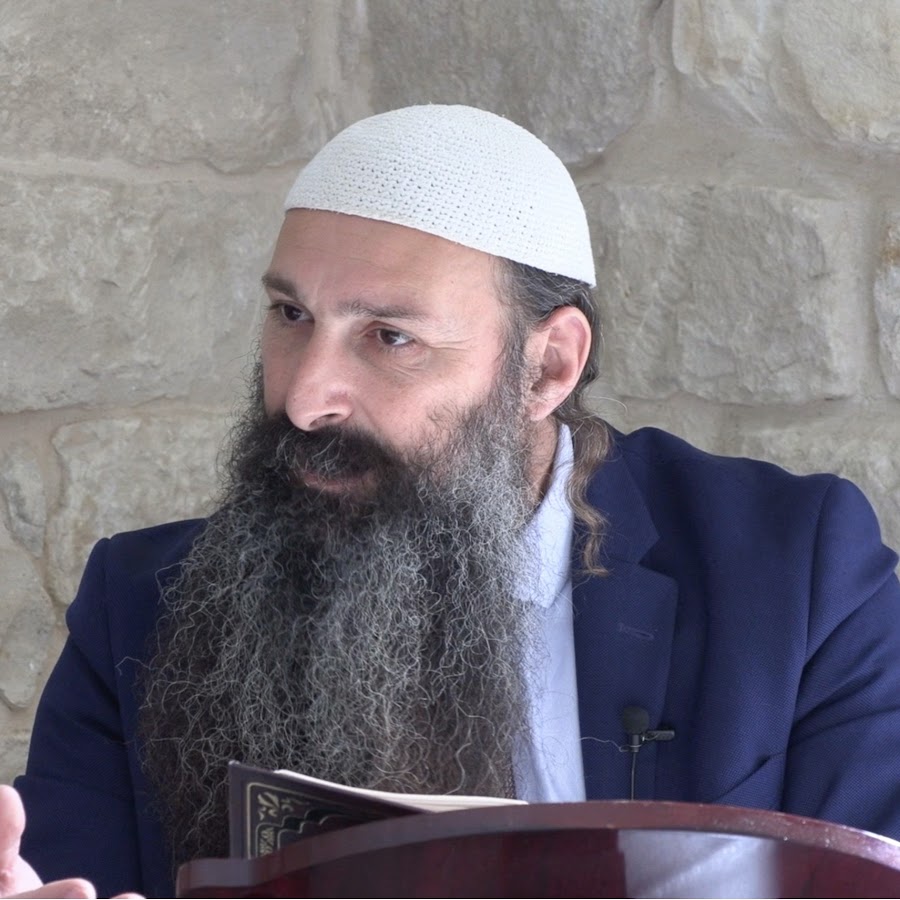
TBC - Day 30 - 'Get your force back' - Rabbi Alon Anava | Atzmut.org
3,486 views
Learn about Teshuvah in depth: 1) Visit https://www.atzmut.com/TBC 2) Register for FREE 3) Go to https://www.atzmut.com/course/TBC 4) Join Whatsapp for updates +972-55-965-68-36 #TBC #40Days #Tikun #Geula
Categories:
Torah
Comments(0)
Transcript
Auto-generated transcript. Not time-synced to the video.
Our main goal right now, and not only
now, but throughout our life,
is to do teshuvah.
The The example of teshuvah is Moshe
Rabbeinu.
All his life he did teshuvah till the
last day of his life. Moshe Rabbeinu was
really the one that call is called a
baal teshuvah.
And one is of the main reasons that we
do teshuvah is because we sin.
Now, we have to understand first what
happens when we sin in order for us to
understand what to fix.
So, the question right now that we are
presenting is what does the sin do?
If you would tell me now, "Don't sin."
But you don't tell me what it does, then
it's hard for me to control myself. But
if I understand
what happens when I sin, that helps me
uh
prevent from doing sins and also work on
my teshuvah.
So, what is really a sin?
Is that I go against the will of Hashem.
That's the definition. Hashem told me,
"Don't do it." And I did it. Hashem told
me, "Do it." And I didn't do it.
In Hebrew it's called halach neged
retzon Hashem. He went against the will
of Hashem.
Now, what is the real will of Hashem?
The will of Hashem
is lehativ le'vruav.
Is to do good or to improve
the status of his creatures. Hashem
wants to constantly give us more and
more and more. That's the will of
Hashem.
Now, according to the teachings of
Kabbalah,
then
there's always a
relation between a light and a vessel.
The light is the energy, the giving of
the master of the universe, and the
light always needs to be contained into
a vessel.
Now, when you take the word sin in
Hebrew, it's chet.
How do you write it? Chet, tet, aleph.
What is the acronym?
Or more than the acronym, let me first
explain. The letter chet,
what does it mean? Atzira. Means to
stop. When you prevent something.
The letter tet stands for tov,
for good. And the letter aleph stands
for Elokut, for godliness.
So, what is the acronym that I get here?
Atzira, tov, Elokut. When I do a sin, I
stop
the good that Hashem wants to give me.
Hashem is constantly sending me
blessing, and I'm the one who blocks it.
Another way of
understanding it, the sun is shining
24/7. It doesn't stop shining. If I want
to stop getting the light of the sun,
then I close the window and I pull down
the shade. Now, is the sun stopping to
shine? No. What's preventing me from
receiving the light? Me.
Because I created an action of closing
the window and preventing the light of
the sun to coming in.
What is a sin?
La'atzor, atzira, tov, Elokut. It's
stopping the good of God. This is the
the explanation of chet.
What does it mean
Kabbalistically saying? That I stop the
light
to going into the vessel.
Hashem wants to give me a blessing,
wants to give me an abundance, and I'm
stopping it from coming into the vessel.
Now,
when I do a sin,
another thing happens is that I damage
the vessel that the light can go into.
So, if I have a cup and the cup cup has
a crack, and if you want to give me
expensive wine and you pour the wine in
the cup, all the wine will go out.
So, when I do a sin, I damage the
the vessel that is there to receive the
light.
Now, the light cannot go in because
light cannot go cannot go into a damaged
vessel. Or lo yachol lechanes be bechlip
pagum. If the vessel is damaged, the
light cannot go in there. And the light
is the blessing of the master of the
universe. This good that Hashem is
giving me.
Now, what's the next uh
uh
uh action or the next stage when I do a
sin? The first stage, I damage the
vessel.
The spiritual vessel. What would be the
result from that? That the shine that
was supposed to come to me, the blessing
that was supposed to come to me, this
he'arah, this oil, you know where it
goes? I don't have a vessel. I broke the
vessel. So, that he'arah goes to the
klipah.
It's like as if me working all month,
and I did a certain damage. Instead of
getting the paycheck into my account,
the enemy gets it. The klipah.
The sitra achra, the other side of
holiness, that gets the light.
So, that's what happens. Very simple.
I do I go against the will of Hashem.
The result is that the good that Hashem
wants to give me cannot come to me
because I damaged the vessel, and that
good goes to the other side of kedushah.
End of story. This is the easiest way to
explain chet and a sin.
So, now I have to do teshuvah. I have to
fix it.
What are the three stages that I need to
do?
First of all, I have to fix the vessel.
See the vessel like I I broke it? Now
fix it. Fix the vessel.
And
the second that I fix the vessel, then
the light can by default come back into
the vessel.
And I'm not going to explain to you how
we do everything. I'm just giving you
now an overview so you understand what
happens. So, the first thing of
teshuvah, fix your vessel.
The second thing is to cancel
I'll tell it in Hebrew then I'll explain
it. Levateil yenikat hachitzonim.
The other side of kedushah, which is
receiving right now my light, my energy,
it's going to the other side.
The Kabbalistic term to that is yenikah.
Yenikah is to suck or to feed off.
So, I have to stop that. It's like as if
some type of a channel of all my shefa,
all my abundance is going to the klipah.
I have to stop it.
I have to bring it back to me.
So, the term to this is levateil yenikat
hachitzonim. Cancel the sucking or the
feeding off of the other side of
kedushah from the energy that's supposed
to come to me.
You know that a few years ago,
we had an electricity problem in our
house. We bought an electrician.
He was working out, and you know what we
found? That my neighbor was feeding off
my electricity for 3 years.
He told me, "What's this wire?"
I don't know.
We go with the wire. My neighbor hooked
into my board, and for 3 years feeding
off my electricity.
Now, of course, I have to give me back
money. You owe me like 20, 30,000
shekels, my dear neighbor.
But that's a different issue. First of
all, cut it out.
Levateil yenikat hachitzonim.
Cut it out. That's it. You're not
getting any more electricity. You know
what was the the joke? That we pulled it
out. Suddenly the neighbor comes. "Do
you have a a blackout? I don't have
electricity."
I'm like, "Really? You don't have
electricity?"
What do you know? Well, you're not going
to have electricity for the time being,
you thief.
Levateil yenikat hachitzonim. Cut the
life force that goes into the other
side.
And the third
is to from here and on
get back the energy to me. This is
called levateil me kan va'elach.
Is from It's not only to stop that
moment the energy going somewhere else,
is from this point on, it's coming to
me.
Now,
how do you do that?
Then has to be two actions.
The first action is called shinui
ha'ratzon. Change your desire, change
your will.
And in Hebrew or in basic terms, it's
called haratah.
Regret, remorse.
Regret what you did.
But in a more professional way, I call
it professional or we can call it more a
Kabbalistic approach, shinui ha'ratzon.
Change your desire, change your will. I
don't want to do this anymore.
I don't want to sin anymore.
Now,
the term to that is called akirat
ha'ratzon. Uproot the will, the desire.
And what happens is is that you take the
life force, the chayut of your soul, out
of the klipah.
Because when you sin, you put your soul
in the klipah,
in a negative energy. When you uproot
this desire, when you have this regret,
you are pulling out your neshamah, the
life force of your neshamah, from the
klipah.
Just imagine that your life force for
years is in the klipah. You're in a
spiritual swamp. You can't move because
of the thickness of it.
The next thing you need to do is vidui.
Confess.
Why specifically confessing? Because you
have to move your lips. Why specifically
to move the lips?
Because the klipah
has a soul and a body, exactly like we
have a soul and a body.
And I need to break the body of the
klipah.
How do I break the body of the klipah?
Only with talking.
How do we do it? We say vidui. Ashamnu,
bagadnu, gazalnu, dibu-
I don't know if you ever noticed, but
the order is alphabetically. Ashamnu,
aleph. Bagadnu, bet. Gazalnu, gimel.
Dibarnu dofi, dalet. Why in an order?
Because there are 22 letters.
The letters that call in Kabbalah Kelim.
I now with my sin build a body for the
clipa. The only way to break the body of
the clipa is with the vessels with
Kelim, which are the letters. So I have
systematically have to go Ashamnu,
Bagadnu, Gazalnu. You're breaking the
body of the clipa.
Now,
the Ramchal explains that the main part
of the chuva is akirat haratzon. It's
uprooting the will, the desire. That's
the neshama of the sin.
So has to be done three things in order
to stop what I told you, right? The
first thing, fix the vessel.
The second thing, stop the hitzonim from
getting any any kind of power. And then
you divert it to you that from this
point on it comes only to you. How do
you practically practically do it? Do
you have to make a switch in your mind?
You're not going to make a switch.
You're not going to do chuva ba hayim
ever. Akirat Akor means to uproot. It's
to pull out. And if my will right now is
to sin because I get pleasure from this
or from that or I gain something whether
it's money from theft or pleasure from
forbidden relations or whatever it is.
You have to uproot it.
Other than that, it's not going to work.
The Ramchal says clearly Akirat Akor
Akirat haratzon. Switch in your mind. I
don't want this anymore.
And how do you do the second part? There
is a body for the clipa. The neshama of
the clipa when you do Akirat Akor when
you make a switch in your mind, you kill
the neshama so to say of the clipa. Now
you have the body of the clipa.
The only way of doing it is vidui.
Speaking, confessing. Ashamnu, Bagadnu,
Gazalnu. Why do we do it repeatedly? Cuz
that's what breaks the body of the
clipa.
The result says that what is one of the
most powerful ways to break the body of
the clipa specifically created by zera
levatala when a man spills semen for no
not for the sake of procreating is Kriat
Shema al Hamita. Because of Kriat Shema
al Hamita you also say vidui. Ashamnu,
Bagadnu, Gazalnu. The result says that
is the ultimate method to break the body
of the clipa. And then you do chuva.
By that you return everything back to
you. The good that Hashem wanted to give
to you that is now in the clipa
goes back to you.
That's how you do chuva.
This is a very overview short overview,
but one needs to understand what happens
when I do the sin. Now I can start
relating, "Oh, that's what happens when
I do the sin." So let me stop doing the
sin because to reverse it,
it's very very hard. But just remember
the two stages. Stage number one is
divided into three. Tikun Akelim, fixing
the vessel. Number two, stopping giving
power to the the clipa. Number three,
diverting the energy to you. The second
stage is is first of all uprooting the
desire, making a switch in your mind.
And the second one is vidui dvarim. It's
confessing. So next time in the minyan
when they start doing Ashamnu, Bagadnu,
be very happy. Say it slowly. Pronounce
the words the right way. And Hashem
willing later we'll continue to learning
about how do we focus on the vidui to do
it the right way that it actually kills
the body of the clipa and allows me to
do the ultimate chuva and to receive all
this energy back to myself.