0:00 / 0:00
Tazria-Metzora - Source of Growth
223 views
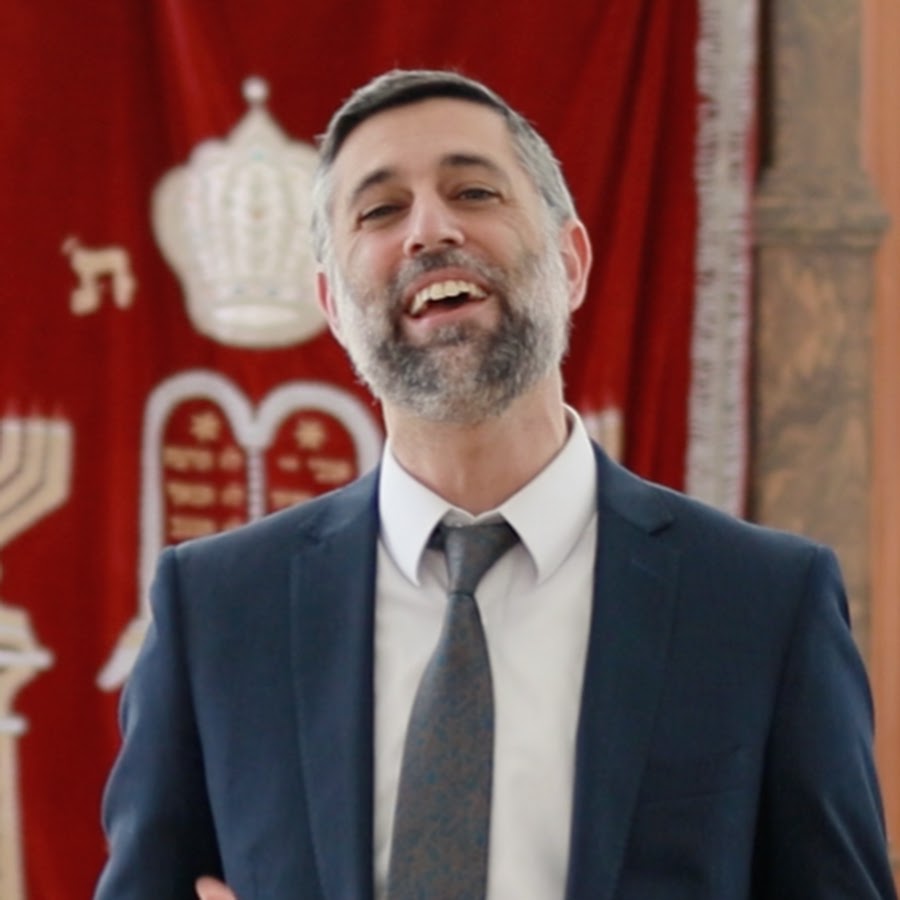
What is the concept of the rain that is split into separate streams as opposed to a single force which could cause a flood? How does this parallel the concept that each hair has it's own follicle and source of power? Why did the Kohen (priest) want to leave Israel, and how did his wife convince him otherwise, based on his own teaching? Why does a hair turn white when a person has the spiritual disease of Tzara'as (leprosy)? How does this parallel the spiritual disease of egotism and lashon hara (gossip) that precedes the advent of tzara'as? Find out in this week's Parsha Podcast.
Comments(0)
Transcript
Auto-generated transcript. Not time-synced to the video.
You're listening to the weekly partial
podcast with Ari Goldwag, recorded with
Hashem's never-ending assistance in
Ramat Beit Shemesh, Israel, 5786, 2026.
This week's parsha is parshas
Tazria-Metzora.
And the topic of this week's parsha is
the concept of lashon hara,
speaking negatively
of others, of gaiva,
of an overinflated ego that causes one
to do so.
And it also causes one to be
disconnected spiritually from Hashem and
from the people around him.
And the result, as are the meforshim
explain, the result is tzaraas, which is
a physical affliction,
called, commonly, leprosy,
and manifests on the skin,
but it's also a spiritual affliction
that can manifest
on a person's clothing, on a person's
house.
>> [snorts]
>> Now, this is a reflection of a spiritual
malady, a spiritual sickness.
And that spiritual sickness
is egotism.
That spiritual sickness is
a disconnect,
a feeling, a sense of separation. I'm
different than you. When I speak about
you, it doesn't affect me. That's my
thought process.
If there's gaiva, if there's
kina, if there's
jealously, it's a sense that I don't
have what I need.
But all in all,
it's an idea, it's a
the ego separates us.
That's the foundation of the idea.
Now, the Medrash brings a pasuk and
brings a story, and I'd like to share
with you and and explore with you the
psukim that is brought, that are
brought.
The rock of Adam ki yebe or bisar, the
pasuk says, when a person shall have on
the skin of his
flesh,
sa'asis apachas, he has some kind of
blemish, some kind of skin disorder,
which is really a spiritual skin
disorder.
So, the obligation is to bring it to a
cohen bring it to the priest.
And the priest will look at it.
And of course,
why don't you bring it to a doctor,
right?
Because the cohen the priest is the
spiritual doctor.
He's the one who recognizes
the elements of our soul, recognizes the
sins that we've done the the separation
that we have between ourselves and
others, between ourselves and Hashem.
So, he's the one to bring it to and for
him to look at it and recognize
is this the spiritual element which is
caused by
is this the physical element which is
caused by the spiritual disease?
So, the midrash brings a pasuk me pilag
lashetif to Allah.
It's a pasuk in Iyov, a very beautiful
pasuk,
which I'd like to explore with you in
detail. The pasuk says,
"Who separated
the shetaf?" A shetaf means the water.
It's a deluge.
"Who separates the deluge
into different streams?"
Miderech l'chaziz koilos.
It would be possible
for Hashem, as it were, when he brought
rain, when he brings rain,
it doesn't have to come in droplets,
right? We're used to rain coming in a
certain way.
It could come in a torrent.
Or even worse, it could come in a
deluge.
There could be so much water that the
earth is just
overcome with the water.
And
when we find that there's thunder and
there's lightning,
so that thunder
could be such a loud sound all at once
that it causes
maybe people to go crazy.
And the the lightning could be such a
great fire
that it
could cause incredible damage and
destruction.
But, that's not what Hashem does.
That's not how Hashem does it. Me pilag
lashetif to Allah. Hashem
>> takes the water, takes the deluge and he
splits it up.
He makes little droplets of water.
He doesn't allow it to to overcome
mankind. Doesn't allow it to cause too
much destruction. And the lightning and
the thunder,
there's lightning here, lightning there,
but it's not all at once. It's split up.
That's how Hashem
manifests in the world. That's how
Hashem brings down
the
the shefa that he wants to bring. And
we'll see more about that soon. I'd like
to share with you first what the measure
says based on this pasuk.
Reb Berachiah says, we just called we
talked about a shetef, which which is a
deluge, a tremendous amount of water.
But there are places that refer to hair
with the same word, the word shetef,
which means an outpouring.
If you think about
the hair of one's skin,
so it's a a product of your skin.
There's an outpouring of hair.
It's a funny way to think about it, but
listen carefully to what the measure
does with this pasuk.
Measure just tells us a story
with a particular person and the
meforshim say this same measure just
brought in the Tanchuma and it's a
slightly different version.
The subject of our story was a kohen,
was a priest.
And he was somebody who
people would come to in order to check
their tzaraas. Is this tzaraas? Is this
something that I need to go through the
entire process
of contamination and then purification
and then korbanos and separating myself.
People would come to him to ask him
to to look at their
their blemish.
>> So,
he said a word.
And the the it's not explicit here in
this matter. She's sent it on Columbus
Boulevard by the Adam of fortune. He
said
He said a word, but before the word,
he was
living in Israel this coin as priest,
and he was having trouble with his
parnassa.
He was having trouble with his
livelihood, and he decided that he's
going to leave Israel. One of the
reasons is permitted to leave Israel is
because of parnassa.
So, he was planning to leave Israel
and to go to slaughter it in order to
make some money
and maybe return to his family.
Now,
one day he was saying
cuz he's looking at the the hairs,
right? He's looking at
one of the things that indicates that a
person has leprosy as tsaraas,
is the fact that the hair
it [snorts] it turned white. It was
brown or black, and it turned white.
Right?
When that happens, so it shows, says
this coin,
that there's something caught up caught
cut off, sorry. Something cut off in the
root power in the source of the power of
that hair.
So, he says in the coin of the name of
the coin of the name of the name every
single hair
has its own
hole. If you look at the hairs on your
hand or wherever,
>> [snorts]
>> so you'll see that each hair has a
separate
entrance or exit that it comes out in
the skin. Has its own hair follicle.
There are no two hairs in one follicle.
And each hair
has its own source of sustenance.
Well, we can think about grass. Looking
at my grass here.
Each little blade of
has its own source of sustenance. I
don't know if it's exactly the same. The
hair is more obvious to see.
So that each hair will not benefit from
something from a different from the
source of power of a different hair.
Okay? So the idea is
that if you see that there's a hair that
is
white
instead of being brown, it means that
the source
of its
of its life has been cut off. That's why
it turned white.
That's why the hair turns white.
And it's a beautiful martial, of course.
It's a great analogy for what happens
when a person
gets leprosy when he gets tzaraat.
What's the spiritual source of tzaraat?
As we said, it's egotism. It's a
disconnect from the people around me.
And really, when I say I'm disconnected
from the people around me, it means that
I lack the recognition that the people
around me are also connected to Hakadosh
Baruch Hu as much a child of Hashem
as I am.
Right? That's the source of my egotism.
That's how I can say lashon hara about
somebody else.
I don't recognize that everyone is
connected to Hashem. Each person is a
child of Hashem. And I don't recognize
that I'm connected to Hashem because I
think that somehow
I'm not getting what I deserve. Why am I
speaking negatively about somebody else?
They got it. They got something that's
mine.
Maybe.
Or they got something that I should be
getting.
So there's a disconnect from my
spiritual source.
And that is the the
spiritual mistake
that I make if I'm involved in egotism.
If I'm involved in lashon hara, speaking
negatively, gossip.
And so it reflects itself
in the hair.
Each hair has
it's like we're all on this goof.
We're all a part of the
body of Klal Yisrael.
The body of the Jewish people. Each one
of us is a little hair sticking out of
this body
doing our job on this earth.
And each one of us is connected just
like a hair has its root of power. Each
one of us is connected to the source of
power which is Hakadosh Baruchu.
Now, what happens
when there's a disconnect to that source
of power? The hairs turn white.
So, this is what this Kohen was saying.
He was saying a drasha.
He was saying every single hair
has its own source of power.
And that source of power gets cut off.
So, his wife heard
heard him saying this idea. Heard him
saying over this drasha
about each hair having its own source of
parnassah.
And she said to him, "Don't you hear
what you're saying? You're thinking
about leaving Eretz Yisrael
in order to
get
parnassah in order to get livelihood?
That means that you don't believe that
Hashem has exactly what you need for you
right here.
Right? Eretz Yisrael is the place which
is closest spiritually to Hakadosh
Baruchu.
So, you're going to go out, you're going
to leave, you're going to so to speak
cut yourself off
from the skin of Klal Yisrael in Eretz
Yisrael and you're going to go out there
and find something that you don't have
here? That's ridiculous." said her said
his wife.
"Come back.
Come back from Chutz La'aretz or
don't carry out your
plan.
And Hashem, your creator,
will provide for you, will give you
sustenance.
Shma love Yisrael
become the warrior.
So, this cohen, this priest,
listened to his wife.
And indeed, exactly what she predicted
would happen is what happened. He
decided not to leave. He instead stayed
in Eretz Yisrael, and Hashem took care
of him. He had the livelihood that he
needed. And that's a brave wife.
It's a brave wife.
But it's an insightful wife. It's an
insightful
idea.
Okay, so that's the first part of the
possuk. Mipilag lashevet to Allah means
she has understanding. The possuk of
Shas is
that there's a there's a deluge
of water that Hashem splits into little
sprinklings of water, so that we're not
overwhelmed by the water.
And in the same way, each hair
has its own
And the And the word shetef means the
deluge, but it could also mean
something that pours forth, something
that
that comes out. And it's the it's the
hairs. And it's the hairs that are
coming out. Hashem has
all of the parnassah.
Just like the body has enough energy to
push out all the hairs on our on our
entire body. Hashem has all the
parnassah that's needed. Just like every
hair has its
power that's given to it, so it can
grow. So, too, every individual
Hakadosh Baruch Hu has reserved for him
the power that you and I need, each and
every one of us. And And just like no
hair can touch the root of a different
hair,
so, too, each and every one of us, we
are directly connected in to Hakadosh
Baruch Hu. Hashem has for us, each and
every one of us, the livelihood that we
need.
Now, this goes on and explains the
second part of the possuk. V'derech
l'chaziz kol eis.
The
the thunder
The thunder could be one huge
amazingly
I don't know how to say volume
voluminous. I'm not sure how to use it
as an adjective.
The sound of thunder could be one
loud
manifestation of of of sound.
But instead of some splits it into
voices, splits it into separate
separate sounds.
So that we are not overcome and
overwhelmed.
Measure says
that Hashem gives each and every sound a
separate path to travel, right? We have
sound waves. Sound waves travel through
the air. Each sound wave has its own
path that it travels.
Why?
that it doesn't come out and cause
massive destruction in the entire world.
Right, sound can cause destruction.
I'm thinking of
the plague of of
Arbeh.
The locusts, they were making so much
noise. Or was it the frogs? I'm sorry,
it was the frogs. They were making so
much noise that Pharaoh was extremely
disturbed.
Right? Noise, constant noise
can can really
cause great disturbance.
Another possible explanation about the
separation of the of the voices of the
sounds
Rebbe Nachman says that it's analogous
to a
to a vegetable garden.
And there's water flowing into the
garden. Right? You have your sprinkler
system set up.
You are a leper.
This is also reference to what happens
with the hairs as we said earlier. As
long as there's substance, as long as
there's water coming into the garden,
so
the garden, the grass gets green.
The moment that the water source is cut
off, you look at my garden, you can't
see it right now,
but there are spots where there is a lot
of green and there are spots where the
grass has dried out cuz of a lack of
rain or a lack of water.
So, that's the the reality of it.
And we can we can personally
dry out, so to speak.
We can disconnect ourselves from
and lose that youthfulness, use that
lose that joy, lose that connection,
lose that sustenance.
If a person marries, so then the the
hair that comes out is black.
We're not talking about the white hairs
of my beard right now. We're talking
about a person who normally has black
hairs and they became white because of
tzaraas.
As long as they stay connected to their
source of power, they are they are
black.
The moment that they lose that source,
the tzaraas will
So, what happens?
A person can become pure again
as long as his hairs are black. But
if it has turned from black to white,
so then the tzaraas will see him as a
leper.
The pasuk says, when a person shall
shall have the skin of his flesh
that the the hairs have turned white, so
it starts off with adam.
What is adam? And Adam is a man.
Right?
Adam is a human being. But the word
Adam, the root of it is the word dumb,
which means
blood.
Because
the human being
our essence is that we have a choice.
Are we just a bag of blood?
Or are we connected?
Are we connected to Hakadosh Baruchu?
Are we connected to the master of the
world, Hashem?
Or are we disconnected?
And that's that can be seen clearly
through the the inyan of tzaraas. It can
be seen
when the when the hair is turned white.
I'd like to share with you a little bit
from these psukim in Iyov. Look at them
more closely just because they're so
beautiful and so connected to this idea
of having that spiritual source, having
that spiritual connection to Hakadosh
Baruchu.
And also the way that Hashem
provides for us, the way that Hashem
takes care of us.
It could be done in an overwhelming way,
as we've been saying. But Hashem chooses
not to.
I'd like to read to you from the psukim.
I'd like to read to you from the Malbim,
who explains the psukim. Pasuk before
says, "Eizeh haderech yechalek or?"
Another example the pasuk brings of the
way that Hashem
shines his light upon us.
Right? Think about it. If Hashem
took out the sun all at once instead of
it coming up gradually, so we would be
blinded.
Eizeh haderech yechalek or, but Hashem
separates the light. Hashem gradually
causes the light of the day to come
about.
Yafetz kadim alei aretz.
It it
Hashem lets the light spread from the
east upon the upon the earth.
So it's an incredible
um
it's an incredible kindness of Hashem on
one hand, but I would I would say in
connecting it to the concept of sarahs
and egoism
on another hand
it also creates a certain problem,
right?
If Hashem would let's say analogously
reveal himself to us, Hashem would say,
"Here I am. Here I am."
So, a few a few different things could
happen. Number one,
we would lose our bechira.
We would become bottle to Hakadosh
Baruchu.
I should we would disappear.
We would just be automatons.
We would be
our our free will would be ended.
Because if you see Hashem is there, so
then there's not really a choice,
right? So, if Hashem shows too much of
his light,
so we disappear. But what does Hashem
do? Hashem
shows his light in gradations.
Gradually, he allows it to appear
gradually.
Now, what's the result of that?
The result of that is I can say, "Well,
where is Hashem?"
It just looks like everything is
happening. It looks like the light is
just I'm used to it. The the sun rises
and the sun sets.
I do the things I need to do for my
parnassah and
they have a certain effect. I have my
job, I get my paycheck.
Right? It It because it's distributed
and it's distributed in a way which is
so that the world is not overwhelmed by
Hashem's light or Hashem's
shefa of water,
it needs to be that way.
But because of that, it creates a
different issue. And the issue is the
potential for me to think that I'm
separate.
That's the That's what's going on here.
I'd like to read
So, so let's see that in the pasuk. Give
me pelag lashet of to olam, like we said
before, the pasuk says in regards to the
water, instead of it being coming down
in one fell swoop, Hashem allows the
rain to come down
also in gradations and
just like there are sun rays, there are
water rays or water ways.
The thunder also doesn't overwhelm us,
it comes
in separate sounds.
Also allows water to the the rain falls
in places where there's wilderness,
where there's no human beings.
And it allows the grass to grow.
Causes things to grow because I've
watched this happen in my own garden
it's right here.
That the grass in the spots where there
was too much water
the grass didn't grow.
In the spots where there was less water
or the right amount of water, it did
grow. Right, too much water can be
damaging.
But Hashem distributes it properly so
that
things can grow.
Hashem distributes his kindness to us in
such a way as well so that we can grow,
so that we're not overwhelmed
by the kindness of Hashem in such a way
that
we don't feel like we need to feel like
we have a separate existence as well.
But that separate existence, as we said,
can lead to the problem of egotism, can
lead to the problem of lashon hara, of
sensing that hey, that person is
separate from me. He's a different hair
on a different part of the human body.
Okay, he's not really we're not all part
of one body. It could be a person could
think that. Right, a moshol of a tree.
A tree that has
some leaves on the top of the tree, some
leaves lower in the tree, and the leaves
that are below say, "Hey,
how come we're not on top?"
Why are those leaves there? And then but
the leaves don't realize that they're
all part of one tree.
They're all part of one
one life form.
And the the leaves are there to provide
energy through their
through the through the processes
receiving that light
etc.
Okay, so we could
perceive ourselves to be separate.
>> [clears throat]
>> And a light beam could also perceive
itself to be separate from the sun.
But it's connected.
The Rambam says, "Aza Haderech."
What is the path that the light is split
up?
He's explaining how Hashem created
everything
perfectly measured,
perfectly
weighed
for the human being. Point to what we
can handle.
Hashem established the sun should not
suddenly rise upon the earth.
When the sun is a certain distance below
the horizon, so then the light starts to
shine in in the world.
This is done
in a way that the human being shouldn't
become blinded. And again, I say that
that's an analogy to the way that Hashem
brings out his light. Hazal say it
that when Mashiach comes, it's going to
be in gradations. Hashem's not going to
reveal himself in a moment because we
can't handle it.
You could this is also going to have the
effect of shining light on a greater
portion of the earth.
I don't know what that means exactly,
but somehow
helps the people in the north.
>> [cough]
>> The light is
is separated out. It's distributed
by the wind
on the eastern side. I'm sorry, not the
wind. On the easterly direction.
As it comes up, the sun rises in the
east.
What happens is the sun comes up, the
rays shoot out from the sun. Obviously,
we can't yet see the sun.
And it causes
the the
condensation of
as it warms up the air, causes the
condensation of the water and it becomes
clouds.
Okay, he has a whole scientific
explanation here. I'm not going to get
into it, but the point is it's like
flowing from one place into another.
First, we talk about the light, then we
talk about the the water and the rain,
and it's a continuation.
And he says, "Mipi Hillel and Shamai
Also, not just in light did Hashem
distribute it in a careful way, but also
in the water. Sham distributed the water
in a careful way.
>> [cough]
>> Water could have come down on the world
world and and and flooded everything.
Hashem could have made the world that
way.
Look at the beautiful and amazing
balance of the world that Hashem made.
Right, we have the
the
element of fire, the element of water,
we have the element of fire, which is
the lightning. And Kodesh Baruch Hu
could have allowed it to just explode
all at once in fire
and destroy the world. But that's not
what Hashem did.
Hashem allowed each and every drop of
rain to come down in a separate
location.
Hashem allows every single sound to have
its own separate
sound wave that we receive that sound,
so that the world will not be overcome.
>> [sighs]
>> I want to really take out of this
a few amazing things, but mainly number
one,
that
Hashem created everything in a balanced
way, in a beautiful way, so that we
could receive
the good and the bounty that he wants
for us. But as we said,
that very balance, that very separation,
and that very desire to to give
to give each thing its own demarcation,
its own definition,
creates the potential for
a sense of separation, a sense of
distance, a sense of disconnect from
Hashem and from the people around us.
And so it's our job, and I bless you and
ask you to bless me.
Hashem should help us
to fulfill our job, which is to
recognize that we are all parts of the
same tree.
We're all leaves on the same tree. We're
all
hairs on the same body. That body is the
body of Klal Yisrael.
We are all part of a unified being.
And we are all the children of Hakadosh
Baruch Hu. We're all the children of
Hashem.
Hashem should help us to recognize that
and to
realize that everything that I have is
mine
and everything that you have is yours.
Every single person has their own source
of life, their own source of sustenance.
Let's not get confused. Hashem should
help us to have that clarity
and with having that clarity,
recognizing that we are all truly
connected, each and every one of us to
the source of all power, Hashem should
help us to have
Hashem should help us to have a sense of
completeness and wholeness inside of
ourselves
and as part of that greater whole. Thank
you so much for listening. Have a
wonderful Shabbos.
This podcast was made possible [music]
through the gracious donations of
listeners like you. For more podcasts
like this, please visit
www.arigoldwag.com
[music]
or search on iTunes Ari Goldwag.