0:00 / 0:00
Tazria Metzora 5786 - Rav Hershel Schachter
3,184 views
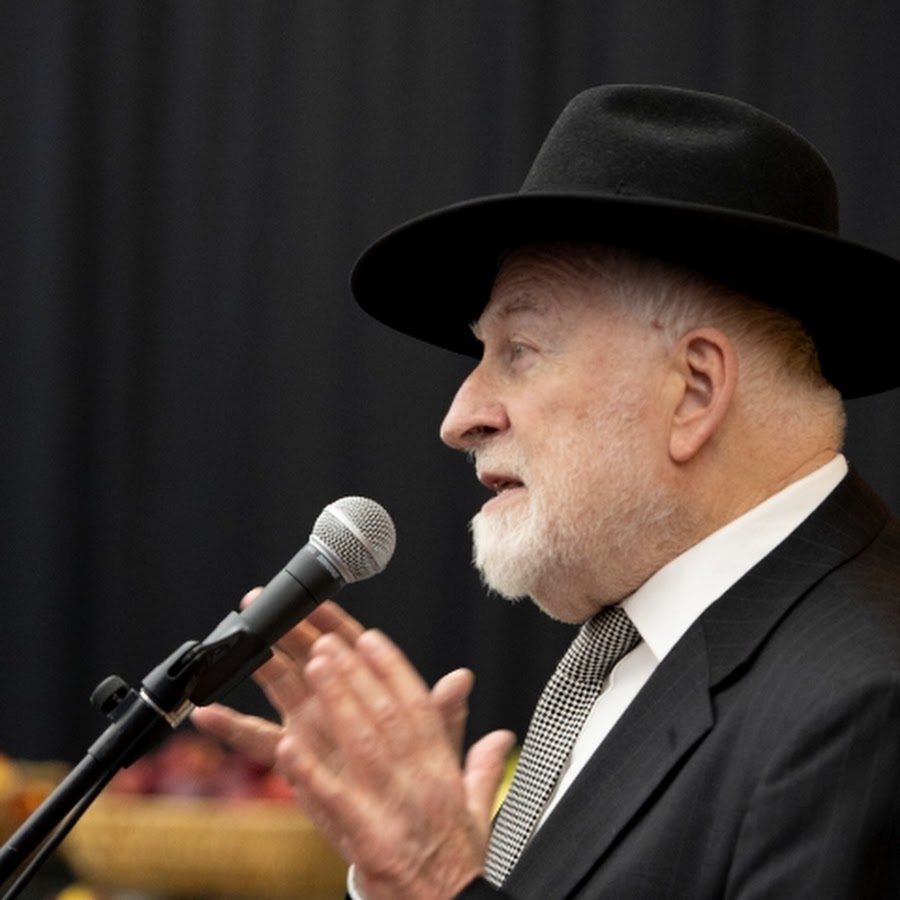
Thursday morning Parsha Shiur to give the talmidim a break from the regular masechta.
Comments(0)
Transcript
Auto-generated transcript. Not time-synced to the video.
This week we're going to learn two
sedras.
Tazria metzora. You have a lot of dinim
here.
About dinei tumah. There are two
categories of tumah. The Gemara
distinguishes between tumah hayotzei
l'mi gufo, something develops in the
body
a man becomes a zav, a woman becomes a
zavah, nidah, yoledes,
metzora. These are all tumah hayotzei
l'mi gufo.
Then you have tumas magah. If you have a
dead body and you attend a funeral, so
you're mekabel tumah mibachutz.
Not that the tumah develops in your
body. What's the difference al halacha
l'maaseh between the two categories,
tumah hayotzei l'mi gufo as opposed to
tumas magah?
So the Gemara learns out from the psukim
that
in Chumash Bamidbar, at the beginning of
Bamidbar, it says, "U'shilchu min
hamachaneh kol tzaru'a v'chol zav v'chol
tamei l'nefesh."
And it says three times machaneh,
mentions three different men. "Kol
tzaru'a v'chol zav v'chol tamei
l'nefesh."
So the Gemara says there were three
machanos. The machaneh Shechinah, that's
the Azarah.
Any tamei, all temei'im are not
permitted to enter. The machaneh
Leviyah, the Har Habayis, only one who
has a tumah hayotzei l'mi gufo is not
allowed to enter. One who has a tumas
magah, let's say someone touched a meis,
or someone touched a dead sheretz,
someone touched a baal keri, so he's
mekabel tumah mibachutz. So then when
not tahor, you're allowed, you're
permitted to enter the Har Habayis. And
the Rabbanan, they divided Har Habayis
up into three different parts, and they
said that a tamei meis is not allowed to
enter in the inner parts, but on the
level of d'Oraisa,
>> [clears throat]
>> only one who has a tumah hayotzei l'mi
gufo is not allowed to enter the Har
Habayis. Then not to enter the whole
Yerushalayim, that's only a that's only
a metzora.
Metzora not only is not permitted to
enter
Yerushalayim, is not permitted to enter
any ayoros hamukafos chomah
b'moshav ben Nun.
>> The cities in Eretz Yisrael have more
kedusha
than
the farms.
One might have thought the reverse. But,
how well do we know the
demarcations of the three areas in Har
Habayit? We have an idea of exactly
where we want to mark.
Different opinions.
Everybody has a different sheet, though.
Where
how much is is Har Habayit. Yeah.
Different opinions.
So, the
the Tosefta has the din in the the
Rashba Mishnayot quotes it.
It says if you have a beit samanut, you
have to take the avanim michutz la'ir.
It doesn't only apply to Ayarat
Hamikdash
any city in Eretz Yisrael. The cities
have more kedusha than the farms.
One might have thought that the source
of all of the trouble is from the big
cities.
The Avodah Zarah Rashi and Chazal learn
the farms that nice people.
But, the din is otherwise. Din is that
the farms have one level of kedusha and
the cities have a higher level of
kedusha. And Ayarat Hamikdash
have even a higher level. So, the tamei
the metzora'im are not allowed to enter
Ayarat Hamikdash, but in even a manuga,
you're not even allowed to leave it in
any city.
So, you have to have what's the
definition of a city.
What's the definition of a city? So, the
definition is found in two Mishnayot. A
Mishnah in Eruvin and a Mishnah in
Eruvin. They're two different Masechtot.
>> [clears throat]
>> In the yeshivot in Europe, they used to
make fun of the way the ba'alei batim
learned. They didn't know how to learn.
So, they used to make fun that two older
gentlemen made up they were going to
learn Baba Kama every day. And
so, one they were both hard of hearing.
So, one of them thought they made up
they were learning Eruvin and the other
one thought they made up they were
learning Arachin.
Totally unrelated different Masechtot.
Everything was going well. The chavrusa
was going well till one of them got to
daf lamed beis and he made a siyum. The
other one is still in the the middle.
The other one goes to to much longer. It
goes to daf kuf.
The bottom bottom are not so bad. They
they know how to learn. That's a hard of
hearing. That's another whole case.
But uh
So there's a din
The definition of a city is you have to
have gimel chatzeiros.
Gimel chatzeiros. And each chatze chatze
is an area that has a wall around it. So
it's reshus hayachid. Gimel chatzeiros.
And each chatze you have to have a
minimum of two batim.
>> [cough and clears throat]
>> How close do the chatzeiros have to be?
You have one chatze in New York and one
chatze in in Idaho and one chatze in Los
Angeles. So it makes the whole United
States into into one ear. That's
ridiculous.
Do they have to be contiguous? Do the
chatzeiros have to be touching each
other? The Tosefta says probably not.
So Tosefta says the Mishnah is talking
about batim being within shiv'im ameh
v'shiyuraim, a little 70 a little over
70 amos. The Gemara learns that from a
pasuk that's here.
70 amos and a fraction. 70 and a and a
point two, I think.
>> [clears throat]
>> So that's about how close the batim have
to be to each other that the city keeps
on expanding. So Tosefta thinks that
it's probably the same shiur for the
gimel chatzeiros. You have to have gimel
chatzeiros. Each chatze has to have
minimum of two batim in it. Each chatze
has to have a wall around it. And the
chatzeiros have to be The walls of the
chatzeiros have to be within shiv'im
ameh v'shiyuraim of another chatze. Is
there any minimum population that you
have to have? So the Gemara in the first
perek in Sanhedrin
talks about ir hanidachas.
How many how much population do you have
to have in the city that should have the
status of an ear to be able to be
subject to the dinner of the Ir Dahas.
So, we pass over there
population of 100.
By Ir
it's a minimum population of 100. Then
there's a maximum. If there's too many
people, then we don't burn down the
whole city. You don't destroy the whole
city. Even though
worship the Zara goes in the dinner
fashions in Darshan the cooler you
always Darshan the cooler. So, you say
Ir Dahas
Like this here we hear Ir Velo
if it's a big metropolis that then does
not apply. So, the more gives a a
maximum.
By if you just talk not talking about
dinner talking about an ear. What what
are the what's the dinner of an ear? So,
there's no maximum.
But all the all the houses have to be
within
Shiraim of each other. Otherwise, it's a
different city.
So, that's one difference between
what's in the Gufi as opposed to
Thomas Maga that the prohibition of
entering um
the Har Bayis
only applies to those after my only
Gufi. What is the Mace when there is the
whole Har Bayis even at the same time
even to take a Mace into the Har Bayis
but the Rabbanan they introduced Thomas.
>> [clears throat]
>> What else might be a difference between
Thomas Thomas Maga and Thomas only Gufi?
So, Thomas writes in a few places that
the dinner that
based on a mission in Sokin
that sometimes if the Zibur is
then you bring a carbon
above the
and everybody eats it eat the carbon
with for Zibur is only.
So, so the mission says Thomas Thomas
Thomas Maga
only Thomas Maga but if the but if the
people have Thomas only Gufi then you
don't say Thomas with the city. only
Thomas
that's it.
They said
even limited further things that
Thomas
only Thomas
even Thomas
a touch another person who's who's a
dummy.
So even Thomas
it's only
by Thomas May.
The
sun the first
need has
third committee.
Between
Thomas May.
This is not sure whether the rules and
regulations that we had the other day
that's the villain.
That something should
something
that these only apply maybe the only
apply to Thomas May
and they don't apply to Thomas
for sure they don't apply to Thomas May.
That's for sure.
If there's a ticket the person is a
that's not called the Thomas because the
doesn't become
anyone else who's
I touch a become
I become a
become a become Thomas.
But by
even if you have the
you don't become till the basket that
you don't
have a
Thomas is not a Thomas is a fake.
He's tall is there a to declare him as
or is there no declare him
the two are fake I'm not busy tell me a
tour.
So that's for sure that's not called a
Thomas.
I don't know what that is.
That's the sun the first and cooler.
That by for sure. The rules of
competition
don't apply.
The
maybe that applies to the whole category
of tumah and yos and all the muguf.
So that's a machlokes in the Rishonim in
Bava Kamma, in the first perek in Bava
Kamma. Then there's a fourth nafka mina
on the level of the Rabbanan.
Then you get the challas chutz la'aretz.
Min ha'Torah challah is only in Eretz
Yisrael. And the Mitzvah is d'Oraisa.
We learn the Gemara in the second perek
in Chullin. Challah is Mitzvah d'Oraisa
in Eretz Yisrael and it's only
d'Rabbanan because there was no Beis
Ha'Mikdash.
The first time when they came into Eretz
Yisrael and they built the Mishkan, it
was Beis Ha'Mikdash. But then the
Kedushas Ha'Aretz was battalah during
the seven years of Golus, battalah.
So when they came in the second time,
there was a lack of
uh of Beis Ha'Mikdash.
So the Gemara says, therefore challah in
Eretz Yisrael today is only
mid'Rabbanan. So challas chutz la'aretz
is a d'Rabbanan on top of a d'Rabbanan.
So the Gemara in Bechoros in Daf Chaf
Zayin also has a whole list of kulas one
after the other that only applies to
challas chutz la'aretz. I remember years
ago, the first time
we visited Eretz Yisrael.
When I was a student, they didn't have
the system set up that everybody goes to
learn there. So
once every couple years, there was a
summer I went out there. It was not a
program for Americans. Some of them went
to Chevron Yeshiva.
When they had the riots in Chevron, they
killed some a whole bunch of talmidim.
A whole bunch of boys who were graduates
from Yeshiva College who were killed by
the Arabs
in 1929.
But uh
I [clears throat] wasn't born yet.
So I remember the first time
I visited Eretz Yisrael in the
summertime.
So the
a lot [snorts] of the Yeshiva ship
boys
doesn't learn the Brisk and the real the
real Yeshivas there. So they didn't
trust the Rabbanut and the Hashgacha. So
they buy a bottle of soda, so they would
be mafresh their own trumos and
ma'asros. So what they would do is they
drink the whole bottle till towards the
end.
Oichel b'lo
So,
he has all the dinner Shabbos once in a
while on the footnote he goes on a
tangent and he talks about something
else. So, when he talks about how
precious mice and Shabbos he writes that
it's improper what the boys think is
okay
that's only dinner
doesn't apply the tumor this mice and so
>> [clears throat]
>> doesn't doesn't apply to other other
case it's a special cooler colors
and more has a lot of coolers.
So, the more says colors
Tommy is not allowed even though the
colors Tommy a coin is permitted to eat
it even though the coin is Tommy if he
but if he's Tommy to my also the
mcgruffy then he's not allowed to eat it
a difference been again the colors lord.
So, if the tumor if the colors Tommy
that's too much my God.
It is not too much mcgruffy by the
color.
But
but if the coin [clears throat] is Tommy
if he's Tommy to my other mcgruffy not
allowed to eat colors lords.
What's the dinner of a ball carrier a
man becomes a ball carrier. So, ball
carrier is a too much rear makes him
into an alpha tumor is that too much
rear mcgruffy or maybe you should say
there is no such thing that a ball
carrier is Tommy. The deeper
is Tommy so when it comes out of the
body and it's touching the body me by
hoods that's my God so the ball carrier
is a regional tumor.
So, that's a major
a regional tumor.
The demand the first stuff about the
comments on the machine that they don't
get test the first comment is on the
first comment about the comment.
So, the more quotes on mission over the
tumor a share is by there about Tommy
may so the sheet of this is quotes the
rush from
what is it say over the tumor a share is
by
about Tommy may and bases are they a
voice out too so the one who goes to the
funeral becomes an offer to them.
When you become a tumor, the tumor
always goes down a madrigal.
That's what the more calls on the first
bottom of the bottom of the first some
don't get pissed the first time. So it
says by by the second
You have obvious and told us of obvious
and second you have told us so told us
and coyote to them. But by tumor you
have obvious and told us and told us
told us and love coyote to them. Why how
come it's different? So there's a famous
say fair and Baba Kama called the
necklace David of David table was a
tournament of a prime of a larger now
from the first time meeting of the
larger now you should even and he was
invited by a prime of a larger now he
left the Shiva and then he was invited
to come back to give Shiva in the Shiva
doing the lifetime of a prime of a
larger So on the first Gamara on the
first page in Baba Baba Kama the
necklace David has a famous
part.
It's it's true. It's a fact. He says
obvious obvious music in of four
categories.
So I bought my dad these are categories.
So told us and coyote to them told us
means things that is sufficiently
similar to the of is a mama thing as the
same thing as the of so of course it's
going to be told the same coyote to
them. It's going to have all the same
thing in the same of. But told us by
tumor doesn't mean that they're a
category. Told us means I went to a
funeral I was couple of them are from
the maze then I go after the funeral I
go I meet you and I shake your hand. So
I was my couple to them from the maze
then I transmitted to me to the next
person and he touches food and he
transmits the food that to me to the
food and the food touches my shaker and
the food is become the my shaker so
there it's told the same love coyote to
them. It's a different concept of
told them. Told them means when the
tumor is transmitted it always goes down
a madrigal by definition. It has to be
told the same. Lav kayetz bahem. Tosfos
says the kasha this is bikius. This is
Bava Kamma daf based on the base.
And base of Talmud in Brooklyn they go
over they used to go very slowly. I'm
not in touch a long time already. Used
to go very slow. So the holy yeshiva was
on something like ten zeinim at all of
us and and
and erchin I think. I forgot and me'ilah
they were learning the eilah. Holy
yeshiva was on amud aleph. One of the
boys was learning on the base and he
said bikius he's learning bikius.
He's up to amud base the holy yeshiva
was on amud aleph. Okay.
So Tosfos there has a kasha. The Gemara
seems to have a klal that by tumah has
to be told the same lav kayetz bahem.
Because the toldos by tumah means the
tumah is transmitted from one to the
other to the other to the other. So
whenever the tumah is transmitted it
goes down a madregah. Has to be always
told the same lav kayetz bahem. It loses
in transmission.
So Tosfos has a kasha but yet sometimes
told the same is kayetz bahem. There's a
din of cherev harei v'cholo.
That's in parshas
chukas. When you have the dinim of tumas
meis. If you touch
a meis
the meis is av avos hatumah so if you
have a kaval tumah from a meis you'll
become an av hatumah.
So what if the meis touched a cherev? If
the meis touched a kli mateches? There's
a machlokes Rishonim that's not in this
week's that was that's in chukas.
If the meis touched a kli mateches
that's a machlokes Rashi and Tosfos and
machlokes the Rambam and the Ra'avad.
When do you apply cherev harei v'cholo?
So here in the Shach and Yoreh De'ah
quotes it in siman about tumas kayanim.
So some Rishonim say it only applies to
kli mateches and others say it applies
to begadim and applies to tables and it
applies to every kli except for kli
cheres.
It's a major machlokes Rishonim. So
let's say
and the mace touches a clay
>> [clears throat]
>> vessel. So, the clay vessel becomes a
vessel of impurity. And if I touch it, I
become an impure vessel. So, you see a
case where they told the same is
the same as the mace. Is that a
violation of the rule that has to be
told the same?
Is that a violation of the rule that has
to be told the same? Not the same as the
mace. by
by tumor.
So, the answer says
it does go down a little bit because a
cannot make another
So, one down a little bit. Didn't go
down as much as it usually goes down.
Usually, a person
who touches a mace becomes an impure
vessel.
It does become impure.
Here, the
becomes impure.
But, it's not the same level. It's not
still not the same level as the mace.
Mace can make a
and the can make another
vessel.
So, the cloud is that by um
told the same
told the same are um
by tumor have to be the same.
How far does the tumor go? So, you have
the mace as an impure vessel.
Someone who attends a funeral is impure
from the mace and becomes an impure
vessel. Then, he touches, let's say,
food.
So, food even after the
There are four things that are impure in
the whole wide world. Four categories, I
think. All of them are
That's in chapter 101.
Four things in the whole wide world.
Four categories.
All of them
have a pool.
Clay vessels don't have a pool.
So, it's not going to be the same. All
of them
do not have a pool.
Even though if you have water that
became impure and they got wet. So,
Rashi always explained how it's not the
same as
All of them do not have a pool. They
have no pool.
So, the the So, the Gemara the the very
end of Eruvin, the Gemara has a cloud
based on Sukkot that Kohanim She'ain lo
Tahara Mikvah ain anasa av hatumah. All
the Mikvah'im who can have Tahara Mikvah
so, they can become an av hatumah. But,
Kohanim Mashkin, even if they're in the
oilam ha'mes,
someone dies and there's Kohanim
Mashkin, you don't say
the basis of the avos hatumah. So, the
Kohanim Mashkin are mekabel tumah, they
become an av hatumah. No,
only all the Mikvah'im can become an av
hatumah. Kohanim Mashkin
can become an av hatumah cuz Kohanim
She'ain lo Tahara Mikvah are the same
kli cheres. Kli cheres has no Tahara
Mikvah, so can't They can't become
can't become an av hatumah. So, if
there's a mes there,
it it makes it a rishon letumah. Makes
the kli cheres a rishon letumah.
So, let's say
a person attended a funeral, so the mes
is av ha'avos hatumah. The one who
attends becomes an av hatumah. Then, he
shakes hands with someone else
who wasn't at the funeral, so he makes
him into a rishon letumah. The rishon
letumah touches food, it makes it into a
sheini letumah. So, by chulin, that's as
far as it go. But, if it touches trumah,
then you have
even a din
you have [snorts] even a din of shlishi
letumah. Then, if it touches kodshim,
there's a din of revi'i bakodesh. It
goes till revi'i. And then, if it
touches parah adumah, then the din
becomes
But, this is only midirabanan. These are
only midirabanan.
Then, the Torah only goes till
till sheini. And the shlishi and revi'i
and chamishi, that's only midirabanan.
This machlokes is a rishon that I
mentioned before regarding
a ba'al keri
that the Gemara on the first daf in Bava
Kamma quotes a Mishnah from Taharas avos
hatumah sheretz vashichvah vazera. Avos
hatumah are the shichvah mukebeles and
the quotes from the rush. The rush me
shots wrote a commentary on Mishnah is
coach
Taurus.
Um.
So the Taurus and Zeraim.
So the So the rush is quoted as saying
the Shiva Zera is an Avot about the bulk
areas originally to me. You know the we
shall disagree explicitly they hold it's
not so.
So that's
the seems to be contradictions in in
Gemaras.
So that's what some of the earlier get
down on the thought that it's not only a
Mahloket of Rishonim it's a Mahloket of
Tanoim.
There's a knockout safer on Taurus. I
forgot the name.
The two he has
the safer has the text on top is the
Hakdamot of Rambam to say the Taurus
from the Pirush of Mishnayot.
One of them as kill him made a comment
here years ago that if all we had from
the Rambam is his Hakdamah
the and the Pirush of Mishnayot to say
the Taurus we would have known that he
was the God Lord of his generation.
The Hakdamah to Korban is also
fantastic. He puts everything all
together.
So the text of this safer I forgot the
name of the safer.
The text of the safer on top of the page
is the Hakdamah of Rambam and Pirush of
Mishnayot to say the Taurus and then he
has on the bottom of the page two
commentaries. One is a Mahaneh one is
Parpar. That's in the Haftarah of this
week.
We have two half We have two seders this
week. Tazria and Metzora. So there two
Minhagim
in in Avudraham when you have Mechubarim
two seders do you say the Haftarah from
the first parsha or Haftarah from the
second parsha? So in Sefer Shulchan
Aruch our practice usually is that Rubah
the Rubah that we say the Haftarah from
the second parsha. So the Haftarah from
the second parsha
>> No.
A name this after from the first part
from Tazria talks about Amanu Farpa.
Those are two rivers in
in Aram.
Who was it
Sarto Amel Aram became become a Metzora
and he went to Alisha and Naver and
Alisha and Naver told me should bathe in
the Yarden and his
sickness will be cured. And he said,
"What am I going to bathe in the Yarden?
I bathed already in Amanu Farpa, the two
clean rivers, cleaner than the Yarden
river and it didn't get healed." And
then the Naver said, "Just listen to
what I told you." He did and a miracle
occurred and he got cured. So, the two
Perushim in this safer on the bottom of
the page are Amanu Farpa. I forgot the
name of the safer though. So, he
suggests Main after.
Main after, yes.
Main after, not to be confused that
there's another safer Main after
from a later
commentary on Yevamos.
That's a different safer. But Main after
on Paris also legend that his
grandfather Prime had the Main after on
his desk
all the time.
How could be all the time when he's
learning Sugas? There's very little
Paris there.
I don't know. That's what he said.
He had it on his desk all the time. He
used the Main after extensively. It's a
fantastic safer.
So, the
So, the Main after suggests that it's
probably a Machlokes Hatanoim. What
about Keri'as
Shema Rishon Letuma?
Same thing Rabbi Chaskel Abramsky. He
was in He just
He was in my lifetime. He was alive. So,
he wrote the commentaries on on the
Tosefta.
So, he he wasn't as big as the Main
after, but So, was a prominent Rabbi.
So, he also thinks that it was a
satanoi.
There's no way around it. It has to be a
satanoi.
When a person is um
a he has to go to mikvah to become
tahor. Usually, you go to mikvah, you
become tahor. You have a choice. The
said it was in I think it was in last
week's The said you can my and a boy
mikvah my tahor. If a person is tahor,
he has the choice to be
either in a mikvah Mikvah means the
water is covered with it's stagnant.
It's standing still. If it's If it's
rolling down a mountain side,
if the mikvah is Let's say it's pouring
outside, and and there's water all over
the place, sloshing all over the place,
but it's it's it's not standing still.
It need The water of the mikvah has to
be in a crack in the ground, a
That's called
The water has to be uh
The
shouldn't be That's a there is a
So, that's a mikvah. So, if you in a
mikvah, you become So, if you in a
is also good. The is
If the source of the water is from under
the ground, then has a of a source of
the water is the rain or the melting
snow on the all winter long the snow
accumulates on the mountains and then it
comes spring time and the sun is shining
and it's a 90° outside, so the snow is
going to melt. There's going to be tons
of water rolling down the mountain. So,
that's not acceptable. That's a then.
That's made
is no good if it's Only if it's made of
from under the ground.
The water from under the ground also
comes from the rain. The know that
there's a water cycle. There's only so
much water in the whole wide world.
So, all the water from under the ground
is also So,
that's the question. How How far does it
have to roll under the ground and then
shoot up again that it should be
considered a then? If it just landed on
the ground and it shoots up 2 in later,
that's mega shaman. That's not
acceptable. That'll be
So, that's a discussion. That's a
serious discussion and serious Boston.
So, all the
have a choice either to be on a to be on
a Mayan. That's the I think last week
said I
think
except for the
of. And this week said it says if a man
is a
he has to be on
Mayan. Mayan means a Mayan. If he's on a
he's still like before. What about a of
Does a need Mayan so the doesn't say.
But the
came up with such an idea. So,
on the
in quite a few places around three or
four places quotes the and he leaves it
like that that has to be on a Mayan
also.
In another three or places quotes the
says that they're wrong. That it's
against
it's the of
the
the first of the has
and the of the
and the has more
so it's against
it
that the needs Mayan and the does not
need Mayan and the
points to that. Quotes the gave a wrong
they said that a needs Mayan. Today we
treat there's a difference between a and
a of.
>> [clears throat]
>> So, a of who does not need Mayan.
The only said that a of has the same as
a of that need Mayan. So, the says it's
against
it's it's not correct.
It's not right.
The
we're talking yesterday about the of the
of.
So, the first half of the of the was the
Thomas of
them.
On the of them.
Then the second half of the safe I Yasha
is chuvous that he wrote.
The talmidim to other contemporaries of
his. So he has a letter is not a
chuvous. He has a letter to the Rabbeinu
Meshulam. Rabbeinu Meshulam was a talmud
of the Rabbeinu Tam. And then he
graduated and he moved off and he took
the rabbinical position somewhere. And
the Rabbeinu Tam heard stories about him
that he's doing crazy things. So he sent
him a letter, you can't do that. It's
Can I get a din? So one of the things he
heard that he came up with a chiddish
based on the psukim. It's a good It's a
good insight. It's in the Torah. It says
if you have a baal keri
it says it says v'rachatz says basar
bamayim. If you have a zav
no, if you have a baal keri it says
v'rachatz says kol basar bamayim. And if
you have a zav it says v'rachatz says
basar it doesn't say kol basar. So the
Gemara has a comment on the word
v'rachatz says kol basar
that in order to be tovel in a mikvah
you need 40 se'ah. Why? Am mayim shekol
gufo al bahem b'vas achas. You have to
be able to submerge your whole body at
one time under the water of the mikvah.
You can't stick in the right leg then
the left leg then the right arm then the
left arm then the chest and the back
then this side of the head that side of
the head. You have to be tovel the whole
body b'vas achas. So that's learned out
from the word kol basar. Mayim shekol
basar al bahem b'vas achas. But by the
zav it doesn't say kol basar. So
Rabbeinu Meshulam came up with a
chiddish that whenever anyone the zav
needs mayim chayim.
So whenever you have tvilah b'mayim then
you can be tovel one limb at a time.
But when you have tvilah b'mikvah has to
be kol gufo b'vas achas. Rabbeinu Tam
said that's scandalous. That's not true
correct. There is no such thing. It's
not good b'na Torah. So Rabbeinu
Meshulam sends him back a letter, I
didn't say it's good. I said from the
lashon of psukim the shittur shall nikra
it would appear like that. So Rabbeinu
Tam sends him a letter like that. He
said, "You're not allowed to say that."
Not allowed to say that Pshuto Shone
Mikra is like this and it then is not
so. And Amikah Yitzchak Mi'Dei Pshuto,
whenever you have a Pasuk, you have to
follow the simple reading of the Pasuk.
The Drashos are certainly Amis. The
Gemara says in Shabbos, the Gemara tells
one of the Amora'im had a Rebbe who
learned all of Torah She'Baal Peh. He
learned all of Talmud Bavli. And one
fine day, the Rebbe said to him, "Danny,
say, where did you get that from?" So,
he said, "Amikah Yitzchak Mi'Dei
Pshuto." So, the Talmid never heard of
that. He thought that the only thing
that's binding are the Drashos of the
Torah She'Baal Peh. And Pshuto Shone
Mikra, we ignore. The Gemara said, "We
don't ignore it. You have to follow the
Pshuto Shone Mikra." So, that's why
Rabbeinu Tam writes a letter to Rabbeinu
Meshulam. He says, "You're not even
allowed to say this
by way of giving a Shiur, to say that
the Pshuto Shone Mikra is like this and
it then is not so. If Pshuto Shone Mikra
is like that, then you should follow
Pshuto Shone Mikra." So, he was upset.
That's the problem with the Pirush
Rashbam. The Rashbam is the older
brother of the Rabbeinu Tam.
They were both grandchildren of Rashi.
So, the Rashbam
learned with [clears throat] Rashi.
And the Rashbam on Chumash, he always
writes Al Pi Pshuto Shone Mikra. He
writes wild shots in and it's not
correct L'Halacha. Halacha L'Maaseh. So,
what did he write such a wild shot for?
What do we need his Pshuto Shone Mikra
for?
I think that Rabbeinu Tam probably would
be upset about the Rashbam's commentary
on Chumash also.
Anyway, that's the Rabbeinu Meshulam had
a deal. Interesting deal. But, by the
Ba'al Ha'Keri, where he can be Toivel in
a Mikvah, says the Brochah since Kol
Ba'Sar Ba'Mayim. Kol Ba'Sar Mayim
She'Kol Guf Ha'Ba'al Ha'Keri Ba'Mayim
and by the Zav, because he needs Mayim
Chaim, that's why it doesn't say Kol
Ba'Sar, right? So, the Rabbeinu Meshulam
said, "The Pshuto Shone Mikra means that
you don't need Kol Guf Ha'Ba'al Ha'Keri
Ba'Mayim. He can stick in a limited
time." It doesn't make any sense.
What's the difference between a zav and
a zova?
What's the difference between a zova and
a nida? A zova and a nida.
So, the the nida has the reias dam
the eis nidosa, when it's expected. And
the zova has the dam below eis nidosa.
When is When is eis the When is low eis
nidosa?
So, the Gemara says the yural of yom
shebe nida le nida.
So,
So, there are many Gemaras that indicate
that yural of yom means like this.
>> [clears throat]
>> When a girl starts having a period, so,
the first time she has dam, she becomes
a nida. She's a nida for 7 days.
>> [clears throat and cough]
>> Then, in the 11 days immediately
following the 7 days of the nida, she
has the opportunity if she'll have dam
then, that she has dam straight
7 days in a row and the next 3 days
also. So, she becomes a zova gedola. If
she only has dam
1 or 2 days, she becomes a nida for 7
days. Whether she has dam all 7 days or
not, doesn't make a difference. So, if
she only has dam in the next
Let's say she has dam during the 11 days
that follow the 7 days of nida, not on
consecutive days. She has day number
one, day number three, and day number
seven.
So, Tosefos in nida quotes the Rav
Saadia Gaon's commentary al HaTorah that
he writes that the woman will become a
zova gedola. She needs shiv'a neki'im.
And they say "With all due respect to
Rav Saadia Gaon, it's against the
Mishnayos." The Mishnayos say that there
is not so. She only becomes a zova if
she has 3 days in a row in the yural of
yom shebe nida le nida. But, the yural
of yom in many Gemaras says yural of yom
shebe nida means only the first 11 days
immediately following the 7 days of
Niddah.
Then when she becomes and when I shall
have the next three year
and I shall have the next three year
after
after those 11 days, the next three year
will be a Niddah
for 7 days and then the next 11 days
following the 7 days she has the ability
to become a Zavah. So if you have three
consecutive days in the Yurala Yom she
becomes becomes a Zavah Gedolah and you
need Shivah Neki'im. And if she only has
dam one day or two days in a row, then
she's only a Zavah Ketanah and she only
needs one Yom Naki.
And then the Pasuk says
after the
Zavah Gedolah let's say needs Shivah
Neki'im, she has to make Bedikahs to
make sure that she has Shivah Neki'im.
So it says "Va'achar Titaher." "Zavah
she has Yomim." "Va'achar Titaher." She
needs Shivah Neki'im. What is "Va'achar
Titaher?" She should say "Va'achar
Titaher." So the Gemara says "Va'achar
Titaher even if it's the morning of the
seventh day, if she makes a Bedikah and
she sees that there's no dam and she
goes to the Mikvah, we apply the rule of
Miksah Sayom Kulo. That is the source of
the institution of Miksah Sayom Kulo
by the
by the Zavah Gedolah.
"Zavah she has Yomim." She needs Shivah
Neki'im. "Va'achar Titaher." "Va'achar
Maiseh Titaher." After she does a
Bedikah on on the
on the seventh day of the Shivah Neki'im
and she goes to the Mikvah, then
she's Tahorah.
She's Tahorah.
Where do we apply that then Miksah Kulo?
We apply it to Avelus.
If a person is in the middle of Shivah,
someone comes the morning of the seventh
day, so we say Miksah Kulo. Comes the
morning of the 30th day, you say mixas
ayam kukulai.
What about yud bais chodesh? When it
comes the last day of the yud bais
chodesh, you all say you say mixas ayam
kukula. So the Shulchan Aruch you do
not. It doesn't apply by yud bais
chodesh. Why not? So the official
explanation they give in Shulchan Aruch
is
that
shiva and shloshim, the din was
instituted 7 days, 30 days. Yud bais
chodesh was instituted in units of
chadashim, not in units of days. You're
not working with the units of days.
Whenever you're working with the units
of days, then you say mixas ayam kukula.
When you're working with units of
months, then you don't say mixam kukula.
That's the official explanation that
they give in Shulchan Aruch. It could be
that there's another
explanation.
That
how come you not say mixam kukula by a
nida?
The Gemara says in psachim, so Gemara
psachim that it it doesn't apply to nida
or yoledes. Cuz by the yoledes it says
if the yoledes has a baby boy, she's
tamay for 7 days. If she has a baby
girl, she's tamay for 14 days.
And the Gemara says ki may nida
is the voice of titma. She has a din
like a mixam kukula, so too by a
yoledes, you don't say mixam kukula.
When when do you say, when don't you say
mixam kukula?
So the pashta says
>> [clears throat]
>> you only say mixas ayam kukula. What was
the drasha that the tanain made? So for
the shiva samay ba'achas tita, achas
ma'aseh tita. When she does a ma'aseh on
the last day, so by a zava, you have to
make bedikas. The safala shiva samay,
safala that doesn't mean counting the
peh. It means she should make bedikas to
know that she has shiv'ah neki'im.
So, there's one opinion in the tanoyim
that she has to make a bedikah every day
of the shiv'ah neki'im.
L'chatchilah we do that, but
that's not me'akev b'di'eved.
L'chatchilah you need a bedikah every
day, and b'di'eved
um even if you only made one bedikah,
sometimes we would be meikel.
L'chatchilah the
more correctly she make at least a
bedikah the first day and the last day,
first day and the seventh day.
But if it's a big shas hakrach, then we
we are then we make like the other
opinion in the gemara that
one bedikah is also good. But if you
want to apply mikvah on the last day,
then everyone agrees you have to make a
bedikah cuz there's tita, achah ma'aseh
tita. The person has to do a ma'aseh in
order to terminate
the the tum'ah.
So, the ma'aseh is you have to make a
bedikah, then you say mikvah.
So, by a niddah, you don't have to have
you don't have to have shiv'ah neki'im.
You don't need any bedikahs. You just
need a bedikah before this Let's say a
woman is a niddah, she has Today's
Thursday, so she starts as a re'ah as
niddah today.
You don't have to make any bedikah. She
can have a dam till Wednesday next week
before shki'ah. If she's going to
continue to have dam after shki'ah,
she'll become a zavah k'tanah. Then
she'll have dam the next day, she'll
become three days in a row and a row,
she'll become a zavah g'dolah.
So, you just need to have s'tarah at the
end of the seven days. He may need also
the seven days of niddah. He need a
bedikah to make sure that there's no dam
afterwards, but you don't need a bedikah
cuz he need a yom naki.
Just want to make sure that she didn't
become a zavah k'tanah.
So, the only times I make some cool
after something to do, it doesn't happen
by itself.
So, that's why by [snorts] a niddah,
there's no kiyum. There's nothing that
you have to do.
So, therefore you can't say mix apples
and oranges. So, the same same is true
by avelus. In shiva, the the avelus
there are three levels, shiva, shloshim,
and yud b'shloshim. So, in shiva,
there's a requirement for an evil
merubah.
>> [clears throat]
>> If the evil merubah
is so annoying, let's say a person not
allowed to bathe in shiva.
But, people today bathe so often. And if
it's hot in the summertime, you're going
to be perspiring all day long. You're
going to be itching and scratching.
Going to be annoying. So, whenever it's
whenever it causes tza'ar, whenever it
it's it's very annoying, that's more
than the halacha requires. So, then then
you're allowed to bathe, even in the
middle of shiva.
If it's mitzta'er, you're allowed to
bathe.
So, in in shiva, we need an evil
merubah.
But, once it's worse than the evil
merubah, mitzta'er, then it then it's
muttar. In shloshim, you need an evil
b'miktzas.
You have to do an evil b'miktzas. But,
once it becomes evil merubah, then
you're permitted to violate. Let's say,
during shloshim, you're not allowed to
put on clean clothes.
So, the person going to wear the same
shirt 30 days in a row. The shirt is
going to be filthy. Going to be by the
neck, it's going to be full of
perspiration. By under the arms.
And you drop food on your shirt when you
eat, it's going to be dirty. So, the
Pischei Teshuvah says, even though it
doesn't say anywhere, it's a double
parsha,
that the shloshim all you need is evil
b'miktzas. And he's got to wear the same
shirt same shirt for 30 days. That's
already that enters into the category of
evil merubah.
>> [clears throat]
>> And
usually the Pischei Teshuvah quotes
poskim. This he writes on his own. He
doesn't quote anybody. Says it's a
double parsha like that. But, in yud
b'shloshim, there isn't no neehug to do.
There is no kum b'yaaseh neehug. In
shiva, it is considered evil. You have
to act with evil merubah. In In
shloshim, you have to observe nevu'ah
b'mitzvah. You b'seder she just need new
tanugim.
But there is no nehu b'kumeh asei. It's
b'sheida altus. So that's maybe that's
another reason why.
I think Rav Soloveitchik said that.
But it's a very good svara. The only
time you say mitzvah em k'kulan when
there's a nehu b'kumeh asei.
There's a question, why don't we say
mitzvah em k'kulan on Shabbos?
>> [clears throat]
>> When I was growing up,
every Orthodox shul had a hashkamah
minyan. The hashkamah minyan was for the
people who had to go to work on Shabbos.
It wasn't for the people who wanted to
learn.
They didn't want to hear the rabbi's
sermon. They wanted to learn daf yomi
then. It was for the people who had to
go to work.
I remember when I was
a little boy,
there was one baal bos, he only showed
up in in shul on Yom Tov.
He was never there on Shabbos. And he
used to always get an aliyah, make a
misheberach for the Gerer Rebbe.
And I never understood, where is he all
year long? He's not He's never in shul
on Shabbos. And so one fine day,
Shabbos, he shows up in shul. He gets an
aliyah, not Yom Tov. And he makes a
misheberach for the Gerer Rebbe. And he
says, "Baal bos, another is giving
kiddush today in shul because he just
became
a shomer Shabbos."
He felt he has to work for a living. If
he he's not going to be m'challel
Shabbos, he won't make a living. He He
thought it's a safek sakana. Maybe it
was. Maybe it was.
So that's what the That's what the I
never went to the hashkamah minyan. He
always davened in the hashkamah minyan.
He made kiddush in the hashkamah minyan.
Then he went to work.
And when he finally was able to switch
his job and to become a shomer Shabbos,
he gave kiddush, made his misheberach
for the Gerer Rebbe again.
And he And he gave the kiddush that day.
So that's a question.
The Ram Mipanu.
Fano was a city in Italy.
The Ram Mipanu was a Mekubal and he was
a contemporary of Yosef Karo. Yosef Karo
lived in Safed in Eretz Yisrael when he
wanted to print his Beit Yosef
and the Shulchan Aruch, he sent it to
the Ram Mipanu, he should take care of
it cuz there were no there were no
Hebrew printing presses in Eretz Yisrael
at that time. In Italy there were.
The Ram Mipanu has a small collection of
Tshuvas, every so often they quote
something for the Ram Mipanu.
It's not the way we
uh it's a different style of learning.
So, uh he has uh an essay, he has a
Tshuva, why don't we say every Shabbos
Miktzeh Yam Kukulay? Go to the Ashkenazi
minyan and call it quits, make Kiddush,
then go to work. Miktzeh Yam Kukulay
every Shabbos and Yom Tov.
So, he thinks
he only he says a Svara.
Usually we have a concept of Mosif
u'Mekhalel al haKodesh. You don't want
to
limit Kedusha, you want more Kedusha,
there should be more Kedusha in the
world. Mosif u'Mekhalel al haKodesh.
So, if you have a day, Yom Tov is a day
of Simcha, Shabbos is a day of Kedusha,
you want to have more Kedusha and more
happy things. By Avelus it's the same,
Miktzeh Yam Kukulay. By Tumah, you want
to get rid of it as soon as you can. So,
it only applies, Miktzeh Yam Kukulay
only applies by Tumah and Avelus, things
you want to get rid of. They put a
person in Niduy for 30 days, the Mishna
says Miktzeh Yam Kukulay on the last day
of the 30 days of Niduy because Niduy
the person observes Avelus on himself.
When they put someone in in Niduy a
Cherem,
he has to observe Avelus, it's if that
the the cursing him he should drop dead.
And Misha Meis b'Niduyo and if he dies
uh and they they never took off the
Niduy,
so the children don't observe our
values.
We treat it like a Harrogate basin.
Cuz basin put him in need away and he
put him in that's a curse. The master
the word Harrogate is the same letters
as the same letters as
the same letters as Ramach. The the male
body has Ramach a worm and when he put
someone in Harrogate, they want the
curse to seep into all of Ramach a worm
and the man should die.
And if mission is been a doing a basin
so cool our own home.
It doesn't mean you put a pile of stones
in the gala show home.
Home is in safe of your show.
You don't do that. Put when you have the
coffin when you take the coffin to bury
him, you put a slab of stone on top of
the coffin to demonstrate to indicate
that he really deserved to have skilo.
And we treat him like Harrogate basin
and the children don't observe our
values like Harrogate basin.
The Gamora quotes the first Baba Rashad
Rina. When we show him die, he's
supposed to rejoice.
So the So that's what the Ramami found
out suggests.
That you only say mix up by two men by
our values or by need away and
Harrogate. Harrogate is a curse he
should drop dead and so he has to
observe our values on himself.
The same thing it says the mix up
in the second mix up
says God of you from Russia have a
ruler. So the Gamora said that's a
Indian of Neil our values.
The the mix up has a case.
The Gamora says
there are three people
one is a mix up and the other two.
Bonnie.
I forgot who's the third one.
I think there's three.
But the mix up has a case.
So So
and we assume Saracens a punishment for
his other errors.
So he has to observe our values. Usually
when a person dies his relatives observe
our values. Here the person is observing
aveilus while he's still alive. He's
observing aveilus on himself like the
menudah, like the muchram. He observes
aveilus on himself cuz they gave him a
curse. Person gave him a curse that he
should drop dead.
So, the Gemara says that this ain't mix
kol. So, that's what the Ramami finally
thinks that the only time we apply it by
tumah and by aveilus, the same things.
But by yuntif, simcha, by Shabbos
kedushah, he don't say. Rabbi Yosef
Engel quotes this in his Gilyone Hashas.
>> [clears throat]
>> Rabbi Yosef Engel had a Gemara with a
big margin and he used to write all
kinds of things on the margin. So, he
gave his Gemaras to uh typesetter and
they printed everything he wrote on the
margin. That's called the Gilyone
Hashas. He always has very interesting
uh comments.
So, he says this is against the Gemara.
What the Ramami finally said against the
Gemara cuz there's a machlokes in the
first perek in the very beginning of
uh nazir.
Nazir, it says kodosh yihyeh godel paras
rosho. The nazir is considered kodosh.
And there's a machlokes Beis Shammai and
Beis Hillel.
What if somebody makes hekdesh betos?
Let's say
I thought I was a wealthy man and I
donate $5 million
to
Beis Hamikdash
or I donate 100 korbanos.
Then I find out that the yesterday I
lost all of my wealth. They they didn't
tell me the good news till after I was I
donated a million dollars to to hekdesh.
So, Beis Shammai hold that that's
hekdesh betos. So, Beis Shammai hold
hekdesh betos is chol.
We don't pasken like Beis Shammai. Where
did they come up with such an einfal?
Hekdesh betos is chol. Cuz when you make
temurah, you say harei zu tachas zu and
I'm not to say that. Once you declared
an animal as a korban, you're not
allowed to change it. Lo achlin v'einan
toldin b'ararah b'tochav.
He
thought the guy thought he's going to
get away with it to switch the Kadusha
from this carbon to to the different
animal.
And then the Torah says he doesn't get
away with it, but the new animal this
remains Kadusha and the new one also
becomes Kadusha. He didn't want that. If
he would have done the both be the
Kadusha, he wouldn't have said a word.
He wouldn't have said it has a zoo.
So I see that it's happiness but it was
in its house. And they still say that's
a different story.
Tomorrow is a different story. But
happiness with toys is not house. So
that my happiness with toys is quoted in
the mission in other. They shall I say
one becomes another is also a form of
happiness and even if he made a mistake.
Even if he let's say he he didn't
realize he's going to lose his whole
plan if he's going to be another. He's a
wine taster for a living. He didn't he
thought that another
has a long hair.
And he doesn't go to funerals. He never
heard that he not supposed to drink
wine. So he become another
and he finds out he just lost his job.
He can't be a wine taster anymore.
That's what he does for a living.
So they shall I say that another with
toys is house cuz like happiness with
toys. And we pass like this hello
happiness with toys is not house only
tomorrow and another with toys is also
not house. Whatever he does so when it's
with toys is not house.
So yes the table says the tomorrow has a
what he say makes the same with another.
We pass and you do say.
Let's [clears throat] say he was to be
another for 50 days.
He can't he can't be become another
less than 30 days.
If he didn't say how long he just said I
already know this is done with the years
of solution year.
But it can be it has to be in units of
days. It can't be
45 and 1/2 days. So they say they say 45
and 1/2 days has to be 46 days. It's in
units of days.
So the din is that on the last day of
the nazirite, let's say he says he wants
to be a nazirite for 100 days. So on the
100th day he can he can bring the
carbonus in the base hamikdash and
terminate the nazirite. We do apply
mixos ayam kukloy to nazirite even
though it's an inyan of kedusha. So it's
not like
the Ramam Mipanu.
Even though there isn't any inyan to be
mosef bechalah hakodesh, but you do say
mixos ayam kukloy even by nazirite.
Even though it's an inyan of kedusha.
So that's not correct. What the Ramam
Mipanu said is not correct. So when do
you say when do you apply it when don't
you apply it?
So Rav Soloveitchik said the pashut this
is like they said only apply if it's a
calendaric day.
Yom Tov is Yom Tov all day long is Yom
Tov. Shabbos is Shabbos all day long is
Shabbos.
This is a melo a woman happened to have
a baby yesterday
Tuesday.
So so she has a melo. If it's a baby boy
the melo is
40 days.
And if it's a baby girl the melo is 80
days. If it's a baby boy the first 7
days is in may tuma and the next 33 days
is in may tahara.
And if it's a baby girl everything is
double. The first 40 days is in may tuma
and the next 6
shishim um shloshim yamim they should be
in may tahara. So the melo is 40 days
already that that superimpose on a
calendar. Someone dies so then they bury
him and then the shiva begins and
shloshim begins. That's not calendaric
days.
Maybe in Beis Shamai they have a
calendar when Ploni has to die. That's
superimpose on the calendar.
Nidui also they put him in niddui today.
They asked to observe niddui for 30
days.
So, shiva shloshim.
That's a melochos that's superimposed on
the calendar. But, Shabbos and Yom Tov,
the day day is all day long. The Shabbos
is all day long as as Yom Tov.
So, let's say by shiva shloshim a
mishter chosson gets married.
So, remember when I got married,
I married a girl who was never married
before.
So, we got married on a Tuesday night.
So, then this is leil hamavri.
If you get married in the daytime, leil
hamavri is Wednesday. You get married at
night, so the achronim say that it's
Tuesday night. So, I got married Tuesday
night.
So, Tuesday night is Wednesday.
And the shiva shloshim a mishter was
over the next week on Tuesday.
So, Rabbi Soloveitchik used to give
shiur
on Tuesday and Wednesday.
>> [clears throat]
>> So,
the last day of my shiva shloshim was
Tuesday.
And just then, Rabbi Pelayov passed
away. Rabbi Pelayov was a rebbe in
Yeshiva.
He had learned by Rabbi Isser Zalman
Meltzer in Europe.
And he he was a very old man.
And he passed away.
So,
I was never in his shiur,
but he was like a loving grandfather to
all the students in Yeshiva. He would
always give you an encouraging word.
I remember once he asked me to say a
dvar Torah at a Chanukah chagiga.
So, I said a dvar Torah. So, he came
over to me and he tells me he has
printed in his safer a teretz on the
kasha that I asked, but he says, "My
teretz is better than his teretz." I
don't think he meant it,
but he that's why he would encourage
people. He should write it up to the
Beis Yitzchok and print it. His The Beis
Yitzchok always had his He always
encouraged his talmidim.
write. They always wrote things in the
base hits guy all the years.
So he was So I felt bad. So then I got a
phone call that he passed away and the
funeral was going to be in the in the
Yeshiva. They're going to have hespeidim
in the Yeshiva. So I came it was the
last day of shiva shiv'a mish'ta for me.
So I came to the funeral
on
Tuesday morning and then Rabbi
Soloveitchik was going to give a shiur
right after the funeral. It was it
wasn't going to go to the cemetery.
So I went to the shiur. So after the
shiur we davened mincha. So whenever
there's a chosson you don't say tachnun.
So I raised the question, should we say
tachnun? Maybe he's saying mik'tzas
hayom kulo.
Cuz it's a milos, it's superimposed on
the calendar. It's not calendaric day.
Depends when you happen to get married.
I happened to get married on a Tuesday
night. So the shiva shiv'a mish'ta ended
the next week on Tuesday.
So maybe since it's a milos, maybe you
should say mik'tzas hayom kulo.
So I I don't remember what Rabbi
Soloveitchik answered.
But Rabbi Genack says, Rabbi Genack was
there.
So he said that Rabbi Soloveitchik said,
the shiva shiv'a mish'ta the chosson is
muchlaf to be mesameach his wife.
To entertain her.
So he says, you're not a ba'al habayis,
you're not allowed to really
to break off the shiva shiv'a mish'ta by
the zava.
She's in charge. So she can by the
nazir, the nazir has the right to
decide. But since by the chosson's shiva
shiv'a mish'ta he's meshubad to be
mesameach the wife, so he can't break
off the the mik'tzas hayom kulo without
consulting the wife. The wife wasn't
consulted, so
so I'm still a chosson. So they left out
tachnun. So they didn't say tachnun.
That was the shaila.
But the whole shaila came cuz that's the
din of mixam kekula. Not like the ramam,
he found that it doesn't apply to
inyonim shel simcha and inyonim shel
kedusha. That's why Rabbi Yisrael says
that he's not right. The gemara applies
halacha l'maaseh. The gemara applies
mixam kekula by b'nei Yisrael, even
though it says kodesh hiya as a din like
kedusha.
It only applies to
case that's a milah, some din that's
superimposed on the calendar. Then it's
not mixam kekula.
>> [snorts]
>> And the opening sugya in the beginning
of parshas
uh
Tazria
So it says that they have a baby boy,
they do the bris on the eighth day.
So the gemara says it said that already
in parshas Lech L'cha.
When Hakadosh Baruch Hu gave the mitzvah
of milah to Avraham Avinu, it says he
should do the bris milah on the eighth
day. Why is it repeated here? Well, it
says it's repeated to tell you that
davka the milah b'zmanah is a special
kiyum. You're not supposed to postpone
unless the baby is not well, then you
have to postpone the bris.
But the milah b'zmanah is a special
kiyum and it's docheh Shabbos. That's
why it's repeated.
V'yamashmenu b'tzar al asoi, that pasuk
tells you that milah b'zmanah is docheh
Shabbos.
Docheh Shabbos, docheh Yom Tov.
But if it's a shabbatic milah b'zmanah,
then then it's not docheh.
What if it's a What What about Yom Tov
sheni shel goliyos?
So the Mishnah says if you have a milah
shel lo b'zmanah
A milah shel lo b'zmanah is not docheh
the second day of Rosh Hashanah.
Mishnah talks about The Mishnah is where
composed in Eretz Yisrael. Most of the
time lived in Eretz Yisrael. Some of
them lived in other parts of the world.
Most of the time lived in Eretz Yisrael.
So, um
So, they only have they only have the
Yom Tov Sheini shel Rosh Hashanah.
So, the Mishnah says that a milah shelo
bizmanah may not be performed on the
second day of Rosh Hashanah. But maybe
that's because the two days of Rosh
Hashanah is Yomah Arichta Kedushah
Achas. What about any other Yom Tov
Sheini shel Goliyus? So, that's a
machlokes the Rambam and the Rosh.
So, the Rambam holds only on Yom Tov
Sheini shel Rosh Hashanah
is Yomah Arichta Kedushah Achas, so
milah shelo bizmanah is not docheh. But
milah shelo bizmanah on any other Yom
Tov Sheini shel Goliyus is mutar.
And the Rosh disagrees. Says, "No, the
Mishnah was written in Eretz Yisrael.
There is no Yom Tov Sheini shel
Goliyus." But what about the nami? It
says the second day of Rosh Hashanah.
Any other second day Yom Tov is the same
as Rosh Hashanah, even though it's
docheh. Shte Kedushos Rosh Hashanah is
Kedushah Achas, that's a real
So, that's a
So, that's a machlokes, yeah. Then Rebbi
Yehudah is known, what if the baby was
born bein hashmashos?
So, the Mishnayos have all these dinim.
What if the baby was born bein
hashmashos? So, you can't do the bris on
the
bein hashmashos of Yom Tov sheini shel
So, you can't do the bris on the Yom
Hashmini starting from the earlier day.
Maybe it's a milah d'oraysa minah that
you're not allowed to do.
But let's say you'll want to do the bris
milah
on this
the eighth day starting from the second
day.
Bein hashmashos. Bein hashmashos of Yom
Tov sheini shel So, So, what if the
eighth day from the next from the second
day will be Yom Tov Sheini shel Goliyus?
So, that's a sfek sfeka. Maybe it is
milah bizmanah. Maybe bein hashmashos is
laylah. Maybe it is milah bizmanah. And
even if it's milah shelo bizmanah, maybe
the din is like the Rambam that milah
shelo bizmanah is docheh Yom Tov Sheini
shel only not docheh
Rosh Hashanah.
Second day of Rosh Hashanah. So that's
Mikvah.
The
The naughty people is vexing.
Or let's say you have
Caesarean.
So the has a
summer rain. The says
Thomas
is the make to make
and then you have a dinner
with the salad or lasagna. So in America
blessed the middle of the house has 24
property.
The
is a commentary on the big mission.
When you have a mission with the
Pharisees so they have the mission. So
as far as I can see every so often I'll
write some of the there.
So he says the reason why
made it 24 property because the knock
I think it's in the house called they
describe the color with the when she
would get married with weight 24 pieces
of jewelry.
I don't know where you can put 24 pieces
of jewelry.
But that's the style. Nose rings and
earrings and fingers and everything and
necklaces. Everything added up to be 24.
The [cough]
made 24
for Shabbat the color. You say
it's like a color. So
made 24 property those are the 24
pieces.
So the says there's a whole paragraph
there. The blessed the middle has most
of the dinner my breast milk appeared
there.
Doesn't have everything. Some of the
dinner must spread out in other
but most of the milk appeared. Appeared
there. So in the beginning of the
paragraph there's a
summer rain.
What's the dinner if it's a Caesarean
delivery? So that we pass
that you make to me and then married and
then apply.
If you have all the if it's the normal
way, if it's cesarean, so there's no
there's no Torah.
So, is there also no of meaning?
Cuz it's together with the
or not. So, that's
so that we pass that's a of them. One of
them those two disagree they have no
and it's a of them.
So, if it turns out there was a cesarean
delivery and 8 days later is the of
not of the
so that will also be a of them.
>> [snorts]
>> Maybe it is
cesarean delivery also of meaning.
And if it's a of them all.
Even if there's no of meaning, maybe of
them all is of them all like the
whatever you have of them. of them
where where make them
uh
100 years ago in Europe there was a
famous uh
who can go in the of
them all. Vision.
of them all
was a super genius. He can show
this is here it's black and here it's
white. I'll give you a of them all.
He was able to give a of them all
everything. He was a super genius.
Once they say of
them wasn't home. And of them all stayed
overnight. The family was there.
And then when came back from wherever he
was, so he asked
knew did you talk to him and says yeah.
Says
what did he say? He said he said
genius things but there's no of them
all.
He would say explain why that's black
and why this is white but he had no of
them all that it was so.
He would say
every of them all in his was so good
they were against of them all.
So, that's uh
So he had he printed this. He printed
this.
That uh a safic mila shalom b'zmana on
Yom Tov Rishon is mutar. You're allowed
to it's against the Mishna. It's against
the Mishna.
Why? Because tzarchei Yom Tov
when you learn Beitzah. So it says
you're allowed to do melacha ochel
nefesh and tzarchei Yom Tov.
And if it's a safic
People may or may not come. People may
come. Some friends said they may pop in
on Yom Tov for a meal.
So so I'm going to wait till they come
and then I'm going to cook the food.
They didn't call they they can't call me
up on Yom Tov. They can't give me any
any mail. They can't call
send a telegram.
So how am I going to know? So if I'm I'm
afraid people want to come. They have to
bake cookies and have to cook flesh just
in case they come. So whenever there's a
safic tzarchei Yom. So tzarchei Yom is
also tzarchei Yom. So that's what he
thought. If you have a safic mila
b'zmano
maybe you'll safic mila b'zmano should
be mutar on Yom Tov Rishon.
But it's again he said it's against the
Rishonim but he thinks it's against the
Mishna. Not against the Rishonim.
Against the Mishna.
They tell the story that uh
the Chazon Ish when he was a teenager
wanted to learn in a yeshiva.
So he said he he figured I'll try out
Ponevezh Yeshiva.
So they were learning Kiddushin. So Reb
Betzalel Ponevezher got up and he gave a
shiur on the Gemara Kiddushin. One talks
about uh
eved ivri nirtza.
So the so
so Reb Betzalel Ponevezher gave a shiur
in the Beis Medrash
that when they do the retzi'ah
the last minute on the last day of
shisha
for 6 years and have an every is selling
for 6 years and after she she goes free.
So for the Gamar would appear that in
order to become near to has to be a half
day so that he should have a lot of say
he doesn't want to go free. That should
be the last minute on the 6th day.
So the Hazon Ish knew that that was
wrong.
I thought that that was partial shot in
Gamar. I thought that this was right.
I thought that's what it said in Gamar.
The Bais Din upon the vision said that's
what it said in Gamar. So the Hazon Ish
knew that it was wrong as a teenager cuz
the opening Mishna
opening Mishna in Shkalim says that the
Ahad b'Adar writes in the second Adar
he do the Bais Din puts advertisements
in the newspaper and whoever has an
every day he might do it here he take
care of it on Rosh Chodesh Adar.
Everybody brought the purchased their
every day every on the second day of
Adar 6 years ago. So by everybody Rosh
Chodesh Adar is the last day and the
last minute and the last day. How can it
be?
So you see it's sometime towards the
end. It doesn't have to be the last
minute of the last day.
So he took
the Gamar Pesachim usually has Shkalim
printed in the back. So he was in the
Hazon Ish was in the Bais Medrash in
Ponevezh Yeshiva.
So he took out a Gamar Pesachim and he
mish toffed to the first Mishna in
Shkalim. He walked to the front and he
put it on the stand. Bais Tzalel had a
Gamar Kiddushin on the stand. So he put
the Mishna in Shkalim and he and he
walked out.
And he decided this time I caught him.
He made a mistake against the Rov of the
Mishna. Next time I'm not going to know
that he's saying
falshe Torah. So he said he made up he's
not going to learn there.
Then he wanted to learn in Baruch Chaim.
So he realized he won't be able to be
near there in Rosh Chodesh if he learns
Baruch Chaim. So he he didn't go. So he
learned at home. He learned by himself.
So he only grew up to be Hazonish.
He didn't have any assistance in the
Yeshivas.
He used to ask him any when he lived in
Bnei Brak, what does he do for
entertainment?
He just sits and he learns all day long.
So, they said, "The boys from Ponevezh
come and they tell me their
playder. They say silly things. That's
my entertainment. When they tell me all
their
Everything they say is all wrong. That's
what he does for entertainment. He
listens to them."
Anyway, Hazonish has a lot to say about
everything.
How do you translate the words in the
possuk "Tashivenu meito hora"? If she
has a baby boy, so you may tell her a 33
days and she has a baby girl, you may
tell her a 66. What's the din "Tashivenu
meito hora"? So, our tradition has it in
the Gemara that Tanoim, even if she has
dam in the middle of the 66 days, it's
not metame.
The Karaites interpreted "faker".
Even if she has dam with a mara tohor,
it's not red.
It's that part of the woman's body
always has some
fluid there. There's always something
there.
So, if it's brown or it's or it's a
yellow, it's not considered dam.
Only if it's a mara oden or shochor.
Shochor dinika oden.
>> [clears throat]
>> So, the Karaites interpreted "Tashivenu
meito hora", she's assur la ba'ala even
if it's dam tahor. Even if it's dam
tahor. Even if it's a mara tahor.
So, that's wrong.
So, there were communities where they
had the meaning that a woman who gave
birth to a baby wouldn't go to mikveh.
She wouldn't go to mikveh after the
first
7 days or 14 days, whether it's a boy or
a girl. She wouldn't go to mikveh till
the end.
So, the
So, the the
Rambam I think writes that that's a
minig from the Karaite. You know, a lot
of follow that minute, but there are
more quotes that the work communities
were were not Karaite, that they
followed that minute and there was a
reason why.
The reason was [snorts] that the mikvahs
didn't were not warm water.
There are a lot of times they had to
crack the ice outside and in order to be
toveled in a mikvah, she could get the
pneumonia. The woman can get pneumonia.
And by your latest, she has to be
toveled twice.
She has to be
There's a machlokes Bishammah Beis
Hillel. The melos is either 40 days or
80 days and has two parts. The first 7
days is a may tumah.
Even if there's no dam at all, that's
it.
It's impossible.
There's never no dam at all. There's
always a bucket full of dam.
You You wonder how the women survive
when they have a baby. A bucket full of
dam comes out and they survive most of
the time.
Sometimes they don't survive.
So, the um
So, the Shammai have the opinion the 7
days of the may tumah and dam at all,
then the yom metali rachmana
and the 33 days begin by themselves.
She not If she doesn't go to mikvah, she
won't be tahor.
But
But the 33 days of the may tahor begin
right away. It's an af kemina.
But then the dam is an af tumah, not a
complicated af kemina.
And we don't pasken like Bishammah, we
pasken like Beis Hillel. Beis Hillel
said the yom met rulyah tali rachmana.
She can't go to mikvah before the 7
days, but even after the 7 days are up,
the yom may
tahor don't begin until after she goes
to mikvah need both the yom may and the
tulyah the tulyah tali rachmana.
>> [snorts]
>> Okay.
So therefore what?
We're not finished yet. Hold your
breath. So there's there are many
disputes between Benjamin and Reshel.
And many disputes between Abaye and
Rava.
So the Gemara makes a statement in many
disputes between Abaye and Rava, Rubba
the Rubba we pasken like Rubba except
for Yael Kegam.
What is What does Yael Kegam stand for?
So they
lamed
of Yael is a machlokes Rashi and
Rabbeinu Tam.
Does it stand for Yomi Mayaim Love, a
topic in the first perek in Eruvin, or
Lachi Dekora? Or does it stand for Yomi
Mayaim Dosan, She'ini Ro'eh Bahem?
So the
Rabbeinu Tam holds that it stands for
Yomi Mayaim Dosan, She'ini Ro'eh Bahem,
that we pasken like Abaye.
Let's say the first 7 days are Yomi
Tumah, and the next 33 days are Yomi
Taharah. So whenever a woman is a
Yoledet, she has to have Shiv'ah
Nekiyim.
Mid Derabbanan. You have to learn the
Gemara. Mishnah is Mid Derabbanan, she
needs Shiv'ah Nekiyim. Min HaTorah, she
probably doesn't. It's mostly Rubba
Derubba, it's only Mid Derabbanan.
So she doesn't Shiv'ah Nekiyim is only
if she's a Zavah. She's not a Zavah.
She has uh
even if there's no blood coming out,
which is impossible. Always there's a
ton of blood that comes out. Even if no
blood, the Yoledet is Tamei'ah.
But uh
So let's say the first 7 days are Yomi
Tumah, even if there even if there would
be no blood.
So we require Mid Derabbanan, we require
all the Shiv'ah Nekiyim for a Yoledet.
Can you count some of those 7 days
as the Shiv'a Nekiyim?
And may they do the Shiv'a Neroyim if
she has done all the 7 days, which she
usually does have done. You know, that
is usually has done quite a while.
Quite a while. Every day there's going
to be a little done.
But um
let's say there won't be any done
in the last 4 days of the of the Shiv'a
Yemei Tum'ah.
If there would be such a case, can you
count those those days? Cuz the whole
idea of Shiv'a Nekiyim is she has to
wait
she has to wait
Shiv'a Nekiyim to be able to go to
Mikveh. Yes, she has to wait because she
had a baby anyway.
She's done with her 7 days even if
there's no done.
Which [clears throat]
is not possible. There's always done.
But the din is like that. Even Lady
Yevestah, that's how the Gemara goes. A
Lady Yevestah there's no done at all.
So she she has to wait 7 days cuz she's
Tamei anyway. So that's called Shiv'a
Nekiyim.
Shmurim the Safek of the Shiv'a Yamin.
That's called Bedukah Meshurim. De'in
Kavul Kol She'asur L'va'alah because she
had a baby she's Tamei for 7 days. So
that's Makhlokes Avraham. So the
Rabbeinu Tam
Rabbeinu Tam held that the din is like
Abaye there that Yemei Ledah she's
Neroyim anyway
are not Olin L'sfirah Zivah so
so every Yoledes has to go to Mikveh
twice.
She has to first go to Mikveh to
terminate the first 7 days of Yemei
Tum'ah. Cuz we poskin like the Shiluv
against the Shamah that the Yomi T'vilah
L'Rachmanah. There's a Melochah 40 days
and has two parts, 7 and 33. There's a
Melochah of 80 days. The first 14 days
Yemei Tum'ah then the next 66 days Yemei
Taharah. And it doesn't switch
automatically. You have to have Yemei
Utvilah. She has to go to Mikveh the end
the seven or the 14 days, and then you
can begin to count shivah naki. Then
after the shivah naki, then she has to
go to mikvah a second time. That That
was the meaning by the baalei ha Tosfos,
the whole ohr zarua. That's what the
Tosfos writes on krisos. This is the
Mishnah's krisos and the Gemara's
krisos.
The whole ohr zarua the meaning was like
the Rabbeinu Tam.
That a a yoledes has to have stay
twilahs
because the maylei dosah should have a
and my not oylem l'sfiras yosah and we
poskin like Beis Shammai, the maylei
dosah not over until she has yamei oot
twilah.
So, going to mikvah once is enough to
give her pneumonia cuz it's freezing.
The mikvahs most of the time are
outside.
So, so the women didn't want to have to
go. They They wanted to have less
as possible. They want to have less
going to the mikvah.
So, they figured if she'll wait till the
end of the 40 days,
she won't go to mikvah or she'll wait
till the end of the 40 days, the melosis
going to be over. The difference between
the first seven and the next 33, that
depends on
yamei oot twilah. She has to go to
mikvah. So, you may you may tumah may be
10 days and may taharah will be 30 days.
May tumah may be 20, may taharah will be
20. May tumah may be 30, may taharah
will be 10. But if you went to the end
of the whole melos of the 40, the whole
thing is you may tumah cuz you never
went to mikvah.
It doesn't continue after the melos is
over, after the 40 days are up. Then she
won't need stay twilahs. If she waits
till after the 40 days are up, then she
can just count shivah naki cuz the melos
of the may tumah is over already. So,
they used to not go to mikvah in order
not go to mikvah right after the seven
or the 14 days are up, so they would
save themselves
a second twilah. Every time they went to
mikvah, they're putting their lives
b'sakana cuz it was it was cold water.
So that was a common practice in the
call it over there where they would do
state feeders because of this rather
than a time.
So that in many communities where they
what? They were not the carry heights.
That the minute to wait till after the
40 days and 80 days are up and then
count Shivani came. Then you don't need
state feeders. You'll need the one
feeder at the end of the at the end of
the Shivani came after the whole
molasses over.
So then somehow that
minute
people didn't understand what it's all
based on. So they had a minute that you
wait [clears throat] till the end of the
40 days. You go to make for that. That
doesn't make any sense. That's like the
carry heights. Why are you waiting till
the end of the 40 days? You have to wait
another 7 days after the 40 days.
So that's when the Shulchan Aruch they
say if your community doesn't have that
minute, don't adopt it because the way
the minute stands now that they only
wait till the end of the 40 the end of
the 80 days, they don't wait another 7
days Shivani came. So then the minute is
[snorts] on a time that doesn't make any
sense at all.
But that's
that's all in your day.
Here the Torah has a din a maysis metame
ba'ohel
and the metzora'as kosher kames. Where
they get that from? Because Miriam was
punished with nega tzara'as and Aaron
asked Moshe Rabbeinu, "Please pray for
our sister al tina kames.
Let her not be like a mays.
So the Humash could be Aaron never said
that. Could be Aaron said something
else. But because the Humash records it,
the Ramban on the Humash writes that.
In parshas Yisro on the possuk Zachor es
haYom
So he says when the Chumash quotes what
someone said it's not necessarily a
direct verbatim quotation.
Let's say when
when Lavan said
Malish was os nitna l'cholah gam os.
When Yaakov realized that they gave him
the wrong sister
that he had to marry Leah and he wanted
to marry Rachel so he said wait, the
shivah is me'anishes, malish was os
nitna l'cholah gam os.
So the Gemara wants to the the
Yerushalmi wants to learn eima rabanan
simcha b'simcha from that possuk. You
can't celebrate shivah is me'anishes for
the second wife if you're still in the
middle of celebrating shivah is
me'anishes for the first wife. We learn
out dinim from the holy tzaddik Lavan.
Lavan bikesh l'akor es hakol. Lavan was
a rasha me'od me'od. He wanted to kill
He wanted to wipe out the whole Jewish
nation.
Paroh gam bikesh l'akor es hakol and
bikesh l'akor es hakol.
The answer is Lavan probably didn't say
that. Malish was os the Chumash
Hakadosh Baruch Hu dictated the Chumash
to Moshe Rabbeinu as if Lavan said that.
So here also Aharon probably didn't say
this loshon altina kamaisa but because
Hakadosh Baruch Hu told Moshe Rabbeinu
write as if Aharon said that so we learn
out the din of metzora's choshen kemais.
So the metzora is also metamei b'ohel.
But the Mishnah says let the metzora
want to daven in shul.
So if he's in the city that's mukaf
chomos or shuv bein onim he's not
allowed to be in the city. Is it a
different city?
It's a different city. It's apparently
it's not the leprosy.
They say it's not leprosy. It's not a
contagious disease.
The reason why he's not allowed to be in
a Yerushalayim because of the kedushah.
Like a tamei is not allowed to be in a
Yerushalayim it's not that it's
something like leprosy that's
contagious. The Gemara has a sofek a
discussion in the Sugya the third perek
in Moed Katan whether the metzora has to
observe the din of shiluach tamei'im on
Yom and Hal Amite when you don't observe
a veil is one doesn't observe a veil is
a Hal Amite so the sugar
the sugar of a tournament and a machina
is part of his new God is
is not because
it's not because it's a contagious
disease it's part of a new God is
it says because of you for women
God of you for women sounds like his
garment should be torn the Mara has a
dinner
let's say a relative dies and the
surviving relatives have to rip Korea
so let's say he's going to take an old
jacket that he ripped Korea on 10 years
ago when someone else died and make
believe that he ripped it now so the
Mara says I raised it the beggar Korea
Vishnu amazing he didn't rip Korea on
this maze
I raised the guys on the Sahara Mesa
Mason he's fooling the public into
believing that he busy out secret here
and he's cheating the maces not ripping
Korea for this maze dinners you have to
rip Korea for this maze
and if he and he he ripped Korea he
thought it was his brother turns out
that it was his sister the wrong person
also I think the Mara says you know he
out say you have to know whom you're
ripping Korea on
so
so the Torah to me ma has a suggestion
an original suggestion but it's very
questionable since the passing says by
the material because of you for women it
doesn't say he should rip Korea because
they should be torn so even if he has an
old jacket that's torn from previous
occasions he got torn by itself or he
ripped when someone else died he's yet
say if he wears the God of Korea that's
others are questioning whether that's
really true
is that correct or not
so there's a din that the metzora is
kosher kemese is metamei ba'ohel.
So the Mishnah has this issue. The
metzora wants to daven in the shul. So
he's going to walk into the shul, he's
going to be metamei everybody. Mar says
no.
But the Yeshayahu Chutz La'Machaneh
Moshe Ohel, the pasuk says
the metzora is only metamei when he's
when he's stationary. When he's walking
he's not metamei.
So the Mishnah says let him walk quickly
from the street into the shul. So while
he's walking he's not metamei the
others. Then he'll sit in the women's
section behind the mechitza. Then middle
of the week the women don't go to shul.
So he sits in the women's section. But
the mechitza doesn't go to the roof.
Mechitza only goes so high.
And the door is and then there's a door
open. The women's section is a different
women's section different room. But the
rooms are open to each other. So if it
would be a mese, the mese is metamei
ba'ohel. If
if there's a wall and the wall doesn't
reach the ceiling so the tumah goes
over. If there's a chalon and the
if there's an opening from one room to
the other, let's say there's a mese in
the hallway and someone opens the door
so the tumah goes from outside inside.
By metzora we don't call it ohel, we
call it the metzora is metamei bibi'ah
when he walks into the room.
So the Menachem Chinuch says why did
they change the lashon? Why did they
have metzora metamei ba'ohel? The
metzora is metamei ba'ohel like a mese
ohel kemese. That's what Aaron said. So
he says because it's not exactly the
same. If the metzora is in the women's
section in the shul even though they're
all open to each other, they're
connected with each other, so the others
will not be tamei when he's walking
from the street into the section in the
shul. He's He's going to be in one room
in the shul. When he's walking there's
no tumah. If they would be carrying a
mese there would be tumah. It's not
exactly the same
as tumas mese. That's why they decided
to use a different expression. They say
a metzora a metzora is metamei bibi'ah
when he enters room, as opposed to a
meis, a meis is metamei be'ohel. They're
not exactly the same.
There's a din of boiled nidda.
A nidda doesn't have a tum'a, and if
someone bemeis it, besheg, whatever, he
boiled a nidda, says the same nidda so
all of the boiled the nidda is tamei'a
for 7 days. So the boiled nidda also
becomes tamei'a for 7 days.
So the Gemara has a braisa Yochal Yala
Leragla. Let's say the nidda became
tamei'a
on Sunday, and today it's Thursday. So
he has boiled the nidda on the fifth
day. So the nidda only has to wait
another 2 days. She became a nidda on
Sunday, she can go to mikva motzei
Shabbos at the end of the 7 days. So he
said the boiled nidda is the same nidda
so all of he takes over where she is
today, Yochal Yala Leragla, so just like
she can go to mikva motzei Shabbos, the
boiled nidda also is only tamei'a till
motzei Shabbos. So the Gemara learns out
from a pasuk that it's not so, that he's
tamei'a longer than her. He's tamei'a
for 7 full days.
Even though she already counted 5 days.
So what was the hava mina? What was the
maskana?
So I never gave it any thoughts. I
remember once
I'm a distant relative of Rabbi
Gestetner, so we used to get together
all the time at family simchas.
So um
So he the way he just said over the
Gemara was interesting. That's how
that's pashut pshat. The Gemara shaila
was the tanai'im wondering when a woman
is a nidda, is is it the same level of
tum'a from day 1 till day 7? They say
every day gets less and less and less.
You can't go to mikva before
before the night after the seventh day.
So does it mean it's less and less till
it's so weak on the last day that the
mikva will help? But he said, "No, it's
the same level of tum'a, but you You to
wait till the seventh till after the 7
days are up. So, that was the Hava Mina
was it has to get less and less.
And if this boy meets on the 5th day, he
only he's only going to be Tommy 2 days.
He doesn't have more tumor than she has
today. Tommy Lima, it's not so. Yes, she
has the same level of tumor from the
beginning to the end. So, the Rashash in
that Gemara points out
a Safek.
What's the din by Chareiv Aryeh K'cholo?
Chareiv Aryeh K'cholo.
Let's say
something
uh
Something is Tommy Mays for 7 days and
you have to have Hazos Shlishi Shvi'i
and then you can be toveled in the
Mikvah. That's a person went to a
funeral. So, he's Tommy for 7 days. So,
usually a Tommy goes to Mikvah becomes
Tahor. But if he's a Tommy Mays, he has
to first have They have to sprinkle
Parah Adumah water on him
at least Shlishi Shvi'i. It cannot be
before the 3rd day, not before the 7th
day. After doing Hazos Shlishi Shvi'i,
then he can go to Mikvah and become
Tahor.
So, let's say you have
Let's say you have
a person attended a funeral.
And he became the Mays of the Av Avos
HaTumah. Here the Tumah goes down a
Madregah. He becomes an Av Tumah. And
it's already the 5th day. He already had
Hazos Shlishi and he's going to have to
have Hazos Shvi'i in other 2 days of
Hazos Shlishi and then he'll be able to
go to Mikvah to become Tahor. And then
he touches a Chareiv.
So, the din is Chareiv Aryeh K'cholo. It
takes over the same level of Tumah.
So, do you say is it the same as Niddah?
That even though it's the fifth day, but
it has the same level of tumah from the
beginning to the end? But he said, "No."
He had a Zos Shlishi, that's partial
taharah. He had a Zos Shvii.
Cosman said, "Every day the tumah gets
less and less till the end." So that was
the safek in the Rashash. Rashash raises
this safek. So believe it or not,
there are some Gedolei Muche think that
the wild way is the correct way. That is
right.
That here there's no pasuk, there's no
braisa saying otherwise. So you do say
Yala Leragla. That since the person
already has Zos Shlishi, and now it's
the fifth day, so I'm a lower level of
tumah, then I touch a Cheirus Harei'ah
Chalal, and normally
the Cheirus Harei'ah Chalal only needs
Hadashvi,
two more days, and that's it, and call
it quits. So there seems to be a Gemara
like that in the end of the Steipler has
an essay on this. He has a sefer on
taharah. So he thinks that that side of
the Rashash
is correct. I don't remember what his
way is, but I thought there was a
Befeirush Gemara in the end of Niddah
that sounds like that.
It's a wild chiddush.
Okay, let me say one more din. This
halacha in Maseches Keilim said this
first.
Um
the dinim of tzara'as begadim.
So it says, "Habola Bayis." If you have
a a bayis amonuga,
the Kohen declares that the bayis is
tamei. So it says, "Habola Bayis Kohen
Mayis Gerusha." Yitma d'Oraisa, he
became tamei.
Oichel u'voel bayis she'eichal bayis
she'bigadav.
If I walk into the bayis for a minute
then I walk out, I'm tamei by bigadav
and not tamei. The Gemara says, "If I
walk in and I'm I'm carrying the bigadim
in my hand, so I become tamei right away
and the bigadim become tamei right away.
But if I'm wearing the bigadim and the
bigadim are bottled to my body, I become
tamei right away, but the bigadim don't
become tamei.
Um
the god them only become tummy if I'm
shy by basket they are killers I don't
know about bias. The base is because of
I don't know about bias whether the god
them become tummy the god them that he's
wearing. If he's carrying the god them
the god them are boiler bias the second
you walk in but if you wearing the god
them shoes and the socks and all the
clothing so the god them will only
become tummy if you are by I can't
believe depends I
So the time I am saying that I had a
tradition means if he show you the
killers brass. The killers brass the
time that it takes to eat a brass a
brass is either four days or three days.
What are you eating?
It depends what you are eating.
If you eating
If you eating something
soft
Sometimes you eating something that's
going to get stuck in your throat so it
takes longer to eat you have to drink
water keep on drinking water. If it has
mayonnaise with it that's going to slide
down your throat. It's easier.
It depends what you are eating.
So the dinner is it depends
I don't know about basket brass brass
mason believe that's
what the time I am saying.
So they
don't give but they talk about a person
has to eat on Yom Kippur
So I don't know what people
but he doesn't have to eat a whole meal
together. So if you eat a hot hot is
awesome but I don't know but there's no
courage. So if you can eat
a hot and wait a few minutes and eat
another hot and they won't be stopping
so that's how I don't know what that is
you violated only the there is a hot
here.
It's less of a to violate a hot than to
violate a hot.
I don't know what that is I don't know
what that is I don't know what that is I
don't know what that is
we pass I don't know what that is I
don't know what that is
but it's not as eating a full sheet. So
sometimes if a person if the person is
really sick and he's pulling out of the
sickness then then many poskim hold you
just let him eat normally. But if he's
not sick, he's an older person, we're
afraid if he's going to fast the whole
day, he may he may develop sakana. But
he's not yet bisakana.
But if he is bisakana, then you tell him
to eat normally.
So if if he's not yet bisakana, you want
to prevent him, so so better is to eat
pachas pachas mikshiur. So how long is
the shiur de'achilas pras? So the
Mishnah Berurah holds that some say it's
10 minutes, not minutes, they give
shiur. So the Minchas said, "How
can you give a shiur? It depends what
the food is that you're eating. If
you're drinking water, you can drink in
in half a minute. You can drink but not
rushing.
You can drink four kibaitzim of water in
no time. It depends
what what food you're eating. So he said
the shiur that they gave kdei'achilas
pras pas chita meisev achal beliftan,
that's only for shoyeh babayis cuz he's
not eating anything. He's not shoyeh
babayis. But whenever you're eating, it
depends on kdei'achilas pras of the food
that you're eating. After they got that
there's even a machlokes of the recent
poskim
what if he's drinking coffee?
And the coffee is hot, so he's sipping
it, takes him a longer time to take. But
if it would have been room temperature,
he would have been able to drink it
faster. So they say the shiur tziruf is
de'achilas pras if they whatever
whatever the shiur is by mashkin
of room temperature coffee or of hot
coffee.
So he said it depends on that particular
ma'achal.
It's not that there's one shiur
de'achilas pras for everything.
So that's that Minchas that's
important halacha l'ma'aseh.
Okay, there's a lot more in the
parshiyos. Good.
This Oh again, this Sunday morning I
have to give a shiur at 9:00 cuz I have
to leave.
And uh Um
in the community here, Bnei Yeshurun
community, the rabbi is going back to
Europe.
He came from Switzerland. He's gone back
to England now, and they're looking for
a new rabbi. So, this Shabbos they're
having a guest, a candidate for the
rabbinical position.
So, they're going to have a big kiddush
on Shabbos morning after davening, where
the new rabbi is going to speak, and
he's going to give shiurim and
everything. So, if anybody's interested
in
giving their opinion
uh who, whether he should become the
rabbi, come to the kiddush.
There aren't so many people who go to
Bnei Yeshurun, so there'll be enough
room for the guest.
I think you're ready. Have the Dayan
Schechter have the the shiur
[snorts] itself be the Have the shiur be
the Dayan. Okay.