0:00 / 0:00
Sukkot
265 views
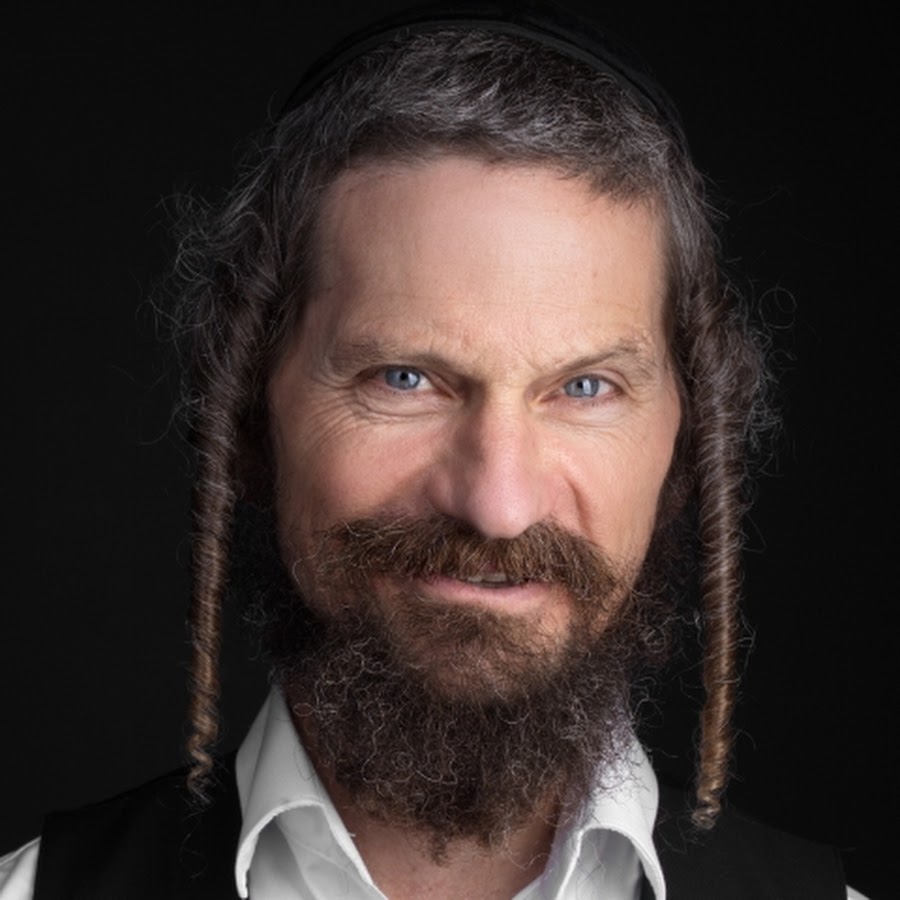
This class is a great way to get ready for your Sukkos experience 
Comments(0)
Transcript
Auto-generated transcript. Not time-synced to the video.
city of Jerusalem and sukus is upon us.
We're about to go into sukus. Really
exciting time and I imagine that
everyone here is very excited for it.
But you should know that on the one hand
you want to prepare yourself and on the
other hand expectation breeds
disappointment. So you don't want to
come in like overly into it. You want to
come in ready to experience it. And of
all the mitzvah that you want to be
ready to experience, it's sukkot because
it's the only mitzvah that we have.
Sorry, we have a few more. But it's one
of the only mitzvah we have that you
don't do anything. What's the mitzvah?
>> To dwell in a suka. Just to dwell in a
suka. So, it's so easy to forget that
you're just sitting at a meal and you're
just like, okay, you know, pass the pass
the soda, you know, pass the the
chilling or whatever. that you're
actually doing the mitzvah by dwelling
there, which requires you to go into a
state of dwelling, a state of of rest
that's similar to the positive state of
rest of Shabbat. You know that you have
two mitzvah regarding rest on Shabbat.
You have the um you have the refraining
from doing stuff. That's the thou shalt
not do stuff. That's one rest. But
there's a whole other positive state of
rest that most people don't do. And that
is uh just because most people wouldn't
know how to do it. But that is to
actually like be in that state of rest.
Be in that state of shabas. A lot of
people never even think about that. But
to be in that state of shabas, let me
give you an example. Are men are allowed
to wear tofillin without having the
tfillin in mind? Meaning am I allowed to
just put on my fillin and then go to
work?
>> No. We have to have in mind the whole
time that the fillin's on her head. Tell
me on Shabbat do men put on?
>> Why not?
>> Shabbat is uh is Shabas bim tofillin.
Shabas instead of tofillin because on
Shabbat we don't wear it to fill. Not
not just cuz it's muksa but because it
would be mukin because we're not allowed
to wear it but if we were allowed to
wear it we'd wear it on Shabbat like so
many other things we do on Shabbat. So
the reason we're not wearing fillin on
Shabbat is because because Shabbat is
the til.
Shabbat is the til. You know what that
means? That means you have to have
Shabbat in mind the whole time. You have
to mind that you're resting on Shabbat,
which isn't just the lack of doing. It's
the actual state of manuka that you have
in mind. And that's how we're ultimately
not into feeling is because we are in
that state of rest. Now, I'm gonna ask
everyone just to take a moment. We're
going to do a quick mindfulness um uh
practice before you get into your sukas
cuz tomorrow night you're going to
already be in this. So, what I'd like
everyone to do is is get conscious of
your own consciousness. Ready? Conscious
of your own consciousness. And we're
going to snap on four to get there.
Okay. Two fingers. Everyone get your
fingers ready. Okay. Both hands. Ready?
One, two, three.
Wow. Wow. Never seen that happen before.
You know, everywhere I do this, there's
always someone who's like, you know,
like way after us. Okay, let's do it
again. Consciousness. One, two, three.
And now listen carefully. You're having
thoughts. I mean, the gigglers are
definitely having thoughts, but you are
not your thoughts. So, everyone look out
the window for a sec. See the tree?
Okay. Now think about the tree. Tell me,
are you a tree? Everyone say no.
>> I'm not a tree. Okay. Now say, I'm me.
>> Thinking about a tree.
>> Okay. Now think. Now come back. I'll
close my eyes. Everyone close your eyes.
Think about a bird.
>> Are you a bird?
>> No.
>> No. Say I'm me thinking about a bird.
>> Open your eyes.
Now
that you
that is not your 60,000 thoughts a day
is really you. That's like actually you.
And as you get in as you let that you be
there and in a suka, then you're doing
the mitzvah. If you can be conscious and
sit in that suka and just dwell in that
suka, which means no matter what's going
on around you, you can totally lock in.
You can totally lock in. Meaning, if
it's a little crowded, a little crowded,
you can lock in. If it's if you you
didn't get if there wasn't enough food
going around, you just lock in there and
just be in that suka. And that's your
mitzvah. Your mitzvah is just to dwell
in the suka. But what's going to happen
is your thoughts are going to be
running. Your thoughts going to be
running 60,000 thoughts a day, 3,500
thoughts an hour. Your thoughts are
going to be running. Your thoughts going
to be running. And and you're not your
thoughts. You're not one of them. You're
not a thousand of them. You're not
60,000 of them. None of that is you.
None of those thoughts are you.
And the second you catch yourself and
you say, "Shut up."
to yourself,
you tell yourself just shut up.
What's on the other side of you shutting
up is
your own conscious awareness.
And that's something that science has
never put its finger on. There's it
doesn't show up in an MRI. It doesn't
show up in a brain scan.
It's the second biggest kasha of the
atheist world. If you go online and look
at the atheist world, like what they're
arguing for atheism,
their second biggest kasha that they
have to deal with is consciousness.
because it's not physical. It's part of
your nisha and you actually you get that
in a suka
get that when you that's your mitzvah is
just to be in the suka
the fact that we eat drink and party in
there we're going to get to now when I'm
about to share with you is adapted from
the arisal about sukus but it's also
about el rasha yum kipper and sukus so
When the king is in the field, then it's
el that's the dating process. Okay? By
the way, we're going to get to sukus.
Sukus is chev brothers. Okay? So, when
you're in the field, so that's the
dating process. Out in the field on a
date walking around, that's the dating
process with a shim. Comes rash. That's
the arrison. Rashana is the arrison.
Comes yipper.
That's called yoma. Do you know what
yakupa is about? You know what that day
is about? It's a very intense day. It's
a day of heavy cha. In fact, you do the
entire vidui on yupa. When you do min,
did you ladies know that? That in yupa,
you do the entire yum kiper vidi.
You're in yupa. And then comes the
actual. the actual is the suka
and and then it's
the is the seven days in the suka. Okay,
that's the o over overall view of what
we're going to be doing.
When you get to the ultimate place of
chuva, what does the word tshoua mean?
>> To means to return, right? And it and
the word tashu and then the hay the hay
you know the why the hay is shaped that
way in kabala because the hay doesn't
have a bottom right so sometimes we fall
sometimes we fall right out the bottom
but what's it got up at the top it's got
a hole up by the top and that's the
tashuh that sometimes you fall right out
you got to get back up into it. Chuva is
called it comes from um the mida the in
the ten spheros comes from bina
is where chuva exists you know why
because dina bina means to contemplate
and when you do chuva what are you doing
you're contemplating your actions till
you get to the point of regret to the
point that you commit to never doing
that again so bina and chuva are the
same exact place so for example when you
say hashu in inst
Okay, I don't know if you know this, but
every single brahen is one of the 10
spheros. And so hashu is bina because
we're we're coming back up and through
the upper hole to doing beina. And women
are known for having beer as you know.
And the but women are bina that's called
aim, right? Has a bina
and the and the women are builders.
They're bonim. Yeah. their very
reproductive system actually builds.
That's what they do. And so now when you
finally did shuva and you already
returned all the way, so where are you
now?
Where where are you? If you've totally
returned to Hashem, where are you?
>> Someone said dead.
>> No. If you do full tusha and you're
still alive, you didn't die. Where are
you now? Why?
>> Excellent. She said it. You're with
Hashem. You're like, you're you're
totally with Hashem. Think about you do
anything wrong, it creates distance. You
do toua, it creates closeness. But if
you did full tusha, like chuva.
So now you're totally with Hashem. Yum.
Kiper is designed for you to get there,
for you to get totally with Hashem.
Let's get a showing of hands. How many
people felt like they got there by
naila? Anyone got there by Nila? I don't
want L's, guys. I I didn't see those.
Let's see. Vav who felt they got there.
Excellent. Okay, that's not a bad
number. You should know. And ladies
shouldn't feel bad if you didn't raise
your hand. You just need to choose a
better minion next time.
You know, there's a rule when it comes
to Nila that you never mess with anyone
who's going somewhere else for Nila. You
never mess with someone who's going
somewhere else for nila. So for example
like like the right place for a son to
be in his would be next to his father on
yumor right but laisa he has a mashpia
and his mashpia is going to be leading
nila and it's across town and the boy's
all of a sudden like even though he's
fasting he's like tati I really I want
to go do nila over there you're not
supposed to say anything just let him go
let him go let him go get his nila and
you you go where your nila needs to be
and there's Nothing like the leader of a
nila who totally falls apart. Raise your
hand if you're at a minion where the
leader leading nila fell apart.
Yeah. Well, you should know most of
those were the same hands of the people
who uh who went with him cuz the when
the leader of Nila the Seabor when he
starts like totally breaking you you
just start breaking too. Like if if the
highest level person our whole community
at the on the level of being able to
lead no fell apart. So like I'm
definitely falling apart. Like for sure
I'm going and I have a guaranteed nila
every year because uh our kabalat
Shabbat every single week is more
intense than every single synagogue on
earth's nila
>> where
>> it's called Carlen.
Carlen it. I'm part of a group called
Carlen. Our group's called Pince Carlen.
And it's an ecstatic prayer group. So
what we do is we we pray at the top of
our lungs. You want an example what I
mean by that?
>> Yes.
>> You want to go outside for a sec?
>> No, I don't I'm not going to do it if
you don't want to hear it.
>> You do want to hear it.
>> I'll give you like a yahme.
I'm not going to sing.
I don't know if I'm warmed up enough
because I I do diamond in a regular
minion this morning, which is otherwise
called not domining. Um,
here we go. Uh, I'll see if I can get
it. I might not be able to do it right
now just because you're warming up from
the beginning of domining till you're
getting to like serious yos. But be
something like this.
[Music]
She thought it was an attack one time.
She was outside a shel there.
>> Um,
>> it's called Carlen. Uh the women don't
scream. Uh the front row just cries the
whole time. And the Yeah, it's just like
these old ladies like balling while
we're screaming. And I'm always
wondering if they stop balling if we
would stop screaming. But anyway, but
you got to imagine this is with hundreds
of people every Kabalat Shabbat. So what
we're doing on Shabas is more intense
than the nilas of the rest of the world.
Now when we're doing nila, it's a
thousand men. thousand men. Oh, you're
keeping it going. Thank you so much.
Thank you.
>> It's a thousand men screaming like that.
It's like, believe me, I was I was so I
didn't fast. Well, you can see I don't
have a lot of fat here. So, it's like I
don't have like reserves on a fast day.
Yeah. I was completely falling apart by
the time we when we started Mai, I was
already like ready to die. But when the
ila hit, you know, I just I took
whatever was left, but I completely fell
apart. completely fell.
So, let's go to the end of Nila.
We get to the end of Nila and we're at
the chuva spot and the next place we're
going to go, I'll tell you, is the but
we're in the and we yell at the top of
our lungs, hashem.
I should have yelled that.
>> Do it. Do it.
>> Oh, you like that? It's keeping you
ladies awake, I guess.
You you should really have a camera up
here that shows year after year after
year what it takes to keep everyone
engaged here from like 1980 or
something.
In 1980 been a bunch of bunch of girls
just like
so the um anyway Hashimo. Yeah, we'll do
one of those.
I'm not doing it seven times.
>> I'm not doing it.
>> Everything you've got everything.
>> Oh, everything.
Yes.
>> I feel funny saying Hashem instead of
like the real word. Okay. Hashem.
[Music]
[Applause]
It was more of a shriek and I was I was
shrieking and like I was bending over. I
think I wasn't just shuckling like 90°.
I was going like all the way down and
flinging back up for each one. Anyway,
but just sobbing and sobbing and
sobbing. where you get to at that point
is
a deep closeness with Hashem and meaning
the chashu like you're you're together
you're one and what I wanted to share
about it is this
is that Hashem represents God outside
space and time like a tortilla yeah
surrounding okay and Elohim is
represents the rice and beans okay how
God fills space and time so Hashem
surrounding space and time. Elohim
filling space and time. Who is hem?
Whoa.
>> Elohim. Why is Elohim plural? Why do we
have a name of God that's plural?
>> One second. I'm starting to People are
getting too giggly now.
Uh why is God's name plural with the
word Elohim? It's because it's how God
fills all creation. And there's a lot of
molecules of water in here. And it's all
all the water in here is elo is made of
elocus.
The word for that actually in English is
divinity. Divine. Divine doesn't mean
God.
Divine is the divinity within all of all
things.
And that's elokus. That's elohim. When
you say brahas, you actually say both
names every time. And I don't know when
the last time any of you ever thought
about the fact that you're using two
completely different names of God every
time you make a bra. But you're saying
at Hashem, blessed is you Hashem who
surrounds space and time beyond space
and time. Elohim Shalanu is Elou who's
filling space and time.
Meaning Khazal found it important enough
that every single Jew should recognize
God not only as eminent but imminent
every single time you make a braha. But
no more no time do we say this more
clearly than
especially in the
you have shown us to know key that
hashem
is what fills creation. What's the next
three words
>> that's the end of the p. Uh any new
sakar people here?
>> Yeah.
>> Excellent. So the the uh non-nusakar
just go straight into uh when you start
uh when you open up the ark on Shabbat.
So you say
something like that
say and say
[Music]
there is nothing but Hashem. But we just
got through saying it seven times. What
does seven represent?
>> The spheros. But it also
it represents nature.
Nature is always with the seven. And
conveniently the word ha elohim if you
add a hey is the numerical value of
sorry
>> sorry the word elohim is the numerical
value of hatva the nature. You have to
add in a hey conveniently but elohim
equals the nature.
And
seven represents nature.
That's why the rainbow's seven colors,
meaning those are the colors in the
rainbow. The oct the octave. I'll play
for you in a little bit. My guitar. How
like am I going by the way?
>> Okay. So, uh the uh what was I holding?
Uh the octave. 1 2 3 4 5 six seven one.
>> Okay. The octave is also seven notes.
It's the the lunar cycle is in sevens
the reproductive cycle sevens and in
fact women represent elk elim and the
men represent hava in the relationship
that's actually the relationship between
hashem and havaya
between the yud and van the husband
represents that the woman represents the
nature
in that when men strap themselves down
because men do not like subjugating
themselves to God. When we strap
ourselves down, how many how many uh
loops do we put on our forearm? Seven
loops on the forearm
as we subjugate ourselves to God. Seven
represents that. So what did we just get
through saying? Seven times in all the
world of the spherus, in all the worlds
of nature, because the spherus are how
God made nature.
Seven times were screaming Hashem.
that that's all there is. There's
nothing else.
And even how God's hidden in the world,
which is why we whisper kavode, because
every word of shame kavode is a code
word. Each of those words is a code word
for how God hides in this world, which
is why we whisper it. Each word of
kavode, I'm not going to teach you what
they are now, but they each word is a
code word for how God's hidden in
creation. And that's
When you finish nila, you belong in a
baby n nursery. You understand? When you
finish yum kipra, you don't belong out
there on the streets, in the shopping
markets, in the all around the world.
You don't belong out in the world. When
you finish that, you belong in a
nursery.
And that's exactly where we're going.
We're going into a place
of godliness
where we're leaving the all the
contextual
human-made
conceptual conventional constructs
that humans make. The epicenter of all
the constructs that you make is your
home. Why did you choose those floors?
Why did you choose those curtains, those
carpets, those th that paint color? Why
did you choose, you know, that kitchen
layout? Why did you choose that style of
a of the outside, the exterior of the
home?
It's all just you creating context. It's
just you create constructing
constructing,
you know, uh uh fictions.
Really, we should all be wearing white
in the suka, no makeup.
No fancy shaita,
>> you know. We should all be like like
just like because that's what we're
doing really is we're leaving the world
of meaning.
We're leaving when I sorry we're leaving
the world of human imposed meaning the
all the meaning we've been making cuz
the meaning of reality is that Hashem is
all there is. By the way, there's
nothing wrong with with beauty. You
know, this is a this is a very very
special guitar. You know, I I have about
12 guitars and this is this thing is an
absolute work of art. I feel a little
bad the guitar strings aren't fresh. Um
but can't win them all. Um
the
beauty is great, but Shem is greater and
and how he comes out through the beauty.
And for example, the our suka is is a
like a absolutely gorgeous incredible
like
situation what we've created in there.
But one thing's for sure is it's all
like kulo lashem the whole entire
experience of that.
And when my wife dresses for Yantiv
uh which which she's wearing everything
from head to toe is all just like how
can Hashem express through me you know
as much as possible drawing least amount
of attention and maximizing that the
elocus is shining shining right out of
me and in this experience
and the u
so You belong really in a nursery and
that nursery is the suka. The suka is
also the suka is the and so I'm just
going to share with you one more thing
and that is that when we go through the
midas
the seven days when we go through the
seven days of the suka you're now fixing
your life based on each of those midas.
For example
is the first day. So, tomorrow night's
going to be Monday night's going to be
and
normally you're supposed to be very
oriented with your mother and your
parents when they need you. Like, you're
supposed to say yes.
But once you're married, you're it's no
longer appropriate to just say yes to
your parents. Meaning, you have a
husband now. And it's like yes is is
first checking with your man before you
go to you know go help out your mother
or something. You have a home now. And
so all of a sudden shifts gura
is your own borders your own you know
your own uh
[Music]
you know your own gulois and and you
know you're protecting yourself. But
that's very different once you're
married. At least for one man, it's very
different what gavor is. Once you're
married, you understand each mida has to
shift now in the in the context of
marriage. So what we'll be doing on
sukkot is we're going to have each day
of sukus meaning tomorrow night begins
and we're going to have a chance to all
think about the fact that that where am
I doing on the of my own toe? Where am
I? Where am I doing? where where am I
off with
in a way that's that's like taking away
from my own my own self my own space my
own you know how many of us are saying
yes when we should have said no you know
and and then with gavora also is knowing
when to say no
and um and that's uh visa vashm when
when do I you know so I have the whole
Tuesday night till Wednesday to work on
Gabura.
And I'm not going to go through each of
them. What I am going to do is pull out
my guitar.
>> Yes.
>> And play a little bit.
>> Yes.
[Music]
Oh son
of a
[Music]
[Applause]
[Music]
shifting.
[Music]
Shifting the face.
[Music]
to say
oh Hallelujah.
It's
been
[Music]
healing.
[Music]
So you won't
[Music]
[Applause]
pass
[Music]
our shift
[Music]
Shifty
[Music]
[Applause]
with a shingo.
[Music]
say
[Music]
he
[Music]
still need to say.
Oh, hallelujah.
[Music]
[Applause]
you likey.
>> Okay, that'll be our
>> That'll be my our L song. Although I
have much rockering more rocking
version. You want the more rocking
version?
>> Yeah.
[Music]
I like
[Music]
I like
[Music]
I like the
I need
[Music]
you
[Music]
on me.
[Music]
You guys got rhythm.
[Music]
[Applause]
[Music]
been on my sh.
[Music]
[Applause]
[Music]
[Applause]
Oh, you make higher.
[Music]
I
always
[Music]
Yeah.
[Music]
[Applause]
[Music]
One more time.
[Music]
[Laughter]
[Music]
[Applause]
Wow, you're a shocking group.
>> Are we ever part of a rock band?
>> I'm in rock band now. You guys should
have just hired my band for sukas or not
that we'd go out on sukas, but but we do
I do kumits all the time with a band.
>> I love your band.
>> Who's my my band?
>> Y to Glazer's band.
>> That's what it's called. Yeah. Meaning
people bring me for kumzas. I just
played
>> Spotify.
>> Okay. Uh where were we holding?
>> We did that song. That was
>> L.
You want to go like by the
>> Yeah, let's go to Roshana. What should
we do?
[Music]
Oh, the other reason why you're on beat
is not only did you all snap on four
without me even saying anything other
than one, two, three. But um everyone
just hit four like that. The entire
group. First time ever. But wait, you
got to hear the second part. Second part
is rock songs.
The snare the
is on the two and the four. It's on the
two and the four. One, two, three, four.
That was a rock song. So, it's the two
and the four. But if you play for a
Froom group anywhere in the world, they
can't but help themselves to clap on the
one and the three
like it's some Turkish song or
something. Yeah.
So, they would just always clap on the
one and the three, which is how you clap
at Jew Jewish music. You clap on the one
and the three. But rock songs, you clap
on the two and four. I don't know what's
up with this group.
>> A lot of musicians in the room.
>> Well, this group went right to the two
and the four for the clapping without
even thinking about it.
[Applause]
>> It's your ad.
[Music]
Okay, let's do a Russ one.
>> I feel bad you can't sing. That's kind
of lame.
>> When I'm When I play concerts, I have a
whole speaker system and we're all on
vocals, so we don't hear a word anyone
singing. So, everyone just sings and we
don't we don't get to hear them. Yeah.
In this case, that wouldn't work. Can we
quickly translate the whatever you're
going to say so that the girls
understand what you're saying?
>> All right.
>> Thank you.
>> Yeah.
>> Uh-oh.
Not again.
[Music]
Hope I don't need my wrench.
Oh.
my wrench.
[Music]
>> All right.
This is ridiculous.
>> Touching this thing to this guitar is
like horrific.
>> Okay.
I don't know what to do. If you had a
moxer, I'd do a ll,
which would be really winging it. I've
never sung that in my life.
>> And we got a a moatza.
Oh yeah, Rush would be great.
>> I could take you.
[Music]
Good luck finding it. Anyone know where
is
>> in Mus?
[Music]
No, actually
[Music]
it's a sour stick.
[Music]
>> That's not going to
[Music]
Found it.
>> This is seriously courageous of me to do
this. Neither I haven't really played
this. Certainly haven't sung it.
Certainly haven't performed it. And if I
blow it, no one's going to be able to
correct me.
Okay, let's see how this goes.
Here's the words. I shall uh this is the
prayer in preparation to doing the the
service before God. Like if you're going
to go serve God, listen to these words.
I shall put my hope in God. I shall
beseech his presence. I should request
of him eloquent speech
so that I can sing of his strength in
the people's congregation that I can
express glad song for the sake of his
human creations. It is for man to
arrange his feelings. But eloquent
speech is a godly gift. Whoa. Isn't that
interesting?
>> It's upon us to arrange our heart, our
feelings. Like that's us. But if you're
already going to put eloquent speech,
that's a gift from God. And then
Hashemized,
God, open my mouth and let my
uh God open my lips so that my mouth can
sing your praise.
Okay, let's see how it goes. This may
this may not be a go, but
Yes.
My name was show
[Music]
my
sh
I'm
[Music]
I be on
the army follow
[Music]
a She lo
[Music]
my
[Music]
neighbor show
a shame.
[Music]
J
[Music]
may
not Oh. Oh.
A shame
she
[Music]
was so scary.
Now I can get my wrench off this moxar.
You did it.
>> We'll do a Yum Kipper song.
You have a some song on here. Um
[Music]
Oh, I know one. Maybe you've heard this
one before.
[Music]
He know my king. My name
[Music]
A sing.
[Music]
Okay. Sucus.
[Music]
This is on the one and the three.
[Music]
You can do every beat. Get some
exercise.
[Music]
High
voice.
[Music]
shall
[Music]
you
are you Oxy.
[Music]
Oh.
[Music]
All right. I love this.
[Music]
Where are you so
[Music]
you may
[Music]
your
la.
[Music]
Oh yeah.
[Applause]
>> Greatest greatest joy to everybody. I
bless you. this that this sukus is a
major dialogue. I'll finish with these
words. Uh my dear neighbor uh and one of
my best friends Simka Rosenfeld
uh Alulum he one time after sukus I said
to him
I said to him
how was sukus? And he says to me,
he said, "How was it? You mean how did
it go in?"
>> And I was like, "What do you mean how
did it go in?" Like putting your suk
away back in the storage room, putting
it in. He says, "No." He says, "The
holidays, you don't go through them.
They you you download them.
You download each, you know, it's a
download." So in our new year so far,
we've downloaded God as king. We've
downloaded us as his oner
and now we're going to download this of
our whole year.
And every time you say it, you're
[Music]
slow down for a moment and just say,
"Wait, anytime I'm saying the word zman,
that means there's something coming
down. There's a download here." What's a
download? download Simra.
So that's our this is like our chance to
grab it. So he was saying don't ask how
suka was ask how does how did Suka go in
and I I promise every one of you like I
do get phone calls during sukus where
people are like it's old students or
whatever random people too from YouTube
are saying like hey I'm I've been
sitting in a suka I'm just ready to kill
somebody. I'm like not at all feeling
it.
And whenever they say that there's only
one thing in the way, what is it?
>> Your thoughts. Yeah. Excellent. That's
just someone who's overthinking.
They're having thought attacks in the
suka. Okay. Thought attacks in the suka
when the whole mitzvah is to stop
thinking and to dwell in the suka. The
mitzvah is to dwell, not to think in the
suka, not to figure out why it's so hot
in here, not to try to figure out why,
you know, you didn't get a plate.
Wonder what's what's God saying here? I
didn't get a plate. So anyway, if you're
getting thought attacks in the suka,
just stop. Give that snap. Come back.
And what greater sim is is there than
the now? Living in this moment, totally
present, conscious with God. And the
only you you need to be anyway is just
that celoim inside you. What else do you
need besides that? you know that's all
you need. So should be a very very happy
sukus and those whose na didn't work out
too well uh for those of you like miss
nila so if you didn't have that whole
fall apart experience
you can just count on everyone else's
and just meaning
just go be happy you know just go be go
be bima with hashem and if you needed to
fall apart crying like you know like
just totally lose it you would have
clearly you don't need that right now.
So if that wasn't necessary for you so
then just go in the sukus and have it
fall just have a great time and be there
be present feel hashem with you and
again feeling Hashem is not thinking
about him. It's not trying to feel
Hashem. The second you're trying you're
not going to feel him. When do you
finally fall asleep? When you try to
fall asleep or when you stop trying?
>> Stop trying. The same with Hashem. You
want to feel Hashem, don't try.
Second you get that brain to what?
I said it much not nicer. The second you
get your brain to
>> shut up,
you'll start to feel sookus. Don't be so
friendly with your thoughts. Meaning, I
don't say shut up to anyone but my own
thoughts. I don't I never use the word
shut up to human beings
and I do use it for my own brain. I
guess I'm a human being. I'm the only
human being I say shut up to and I tell
my brain to shut up. You should know I
have a watch that I wore all Russia
shana and I wear it on chabas and stuff.
It's all the watch says on it is the
word now.
It's the most accurate watch in the
world. It's actually a really nice
watch. Literally glass face, nice band,
real metal. Like it's a nice watch. And
but the only word it says is now. And
you forget if you only wear it like once
a week, you forget you're wearing it. So
whenever I'm like, "Oh man, what time is
it?" Pull up my sleeve and it says now.
And it's the most accurate watch in the
world. There's no watch with anywhere
close to the accuracy of this watch. And
it never needs to be set. never gets
slow, doesn't go fast. If you ask me
what time it is, I can tell you with
absolute accuracy. See, if you ask me
what time it is with this watch, by the
time I told you, it's already not the
time when you ask. But my now watch
tells you exactly what time it is. Cuz
that's exactly what time it is. It's the
only time you've ever experienced in
your life. You've never experienced time
once. You've never experienced the past.
Never experienced the future. Not once.
Not one time in your entire life, not
once. You have zero experience of past
and you have zero experience of future.
It's never happened in your entire life
that you ever experienced past nor
future. There's only one thing you've
ever experienced. It's the only thing
that God makes because he creates the
world something from nothing at all
times. He's
God is literally renewing perpetually
the entire work of creation every
second. And if he were to stop saying,
"Let there be animals upon the earth." I
would no longer be wearing this vest.
I'd be just in my cotton shirt, the the
whole entire world is coming from
absolute nothingness at all times. Now
is all that there is. So the more you
tune in to reality, the more joy you'll
feel. Good. Everybody,
[Music]
>> if you watched all the way through this,
I apologize for all the low tech issues.
And uh just click on all the things
you're supposed to click. Subscribe.
Make sure it's my channel. Rabbi,
thank