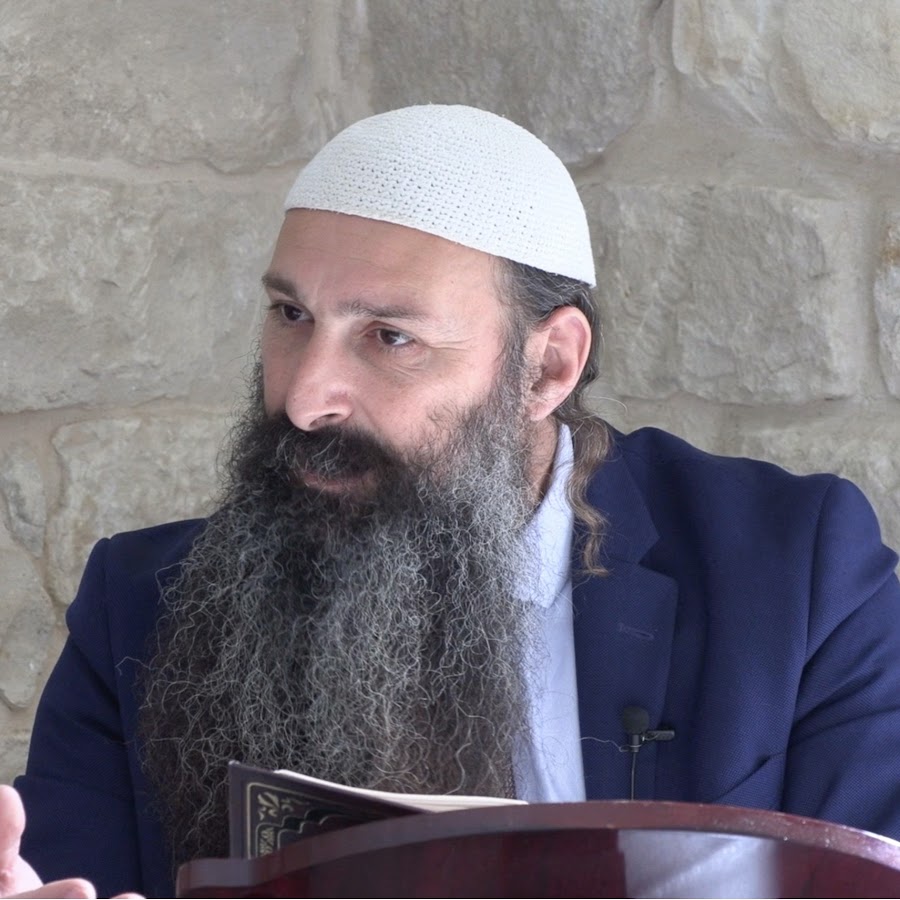
Transcript
Auto-generated transcript. Not time-synced to the video.
After a very long break,
uh Baruch Hashem, we're back online.
The long break, I mean, for the ones
online, it's a long break. You see me
every day, but uh
one long break in regards to the
lectures going online and of course was
because the fabulous YouTube and other
platforms decided to block
uh block my channel, remove videos, and
censor what I had to say. And regard And
besides that, a few other things. So,
Baruch Hashem, it's all good now. I
think we didn't try it that the block is
over. We're going to try with this video
to load it up and see what happens.
And uh
many want wanted to know how I'm doing.
I mean, again, you see me every day.
People online don't see me. They don't
know what's going on. So, Baruch Hashem,
I'm alive and well, and I'm not in some
basement of the Shabak being tortured,
why am I going against the government?
So, it's all good, Baruch Hashem. And
and
I prepared a few lectures. I Of course,
we're not going to do it all in one
shot. Today, we're going to talk about
one topic,
but
there's a few other topics
that I've already prepared lectures that
we're going to have to go through, which
of course are all about current affairs
and what's going on and what's the next
move after all things are going on in
the world, things are happening.
And it's very important to to follow
what's going on and to see what the
Torah has to say about it.
Today, specifically, I want to talk
about
the disaster that happened in Meron.
And not because I wanted to talk about
it, because after it happened, I think I
got
a few thousand emails and messages of
people asking, "What do you think Why do
you think it happened? What do you think
is the message? What do we have to take
from that?" Which I didn't really feel
like giving my two cents of the matter,
besides the fact that it was obvious,
very obvious that it happened in a
deliberate way. It wasn't an accident.
It was pretty obvious, not pretty, very
obvious that it was planned. And the
plan, of course, was to get much more
casualties, and there was a huge miracle
and it was only a 45.
That's number one. I'm going to talk
about that right now. People get very
touchy and upset when you talk about
things like this, but the fact is it was
planned. It wasn't a mistake.
You clearly saw how the police stopped
the pathways. The police removed all the
cameras 2 days before that. Everything
was planned, and it was planned to be a
disaster. It was a disaster, but on a
scale of thousands, and Baruch Hashem,
there was a miracle and it was only 45.
And but this
it's less important why, because the
after all, even if a um human being
planned it, there was still the hand of
God that allowed
So, there's a very profound message.
There's a lot of messages behind it,
which we're going to kind of go through
this today, but nevertheless,
uh we also have to understand that
Hashem is telling us something.
And then, of course, right after that,
uh there was the whole
mini war right now in the riots in
Israel and many other things that
of course, everything is not happening
by chance. Everything is planned. So,
we're going to have to see what the holy
Torah has to say about that and how is
that to do with me, what I Where I'm
coming into this picture.
But
before we start
for at least for the viewers online,
there's a few
good news, happy news. We started
working on our smartphone app, which was
going to be a very very powerful app
where all the videos, courses, lectures
are all going to be there, plus many
other things, amazing amazing things.
So, anyone who's interested to see
what's going on, when it's coming,
especially
to participate, then we're going to put
underneath the video the link where you
can visit it, which will probably be on
itsmooth.org/app,
but you can see everything that's going
on. And
it's going to be real special app. It
will come in stages. It's not going to
come in one shot, because we have to do
one
feature at a time.
We're also going to start. This should
be also good news for you. We're going
to start a few very interesting courses
that we were waiting for a while
that will also be posted on itsmooth.
And the first one is going to be the
Gates of Reincarnation, Shaar Hagilgulim
by the Ari Zal. The other one will be
Shaarei Kedushah, Gates of Holiness.
Two things we already started about
Kochav Yaakov,
Planet X, Nibiru. Here we already
started another one with is the letters
in the names. Some of it we already
started,
but Baruch Hashem, we're going to
continue. And for the ones who are
online, they can definitely join all
these wonderful teachings.
Now, as I said before, many things are
happening lately,
but specifically in the land of Israel.
And like I said before, the incident in
Meron, and after that, the riots and the
barrage of rockets, and a few other
things.
And even though it's happening in the
land of Israel, and it's important to
understand land of Israel, I'm not
talking about the country of Israel.
Country and land is two different
things.
But since it's happening in the land of
Israel, and the land of Israel is the
center of the world, then this is not
only for the Jews or for the residents
of the lands of Israel to understand,
it's for everybody. So, anything that
has to do with Israel, of course, it's
applying to all Jews around the world,
which simultaneously many Jews around
the world are experiencing a lot of
anti-Semitism in New York and Los
Angeles and many other places, in
London, in Montreal.
But when something happens in the land
of Israel, it's for the whole world to
understand that something's going on,
because the land of Israel is the land
of the Kadosh who doesn't belong to
anybody. Doesn't belong not to the
Israelis and not to the Palestinians.
It's It belongs to the master of the
universe, and he will decide who will
inhabit and occupy it.
Right now, it's we we are living here,
but there's no question that the evil
regime is controlling it. We're not
controlled by Torah laws here.
Till Mashiach is going to come, which is
already a problem.
But when things happen in the land of
Israel, it's not only for us to take
something for that, it's for the Jews
all around the world, and it's for any
human being around the world, Jews and
non-Jews alike.
So, even people who are not Jewish, this
has to do with them, too. It's also a
big part of it.
And
you know, we just went through a whole
year,
which for many people was a year full of
fear and anxiety and uncertainty
and with the plandemic and everything
that has to do with that.
And up until now, it doesn't matter
where people are, there's still a lot of
confusion and and fear and
and as I said, uncertainty, because
nobody knows what's going on. Amazingly,
I don't know if you noticed that we had
Corona for a year and a half, and then
when the barrage of missiles started
falling in Israel and riots, the Corona
disappeared. Suddenly, I don't know, the
Corona maybe is
is um
has a
a weakness for missiles or whatever it
is, but suddenly the Corona disappeared.
For 15 days, we didn't hear about
anything about the Corona. And
miraculously, the 30 minutes after the
so-called ceasefire was
announced,
the news are announcing 33 new Corona
cases were found in Israel. So, the
Corona is back in town, and
every day they invent something new. So,
we have to really focus on what's going
on here and see
what does Hashem want from us? Because I
From when I talk to people
here in Israel and outside of Israel,
the main thing that people project is
that this because of the uncertainty of
what's going on, some type of fear.
Fear or, you know, the word in Hebrew
would be more precise to say charada,
that that it's not just I'm afraid of
something, it's more deeper.
And when a person is is
attacked by fear, fear from the future,
fear what's going to happen, what's
going to be in a month, what's going to
be in a day, and so forth, then a person
needs to meditate really what is the
message behind it.
And more than that, when Hashem puts
some type of a problem on us, it's for
me to really look at myself and to
decide how can I better myself
when
and my behavior, but more than that,
when we are attacked with fear, is a
message from Hashem to tell me, "Look
inside yourself how you can uproot
hate and separation in your heart."
And the sad reality is that even as much
as people pretend that they don't, but
we all have a lot of hate in us towards
other people.
And needless to say, with the hate comes
a lot of separation. And I'm not talking
about
necessarily
things that are on the surface, but we
all carry within us a lot of hate.
If whether it's Jews and non-Jews or in
the the Jewish
group, the religious and the
non-religious, and in the religious
people, so the Ashkenazi and the
Sephardi, and this group and that group,
and and in communities and in shuls,
everywhere there's all all the time this
this hate. And the hate will always
going to cause separation,
which is our problem.
Now, going back to the topic what we are
going to cover today
is about the disaster that happened in
the the mountain of Meron
on the very special day of Lag Baomer
and even though some time already has
passed almost a month but nevertheless
it has to be understood what does Hashem
want from us.
Next class will be we will talk about
how how could it be that we didn't even
finish the morning of of the disaster of
Meron and right away Israel is being
attacked with barrage of barrage of
missiles which we're not going to touch
in this lecture if we really were
attacked by barrage of missiles or it
was maybe just one big show but this
we're not going to talk about right now
but we also experienced all the riots in
Israel. We never had such a thing. We
have many many times we were attacked by
missiles by our enemies but riots inside
of Israel that we never had in that
scale.
And and we have to see so we're going to
break it into a few classes. So let's
start with the class with Meron and this
is a very deep and profound message.
So 45 holy souls died I would like to
say publicly murdered but
that's what happened. They were murdered
but 45 holy souls died.
45 is a very profound number. First of
all it's a numerical value is the
gematria of the word Adam
and everything that happens to us as a
personal individual or as a whole is one
fraction of the rectification of the sin
of Adam Harishon. It's called Tikun
Tikun
Hetz Etz HaDaat. Adam Harishon sinned
and we have to correct it with many
different ways.
So already we see
a first interesting digit that 45 could
have been 46 and it could have been
could have been 44. Why 45? Then we're
going to find out many reasons why 45
and what are the messages here but the
first thing that struck me at least is
is first thing that struck me is that 45
is the numerical value of the word
Geulah.
Redemption. Hashem is telling us to
buckle up the redemption is coming and
it's not coming with
with a silver platter and it's going to
come nice. It's going to come with a lot
of hardship.
Second thing that I thought of was yeah
45 is the minyan of Adam. This is part
of the Tikun of Adam Harishon.
Now it happened in a chain of of
of the parashot which I found very
interesting. It happened in Parashat
Emor which we're going to touch this in
a second and right after that were
another two parashot that were attached
Behar Bechukotai.
And right away I was like wow this is
unbelievable because where did the whole
thing happen? Behar Meron in the
mountain of Meron. Har means a mountain.
And right after that and attached in the
same week is Parashat Bechukotai where
we read about the 98 curses in the Torah
that when you hear the curses
it's very even hard to digest that why
would the Torah explain to me that if I
don't follow what Hashem says I mean the
curses are like beyond what a human mind
can understand.
And this all happens in that time. Now
really what was going on in Parashat
Bechukotai? The majority I mean I would
say the main theme of Parashat
Bechukotai
is a warning
of Moshe Rabbeinu I mean Moshe Rabbeinu
is the one who's talking. He's warning
the nation of Israel
what to do and what not to do before
going into the land of Israel.
And why is that so
important? Because the land of Israel as
I mentioned before first of all belongs
to the master of the universe. It
doesn't belong to anybody. Nobody can
come and claim ownership on the land.
And at this point not the Palestinians
and not the Jews.
The land belongs to God period. There's
no way to argue with it and God will
decide who he wants to give it to.
If he wants to give it to the Jews
that's his choice.
But the land belongs to the master of
the universe and more than that the land
of Israel is like the the apple of the
eye of Hashem. That's how it's called
Mabat Ainayim.
And where do we see it in the most
profound way? Next week we're going to
learn about the story with Shlach Lecha
with Shlach with the sending of the of
the spies which we talked about it not
once and not twice that up until today
that sin was never forgiven.
And why was that sin never forgiven?
Because the spies spoke lashon hara
about the land of Israel.
Speak lashon hara about anything else
Hashem will forgive you but you speak
lashon hara about the land of Israel
then you're going to have a serious
problem.
And that sin the sin of the spies was
never forgiven up until today because
Hashem says there's certain things that
I will oversee and certain things I
won't and there's not going to be such
easy way to do teshuvah. And in Parashat
Bechukotai is when Moshe Rabbeinu is
warning the nation
if you're not going to listen then this
is what's going to happen.
And really when you're going through the
98 curses it's it's is a holocaust. He's
he's predicting
holocaust one after the other.
And when? Right before you're going to
into the land of Israel. So you have to
be double careful when it has to do with
the land of Israel.
Now as I said before that
many of our challenges is not only
because our own sins but because we have
to do a rectification to the sin of Adam
Harishon.
But more than that if I do a certain sin
and I don't do teshuvah I don't repent
and I don't do a rectification
then I'm going to have a problem.
Whether before I leave this world or
after I leave this world. That's why
it's extremely important for every
individual to catch themselves and to
say I don't know you know what I'm not
going to live forever. One day I'm also
going to be placed in the ground unless
Mashiach comes tonight and now we're no
more death.
But a person has to do an account. Wait
a minute I have 50 60 70 years of sins.
Did I really do a Tikun for that? That
fact that you grew a beard and you put a
yarmulke on that's very nice of you. Who
said you did a rectification for your
sin? It's called a Tikun. Now Hashem is
so kind that if a person did not do a
Tikun a rectification to his sins that
Hashem will do it for him and usually it
will be done by death.
That's how it usually is done. If you
don't do it then Hakadosh Baruch Hu says
okay I will kill you for that and
sometimes the death is what's called
mitah meshunah very weird death or has
veshalom in a very
um
derogatory word where way but
nevertheless
if you don't do it then Hashem will do
it for you.
Now
the biggest question that I had when I
saw this disaster in Meron
is why did they kill each other?
You know what? They could have gone on a
bus all these 45 souls and the bus would
fall off the cliff has veshalom or
explode or why
they all killed each other. Nobody died
by by by by falling by themselves or
has veshalom a shot or they killed each
other. They were standing on each other.
Up until today I'm still trying to
figure out beyond that. There are four
types of deaths
by the by the court and one of them is
by suffocation.
So for example if a person desecrates
Shabbat then the death is by stoning and
it doesn't have to be stones per se. You
know in our generation the stoning can
be like a car accident. That's what many
great rabbis are saying that in our
generation in Israel the deaths by car
accidents is out of proportions because
when you when the car rolls and the
person gets hit from all directions and
dies because of that it's like stoning.
So I'm still trying to figure out what
is the focus on the suffocation.
But we'll put this aside for now. The
question I want to ask is that's the
question that I asked myself why did
they kill each other?
Can't you kill them in another way?
There's no question that these four 45
souls were holy souls that you can't
even imagine. You look at their faces
you see these pure pure souls and half
of them were kids. Of course they didn't
have their own sins. You see on their
faces they were holy. They obviously
died for us. They obviously died as a
atonement.
But nevertheless why did they kill each
other? Okay?
Now so let's go back to the parasha that
we talked about with all the curses
and you might want to open a Chumash if
not just follow later on you can open
the Chumash and follow but if you do
open the the the Chumash and follow the
psukim the verses that we're going to be
reading and
and if you have it with a translation
even better. For the ones who speak
English I don't like the translations
cuz the word in Hebrew make much more
sense but we'll explain it all. So go to
Parashat Bechukotai exactly where all
the curses are which is chapter 26
and we're going to start with verse 37.
Pasuk Lamed Zayin. But before we start
this is where I want to focus on but
before we start with chapter with the
verse 37 go to verse 36. And what does
it say there? It says there very clearly
Hashem is explaining to us that if we do
not observe Shabbat
and we will not observe the sabbatical
year then the land will will so to say
throw us out and the result will be that
we're going to be scattered among all
the nations. Okay? And that's really
what happened.
There wasn't
observance of the sabbatical year what's
called Shmita wasn't observance of
Shabbat and the result is that we were
scattered and up until today amongst
amongst all the nations.
Now
first of all it's very important that to
understand that all these warnings that
we're getting in this parashah, it's
Moshe Rabbenu saying that.
But, nevertheless, the warnings are
coming from Hashem. And why is it
important to to understand that it's
coming from Moshe? Because if you flip
the letters of Moshe, you read it
Hashem.
So, Moshe is speaking in the name of
Hashem. Hashem is God, of course. But,
not only that, the acronym of the word
Moshe is a verse that I
a lot, "Ma shehaya ushiye."
This is a quoting Kohelet, what
Hamelech says, "What was is what will
be." So, what we what they experienced
then, we're going to experience
everything.
The Midrash says, and many other sources
says, that exactly what happened in the
redemption of Egypt, we're going to have
a carbon copy, exactly we're going to
have it now.
So, what does it says in verse 36?
"Vehanish'arim bakhem"
Uh "Vehanish'arim bakhem" the one will
remain.
And it says, "Vehavti morakh morakh
bilvavam." Let me just read the verse in
English, I think it will be easier. I
will bring fear in their hearts. The
ones who remain, I will bring fear in
their hearts.
And
in the land
and sorry, and the lands of their
enemies
and the sound of a rustling leaf will
pursue them, and they will flee as one
flees from a sword.
Okay, that's what the verse says. That
Hashem will bring fear into their
hearts. And
the the the the instruction that he
says, that, you know, when a leaf falls,
it makes a noise, like, you know, you go
walking in the forest, the leaves, I
don't know how you say it, they hit each
other or the wind, they make noise that
a person will hear like something like a
leaf and will be trembling from fear,
like as if somebody's coming to kill
them.
Uh very few people can relate.
But,
you know, if if a person is in a very
bad situation and he feels he's about to
die. Imagine now, we saw all these
riots. Imagine an individual standing
and there's a mob of people coming to
attacking him and that person starts
getting attacked and beat up by the mob.
Can you imagine what's going on in that
person's mind right now?
I'm being attacked. There's like 30 of
them. And then he feels, of course, the
pain
of the attack. And then in his mind, can
you imagine the fear that that person is
going through? This is fear that is very
hard to to to digest. It's because, you
know, you have no chance. They they can
kill you.
Especially when they're, you know,
starting attacking you with stones and
bats or whatever it is. Just imagine try
to get into that place of fear. So,
Hashem says here that you're going to
get to the same level of fear even just
because you hear a sound of a leaf.
Something that you're afraid of a leaf,
but that will bring you the same level
of fear.
Now,
it says a very interesting word, and it
says in Hebrew, "Venaf'lu."
And they will fall.
So, already we see what was going on
there in the in that very short
narrow corridor, that how did it happen
that the first line of people fell down
from the pressure and then the rest
started stepping over them. But, it says
here in the in the verse in 36,
"Venaf'lu and they will fall."
Now, you continue to verse 37 and it
says,
"And they will fall, each man will
stumble over his brother."
Okay? So, again, if you want to read
again, this is in chapter 26, verse 37.
And what does it says? "And they will
fall, each man will stumble over his
brother."
That's exactly what was going on there.
And then it continues and it says, "You
will not be able to stand up."
A comma, which that's what happened. Can
you imagine
1,500 people pushing one the other and
the ones in the front, what happens?
Can you imagine how it looks? Forget
about how it feels.
I mean, there's not a lot of footage
with what what from what was going on.
Because the police took care of it the
two days prior to the event, they
removed all the cameras from the run.
And they took the consideration that
most Haredi Orthodox Hasidic individuals
that will come don't have smartphones to
film what's going on. There's there's
not a lot of footage of what what's
going on there. But, for the ones who
were there,
you saw what was going on. I mean, I
don't know who from you were there. The
the the sight was not a normal sight.
It didn't look normal at all.
But, what was going on there that the
first line of people got to the end, the
police stopped them. And and they
started like a pressure from all the
people coming.
And at some point, the ones in the front
line fell down because can you imagine
what pressure it is? I'm assuming here
that you're talking here about 10, 15
tons of people, not tons, like tons of
weight. People pushing and pushing and
pushing, it's not normal pressure. So,
the first ones fell, as it says, "And
they will fall." And after that, what
does the verse says? "Each man will
stumble over his brother." Which exactly
what happened. And then the verse
continues, "You will not be able to
stand up." Can you imagine you have 40
people on you? How can you stand up? You
can't.
But, if you continue listening to the
reading the verse, it says something
very interesting. "You will not be able
to stand up against your enemies."
So, if you put the comma, you will not
be able to stand up because you have
dozens of people over you. But, let's
remove the comma for a second, against
your enemies.
This is the next thing we need to take,
but fear we're just going to skip. Just
remember the against your enemies.
And this is the first hint that we have
with what was going on there.
Now, when you read the Torah, most
people when they read, their commentary
that they read is Rashi. That's the
common commentator. But, the ones who
are more interested to find more
interpretations and commentary, then
there are many other commentaries. One
of them is called Kli Yakar. The ones
who are reading what's called Mikraot
Gedolot, as usually will come with
either four commentaries or eight
commentaries. One of them which is very
very known is called Kli Yakar.
Kli Yakar is a rabbi called Rabbi
Ephraim. Lived about 450 years ago.
And very very deep and profound
commentary. And he says something very
interesting.
The verse says, "Vekash'lu
ish be'akhiv."
That's what the verse says. The
translation, "Each man will stumble over
his brother." That's the translation,
but the translation is never good. The
Hebrew means "Vekash'lu" and they
failed, "ish be'akhiv" a person in his
brother.
Now, what does the Kli Yakar say? This
is a commentary. "Kilo nizhar
bekhvod akhiv."
They are not cautious or they don't have
the respect for the honor of his
brother.
Again, these are words that it's a
little bit hard to translate, but the
Hebrew, again, "Kilo nizhar bekhvod
akhiv." That the one is not
respectful enough to the honor of his
brother.
What is really that what it means? It's
called Perud Levavot. That's what the
Kli Yakar says. Perud Levavot is that
the hearts are separated.
So, we have here a commentary saying,
"Why did they stand all over each
other?" I mean, this is physically,
because they don't give respect to each
other.
Now, very interestingly, I don't want to
say the word ironic, but very
interestingly,
this is the day, the third the 33rd day
of the Omer, is the day that the 24,000
students of Rabbi Akiva who did not give
respect to each other, that's the day
they died. They stopped dying.
And the Kli Yakar says, "What does it
mean that they that they
and they will
each one each man will stumble over his
brother?" That they don't give respect
to each other.
That's very interesting what the Kli
Yakar says.
And that's the first the second big hint
that we have here.
Now, if you go three verses back to 33,
which again, happened on the 33rd day of
the Omer,
unbelievable, but to the 33rd verse, it
says as follows, "Ve"
"Ve'etkhem
azare bagoyim." That's what it says in
the verse. And again, it says, "All the
curses."
The translation, "And I will scatter you
among the nations." This is one of the
punishments that Hashem says, "Yeah,
you're not going to do what I tell you,
specifically with observing Shabbat and
the sabbatical year, I will scatter you
all over the nations."
Now, the word in Hebrew "azare"
I mean, the translation means to
scatter.
But,
the the one can explain it in Hebrew
with the word "afazer" that I will take
and separate.
And you know, this word is used when a
farmer takes the seeds
and throws them like that, then you
spread the seeds. You don't want them
all in one place. You want the seeds to
spread all over the place and then they
grow in different places. This is the
word that it's using.
Now,
the commentary says, "Kol echad dokhefet
khavero." Now, when I have seeds in my
hand and I throw them like that, then
they when they bump each other, they go
to different places. Right? That's
physically what happens.
So, what does he says here? Each one
pushes his friend.
And so, what does the clear cut says?
How? How each one pushes his friend by
Lashon Hara?
With slander and gossip and so forth.
Okay. So, here we have the first
commentary that we read and another hint
of what's going on. Now, it comes and
says something very very interesting.
We're going to quote two pages in the
Gemara, one from tractate Shevuot
and page 49A and the other
Talmud is from the Talmud of Shabbat
page 70.
Interestingly, in tractate Shevuot,
Shevuot means oaths.
But, it's also sounds like Shavuot, the
holiday of Shavuot, which again around
the time of Shavuot. But, what does it
say there?
In page 39A,
it says the Talmud is asking a question.
Why doesn't it say mipnei achiv and it
says be'achiv? Okay? That's the verse
that we're that we're reading in in in
the in the parashah.
So, the Talmud says, and again, in
English it's very hard to really
translate it because there's a
difference mipnei achiv because for his
brother, but it says be'achiv, in his
brother. And again, the translation
doesn't sound so right, but it's a play
of the words because in Hebrew sometimes
you change one letter, it's a completely
different meaning.
Because what does the verse say? The
verse says
vekachlu ish be'achiv. The translation
is each man will stumble over his
brother. That's that's
you know, very simple translation.
Vekachlu ish be'achiv, they failed a man
in his brother.
So, the Talmud is asking, why is he
saying in his brother? Be'achiv, it
should say mipnei achiv that I'm failing
by slandering my brother in in his face,
mipnei.
That's the question the Talmud is
asking.
So, there of course when the Talmud asks
a question, it gives an answer. Be'avon
achav be'avon achiv that the stumbling
here is in the sin of the brother, not
my sin.
Biglal she'achiv asa avon.
I get punished because of a sin you did.
That's what the Talmud says. Be'achiv
is that I get vekachlu, the translation
may be it says here
one man will stumble over the brother,
but why they stumble? Because the other
did the sin, not because I did the sin.
I mean, these 45 men didn't do sins. At
least how they look on their faces, they
look like angels.
But, why do they stumble? Because of
sins of others.
Now, why would I get punished because of
your sin?
So, the Talmud says something very
interesting.
Be'avon achiv in the sin of his brother
biglal she'achiv asa avon because his
brother, we're all brothers, did a sin,
hemn naflu, then they fell.
The Talmud is coming to tell me here
that we're all are guarantors of each
other. You know, it says kol Yisrael
arevim zeh bazeh. We are guarantors of
each other.
But, what's the simple explanation of
the of the we're guarantors? Then the
Talmud says ki lo machu because there
wasn't a protest.
If somebody knows here
a person talking slap bad about another
person and the person who hears doesn't
protest, he's just as guilty.
Sometimes people sin and there's no
protest. What is he saying here? But,
there's no protest. Then when I see
somebody doing something bad, I'm not
protesting. Why are you saying that? Why
are you doing that? Why are you behaving
like that? Why are you
desecrating Shabbat? Why are you
stealing? Why are you slandering?
This is the pshat.
But, here comes something even more
interesting.
Uh
a quick explanation. I mean, the Talmud
comes to explain I'm saying what I'm
saying now is a side note. The Talmud is
coming to explain the Mishnah. The
Mishnah was written by Rabbi Yehudah
HaNasi. He compiled all the Mishnayot
together and he made composed the the
Mishnah. But, there are Mishnayot that
came later on. They found, you know,
papers like this.
So, these are called Baraitot. These are
the additions.
So, it says in the Baraita of Masechet
Shevuot
and it says and what is it talking about
in this specific Baraita?
It's talking about the severity
chumrat shevuat shav ker. The severity
when you're lying under oath or
basically saying when you're lying.
And it says kol ha'averot shebatorah
rak a choteh ne'enash. All the sins in
the Torah,
the one who sinned, he gets punished.
Bishvuat shav ker, when you lie,
kol hamishpacha ne'eneshet. The whole
family gets punished.
So, you lie and I get punished. So,
please stop lying.
That's what the Baraita says. I'm not
saying that.
Now, interestingly, then the Baraita
quotes a verse from the Torah in the
book of Devarim chapter 24 verse 16,
lo yumtu avot al banim uvanim lo yumtu
al avot.
Translation, the fathers won't die over
the sons and the sons won't die over the
fathers.
That's the translation. Ish becheto
yamut.
A person will die because of his own
sins.
But, when it comes to shevuat shav,
lying,
then fathers will die over the kids,
which exactly what happened. Fathers
were leaning over the kids to protect
them and either the fathers or the kids
will die over the fathers.
This is this is unbelievable. This is
exactly what was going on there.
So, we have the first explanation that
people mistreat each other and therefore
they're all falling on each other. Step
step standing over each other.
Uh stamping over each other. How do you
say stamping? Stumping? Stumping over
each other. And here it takes us to
another whole new
way of looking at it. That's how much
lying is going on. When it comes to
lying, bishvuat shav ker, then you can
lie and I get punished.
So, here this is the first quote from
the first Gemara. Then we have another
Gemara.
I'm not going to get too much into that
into that story. It's long, but you can
look at it. It's in tractate Shabbat
page 60 and it's talking about that the
Roman soldiers, they used to have
sandals.
And what did they do with the sandals?
The sandal, the bottom was made out of
wood and to connect the leather to the
wood, they would take nails and bang the
leather in the the nail through the
leather through the wood.
And then the soldiers would walk with
those sandals and it had nails in it.
So, if they would stand on somebody,
that was another type of a weapon. Okay?
This is called sandal hamisumar. The
sandal that has nails stuck in it.
Anyways, the story is that the
the Romans came to attack and what
happened is that a lot of the people
that they were hiding in a cave and kind
of like in today when there's missiles,
where do you go? You go to the to a
shelter. So, then there wasn't missiles,
maybe there was arrows. So, they all
went into a cave and when they heard the
Romans coming, from the fear, the ones
in the out outside of the cave pushed
everybody in and killed the ones that
are inside and they stepped over them.
And what does the Talmud says? Veyahargu
zeh et zeh
and they killed each other. I'm talking
about the Jews that were hiding in the
in the cave, which is already, you know,
you see all these connections because in
in Meron is there's a cave there.
And it says veyahargu zeh et zeh and
they killed each other
yoter mimah shehargu bahem oyveihem.
More than what the enemy actually killed
them. They killed each other.
Now, here comes another hint.
How many people died in Meron? 45. It
says veyahargu zeh et zeh and they
killed each other yoter, more, mi from
what? Mimah.
Mah
is mem hey, 45.
And the whole story here, a bunch of
people standing in a in a
narrow corridor in a cave and they're
all pushing each other and they killed
each other. But, what says yoter mimah,
this is not like proper Hebrew, by the
way.
And a hint here, mimah, what's mimah?
Mem hey is 45.
So, we have two Gemarot, two places in
the Talmud talking about this. Now,
let's see where it takes us.
Just remember these two Gemarot, okay?
Now, it says in the Zohar, I mean, after
all, what are we what are we celebrating
on Lag BaOmer? The the the the the
completion of the cycle of Rabbi Shimon
bar Yochai who wrote the Zohar
and it says in the book of Shemot
page 36. No,
6 15B.
This is as in the Zohar, let milta
derimza be'oraita.
Every word that is written in the Torah
has a hint for something that is going
to happen.
There's no such a word, even if the word
says ma, there's a hint for it for
something that's going to happen.
There's the Torah is like a The whole
Torah is prophecies of what's going to
happen.
So, let's go now focus on the parashah
exactly when Lag B'Omer happened, which
is parashat Emor, right?
Go to book of Vayikra. This is in
parashat Emor, chapter 4 and 24, verse
19.
And it says as follows, "Ve'ish ki'iten
mum ba'amito."
And a man who inflicts an injury upon
his fellow man.
"When ka'asher asa, ken ya'aseh lo."
Just as he did,
so shall will be done to him.
You step on somebody else, you'll be
stepped on. That's how it works.
So, what does it says here? "And a man
who inflicts an injury upon his fellow."
How do they die? Because they were
standing on each other. This is really
not an injury. This is really death.
But this is what it says in the parashah
when the whole thing happened, "V'chi
iten ish mum ba'amito."
And again, I don't like the translation.
I never liked the translation.
Because "V'chi iten mum ba'am ish iten
mum ba'amito" is that when I Mum is a is
a blemish.
Here it says inflicts. It's a blemish.
If I punch somebody, I make a blemish.
It's a mum.
"Ka'asher when what I do, it will come
back to me." That's how it is. What How
do you say in English? What comes around
goes around or goes around comes around?
That's it. What you do to others is
what's going to happen to you. And
what's what's going to happen here? That
there are people standing on each other.
That's really what's going on here. The
Torah is coming and telling me,
"Everybody's standing on each other's
honor, their respect." And in Hebrew, of
course, it sounds much more accurate.
"Dochim echad al hashani."
That's what happens. Nobody cares about
the honor and the respect of others.
But very interestingly,
if you're taking the words in this
verse, "Ki ve'ish ki'iten mum ba'amito
ka'asher"
when a man And a man who inflicts an
injury upon his fellow,
go to the last letter of each one of
these words. This is called sofei otiot.
And you get the word Meron.
Ki, you have the yud.
Iten, you have the nun. Mum, you have
the mem. Ba'amito, you have the vav.
Ka'asher, you have the resh. Meron.
Now, there's no coincidences or flukes.
So,
the Torah The Zohar says every word in
the Torah has a hint. So, there we have
a hint. When you're stepping on each
other, when you have zero tolerance and
respect to others, and you're stepping
upon each other, and you're putting a
blemish in If I go and slander you,
that's a pretty pretty big blemish that
I do to you. Maybe not physically,
but there's a blemish. Or inflicts an
injury. Injury doesn't have to be
necessarily physical. That's
That's what happens.
And the same way that you treat others,
that's what's going to what's going to
happen to you at the end of days.
So, again, we have another hint. Let's
continue.
No one that's class to be too long. The
point is just to get the point.
If we're going back to parashat
Bechukotai,
chapter 26,
verse 37, lamed zayin.
And it says as follows, "Ve'lo tihiyeh
lachem tekumah."
Translation, you will not be able to
stand up.
And that's exactly what was going on
there. When people had 40, 50, 60 people
standing on them, they won't be able to
stand up. But if you're taking the word
in Hebrew tekumah,
which again, the translation stand up,
tekumah means to be able to stand up,
then break the word into the first three
letters.
So, you have taf, kuf, vav.
And then you have again the word ma.
Which ma is the numerical value of 45.
And the taf, kuf, vav
is the what's called teko. Is what we
cannot grasp. Because people were
asking, "Why did this happen? What did
these 45 holy souls did? Why is the Shem
doing this to us?" People were going
banging their head at the wall for a
whole week. Why? Why? Why? This is what
we can't understand. So, the word kumah
you have the teku ma. And you're not
going to understand why Shem took 45.
This is for Shem to understand.
But very, very interestingly here, if
you're
focusing on these verses, and at home
later on, read all the verses from 33,
go till at least to like 42, 43, 45.
Just read it.
But if you're going from that place,
99 letters, you jump from 99 letters.
This is called when people want to see
hints in the Torah, this is what we just
said now, sofei otiot, the last letter
of every word. There's
rashei otiot, the last the first letter
of every word. But there's also what's
called dilug otiot.
A lot of people who look in the Torah
codes, there's a rabbi, I think his name
is uh
Glazerson. Glazerson, thank you. He does
online the Torah codes, and you see he
has a software, and you see sometimes a
hint when there's what's called the
dilug otiot, that you find a word when
you're jumping the same amount of words.
Okay?
So, if you're jumping 99 letters,
this is what you get. If you're going to
This you can do later. Don't look at it
right now.
Chapter 26 in parashat Bechukotai, from
uh
verse mem.
And it says, "Vehitvadu et avonam."
That's where it starts.
What does it say What does it mean?
"They will then confess their iniquity."
Remember we spoke about on Shabbat how
important it is to confess? Be a man,
just confess.
Don't start pretending it wasn't me. It
was wasn't my fault. I was under
pressure. Excuse my language. Shut up
and just confess for what you did. Just
step forward and say, "I I'm guilty."
Who are you kidding?
But see, here he says something very
interesting.
Because it says, "Ve'et avon avotam
bema'alam."
"Halchu imi bekeri." I mean, this is the
end of the verse. Read the whole verse.
What does it says there? That they had
to confess their iniquity, but the sins
of their fathers, and at the end,
"Halchu imi bekeri." I mean, the
transla- I don't even read the
translation cuz it's The translation
doesn't make sense. "Halchu it bekeri."
Keri comes from the word in Hebrew
mikreh.
Mikreh means by chance.
There's no hand of God happened here.
This what it means "Halchu imi bekeri."
That people say, "No, no, no. There's no
divine intervention here. It's a It was
a
a coincidence. It just happened to be."
Shem says, "You're telling me that
something is a coincidence or it
happened by mistake? That's "Halachti
tik bekeri."
Don't say it's a mistake. It was the
hand of God that did that. And Hashem
doesn't like that.
Now, it says here, "Ma'alu bi." They
went against me.
This is what's called their betrayal.
"Ma'alu bi ve'af." This is where you
have to follow the the verses.
We're going to try maybe on the editing
to put all the verses.
But for you, if you're following the
text,
so if
you're starting to jump 99 letters, and
I'll tell you from which letters. This
is just a hint.
That How did we Why 99? Because first of
all, we have 98 curses, so we have one
over the curses. But in the ver- in the
words where it says their betrayal,
because Hashem says you're
saying it was not the hand of God,
you're going against me. How can you go
against me? I'm Shem I can't go against
Hashem, not against me. So, the words
"Ma'alu bi ve'af." If you take the words
bi, in me, ve'af, and the anger of
Hashem, gives you the number of 99.
So, now we're going to start jumping 99
letters. So,
you can follow in the in the in the
verses. In the words kumah, this is
where we start counting. "Lachem
tekumah." You're not going to be able to
stand up. From the letter mem, count 99
letters, you're going to get to the word
"Et avonam." To their sin. So, they're
confessing to their sin. So, the 99th
letter is the ayin of avonam.
And count another 99 letters, and you
get to the word "Ve'az yiratzu" or "Az
yiratzu." So, the resh of ritzu, then
they will ask or request.
And go another 99 letters, and the word
is "Mehem be'ashmatam mehem." Then you
get
the word "Me'arah."
In the cave.
Mem, ayin, yud Sorry, mem, ayin, resh,
and heh. And why is it so important
dafka the word me'arah?
Because exactly what happened in the in
Meron, with the cave of Meron, is what
happened in tractate Shabbat that I told
you. They were all squished into a cave.
So, there's nowhere to go. Not to the
left, not to the right, and not forward.
So, the ones who are coming in are
pushing every This is exactly what
happened in Meron. It looked a little
bit different if you looked from above.
But it's the same idea.
What's interesting here is the numerical
value of
is the numerical value of the word
"Yig'alena."
Will be redeemed or will redeem. And
like I told you that 45 is the numerical
value of geulah, of redemption.
So, the hint that we're getting here,
"Lo yet kumah." The person will not be
able to stand up. Can you imagine the
person who's on the ground
and he wants to get up, wants to save
himself and there's so much people on
top of them and they can't get up. You
can't move. Can you imagine the
frustration? Imagine the anxiety.
You can't breathe and you you can't even
move. The people people were piled on
top of each other.
Wasn't it somebody just fell? People
were piled on top of each other. If you
see some of the footage, people were
like pulled out. Can you imagine what's
going on in the person's mind? The fear.
The the the the you know in Hebrew it's
called Khusron the the the you're
helpless.
And there's so much pressure on the
lungs lungs. You can't even scream help,
move, anything. Just imagine what's
going on in those person's mind.
Shem Yirachem.
Now,
interestingly here, this I'm going to
just going to say it as a side note, but
in the
in in
verse 22 it says
"I will send the wild beasts of the
field."
Again, this is part of the curses. It
says I will incite the wild beasts of
the field. So I was thinking of, you
know, wolves or I don't know, tigers,
whatever it is.
But the Talmud says in specifically in
this case the Khayat Sade, the wild
beasts, this is the Roma'im, the Romans.
And how did the Talmud get to it?
Because Esau who was the father of Edom,
he was in the field and he's the the the
head or the father of the Romans. And
I'm not talking about the ones who live
in Rome. I'm talking about the the real
Romans that are our biggest enemy enemy
right now. Then in our generation again,
it's not the ones who serving pizza in
Napoli. Talking about the Romans from
the Vatican that are running the the the
the entire world. So I'm just finding
this is a is an interesting
hint. We're not going to get into that,
but for the ones who were at Meron at
the night of Lag BaOmer and some of you
probably saw it online, the whole place
was full of the the the pyramids. I
don't know if you saw it in the pictures
or not. Everywhere you looked in Meron
was the Illuminati's pyramids.
Everywhere. And people took pictures of
it. Why why is what is the pyramids got
to do with Meron?
Why? Because the Roma'im, the
Illuminati, they control everything,
especially the land of Israel. And
they're running the show. So I just
found it very
I'll use now the word ironic. The the
part of the Klalot is that the Shem says
I will send to you the the the
translation, the wild beasts of the
field, but the Talmud says this is the
Romans, not the animals. I'm going to
send these individuals to be your enemy
and they will bring you down. Which
really, I know it's a lot of people
don't like hearing it, but these are the
ones who planned this whole thing. I
told you this was planned and it was a
murder. But anyways, let's go back to
our verses.
Very interestingly here again, another
hint. And this is not chance and don't
dare to say a chance because I just told
you that the Shem says if you saying
it's a chance, you're going with me be
Keri, that's when I really lose it.
The verse that we're reading is what
verse?
Lamed Gimel. 33. Woohoo. Don't say a
chance.
This is not by mistake that we're
reading verse Lamed Gimel. In which
chapter? 26. Now what's the significance
of chapter 26?
The whole day was to commemorate the
passing of Rabbi Shimon bar Yochai,
right? How many years did Rabbi Shimon
bar Yochai learn in a cave?
13 years. Well, 12 then he went out,
came back for another year.
13 is the numerical value of the word
Ahava,
love, which we all can apply a little
bit more to our fellow friends.
Another numerical value with the number
13 is Echad.
Now when we say Shema Yisrael, what do
we say? Ve'ahavta et Hashem Elokecha,
right? You should love your God. And at
the end, Hashem Echad.
So Rabbi Shimon bar Yochai, what he did
with his deep profound meaning me
teachings is to connect love with one.
And this is a big problem that we have
is that we are not one.
We are very separated and there's no
love.
So you have 13 of the numerical value of
love and 13 of the numerical value of
Echad and you have 26. So in chapter 26,
in verse 33, I don't know about you, I I
see very clear
hints here.
But it's all about the connection and
that's what Rabbi Shimon bar Yochai
really did. This is called Yichuda
Ila'ah, the connection a supreme or an
exalted connection, connecting love and
one.
Or connected to be one through love.
Now, interestingly here, just to
conclude, um now all that we're focusing
here is on the curses of the parasha, of
the curses in the Torah. How many curses
do you have?
Quick test.
How much? No, I said that the 15 minutes
ago. How many curses we have? How much?
98.
98 is the numerical value of the word
Chinam.
Chinam, the translation is free, but
what other connotation we have with the
word Chinam?
We have either Sinat Chinam
or we have Ahavat Chinam.
Sinat Chinam is a baseless hate.
You have baseless hate,
this is what we are experiencing, you're
going to experience 98 curses.
I rest my case.
Shem is telling us in clear words
you did it to yourself.
I did it. I'm speaking now. I can't
speak in the name of God, but I'm saying
Shem says I did it. I run the show.
Don't think for one second that this is
a mistake, a chance, an accident. I
allowed it to happen by the hands of
who? The Khayat Sade, the the beast of
the field, which are the Romans. I'll
send them to bite you.
They're going to bite you. But why?
Because of Sinat Chinam. You have
baseless hate, that's what you're going
to get. It's very very simple. You step
on each other,
then you are going to stay in exile.
Chas v'shalom. Now these 45 holy souls
that were murdered, I don't think they
had that problem. They just went as an
atonement because
if I lie,
if I slander, if I cheat and steal and
desecrate Shabbat and hate other people
and can I be con- considered complete or
whole? We spoke about it on Shabbat.
It's called Tamim, right? I'm not. Half
full of damages cuz I lie and I cheat
and I slander and I hate and so forth.
So I'm not whole. I'm not a perfect
sacrifice. But these 45 holy souls were
perfect sacrifices. It's called Olah
Temimah. Olah means a sacrifice a
korban but Tamim, it has to be perfect.
So Shem chose 45 perfect souls
that you see on their faces and if you
read about them and learn about each and
every one of them, rabbis, huge
scholars, kids that were like angels.
And Shem chose perfect ones. He could
have chose also anyone. No, Shem says no
no no no. If I'm taking sacrifices,
they're going to be perfect.
They didn't do anything wrong. We did
something wrong. We lied, what the
Talmud says, we lie, then they get
punished.
So the point that we need to take from
that,
it's our fault.
And I don't like people who are brushing
off responsibility. Oh, take
responsibility. Ve'hitvadu al avonam,
right? That's what they what the what it
says in the in the in the verses that
we're reading here. You have to to
confess your sin. Who am I kidding? I
CAN'T STAND YOU.
Not you.
But if I need to do a Cheshbon, an
account with myself, sometimes I look at
another person and in my heart I I can't
stand this guy.
Why? Cuz he's smarter.
He's younger. He's handsome. He's rich.
He's has a beautiful wife. I like his
wife. So I can't stand him.
I mean, let's cut to the chase here.
Nobody can stand each other.
That's the Sinat Chinam.
Now the thing is that where does the lie
come in? Because I hi, how are you? You
look amazing. That's great. I I missed
you SO MUCH. YOU LIAR. SAY it straight
in the face. I can't stand you.
Now I'm not telling you now to go in the
street and start telling people I can't
stand you. That will cause more Sinah.
But who are you lying
It says clearly
and what I'm telling you right now,
there's so much more hints in the text.
I'm doing it short cuz I really want to
make a kind of short class. There's so
much more hints here. You can't even
fathom how many hints are in all these
parashot and the words and you can't
even imagine.
But I want to keep it simple.
And that's why I quoted the the Talmud
of Shavuot because it says you lie, your
brother will get punished. So stop
lying. Who are you kidding? You know who
you're lying to? You're lying to
yourself. Oh, I love everybody. No, you
don't. You can't stand this guy cuz he
has more money than you and you can't
stand that guy because he's from a
different religious group. And you can't
stand this guy because he's Jewish or
not Jewish or religious not religious.
Ve'lo tisna et achicha bilvavecha.
This is a direct commandment from God in
the Torah. You should not hate your
brother in your heart.
So, Hashem is telling us very simple,
the sinat chinam, you hate each other,
you stepping all over each other,
you don't care of the respect and the
honor of others, and that's what you're
going to get.
You want geula, people screaming all day
long, we want the Messiah. Well, let's
see what you can do.
And this is nothing to do right now,
Jews, non-Jews, religious,
non-religious, observant, because
everybody kind of hates each other. Now,
what's the solution? And some people
tell me, "Should I not or hate or a
terrorist that is coming to kill me?"
What's that got to do with it? That's
the questions people tell me. Somebody
got raped, should he not hate the
rapist?
I'm not talking about that. Of course,
if somebody was raped, lo aleinu chas
v'shalom, or molested, or
I'm telling you to love that person.
So, somebody else asked me the other
day, cuz I told him the same thing, "How
is about if I see somebody desecrating
Shabbat, or they're not observant,
should I hate them?" No, I didn't tell
you to hate them. First of all, you have
to rebuke them.
That's what it says. Shalom ichu,
remember I told you there was in a a
protest. But, you have to do it with
love. Don't throw a rocket at a car and
scream shabbos. That's not how you
protest.
But, if I see somebody doing something
bad, then go and protest, but in a
in a way of love.
Reach out to the person.
And if you can, then stay back, but
don't hate that person. You can hate the
person's actions,
but don't hate the person's soul.
So, the first thing I want to conclude,
cuz there's another thing I want you to
take from this class, is that each and
every one of us has to take some time to
themselves
and say, "Do I really, really have love
to other people, unconditional love, or
am I failing with sinat chinam?"
And the majority of us are failing in
sinat chinam. That's how it is. Sinat
chinam means baseless hate, and I told
you there's no there's not not by chance
that there are 98 curses, cuz 98 is the
numerical value of the word chinam.
Chinam means free, but you can either
have sinat chinam,
and then you fail miserably, and then
you bring on yourself these 98 curses,
chas v'shalom, or you have ahavat
chinam. I don't even know who you are.
And you know what?
You may be weren't there to see it. You
know what ahavat chinam people had in
that disaster? You know that people that
live in Meron ripped their doors out of
the hinges,
so they can carry wounded people on the
doors, because there wasn't even a
pathway for the for the ambulances to
come in?
People were risking their lives jumping
into the crowd to pull other people.
People were carrying people on their on
their own bodies. Then then you see
ahavat chinam. The people don't know
each other. They come to rescue and save
other people. But, why do we have to
wait for a disaster to behave like that?
So, we need to take from that that first
of all, don't think for one second
accident, mistake.
Hashem says, "Are you telling an
accident? I'm telling you that I did
this."
Hashem says, "I do. Don't don't dare to
say an accident." "Oh, what a horrible
accident." No, it what it it is
horrible. Don't take my words out of
context, but Hashem says, "I did it. I
designed it
to show you how you look stepping all
over each other. That's how you look."
Can you imagine step aside and look at
the crowd, and you see how people step
all over each other?
And this is a term,
stepping all over each other, not
talking physically. So, Hashem says,
"Okay, you're doing it in a metaphorical
way. Now, I'm going to show you how you
do how you killing each other when
you're physically stepping on each
other." When I go and slander other
people, yeah, I'm stepping all over
their all over them, and that really
kills them, and they completely It's
like kills me.
First lesson to continue to conclude
from all this
is that Hashem is telling us clearly,
"You want the geula? You want
redemption?
In the same numerical value of 45?
Then this cannot continue.
This cannot continue, this baseless
hate.
This
hate and resentment and slandering and
gossiping and lying to each other and
it has to stop.
Lesson number one. Lesson number two is
not going to be like now 1 hour. It will
take me exactly 1 minute to explain to
you. That was the first thing that
struck me struck, strike me. How do you
say strike, stroke? The first thing that
hit me when I saw 45, because you know
the the number of the dead was going up,
12, 13, 14, 15, 16. It was just
but it stopped at 45.
And the first thing that came up to my
mind, 45, the ones who learn a little
bit of Kabbalah, is right away Shema,
right? There are four ways how you can
write Yud Ke Vav Ke, the name of Hashem,
which is numerical value of 26, but if
you write it in you spread the letters
and you write the letters, then you get
four combinations.
Really, you can get 12. I told you
already, I promised you many times we'll
do a class about all 12 combinations,
but Shema is the numerical value of 45.
So, that first of all hit me. Now, where
do you find
the word ma in the Torah that is very,
very powerful?
Go to the book of Devarim, chapter 10,
verse
12. And it says, "Ve'ata Yisrael, listen
to me, oh Israel, ma ma
Hashem Elohecha shoel mimacha." What is
What does God want from you?
"Ki im leyira et Hashem Elohecha." Fear
God and only God.
Book of Devarim,
chapter 10, verse 12. Go read the whole
verse, where Hashem tells you, "You know
what I want from you? I want you to fear
only me." Only fear the Lord your God.
Don't fear other people. And of course,
go in his path and let's do the mitzvot
and so forth.
And that's the problem that we have very
obvious in the last year, that people
fear a virus.
People fear a government. People fear a
500 shekel fine. You're afraid of a half
500 shekel fine, cuz you didn't wear a
diaper on your face. Well,
luckily now, they're not bothering us
with the diapers anymore. Now, they're
announcing that's it. Their green
passport is not going to have any any
meaning, no more restrictions. I can't
even imagine what they're cooking for us
right now.
But, the point is that in the last year
and a half, all I saw with most people
that they fear everything
but God.
And Hashem tells us with this incident,
"Stop fearing governments. Stop fearing
viruses, doctors, threats by
authorities. Fear me and only me."
That's what it says. Only to fear the
Lord your God.
Sorry to tell you, if you're afraid of
the police, or the Department of Health,
or the CDC, or the WHO, or whatever, who
cares, then I'm sorry to tell you,
that's that's a big slap to the face to
the Master of the Universe. You fear
God.
And I know there'll be a lot of
arguments, but you have to do an effort
to protect yourself. I'm not talking
about the efforts you need to do. I'm
telling you to fear God, and that's the
problem that most people don't have.
They don't fear God. They're afraid.
What is the What's going to happen? I'm
going to get fired because I didn't take
my shot. What, you afraid of a boss?
Afraid of God. People lost their fear of
God.
So, we're not going to make a whole
lecture out of that, but that's the
first thing that I saw when I saw the
45, because it says clearly in the
Torah, "Ve'ata Yisrael, listen to me, oh
Israel, ma Hashem Elohecha shoel
mimacha." What does Hashem ask from you?
And that Shema is 45. Hashem says,
"Yeah, I want you to fear me."
And after you fear me, everything else
becomes this big.
Needless to say, people need to take
precautions. You're not allowed to put
yourself in a place of danger. There's a
barrage of missiles, you're not standing
in the street like this and saying, "I'm
fearing Hashem." You go into a bomb
shelter. But, that's not what I'm
talking about. I'm talking about that
you put all your fear to Hashem. I lie,
you're going to get punished for that. I
slander, there's going to be a reaction.
I desecrate Shabbat, I don't eat kosher.
Doesn't matter. You There's going to be
a There's going to be a precaution. Do
you think Hashem is just going to forget
about it?
So, we have two profound lessons to take
from this incident, and I hope that
people can not only internalize it, but
also to to apply that.
And to understand the the severity of
sinat chinam, of this baseless hate,
is what's killing us. The perud levavot,
that the hearts are separated, that
we're not united, and I told you that
not once and not twice. It happened till
about a year ago, the sinat chinam was
if you're Sefardi or Ashkenazi, or if
you're from this group or that group, or
how you dressed. Now, the new sinat
chinam is is if you're vaccinated or if
you're not vaccinated, or if you're
wearing a mask or you're not wearing Are
you pro-vaccine or you're against
Corona? That's the new sinat chinam.
People hate each other because one is
vaccinated while the other one is not.
I don't agree. You don't have to agree
with me. You know how many people hate
me?
You don't have to agree with me, but why
do you hate me?
I don't hate you. I don't agree with
most people,
but I don't hate them.
I choose to disagree. The whole Torah is
full of disagreements,
but I don't hate you for that. I'm going
to mock you.
I'm going to ridicule you in public.
This is a brand new sinat chinam that we
have.
So, first, internalize that if we are
not going to be united, we're going to
continue seeing another disaster and
another disaster and another disaster,
and it's all going to be done by
hasadeh, by the way. Hashem says, I will
send to you the the beast of the field,
right? We become a sudden.
So some might say, oh, Hashem didn't do
it. They did it. No, no, no, no, no.
Hashem released them.
And the translation is the wild beast of
the field, but the town would say no,
no, no, no, these are the remain. And
I'm not talking about the ones from
Rome. Oh, well, they are in Rome in the
Vatican, but I'm talking about the evil
regime that are coming against you. Kill
you.
And the next like I told you, we have to
have only fear from Hashem, and we have
to have fear from Hashem. Forget about
that's you know, let me separate it into
two categories. First, you have to have
fear from Hashem and not from people.
But most people don't even have fear
from Hashem.
That's If you believe in God, this is a
mind-boggling to me. If you believe in
God and you hold yourself as an
observant individual, Jew or non-Jew,
doesn't matter. It's the same God.
How can you sin?
How can you sin if you fear God? So you
don't fear God. You're not a God-fearing
individual.
Sometimes people tell me you're
religious. Whoa, whoa, whoa, whoa, whoa,
whoa. Don't call me names. I'm not
religious.
Religion is not a nice word. It's a
man-made concept. I'm a God-fearing
individual. God-fearing Jew, call me
however you want. I need you to show
mine.
I fear God.
Religion, that's a man-made thing. Men
man invented religion.
Judaism is not a religion. This is a way
of life. I I serve the master of the
universe.
I don't like when people call me you're
religious.
I'm a God-fearing individual. At least
I'm trying to be God-fearing. So most
people are not God-fearing because if
you do sins, how how how who are you
fearing exactly? You don't fear God.
The question is you know, the test is
how you behave at home.
Next to people you behave like a good
kid or a good individual. At home, let's
see how you behave. Closed doors where
nobody sees you. Then that's the the
God-fearing is tested there.
So we'll break the the fear of
fear of God is first fear God and not
humans.
Put all your trust in God and not in
humans. That's mind-boggling
mind-boggling to me. You put your trust
you put your health in the hands of
people. Put your trust in the hands of
God.
And I know that people will manipulate
it say of course I trust in God, but I'm
doing my effort and therefore I'm
trusting in people.
David says I will give her back by Adam.
Right? David says in
damn is the man who trusts in another
man.
You put the shame is your security. You
believe in Hashem.
And then of course you question yourself
how how God-fearing are you? Are you
really a God-fearing individual? Cuz
when the storm is going to come very
soon,
what do we say every day?
Hashem
I am Hashem.
I am. I am. That's not talking about
today. I am. The translation is today. I
am is the day that Hashem will reveal
himself. The day. I am.
So only if you're holding on means that
you're glued.
You know, holding Hashem like this, then
you'll survive the storm and you'll be
alive in that day.
I am Hashem
in the day that Hashem will reveal
himself to the universe.
But if you're not fearful from Hashem,
who says you're going to survive?
Yeah, yeah, yeah. Have a guarantee? I
don't know
how many people will survive. The ones
who are fearing Hashem.
And if you really fear Hashem, then you
don't lie and you don't slander and you
don't gossip and you don't steal and you
don't carry hate to other people and you
follow the Torah tells you to the best
of your abilities. I'm not
expecting Hashem is not expecting
robots. He knows we're going to fail,
but to the best of your ability.
Just be a mensch as they say.
So I want to take this sad incident as a
strong message that Hashem is giving to
us.
Clearly what we need to do in order to
reach to a state of Allah.
The numerical value of 45. Hashem says
you want you want to be in a state of
freedom, mental freedom, spiritual
freedom, emotional freedom.
Then get your act together and get it
fast. Because we didn't even get up from
people didn't get up from the Shiva of
mourning the death. Boom, right away
attack from our enemies.
Barrages of missiles, riots everywhere.
Now people saying, okay, that's Israel.
No.
It's not only Israel. It's very scary
for the Jews in New York right now.
And Johannesburg and in Montreal and Los
Angeles.
Yesterday I spoke with a good friend of
mine. He told me, I don't care about the
corona, the vaccines. That's not what
worrying me.
It's the anti-semitism that I'm worried
about in New York. People are afraid to
walk in the street with a yarmulke in
New York. New York.
Which as I said many times,
that's what happened in Germany 85 years
ago. 90 years ago, everybody walked in
the street with
yarmulke,
yeshiva, kosher butchers, and got to a
point that people didn't walk with
yarmulkes in the streets of Frankfurt,
Berlin, and
who who dared to walk with a Jewish
identity? And this dear friend of mine
says, I'm afraid. Forget about the
corona. I don't care about the corona. I
care about the
the the the
anti-semitism.
So it's everywhere. If it starts in
Israel, it ripples to the world.
So we need to get our act together very
fast because now the waves are going to
come much much faster.
Can't even wait to see what's going to
be next after this so-called
ceasefire. Some ceasefire.
So I take this message very very
strong. I hope I was able to relay a
little bit of the the importance of what
we need to do. I know it sounds like a
broken record,
but nothing seems to change. So
hopefully maybe now people will be able
to apply that. The thing is that each
and every one of you have to not look
around what other people are doing.
So close yourself in a room or better
off to go to some big open field with no
boundaries and to say to yourself,
where am I failing? What can I do? And
don't think that your change will not
affect the entire world. One person can
affect the entire world. When I take on
myself to really respect others. I don't
agree with you. I respect you. I will
not ridicule you. I will not mock you.
And then needless to say not going to go
and slander your name and gossip about
you. I don't have to agree with you. As
they say the famous
quote in English, let's agree to
disagree. That's it.
Don't have to agree.
Just today somebody told me we were
talking about the new app that we're
doing and I said there's going to be a a
on the app. And then till Messiah is
going to come, we still have no
and no Ashkenaz. So we're going to have
to have two
for the Ashkenazim and the Sephardim.
And this person says, why do you have to
have two
why can we all have one do?
So I said, okay, that's what's going to
happen in Messiah is going to come. But
there's a reason why there's Sephardi
and Ashkenaz. And one of the many
reasons is that let's see how you can
respect each other even though you're
serving the same God in different paths.
So what if you read in this type and I
read in that type?
That shouldn't bring us to hate each
other.
Never. You teach me, I'll teach you.
Let's join together.
So I'm hoping that the words were a
little bit clearer. I This is I mean
this is just the tip of the iceberg.
There are so many other hints and and
messages, but I think this is pretty
clear, pretty loud. Hopefully we'll be
able to do some type of a change and
this change starts within you. Not to
look around at others. It's what do I
can do to change it? I guarantee to you
that if you do the change, by default it
will affect other people.
Because the positive power of your
change will affect positive other
people. And needless to say
that you spreading love and unity and
light in the world then by default it
will diminish the darkness in the world
that is taking over. And
we can experience the redemption but
with kindness and with love and
compassion and not
with disasters.
So I will bless you all including myself
that we should have real
real fear of God. Real love to others in
quotations even if I don't agree with
them.
And we will be able to do serious
for our sins so to be able to rectify
that and to change the world and make
the world a much better place with me
spreading unity and love and light and
applying what the Torah says because
before all the curses that we read in
this look at all the beautiful blessings
if we go in the path of God. So now
Hashem is telling us Jews and non-Jews
do. Go in the path of God cuz that's the
only way to bring unity, love, and
needless to say to bring the redemption.
With kindness and with love and
we should experience this very soon
in our days.