Preparing video...
0:00 / 0:00
Text-Based Tanya Class—Week #39
874 views

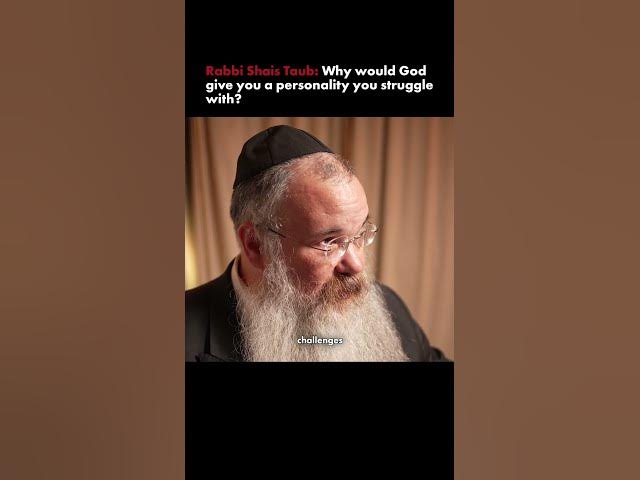
We begin Chapter 26 which speaks of the necessity of serving Hashem joyfully. Why is joy so important? For more classes from Rabbi Shais Taub visit https://www.soulwords.org/ Follow us on Instagram https://www.instagram.com/rabbi_shais_taub Support our work at: https://www.soulwords.org/donate/ --OR-- PayPal: https://www.paypal.com/paypalme/soulwordspayments CashApp: https://cash.app/$soulwords Venmo: https://venmo.com/u/soulwords
Categories:Torah/Chassidus
Comments
Transcript
Auto-generated transcript. Not time-synced to the video.
the rough month you know it's been a
challenge yeah it's been rigorous
uh it's been more than a month in a
couple months we were
there was a string of chapters that
really runs from 18 through 25 and it's
a difficult concept and i'm not going to
repeat the whole flow you could re-watch
the classes online if you want to get a
review but what's today about you know
what today's about joy joy thank you
joy
simcha
so why are we talking about simcha
before we start talking about simcha is
joy
not happiness but joy
big difference happiness happens
it's passive
joy is something you create
happiness means it happens it's
happenstance if it doesn't it's a mishap
it's a very
victim
type mentality
joy is a
proactive decision we're going to talk
about
but
for context purposes why are we speaking
about joy now
why is that the subject now
so
just a little review of the first 25
chapters of tanya
a little review
not intense just a little review
in chapter one
we spoke about the fact
that we have two souls
one just want self-preservation
by any means necessary
and the other is
altruistic
that we really learned about in chapter
two the altruistic soul the selfless
soul godly soul
and we learned about the fact that they
each have their own
cognitive and emotional faculties
meaning their perspectives on life and
the way they feel about what they
believe they've perceived
and that they both express those
perceptions and emotions through three
behavioral
um modes of expression called thought
speech and action and that essentially
within each of us there are these two
souls vying for who's going to gain
self-expression at any given moment
and that's the whole conflict of tanya
that's basic basic basic timing
we
introduced
one method for handling that
conflict managing that conflict in
chapter 12 we said well you know what
the banini does the intermediate guy he
has the inner war of the russia but he
exhibits behaviors as if he were a
tsadic
his tool the first tool we learned about
is
impulse control
your brain controls controls your heart
so you don't don't give in to every whim
that you have you just control yourself
great beautiful wonderful tool
then in chapter testing your design
16-17 we learned about a new way of
explaining that may charlotte lla the
brain rules over the heart which means
that if you meditate use your brain
you'll create emotions in your heart
brain rules over the heart earlier had
meant you bypass your emotions and do
things that you don't want to do because
they're the right thing to do
then later on 16 and 17 we learn about
using the brain to not bypass
your emotions but to create new emotions
to get yourself congruent emotionally
congruent with the behaviors that you're
committed to anyway
that you're following
these tools okay and then after that we
said well what about if
the
tool for creating emotional congruence
is taking too long which we know that
meditation is a lengthy process a
lifelong
pursuit and endeavor
uh so we said okay no problem we have a
short
emergency way of doing it 18 through 25
and i'm not going to review what 18-25
was but the bottom line the upshot of
18-25 was a quick way to get emotionally
congruent to get a suddenly a sudden
emotional jolt
to have the motivation to do the things
that we're supposed to be doing okay
so basically in the first 25 chapters of
tanya we've been
presented with a pretty comprehensive
system
of spiritual tools
for managing the inner conflict we have
the first type of my chalto lay which is
control yourself impulse control
we have the second type of
challenge
which is meditate and create new
emotions to get yourself emotionally
congruent with the behaviors you got to
do
and we have the in case of emergency
brake glass the backup system which is
how to suddenly push that button that
super jew
uh
spiritual adrenaline rush
that we learned about we just finished
learning about in the past eight
chapters okay
so there you have a comprehensive system
for serving a chef
and it's pretty complete
so then what else do we need remember
tanya dalton says
is to simulate the experience of coming
to him asking for
guidance
so if you imagine yourself with each new
chapter
re-entering the altarebes room and
asking him again for more guidance you
have to ask yourself what am i bothering
him for again this time why did i
i just left now i'm coming back in why
am i coming back in
what's the tension
that's driving this
need
for this next meeting
so the next
issue
is not that i need
another
tool in my spiritual toolkit
the next issue is really
the
the human issue
that being
that we experience uh
emotions we have moods
even if the al-tarab has given us a
perfect system
if we lack the will or the desire
to apply that
system because for whatever reason we're
emotionally
demotivated
then
it's to no avail
so even if the system we've been
presented with in the first 25 chapters
is a wonderful system
if i'm feeling bad and therefore i'm
lacking motivation
i'm not going to be able to execute and
carry out
that system that was presented to me
and that's basically where we're at now
in chapter 26 he deals with emotional
well-being
because if you're not
feeling good
you're not going to do anything well you
cannot execute any task well when you're
not feeling good
and
that includes the system that was
presented to us in the first 25 chapters
of tanya
you follow what i'm saying
okay to help you to really cement the
idea i'm going to start reading and i'm
going to present you with the metaphor
that the alt-rabbi
uses at the beginning of chapter 26.
perakova
brahm kegan dots
one must however know however means
um i'm going to switch things up on you
a second here
notwithstanding this wonderful system we
were just
presented with in the first 25 chapters
there's something you still need to know
and it's a big rule he calls it a cloud
goggle a big rule
just like in a material in a physical
battle or confrontation
like two men who are wrestling with each
other one is trying to throw the other
so the metaphor is what
why
wrestling
yeah
yeah well i don't think they're fighting
i don't think
it's athletic it's competition yeah it's
not like a street fight
it's it's it's athleticism they're
wrestling
well yeah what it's just a metaphor no
no it's a different question okay does
the time alter rebbe presuppose or is it
a given that every individual is capable
of having emotional well-being yeah
yeah
so just like
no never i mean
so before we're even starting the
chapter everybody wants to put in a
giant asterisk and say who this doesn't
apply to until until it applies to
nobody okay right we're just studying
for academic purposes all right no
problem it's just anthropology hasidic
anthropology doesn't apply to anyone
certainly nobody here okay
no
problem take it however you want
hine now listen to me
if one of them
is lazy
or heavy
and he will be thrown even if
he's stronger than his
competitor
so you have two guys wrestling one of
them is stronger one of them is weaker
but the weaker guy
is feeling good and the stronger guy is
feeling blah
and what happens the stronger guy gets
thrown by the weaker guy because of the
emotional advantage the emotional edge
the guy who's feeling good ends up
defeating a stronger opponent
because the other guy is feeling bad
kokomomish is just a metaphor
so too literally been such a yetzer when
we want to defeat our
evil inclination
it is impossible to defeat him
if we're feeling sluggish and heavy
emotionally heavy
tim tamalevka evan
emotions that come from
depression
and a
congested plug plugged up heart
that's plugged like a stone
what does it mean a heart that's plugged
up like a stone he'll explain by in the
next very very next line
but rather
biz resource
alacrity
that comes from joy and an open heart so
the opposite of timtum haleevka evan a
heart that's plugged up like a stone
would be sikha salef an open heart that
means where the emotions are flowing
there's a good energy flow in the heart
and it should be completely his heart
should be completely free of any trace
any trace of worry or sadness at all
in the world
so here's the premise
even if you have what it takes to beat
your evil inclination and you do
if you are not emotionally
feeling
good if you're not
walking in there with
what he calls
then you're going to
be defeated by an inferior opponent
feelings that drag you yeah isn't that
the power itself
well we'll talk about that yeah that
sometimes the yetzer hudders best way to
win
is to uh psychological warfare
to undermine your mood
yeah and we'll talk about the tricky
ways that the itsahada actually does
that yeah
yeah
okay so you understand the context why
tanya is speaking about simcha i think
it's very important
i think it's especially in our day and
age
where joy has become an idol
an idol is anything that is deemed
important for its own sake
that's my definition of an idol because
if you ask why is something important
the answer should be
because
it helps me serve hashem
or sometimes there are series of because
because because and it takes a few steps
before you can trace it back ultimately
to how that helps me serve hashem
but if the answer is it's important just
because it's important
well only
hashem is important just because he's
important because only hashem exists
just because he exists and anything else
that you give that type of status to and
you say it's important because
it's important in other words
if i say to you you want you want to be
happy yeah i want to be happy okay once
you're happy what are you going to do
with your happiness i don't know i'm
just going to be happy that's idolatrous
it's like saying i want a million
dollars okay what do you want to spend
it on no i want to have it
so then the end-all be-all is the
million dollars or the end-all be-all is
the happiness
it's not about happiness it's about
serving hashem happens to be
that the only way to do anything well
including serving hashem is if you're in
a good mood
so in order to serve hashem well evdu
you want to serve hashem properly how do
you do it
is an adverb it's not the direct object
hashem is the direct object in other
words the goal is aveda i'm serving
hashem the means to properly doing it
is joyfully yeah
chapter 100 right
[Music]
i'm not familiar with the other sources
outside of khabad so i'm not sure
i actually am familiar but that's my
passive-aggressive way of saying i'm not
going to quote it in a time issue how
you like that
that's a madisha
it's actually not since you not since
you got me started this is very
different than mitzvah de la lea
specifically because that's saying that
the simcha itself
is
the objective here we're saying
the avedas hashem is the objective
and the simcha is what facilitates it
and makes it possible
yeah well eating is a mitzvah if that's
how you if that's the logic you're going
to use
which is fine it's it's true i mean we
learned in chapter 7 of tanya that even
mundane stuff that you're using for the
sake of serving hashem becomes absorbed
in the holy energy of the mitzvahs that
you're doing
okay
i think this is very important al
tadaba's approach to simcha
simcha became very popular but i don't
think this nuance is well appreciated
there's a utility in simcha
let's not idealize it there's a utility
here yeah
but that seems to be the paradox because
i think anyone
being the one and the psychological
warfare i don't think there's anyone in
this room that doesn't want to be happy
so but so you're basically being told
this is what's going to happen you're
going to go through certain fails and
then you should be happy bad so then
what ends up happening is then then i'm
sure everybody's trying but then there's
just not only that if it doesn't work
sometimes then there's a guilt of like
well i i'm not serving god in the way it
should be
right so then it becomes uh
it compounds
the the negative feeling because not
only am i not happy which any normal
person would be sad about
but now i found out that i should be
religiously guilty about the fact that
i'm not happy so now it's like yeah okay
all right yeah
if you thought you weren't happy before
now i could be even more unhappy because
you're sinning when you're not happy oh
no okay
okay but we're going to deal with it
that's what this chapter is about it's
about
giving us tools for dealing with that
okay
so everyone understands
first chapter first 25 chapters of tanya
were presented with a system for
becoming this bananee this person who
and the inside has the inner conflict of
the russia but on the outside is
behaving like asadik
and um
now
at this really halfway through time
tanya is 53 chapters so 26 is almost
halfway through
um
we're saying look
the system's a great system but
if you're not feeling good you're not
going to be able to implement it so we
got to take care of this issue
okay why wasn't this much earlier then
sometimes when i teach tanya start with
chapter 26
people you know another reason i often
start classes with 26 is because
uh it's relatable like
the first chapters of tanya
are difficult to get through if you
don't already have some desire
in learning about serving hashem a lot
of people aren't into that but you tell
them this is going to help you be happy
like you said everyone wants to be happy
so then it's easier to sell
so you should feel complimented that i
started with chapter one with you
and as for what's written
says the wisest of all men says
in every active and every
sadness there will be an advantage
well that
seems to provide scriptural proof
that sadness is okay not only it's okay
but it's useful
so how do we deal with that
because the altitude just
asserted a claim that sadness is going
to undermine everything but we have this
verse here that says
of yemen every sadness will have an
advantage
so here's what it means
that there will come from it some
advantage
to the contrary malasian zamasu this
wording itself implies
the sadness itself
has no value iraq but rather shia give a
yavi no yes that from it you will come
to
some advantage in other words read those
words again it doesn't say the sadness
is advantageous it says there will be an
advantage which ensues
from or following
the sadness okay great what is that
vahenu and now he spells it out hasim
khamitas basham alaykov
the true
joy and hashem his god that will
ensue
after the true sadness
at appointed times
regarding his sins with a bitter
contrite
soul and broken heart
there's a lot there to unpack hold on
let's unpack it
means a lot
first of all
the sadness itself
is not advantageous
but it sets the scene for
something that is valuable to follow
that's first of all
second another detail to pick up here
is
he calls it
true sadness or i might translate it as
legitimate sadness
in other words i'm sorry the altar is
implying there's such a thing called
illegitimate sadness and he's well we're
going to talk about it at length about
things that really you should not be sad
about there are things that you should
be sad about there are things that you
should not be sad about so
atsavarmiti means
sources of legitimate sadness and he
spells out what the sources of
legitimate sadness are he's but first of
all let me read the next words
at appointed times that's key that's
crucial it's at appointed times it's not
just in
out of the blue
it's at appointed times it's on your
schedule
and then he spells out what the source
legitimate source of sadness is it's
about
being sad about your sins
in other words let's unpack this all
be sad about something that you can
actually
control if you're sad about things that
happen to you
you're going to drive yourself crazy
because you can't control
what's happening to you
but if you're sad about poor choices
that you've made
okay so then
you can do something about that
no not talking about that he's not
talking about that
he's talking about where you were at
fault
it's a legitimate sadness
because you actually did something wrong
and you should be sad because you did
something wrong trauma something
happened to you where are you at fault
um
it's not legitimate legitimate what
legitimate physical reaction it's a fact
it's a fact
so the word sadness here
is not the same as pain
no no no it's not the same as pain
what's the difference what's the
difference
pain is
not cerebral you don't have to think
about it in fact it happens on a level
that thinking doesn't even
doesn't even begin to touch
that's why you can't talk your way out
of it
sadness here is very cerebral
isn't that what talk therapy is yeah
that's why talk therapy isn't effective
on certain
conditions if you have a messed up
perspective then you can talk your way
out of it
but if there's something that's
not the way you're thinking it's not
your messed up thinking it's
on a deeper level
then you can't talk your way out of it
if you can control your sadness can you
control your pain
control your pain as a tooth schreitman
but i mean like okay
when it hurts you say ow
then you have to
decide how to feel about it yeah that's
a separate step okay but that's a
separate step one is i'm in pain
the other is how do i feel about my pain
those are two those are two separate
okay yeah so that that you could control
but it isn't isn't there a thought that
if i made a choice at that point there's
the seat of the shema that i was meant
to make that choice even if later i find
out that it was the wrong choice but at
that point that was the choice to make
yeah that's that's uh
that's a perspective but that's not he's
not talking about you know everything
has its place but this isn't it
right here what he's saying is this
you came to me and you were quoting king
solomon the wisdom of solomon said king
solomon said that every sadness will
have an advantage and i have to address
that so he says here's how i'll address
it it's talking about legitimate sources
of sadness which are
not that something happened to you
a legitimate source of sadness is where
you messed up you deserve to feel sad
you made a bad choice
but even that he frames it and says it
has to be eaten
it has to be at appointed times
see it's very very important
that if you want to deal with your
dirty laundry
that it doesn't become something that
overtakes
your whole life
and it has to have its set times it has
to have its
its place it's time and its place
let's let's
let's read a little bit more because is
the elder rebbe saying that it everyone
who has true joy has had legitimate
sadness
that's an interesting question
could it could you get true joy and
avoid can you just sidestep the whole
sadness maybe not sure maybe
yeah yeah in this chapter yeah yeah yeah
is this a multi-week chapter yeah yeah
yeah yeah
yeah we could spend a year on this
chapter but we're not we'll we'll we'll
see how long it'll take us to get
through it okay
okay
vasaya
and then after you deal with
your contrition
over what you chose wrong
then see there's this
this is a verse in psalms
a broken spirit
or maybe i didn't say
no
hold on i got to back up i said li tim
zumanum allah
that through breaking down this spirit
of impurity
or by through breaking his heart he
breaks the spirit of impurity which
serves as a partition between him and
hashem
kamehameha al-pasic like desire says on
the verse from psalms
that a broken spirit and a broken
heart hashem will not reject
him
and then what ensues is the rest of the
passage or actually the beginning of
that same verse tash meaning
let me hear
gladness and joy hashivalis
return to me the joy of your salvation
virginia diva gamer and place within me
a generous spirit
in other words
this is not something that you get stuck
in
it's something that is a very
defined process
you set an appointment
you go deal with whatever it is that you
legitimately feel bad about because you
did it didn't happen to you you did it
and then you finish your session you
have to if you don't finish your session
this way you didn't do it right with
relief
that it's taken care of it's done i've
been forgiven we're moving on
so that's called productive sadness
productive sadness is i feel bad
legitimately i did a bad thing of course
i feel bad i have a conscience so i go
set an appointment this is not something
i'm doing all day long i set an
appointment
i review what i've done
i tell hashem i'm sorry and i finish
feeling great that it's all cleaned up
obviously if it's a being adam lejevador
i think it's interpersonal relationships
i also have to go to the person i wrong
that goes without saying
that's why the arizona set it up
that you say this verse that we just
quoted
after tikken khatsa is ticking
a sad prayer we say about our sins that
caused the shekinah to go into exile
but then we say this verse in order to
prepare ourselves for the joy of
learning torah which has to be done
joyfully
and this joy that comes after the
sadness has a special quality
of superiority
like light that comes from darkness
light that comes from darkness and
there's different ways of understanding
the advantage of light that comes from
darkness some
on one level it's subjectively if you've
been in the dark and then you enter the
the light that seems much more brighter
then there's an even deeper level where
darkness itself becomes transformed into
light
isn't that the whole concept of the moon
i don't know yeah
is that the same as chuba
what we spoke about in chapter seven
shivama ava which transforms sins into
merits
um yeah that's an even higher level
i he i don't think he's stipulating it
has to be of that level of chuva but
that's a good reference yeah
kamehameha
maven like it says
in the zayer
on the verse
king solomon again says i've seen
there's an advantage of wisdom over
folly like the advantage of light over
dark
but you could read it not islain
advantage of light over dark but like
the light that comes from dark meaning
light which is
made out of repurposed darkness in other
words because i confronted my guilt
and i finished it and i went to the
bottom of it and i found forgiveness
now i turned that spiritual yuckiness
into
a positive feeling
of being loved and embraced by hashem
okay so that's
the type of legitimate sadness by
legitimate sadness what we mean is
productive sadness maybe let's say
sadness that's actually going to get you
somewhere
because
it has a definite goal it has a definite
purpose
um if you wouldn't go into that sadness
you wouldn't be able to
get the
end result that happens by facing that
sadness so that's a productive sadness
you shouldn't be doing it all the time
it's only eating monuments at appointed
times but when you do set an appointment
for it it's productive again why because
it's something that you have control
over i don't feel good about what i did
i have to clean it up i have to make a
better resolution for the future so
that's a productive sadness
um
and now he goes back to the original
premise of the chapter and he says
anyways i'm talking about the importance
of joy and as we know what the arizona
said on the verse
because you did not serve hashem with
joy there's a there's a there's a verse
because you did not serve hashem with
joy the simple translation is
because when life was good you took it
easy and you didn't serve hashem
now hashem is going to make life not so
good for you that's the regular
translation of the verse but the arizaw
translates the verse and says like this
because you didn't serve hashem joyfully
you're making a lot of problems for
yourself
in other words
it is a moral imperative
to serve hashem joyfully
so
let's just review what we've said we
started off and we said
you need to know the importance the
tactical importance of joy we give a
metaphor
two guys wrestling
one guy's weaker than the other but he
ends up winning because he's in a good
mood the other guy's stronger he loses
because he's in a bad mood
so too with the eight zahoda you want to
win it's not enough that the altitude
will give you 25 chapters of training
it's not enough you got to enter your
wrestling match feeling good
then he says well what about when king
solomon says that there's an advantage
to sadness he says exactly he doesn't
say that sadness itself is worthwhile he
says there can come from an advantage
and that is in a very specific context
it depends what the sadness is about and
it depends when you're doing it first of
all what is the sadness about about
legitimate productive sources of sadness
where you messed up so you should feel
bad
and when should that happen
eat misumanum at appointed times
he doesn't say so clearly but he
mentioned remember he mentioned tikken
katsos he mentioned the midnight prayer
and other places i see this it talks
about this is part of the bedtime shema
the point is it's not the middle of your
day it's definitely not the beginning of
your day
this is something you do
like a shopkeeper takes inventory when
he closes shop and there's no more
customers there then you take inventory
or like in a year
alo aloe is right so at the end of a
year you take
inventory at the end of the year in the
month of owl at the end of a week by the
way thursday night is a time for
inventory because your end of the week
the last week night of the week is
thursday night at the end of the day
before you go to bed bedtime shema you
take inventory but this is not something
you should be doing
in the middle of the day he'll talk
about it a little bit more
you will talk about that a little bit
more
more water yeah yeah sure thanks
appreciate it
okay
now
we're going to get into the difficult
part
yeah
thanks
this is tough stuff
i feel funny starting it 45 minutes into
into class
it's like four or five lines but really
it could take
hours to explain it just on the most
basic level to explain it properly
he talks about
and i'm so scared to use this term but
i'm i'm not going to shy away from it
illegitimate
sadness or like i call it unproductive
sadness
i'm not against you the altar is not
against you nobody's here judging you
we're working for you we're trying to
help you and we're saying to you there's
some stuff you're sad about right now
and it's not working for you
it's not working for you
if you want to get sad about your sins
from time to time great set an
appointment do that clean it up and
emerge feeling refreshed and reborn and
clean beautiful
but there's some other stuff that you've
been feeling sad about and it's not
serving you well we're not here
condemning you we're not here to make
you feel doubly bad about it we're
saying to you this
stuff is weighing you down it's not
helping you
we want to get rid of it don't be so
attached to your suffering
that you won't even entertain the notion
of referring to it as not legitimate
sadness we're not saying that your
feelings aren't real feelings we're not
saying the experiences that led up to
those feelings aren't real experiences
god forbid we're not saying it what
we're saying is the fact that these
things are troubling you is not working
for you it's not helping you
and we want to get rid of this
so that you can get back to being the
best you
which ultimately is important because
that's how you serve a chef
okay everyone's clear
no you're not clear no can this same
sadness be helpful for one person and
hurtful for another this is
categorically and unhelpful sadness what
we're talking about it's not about who
we're talking to this is categorically
not helpful
okay
now that we've established how important
it is to get rid of this
sadness
please rabbit tell me how to do it how
do i get rid of the sadness all right
the heanette
to get rid of any trace of sadness or
worry about
worldly matters
melee the alma worldly matters as
opposed to what what's the other option
spiritual matters there are worldly
matters and spiritual matters spiritual
matters we kind of actually spoke about
we said your guilt about your immoral
choices that's spiritual matters
but now we're talking about worldly
matters worldly matters
doesn't just mean
real physicality it could it could mean
that as well but it means everything
that happens in this world
even the three biggies
these are the three big categories of
blessing and these are the three big
categories of pain
children
health
and wealth
children health and wealth
these are the big areas
family problems
health problems
money problems
now let me rephrase what i said
the fact that these things happened
is real we're not telling somebody
no no no it never happened to you
the fact that you respond with a certain
pain to it we're not saying that's
illegitimate yes this is painful
but the emotional reaction
that you're having to it is not working
for you
so we want to say
how can we take the way we're
emotionally processing these real
problems they're real problems that's
why it says afilo even such big big
biggies like this
how can we
do something with this so that we don't
get emotionally weighed down by it
so yeah these other categories he's
saying are sources of illegitimate or
unproductive
sadness this is not helping you
these sources of sadness is not helping
you we want to get rid of it
doesn't mean we're getting rid of the
actual experience the experience either
it happened so there's nothing you can
do or maybe it's happening we can dive
and
hashem can help to make it go away but
that's not what we're talking about
right now what we're talking about
is my emotional response to
the thing that happened or is happening
my emotional response
we have to be very clear what we're
talking about here
so what am i supposed to do i'm trying
to serve hashem think about it set the
scene i learned 25 chapters of tanya and
i know about maya charlton eleven and i
know about meditation and i know about
the ava misutaris and all this stuff i
learned in 25 chapters and i'm trying to
be a good boy or a good girl and serve
hashem
but i have a life and not all of my life
is perfect because that's the nature of
this goalless
and there are painful aspects of life
and i'm only human and i'm responding to
those painful aspects of life
in a in a way that is
emotionally weighing me down and i see i
see for myself it doesn't allow me to
serve hashem
or it doesn't allow me to fully
completely serve hashem the way that i
could be
so what am i supposed to do
okay
and not only that you say but i'm angry
at hashem because ultimately
these problems
must come from a shop
well
let's find out
i mean
yeah they do but let's
allow a little suspense
okay
okay what did you say that children
health and wealth are
worldly versus spiritual yes those are
worldly problems
but they're not spiritual
no
spiritual means you made a moral choice
that's spiritual only means when your
free will was at play
the fact that you are blessed in these
three areas
or you're experiencing
struggles in these three areas is not
your free choice
whether you do a sin or you do a mitzvah
that's your free choice so spiritual
means whatever does this make sense to
you
spiritual worldly basically forget those
terms
free choice that you chose or stuff
that's happening to you that's it
other people's free choice by the way
could be their free choice but for you
it's stuff that's happening to you
i hope that's not overly complicated
by your choices
so yeah and vice versa
okay
legitimate sadness over a choice you
made that has negatively affected your
child yes yes
yes
you have to separate it you have to
categorize it properly if you're feeling
guilty about an immoral choice
then we have one way of dealing with
that but if you're feeling sad because
life is hard
then we have a completely different way
of dealing with that
okay
we have nothing to do with the pain we
have no way of dealing with these are
just words and the words don't take away
the pain
the words are going to help you
gain a perspective what to do with your
pain we can't take away your pain
we're not even going to pretend that
that's possible
in general
you know
all the things that everybody here
that is just that is
that is not the feeling the pain is is
considered
just a natural instinct and and that's
okay
i've never heard this distinction before
well
tell somebody not to feel a sensation
it's it's it's not a productive order
because you don't really have control
over that
whether it's from physical stimuli
like
somebody uh
they stubbed their toe and you tell them
well if you were really spiritual you
wouldn't feel it
come on or if it's emotional
like uh somebody comes over they don't
touch you they say they say a bad word
to you they call you a name so there's
just certain just there we're wired that
we have certain responses to that
um
and then obviously
it goes without saying some
major trauma where
there's just no way to avoid the way
that affects
the body we're not talking about that
we're not pretending to deal with that
we're talking about
how you process your emotions
about
the situation
so you have to distinguish between
sensations
which you have no
you have no power
over and
ideas attitudes
and emotions which
you do have power over
okay
so here's it's
really
unwise to try to get into this this is
a
very um dangerous territory here
because
there are a lot of ways to teach this
you know
that hurt people
and one way is
if it appears in any way that we're
being cavalier
about people suffering and we say well
just get over it just move on
says in tanya
here's the solution so just go and do it
and and i want to be very clear
the altareb is not minimizing these
types of problems to the contrary
the first thing he does is validate that
these are a serious source of
anguish he says
when he says that word the altadebu
doesn't use words lightly
when he says even
family
health and money problems what he's
saying is he's legitimizing the fact
that those are big sources
of pain for people
and yet he's saying even those really
serious sources of pain
we have a way of dealing with it
so that we won't be emotionally
undermined
by our experiences and in fact
we could even maintain a really positive
attitude so i just want to make sure
everyone everyone understands the altar
is not being cavalier he's not being
insensitive
and again like i said before
he's helping you
these emotions are not
productive these emotions have not been
serving you well
these emotions are not allowing you to
be your best you and to serve hashem on
your best level
so don't feel that
you're not being validated to the
contrary feel that you you are being
validated somebody's saying to you i get
why this thing would be
painful i totally get it
but what you want me to do because i i'm
so empathetic to the fact that these
things would devastate you i'm going to
give you a certificate that says you
have that that now you have a mitzvah to
be devastated for the rest of your life
how about if i validate you in both
directions i'll say to you i get why
this would devastate you and at the same
time i get why
you would love to have a way to be able
to move on
and not
be consumed by these problems so that
that's
the balance here okay
actually
it's supposed to be freeing yeah it's
supposed to be
okay
should we start the method i mean
two paulo says
why
[Music]
what should we do
you want to like a sneak preview of the
method yeah
i'll say the first line of it
but you have to promise me you're not
going to be
indignant or outraged
if
it doesn't come off the right way
this saying of the sages
must be known to all
kashem
just like we bless hashem and thank him
for
good
and he says etc because if the al trebba
can avoid spelling out something
negative he avoids it and he just
implies it and we all know the rest of
the sentence so too it's
so too
one is obligated to bless hashem
for
the not good
and that is the source in ghazal of the
bracha
diane
which nobody wants
to make da bracha but there's a concept
in judaism
that just like
we acknowledge hashem when he gives us
good
we acknowledge hashem when he gives us
the opposite
okay so i guess there we spoiled yeah it
is all from hashem
it is all from hashem okay
great
fine
i still don't know how to do this he's
quoting
a passage from the talmud that says that
you're supposed to look at everything
even the painful experiences and say
thank you hashem
okay you told me what i'm supposed to do
you didn't tell me how to actually do
that i mean i can say words
but he didn't teach me yet how to
actually say those words with sincerity
how to actually feel that way
stop crying or you i'm gonna take
something else away you want you want to
cry i'll give you something to cry about
no no that's not what it is no
no he's going to actually help us
contextualize these types of experiences
and again i told you it's not going to
take away the pain that's that's an
automatic response
you have no free choice
over how your body processes stimuli
but on a cerebral level the way you
think about it that we could reorganize
and we're going to reorganize the way
that we view these types of experiences
it should be comforting yes and
empowering yes and relieving and freeing
yeah
yes
the way we balance them is not balancing
them balancing them is mishmashing them
and confusing it more
separate the two
i can be in pain and bar hashem i'm not
suffering
they're two separate things
the resistance to the pain brings
suffering yeah compounds the suffering
isn't there also different the levels
like the physical the emotional and the
thoughts yeah this physical pain
emotional pain one might argue emotional
pain is even worse
so we're going to the thought level to
rationalize it so it affects the
emotional and the physical
we're not talking about sensations we're
talking about emotions
you do not have any control over your
sensations
but emotions as we learned back in
chapter three
remember we learned where emotions come
from
hamid the saint told us khabad
that the emotions are the children of
the intellect of kokomobi nadas so the
way you cognitively process
that determines the emotional
response so we can do something about
the emotions but emotions are entirely
separate from
sensations
having a good perspective doesn't get
rid of pain it helps you to deal better
with your pain
okay let's continue next week
Up next
24 recommendations shown


Stray Kids
3 years ago






TOOL
8 years ago

The Alan Parsons Project
9 years ago

Ol' Dirty Bastard - Topic
12 years ago



Berel Solomon
3 years ago


Matisyahu
17 years ago