Preparing video...
0:00 / 0:00
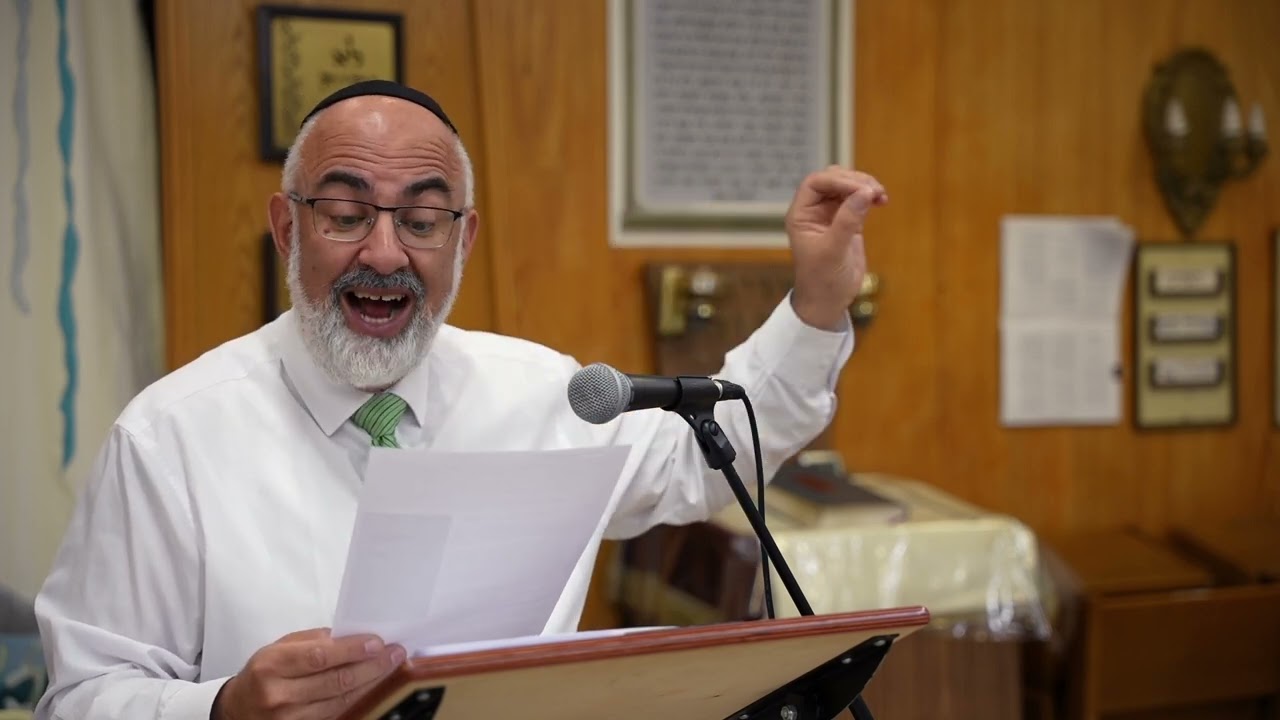
Everything You Wanted to Know About the Omer | Rabbi Shmuel Goldin | April 14th 2026
99 views

www.ouisrael.org facebook.com/ouisrael #OUisrael #torah #judaism #torahlectures
Comments
Transcript
Auto-generated transcript. Not time-synced to the video.
Consider obviously the portion of the
Torah that comes to mind is the portion
at the end of
remember what did to you. The Torah
continues
they came upon you by happen stance.
They attacked the weak. And then the
Torah says, "The time will come when you
will be at peace within your land."
And at that point,
you will erase, you will eradicate the
memory of
don't forget.
And at face value, it seems that this
commandment is self-contradictory.
remember remember
should eradicate the remembrance of
so what is it am I supposed to remember
or am I supposed to forget so the answer
is that there is a fundamental
difference between forgetting and
erasing
when you forget something it's still
there you forgot it you forgot it but it
still exists and it's going to come back
and haunt you again if you don't do
something about it.
When you are successfully able to be mo
when you are when you can do
when you eradicate
then you eradicate
and that's the difference between
forgetting and erasing
the world after the shawah
number one we were in a bit of a bubble
we were in a bubble because it was not
that fashionable to be anti-semitic
after the shawah
That lasted for a while. The bubbles
burst
and all those people who told us during
the bubble, well, forget about the show.
Forget, you know, move on, move on, move
on.
We kept saying, "No, what what we don't
think we can because we think it's still
there."
And it is. And we've seen it. And now
we're seeing it in spades. And we're
seeing the way the world is turning on
us. And we're seeing the way things are
getting tough even in the golden medina,
even in America.
And you know that it's it's really
frightening. It's really frightening.
And I think that that is the lesson that
we've learning that we're learning and
the lesson that we have to teach the
world that there's a fundamental
difference between forgetting and
erasing. And we're waiting for the point
where we can say it's been erased. and
we're far from it now. All right. So,
anyway, that's uh just an introduction
given the fact that it's Yoma Shawat
today and that we should not we should
not ignore that.
>> What are sheets are outside? Yeah.
>> Outside.
>> Okay.
We're going to turn our attention. This
week is a nightmare for rabbis because
it's the week of tasria mitzah. It's the
week of uh those parote. Uh thank god
the calendar is coming to ravenic
survival and that is it's roesh as well.
So probably most of the rabbis in the p
pulpit will speak about roesh as opposed
to tazriam et nonetheless
we're going to speak about the omare.
We're going to take a look at spirat
omer at the mitzvah of counting and at
what has happened to the omare period
and what it means to us and how we deal
with it. So let's start. The Torah says
in two different places that we are
supposed to count the days between and
Torah says
Shabbat you should count from the day
after Shabbat which we interpret to mean
the day after the first day of the
second day of the
>> I'm sorry. Okay. Thank you.
From the time that you bring the waved
omare, the omare is a grain sacrifice,
barley sacrifice.
Seven complete weeks shall you count.
Now, we're going to parse that p a
little bit later, but there's a lot to
learn from it. But there's another P
that says
you shall count seven weeks
from the beginning of the barley pro
harvest etc etc
two different places that's why we count
days and weeks according to most but the
question is the following what's missing
>> why
You ever stop to think this is a very
strange mitzvah, right? Count the days
between my last year my wife put on our
Alexa. Please remind us to count the
Omr. But we were never able to erase it.
So throughout the year at about 8:00,
Alexa said, "Barbara, please remember to
count the omer." So we got to the point
where it it's fine now. It works. It
works. All right. But we had to listen
to it all year long to hear hear it now
today too. All right. Anyway,
what is the rationale for this mitzvah?
And there are a variety of different
suggestions that are made by Kazal. When
you know that there are a variety of
suggestions, it means that we don't know
which one is right. Or maybe they're all
right. But now let's take a look at some
of them. The first is that we are
counting towards we are moving from pes
to shaveot and the counting of the omarr
is the linkage between those two
festivals and to support that do you
know what shot is called in in the
talmud
it's
which should ring a bell for us righter
and shu are very much alike.
Very much alike. Number one, they are
each attached somehow to a festival that
came before. In fact, the rabbis say
that should have been as distant from
Sukkot as shuot is from Pak. Why? Why
wasn't it? Because had mercy on us. We'd
have to come back for another another y
in the middle of the winter. So
therefore, we waited. Therefore, we
waited and
gives user immediately as opposed to is
which is later.
What other aspect is and it's on your
sheets later. I'm going to talk about it
now
and shàuote are very much alike because
they both those holidays in our world at
least do not have a specific mitzvah.
Shàuot other than the bikurim and the
mitzvot that were unique to it in the
days of the BT
in our day has no individual unique
mitzvah. the mitzvot that guide us on
shabot or the generic mitzvot that guide
us on every h there are there are
traditions that have come up that you
stay up all night learning that you do
these things but that's none of those
are mitzvot none of those certainly are
no mitzvot
>> cheesecake I understand yeah right okay
I'll count that as a mitzvah if you'd
like but the fact is that that sween and
what it what it seems is that Both these
festivals
are constructed to celebrate the
totality of Jewish experience as opposed
to a particular mitzvah.
And there are other reasons why Shauvo
doesn't have its own mitzvah. When we
compare it to
what's happening is in the in the fall
>> what
>> that there the Ramban says that the spir
of of P right to right now the point
though is that if you look at those two
um paths if you will in the beginning of
the our year a tish year what do we do
we have a personal path towards chuva
which ends within
which is that day which celebrates our
relationship with on a personal level
later on for the roashana of Nissan we
we're put through a different path and
what's that path that path is through
the con through the uh exodus theatim
to matan tora and that is the path that
gives birth to the Jewish nation. The
two fundamental
signposts
for the birth of the Jewish nation areat
mitzim and matanora.
They're you have to we've said this
before you if someone converts to
Judaism the first thing you say to them
is why do you want to become part of
this people
so the first thing we had to do is we
had to be willing to throw our lot in
with this fellow who we don't even know
go into the midbar and only then could
we what get to hari so those are the two
signposts and sir Omare according to
this position is the connection between
pesak and shot. I'm counting towards
this period should be a period of
anticipation. I'm moving towards hersai.
Then there's another position which is
exactly the opposite
and that is
we counting from and then I'm going to
go back to to be going to C. Now on page
number two,
we're not count only counting towards
this position says we're counting from
we're counting from mitan. And as proof
of that, take a look at the first puk in
paras mas at the end of safer
and at the malim suggestion.
These are the journeys the voyage of
Star Trek. I I whenever I say that I
think about that but the fact is
these are the journeys of Ben Israel
as who left the land of Egypt. Now says
the Malin hold on a minute when you
discuss or describe a journey how do you
describe that journey? You describe it
by the destination. You don't don't
describe it by the point of departure,
right? You don't say, "I'm going to uh
the store, but I'm really leaving my
house. I'll get to the store." In other
words, which is the more important
point. So the malab says this this tells
us something about the journey that
every step we took in mit in the midbar
was a step away from it
and that that gives rise of course to
the famous medish that we were at the 49
levels 50 left there are 50 levels of
tuma then we were at the 49th and a
kadeshbar who saved us at the last
minute and that's why there are 49 days
to the counting of the omare
All right. And there's another position
which I have on the sheet at page number
three which is the um orim who says that
the 49 number is counting from but it's
not just the levels of tuma he compares
it to the cycle of nidon and he says 7*
7 and he says that's why and this that's
why I include it this is a very
interesting
why couldn't I start counting on the
first day.
He said, "Because you have to have seven
full weeks. The first day you're not out
of mit yet.
You're only out of mit for half the day.
So you can't count that day. You can
only count the next day, which is the
first full day." This is not a beautiful
point. Now, let's go back on page number
two to section B.
There are I love parallels in the Torah.
There are parallels between two counts
in the Torah. The omare and the counting
of years towards Yel. Each of them is a
count of 49
to 50. Right? 49 to 50 days for Pakualt.
49 years from one Yov to the next seven
and it's seven weeks and then in the
case of Yov it's seven groups of seven
years
now
each of these
countings
may be talking to us about different
aspects of the same thing. What do I
mean by that? spoken about this when we
talk about
take a look at the second section on
page two.
I mean it really sounds very very
similar to the counting of the
and then in
you should cause a on the kipper you
should blow a chauffeur throughout the
land
and you shall proclaim liberty
throughout the land unto all the
inhabitants thereof. Now I was teaching
this in a class in Mishima University
and I asked the class where is that
sentence found in the United States and
the only one who knew the answer was a
Canadian
that's it is it is inscribed on the
liberty belt right now what's drawer
is liberty what's liberty liberty is the
removal of the negative conr raints.
That's what's happening here, right? I'm
freeing the indentured servants even if
even if it's if it's in the middle of
their even if it's in the middle of
their six year or sevenyear indenture.
I'm freeing them. I'm letting them go.
That's draw. Draw is pesak. Pes is draw.
But there's another element to freedom.
What's that element? Kazal will say the
following. It says it's the the word
that critical is not found in the Torah,
but they say it's all alluded to. The
Torah says that the word of
was
alot meaning what? It was engraved.
Say the rabbis with their play on words
which always is much deeper than it
seems.
Don't call it freedom but don't call it
engraved. Call it freedom
unless you are
right. Unless you are. And if you take a
look at the top of the page,
it actually says Misha
Torah. All right? So in other words,
only the only free person
is someone who is has a higher calling,
has a higher purpose in life, has
something beyond. And for the Jew, that
is Torah. And that's the learning of
Torah. And I saw this very clearly. I
think I've told you in a number of years
ago when I was in the Soviet Union
visiting refusnix
who told us, you know, rabbis, we were
three rabbis, you know, we're the only
free people in the Soviet Union because
they were
saying goodbye to to the to the Soviet
rules and they were basically breaking
them to learn Torah and that made them
free. they were not constrained.
So if we what we have therefore is we
have two different types of freedom
and one is leading to the next. When we
look at sasa omare
draw the the removal of the negative
constraints
becomes complete
only through the injection of the
positive and the injection of injection
of the positive is what tora what
holiday shav
so that's another linkage between these
two holidays okay I'll stop for a minute
to take two I think two people had
answer Just a quick comment rather than
question some your explanation here
reminds me of what was said by Victor
Franco who survived the Holocaust today.
>> Right.
>> And he realized when observing in the
camps people that had a a higher
objective, higher purpose, they survived
much better than
>> Wow. All right. uh for those that are
for those that are listening um on the
tape wouldn't have heard that that's a
beautiful thought and that is that we're
talking about having a higher calling
Victor Frankle who has his own approach
to mental health because of that who
survived the shawah actually said that
the those victims of the shawah who had
a higher purpose who did better did
better as a rule not always but as a
rule
All right. So now we now we we've spoken
about counting from
and counting towards. We're counting
towards and counting from. There's still
another position on this and that
position has to do with agriculture.
What what really was the omare? All
right. Yeah. We have to take a step
back.
The omare was the first barley that I've
harvested. In other words, the barley is
the first thing to to ripen. And
therefore, what was the rule?
The rule was you could not use that
barley until you first brought a carbon
or a an offering to aeshb. It's like the
burim on shot. It's like the first
fruits on Chevot.
That is the explanation by the way for
andadesh. When you hear those terms,
what does that mean? What that means is
there are those who say that there is a
the prohibition of
grain still is in effect even though we
don't have the basic and and also some
say even in effect in out in the
diaspora. Others say no. It's a it's a
it's a debate. I think most say yes, but
in terms of practice, most say no.
Anyway,
means what? Kadesh means new grain that
grew
since the last omare, right? So that new
grain hasn't had a matier. What's a
mater coming from the wordare?
Something that allows something else.
Omar is a matier. Omar is allowing you
to eat the grain that's going to come
now because it's passing through the
omer starts the process. So that's
that's what's happening. But the Ramban
and others
say that that also explains the purpose
of sasa omare.
It is to connect heaven and earth. And
there are different permutations of
this. I'll I'll give you one and that is
what you're doing is you're taking the
farmer who has his gaze at the ground
looking at his harvest and looking at
the growth and what are you doing?
You're raising his sights. You're
connecting heaven and earth with the
omer. You're trying to say you're going
to be preoccupied with this think think
loftly ideas as well. And therefore
that's another reason that's another
reason for the counting of the omare to
collect correct connect heaven and
earth. Can I ask
>> um when did really when did it come into
tok
that we not only tell but we
correct try to correct amigul each week
is a different era when did that start
>> that's all that's later it's later it's
coalistic most met of it and um it's
beautiful but it's not we're not
>> when did it start
>> when did it start I would think the
Middle Ages, but I'm not sure. I'm not
sure. I I'd have to look it up, but it's
a it's a later aspect to it. It's
building on counting from it's building
on perfecting your meos each day. I
mean, that concept exists. It's made,
you know, they make it um more concrete
through the statements that we say some
say afterwards. Now, take a look at page
five.
So there are additional messages to the
omare in addition to the question of
connection. The first one we saw pesak
personal passage
um from sukkot through national passage
through pesak to shuote
raikatal
says there's a difference between there
are two two words that exist in the
Hebrew language for counting.
One is lispor and one is lunote.
Minan is account right and therefore you
spirra and minan are different says Raf
Salvich
Minan is accounting towards a goal and
all that matters is whether or not you
reach that goal and for example yet nine
wonderful men
can't be a minion you need to have that
tenth right you need to have there has
to be you have to reach the goal for the
counting to be meaningful.
Spher is very different. Spher is to
recognize the beauty of each unit that
you have. In other words, it's like
someone who's counting precious diamonds
and he surely wants to know how many he
has. But as he goes, he takes a look at
the beauty of each one and basks in that
beauty. says Ra Solvetic Sasa Omar is
teaching us to count our days.
Well, the lesson is that and I say I've
said often comes from other places in in
the in the Torah as well. The concept
being we too often focus on the
goalposts
and ignore the beauty of the of the
journey. And the sir um is to sensitize
us to the beauty of the journey each
day.
Then you have grain to bread. And this
is this is very interesting.
The omare is a grain sacrifice.
When we get to shàuote,
we offer
we offer bread.
Say some commentaries. That's an
important piece
because it's teaching us the role that
we have in perfecting God's world.
There's a famous quote that's said in
the Gomorrah in the name of Herbaka that
one of the Roman generals or someone
said to him, you know, why did God
create you
cir uncircumcised and you have to
circumcise your children? Why why
doesn't he create you perfectly from the
start? So Rebecca came back to him and
said, "Okay, here's some grain and
here's some bread. Which do you think is
is more precious?" And the woman said
bread that's our participation in
perfecting God's world. And that was
it's a beautiful answer. And that so
therefore moving from grain to bread is
a reminder that that's what that's our
rule or part of our rule.
All right. We spoke about f omeir. Now
let's go to the historical overlay.
This is something that comes much later
and not as late as as the things you
were talking about, but it comes much
later. This is not from the Torah at
all. Right? And that is that in the days
of the Talmud, if you take a look at the
middle of page number five,
Elfimaka,
Rebea had 1,200
pairs
of students.
>> Thou 12,000, right? 12,000 pairs of
students. Thank you.
from one place, you know, all through
the land.
They all died. The garra says during
this period
because they failed to teach each other,
treat each other with full respect. And
the world was desolate, say the rabbi,
says the Gomorrah until Rabbi Haka found
new students to teach and then it would
continue, which by the way underscores
why this is such an important event.
Think about it. I mean, it's terrible
that they all died, but a lot of Jews
have died in other ways throughout the
years, and we don't always have a
commemoration of the mash. We do, but
others, right? Well, this was not only
this represented not only the death of
those students, but a break in the chain
of Torah Shabbal.
That's what it means when it says the
world was desolate. It was a break. No,
nobody was around anymore to learn Torah
and to teach Torah. And that break would
have had monumental monumental effects.
We would not be here today
if Rabi Akiva had not persisted, found
additional students to teach and the
Torah comes back again. So that's that's
we need to know that that's a piece of
what's happening here.
Um we're what what h what do we do what
we do when it comes to to this period of
aos? So the answer is we've got a number
of different customs. We can't, you
know,
we can't agree on anything. We can't
even agree on how to count by the way,
lawmare or bare, right? So, you know, I
I do both just to be safe. Anyway, so
what what's happening here?
We have a tradition
that this should become a period of
mourning for us. But there are different
ways to count that period.
All right. And some say it's counting
from pesak to log mulmer. Some say it's
the day after log mr. Some say it's from
from rokes to shu. You have all of these
different customs. They are based upon
one particular point and that is that
the num what's what's critical is the
number of days as opposed to the days
themselves. In other words, you have to
observe a certain number of days during
this period in aos and that and for for
a reason has to do with chabas as well.
But one way or the other that's the
critical component. Why do I say this is
so important? Because this custom
is unique in the world of customs. Why?
You can switch year to year. In other
words, number one, you can you can if
you counted till lagba last year and you
want to count after log and start later
at at Rosh Codes this week, you could do
it. You can switch. Not only can you
switch, but you if you are invited
to something that you wouldn't shouldn't
go to if you're an aus like a a
during that person's omare count aus and
that's not yours you can go in other
words you can you can attend a wedding
during the position of during the time
that you are counting the error. All
right. So, what you have here is a very
interesting and the being that
it's the count as opposed to the actual
days themselves.
Now, let's go to what I call a halahic
laboratory. And this is this is fun. I I
enjoy this.
Let's let's understand I I I see that
the Omr is a laboratory for
understanding certain foundations of
aloha. Let me explain first.
Is the omare count
not the aus aos is not aus comes later.
Is the mitzvah to count the omr today a
biblical or rabbitic mitzvah.
Now take a look at the right.
You shall count from the day after the
first day of Pesak from the t day you
bring the Omr. What what will it depend
on in terms of my my decision?
Do you is the Omar count
based upon the Omar sacrifice connected
to it so much that when there is no Omar
offering there's no mitzvah to count the
Omr
or do we say what do we say that that's
that and that's that and and we're now
the Rambam
and some others holds that the counting
today is Dior
there the most of the most of the
halists say no say it's the rabbon that
we're only do and I'll you'll see in a
minute why this becomes important now
the I was going to say something just
give me a minute
all right don't remember all right
anyways
so uh the the the count itself
according to the Rambamist deal right
today. It's similar, by the way. Oh, I
know what I was going to say. It's
similar, by the way, to what we have on
Pesak. We have Matzah and Mor, right?
Matzah is a biblical mitzvah today. Why?
Because it's commanded in conjunction
with the Pesak sacrifice and also
commanded independently.
Morar is only commanded in conjunction
with the Pesak sacrifice. So that is
mikto. That's what we're doing when we
when we eat the mar is we're fulfilling
the responsibility of remembering the
time of the temple and and living
reliving it. That's what's happening
here according to most mafarian. What's
according to most mafarian? What's
happening here is ayah. It's not a
mitzvah to count the om anymore. It's a
mitzvah to count the in order to
remember the glory of the days of the
bikd which is why after you count what
do you say
etc etc. What what does that have to do
with the because you're saying according
to that position that this is not not
the or today I'm doing it because I'm
remembering the BTO and that's why that
puk is there. All right. Now
the
question of whether it's rabbitic or
biblical
is not just a theoretical question. It
has practical ramifications
because one bib one particular rule in
Jewish law and that is
all right which means if you have an
uncertainty of a on concerning a
biblical law then you have to be mir you
have to treat it stringently.
If you have uncertainty concerning a
rabbitic law, then you can take the
lenient position. Now, where does this
come into play? This comes into play
because of a particular phenomenon that
happens every day and that is there is a
period of the day that is uncertain.
It's called bashmote.
What's bashmote? Bash Masho is between
the suns because it's because the Jewish
day starts at night and we don't know
when night starts. Does night start with
sunset or does night set start with
nightfall? This explains by the way why
and and most of the time we don't pay
attention to it because deals with it.
Why do you start shabas early and end it
late? Right? Because each point you are
confronting Shabas as a mitz or so
therefore you have to treat benachos
stringently when it comes and that's
counting it as part of shabas and then
when it ends you've got to treat
stringently so you count it as part of
shabas again even though it's a
contradiction to what you did before
right we're not being consistent but
we're being consistent in terms of
following the law which is when you have
a deal you have to be stringent you have
to say that's it's still it is shabas
now and you have to treat it that way.
Now if
the riso then we have to treat it
stringently if it's durabon then we can
be lenient
when does this become an issue comes an
issue as to whether or not you can count
during bay mash can you count sirasa
omare
in dusk between between
sunset and nightfall According to the
Rambam, the answer is no. According to
the Rambam, this is a biblical mitzvah
today and you have to treat it as such
and you have to wait until it's fully
night to count. According to many of the
other postkim, no, you can count. Now,
this is critical because many schuls
dava and marav together and the marv
they're ding is hopefully during bay,
right? They're they're basically saying
it's but do they do they count at that
point? Do they does the rabbi count and
and everybody else count by themselves
but at least they're one you know they
were yo say with his count it's all
there all sorts of different positions
but that's the issue the issue is do I
have to wait till nightfall or can I
count at sunset I when I say that the
bay ash mashos is dealt with halahically
there always is the exceptional cases
where you it comes and rears its head
for example
I may have told you this. My oldest son
was born Friday night bay in Hashmote.
All right. So when do you do the bris?
Right. You can't do the and it's a day,
right? So you can't do the bris on
Friday because maybe it's a day too
early. You can't do the bris on sun on
chabas because the only time you're
allowed to override chabas for a bris is
when you know it's that day. So when do
you do it? Sunday.
>> Sunday. We had a Sunday bris which was
much better than a Friday or a shabas.
My my next son was born on shabas just
to get it back at us and we had a shabas
pigeon.
>> Pigeon you ah very good question. Oh
very good question. It is is not reliant
on the uh the bris. In other words it
doesn't push off the pigon. It's 30
days. It's 30 days. Right. Okay. Yeah,
that sorry.
>> I'm sorry. Say again.
>> Well, okay. I'm going to get to that.
I'm going to get to that. What does it
mean to me? Now here here it gets
complicated and I I've tried to explain
this to people many times. It's very
hard. You may not get it but let me try.
All right. There is a debate
about one word in this mitzvah. And that
debate is
right. The Torah says you have to count
seven complete weeks. It doesn't have to
say complete. All it had to say is count
seven weeks. What does complete mean? So
there are two positions. The majority
position is you have to count each day
completely. Meaning that you if you have
to count in the in the evening, you have
to count at night because if you count
during the day, it's not a complete day.
That's one position. The other position
which is a minority position but more
famous because it's more dramatic is
toote means it's all one big mitzvah
and if you miss a day then you've missed
the opportunity to perform that mitzvah
period. In other words to means you got
to count every day and if you didn't
count every day you didn't do the count.
Now what do we do when if I forget at
night and I count during the day? I what
do I do? Count without a braha. Why? Why
am I counting without a bra? Because
it's a suffic. Maybe means full the full
count.
I'm sorry. Yeah, maybe it means the full
count or maybe it means the full day. If
I count if it means the full day then
I'm not counting with a braha because a
braha is a rabbitic law and suff
you are lenient when it comes to
rabbitic law. So all braot you're
lenient about. So therefore I have to be
concerned maybe maybe toote means the
day has to be full. I can't I'm counting
in a non full day. I have to count
without a bra.
Then the next if I forget to count
completely
what do I do? I count from then on
without a bra. Why? because I'm look
taking I'm taking a a risk when it comes
to missing a day that the other position
is is is there right and the other
position is you have to have complete
days a complete count you have to have a
complete count so if I miss a day
completely I don't have a complete count
it's a suffic whether or not I'm still
fulfilling the mitzvah so I don't have a
bra okay clear now oh what wait what it
gets now it gets complicated
What happens if you forget at night
remember during the day? What do you do
the next day?
>> Count with or without
>> with a why hold on a minute. What's
going on here? So the answer is you have
to you have to understand any way you
slice it you should count with a braha.
If the fact is that you need full days,
right? then that means the full count is
not needed because you're expressing to
me moat is each day has to be full and
if you believe the count has to be full
then you don't have to have full days
and you counted during that day even
though it wasn't a full day so therefore
you can then continue to count with a
braha because one way or the other it
counts okay good all right I I think I
did well that time. Yeah.
>> What about four weeks? If I miss a day,
then can I count the full weeks?
>> That's a there's a debate about that as
well.
Yeah. Yeah. This is the debate about
that and and in fact there's a debate
one I I told her there were two
positions whether
or there's a position also that the days
are duraban and the weeks are still why
because the tells you about
doesn't mention the Omr sacrifice okay
now
finally I want to end with with what I
consider to be what I call an Omar
mystery and I think It's it's a powerful
mystery and there are I'm sure many
answers to it. I'm going to tell you
two.
The second one is the one I I personally
like more. One is what what's the
mystery?
Rebea's students died shalom,
right? Meaning some on some level they
didn't treat each other with the respect
that they were doing. It doesn't mean
like meet and treat or other worth of
respect. It means on their level they
had fine. But what was Rabaka's central
mandate via
how is it? It's almost as if our
tradition is challenging us because if
they would have died because they didn't
keep shabas terrible, but that's if they
wouldn't have died, if they died because
they ate trafe, that wouldn't have the
problem. But I have the problem here.
They're dying because they didn't
perform the very mitzvah that their
teacher held to be central to Judaism.
>> All right. So, that's one answer.
What?
>> One. I'm going to say now one answer.
Yeah, sorry.
>> What?
>> Not the same. And are two different
things.
>> Correct. It's a good answer. Good. I
didn't think of that. Right. Baha and
Cavote are different things.
>> Oh, that's the that's what she said.
Okay. So, the first answer I would is
temporal. Maybe Rebea came up with the
after seeing what happened to his
students who were no.
That's one possibility. But it occurred
to me another possibility which probably
may not be right but the lesson is very
powerful and that is maybe Rebaka
felt that message to be so self-evident
that he didn't think he had to teach it.
Is it possible that Riyaka said well
I don't have to teach that right? So
what am I going to do? I'll start from
the next stage.
And and and if that if that's true, if
that's a possibility, then it's a
message for all of us, which is as we
talk to our children and our
grandchildren, we should not assume
anything. We should not assume that they
look the at the world the way we look at
the world. They should not assume we
should not assume that what we feel is
important they will automatically feel
is important. And if we feel there are
things that are important then what
should we do? We should teach them. We
should make sure that we say them. We
should make sure that we teach them to
our children and our grandchildren
because they will not
perform those things unless they are
taught of their importance. Don't
assume. Someone said to me and you know
there was a I may have said this before
I'm not sure. It was at Yoma Showa a
number of years ago in my show and
someone came up to me before the uh teas
said to me, "Rabbi, do you know and this
is already about say 15 years ago
children born today
at the time of their bar mitzvah boys
will be as distant from the Shawah as we
were from the civil war at Aritzvah.
Now for the Americans, that's that's
stark, right? Uh Civil War, that's
ancient history.
The Shawah is becoming ancient history
for these kids. And it's so important,
particularly now as we're losing,
unfortunately, more and more of the
survivors. It's particularly important
for us to teach what we spoke about
before about the difference between and
and the world and that lesson has to be
taught. Okay. Now I'll take any comments
or questions. Yes.
>> Is it that's right? Is it was what
central? I'm sorry.
>> Oh the con. Yes. Yes. Very good. The
concept is said in the Torah, right?
You're right.
Means you should repeat it over and over
again to your child. You should teach
them. Don't assume that they're going to
see the world. The world is changing so
dramatically every single not every day,
every hour. That the world in which our
children are growing up is is vastly
different. Vastly different than our
world. And it's important that we try to
understand that and that we try to teach
the things that we believe are
important.
>> Can I ask?
>> Yes.
>> Um what we said about Rabbi
uh it's not something that happens
overnight. It's something that he would
have seen as he's going along. Wow, look
how he treated that one. Or wow, look
what that person told me. Look how he
treated that one. it would have been
building up and he would have already
known that the needles are problematic
and it would have it doesn't make sense
but
>> okay all right you know the answer to
that is I I don't know I you know in
other words I her his perception of what
was happening with maybe they when they
were in his presence they treated each
other with cavote maybe it was only when
they were out of his sight
>> come to him with a problem
>> no not necessarily remember that we're
talking about a a a cover that's further
than we call cover more right so it
would have been a nuance yes
>> I think as a parent and a teacher more
than do as I say is do as I do correct
the father gets to sh late he can't say
to a son get to sh on time children are
very bright nowadays to see what their
parents are doing more than what they
say
>> absolutely absolutely and that's why
I've said o over and again, I'm sure
I've said it here, the family and the
home is the most important unit in the
education of Jewish children. And that
that I believe if someone were to say to
me, what's the greatest failure of
diaspora jewelry, it's not assimilation.
Assimilation is the symptom. It is the
abdication of the family's
responsibility to educate the child.
>> That's why you put blood on the door.
>> That's good. And that's Yeah. And and
that by the that's why that's why you
you you celebrate the day before going
out and becoming a nation with a family
meal because it's got the Hashem is
stressing the importance of the bias. I
mean if someone came to me in my
community and said to me, you know,
rabbi this school has to teach my child
not to cheat.
>> Teach your child not to cheat. All
right.
I had and this I'll end with this story.
It's it's funny but it's tragic. I may
have told it to you. I you know I never
remember what I've said so if I've said
it just tell me. Um I w in addition to
being the ra a rabbi in PTOIC Maryland
for six years. I was al also the
principal of the Scholes Hebrew school.
Now Hebrew school by the way was a
failed experiment. I mean it it doesn't
make s now that you look back on it. It
doesn't make sense. You're taking kids
when everyone else is out of school for
more school and you're teaching them
things that are alien to them because
they're not being observed in their
home. So it's it it very rarely very
rarely was it perceived by the
participants as a positive experience
and even more rarely did it did it
maintain their Judaism in a powerful
way. One mother came to me and this
sticks in my mind and she came to me and
she said, "You know, Rabbi, you have the
Tama Torah. You have three days a week
of study. My daughter can only come two
days."
Why? Because that third day she's taking
baton twirling lessons.
And she is going to participate
in a national baton twirling
competition. And don't you think it's
would be wonderful to have a Jewish
champion baton twirler?
I no lie. I'm telling you,
right?
I didn't know what to say.
You're you're at a point where you just
don't know what to say. That's the
point. The point is we have to recognize
our role as teachers, parents and
grandparents and we have to teach. Okay,
we're gonna end there. I don't want to
go over my time too much.
Up next
24 recommendations shown


Stray Kids
3 years ago






TOOL
8 years ago

The Alan Parsons Project
9 years ago

Ol' Dirty Bastard - Topic
12 years ago


Berel Solomon
3 years ago

Matisyahu
17 years ago