0:00 / 0:00
Shavuot Kabbalah Class קבלת התורה בשמחה ובפנימיות A New Kabbalah class by Rabbi Yitzchok Minkowicz
248 views
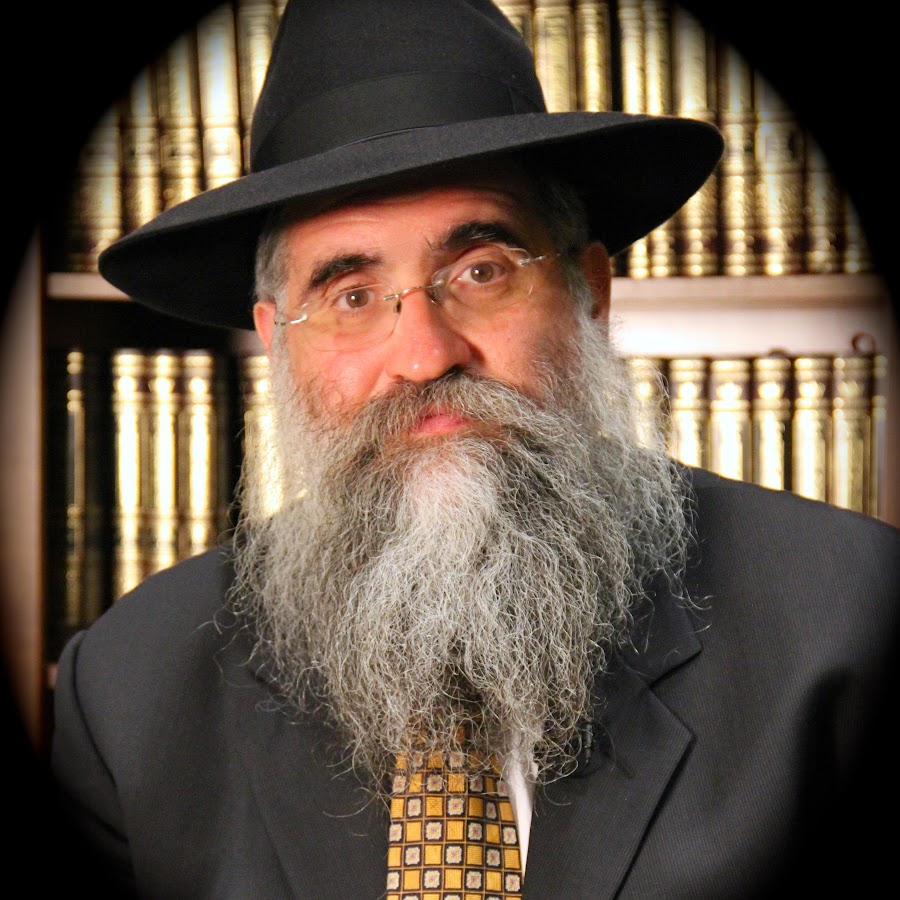
Shavuot Kabbalah Class קבלת התורה בשמחה ובפנימיות A New Kabbalah class by Rabbi Yitzchok Minkowicz Learn the Kabballah of: Shavuot. Matan Torah Rosh Chodesh Humilty Acceptance Light Love Keter Essence of G-D Ratzu Shuv Mitzvot Dwelling Place for G-D Unity Nisan – Malchut Iyar – Yesod Sivan – Tiferet Joy Based on A Chassidic Discourse of the Lubavither Rebbe מאמר בחודש השלישי תשכ"ט קונטרס ר"ח סיון - תש"נ בחודשהשלישי לצאת בני ישראל מארץ מצרים ביום הזה באו מדבר סיני A Project of Chabad Lubavitch of Southwest Florida 5620 Winkler Road Fort Myers, FL 33919 239-433-7708 www.Chabadswf.org [email protected]
Comments(0)
Transcript
Auto-generated transcript. Not time-synced to the video.
Welcome to this week's class on
Chassidus. Since we are getting ready
for the holiday of Shavuot, we're going
to learn a beautiful Chassidic discourse
from the Rebbe that he said in the year
Tav Shin Chof Tes, 51 years ago, and it
was certified and edited by the Rebbe in
the year Tav Shin Nun, 30 years ago.
It's based on the verse on the Torah
where it says B'chodesh Hashlishi, in
the third month, B'tzeis Bnei Yisrael
M'Mitzrayim, from when the Jewish people
left Egypt, we know the Jewish people
left in the month of Nissan, then then
there's the month of Iyar, so the third
month would be the month of Sivan. So,
the verse says Bayom Hazeh, on this day,
Bo, they came Midbar Sinai, to Mount
Sinai.
So,
the question is what day did they come?
Bayom Hazeh doesn't say what day.
So, we all know the Torah is very
ambiguous, but it's not because it's
trying to hide things, but because it
wants us to learn. And we know there's
different ways you can learn things in
the Torah. One of them is called Gzeira
Shava, where if you have in one
verse, like in this case, where we don't
know what day it is, but in another
verse, where
it specifies a day, and this verse and
the other verse have the same word, a
buzzword, so you connect the two. So,
for example, the Gemara says, since it
says Hazeh in this verse, and another
verse in the Torah says B'chodesh Hazeh,
Lachem Rosh Chodesh Hashana, over there
it's referring to Rosh Chodesh, so
therefore we know that this month this
month, when we're referring to Hayom
Hazeh, it's referring to Rosh Chodesh.
That's what the Talmud tells us. Comes
along the Gemara, and the Gemara says,
why are you learning it out from the
Gzeira Shava using the word Hazeh?
There's another word in this verse, when
they came to Bamidbar Sinai. Where did
they come to Bamidbar? Midbar is also a
buzzword.
And in with Bamidbar, we know in another
verse it says it's referring to Rosh
Chodesh, so we could also know it's Rosh
Chodesh based on the buzzword of
Bamidbar.
So,
the Rebbe asks the question, seemingly,
what says this question?
Hayom Hazeh, this day, my concern is
right now what day? So, they use right
away this verse, which is close to
hayom, to tell you what day it was. Why
use a verse a
word later? Also, later speaking about
the desert, here speaking about the day.
Obviously, the the Tosis has the
question, it has a real reason, a good
reason why it wants to use that word.
And what's the reason? So, we're going
to explore, and we will try hopefully
come up with a beautiful idea based on
Kabbalah, what's the reason why Tosis
wants to use the buzzword of midbar
versus the word hazeh.
So, we know what day they come, they
came Rosh Chodesh.
So, now the Aris is going to explain
what's the whole idea, why is it
important to know they came on Rosh
Chodesh, why hayom hazeh, and why the of
the Tosis want to use the word from
midbar. So, Aris says, we're going to in
order to understand this verse, we're
going to try to understand basically
what's the whole idea of Matan Torah.
So, we know that Matan Torah, what
happened was three things happened.
There was a noise in our Torah, Hashem
gave the Torah, there was Kabbalas
Torah, we received the Torah, and then
there's the Torah itself.
And in the verse where it speaks about
Hashem coming out of Mount Sinai, it
says, "Vayedaber Elokim es kol hadvarim
ha'eleh lemor." Hashem said all these
words, lemor. What does lemor mean? So,
the commentaries tell us that lemor
means Hashem is imbuing, empowering,
that any time and any place and any
future generations, when we sit down to
learn Torah,
Hashem is saying it with us.
Based on a verse, Ta'anis 21a.
So, what happened at Mount Mount Matan
Torah was not only did we receive the
Torah, but we also received the gift
that any time and any place that we sit
down to learn Torah, we are learning
Torah with Hashem.
Which is very, very powerful.
Now,
So, now what's the question What's the
connection between Matan Torah and
Shavuot? Matan Torah received the Torah,
very nice. Shavuot is one of the three
holidays of the year, Pesach, Shavuot,
and Sukkot. What's the connection
between Shavuot and Matan Torah?
So the Rebbe explains that we know that
what is what is what's Shavuot? Shavuot
is the holiday
that
we were commanded by God to count
Mimochorash shel Pesach from the second
day of Pesach, we count Sefiras HaOmer,
we count 49 days. What's the idea of
counting 49 days? To get ready for
Shavuot.
To get ready to bring the Korban Omer.
And we count every single day, and every
single day we have to transform
ourselves. We know every single day of
the first week is represents the middah
of chesed. We go through chesed,
gevurah, tiferes, all the seven middos.
The second week, all the middah of
gevurah, and so on and so forth. What
happens on the 50th day? So the Torah
says you should count seven weeks, but
then it says "Tishbach chamishim yom",
we don't count the 50th day. So the 50th
day is a gift after we did our avodah
for for seven weeks, and we transformed
ourselves, then we get the gift of
chamishim yom. What's chamishim yom? So
it's brought down in Kabbalah, and it
says that's the 50th gate of binah.
What's the 50th gate of binah in
terminology that we can relate to?
That's the gift of the sefirah of keter.
What's the whole idea of sefirah of
keter? Because we're we're coming to
Matan Torah, and we're getting the gift
of the Torah, and we're getting the gift
that we we're going to learn that every
time we learn Torah, we're going to
connect to Hashem. How can we connect to
Hashem when we learn Torah? We have to
be humble. Because if you're arrogant,
you're not going to be able to connect
to Hashem. As the Talmud says, "Ein
anavah yecholah l'lomed." So how do we
experience the ability of humility? By
doing the work for the seven weeks, and
we get keter. Keter has in it the
ingredients that allows us to experience
uh true humility. And based on this, the
Rebbe says that that's why the verse
says that it was in the the the third
the third month we came to Midbar Sinai.
Why Rosh Chodesh? Why do we specifically
have to come Rosh Chodesh? Because Rosh
Rosh Chodesh we know that's when the the
levana is born, the mo'ed ha'levana. And
we know what does it mean the the the
the moon is born? It's a little dot.
What's a little dot? A little dot
resembles humility.
So because it resembles humility and we
came on that day, that's the day that
we're that that's appropriate to work on
our humility so that we'll be able to
receive the Torah from Hashem. And not
only receive the Torah from Hashem,
we'll receive receive it with humility.
So therefore for for generations till
today, until Moshiach comes, every time
we we learn we learn Torah, we will
learn in humility and we'll be able to
connect to Hashem. So that's the
connection of what? Of matan Torah, is
to receive the Torah, receive the Torah
then, but even today when we learn Torah
we're connecting to Hashem. That's the
connection with Shavuos, cuz Shavuos
gives us the gift of kesser, and that's
why we came Rosh Chodesh to have the
humility, and through kesser we'll have
be able to have the humility to connect
to Hashem in a very beautiful way. So
that's one reason why we came on Rosh
Chodesh, humility.
There's another reason why we came Rosh
Chodesh, because we know it says, that
we mentioned already before, that when
we left Egypt, we had to go through
transforming ourselves. And
we went through all this we have to go
through seven weeks. So the first week
was all full of chesed, the second week
gevurah, the third week tiferes. And now
when it came to the seventh week,
malchus, so the within the first three
days we do chesed gevurah tiferes of
malchus. And we all know that the the
main sefiros is chesed gevurah tiferes,
the main emotional sefiros is chesed
gevurah tiferes. So once we accomplished
the full six weeks and we accomplished
already the 7 weeks, the first 3 days,
we are totally a complete human being.
So, on Rosh Chodesh, we finished
counting the third day of
the seventh week, so now we're complete
and we are ready to receive the Torah.
So, the Rebbe asks a simple question.
On one hand, what are we saying? That we
came here and we're humble, model
talavona. Nevertheless, we're saying
what? That we're complete. So, are we
complete or are we humble?
And the answer is
that we need both.
We need to be complete.
We need to be transformed, but after all
the transformation, we have to be
humbled. So, it's a double a double gift
that we need. We need to be transformed,
we need to be complete, but with the
completion, we have to have a sense of
humility. Then the Rebbe goes on to
explain the second half of the verse
that says that we came where? By Midbar
Sinai. Why is the Torah telling us?
Obviously, we need to know where they
came, but Midbar Sinai, so spiritually,
what is Midbar? Midbar represents the
whole idea of dibur.
Dibur means speech. What are you
speaking? So, dibur, Midbar is two
words, mem dibur. Mem is one of the
letters from the word hamanti. Every one
of the letters refers to like the way
we're humbled. So, the dibur, our dibur,
our speech is humble. So, Midbar is our
speech is humble. It means whatever
we're saying, we're saying the words of
Hashem. I don't I don't share my own
words, I don't share my own thoughts, I
share what Hashem has to say. That's
Midbar. You're only sharing what Hashem
has to say. What do you mean I'm sharing
what I have to say? There's no me, it's
Midbar. We have to be totally humbled.
Like we find, for example, in the
Midbar, a Midbar is a place nothing
grew.
What does it mean nothing grew? In a
place where things grow, what what is
growth? I think and I have an idea and I
feel, that's growth. What is Midbar?
Nothing grows. There's no intellect,
there's no my opinion and I think, and
there's no emotions, and how I feel,
nothing grows. What only thing that
grows is midbar, the dibur of Hashem.
The only thing that we're sharing is
what Hashem has to say.
And then we have the avodah of Sinai.
Cuz what's the whole idea of Sinai? Cuz
the Talmud says that the reason why it's
called Sinai because it was a sinah for
the almost oilam, people that wouldn't
accept the Torah, which means the idea
of breaking all the klipot and all the
sitra achra. So the avodah of midbar
Sinai is when you're totally humbled.
The only thing you're sharing is
Hashem's Hashem what Hashem has to say,
and all the klipot and the sitra achra
are totally obliterated and um
destroyed.
So the Rebbe asks now a question, what
did we just say?
The first part, yom i mazeh, that on one
hand
we are totally transformed, we went
through um seven weeks, six weeks, and
then three days, and the other hand
we're humbled. So are we humbled? Are we
are are are we are we complete? So the
Rebbe explains powerfully, and he says
as follows, what is the whole idea of
humility? So what we said how do we know
humility from? We said it's from the
levanah, cuz we're we count to the moon,
our our our calendar is based on the
moon. What is the whole idea of a
levanah? So levanah means it doesn't
mean the levanah doesn't exist. When you
say the first day of the month, it means
a tiny dot of the moon. Does it exist or
does Sure it exists. But what happens is
it's called molad halevanah. Molad means
it was born. What means it was born?
It's something, but it recognizes it
came from somewhere else. It's only a
creation. So true humility is No, you're
something. You were born. You were
created. You have tremendous qualities,
but you recognize where your qualities
came from. True humility is you're a
somebody. You have tremendous talents,
tremendous gifts, intellect, emotions,
understanding, ideas,
all levels of transformation, but you
realize where did you get all these
gifts from? You got them from Hashem.
And that's really what humility is.
Humility is when you have talent, but
you know where it came from. And that's
where the verse says, "Yom hazeh." What
does Yom mean? Yom means day. What does
day mean? Day means light, when it's
light outside. What does light mean?
When there's love. In Kabbalah, it says
that Yichud Elah,
the highest level of a union, the
highest level of relationship is when
it's light, when it's bright, when it's
full of love.
That's real union.
On the contrary, when it's dark, when
it's full of Gevurah, when it's the
opposite of love, when it's Yirah,
that's not Yichud Elah, that's Yichud
Detata. There's relationship, Yichud
Detata. A low level, fear, darkness.
That's not what we want. We want to have
the highest level of relationship.
What's the highest level? When it's full
of light, when it's full of love. That's
the highest level of relationship. So,
we want to have the highest level. We
want you to have light, full of light,
full of love, full of success. However,
all that you have to realize is coming
from who? From Hashem. And that's the
power of Rosh Chodesh. The power of Rosh
Chodesh is
there's a birth, but it comes from
somewhere.
We have tremendous gifts, but we get it
from somewhere. And based on this, the
Rebbe explains this is why Tosfos wanted
we should learn it out from Midbar. Why?
Cuz Yom hazeh is telling you Yom, your
day, your light, your bright, you're
full of great things. But, we have to be
humble, know where it came from. Midbar
is a higher level of humility. Midbar
means but everything I'm saying, I have
nothing to say. I'm just sharing what
Hashem has Hashem wants.
Sinai, all the Klipos Acharayim are
destroyed. So, Tosfos says, "If you're
coming to receive the Torah." So, you
need humility
to receive the Torah. So, why shouldn't
you learn the
Midbar cuz Midbar is a stronger
humility? It's referring to the saying
the divrei Hashem.
So, now you understand why Tosfos
wanted us to learn from deep Midbar from
da- from divrei from the that word of
Midbar. Why? Cuz that a higher level
humility. But, nevertheless, we don't
learn it from there. Why? Because the
truth is there's a certain power
in
having gifts, being a human being, and
nevertheless having humility and
transforming yourself. Why is that? How
is that? So, the Rebbe explain Rebbe
brings the famous
Maimon Chazal where it says in reference
to Shavuot and it says like this,
"Bishal she ikdimu Yisrael na'aseh
v'nishmah." When the Jewish people went
ahead and they said na'aseh before
nishmah.
So, then the angels came along and they
made every one of the Jewish people two
crowns and put it on their head. One for
na'aseh and one for nishmah. So, the
Rebbe asked a simple question. One
second. The first part of the Maimon
Chazal says, "Bishal she ikdimu." The
reason why they got the crowns is
because they said na'aseh before
nishmah.
So, why are they getting the crowns
based on the first half? Cuz they said
na'aseh before nishmah. The second half
says, "Why are they getting the crowns?
One was for na'aseh, one was for
nishmah."
What Why did they get the crowns?
Because they one was before the other or
because they said both?
So, the Rebbe Maharash explains, "Let's
try to understand what does this mean
they said na'aseh, we're going to do,
and what does it mean nishmah, we're
going to hear?" And Rebbe Maharash
explains that na'aseh means kabbalas ol
malchus Shamayim. Kabbalas ol malchus
Shamayim means I'm accepting Hashem.
Na'aseh means I'm accepting Hashem. Not
accepting this rule, that I'm accepting
Hashem. And obviously I accept Hashem, I
accept everything. What is nishma mean?
Nishma nishma means I'm accepting to do
all the mitzvot. Kabalat ol mitzvot, I'm
accepting to do all the mitzvot.
So,
and for example, he says, we know that
we say Shema, so there's three three
chapters of Shema, but the first two is
Vi'ahavta and the second one is V'haya
im shamo'a. What does Vi'ahavta mean?
Also kabbalat ol malchut shamayim. I'm
accepting Hashem. V'haya im shamo'a, I'm
accepting the mitzvot. Or for example,
another another way to describe the
difference between the first parsha in
Shema and the second parsha in Shema,
the first parsha in Shema is ratzui, I
want to cleave to Hashem, mesirut
nefesh. The second one, V'haya im
shamo'a, is shuv, I'm bringing it down
to reality.
Now, we know that what do you have to
say first? First you have to say Shema,
Vi'ahavta, then V'haya im shamo'a. Why?
Because you can't go to accepting
mitzvot without accepting Hashem.
So, therefore, the Bnei Yisrael, they
said na'aseh v'nishma means the same
idea. They did the na'aseh na'aseh the
na'aseh they did the na'aseh first, they
did kabbalat ol malchut shamayim first,
and then they went over to the idea of
nishma, of accepting the accept
accepting the the mitzvot.
Now, why did they have to have na'aseh
before nishma?
Listen, why na'aseh before nishma? So,
Rebbe explains because they received as
a gift two crowns. And what is a crown?
A crown is makif. It's something which
is you cannot internalize, it's very
very powerful. So, in order to draw down
that powerful energy of makif, you have
to have na'aseh before nishma, which
means that when you're saying nishma,
even though you're accepting specific
mitzvot, what you're doing is as as as a
introduction, and the baseline is
kabbalat ol malchut shamayim. So, even
when I'm accepting the mitzvot of
Kabbalas El Mitzvos, I'm accepting it
after I did what? I did Kabbalas El
Malchus Shamayim.
And that's why you had why you have to
have two crowns. Very simple, because in
the first NASA,
which means I want to have rotzei, I
want to have a state of ecstasy,
Kabbalas El Malchus Shamayim, that's
when the mallei we go up into saver, we
go into the crown. On the other hand,
when we we're doing Kabbalas El Mitzvos,
that's when we're drawing down Kesser
Makif down into this world. And um
So, now the Rebbi explains, so but so
even though you're drawing it down to
this world, so why is it important that
the NASA should be NASA should be first?
And the reason is because Kesser is a
very very high level, and it's a high
level which is totally not connected to
any of the Sefirot. So, therefore you
have to have to have the NASA first. The
Rebbi explains as follows.
The Rebbi says, for example, this idea
of Kesser. What does Kesser mean? It's
totally disconnected.
Totally not connected to to to reality.
For example, we know in Kesser there's
two levels. There's Atik, the higher
level, and there's Arikh, the lower
level.
Atik is in practical terms called
ta'anug, a very very deep pleasure.
Arikh is what? The ratzon.
In ratzon, so let's say you have you
want to do something. So, it's not a
logical thing. It's not a a feel thing.
Ratzon, I want to do something. But you
what do you want to do? So, you can you
say you want to do something specific.
Sometimes you have a ratzon, I just
want. What do you want? I don't know I
want to I don't know what I want. So,
that's ratzon where it's not connected
to reality.
A temper tantrum. I want I want. What? I
don't know I want something. That's not
reality. But then you have a ratzon
which is connected to reality. So,
ratzon has both where it's disconnected
and connected. Ta'anug, and the real
level of Kesser is much it's way out
there. It's not connected to reality.
When Bene Yisrael, what did they get?
They got two crowns. They got beyond
reality. Why? Because even though
the first one Na'aseh were willing to
accept Ol Malchut Shamayim for sure, it
makes sense why they got the crown. But
when they said Kabbalas Ol Mitzvos, why
did they get the crown? And the answer
is because they got it, they said
Kabbalas Ol Mitzvos as an introduction
after they said Kabbalas Ol Malchut
Shamayim. So even though they were
accepting the mitzvos, but because they
accepted first Hashem, so when they
accepted the mitzvos, it's part of it's
part of them, it's part of the process
of accepting Hashem. And therefore they
they got the two crowns, which is
basically totally makif, which is above
and way beyond um connected to any any
type of reality because it came as an
introduction from the whole idea of
Na'aseh.
Now,
um but then the Rebbe says, "One second.
If that's the case, so what's the
difference between Na'aseh v'Nishma?
If it's both bittul, accepting, so
what's the technical difference between
accepting Hashem and accepting the
mitzvos? And especially what we're
saying is that accepting the mitzvos
came after you accepted
you accepted Hashem." So the Rebbe
explains as follows, that um
there's something which is called ratzui
when you have yearning of ecstasy.
So there's different types of yearnings
of ecstasy. You can want to have you
want to cleave to Hashem.
Why do you want to cleave to Hashem?
Because you want to cleave to Hashem.
So what's cleaving? You're cleaving.
It's all about you.
Or you can say, "No, no, no. Really,
I want to cleave to Hashem, but I know
Hashem wants me down here. But on the
other hand, I need Hashem. I need I need
energy. I need godly light. So I want to
go up to cleave to Hashem so that I can
get the light to bring it down to this
world." So there's a big difference. If
it's just ratzui, Do want to cleave to
Hashem, it's not that's not about
Hashem, it's you. You want to
This interest of having a godly or
spiritual experience. But if you want to
do what Hashem wants, you want to be
down here doing living in a physical
world, doing physical mitzvot, but on
the other hand, you want to have
spiritual energy, so you're going up to
get some spiritual energy to bring it
down to reality. So it's a ratzo, the
whole purpose of the ratzo is for the
shuv.
So, back to our case. When they said
"Na'aseh", you can say "Na'aseh, Hashem
accept you." No, no, no. That's not what
they said. "Na'aseh, Hashem I accept
you. I want to be with you. I'm ready to
do anything, but I'm ready want to do
anything with you so that I can be
nishmas, I can take that powerful energy
and bring it down to reality."
And then the nishmas I'm doing based on
the power of that original na'aseh.
Which what happens then is
you're actually going much deeper into
what Hashem wants. As the Rebbe uses the
term, you're actually going into the
idea of what does Hashem want? Does
Hashem want me to leave this world? Does
Hashem want me to live in this world?
And the answer as we all know that ratzo
Hakadosh Baruch Hu liyos lo yisborach
dirah betachtonim. Hashem wanted what?
We should make a dwelling place down
here. What does that mean? We should
draw down the infinite light of Hashem
in this world.
Now when a person
is following what Hashem wants, meaning
to say he says, "You know Hashem in a
dream. Hashem is this godly, infinite,
spiritual
human being.
He want He created a finite world. He
put us here, and he wants us to bring
godliness into this world. How do we
bring godliness into the world? So we
have to first and foremost we have to
accept we're doing whatever Hashem
wants. So kabbalas ol malchus shamayim
means I am doing what Hashem wants.
That's the first.
So it's not about me.
Yes, I'm me and I have all my gifts that
God gave me, but all everything he gave
me comes from him and I want to do what
he wants. Kabbalah shamayim
So therefore, I want to go I want to
connect to this infinite light, but I
know that the goal is not to take a
flight up and stay there. The goal is I
want to go and get some spiritual
energy, but right after this I want to
bring it back down to this world. Why?
Cuz I want to
fulfill God's dream of Leah's broken the
Now, who had that dream?
Atzmus, Hashem himself had that vision
and that dream to make a deero, to make
a dwelling place to the time in
So
when
Israel said NASA, that means Kabbalah
shamayim willing to do whatever Hashem
wants.
And when they said nishma, means I'm
willing to take all that powerful
ecstasy that I have and bring it down
into the deal with the time in down to
this world. What does that require?
from us?
That requires tremendous humility.
Cuz it's not about me.
It's not about what I want. I am willing
just to follow protocol.
Hashem wants deal with the time in
great.
NASA, I'm willing to accept you as
Hashem.
And then I'm willing to do all the mix
vote and bring down the light down to
this world. But when I'm drawing down
the light into this world, what type of
light am I drawing down? Because this
mix will make sense or I appreciate this
mix for no, because I want to connect to
the infinite Hashem. I want to connect
not to external and light and it feels
good and it feels great and it makes
sense. No, no, no, I want to connect to
the essence of Hashem. That's what I
want to connect to. Atzmus.
And because I want to connect to Atzmus,
NASA, I'm ready to do anything.
I'm ready to come out I'm ready to
accept you as Hashem and then I want to
bring it down to this world.
And that's really what happened on Rosh
Chodesh Sivan. Rosh Chodesh Sivan we
came to the mountain and we came and we
said, "Yes, hayom, it's light and it's
full of love and it's all great.
However,
it's all about Hashem. It's not about
me."
Or like midbar, I am willing to just I
want to speak whatever Hashem wants me
to speak. And all the klipot totally get
eradicated and up to the point where we
can actually draw down Hashem and
therefore Rosh Chodesh we can even reach
a level of what? A bitul, not only bitul
ayin yesh, but bitul hametzius, we can
totally become nullified. And based on
this the Rebbe explains a deeper idea of
why the verse says "Bayom hazeh" on this
day. Cuz we know the word "zeh", this,
the only one that you can say "this" is
only in Hashem.
Cuz the only one that really exists, for
example, "zeh Keili v'anveihu". What do
we say? "Zeh", this.
What this? Referring to Hashem is our
God and therefore I'm going to beautify
him. Why? Cuz the only one that really
exists, "melo kol ha'aretz kevodo".
Who's the only one that exists? Who is
the only one that you can say "zeh"?
Only in Hashem. Why? Because not only in
Hashem, but on external but atzmus, the
essence of Hashem. Because
anything
that
was created by something else and
anything that exists because someone
else created it, you can't say "zeh" on
it.
The only place you can say "zeh" is on
Hashem.
So therefore,
it's so beautiful.
"B'chodesh hashlishi", in the third
month, they left Egypt, they come to to
Mount Mount Sinai. "Bayom", they're full
of light.
They're full of love. They feel like
they transformed themselves. "Hazeh".
What does "hazeh" tell you? Who's the
only "zeh"? Who's the only one that
exists? Atzmus.
The only one that exists is Hashem.
And because the only one that exists is
Hashem, what am I? Hashem created me.
So, therefore, all my tremendous talents
and gift,
I'm humbled. Cuz the only one that's
really existing is Hashem. I don't even
exist.
And based on this, the Rebbe explains
why it says when they came, what does it
say later on the verse? Bamidbar Sinai.
What did Midbar accomplish?
That totally humbled Sinai. There was an
emasculating to anyone that wouldn't
accept Hashem. Why? Cuz the fact that
Hashem chose us, and the fact that
people didn't want to accept Hashem,
Hashem was willing to give the Torah to
anybody. That means we didn't come When
Hashem was giving willing to give the
Torah to anybody, it wasn't because
someone was better or worse. Hashem had
anyone. So, Hashem was willing to give
the Torah to anybody because he was
giving it from a place where there was
no difference between one person and the
other person.
There was no difference. He was willing
to give it to anybody. Which in Hebrew
it's called it was coming from a place
of bechira chofshis. Hashem didn't
choose one over the other for this
reason.
And he got he just gave it freedom of
choice. The only The only place
where you can have freedom of choice is
only in Hashem. In only in the atzmus of
Hashem. And because it came from that
level that place, we were able to have
true
and emasculating to our own evil
inclination.
And because of that, we were able to
transform our animal soul.
How?
By revealing atzmus.
Because when you reveal atzmus, you can
have opposites. What are the opposites?
On one hand, I exist, and it's light,
and it's love, but nevertheless, it's
all Hashem.
And there's a world, but the world is
trans- it's transformed. Now, that's
what happened on Rosh Chodesh. There's a
world, the world that got response, but
in order for us to receive the and that
that's the power of Rosh Chodesh of Yom
HaZeh, but in order for us to receive
the Torah on on already on on Shavuos,
then we had to go to the the
higher level of humility, the level of
midbar, where basically whatever we're
saying is the divine Hashem, where
everything is totally nullified, and
then we were able to receive the Torah,
cuz the Torah actually is from the is
from Hashem himself. That's literally
from the Etzem of Hashem, and that's the
power what? Of Matan Torah itself.
And then the Rebbe goes on to explain
where it says "BaChodesh HaShlishi". So
the Rebbe was saying this idea we spoke
about of Rosh Chodesh, what's Rosh
Chodesh? We have all our tremendous
gifts, but nevertheless we're humble,
seemingly why isn't it every every Rosh
Chodesh? Nevertheless, the verse says
it's only when "BaChodesh HaShlishi".
Why was it only in the third month of
Sivan? The Rebbe explains beautifully.
The Rebbe says as follows. We all know
the first month
month in the Jewish calendar when the
Jewish people became a people is the
month of Nissan. And we already
explained in one of the previous
Kabbalah classes that when you start
becoming a people you have to start
going from the bottom to the top. You
don't start from the top to the bottom.
So you from the Sefirot we start from
the bottom. The first month is the of
Nissan is the month of Malchus. That's
what happens in the first month,
Malchus.
Then as we graduate out of Malchus, the
second month
is the month of Iyar is actually called
the month of Ziv. In Kabbalah it's
called Ziv, which means it's a ray. We
start to get to a ray of the emotions,
which is the emotions of Yesod. So the
month of Nissan is what? Is Malchus. The
month of Iyar is Yesod, the way it goes
into Malchus.
And the third month is we go go up the
middle channel, it goes into Tiferes, in
beauty, because Tiferes is where the
name Yud Kay Vav Kay is totally
revealed. The shame atzum is revealed.
So by chodesh has shlishi again
first month is malchus, second month
Iyar is
yesod, which is only a ziv array, and
the month of Sivan is the tiferes, which
is the essence of Hashem's name. The
atzum of Hashem is revealed, and because
when you have the atzum the essence of
Hashem is revealed, therefore only and
specifically this powerful gift of
humility
exists only on the month the third
month, the month of Sivan.
So the month of Sivan has the power you
can be you can be full of light yom you
can be full of light, but nevertheless
and love it all the great things, but
Hashem is revealed. Because Hashem is
revealed we're able to experience the
greatest humility possible.
And the Rebbe says, by preparing
ourselves in the third month, again the
month of tiferes, where the essence of
Hashem is revealed, and specifically in
Rosh Chodesh Sivan, which is going to be
this Sunday, by transforming
our animal soul, like we mentioned
before the idea of Sinai, getting rid of
all the klipos, and being humble the
level of midbar in the highest level,
which means the level of our godly soul,
and specifically the Rebbe says, when we
are
ish echad b'lev echad, cuz one of the
the biggest powerful gifts of of the
Jewish people was Hashem said, "Look,
they're all here together." Kish echad,
they're all unified. Now I'm ready to
give them the Torah. When we stood there
in a unified way, Hashem opened up
Hashem's heart and melted Hashem. The
biggest gift we can give to Hashem, and
the way we can melt Hashem's heart
is by being unified. Cuz when you're
unified Hashem said, "I'm ready to give
them the Torah." Why? Cuz we Why Why
would Hashem say we're ready to give
them the Torah? Because where do we
differentiate I'm this and you're that
and I think better and worse and so on
and so forth? That's on lower levels.
But when you go into the essence, where
we all come from our shorish and our
shamah comes from the atzmus. And in the
shores, we're all one. So, we behave
unified,
we're connecting to the atzum of Hashem.
So, we're we're opening up the atzum of
Hashem. As we open up the atzum of
Hashem, Hashem says, "Here, sure, I'll
give you the Torah." So, every single
time we are unified with one another, we
literally open up the greatest channel
for the greatest blessings. And we saw
Matan Torah, we see the Torah because we
came unified.
And through the fact that we'll be
unified today, the Rebbe says, we'll be
merit
to receive the Torah. But now, we
receive the Torah physically. We receive
it the simcha, because the greatest gift
you can have is not only to have the
Torah, which is great, but to have the
Torah in a way of simcha, we're really,
really happy. Spiritual happiness,
physical happiness, emotional happiness.
Over pnimius, we'll receive the Torah
not only as a book on the shelf, but
internally, it'll become part of who we
are. Well, our our lives, our families,
our communities will be bright from
learning Torah and connecting to Hashem
the nicest of our Torah. And we'll not
only achieve it for for for Shavuos, and
for Matan Torah, we'll achieve this for
a whole year. So, this discourse is a
beautiful discourse, cuz it teaches us
how to get ready for Matan Torah by
realizing all the tremendous qualities
we have. But remembering all the
qualities we have is a gift from Hashem.
And because it's a gift from Hashem,
we're totally humbled to Hashem. And
because we're humbled to Hashem, we're
ready to accept Hashem, we're ready to
accept his mitzvos,
we're ready to get along with everybody.
And when we get along with everybody,
we'll we'll draw down the greatest
blessings, we'll connect to the powerful
blessings of the month of Sivan, the
month with of the Tiferes, the month
where the atzum of Hashem is revealed.
And God willing, we'll touch Hashem in
the most beautiful place that Hashem
will reveal himself and grant us the
greatest gift of the revelation of
Messiah to come speedily in our days.
Thank you so much for joining us for our
beautiful Hasidus class.