0:00 / 0:00
Shavuos - Combining Heaven and Earth
4 views
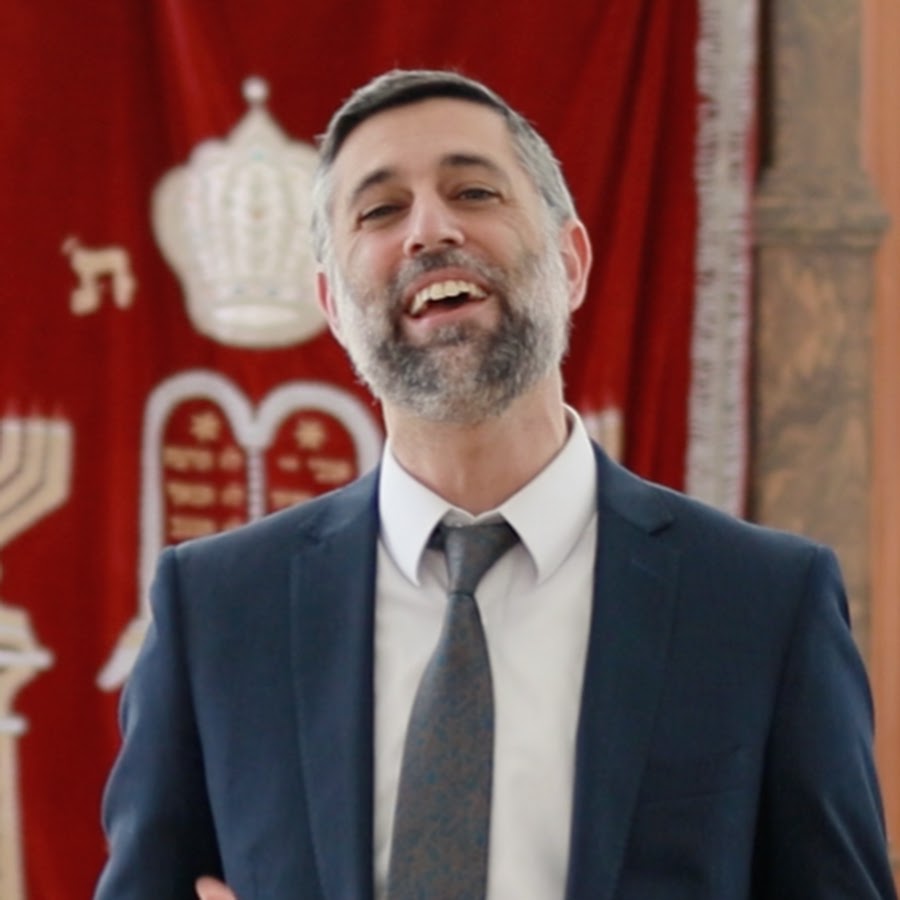
Why was the Torah specifically given in Sivan and not in Nissan or Iyar? Why did the king in the analogy consider parading his princess first on an elephant, then on a horse, and finally on the shoulders of a human being? What is the concept of the human being who 'talks, claps and dances?' Why did the heavenly hosts cry at the giving of the Torah, while those on earth were joyous? Why did Hashem ask the angel of darkness to step aside in Nissan, when the world was created, then invite him back in Iyar, and finally speak of the human being who could 'see both light and darkness?' Find out in this week's Parsha Podcast.
Comments(0)
Transcript
Auto-generated transcript. Not time-synced to the video.
You're listening to the Weekly Partial
Podcast with Ari Goldwag, recorded with
Hashem's never-ending assistance in
Ramat Beit Shemesh, Israel, 5786 2026.
This week tonight, tomorrow we have
Shavuos, Shabbos if you're in Eretz
Yisrael, we're going to read Parshas
Nasso. If you're in Chutz La'aretz, it
will still be Shavuos.
So, in the coming weeks, we're going to
have that offset.
We'll deal with that when it comes. I'd
like to share with you some thoughts
about Shavuos. I'd like to share with
you some midrashim that relate to
Kabbalas HaTorah.
And I want to preface it by saying that
uh this morning
I
was struggling to find something to
speak about.
And um
the name Rabbi Mordechai Fochler came
up,
who is my sister's father-in-law, was my
sister's father-in-law.
And there's a sefer from Rabbi Mordechai
Fochler, who was a rav in South Africa
and also in the UK.
And there's a sefer and he talks he has
essays on Pesach and Shavuos.
And in that sefer
so he um brought some midrashim which I
found quite interesting.
I'm going to
expound and expand a little bit
of my own type of thinking about them
and I I hope to mention a little bit of
what he says as well.
Then he just says
Shavuos, we celebrate Kabbalas HaTorah,
we've been counting down the days,
counting up.
Seven weeks, seven times seven.
We're getting to the 50th day tonight.
And on the 50th day Hashem, right we
count from Pesach until Shavuos.
We're going to see, we're going to talk
about why is it that the Torah was not
given immediately
in Nissan, right after we left we left
Egypt.
And the midrash is going to address this
point.
But we've been counting down.
Counting down from
Pesach in Nissan
through Iyar
and now we're in Sivan.
And this is when we receive the Torah.
So I'm going to read to you the measure.
It's in the Sifta Rabati, I think.
Aseres Hadibros.
Parshas Matan Torah.
The measure says,
the 10 Commandments,
the
section of the Torah which speaks about
the giving of the Torah,
Amru Ruach Hakodesh al yedai
Hamelech, Melech Yisrael.
>> [sighs and gasps]
>> Divine inspiration spoke through King
Solomon
and said as follows. This is a pasuk in
Shir Hashirim. Pasuk says, So in Shir
Hashirim, Song of Songs, chapter 5 verse
13,
Lichayo karugas habosem,
migdalos merkachim.
His cheeks
are like a a a beautiful
um
fine smell.
A a tower or towers
of
fine smells.
Sifsosav shoshanim noflos mor over. And
his lips are like roses
that they have again a beautiful smell,
the smell of mor. In Hebrew it's myrrh,
m y r r h, if I'm not mistaken.
Passing you you pass by and there's a
wonderful smell.
So the pasuk in Shir Hashirim is
speaking about Hashem's praise of Klal
Yisrael, the Jewish people,
that we with our cheeks and with our
mouths, with our lips,
there's something unique about us.
We smile.
We speak.
And that's unique. And it's related, as
we'll see soon,
to the concept of the giving of the
Torah.
Says the measure, Can I give me amar
Hamelech hazeh?
Corresponding to what did King Solomon
say this pasuk?
Lo amar ela keneged osei teshuvah.
It's referring to something unique and
special about this time, the time of the
giving of the Torah. K'she nitna
ha'Torah l'Yisrael.
When the Torah was given to the people
of Israel, "Mish da'agu kol ha'olam
kuloi."
The whole world shook.
Okay?
The whole world is shaking.
"Kol ha'olam kuloi."
And this comes to Aitz Chaim al
ha'Torah, and I would say
that it's what it's what the world looks
like
when the Jewish people are facing
redemption.
And here, we're talking about first we
had the Jewish people go out of Egypt,
which was our physical redemption,
but then 50 days later we received the
Torah.
We have a spiritual redemption.
Having physical freedom
is only important in so far as
we can fill our physical freedom with a
spiritual freedom.
Okay?
So,
whenever there's a
freedom, whenever there's a redemption,
the world shakes.
Right? Think about what's going on now
in the world.
Klal Yisrael, as we're moving into the
age of Mashiach, so the whole world is
shaking
from those who wish to prevent Klal
Yisrael from
holding on to and taking possession of
Eretz Yisrael.
Right? That's what's going on with the
war with Iran,
with the wars that have happened over
the last
decades.
There's a shaking up of the world that
happens
when Klal Yisrael is about to receive
the Torah.
This comes to Aitz Chaim al ha'Torah, so
what do the nations of the world
naturally do?
They come to Bil'am.
Bil'am was the prophet of the nations,
Bil'am the wicked.
Remember the shamayim v'ha'aretz
v'ha'olam ha'olam nidonim k'veishalom.
People sensed
that something huge is about to happen,
something great is going on.
So, they said, "Maybe Hashem is about to
bring a flood to the world as he did in
the times of Noah.
Or maybe the world is being judged as it
was before.
So, in response to this Russia said, and
he said appropriately, he said
correctly,
Kings of the land,
do not do not be afraid.
Don't don't get tumultuous.
Those who are in the land
came.
The one who dwells on high,
which is the one who dwells in heaven is
coming
in his honor to to reveal himself upon
his children
with compassion.
An amazing thing.
Hashem has come with his compassion. He
has appeared to give to his nation the
Torah
and wisdom
and instruction
to those who are his beloved ones. Okay,
so there was a sense, there was a
recognition amongst the nations of the
world, the leaders of the world that
something big is happening. Something
huge is happening.
They were afraid. They thought maybe
they're going to be judged, destroyed,
who knows what.
And tells them
Hashem is revealing himself to the
Jewish people.
Hashem is now going to guide them. It's
very interesting when we look at this
and we'll see more about the connection
between heaven and earth.
As we look at this we see
that he's talking to or I don't know if
it's a probably based on a sounds very
sounds like something in
in uh
somewhere.
But he's saying
those who dwell upon the land don't
don't get all confused and sit tumult as
they say in Yiddish.
Don't get all
bothered and worried because Hashem who
dwells on our in the heavens, the
heavens are coming down to dwell on the
earth.
Which to me means to say
that
it's true in a sense that
there was a judgment that was going on
for the world. Right?
We know Hasal say that
Hashem turned to each of the nations of
the entire world and said to them, "Do
you want to accept the Torah?" Each of
them said for their own reasons, "No."
Which means to say that there was a
judgment going on.
Cuz all the all those things that Hashem
said were all already they were already
obligated in the was the Shimon says
B'nei Noach.
So Hashem appears
but he saves the world as it were
by giving instruction to the people who
will accept it. And ultimately, as we've
seen over the last few thousand years
the nations of the world also to a
certain extent
accept
that which it says in the Torah.
Christians on their level
the Muslims on their level.
Now the Medrish
the Medrish is giving us
like kind of a key a a
an an opening to understand
that everyone's affected by the Torah.
And it's a connection between heaven and
earth.
But let's see. The Medrish says
something further which is remarkable.
V'lamah nitnah Torah b'Sivan?
B'lo meisharim orachim.
Medrish says, "Why was the Torah given
in the month of Sivan?" That's the month
we're in now. We're at the beginning of
Sivan. Love Sivan.
Why didn't Hashem give the Torah in
Nissan? They should have come out of
Egypt and receive the Torah immediately
or maybe in Iyar
the month that immediately follows. Why
did it take a whole 50 days? Why do we
have to get
to a third month?
says something which
on the surface is a little bit
opaque, but we're going to hopefully
understand it.
It says
this is an analogy to a king
that wanted to make a chuppah. He wanted
to
show off his daughter.
He's marrying off his daughter. He wants
to show her off.
>> [snorts]
>> One of the One of the king's advisers,
particular person said,
The first adviser said, "Look, you want
to show her off. You want to show off
your beautiful princess.
You want to show off, right? And
obviously Hashem is the king, and
Klal Yisrael is the princess.
You want to show her off, so put her on
top of a huge elephant.
She'll be high up.
She'll be seen by everybody.
Make a beautiful
uh display.
Bring her around and and show her off to
all of the great ones of your kingdom.
I'm going to appeal to the fire.
Another person said, "Look,
to put her on top of a
uh an elephant an elephant is very high.
It's It's not so
It's not the same level of splendor.
Like when something is too high and far,
you know what I'm saying? It's hard to
see.
I'm sorry. It's not like
an elephant is quite an ugly animal.
It's not like if you want to
express how great she is,
put her on an animal that's more, you
know,
beautiful.
Not so Not so tall.
People won't to crane their necks.
Another key of Sisyphus.
Instead, put her onto a horse, which we
find that Mordecai It was done for
Mordecai.
And then show her beauty to all of the
great ones of your kingdom.
On
there was a third advisor of the king
who said, "Look,
it's true, there are advantages of each
of these
and disadvantages. The elephant is too
tall, maybe. The horse is very nice.
But
But they're missing something and that's
the mouth, which remember in the Shir
Hashirim, the beauty that Hashem
referred to,
the the cheeks that smile,
the the lips that speak.
So, this third wise man said, "If you
want to show her off, put her on the
shoulders of a human being.
Let her sit on the shoulders of a person
who can speak, who can sing, who can
clap, who can dance." Those are That's
what it matters, it says.
Mouth to speak,
hands to clap,
feet to dance.
Ours is Yafia.
And you can And it's right to put her
onto the shoulders of a human being
to show off this your your daughter's
beauty.
She did not want to give We need to
understand what this means.
This is the opaque part. She did not
want to give the Torah in Nissan and not
in in Iyar.
We have Nissan Mazel Nissan to Iyar,
mazal Iyar shor.
The
zodiac sign and the zodiac signs
are
of Jewish origin,
guys.
So, the zodiac sign of Nisan is the the
lamb
or the sheep.
And the zodiac sign of Iyar is the ox.
So, those are two different types of
animals. They represent two different
types of things and or perhaps we'll get
a little bit of a deeper insight shortly
into what they each represent. But,
they're animals.
And if you're going to put the Kabbalat
Torah, the crowning of the of the
princess, the Jewish people, if you're
going to make that
occur in Nisan, the character of Nisan
is related to
a sheep and the character of Iyar is
related to an ox.
Ein Eloheinu Melech Ha'Olam LeChadesh
LeShabeach.
So, you're you're putting the princess
onto the wrong month, onto the wrong
animal,
the wrong type of being.
Lakach Hashem Hakadosh Baruch Hu HaTorah
b'Sivan.
That's why Hashem gave the Torah in
Sivan. Why? Mivne sh'mazal Sivan
Te'omim.
What is the zodiac sign of Sivan? The
zodiac sign of Sivan is
the twins.
U'Te'omim Adam Adam.
And twins are a human.
When you have twins, it means two twin
human beings.
And
V'Adam Yesh Lo Peh Ledaber V'Yadayim
Lespok V'Raglayim Lerakod.
The human being
has ability, has a mouth
to speak, hands to clap, feet to dance.
So interesting.
Mouth to speak, hands clap, feet to
dance.
So,
what is the measure saying? The measure
is saying that there's something special
about Sivan that happens. There's
something unique about the character of
Sivan that it it's like carrying, it's
like being carried. The Torah is being
presented. The The chuppah of the Jewish
people is happening in Sivan.
In the month of the human beings, of the
twins.
Of the twins.
You could also say, "Why is twins? Why
couldn't it be, I don't know, the
archer?"
Well,
in Chazal, it's it's the actual the
the bow and arrow itself. So, it's not
the archer who's a human. But, what's
the what's the concept here?
What's the concept here?
So, I'd like to share with you
there's there's a whole section here in
the measure,
which I I I don't want to read it
inside, it will take too long, but I
I'd like to just mention it because it's
also very much related to the concept.
And then we're going to see inside
the part of the measure which really
gives the deepest hint as to what's
going on here.
The measure says that it's a famous
thing.
When the when the Torah was given, so
the angels
were upset. "Why are you giving this
Torah to human beings? Why are you
letting this amazing spiritual
powerful teaching, why is it going down
to earth?" They wanted to stop Moshe
Rabbeinu.
The measure here says
that they were crying.
The angels were crying.
The heavenly hosts were crying.
And
you know, let's read it inside cuz it's
so beautiful.
K'she natan Hashem Torah l'Yisrael,
eretz samecha v'shamayim bochim.
When Hashem gave the Torah to the people
of Israel, the earth was rejoicing and
and the heavens were crying.
U'mipnei mah eretz samecha v'shamayim
bochim? Why was the
earth Why was
the physical realm so joyous and why
were the heavens crying?
It says the magician of the martial it
says
imagine you have a king who wants to
make
a hooker for his daughter but they crack
my necklace with slight
so the people of the royal city
they didn't come
the city dwellers the ones who live near
the palace they didn't come
learn us
they didn't give any praise but it from
this one of the shower
the people of the outlying cities the
suburbs they came
they praised the king but the shower the
milk
they had all types of instruments
harps and violins
the the king put out a proclamation
saying where are you guys? Why didn't
you come? You guys live near the palace
you understand the great honor the king
you know how to praise the the princess
properly why didn't you come?
the earth gave their praise
think about it even Russia
understood that something momentous was
going on
the earth gave its praise
the heavens did not give their praise
our God is good who
will be the yes men of arts you guys
should be giving all of the praise you
understand the spiritual value
of the Tyra
you understand the my daughter which is
the Tyra
you guys are you understand it more so
than
the physical realm, the people on the
land.
They said that the earth needs to
be the one to give the praise.
Right, think about it. Who is the king?
I I don't know. Who does the king take
care of more? The people in the royal
city?
All of the dignitaries? Or does he take
care of more? Is he more concerned about
and worried about the people who live in
the outlying areas? I would say that the
dignitaries can take care of themselves.
They're rich. They're they're okay. The
the king is more concerned about the
people throughout his kingdom.
So, in a certain sense,
the the the Torah, which is given to to
mankind, for us to be able to revel in
and to
have a
a deeper
reality in this world. We live in a in
the physical realm.
We're going to infuse the physical realm
with the spiritual.
So, that's those who to whom the Torah
is given, so it makes sense for them to
praise.
The heavens were sad. We're going to
give praise?
We're losing the
There's a certain thing that happens.
The heavens are crying.
And I And I think that what it's saying
or what it's hinting to here is that
the world doesn't come to completion
with the animals,
with the
For some reason, Nissan represents a
certain aspect.
Represents
the animal aspect of the world, perhaps.
Or as the Midrash says in the
continuation, it represents the light.
Iyar represents darkness.
Let's Let's read the Midrash inside
before we run out of time.
So the magician interesting thing.
Why did I show create the world in
Nissan
and not in year?
We all think that the world created in
Tishrei it was in potential. It was
brought into actualization in Nissan.
It's a conversation for another time.
But why did I show create the world in
Nissan?
And not in a year because at the time
when I show created the world
He said to the
to the
the angel of darkness
move out of my way.
I want to create the world with light,
which means to say there's a physical
aspect which is called darkness and
there's a spiritual aspect which is
called light.
I show wants to create the world with
light.
Okay, so he says to the darkness move
out of the way.
So
Nissan is the month of light.
The the
angel of darkness is compared to the ox,
which is the physical aspect as we said.
So I show says to this ox to the angel
of darkness move out of my way.
If you don't move out of my way, I'm
going to scream at you.
So so I show says I I want to create the
world with light.
What So I am out of my way, right?
So
the angel of darkness says to Hashem,
"What do you create after light?"
And we're like, "Hashem?" He says, "The
second thing I'm going to create is
going to be darkness, right?"
Hashem created the light and dark.
This is where it comes to Shamayim and
Aretz.
First he makes the Or and then he makes
the Choshech. He makes the darkness.
So, what happens? That's that's Iyar.
The Maggid understands. V'achar Choshech
Mata Beru v'Imalay T'omim.
After the second month, which is Iyar,
which is representative of the physical
aspect versus the spiritual, then is the
physical.
What happens in the third month, which
is which is Sivan, I'm related to I'm in
now I have twins.
N'mata Beru T'omim she'also l're'ot Adam
b'Or u'v'Choshech.
The human being can see light and dark.
The human being has the ability to see
light and dark.
U'v'Shamayim Adam Adam.
So, so here's the depth
of what the Maggid is saying. We're
actually not going to get to what Rebbe
Nachman said,
but I do appreciate him giving me this
Maggid to
to look at and to explore deeply.
What the Maggid is saying here is like
this. Listen in. This is it. This is the
bottom line.
The human being
is
a combination of heaven and earth,
of light and dark.
He has twins.
Twins. He's a human being. The human
being is twins.
This we find also that the twins refers
to Hashem and Klal Yisrael.
Y'notzei T'masei, where the
T'masei, the the perfect one of Hashem,
and also the T'aim, the the twin as it
were, because we have within us darkness
and light.
We have within us this combination.
We don't just have heaven. Heaven is sad
when the Torah is given away. But the
Torah is the heavenly aspect of reality.
And when we receive the heavenly aspect
of reality, we infuse our physicality,
which is the darkness,
with light, and we become the twins.
We become the twins.
Nisan is light. Nisan is creation.
Iyar is darkness.
Right? Think about it.
We have Nisan,
and we have the the uh
the miracles, we have the revelation of
Hashem
letting us out. But then what happens?
Iyar is a time of work.
It's a time of darkness. Where's the
Torah? We didn't get the Torah yet.
Right? I would say, if you think about
many important events over the last
75 years or so, a little more,
have occurred
in Iyar.
It's the physical aspect
of the redemption. Klaal Yisrael's
returning to Eretz Yisrael.
There's a physical aspect and outer
aspect, which needs which needs to be
infused with what?
With Sivan. Sivan is where we get
the physical the spiritual redemption.
Physical aspect of redemption comes and
combines
on shvuous.
Comes and combines with matan Torah,
with the receiving of the Torah.
It's not enough to have an animal
aspect.
It's not enough to have a spiritual
aspect.
We need to find that balance
of shamayim and aretz,
of heaven and earth. And that's what the
Torah does for us. The Torah gives us
this balance.
Gives us the
the human being
who can speak,
who can clap,
who can dance.
No other animal can do these things.
We do find that the angels can sing.
Right? They sing. They sing the praises
of Hashem.
But only the human being
has that ability, that special
Coming back to the
this beautiful
beautiful smell, this beautiful rayach
gan eden, the smell of of the garden of
Eden.
And it comes from our our cheeks. Our
cheeks, they smile, they speak.
They form words.
It's it's the communication, the
connection.
The
beautiful smell that comes from the
lips, the rosy lips
of the Jewish people. How does it come?
It comes from us talking Torah.
Comes from us speaking about the will of
Hashem.
It comes from us
being that combination of heaven and
earth.
Of having a spiritual aspect inside of
ourselves.
The angel inside of us connected to the
physical aspect of ourselves, which is
it's it's a twin, right? It's the twin.
The twins are the spiritual and the
physical.
Hashem, klal Yisrael.
That's when the Torah is given. The
Torah is about bringing together these
two aspects.
These two polar opposites, light and
dark.
The human being sees both.
Human being has the capacity to perceive
light and dark, the spiritual and the
physical.
And because we combine that, because we
have that, the Torah is what gives us
the ability to find that balance between
It's not it's not about denying our
physicality, it's about infusing our
physicality with spirituality. That's
why we have chatzi lashem, chatzi
lachem.
Shavuos is a a special unique holiday
where we have all of these different
foods, special sweet foods, and we
learn the Torah all night, and I would
say that we also have to snack all night
as we're learning the Torah.
It's bringing together these two
aspects. So, I want to bless you, ask
you to bless me. Should help us that we
should be we should merit this
to see the light and to see the dark and
recognize that these two come together
in us.
Should help us to be the twins.
To be the ones
upon whom can ride.
Upon whom
can show off his beautiful princess,
which is the Torah. May we be to carry
the Torah on our shoulders. Thank you so
much for listening. Have a wonderful and
a wonderful this.
This podcast was made possible [music]
through the gracious donations of
listeners like you. For more podcasts
like this, please visit
www.arigoldwag.com [music]
or search on iTunes
>> [music]
>> Ari Goldwag.