Transcript
Auto-generated transcript. Not time-synced to the video.
And we're back. It's always great to
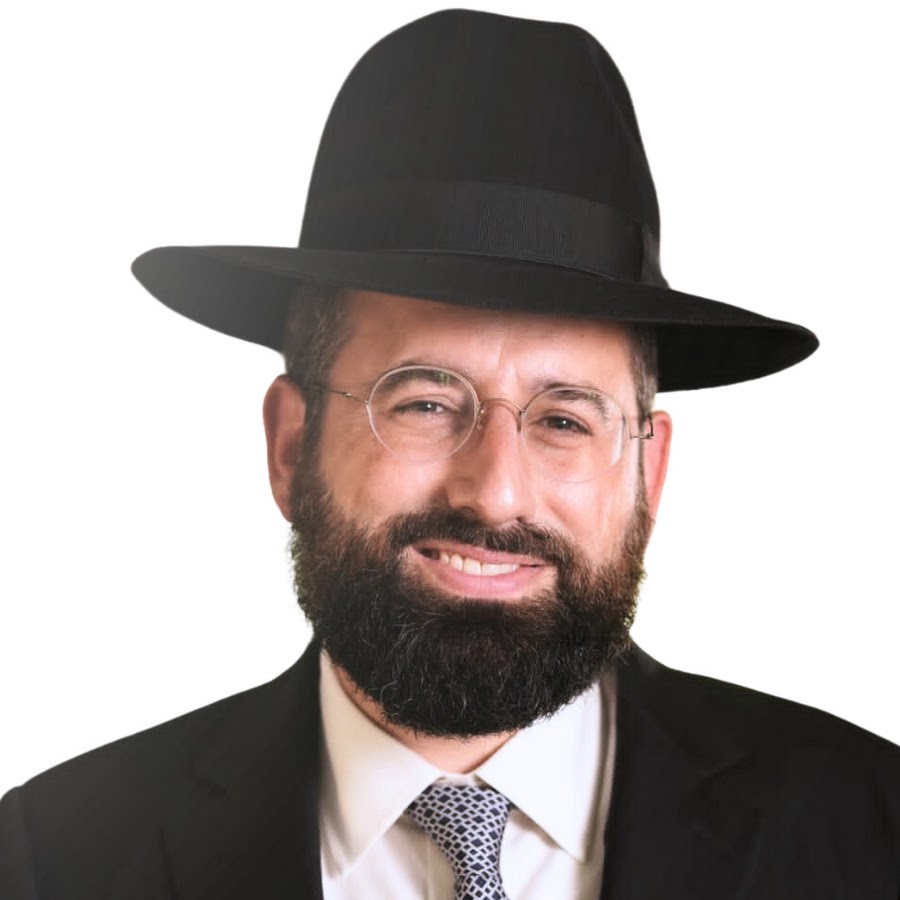
have Rabbi Daniel J. Glassin with us. He
has his own publishing company, Machon
Maggid Harakia. He's the rabbi of
Tiferes Mordechai in Cedarhurst, and he
came out and it came out a little last
year, but it's still very relevant. It's
on the Haggadah. It's called Rav Daniel
Glassin on the Haggadah. Revolutionary
insights into the Haggadah, the Exodus,
and the final redemption, published by
ArtScroll. Good to have you back again.
Thank you so much for having me.
So I want us Usually we start at the
beginning. I want to start at the end.
We're close to the end this year. I
heard that and and I've spoken for for
some reason I heard quite a few people
talk Rabbis talking about Shfoch
Chamascha, pour your wrath on the
non-Jews, and they said there was an
alternative version, Shfoch Ahavascha,
pour your love onto the nations. So I
know you write about it in in the
Haggadah also about the blood libels.
So let's begin with that.
Well,
the the phrase Shfoch Ahavascha Lagoyim,
pour your love on the gentiles, was
uh said tongue in cheek in uh
it was in response to the terrible
allegations of the blood libels that uh
notoriously were always uh drummed up
Pesach time, already beginning in the
Middle Ages, both in the Christian world
and in the Arab world. And by the way,
if you think that that was something of
the past,
there were blood libels in North
America, there were blood libels in the
United States, in Minnesota,
uh not so long ago. And when the State
of Israel is accused of genocide, that
is nothing short of a blood libel. So,
it's something that we face in every
generation. And in response to that,
it's uh Shfoch Ahavascha Lagoyim. And
it's important to know and and the
nations of the world should know that
they have a they have a very important
choice to make
in world history because those nations
that choose to support the Jewish people
and to be our allies will attain great
uh rectification and great esteem
uh in the end of days. But
those who choose to persecute us
the verdict of history is they're
ultimately relegated to the ash heap of
history. So
uh that's a choice that mankind has to
make uh until this until this day.
And the truth is is that Pesach,
Passover time, this has become more
relevant because they accuse Jews of
putting the blood of Christian children
into the matzos. Yes. Yes. Actually,
that's it's a very uh
a
stirring topic. How do we understand the
concept of blood libel? Actually, Rav
Chanan Wasserman discusses this. You
know, we have an idea the Talmud teaches
us that a falsehood that has no kernel
of truth cannot sustain. It eventually
it eventually dissipates. And how is it
that the blood libel regurgitates and
surfaces every single generation? But
there nothing could be further from the
truth. Everybody knows that uh of all
things, the Jewish people stay so far
away from even an ounce of blood. You
know, for if we crack open an egg and we
see a little blood splat, we throw out
the whole the whole dozen eggs. So,
obviously this has no basis in truth.
And Rav Chanan Wasserman actually
amazingly I found
that Rav Chanan was not the first to
make this discovery, but Rav Chanan
suggests that the blood libel is a
punishment for the sin of selling Yosef,
Joseph, where we took his tunic, we
dipped it in the blood of a goat, and we
told our father, "Do you recognize
this?" that we created the first blood
libel. And as a punishment, in every
generation, God measures out to us he
visits upon us a blood libel to remind
us that unfortunately the sin of the
sale of Yosef, the the fact that we
there's a bickering among brothers, the
fact that there's a
uh a lack of unity among our people,
that means that the sin of
the sale of Yosef has not been
rectified. But actually, I saw Rav Chaim
Palagi, one of the great Turkish rabbis
of 19th century, he already made the
suggestion that the sin the the
accusation of the blood libels is a is a
punishment for the sale of Yosef. Now
Rav Matisyahu Salomon
Zatzal Devaracha
he asked
"Why is it then that the blood libel
always is drummed up Pesach time? Why is
it specifically Pesach time?" Actually,
I found Rav Chaim Palagi asked that
question also. Rav Chaim Palagi says
that Hashem has mercy on us and he
allows it to be drummed up of all times
Pesach so that
we're protected through the mitzvahs
that we do at that time.
But Rav Matisyahu Salomon says that
Passover is a time that we need to
think, "How did we get down to Egypt in
the first place?" You know, there are a
lot of things we do the the night of
Seder to commemorate how we were
redeemed from Egypt. A lot of things we
do to commemorate the bondage of Egypt.
But we should also commemorate
how we got down to Egypt in the first
place.
And that is by selling Yosef. And
actually, we do commemorate that.
The two dippings
two dippings at the Seder. First, we dip
the karpas in the salt water. The
karpas, Rabbeinu Manoach, one of the
Rishonim, says is to commemorate the
dipping of the Ksones Pasim.
Karpas, kar is
a lashon, a language of mecher, sale.
Pas is Pasim, the Ksones Pasim of Yosef.
So the the dipping of the karpas
commemorates the dipping of the tunic of
Joseph. And how did we get out of Egypt?
When we dipped the Agudas Eizov, the the
group of grass, the unit. Agudah means a
unit. When we rectified the sin of
selling Yosef and we came together by
Agudah Achas, in one community, as one
people. So the two dippings actually
reflect the dipping of what caused us to
go down and the dipping of of freedom.
So therefore, it's this time of the year
when we're supposed to be thinking
about, "Hey, how did we get down to
Egypt in the first place?
And are we still guilty of that same
type of
crime?" And that's the reason why the
the blood libel and the fact that it it
stirs up the sin of the sale of Yosef is
specifically relevant this time of the
year.
But also Pesach represents blood, but
the Mayim Chaim, we talk about the blood
of the bris milah, the blood of the
Pascal sacrifice. So it is associated
with with Pesach.
Right. But of course, uh you know,
no no connection. Heaven forbid, you
know, for uh any any kind of
uh misconduct, yeah.
Well, and we say it. I saw a thought
which parallels what you're saying. We
say that the Jews were forced to eat
Ones Al Pi HaDibur, forced because of
the divine speech. However, Ones Al Pi
HaDibur, the dibur, the speech they're
talking about is the dibur ra between
Joseph and his brothers. That's the
words that caused the Jews to go down to
Egypt, which would be consistent with
what you're saying now, too. That was
the cause and effect. Yes.
You know, you bring up a very uh also
another fundamental part of Pesach
where there's a cabalistic idea
that the faculty of speech of the Jewish
people was in bondage.
And with uh the freedom from Egypt,
Pesach
the mouth that talks. Pesach could be is
like a compound word. Pesach, the mouth
that talks, that our our mouths were
subjugate, our mouths were in servitude.
And we were freed at a location called
Pi Hachirois, the mouth of freedom.
And the one that subjugated us was Pera,
that Paro. Pera, a bad mouth. And we
were freed at Pi Hachirois, and we tried
to liberate our faculty of speech with
Sippur Yetzias Mitzrayim by discussing
the miracles and by eating with our
mouth.
And it's it's very interesting.
Uh if you look in the tractate of the of
Talmud Bavli that talks about the Yom
Tov of Pesach, Maseches Pesachim, the
the tractate, Maseches Pesachim, the
first topic discussed in the Maseches,
you would expect it should talk about
eating matzah, eating maror, bringing
the Korban Pesach. No. The first topic
in Maseches Pesachim
is why does it say Or L'Yud Daled, the
light of the 14th? Why doesn't it say
the night? It's referring to the night
of the 14th. Why does it say Or? And the
Gemara has over one blot, one folio
of a discussion of how you should always
try to use refined speech. That's the
opening subject matter in Maseches
Pesachim. So Rav Tzadok Hakohen says
that when you have aggadic portions in
the Gemara, they're sp- they're
tailor-made to the most appropriate
tractate in the Talmud Bavli. And since
Pesachim is about the liberation of our
speech, the opening topic is refined
speech. It's an amazing uh observation,
yeah.
You shed some good light on that topic.
Now,
what I also I heard and I forgot who
said it, Pas Yam, from Pasim to Yam,
from the beginning of the coat of
Joseph's coat until the splitting of the
sea, God was in control of everything,
Pas Yam. Nice.
>> Pas Yam, which we should
Now, by the way, you also mentioned that
there were some of the rabbis that said
they shouldn't drink red wine because of
the blood libel, but drink white wine on
Pesach.
>> Yeah. Yeah. Yeah. That that that was uh
for for many many centuries that was
we avoided doing that to uh
to Actually, you know, we say in the
beginning of the Haggadah,
"Anyone who's hungry, come inside." What
do we mean, come inside? The door is
locked. Yeah. Originally, the doors were
open, but because of the dangers
that were precipitated from the blood
libels, we had no choice but to
but to lock the doors.
So then the question is, why when we say
Shfoch Chamascha, throw your wrath on
pour your wrath onto the nations that
don't know you, we open the door for
Eliyahu Hanavi, Elijah the prophet.
Eliyahu Hanavi, when he comes to every
bris, you don't open the door for him
when he comes to every bris. Why on
Seder night, considering the danger, do
we all still open the door for Eliyahu
Hanavi, Yeah. the prophet?
Okay, good. There There's an idea
that you know Hashem has two modes
with which he deals with the Jewish
people.
One is
usually he asks us to take the first
step. God says, "You open the door.
You You You unlock the door. You take
the first step and I'll help you the
rest of the way."
But in times of Pesach, we had no
merits, we had no mitzvahs, we are on a
very low level, and Hashem came and
through no initiative of our own, he
bestowed upon us great spiritual
heights. That's what we call isarusa de
ela, where the inspiration came from
above without any initiation on our
part.
So, normally we have to open the door.
But uh Rav Baruch of Mezhibozh teaches,
"On Pesach, God jumped over the door. He
jumped over the need for us to open the
door."
So, you know, on Pesach, so to speak,
all the doors are open. You know, the
idea of opening the door shows Pesach
the door has been opened for us.
Our guest is Rabbi Daniel J. Glassin,
prolific writer, speaker, author,
lecturer, Rav of the Sephardic community
in Cedarhurst.
Also, uh he has his own publishing
company, Machon Magid Harakia, but his
book that we're discussing is called the
Rav Daniel Glassin on the Haggadah,
Revolutionary Insights into the
Haggadah, the Exodus, and the Final
Redemption, published by Art Scroll.
You also have a wonderful story which
I've heard before about the the No De um
the No De Be Yehuda in in Prague cuz
Prague Jews were killed in pogroms and
blood libels. You have a wonderful story
that one year it was prevented by an act
of kindness to an Anju.
Yeah. Yeah, so you know, that's a legend
where the No De Be Yehuda
because of a fear that that the bread
was poisoned made an additional day of
uh Pesach. You know, I think there was a
Christian boy who No De Yehuda helped,
right? He's He gave him money.
>> he was younger, that the the Jewish
community helped this child, he ended up
uh saving the community.
Yeah. Yeah, he In other words, what
happened was is he his father was the
baker who was going to poison the Jews
because the No De Yehuda showed kindness
and gave him money and helped him. So,
he went and informed and they extended
the day of Passover, Pesach. They said
and it was a calendar mistake, extended
a day later, and the Jews were saved.
That's the legend of the No De Be
Yehuda.
A fan- fantastic story. Now, you
mentioned something earlier with the
blood libels. People think that it was
in Christian Europe and it was all over
the world. We've had it in New York, you
know, a century ago, the blood libel.
But you mentioned the Arab countries
also picked up on the blood libel. Can
you define and explain that?
Yeah, there there are accounts even in
the times of uh Rabbeinu Kalonymus.
Actually, I had the privilege this past
January to be on Har Hazeitim,
the Mount of Olives, and in the Kidron
Valley,
you have buried there Rabbeinu
Kalonymus.
And
there was once uh a boy who was found
dead and he was thrown into the
courtyard of the shul.
And uh Rabbeinu Kalonymus had to save
the community from this uh libel against
against the community. So, it made its
way even to the the Arab countries as
well. So, it knew no bounds. It's It's
uh unfortunately in our history, as Rav
Chanan explains, there are two sins that
we're always
always paying the price for, whether the
sin of the golden calf, whether the sin
of the sale of
of uh Yosef Hatzadik.
And actually, one year
uh when when Yosef's tomb
was desecrated, Pesach time,
so that was a particularly painful
because, you know, it's the time of the
year that we have to think about what we
did to our brother and uh what we're
doing to rectify that.
I think Rav Moshe Feinstein said that
Yosef never forgave his brothers and
that's also part of the promise that we
as a Jewish people face, that he never
said, "I forgive you."
Yeah.
Now, one of the things that's nice about
Pesach, and we speak you mentioned
Jewish unity, and I think it's so
important, is that I think majority of
American Jews, and I assume in Israel,
too, celebrate in some way or form the
Pesach seder. And their four sons, one
of them, of course, is the wise son, the
chacham. You have the rasha, the evil
son. You have those that do does not
ask, and the simple son. But everybody's
together for the seder. The question is,
and it's wonderful that we have
everybody sitting at the seder. The
question is, how we take that spirit of
the seder, the unity that we find in in
Pesach, and really translate it to year
round cuz we desperately need it.
Yeah, that's one of one of the calls
of the [clears throat] hour is uh the
unity of the Jewish people.
You know, also very important
um something interesting that I saw. Of
course, uh the after after the Haggadah
begins, even before the Maggid, we wash
our hands for the karpas. And there are
different interpretations. There's
There's a halachic basis for it, of
course, because uh you're dipping the
the vegetable in the liquid. So, before
you touch it, there might be a halachic
requirement to wash your hands. But
actually, the Rama writes in Darkei
Moshe that the reason why we wash our
hands is the Haggadah is a form of a
prayer.
And before we davven, before we pray, we
do netilat yadayim. So, we wash our
hands in the beginning of the seder cuz
the seder's a form of a prayer. So, the
question is, what what what's the
prayer? How is it a form of a prayer?
What do What are we davvening for? We're
telling a story. How are we davvening?
But the answer is very basic, very
important.
We're not telling a story.
If your children ask you,
"Why are we recounting a story that
happened thousands of years ago? We
don't even remember what happened 200
years ago. I don't even remember what I
ate for breakfast yesterday. Why every
year is it so vital to recount what
happened 3,300 years ago?" One of the
fundamental
uh tenets of the Haggadah is we say a
phrase that the benefits that God
bestowed upon us were kefula umchupeles.
They were multi-layered. Multi-layered
mean whatever happened in Egypt was a
pre-enactment, a precursor, um a
paradigm of what the final redemption
will look like. That all of those
miracles were a dress rehearsal of sort,
that when God brought it down to the
world, now it could repeat itself. So,
we're We need to tell our families, we
need to tell our children, that we're
not commemorating ancient history.
We're trying to remember what happened
to aspire and look forward to coming
attractions for the Jewish people. So,
the the purpose of the seder is the way
it begins and the way it ends.
It begins,
"This year we're here, next year in the
land of Israel." And it ends, "L'shana
Haba'ah B'Yerushalayim." So, in truth,
the entire Haggadah is one prayer. The
prayer is, "God, you brought the dress
rehearsal, you made a pre-enactment.
Now, let's bring the real thing, L'shana
Haba'ah B'Yerushalayim." That is the
main purpose of the Haggadah, and we
wash our hands before to indicate this
is a major prayer in the life cycle of
the Jew.
Oh, so beautiful. And again, we It's one
time a year when we can really get
together, all different kinds of Jews.
And you know what's fascinating is that
everybody uses the same Haggadah pretty
much, whether you're Orthodox,
non-Orthodox, it's the same Haggadah.
>> uses Art Scroll. No.
>> [laughter]
>> But the same with the same language.
That was I think Rav Hai Gaon is one who
composed it. We did a show about it the
other night. But uh that's just the main
one of the few times around when we
don't use the same sitter, but we use
the same Haggadah pretty much.
Yeah. Yeah. And uh
also interesting, even there there
there's even an uh precise number of
words in the Haggadah.
There are 1,820
words in the Haggadah
that are the exact number of times that
Hashem's name appears in the Chumash.
Wow.
Yeah.
And Moshe's name really does not appear
in the Haggadah.
It's the
For the most part, right.
>> For the most part, all right. I mean,
even even Eliyahu Hanavi. By the way,
and the final question, why when we say
shfoch chamatcha we pour it out on the
non-Jews that don't acknowledge you, and
we open the door for Eliyahu Hanavi, why
don't we acknowledge that in the
Haggadah saying we're opening the door
for Eliyahu Hanavi? Why We do it as a
custom, but we don't actually say. The
only reference to Eliyahu Hanavi is in
the benching, in the grace after meals.
Yeah.
Interesting. Actually, some suggest Rav
Simcha Bunim Peschus says that Eliyahu
is the one who wrote the Haggadah.
And he proves it based on
uh we know Eliyahu wrote Tanna D'vei
Eliyahu, and in Tanna D'vei Eliyahu, God
is frequently called Hamakom, which we
see in the Haggadah.
But somebody suggested, "Well, if he's
the author, so he put his name in an
allusion in the beginning of the
Haggadah." It begins with the word ha.
Ha stands for Eliyahu Hanavi.
So, you know, so he kept himself uh he
kept himself out of it, you know. He
wrote it, so he didn't want to I guess
take when when Elijah the prophet, when
Eliyahu Hanavi come, we lessen that
question.
Yeah, take away, exactly. Anyway, thank
you. What What May I recommend? It's a
fascinating Haggadah. It's called Rav
Daniel Glassin on the Haggadah,
Revolutionary Insights into the
Haggadah, the Exodus, and the Final
Redemption. What's your next book going
to be about?
The next book is a book on uh
Chinuch Banim, raising children in uh
contemporary society.
And uh we once discussed the Hebrew
edition, and soon to come out for Art
Scroll.
Looking forward. Thank you for joining
us. Thank you so much for having me. Uh
good Yom Tov, Chag Kasher V'Sameach.
Chag Kasher V'Sameach. Yeah.