Transcript
Auto-generated transcript. Not time-synced to the video.
Buckline Network Radio, America's
longestr running Jewish broadcast
network, the voice of the Jewish
community.
Welcome to the podcast.
You are now tuned in to this episode of
our podcast. Today we are going to
interview some of the greatest and most
influential minds in our field. And now,
please welcome your host.
You're listening to talk line with Zev
Brener. America's premier Jewish
broadcast on the air since 1981.
And we're back. It's always a treat to
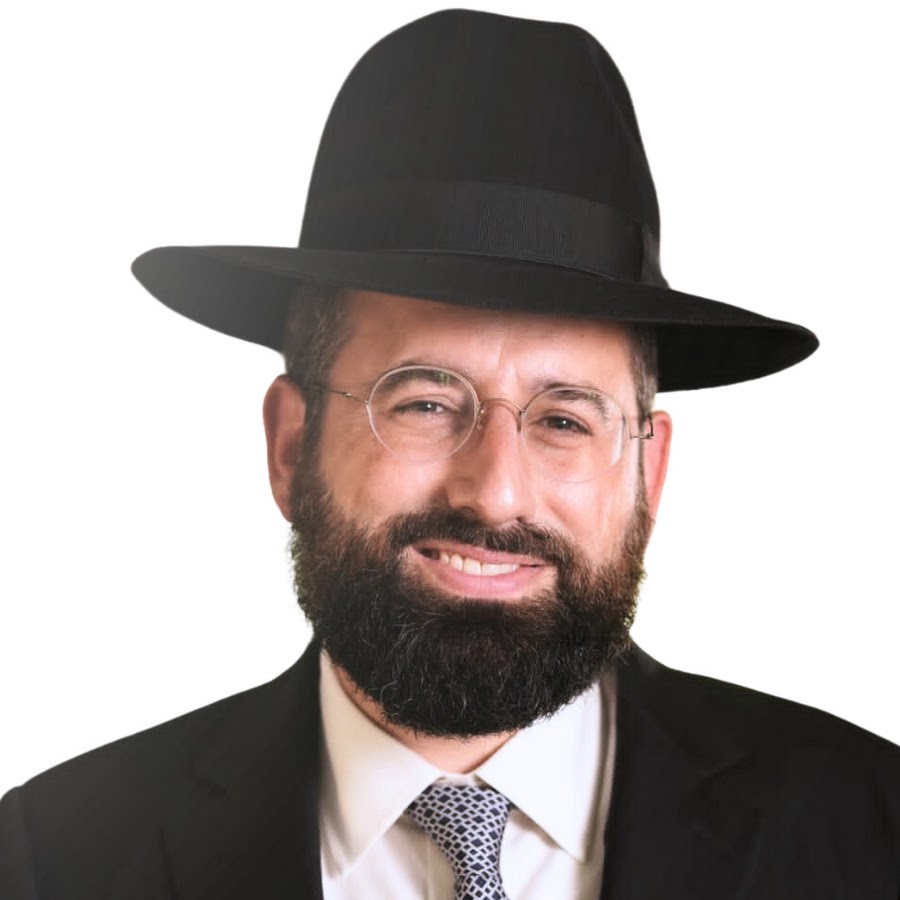
have Rabbi Daniel J. Glading with us.
He's the RV of Kahal of Mahon Magakia in
the five towns, but he's a prolific
writer. And in fact, we his book came
out a year ago of Daniel Glass,
revolutionary insights into the Exodus
and the final redemption. And it's now
available in Spanish and French. Except
for those that speak Spanish and French,
but it doesn't mean you have to speak in
Spanish tonight, Rabbi Gladstein.
Muchas, gracias. Thank you. Shane and
Don, as we say in French. Yeah. So, this
is extraordinary year. It's next time
we're going to have error of Pesak come
out on Shabas will be in 20 years from
now. So, it's very unique that we have
this. So, any special insights as to
what this means, you know, from a
religious theological perspective?
Absolutely. I mean, you wouldn't believe
this. You know, there there's an opinion
that God created the world in Nissan.
So, that's generally understood. He
created man onesh and he said six days
earlier, let there be light. But there
are sources that when we say God created
the world in Nissan, it means he created
it on the eighth day of Nissan, which
means man was created on the 13th day of
Nissan. And the medish pirar teaches
that Adam told his two kids cen and he
pes is coming. You need to bring a
carbon. So cayenne and he on the day
after they were born they brought a
carbon ar that fell out on
chabas. So this takes us back to the
beginning of creation. This is the
opinion
of you know there's a whole discussion
in the talmud. Could you bring the
carbon pes on Shabas? If Arab Pesak
comes out on Shabas, do you bring the
carbon pes? And there's a discussion,
can we learn out from the offerings of
Cayenne and He that indeed that you can
bring the
carbon.
Moreover, Aris teaches that Jacob Ainu
married Leia
on Arab Pes that came out on
Chabas. So the most anticipated uh
marriage in history came out at this
time which shows that that the proper
observ observance of Pesak when Araf
Pesak comes out on Shabas can rectify
uh creation and taking us back to the
root. So that's some of it. Wow.
Amazing. I knew there had to be some
theological connection to Shaba. It
happens so rarely and next time will
happen in 20 years. So, uh, we're 2045,
believe it or not. Wow. So, there's so
much to talk about and you have some
interesting ideas and novel ideas. So,
one of the things that I picked up this
year was the relationship of dogs to see
Mr. Ram to the Exodus of Egypt. Let's
look at that. Oh, the
dogs. Well, firstly, you know what?
There's a story that one of the Samy
uh family asked him what what's the
reason to steal the Afi Kimman? You know
there's custom of stealing the some say
this is not a legit legitimate practice.
So theam didn't want to say in the
beginning of the sed by the end of the
sedar he said you know the garra says
that don't live in a city without dogs
because if there are no dogs there is a
lot of
robbery. So we know the night of the
seda the dogs didn't bark. So if dogs
weren't barking there must have been a
lot of robberies. So to commemorate the
robberies the night of Pesak, we steal
the Aikima because you know there there
were the dogs weren't barking so there
was a lot of Geneva. So we sort of
replicate that. But the idea is the dogs
represent the forces of impurity and
they were all silenced. They were all
silenced the night of Pes you know the
night the night of the sedar all for
forces of evil are vanquished which is
one of the reasons why Mori told Esther
you better go into now remember it was
Pesak because on this day and this night
all the forces of evil are at their
lowest point they're about to dissipate
if you don't take advantage of this time
then we're done you know that's that was
the rush you know what why was Why was
Amorai pressuring Esther? This is the
reason because on this day the dogs are
silenced meaning the the forces of
impurity are completely
destroyed. Actually it began it began on
Purim began when we begin to eradicate
amorim and it's a 30-day process and by
burning the reflects the forces of evil.
when we burn the pes all the forces of
impurity are completely silenced. So
that that's symbolized by the the uh the
dogs being silenced uh the night of PES.
Now you you mentioned by the way about
the connection to PM. I think I heard
from Rabbi Melman A Melman congregation
over Manhattan that the word vakar is is
a important word in the migill and if
you take the word vayikra and you take
out the olive it's your car too. So he
said the happiness of adar extends to
vikra or close to pesa really. Oh that's
nice. That was an interesting thought.
But here's something which intrigued me
and I think this is the famous mid in
Israel. Rabbi Yakov Golinsky writes that
if you look at what happened the word
mutsanum they used the word that the the
Jews in Egypt were were distinct but he
also said in modern Hebrews
distinguished he said they were
distinguish but the fact is they
worshiped idols. They were in the lowest
level of impurity. They didn't
circumcise their kids. They worship
idols. The only thing they had going for
them is that they wore Jewish dress and
they spoke the Hebrew language. And he
said on that basis, he said, "Can you
imagine somebody who dresses like aid
but is doing all kinds of terrible
things. Is that pleasing to God?" And he
said, "The answer is yes. That's what
had happened to our ancestors in
Egypt." I thought it was an interesting
concept. Yeah. Because they maintained
their Jewish identity even though they
didn't have anything but saying, "I'm
Jewish." Basically speaking, they spoke
the Hebrew language. They dressed like
Jews, but everything else they were like
the Egyptians.
Yeah. So they they remained distinct.
Yeah. And distinguished.
Yeah. But it's interesting
that Raosha Feinstein has a chuva about
this where he was asked about whether a
Jew needs to have a Jewish name. And
some wanted to say, well, obviously they
have to have a Jewish name. that was one
of the reasons we were redeemed. So
Raosha says no Mosha said that was
before we had Tyra mitzvah. So we had
nothing going for us. So then it was
important that at least we had these so
to speak externalities but now that we
have Tara mitzvah you can't the the
primacy is given to the you know the
meat and potatoes and Ramosa says those
other things dress and and names so to
speak uh loses their significance. That
was that's the opinion of
Raasha. You know, you mentioned you
mentioned the word vikar, right? Vikar,
you know, there's a small alf on that
word. Alf zer
alf the the kabalisam teach alf zer has
a numerical value of 399 which is rebaka
rebiaka.
There's a very amazing and interesting
opinion that Rebi Yaka authored the
Hagada is the author of the Hagada. Now
like what basis is there for
that? You know if you think about which
sedar all the the historic sedar of
Rabaza
Rabishua they all go to Raaka Sedar you
know like why are they going to his
sedar he was their student Rabik was a
student of Rabishu why are they going to
him but if he's the author of the Hagada
so he's the expert he's the expert on
the exodus he's expert on mim what
what's very interesting is that the
zoyar teaches God took us out of Egypt
with the 50th gate of wisdom. Now Mosher
Rabenu didn't have the 50th gate of
wisdom. That's the only gate Mosha
didn't have access to. But we know Rabbi
Aaka was the only one who had access to
the 50th gate of wisdom. The says what
was revealed to Rebika was not revealed
to
Moshe. It's very interesting if you say
Rabbi wrote the Hagada. If you examine
the number of paragraphs in
the makes a count there are 50
paragraphs
from
until moreover you know the main body of
the we expand on these in you know
by we expand upon these four which is
very unusual why would we expand
upon in Deuteronomy We should expand
upon theim in Exodus that speaks
about you know right behind how does
love get into into that you're like
where did he come in exactly now
now says it says in the the exodus 50
times it says 50 times 50 times God took
us out with the 50 expressions of
mimosa wolfson points out the 50th
times is mentioned are in the kis in
reference to so since the the so to
speak this the spiritual source of the
exodus comes from those verses we focus
on those verses
now is the 50th para in
the so there 50 chapters in the hagada
there
50 there are 50 um we expound upon the
50th time is mentioned from The 50th
para by the way the the
words those words that we choose to
expand upon in there they're 50 words
amazing and by the
way in the discussion how many makos
were inim 10 40 no raika says
50 in the hagada says
50 yeah amazing those are just tuning in
our guest is Rabbi Daniel Gladstein on
the Hag Well, he's written the book on
the Hagada, revolutionary insights into
Hagada, the Exodus and the final
redemption. It's now translated in
Spanish and French available through art
scroll. I want to get back to something
you said before and I know that you said
that Moshe, you quoted him stating that
since God gave the Torah to the Jewish
people, we no longer have the same
latitude to have just the Jewish dress
and the Jewish speaking the Jewish
language is enough to sustain us. We
have to do more than that. However,
Rabay Yakov Galinsky addresses that with
a very interesting story from the which
I want to share with you in the
audience. I want to get your feedback on
it. And he said that there was a baker
that the encountered that encountered
before World War I. And he was
complaining. He says, "I can't make a
living. I can't make a parnasa. The
women come in and this bread is not
round enough. This bread is burnt. This
bread is deformed. And I'm trouble
selling the bread. I can't make a
living. Sees him during middle of World
War I and the baker is all smiles. He
goes, "What happened?" He goes, "Pasa is
so great. My business is great because
of the war, the they take whatever they
want. It's burnt. It's deformed. They
whatever comes out of the oven." So said
basically is that in times gone by when
we had so much spirituality and more
people learning involved in Torah. So
God could be more picky and in order to
be accepted, you had to do all these
things perfectly. But in today's day and
age there's a deficit of spirituality.
So God is happy if we just do obviously
we should be doing more but the fact
that we're doing something is still
pleasing to God. Just an interesting
thought from Bianca had brought down. I
wanted to get your perspective. I
understood what you said Mosha but this
is another interesting perspective I
think. Yeah. Yeah. And I don't think
it's contradictory there. There's a
there is a um very similar parable in
Vital basically about a princess who
people try to please her because she
always had the king's air and no matter
what they brought her, they can never
find favor in her in her eyes. They
would bring her jewelry, they would
bring her money, but she had everything.
She didn't need anything. And then one
time somebody badmouthed her and the
king banished her and put her in a
dungeon and some people brought her some
stale bread and water and when she was
ultimately freed she never forgot the
stale bread and water that the people
gave her in her time of need. So
similarly when the B mikda stood boy did
you have to do a great mitzvah to find
favor in eyes of Hashem. But now that
theina is in the gulos even a small
mitzvah finds great favor in his eyes.
So there's definitely that idea is true
but but I would say it has to be a
mitzvah. So the the name the Jewish name
and the clothing would Ram Mosha says is
not in the realm of uh not in the realm
of an actual mitzvah but but let's say
you would learn Torah even if it would
be a few minutes and even if it would be
now with the greatest concentration or
if you would pray or you do an act of
kindness even maybe in generations gone
by people did much greater deeds in our
generation it it could be much more
powerful. No, very well
said. You know, you write about the
fifth son and I was intrigued because
Bababa Cherebby said that the Hagad is
really referring to the four sons
American kids. The first generation,
they came in from Europe. They were
religious. They spoke Yiddish. They did
everything. Then second generation
rebelled. Oh, it's oldfashioned and they
were they considered the Russia. Then
you had the next generation where it's
just, you know, simple. They just were
confused between the grandfather who was
religious, their father who was
anti-religious. They were confused. And
finally the next
generation doesn't even know how to ask
anything. He's never saw his religious
great-grandfather. He's in a different
kind of league. And then you have the
fifth son which is not mentioned. But
you write about the let's look at the
fifth son. Yeah. So actually I took a
little bit of a different approach. you
know the affforementioned uh Reb uh
identified that the fifth son is the
assimilated son the son who's so far
gone he doesn't even come to the sedar
and uh I took a little bit of a
different approach because there are a
number of missing fifths in the hagada
we don't have the fifth cup of wine
really for Ilio we don't really have the
fifth language of redemption that God
brings us into Israel we don't have the
fifth question of the manana why don't
we eat uh why Do we only eat roasted
meat? You know, all the other fifths are
things that we aspire to levels that
we're trying to reach. So I prefer
instead of saying the fifth son is the
assimilated son to take it the other
direction with a very simple question.
You know, we have all these sons at the
table. Why is there no son who's a
sadic? You know, you have a wise son,
but why don't you have a righteous son?
And the answer is every parent knows
that you no kid is born righteous. They
could be smart or they could be wicked,
but they're not born righteous. And the
objective is to take all four children
and to transform them and elevate them
to become righteous. There's even a
famous gumatria. If you take the word
Russia, which is 570, and you subtract
Shinov, which is 366, you get you get um
204, you know, you get
um you get sadic. You get sadic. So the
objective is the the missing son. I
would say is the righteous son. And the
reason he's missing is that's our job.
The job of parents is to elevate all of
one's children to become righteous.
No, it's certainly a challenge that that
we have. And the truth is is that these
the Russia as bad as he is, he's still
at the seder. Yeah. Yeah. But but you
say something very very interesting is
there is it's not exactly a contrast of
the and the Russia like you said should
be the saddic and the Russia and I know
the many different answers as to why
that is and you gave any other answers
that you want to share with our
audience. You know I
I you know this approach resonates with
me that that you
know you can't be born righteous.
Righteousness is something that you you
learn, you develop, you you
you accustom yourself. But if it's just
instinctual, you know, is it really
righteousness?
So, you know, the the I think the job is
to all these four kids have the
potential to be uh to become righteous.
Was it the RV who said that all the four
kids are really the same person? Yeah.
Well, you know, you know the famous joke
about the guy who went to Warsaw. He
said it's amaz He went from Minsk to
Warsa. He he comes back. He says, you
know, Warso is amazing. I saw over there
I
saw Sadikim. I saw wicked people. I saw
heretics. I saw socialists, bundas,
Yiddishists, Bolsheviks. So the guy
said, "What's the big deal? We have all
of that in Minsk." So he said, "No, it
was the same guy. It was the same guy."
Yeah. So that's really what what he got
at least according to I think it's the
Rob right who said that it's really the
same person struggling with our streaks
you know
so you've written some other insights
into the so what intrigues you the most
is there any particular thought that
you'd like to share with our audience
that you find the most interesting the
most intriguing
well and revolutionary
revolutionary well I want you to Yes,
I'm going to I'm going to um take the
liberty just to convey something uh
simple and we know that you know if you
want to get an idea about what a book is
all about you turn to the beginning you
turn to the end and usually that
captures the main theme if you do that
to the it begins this year we're here
next year in
Israel it
ends which is you know a beautiful
prayer but doesn't seem to be connected
to the main theme of the hagada theme of
the hagada is the story of the
exodus but the answer is that the exodus
was the pre-enactment was the paradigm
was what we
call to the final redemption all the
events
of were the pre-enactment were the dress
rehearsal of sorts of the final
redemption you know there's a language
we say in the
that more
so benefit benefit that was doubled and
and folded over which indicates that all
the miracles are double. Why are they
double? One for then and one for the
future. So we have to tell our children,
you know, they say we we said the story
last year again. We're reading the
history. This is not history, it's
destiny. It's not about what happened.
It's about how these events will create
the future future attractions to the
Jewish people. We have to tell our
children this is what we have to look
forward to. It's we're not looking back
at we're looking ahead to that's why the
is bookended.
Beautiful thoughts. And by the way,
maybe you can comment on the fact of why
do we have to open the door for
Eliohanovi Elijah the prophet. He can we
can open the door for him ahead of bris.
He knows how to get there even without
opening the door. Why do we open the
door for him?
Yeah. Okay. There you know there are
different answers. One one uh beautiful
idea is that the opening of the door is
symbolic that the night of the sedar so
to speak God opens all the doors for us.
All the doorways of heaven are open and
and levels that perhaps we couldn't
achieve at other times of the year are
now being open to us even if we're
undeserving. You know there's the idea
the night of the sedar that God gives us
the opportunity to leap forward into
sanctity even before we've cleansed
oursel from our sin. Usually we say the
rule is you
know turn away from evil and then do
good. The night of the say there we we
advance we we run through the door even
before we cleanse oursel from sin.
Wonderful thought that's gives us an
opening for our closing. So anyway,
thank you for sharing some insights. I
recommend it's a fascinating book and
safer on the Hagad. It's called Daniel
Glading on the revolutionary insights
into the exodus and the final
redemption. What's your new book or I
know you're always working on something
new the next one is
the Yeshua awaiting the coming of Msiah.
So a translation and and essays about
the subject of yearning for the final
redemption. Will that be in French and
English too? with God's help. Yeah. Uh
we're start starting in
English. All right. Daniel Gladstein,
thank you for being with us. Thank you
for sharing some great insights into the
you and your family. Thank you for your
time. Thanks for having me. And I wish
you uh happy and healthy.
Thank you for tuning into Talk Line with
Zev Brener, America's premier Jewish
broadcast, the pulse speed of the Jewish
community. For continuous Jewish
programs, talketwork.com or our 24-hour
aday listenline at
641-741389. For past shows, you can find
us on iTunes, Spotify, Amazon, YouTube,
Instagram, and all major podcast
platforms or
jewishodcast.org. Thanks for listening
to the chalkline.com.
Thank you very much. Follow us on
Facebook, Twitter, and Instagrams.
Thank you for another riveting
conversation. Oh, thank you so much.
Thanks.