0:00 / 0:00
Reflecting on חללי צה"ל on Yom HaZikaron - 3 Students & 3 Chalalim
606 views
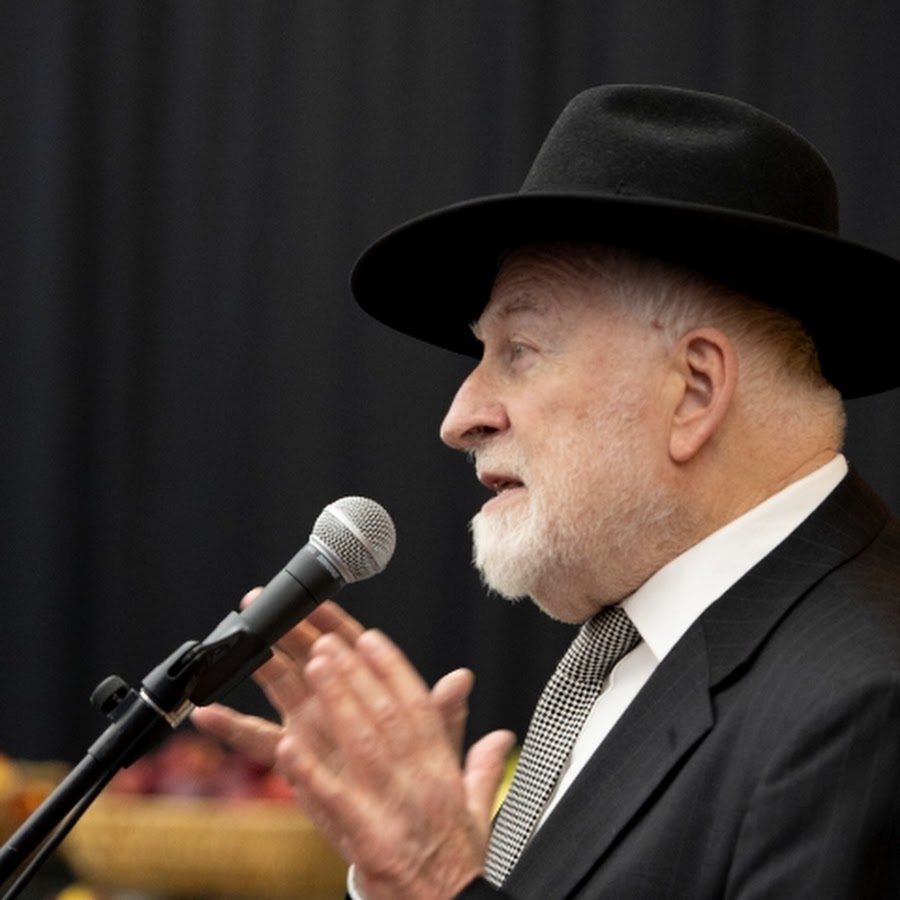
Rav Ariel Diamond introduces and closes, Yedidya Blau, Alex Moss, and Rav Josh Kaufman speak about their friends. https://youtu.be/M_o1Si8vJnw https://www.yutorah.org/lectures/lecture.cfm/1173279
Categories:
Torah
Comments(0)
Transcript
Auto-generated transcript. Not time-synced to the video.
Before you start, you should know where
you're headed
tonight.
a few stories of people
gave their lives
in the wars
of the hope is that
at the end
each of us will feel
a greater understanding
a deepened ais
and a
force
to learn more. In front of you are
pictures of just a few
and their names online. There are so
many tools by which a person can learn
more and connect more to individual
stories. Some of them hopefully will
share using all the technological ways
to get out ways of doing it.
But knowing that by the end I may not be
uh as clear as I am now. So I wanted to
start with that. That that's the goal.
Before hearing from
I just want to start for a second
just by reading the first kina written
for people who gave their lives in
who obeys
David after hearing of the
son composed the following po eulogy in
the form of a poem we've heard as an
elegy
that the Jews will need at times to take
the the bow and arrow It's already been
said from
the land of Israel that on your hills
have been have been found
bodies.
How have there fallen these great
heroes?
Don't tell it among the among the
Palestinians
so that the Palestinians don't rejoice
over the death of the Jews
al-Matar.
The fields in which the our soldiers
fell should not be blessed with the
blessing of due
who stay
mash.
Those hills shouldn't be blessed with
dew because they're the shield of of
heroes, the shield of sha was
contaminated,
the the blood, the flesh of heroes
cashes, the bow and arrow of yonasan
which typically did not turn back the
and the sword of which for
you know was successful.
Now says David
and who were loved and beloved and
pleasant in their lives
in their death they stayed together.
They went higher than eagles and
stronger than lion.
Skipping a
We ask now as said, how is it that
heroes fall in war?
You pure soul.
How can it be that you are now?
It is painful. It is difficult for me,
your brother.
You were very sweet to me.
Your love was superfluous, was
astounding to me.
We ask
how did they fall
and we lost the tools of war at that
precious moment.
One by one.
Uh, I want to take uh time tonight to
speak about um
uh someone named Amai Amikhai Oster.
Um someone that I I got to know my time
in Yeshiva, my one of my closest
friends, older brothers. Um, I want to
spend a little bit of time just telling
a little bit about his story, who he
was, um, how I how I got to know him,
and just three things that I think
really really capture who he who who he
was.
I'm Oster was born in Cleveland, Ohio.
When he was one years old, he he made
aliyah to Carne Shamron.
Um, so yes, in the Shamron, that's where
he grew up.
He was a person who was so authentic and
full of life. He loved music. He played
many different uh instruments. He loved
nature too. Lem he loved his friends,
his family. Um he was like a real bivven
was a madri in his own community looking
out for the younger um the younger kids
in his
he really was a person who looked out
for everyone and he was full of life.
He he grew up in cares and he went to
yeshiva yes.
Um he spent two and a half years there
learning learning seriously. Um and then
decided he was going to do two and a
half years learning and then a full
service two and eight and he drafted to
Givati. Um he became a methaded a
commander. Um and that was a year in
2020. That's when he drafted.
when he finished his service, he wanted
to to do what all Israelis do and like
to go on Tulim.
Um he went to Thailand, came back for a
little bit. Um and kind of in that in
between stage when I would go for Shabas
is when I got to know him. Um and then
he decided to go on a big tule. He went
to America,
rented a car and just was driving,
seeing family, friends.
And October 7th, he was in Salt Lake
City. Um, and he heard the news and
before he got any call, he just said,
"I'm I'm going back."
And he flew back to Israel and his his
unit wasn't even going in. They weren't
even ready. And he said, "I'm finding a
place and I'm going." And he was calling
people and he was on Facebook and he
finally found another another brigade
that needed him. and he signed up and he
switched over
and he went straight into Gaza.
And on January 1st, 2024, he was killed
in a mission in Gaza.
Like I said, I got to know Amihai.
Um
when I was in Yeshiva Haritz, when I was
in Gosh, I wanted to become friends
with, you know, the Israelis.
And I became very close with someone
Yonotan, his his younger brother.
And he was the type of guy who I didn't
I didn't know he was American. He only
spoke to me in Hebrew. Like his his
family had this like little bit they
were going where they wouldn't speak to
anyone in English. And I remember the
first time I showed up to his house
there was like a a LeBron James 2016
like championed like picture of the
newspaper and I in English. I'm like
what is going on? Like he doesn't know
any English. And then he walks in. He's
like hi Ema. And I'm like, whoa, that's
not that's not what's supposed to happen
right now. Um, and that's when I first
met Amii going for Shabbat, going for
Chabases.
Um, I spent my Shana bed, all of Sukkot
there. Um, and we spent time together in
Shul Shabas afternoon, you know. Um, we
slept together in the suk and got rained
on. Um, and he really like him and his
whole family really like took me in.
They were really like a second family
for me in uh when I was in Israel.
Um and I knew I had like made it with
Amiha. He's like this cool guy type of
personality but like very sweet. And
there was one Shabas afternoon when we
were playing a board game and he was
like started messing around with like
Yonatan, his younger brother, like like
all old like good older brothers. And
then he started like messing around with
me also and I'm like that's when I
really felt like wow like he's like an
older brother.
Um, I was home, you know, that that went
through break my second year in YU when
I when I got the news. Um, and it it
just felt
Yeah. Um, it just felt like I had lost
really someone who was part of my
family.
Um,
so I I want to say just three three
things that I think really encapsulate
him just to finish.
Um, three like character traits that I
think really define him. Um, when he was
going on these two limb when he was in
Thailand and in the States, he was
extremely committed to making sure he
daved every day and he ate kosher.
Even if that meant that he was going to
Thailand and buying vegetables and
eating nothing but vegetables or
whatever it was, he was committed. He
dive into every single day. Even though
he was alone, he spent Tishabove in a
forest sitting on the ground reading
keynote. That's just like who he was. He
was so authentic and he was so committed
and no matter where he was going to be,
he was going to be committed.
Number two, his family.
He cared so much about his his family
and the people around him, the people he
considered family.
Every Chabus when he was was when he was
traveling, he would call all of his
siblings. Even if it was just a quick,
"Hi, I'm good. How are you? Good
chabas." He always called.
Family was important to him. It was it
was a key to him. And he and he kept
that with him no matter where he went.
Lastly, he was driven and he was
passionate.
He fought for the things he believed in
and stood up for the things that he he
felt were right.
I want to read to you um the last piece
of Amikhai's mother's um eulogy
um that I think really encapsulates this
point.
On October 7th, Amikhai was in Salt Lake
City, received a message from the IDF,
and immediately set out to return home.
He was determined to serve his country.
And when his reserve unit was full, he
transferred to a unit that needed him.
Recently, when he was home on a two-day
leave, I told him that I'd felt
responsible for the fact that he was in
fighting in a war that he did not make
that decision to come on aliyah
that we made for him.
He thought about it for a moment and
replied,
"Ima,
what makes you think that if you never
made aliyah, I would not have come here
to fight for our country?"
Amai did indeed
rush here to fight for his country and
for all of us. He was doing he was here
doing exactly what he wanted to be
doing.
He died doing what he came home to do.
And now he will remain forever in our
memories as a beautiful, brave, caring
young man, a quiet hero.
Not a day will go by that we don't think
about you.
I wanted to see you get married to be a
father.
I wanted you to have everything.
We must honor his memory by loving and
protecting this land and by living our
best lives, learning about something
new, having adventures, living every day
to the fullest.
Several years ago, I asked my morning
sad Kusa,
who had just joined the army a few
months earlier,
how his first Yomad and Yoma in the army
were.
And he said it was great, very moving.
They sent us to Harertzel on Yumazi
Karon
to stand guard over the graves of the
different soldiers. Each grave had a
soldier standing over it. We went with
the armored core, the Shirion.
And it was so moving.
I never imagined that three years later
I would be spending Yumhazi Karon at the
grave of Eton Fish.
He was killed in a tank by a anti-tank
missile two days before Kaneka.
And when I think of his memory,
I still keep coming back to that phrase
from Kaneka near ishuveso.
I could go many directions with this,
but here's just a little sampling of who
he was to me.
Nitzvah
of a Torah or first of all, I could talk
about N just in terms of his enthusiasm,
his love, his sense of humor, his love
of when Por was coming along and
everything was getting exciting. He was
a person with a lot of enthusiasm even
though he's very quiet by nature.
But really to go to the heart of that
nare that idea of his attachment to
Torah. Some of my vividest most vivid
memories from learning with him was when
he would talk about how he was really
struggling preoccupied him for much of
that year that we were learning together
in Sherbet
with what are we doing this for? What am
I going to remember five years out from
that learning?
And when he went back in the middle of
his service, he did his before he be he
became an officer. before he became an
officer, he got to spend a few months
back in yeshiva in Yukim in the middle.
And he was by then he was a pro at all
these different khazittas and he had all
these bookmarks and sticky notes and he
had the different shittas that he
basically made up himself. And just that
intentionality, not even just that
flame, but really that way of making
sure what he was doing was meaningful
and that his learning was something
meaningful was one thing I really take
away from him.
The ish I think is really what I think
about the most in the context let's say
of
when I first met him was on the week
that I went to check out the yeshiva in
the head yeshiva for looking out where I
would go for my second year in Israel
and we hit it off he was friendly I
didn't remember him that much and he
reached out in the middle of the summer
when I was home to say, "Are you looking
for a kabusa?"
And that changed everything for me. I
was so nervous going into a totally
Israeli yeshiva that I beyond what I'd
experienced before. And
I figured, okay, I'll figure something
out when I get there. I don't know. And
the fact that he thought about me and
went out of his way to realize there was
somebody here who is coming from a
totally different country, totally
different world, and let's find him.
Karusa
was also just that stepping up to the
bat. And when he was back in yeshiva
again in that little midpoint during the
army, he also the karus he had at the
time Ysef Gutle for nights his his
younger Karusa was totally on his own
and everything was not working out and
really um the way that he spotted that
this person needed somebody to learn
with and somebody to look out for him
was a real stepping up.
I think the big stepping up of course
for such a quiet, laid-back, sort of
always in the corner kind of guy was
that he chose to be an officer to be a
Katsine. He extended his service for the
extra year
and um was actually an exceptional
leader and he made that sacrifice
for his people for Israel.
on the last day that he was home
before he went back into battle
was actually a date of his nephew's
bris.
And
he got the call that they were finally
ready to go in. They'd been waiting
outside of Gaza for weeks and weeks
doing nothing. And they finally got that
call that morning that they're ready to
go in.
And he came downstairs with his uniform
and his parents said, "Aren't you coming
to the bris?"
And he said, "I'm called up. This is
it."
And they asked him, "Aren't you
disappointed?"
He was very passionate about family and
he loved all of his nieces and nephews.
And he said, "No, this is what we
prepared for. This is what we're going
to do."
And the family loves to tell this story
also.
that once they were in Gaza,
his soldiers that he commanded in that
tank started to complain
because when they had to choose a tank
to go for one of the different missimot
for the different tasks that needed to
be done, he was always the first to
volunteer. And all of their friends and
all the other tanks were having it easy.
And every day they would have to go and
go here and go there and
do whatever, which already speaks for
his enthusiasm.
And they were grumbling and grumbling
and here's the big authority figure, the
commander, the officer that they have to
deal with. And some, you know, little
soldier comes up and really gives it to
him. And he says, "We can't put up with
this anymore. It's like mutiny. It's
it's been so many days, weeks that we're
in here and you're making us do all
everybody's dirty work." And the guy was
terrified after that came out of his
mouth. It was like, "What was I
thinking? He's going to chew me out.
He's going to punish me."
And fish responded with three words.
Shamati
sapper.
I hear you're right. I'll do better.
I think that's also part of that leot to
be a real leader and to do what needs to
be done and not just lord it over
because you have the power. And finally,
the baso.
It's funny how many of the things that
uh Diddy shared that I really could have
just said the same thing which is speaks
a lot for who our soldiers are.
When we were learning
and everybody has their topics for
Batala I think and um we ended up often
what I remember talking about genealogy
about family. He always had pictures of
his nieces and nephews like he was
pretty obsessed.
And I bring this up not only just
because of who he was, but also the
inspiration that I've got since he fell
from his own family and the strength and
comfort they've given to all his friends
to Kalis and not just receiving not just
mourning but really being in that place
of strength and of going forward with
unbelievable resilience whether it's the
Torah that they did a beautiful movie
that they put out that you can ed with
English subtitles
and
that sense not only of passion for the
next generation and the nieces and
nephews and drawing from all the
generations that wanted so hard to come
to and being part of that line of family
that I think is also really inspiring.
There's so much more I could talk about.
Again, again, as
described, is something that applies to
so many of the fallen soldiers. His
passion for guitar,
for piano, he could really was very
musical, loved to draw and do visual
art, sense of humor, sweet smile. I also
think part one of the most meaningful
parts of my relationship was how him
messing with me and teasing me made me
feel cool. So that was interesting.
his love of basketball
just a person who was a wonderful friend
whose shoulder I miss leaning on at the
end of a long sader
and if there's one thing to take away I
think really going back to that
hishadelio ish it's hard when we're here
far away from the front lines
and yum what we're celebrating what
we're commemorating
is a society
where what people do is step up and even
though it's the brisk, what people do is
go because this is what they've been
preparing for
and they notice
who's on their own from a foreign
country or just struggling without a ka
and that's something that I hope we can
all take with us in memory of fish and
so many of the
to look at what's needed to improve what
we're doing and really have that big
picture of what are are we doing for
Kalis.
I must begin first with a little bit of
appreciation.
I don't think actually I know that I
wouldn't be sharing u anything this
evening if not for Yija's
um very light but persistent encouraging
me to do this and Rabbi Diamond's
unusual and incredible uh insight um
that gives a person the ability uh
really to see and to even feel you know
the truth um of the of the of the
insight. Um, and that that really is
what brings me here. So, I just I really
just owe a great debt of gratitude to
the both of you.
Arying Hashem Yiko and I weren't always
so close. Our families were connected
forever, but our friendship truly began
when learning in Gush. I became a
Benbias in the Zering home, confiding in
Mark and Debbie and finding a brother in
Ary.
It was not easy getting to know him,
though I wanted to very badly. He wasn't
charismatic at all,
but had a magnetic quality. He didn't
say much, but was very serious, soft,
yet extremely intense. Arya was private,
even Adidal and very sensitive.
And I thrived on the challenge of trying
to open him up. I was, we all joked, the
family scout to squeeze out whatever
private information Arya held under lock
and key. And I loved trying to find the
man beneath the surface.
And yet until the final days of his
life, he was incredibly silly,
especially around kids. In some ways, he
was the most comfortable around around
them. He would tease them and they would
tease him back. On that night of Simha's
Torah, all the kids took turns dancing
on his shoulders.
Ary was a manchild, serious and private,
yet the first to rile up the Kinderl.
We often think of heroes as being born
ready to battle, but that isn't how it
was with Arerier. I remember a boy who
lived a comfortable life in Ranana,
well-mannered, connected to American
culture, who not only loved but lived
basketball. It was his whole world. He
would get up early to practice and he
was incredible, poised, quick,
athletically gifted. I genuinely
marveled at his talent, which is a lot
for me to say.
The one thing I always told him is that
he lacked the thing only thing that I
always told him he lacked is the
confidence that he was always the best
player on the court.
He and I often sat in the kitchen eating
American brands or in the basement
playing NBA 2K on the PlayStation.
When he first came of drafting age, Arya
sheepishly mentioned to me the
possibility of going for sports mitain
which is an army exemption to pursue
sports and to be ashamed of for Israel
the Jewish people in another way.
I tell you this because it makes what he
ultimately became not just a tragedy but
a triumph and a conquest of a human
spirit. He was physically and
athletically exceptional. He also worked
really hard at it. I remember his early
mornings coming back from swims in the
ocean or country club before most of the
house woke up. He was always very
successful in army things, but it wasn't
smooth sailing from day one. After
working incredibly hard to get into
Sier,
which is I think the equivalent to the
US Navy Seals, that's what he told me.
He faced the crushing disappointment of
having along the line to switch units.
But Ary didn't break. He took that
intensity and poured it into OKATS, the
canine unit. And he didn't just join,
but he became indispensable.
Looking back, the irony is staggering
because Ary's greatness wasn't that he
was born wanting to fight. It was it was
his resilience when things got hard.
Once he set himself toward this path, he
poured his entire being into it. By the
end, he was in charge of a hundred
soldiers. He didn't just accept his
path, but he mastered it.
Years later, Ary spent Shivuis with my
family in America. He was stuck here.
Those are his words. After teaching some
of his units tactics to US soldiers in
the West Coast, we walked through the
streets of Woodmir and Lawrence well
into the night. As we walked back to my
home from the other side of town, we had
a very, very open talk that took me by
surprise. And I looked at him
differently ever since.
Ary looked at the Jewish life in America
and told me it felt very empty to him.
Not because we weren't kind people or
religious but because he felt it lacked
gravitas.
The sense of
it lacked the weight of reality like
some show or pretend
for a boy who used to dream of the NBA.
He had undergone a transformation. He
couldn't breathe properly unless he was
connected with Erisel and serving
Clalasurel from wanting to be a sports
mitzen
to be this geore which became his sole
ambition.
Every time we caught up and I asked him
the classic questions, Ari, what's the
plan? College? Any ideas of what you
want to do? He would just smile gently
and say, I'm in the army for now. We'll
see. There was no after. There was only
the duty in front of him. More than
that, the army gave him profound sense
of meaning he couldn't fathom finding
anywhere else.
On the night of Simas Torah 2023, Ary
was in Israel being the life of the shul
dancing with the kids. The next morning,
he didn't wait for an order. He didn't
wait for handholding.
Beginning to sense what was happening
down south, he saw a need. He organized
his troops and ran toward the fire to
protect families he didn't even know.
And on that sora in Tene, I was standing
at a podium. I was giving a shir about
the role of encapsulated by the medishvi
after the entire period raship
sukis we have which is just insur
hashem says this is going to now be the
longest stretch that we're going to have
without seeing each other we were
dancing together the
the young kids on the adult shoulders
these courtyards were filled filled with
my children and now they're going to be
empty for seven months until Pesak and
we must endure the cold winter nights
and those images of you dancing and then
fading away, Hashem says, are going to
haunt me. So says Hashem, I just need
one more day.
Part of me says, I always knew he had
been dead. The pit in my stomach that I
felt was for Claia Soel, but also for
him. And yet when my father called me
that night, I couldn't believe it.
Arya's earring, he said, fell in battle.
I really couldn't believe it.
It wasn't possible. this close friend
that I had, this amazing person who was
the epitome of courage and of bravery,
who was relentless and unstoppable,
killed going back to save a wounded
soldier.
A few months after Ari was taken from
us, his father Mark visited me in
Washington Heights. He came to see my
son born a month and a half after whom
we named Yitkak Ari
standing before a father who had lost
his oldest son. I felt so silly. I felt
small. I told Mark the story I had
always told Arya that I was in America
because I wanted to serve the Jewish
people through Torah. But seeing the
price that Arya paid for his
responsibility, I broke down because we
here use the word aas a lot in yeshiva
and we should use it even more and for
more categories.
We talk about aas in broad strokes but
Arya defined it. Responsibility isn't a
trajectory or a career path. It's a
decision a person must make
every single day about every single
choice.
It's willingness to consistently give up
what is easier for you personally for
the sake of an objective greater good.
Mark teiered up a bit too and went on to
highlight just how proud he was of Ary
and his commitment to our nation.
I used to struggle with how to finish a
portrait of Ary. So I always stop a few
thoughts or sentences in. But I've
realized that a final portrait is never
written. Ary nor the other kalahal are
not at terminus.
He is a formless and powerful presence
in my life in all that knew him and in
those who bear the messages his life
projected. He is in the name of my son.
He is in the silence of the siren. He is
in the commitment we all must make to
stop waiting for handholding
to stop living lives lacking gravitas
and weight and to step into the breach
when our people need us. Ashenu,
how fortunate we are that we had such a
person among us.
Every uh soldier has a yard site.
And yet
we have a yard today for all of them
because soldiers
in their death live double legacies.
There's the personal legacy that has a
date attached to it. And there's the
second legacy that
is born and expressed in the commitment
that they made and for which they died
in today already
24 hours before commences. So
they put a little marker by every Kev in
every Bum
of someone who was who who was killed in
Marot
in the wars of our nation and the rest
of the ones that don't have a specific
place to go go and find
in their Bum the place to go.
Sometimes there are people who died
particularly in theat
who had no relatives. They came from the
shawah and they were the last of their
family and there's no one to say kadesh
and there's no yard sometimes and all
there is is a a marker that kasa won't
forget.
CL will hold on.
We hold on for multiple reasons.
We hold on because there's something
that we need to learn.
There's a strength that we need to take
from them
to carry us forward. And we hold on
because it's very important for all of
us to know the debt that we have.
It's important for us to push ourselves
to find the kev among all the of the
person who gave that sacrifice so could
push its mission forward.
Every single Israeli 16-year-old
at some point between 16 and 17 and a
half gets a letter to their house, an
invitation to go to the bakum. And you
show up there. You're not going to start
army yet. Have to finish high school.
But you get your first set of madim
and you get a letter that says that
you'll come at a certain time
and the mother's proud and the father's
prouder sometimes
and they see these madim these green
clothes and they know
of
that it's in these madim that their son
will be buried.
Everyone,
not only the ones you hear about,
every mother in an entire nation,
looks reality in the eye and says,
"In this I choose. This is what I
choose.
So takes a day
and they go to the Bum
and they're pulled in two f totally
different directions. On the one hand,
they're remembering and feeling
a loss and on the other hand
they're
swearing their their their total
commitment
that they will keep this going forward.
This is not a story that began
in the past two years,
but it's a story which has been brought
to to an even higher level in the past
two years.
Amit seal wrote today.
that we are a nation of people who run
to the grenade, who run to the war like
kids running to the Yan.
And we're a nation of people
who arise every morning
and go to bed at night with the
awareness that they might hear.
It's been permitted for us to announce
to explain and another name will be
added to the list.
I remember early two years ago when
Rabbi Zurkman from Kyabna called me and
he just said two Leviath in two days.
We stand in front of the karos and we
say
that we are
a nation thankful for the mysterious
We're an ancient
that knows
that that our father Bashim
is proud cavo
of each and every one of them. And we're
a nation that commits and recommmits
to to living as
Last year when I was at Tus briefly I
met someone
who looked me in the eye and said that
on Torah in the morning so he went as he
was told to towards the north
and he has
that he didn't take his prati which he
carries at all times and go straight
towards
choose your point
anywhere in Aza
that's a death sentence
they were carrying kalishnikovs
this little with the few bullets that
you have
I don't have to explain to him what that
means he knows much better than
When I heard him say that,
I heard
the voice of David Hamelik
and the voice of thousands of years
of living bigger and greater.
Yes.
But I would have
I would have joined with
would have joined with intern.
The hour is late.
I I think that the avoda going forward
is clear. Each of us has opportunity
to find, to dig deep, to meet,
to learn, to understand
a story, another story,
to see each in
the hole that they left and the world
that they built and that they leave us
with.
and to try then to see
how we can be worthy of their
ms nephesh
and the
the double legacy that they left us
with.
Elimin.
forch.
ford.
Amen.