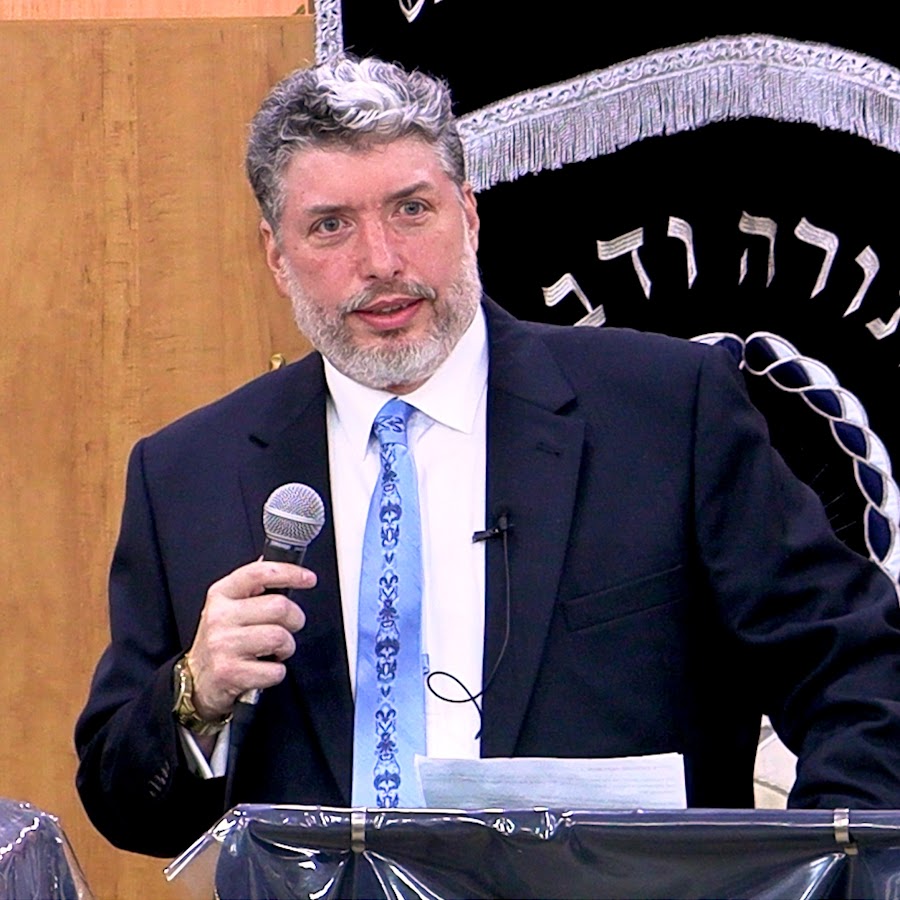
Transcript
Auto-generated transcript. Not time-synced to the video.
But I will say this, Israel has a
covenant with [music] God. God's hand is
over this place.
On April 13th,
2024, [music] Iran, for the first time
in history, launched an attack directly
against Israel. 300 missiles, ballistic
missiles, and drones were launched from
the 13th to the 14th. If a ballistic
missile would have hit any of our
mammads or our we'd be dead. We'd never
survive.
Zero people were killed.
One Bedawin girl was injured from a
fragment. As God's hand is here. I worry
about America cuz America must bless
Israel.
We're going on. I I I love America. Not
only was I born there, but my parents
were born there.
So I want America to do the right thing.
Her security is at stake. England's
security is at stake. But Israel has a
covenant from God. And that covenant
cannot be undone by a quartet or a
United [music] Nations. It's sealed in a
vault in heaven. And the lease is there
for all the world to see in the Torah.
So I'm not worried about this. I'm
worried about them.
We go on.
>> We're already on.
>> Oh, we're on.
>> That's how I work. We're just
>> We're on right now.
>> We're on right now. Yeah. Yeah.
>> Okay.
>> That's it. We start. Welcome back
everybody to the None of Your Business
podcast. I'm your host, Michael
Greenfield, and we are sponsored and
produced by the Prime Source team. If
you are a senior care facility looking
to save on your expenses, come to us. We
know how to represent you well. We know
how to represent all the vendors as well
for sales and marketing and brand
building. Of course, the None of Your
Business podcast is an extension of our
marketing team. So, uh, we appreciate
all the followers, the listeners, the
subscribers, the comments. Keep it
coming. We love a good debate. And, uh,
speaking of debates, we have Reptovia
Singer here with us today. So, I'm so
excited to welcome you here to the
program. Thank you so much for making
the time to sit down and really smoo.
>> Well, it's a joy to be here with you,
Michael.
>> Yes. Yes. It Well, you know what? I've
been going by I've been going by
Greenfield.
and Greenfield.
>> Yes.
>> Where'd you get such a gisha name like
that? [laughter]
>> I'm named after the So, our brothers are
Ysef and David.
>> Wow.
>> And there's another one who's older, but
um the was David Aul. And then I'm a
twin. So, um Mel Gabriel. When the uh
nurse put my uh me and my brother on my
mother's arms, she put me on the right
and my brother on the left. So, my mom
added the name Mikail and Gabrielle. So
wow,
>> I decided not to be when I went into the
business world, but I'm uh I'm dumping
Michael and I'm fully owning Caim and
I'm always in Israel and people who know
me from my beginning years like that. So
enough about me. [laughter]
>> Yes.
>> I want to utilize every single second we
have.
>> Sure.
>> So Retovia
>> Tovia
>> you were What's Tovia? What's that name?
>> This is my greatgrandfather's name. It's
one of the names of Mosher Rabeno. And
he appears in Zechariah 6:10 as one of
the Jews of Babylon who came to the land
of Israel wanting to donate money to the
building of the second temple. And there
was a question asked of whether we
should accept money from outside of
Israel, from Babylon, from diaspora to
support Israel. Could they be involved
in building the new state, the second
temple? And that question is brought to
Zachariah. So, but it's also the name of
Moses. And my great-grandfather was
murdered by the Nazis in the spring of
1944 in Hungary when most of Hungarian
jewelry was destroyed. So, I'm named
after him. Let's get into that. I think
that one of the things that I would like
to do on this podcast today is break
down who you are, where you're from, a
little bit more about you, and then head
towards the uh, you know, the the great
wonderful work that you're doing um,
fighting for Jews and really
understanding like you just dropped, you
know, a number and a name. I I have no
idea what you were saying in terms of,
you know, quoting different parts of the
Torah and the Tanakh. uh these are
things that you know and uh you don't
really need a major introduction but for
those of us that don't know um you are
an expert when it comes to understanding
the Tanakh completely the Quran uh the
New Testament and uh breaking it down in
very simple way to understand it and uh
really battling the battle on behalf of
all of us and uh I on behalf of all of
us who know you a tremendous thank you
for all the work that you've been doing
and all the effort that you're putting
in and and it's just uh it's amazing
that we have someone representing us
like you in the world and uh it's so
important that we have more of you and
you're educating the younger ones and uh
with Hashem's help we're going to
continue educating all of us until the
Messiah comes and uh we can all enjoy
the salvation and get away from all the
hurt.
>> Um so let's start with that. What's your
background? Where did you grow up? Who
are your parents and grandparents? Tell
me a little bit about, you know, spice
it up a little for me of who's Tovia.
Who is this Mosha Rabino that we're
sitting in front of today?
>> Right. So, I grew up I don't think you
heard of it. Maybe Borough Park.
[laughter]
So, um, yeah. And, you know, growing up
in the 60s and 70s,
all the non-Jews around me did not like
me, and I didn't know why. But when you
were born in 1960, 50 15 years after the
Holocaust, it was ubiquitous to see
people with numbers on their arm. That's
the world I grew up in. And there's
nothing I could do to stop that because
it happened. European jewelry was
destroyed
before I was born. So there's nothing I
can do.
But I knew the non-Jews didn't like me.
And they reminded me, if I ever made the
mistake in walking past a group of
Irish, Italian Catholics, they always
told me that I was a Christ killer. And
I thought they were insane.
So I thought that the world I was going
to grow up in was a world that was
filled with hatred, but made sense. The
non-Jews, for some reason, hate us, want
to destroy us. I was very aware that the
Jews were only murdered in Christian
countries.
And uh but then when I encountered
with my family on a Saturday night in
Midtown Manhattan going to a restaurant
called Mosha P. King.
Jews for Jesus on the streets of Midtown
Manhattan by the Diamond District.
Jews for Jesus.
that might as well said Jews for
Hezbollah. It's just like insane like
Jews for G. Why would you join? It
didn't make any sense to me and I began
to argue with them as maybe you have
many people do. You engage them, you can
count them. It's it was a conversation
that went nowhere very quickly. It was
infuriating and also I wasn't really
prepared for it. There was nothing in my
yeshiva background. You know, I learned
in the mirror. It was a very serious
education but nothing prepared me to
understand Christian literature and the
passages they were quoting
and ultimately I walked away very
unsatisfied with that. The following
summer I visited where we are right now,
Jerusalem. My uncle lived in the old
city of Jerusalem and he just happened
to have a Christian Bible that was given
to him as a gift from a pastor that
spent the previous Shabbat at his home.
And when I came to the old city and my
cousins walk me through the Jewish
quarter because after all the taxi can't
take you,
my uncle shows me this King James Bible.
Give a look at what we have here. It's
like he had the the manual from the
other team. He was like really excited.
Give a look at what I got here. And I
told him that's exactly what I wanted to
read. And I began to study it. That's
really the most the the one of the most
important events tectonic events in my
life when I began to study the Christian
Bible and to my shock I realized number
one why they hate us that means I was
fairly confident although I knew little
about Christianity
that Christians didn't like us for some
reason was very obvious to me when I
read the Christian Bible and the Gospels
in particular are all stories and the
stories I don't know if you ever made
the mistake of like opening Al Jazzer or
the New York Times and you're going oh
god they really hate us so it's like
every story the Jews are the villains
and
and Jesus is just the protagonist who
can do nothing wrong and the Jews for no
reason want to destroy God's son was
horrible number two was that the
Christian Bible had altered the Jewish
scriptures in order to make it appear
christoologgical just plainly just was
completely not true. Like it was a
complete lie.
>> What stood out?
>> Oh, that Matthew was quoting Tanakh, the
Hebrew Bible, and misquing what it said.
Moreover, the Christian Bible did
something that
robbed Christians of a guard rail. And
that is that the Christian Bible in the
Hebrew scriptures of the Hebrew
scriptures mistransate their text in
order to comport with the New Testament
mistransations. Which means Christians
are playing tennis without a net.
There's nothing there to measure,
nothing to guide because all the
Christian must do is go back in his King
James Bible and look it up. And the King
James Bible on Isaiah 7:14 will say
virgin in order to support Matthew 1:23.
So Christians, I realize to my horror,
are operating spiritually without any
guard rails and we don't know each
other, but I presume you went to yeshiva
and you learned Hebrew and by the time
you were 10 years old, I can give you a
kish of five books of Moses and you can
read it like you can read a newspaper.
Well, no Christian child has taught
Hebrew. None. Now, they can learn Hebrew
in college, but it's too late. So,
therefore, they're utterly reliant on
translations. When I say playing tennis
without a net, I mean that. That means
there's no way they can tell that
there's something off, there's something
wrong. Now, we have of course
translations are scroll, but most of us
don't need it. There are a lot of
conversions, a lot of Bali chuva
returning. So it's so therefore I knew
that I had to stop this. I met a Jew at
the Western Wall.
My uncle lived in the Jewish quarter on
Mskavladak. I pray at the Western Wall.
Fellow taps me on the shoulder as I'm
talking to God in a way that I'd never
spoken to him before.
I turn around in the middle of Davening
and he asks me if I know the Lord.
What am I doing? I'm playing handball. I
mean, what what what am I doing here? I
said, "Of course I do. I went to
Yeshiva." He said, "You mean you know
who Yeshua is?"
I said, "Of course I do. I went to
Yeshua with him. He was in my class." I
had I was thinking Yeshua Jacob was I
had no clue what he's even talking
about. But we began to unravel what was
happening here. He was a Jewish fellow
from New York and we began to study
together in Israel. Returned to New York
and he did Chuvo. He's today Russia and
Muny. Yeah. So what was shocking was
that when you meet these people who are
in the church, Jews who are in the
church, they seem so sure. But when they
repent and they return back to the
Jewish faith, it's it's tectonic.
So I didn't hear a voice or see a
vision, but I knew that I wanted to
devote my life to getting Jews out of
the church. That was very important to
me. I began to write about this and then
the advent of YouTube. So, what kind of
Jew was Jesus?
>> Well, there's a problem there. If you
would ask me what kind of Jew was Paul,
I can answer you because he wrote a lot.
He was a prolific writer. We have 13
letters that survive of his. Jesus wrote
nothing, which means that we're looking
at him through the filter of mythology
of the Christian Bible. And the Gospels,
Paul never met Jesus. So the gospels
were all written at least 40 years after
he was dead. And it's just mythology
over mythology over mythology.
So we we don't know. And in fact, in New
Testament scholarship, the quest for the
historical Jesus is what everyone's
after. That's what Albert Schweitzer
wrote about in his most fame book in the
beginning 20th century. People can
guess,
but no one can know what he who he was.
because we just know what he wasn't.
>> Do you ever guess
>> he's not the Messiah?
>> I think he was a probably from the
northern Galilee. It seems unlikely that
someone would invent the name Nazareth
and he probably had a lot of contention
with Jewish people. That that just what
seeps through in the Gospels. That means
he's he he's very he's conflicting with
Jews constantly. That's the guess who he
was.
Uh
if he was crucified, which is everyone's
starting point,
it seems likely that he was actually
crucified by the empire. So that would
mean the empire would not crucify
somebody for any ordinary crime. There
were cheaper, faster ways to execute
people. But crucifixion was reserved for
people who were accused of insurrection
that somehow the empire thought that he
was saying the end is coming or
overturned the Roman Empire or something
like that. That's for most scholars
that's a that's a starting point. But we
we have zero that he wrote. The
Christian Bible obviously portrays him
in the very way that the Book of Mormon
portrays Joseph Smith in a very
flattering way with enormous mythology.
As an example, Mark the early of the
Gospels, there's nothing supernatural
about the way he was born.
We're introduced to him as an adult.
Matthew and now Mark is written about
7075.
Matthew and Luke about 10 years later
now we have a virgin birth. He was
conceived supernaturally. So there's so
much thick mythology. The real Mark
which ended 16:8.
Now today's Bibles for those of you
watching this think that it continues to
verse 20, but that was a later
interpolation.
There's no resurrection accounts in the
book of Mark, but we do have that in
Matthew, Luke, and John. So there's so
much embellishment
that it's really hard to do that.
>> I'm just curious. So if if Jesus came
today and you know came out and looked
at the his whole world that was created
for him or you know on his behalf, what
do you think he would say?
>> Oh, he'd be shocked that people worship
him as a god. He would be stunned that
people believe in the doctrine of the
trinity.
Um he would be stunned that people
thought that he would preach that you
don't have to keep Torah any longer.
That we could say with certainty, with
virtual certainty. This is this is the
humanities. But if we could just presume
that he was some sort of religious
itinerant person to think that you
should teach that because Mashiah came
you don't have to keep Shabas anymore to
teach that an innocent person could die
for the sins of the wicked vicarious
atonement which was well known in the
ancient world utterly pagan that this
Pauline neoplatonic Greek thinking is
what would seize Christianity that that
Christians would believe that while God
is one, he's there are three persons
that have distinct hypothatic entities,
fancy word, I apologize, but it's just
because the church uses that kind of
unconventional language in order to mask
fig leaf doctrines that are unsavory.
He would have been shocked. He would
have been shocked to know that such a
religion would nurture him.
>> Wow. I'm I'm very much enjoying this
conversation and I see where you're
going with it and and I and I want to
get back to it. I still want to go back
a little bit to your upbringing and um
and thank you for explaining to me what
got you into it and what sparked your
interest and your uncle and going to the
to the Western Wall and that's just
amazing to hear. Uh you went to regular
yeshivas.
>> Yeah.
>> Siblings.
>> I have four sisters. Amazing women.
>> Wow. Okay. So, uh that must have been
interesting.
>> Yeah. Oh, what did that teach you?
>> They're great kids, you know. It's It's
my four sisters. That's like growing up
with
>> what's his name? Stewie and
what was that cartoon for adults? I
forgot what it's called.
>> My sisters were were perfect. They went
to school. They were the best kids in
the class. Never got in trouble. Always
did their homework. I was a a Kisha kid
who who couldn't understand. So I
thought girls were all perfect and
[laughter] and boys were just a mess.
>> Okay.
>> They were great. They're great. I don't
>> if that changed much.
>> No, no, no. And they remain to be some
of the finest women I've ever known.
>> Wow.
>> Yeah, they are. And married amazing
guys. You know, that's the way it is.
They They're amazing women. They
>> So you grew up in Bora Park.
>> Oh, yeah.
>> You went to regular mainstream
to seis and then
>> and then the mirror.
>> Okay. Did you experience anything
throughout that process of uh learning
about uh the world that you are? So,
>> no matter where your question ends, the
answer will be no. [laughter]
No matter how where you meander with
your question, the answer is going to be
no with an exclamation point. We were
>> in the 60s where were Europeans
and did not understand American kids and
did not for the most part did not
understand
I I just couldn't understand what they
were talking about.
>> Well, let's talk about you then. During
that process of growing up, were there
challenges that you had with God?
>> No, I believed in it completely. I No, I
never for one second didn't believe. I
always believed I just the only thing
was is that we never learned the
prophets.
I mean, we never learned uh I'm a little
Joshua judge maybe try but we didn't. So
Isaiah, we never learned Isaiah when we
went to Shiva. Zero. Nothing. When
learning the Talmud and Jeremiah was
quoted, no one got up and looked it up.
And if we did, we would have discovered
that we don't understand what it's
talking about. Isaiah for your viewers
who don't know this literally more than
90% of it is poetry. This is a huge work
of 66 chapters only five chapters that
are that you can pick up and read and
understand exactly what he's talking
about. The rest of it you would go I 61
chapters you go I have no idea what he's
talking about. It's all poetry. I mean
some of it's easier some not.
>> And therefore what
>> what's that? Uh therefore what meaning
it's
>> oh therefore it's very very difficult
and if you have no background in it's
very difficult I teach Isaiah here in
Jerusalem I have go through the book of
Isaiah it's on YouTube for those of you
want to watch it go to my introduction
video on you I mean once you know it of
course it's magnificent it's just that
yeshiva didn't convey that to me
Ezekiel which conveys the most nuinous
prophecies of the messianic age it's
rich with details that's not found
anywhere else in Tanakh. I was just
marvelous. I mean, I love Tanakh, but we
missed that out. And the yeshiva world
grants that it it messed up on teaching
the prophets specifically, the Naveim,
that central part. And given that we're
living in a messianic period, meaning
we're living at a time when messianic
prophecy is unfolding, it's more
important for this generation than any
generation history to know these
numminous oracles very very well.
>> So start a yeshiva today, let's say, for
argument sake. And uh you're creating
the itinerary and the classes and the
education.
>> Yeah.
>> What would you do differently? What
would how would you educate the young
generation today? What would you start
with? Yeah, I would start with the
Abarbanel. If you have the Abarbanel,
a medi medieval mean he was born in 1437
in Portugal. Uh died in 1508 in Italy,
lived in Spain for 11 years. He was one
of the greatest minds that writes a
commentary on the Naveim in a very short
time in 1481. I would just be teaching
the Nim, the prophets with the Abarel.
That's what I'd be doing and that's what
I do now and I'd be doing now right now
because we're living in a very unique
period. I would say and I I say this to
the rabbis who are watching us who
actually have control over you should be
reading Ezekiel from 34 to the end 48.
Right now Ezekiel for those who don't
know is divided into three discrete
segments. one and two is about the
destruct, why the first temple destroyed
and what God will do to the nation that
persecuted us. But from 34 to 48 is all
about the messianic age. So right now I
urge every um every yeshiva to start
teaching Ezekiel and begin with 34
immediately because we're going to go
through
the final war, the valley of dry bones,
the third temple. right now. That's
vital to know that
>> you're giving a lot of credibility to
prophets and hanging your hat a lot on
on this concept of uh of learning from
them, right? And and why and and and is
there anyone that argues that and says,
"Oh, you that's not you know, where does
all that credibility coming from from
your perspective?"
>> If you got a letter in the mail and the
return address was God,
wouldn't you open it? Of course you
would. Wouldn't you read it with
trembling hands? Of course you would. I
mean, we have that. Not only that, we
are told by the medieval commentators.
My monities as an example,
he criticizes his contemporaries. My
monities was born in 1135. He passed
away in the winter of 1204. give you he
criticizes contemporaries for
speculating about the messianic age and
about making calculations in Mishna
Torah and the laws of kings in chapter
11. He says only the generation who will
live at that time only they will
completely understand these passages.
Well, guess what? You and me are here
now witnessing the events that have been
spoken of and hoped for and dreamed of
two and a half thousand years from the
time of Ezekiel.
Ezekiel contains the road map to where
we are right now, what's ahead. So
that's the last thing in the world I'd
want to ignore. I mean, God is telling
us what's happening and also why it's
happening is why is there a war at the
end of days? Why do the Jews have to
return to the land of Israel? Why is
there a war? Why is there a cataclysmic
attack on Israel that will take the
lives of many, many civilians that
triggers Muhe go? The Talmud knew this
was important. In fact, in trackctate
migill
30 dlammed the gummor tells us that in
fact
this end time war begins on sukus.
Therefore on the shabas of kalamite
sukus mean the sabbath on the
intermediate days of the festival of
tabernacles
read Ezekiel 38 and39 which is the war
between Israel and Persia explicitly.
The Jews return to the land, seize it,
have full control of Jerusalem, and go
to war with a country a thousand miles
east, and the whole world will be
watching it real time. Israel destroys
the enemies, and then the nations will
know that I am God, and Israel will know
I am God. How would I ignore that? I
mean, our sages 2,000 years ago knew
that's it. And here we are.
Love the answer. Uh love love your
perspective and and your knowledge on so
many of these things. Um
one of the prophets you're able to tap
into have a conversation with in person
or King David or Moses Moshe Rabenu who
would it be? What would you talk about?
What would you ask?
>> We have all the information we need.
>> No, no, no. You personally, it happens.
We
>> I would want to meet Daniel only because
he was such a remarkable person.
>> Tell us a little bit about him.
>> So Daniel was a prodigy, a genius and he
was taken in by Nvar the very person
that destroyed the first temple and he
was able to interpret a dream for
Nebuchadnezzar. It was a very troubling
dream and he
was no idiot. He said to his all of his
assistants, "Whoever's going to tell me
what I dreamt," because he knew from
Pharaoh. Pharaoh gave it away. He said,
"In order for me to know that your
interpretation is correct, tell me what
I dreamt and then tell me what it
means." And Daniel tells him his dream
of seeing a great statue, head of gold,
chest of bronze, legs of of uh brass and
of of iron and legs of excuse me of
brass and legs of clay and iron.
And this is what it means. There are
four kingdoms that would um that would o
have schlita of sovereignty over Israel
and ultimately the leg and iron which is
Edom would be destroyed. The point is
that he could have had it all. He was
only 14 years old at the time. He was
just a giant. But this is typical, you
know, that great people accomplish their
greatest works in their when they're
very very young.
And he said he could have had anything.
He was made like viceroy essentially of
what's called the neoablonian empire.
But he he deferred and he said it's not
from me. It's all from God.
Have we encountered Jews that sold out?
We have. I can think of a senator from
the state of New York that's let us down
because he's reached the highest point
of [snorts] power of any Jew as he
brags. That was the opposite of Daniel.
Daniel never betrayed his principles.
Like the Barbaranel, the Barbaranell
rose up to be the head of finances of
Portugal and then Spain. He never sold
out. These are the people I really want
to encounter.
>> So what are you going to say or ask?
It's um I just want to be in their
presence. When I was in the presence of
Raosha Feinstein, Labavi
when I years ago I just would watch them
and just be shocked and listen to them
and receive a blessing from them.
We we have it. It's all spelt out for
us. means we have the prophecy of
Ezekiel 38 and39. We know exact I'm
going to say something that sound um
almost blasphemous. So I want the you
the audience to give me a chance at
this.
So, we understand the the messianic age
or the the events that lead to it better
than the prophets did. How could that
be? I just finished telling you. Okay,
let me explain. See, the messianic age
could happen in many ways. Meaning, the
endgame is that we win one to nothing.
But how do we get there is complete
chaos. And the Talmud identifies this
that it could be a righteous generation
based on the passage at the end of
chapter 60 of Isaiah 60:22 and then it
happens with great miracles or it could
be a a guilty generation and it happens
in a very plain mundane way. So there's
all this open space of how is that goal
scored. Let me first tell you I know
nothing about soccer but I have a sense
of what the business end is. So you can
win by scoring an incredible shot. The
goalie can make an error. It could be a
penalty. That is they didn't know this.
They really didn't know. Not because
they didn't have that information. It's
in a sense like this is not true. God
forneew but God didn't know because he
have gave us complete free will. So we
actually have copious details because
we're actually living the messianic age
in real time. We're able to observe what
they couldn't know. The reason they
couldn't know is not that God couldn't
tell them. It's because it can happen in
a range of ways depending on what kind
of nation we would be
>> based on free will.
>> Based on free will. And there's a key
passage. Why is there such a a visceral
condemnation of making calculations
because of a key passage in Isaiah
59:20.
[snorts]
It's familiar to you because you say it
and you're dabbing every day. and a
redeemer meaning the messiah will come
to Zion specifically when Jacob repents.
So the repentance of the Jews Jews must
repent in order for the trigger the
coming of the Messiah. So therefore the
prophets would have given anything I
rashi my manities would have given
anything to live during our time to have
this kind of detail but we are observing
it in real time because the nation is
engineered. I don't know you, but I feel
confident that the person you were on
October 6, 2023
does not exist any longer and will never
exist. And neither will I. That means
our nation will never be the same from
that horrible Saturday morning
when 1,189
Jews were murdered and 251 were taken
hostage. We'll never be the same.
Whoever we were on circus of that year,
those people don't exist anymore. We are
utterly transformed as a nation. And
there's a revolution going on there in
Israel. And we're observing a series of
events that are unfolding now. That's
Zechariah 12, which this massive attack
is. It's called Msiah Bose in the
Talmud.
>> So, we have access in real time to
what's unfolding right now.
>> Yeah. I'm glad I let you finish your
sentence because it makes sense now
actually. So, I appreciate that.
>> Um, you have a tremendous understanding
and you're quoting things and it's one
of the things I think that I love and
people love about you is your real deep
understanding and to have a good debate
and you know pull out facts. Um, you've
also studied other uh teachings, right?
So, you know, Na'vi prophecy and the Old
Testament, the New Testament, the Torah
of course, right? Um,
what other things have surprised you
surprised you and things that you've
learned or studied? And uh,
specifically, I'm thinking um, the
Quran.
What have you learned from studying
these uh, teachings that you can um,
tell us affects us in ways that we need
to understand in living this messianic
times?
>> So, I've read the Quran more than a few
times and I can tell you that I don't
even understand half of it. Meaning the
Quran unlike the Christian Bible is
incoherent
most of it is incoherent.
It's incohesive
and it passages
uh move from one topic to another on a
dime. So it's extremely difficult to
understand very very difficult. It's
even difficult to know when texts were
written. In fact, there are many Muslim
scholars that believe
that um that no one could really
understand it completely and in fact the
purpose of the Quran. So the word Quran
really means a recital that the purpose
of it really was to recite like balor
it's really the same word like the
person who reads. So the Quran is
supposed to be read. I remember living
in Indonesia serving as rabbi and
hearing the Quran recited that it sounds
uh terrific. But reading it, so what you
have in it is things that I would
recognize. I would recognize the things
that are very Jewish and radically
monotheistic. There is no God but the
true God. La
there's no God but the true God. And and
a front assault on the doctrine of the
trinity of Christianity.
Then you have ideas that you would find
in Christianity as Jesus being the
Messiah. Messiah,
but he's not the Messiah of Christianity
means he's really a prophet. So the
danger in Abrahamic religions, we're
using the same word. Well, we don't mean
the same thing. So Muslims believe that
Jesus or Issa, the J didn't exist back
then. Um that Jesus was the Messiah, but
they don't believe he was the son of
David. They don't believe he was God.
They oppose it completely. So it's very
different kind of person, but they
believe he was born to a virgin named
Miriam and the Quran
chapters named after her and so on. So
and you have many ideas that you find in
Midashic literature that God put a
mountain over the head of the Jewish
people at Mount Si is in the Quran that
Moses a little infant um grabbed a piece
of red hot coal and put it in his mouth.
It's in the Quran as well. So that's
what I recognize. I recognize midashic
literature, talmudic literature, stories
found in the Torah and also Christian
ideas about Jesus and um Christian ideas
about the sayings or more about um
things that Jesus did as an infant
that's found in some obscure texts, not
necessarily the the canon.
>> Fascinating. You know what's also
fascinating that you were [laughter] a
rabbi in Indonesia. I'm sorry I couldn't
like just hear that and forget it,
right?
>> Whoa. So, so now you got to take me
through the era of life. Let's go back
to your yeshiva days. You're done with
yeshiva. You went to Israel to yeshiva.
>> No, I learned in the mirror in America.
>> Learned in the mirror in America.
>> Who influenced you then in any way?
>> Oh, by far Redder.
>> Rea Miller because he was down the
street from the mirror. The mirror is on
I believe Avenue or it's on Ocean
Parkway and Raikda Miller's Shul
was just up Ocean Parkway. It was just
>> Yeah. I I uh I I was lucky enough to go
to two of his shurim. one of the most
popular shm he ever gave which is uh
telling people that if you smoke that
you're putting yourself to in danger and
because it says you have to be careful
of your life that um if you smoke you
you are a Russia which is one of his sh
and I was there for the shir and I
remember someone asking he says excuse
me my rabbi he's sits and learns all day
and he smokes he's a Russia that knows
how to learn [laughter]
>> right so the ravikdum you ask me earlier
on like you know what would I say to
this person that person so I was in the
presence of Victor Miller a lot and I
never said anything to him
>> I just stood and I shook in his presence
he was a person who had hajasponum he
stood [snorts] like this he was whatever
he was that what you hear on his audio
programs that are widely available that
was him he had a complete encyclopedic
knowledge of everything he was Americans
and he also had an a degree in English
so he
remarkable ortor is completely
unfiltered
and also his praise of Muslims he said
you know that they dress in with sna
they dress modestly they pray this
something that's praiseworthy there's
zer a so also his clarity on that point
influenced me I mean I'm a religious
zionist that didn't matter but point is
he spoke clearly and make complete sense
sense to me and he built his ideas his
he was a giant I mean absolute giant he
just knew everything there was to know
but the key was he knew how to make
complex ideas easy to understand so he
was the big influence on me in that I
thought to myself I don't want to do
that but I was not petrified of him but
when he wal you know what it was like
when he would walk by you would just
just watch him and and realize walking
safety I
Wow.
>> But he was again American. So he knew
how to speak to American boys. He was he
didn't work for anybody even though in
his earlier years he I believe was a
rabbi of a young Israel in Connecticut I
believe. And so but now he was
completely unrestrained. He was able to
say whatever he thought
>> and he wanted us to think for ourselves
but he wanted to teach us how to think.
So his complete knowledge of Tanakh. He
knew Tanakh cold. Knew it cold.
>> So take me through that journey of where
you are today from there to here. Where
have you traveled? What have you done?
>> I I knew fairly well that my role was to
to help Jews who were in the church come
back to the Jewish faith. How do you do
that? So, so people would ask I would
lecture a lot and incidentally
Christians would show up to my lectures
who I found to be totally different than
the Christians I had met as a kid. They
were very nice in Yiddish. They were
mench. They were
Um, so that I realized then that the
Christian Bible had poisoned the minds
of these children that were so
anti-Semitic. [snorts] Um, but I started
making cassette tapes like Raikda Miller
had cassette tapes which we all would
listen to.
[gasps]
And so I made cassette tapes of my
lectures. My thought was when someone
asked me about Isaiah 53, if I can just
record a lecture of Isaiah 53 and this
here's someone a cassette tape that
really cost
whatever was 20 cents. It was nothing.
Then here it is. Here's Isaiah 83.
Daniel 9. Here's Daniel 9. That was the
thinking back then. How can I just do
there was there was no internet back
then, right? None of that existed. No,
internet was very valuable for me as
well in that I actually had to meet the
Christian, talk to them and more
importantly listen to them. So I I had
to engage with them. There was no
software or chat. I had to study the
Christian Bible thoroughly. Had to study
the writings of the church father. I had
to understand what they were saying and
why they were saying it. Why is this
attractive? Why would a reasoned person,
a sober mind believe this stuff? because
it so it forced me and there was no
prior to me there was no one who there
was really no one doing this before me
it was like it was a whole new idea it
was a new problem Jews for Jesus started
in 1973
so that's when it exploded in the 1970s
a very difficult time for America
hippies you know Watergate Vietnam Jews
for Jesus what else is new right
[laughter]
so right So you were lecturing, you were
getting involved and you were living in
in Brooklyn at that time.
>> Yeah. Then I moved to Muny, right?
>> Oh, then you moved to my then what? Keep
going. How do you You got to Israel.
>> Oh, so I
eventually got someone out of the church
who
asked me if I wanted to move to Israel.
He became very wealthy very quickly and
said, "I have houses in Jerusalem. Do
you want to live?" and I lived in the
old city of Jerusalem for 8 years
and everything was taken care of for me.
That's when I wrote my books, Let's Get
Biblical.
I was able to do a lot of work then, but
flying back and forth from the United
States to Israel
and I guess then internet emerges so
that YouTube becomes available and then
putting the videos on YouTube and making
that accessible. But then the call
asking me from the Jewish community in
Indonesia. Now you're I know you're
asking there are Jews in Indonesia.
Indonesia is the fourth largest country
in the world. Nearly 300 million people.
It's the largest Muslim country in the
world. But as it turns out many Jews
were there. When I say many, less than
20,000 Jews as far as our estimates are
are there. And many of them had
converted to Christianity between World
War II when Indonesia became independent
and now in the modern period.
And were you willing would you be
willing to come to Indonesia
and there was a person who is not Jewish
but because of my YouTube videos
changed his life and became a Ben Noak
willing to underwrite any uh Jew who
would become a Christian to study with
me at a major convention in the island
on the island of Papo Jeropaya the
capital.
And I was asked, would I be willing to
come? And I went, of course. I mean,
that's like winning the lottery.
So,
was simply paradise to be there. But
hundreds and hundreds and hundreds of
Jews who had become Christians studied
with me for a few days and left the
church. I had a very big impact. And
they asked me, would I stay on as rabbi?
And of of course I would. Of course,
because it was so vital. There just been
nothing there. And I was there for five
years.
And
by the fifth year I was there, so now
we're in 200
um 2018, I came to Israel to do a debate
of Christian at what was then called the
King Solomon Hotel. And I realized at
the end of the debate, which is on
YouTube, many people came over to me and
told me that there were a lot of
Messianic Jews in the country and
brought their friends with them who were
in the church. And I realized then that
it was important for me to be in Israel.
That the problem of mission activity
here in the Holy Land is spread like a
cancer. [snorts] I didn't anticipate any
more Jews in Indonesia were going to get
out. And I decided then
that when I returned to Indonesia, I was
going to close up and then returned back
to Israel, which I did. and I applied
for aliyah went to Singapore where the
Jewish agency was not Jewish Jewish
Israel embassy is at the um is at the at
the embassy of Singapore and I was
accept they all knew who I was
and then I um made aliyah and landed
seven years ago today is today June 4th
>> it I think so
>> I I don't know whatever day it is. So it
was 7 years ago today that my LL flight
landed.
>> No way.
>> Yeah.
>> Wow. Masleto
landed in Israel cuz when I had lived in
Israel before, I was just in and out. So
I was just always on a tourist visa.
>> But then I made Ali.
>> How were you making money after that?
Like what were you doing for income?
You're having a debate. You're doing
God's work. You're representing Jews.
You're fighting missionaries.
>> You know, making people understand it.
So where's income coming from? Well,
people are supporting my work. People
today I people who watch me know that I
never ask for anything. I'm very careful
about I never say buy my books because I
feel it sort of um contaminates the
message.
Three times a year I do a video asking
people to donate and people are
generous. They want to see this work
continue.
>> Beautiful.
>> But everybody who watches me knows I
never try to sell a book.
Uh I never ever asked for money except
three times a year or there was once an
emergency. It doesn't matter what it
was. There was once an emergency but
people know because I never ask that
when I do do and I do that before Rash
Pes for Kaneka. That's when I ask that's
it. It's going to be one video. I talk
about what I'm doing and so people
support it and people do buy my books uh
[snorts] on our website outreach
Judaism. I again I everybody who's
watching me now who has watched me knows
that I never talk about
>> okay well that's why I was asking yeah
>> that's what happened so people make sure
that
>> it's good to know and I appreciate where
where you're coming from on that uh you
said missionaries let's talk about it
first what's what's bothering you so
much about missionaries if you can
explain it to me on a simple level
>> yeah fundamentalist Christians not your
Clinton Christian not the Roman
Catholics but fundamentalist Christians
are targeting Jews for conversion
And whereas the church you're probably
wondering well they've always tried to
convert to Christianity in the 70s
early7s they developed a new technique.
Remember early 70s it was right after
the six day war. There was a messianic
fervor in the world. The church realized
that it had to evangelize the Jews.
Jerusalem after all now is in the hands
of Israel which is messianic prophecy.
It's very very clear. They thought Jesus
was gonna make a second coming by the
year 2000. Whoops. But the point is
there's this push to convert the Jews
and missionaries gather, the
evangelicals gather in Western
Switzerland to figure out why had the
church failed in the past to evangelize
the Jews and what could we do now
differently to succeed in finally
converting the Jews. and they discover
two points and I want the viewers to
listen like they've never listened in
their lives. Number one, they realize
that Jewish people who are not religious
don't want to convert to Christianity
because for some reason Jews equate
Christianity with persecution.
Yeah, I know. I'm surprised too. But I
never heard a Jew go, "Ah, Jesus Christ.
What a hear those words. Say it again. I
want to get nas and pleasure and say
it's such a most Jewish people see
Christianity as a not just alien but as
our implacable enemy and hostile and so
therefore they came with a technique to
address this. You're Jewish. We love
you. We love the Jews. And those
Christians that persecuted Jews in the
name of Jesus, they weren't real
Christians. So that was number one. So
we love you and we support Israel and
they really do support Israel. 70
million Americans are Christian
Zionists, the largest voting block in
America and they're extremely
pro-Israel. So they can actually point
to that and say, "Look, the second issue
they realize is that Jews don't want to
convert to another religion." And I'm
talking about you. I'm talking about
your cousin who's not observant.
Even though she might not be observant
and doesn't go to synagogue or whatever,
but she does not want to be a Christian,
she is proud of her Jewish identity. And
that's where the second technique that
come in that's been devastatingly
successful and goes like this. When you
become a believer in
Yeshua,
you're not converting to another
religion. Oh, no. You're becoming a
messianic Jew, a completed Jew, a fil
Jew. It's the most Jewish thing you can
do. After all, Jesus was a Jew. His
disciples are Jewish. How could it not
be Jewish to believe in Jesus? And then
what they do is they blur the
distinctions between Judaism and
Christianity in order to lure Jews who
might otherwise resist a straightforward
Christian message. So they don't call
him Jesus Christ. It's Yeshua
Hamashiach. It's not the New Testament.
It's Kadesha. They will never say come
to church. Jews don't want to go to
church. Jews definitely do not want to
go to church. They didn't even want to
go to shul. How you going to get them
into a church? Come to a messianic
synagogue, which is a church that
dressed up to look like a shul
that don't say convert to Christianity.
You'll never hear them say that. Become
a completed and fulfilled messianic Jew.
So they engage in this kind of sophistry
of just lingo. There's no substantive
difference between a what's called a
Messianic Jew and a Christian except
that one is using rabbitic Judaism
cultural icons and norms and liturgy
wearing a keypad set all of that but
they are thoroughly Christian. There's
no there's no difference in doctrine
between what Jews for Jesus believes
which is a Baptist mission to the Jews.
Jews for Jesus is a baptism. That's just
one of more than a thousand missionary
groups operating in here and in North
America targeting the Jews for
conversion. They're all over the place.
But that's a Baptist mission to convert
the Jews to Christianity. So it's those
two methods of saying presenting
ourselves as loving Jews and well we are
against the Catholics who hate
>> got to say from a branding marketing
perspective. I mean kudos to them. they
did something right in terms of how to
brand themselves and you know
>> that's correct.
>> So so that's interesting to learn and I
appreciate learning about that. I'm
curious through your um journey of
learning about all these different ideas
and concepts. Has there been let me ask
it a little differently. Um,
when is the last time intellectually you
changed your mind?
Oh yeah.
>> [snorts]
>> So I used to think that the war um over
the land of Israel was largely political
and then be be somehow had a religious
um
but then I so like for instance when
Sunni and Shia split very very early on
after Muhammad's death the split was
really a political split but eventually
religious aspects evolve. I realized
after not just October 7th but the
anti-semitism after October 7th that it
really is a completely religious war
between Israel and its interlocators and
it was not about politics. It wasn't
about uh it was about an idea of daral
Islam which means that is lands that
have come into control of Islam um
cannot cannot be under the control of
anybody but Muslims and that this was in
fact a religious war.
However, I couldn't understand Jewish.
So we have a an idea that the Benish,
the Arabs, not not just Muslim but the
Benish would do Chuva. They would return
to the Jewish people. We would unite
with them and our chief enemy would be
Persia which is so
historically makes no sense because
Persia was a a benevolent empire to the
Jews. The Cisanian Empire was really
nice as the Tamil was written in the
Cisanian Empire in southern Mesopotamia.
But now, oh, so now we see what's
actually happening is that so I I
realize that the conflict we have really
is a religious one and [clears throat]
politics has nothing to do with it. And
number two is I realize what's happening
is that Persia's role because they're
attacking the Persian Gulf states now.
They're they're attacking real Arabs who
are the descendants of Ishmael, not
Muslims in the subsahara. They're
attacking specific and what's happening
is the leader of Saudi Arabia is going
if it wasn't for my dad I would have a
peace treaty with Israel. It doesn't
matter what whether what he's saying now
is true or not correct. It has anything
to do with his dad. But that he would
never have said that 10 years ago. So
what's happening in the Islamic world in
the Sunni Arab Arab Gulf states is that
they realize that their problem is not
to the west Israel but the problem is to
the east Iran and therefore everything
is playing out. So there my view is
shifted. Interesting. I appreciate that.
You know I have uh friends that buy and
rent uh buildings apartments in
Jerusalem in Israel.
>> Yeah. something that I've been recently
thinking about when you were talking
earlier about Christians and the and the
uh impact that they have for Israel and
the support they have for Israel. I have
to tell you some something interesting I
just learned like and and I knew about
it for a long time that when you buy
property in Israel like an apartment,
all right, that's sitting on a piece of
property. There's a concept called where
you're leasing the property for 99 years
as opposed to buying the property.
>> So there are people that have no choice
and they want to live in a certain area
and they sign a lease. I've recently
come to learn that that term has been
altered based on the ownership belonging
to the Christian uh community and people
are now leasing property for 30 years or
you know you know in that realm and and
I'm curious if you don't mind explaining
to me and our listeners what is
happening in the town of Jerusalem
who's owning these properties and may or
Maybe there's not enough information
that you have. I'm just curious if if
you can shed light to it in terms of how
do they own so much property? Do they
have the ownership rights over it? What
is the real estate like in Jerusalem and
in Israel in general when it comes to
the religion? And you know, who's
controlling it really? And what kind of
pathway do we have to grow? I mean,
we're waiting for Msiah to come and have
the third base of Mikdash. What's going
to happen then? I'm curious about this
topic. If you can shed some light.
>> This is not my area expertise. However,
is highly variegated. The largest land
owners here in Jerusalem is the are the
Orthodox Church and the Roman Catholic
Church by far. In fact, it was only
during the Oslo that the Vatican signed
diplomatic relations with Israel because
if they thought Jerusalem was going to
be divi divided, they s needed a seat at
the table. So there are many many places
which even the Supreme Court of Israel
is sitting on land that's owned by the
Orthodox Church.
That's one example. Now there are homes
is real estate where people really
really own the land but it's not owned
by the Orthodox Church and the land was
owned by Jews like in Talpod. I know
many people who actually actually do own
the land. And then there's land that the
state owns the land and you really are
buying the house. So it's not
monolithic. It really depends on where
you are. Like the David Citadel Hotel is
I don't know if that status has changed
recently or not, but you know that was
sitting on land owned by the Orthodox
Church. Um so it really depends on where
you are in China, but the Orthodox
Church and the Catholic Church ownorous
property here and it really is becoming
a serious problem.
>> Right. I is there anything we can do?
>> Yeah, that's I'm not the guy. That's not
my expertise. Yeah, but there are people
that are focused on it and
>> there are people focused on it. They
they would answer that better.
>> Well, let me ask you a question. Besides
your area of expertise that is obvious
to the listeners. What else is on your
mind? I mean um kids uh you know uh just
what's happening in the world, social
media, um you know anxiety
um depressions uh the war and you know
so much happening besides this area of
what's obviously you know takes a
majority of your day. What else do you
think about that's worrying you or
that's
>> the the big issue right now is one thing
we are living it's not that we're living
before the messianic age that we're
living in it that means
the meal that we eat on the first night
of Pesak is called the seder which is an
odd name
means an order 15 events discreetly
separated we are living in that right
now this is what occupies my mind all
the time
half the Jews in the known Jews in the
world living in the land of Israel.
I want to bring the other half back
there. If they don't come here, which
they should, then we're going to get
Mami Mamani in New York. How did a gi
become the mayor of the largest Jewish
city in the world?
That's a signal. I mean every day we
this is what's on my mind is that the
Jewish people should return now to the
land of Israel. Ramban considers it a
mitzvah the erasa. I encourage people to
read his comment on numbers chapter 33
verse 53. It's very very clear and they
should make their way here. If not like
we see what's happening in England. We
see what's happening. So they all know
their time is up. see what they see
what's happening in Belgium where
circumcision has become banned and we've
been there before. So people I mean bur
will keep turning up dialing up the heat
and right now Jews in the area can walk
the streets and and feel a sense of
security. That's what's on my mind all
>> what do you think is the biggest threat
to Judaism today?
The biggest threat would be is if Tucker
Carlson and Candace Owens, if they
wanted to destroy us, all they he would
have to do is the following. Dave Smith
would get on his podcast, Tucker would
announce to his millions of viewers that
I made a huge mistake and I love Israel
and I love the Jewish people.
Um if the world would uh turn away from
its hostility towards Kali Israel, it
would have a catastrophic impact on us
means what unites us across the board.
No matter what denomination you belong
to, money is anti-semitism. That's all I
hear about. And people are perplexed by
because it doesn't make sense. Why the
Jews? Why now? It it so doesn't make
sense. Why would they be in opposition
to people who believe America first
to the notion that the most dangerous
country in the world would possess the
most dangerous weapon in the world?
Let's say you don't care about Israel.
If Isra I I have never been told that
Israel has nuclear weapons. I'm going to
assume they do. Okay? And Iran certainly
was very close to it. If Iran would have
had a nuclear weapon and launch it at
Israel and Israel would respond in time,
it has submarines that probably have
nuclear weapons. What would occur? It
would be a nuclear winter. America would
be destroyed. So if America, if you
believe in America only and America
first, if you have that, if you're a
Buchananite, you it really is very
important to you that Iran does not
possess a nuclear weapon. And unlike
North Korea, which you might think is
crazy in Iran, they're not. North Korea
has nuclear weapons which they acquired
during the Clinton administration in
order to prevent anyone from attacking
them. It's defensive. But Iran is a Shia
Islam iteration. That means they're
incentivized to see this end time war
with the Jews. So therefore, it doesn't
even make sense. That means let's play a
thought experiment. So India and
Pakistan both hate each other and are
both nuclear powers since the late '9s,
right? If they were to have a nuclear
exchange, I mean, unless you lived in
New Zealand, the world would be
destroyed. There would be radioactive
material that would spread all over the
world. It would be catastrophic is only
the word. I don't have another word, but
it would be worse than that. A global
catastrophe.
And we don't want them having a nucleus.
We don't want them having a nuclear
exchange. So therefore, the
anti-semitism doesn't even make sense.
It's not rational. Right now, everybody
should want Iran to be pre uh prevented
from accessing nuclear weapons. So
therefore, it's laum. The anti-semitism
doesn't make sense. Why would you hate
the Jews? You've been mugged by an
accountant. Like why what do you want
from Jews? All they do is invent a
vaccine for polio and figure out how to
get penicellin into a a pill form so
that American soldiers fighting World
War II
won't die from infection. Like what do
you want? They probably delivered you.
So the anti-semitism is irrational.
People are catching on to that,
>> right? So if they wanted to destroy us
just like us and we would like um the
the what the Jews what Israel enjoyed
I'll change that what the Jewish people
enjoyed during the during the time
Napoleon
led let's say from the 1799 to 1815
where Jews enjoyed emancipation was
actually very in the long run was very
bad because it triggered enormous
assimilation
the consequences were enormous.
>> A little bit of a lighter side of things
for a second because this has been
fascinating to me and so much that I'm
learning from and I want to get back to
it in a minute.
>> On a lighter note, do you vacation? Do
you get away? Do you take time off to
yourself? How do you I mean this this
topic is causing me a little bit of
angst just sitting here and listening to
it. So I can't imagine what it's doing
to someone like you on a constant basis
because you're battling it. How do you
how do you step away from it all?
>> Yeah, but I'm doing the thing I would
do.
I'm I love what I do. I mean, if I were
doing real estate,
I would not really want to do real
estate. I just want whatever how people
make money in real estate. I mean, no
one really enjoys the actual selling
buying a house. Maybe they get some sort
of thrill from I don't know. Uh but I do
what I love. Now, when I made aliyah in
in 2019, in June 2019,
by March of 2020, CO broke out. So,
everything shut down. So, the thought
about a vacation. Where really would I
want to go? England, like just walk the
streets of Manchester.
In case you, the viewer, haven't seen
Manchester, it's a nightmare. You don't
want to be there. So what where exactly
do I want to go? Like I am where I
always wanted to be, where I prayed
about being and I live in Jerusalem.
Like where would I go? That's better. I
mean that's it.
>> Okay. That's that's a beautiful thing.
Yeah.
>> I I I don't I think I'll tell you this
when I walk out the door and I just
can't believe I'm here every day.
>> So it's almost like you're living the
dream.
>> I'm visiting Disneyland, but it's real.
It's not fake. Right. which is really
wonderful. Uh and and I appreciate that
perspective a lot. I was just curious in
general like how do you unwind, you
know? Uh
>> I'm I'm my work is what makes me happy
getting that email. I was in the church
for many years and I did chuva meeting
someone on the street who tells me that
you know his whole family converted that
that's
>> so you hear about conversions of people
that come back.
>> It's large numbers.
>> It's large numbers. You're not keeping
tally or anything
>> and not a tally but it's very large.
We're talking about hundreds of
>> Oh, no. Well, there are millions and
millions of people watching me on
YouTube.
>> Yeah.
>> Um, so I have no idea. And I I imagine I
don't know and it's not Let's think
about your your favorite authors or your
favorite YouTube people person out
there. You don't really make it you
don't you're not trying to contact them.
So most people are not contacting me,
but I bump into them and they want to
talk and they tell me. So I know that
it's making a difference. every the
other thing is I don't need to travel. I
used to have to travel because in order
to convey the information I had to speak
in front of a very large audience. Not
that I'm not doing that now but now
there's YouTube so it's not necessary.
Combine that with the in Israel I'm safe
but in America as an example you know
you see what happened to Charlie Kirk.
>> Yeah.
>> I you know so we there's so much
security involved in me doing public
speaking. It just is is I do I do that
but this is a complication that
>> I understand. So keeping it light and in
in
>> keep so far you have not
>> I'm going to get there.
>> There's nothing about what I do as
light. So you don't have a chance.
>> I'm going to say keeping it more um you
know recreational in terms of your life
and also in interest of of what you
have. Tell me about some of your
favorite spots in Israel to go to
anyway. I
>> I really am a Jerusalem only person.
>> So tell me some of your favorite spots
in Jerusalem.
>> Oh, within within
three miles. Aha, there's my defiancy.
Miles, stop with the kilometers.
That's a French concept. It's, you know,
within just a few miles of the old city
is where I'm happy. And that's where I'm
really at peace. I enjoy visiting. I
enjoy going to other cities. I went to a
wedding was it two nights ago in
Ashkalon. It was very nice. But I very
very much enjoy.
>> And what's happening with the whole King
David, right? There's a lot going on now
that's being unearthed. Are you familiar
with that whole uh
>> You mean in the city of David? Yeah, of
course. That's rich.
>> Can you shed some light on that?
>> Yeah, of course. That's where that's the
most archaeologically rich place that we
have access to. I mean the most would be
the the actual temple mount but we don't
have access to do digging there. We
could only but we can't assume we will
probably but um so the city of David is
just south of the old city. You'd go out
of dung gate which is the southernmost
part of the old city but as it turns out
during biblical times
the city of Jerusale Jerusalem was
further south. So like for instance
where Damascus gate is which is in the
northern part of the old city the old
city for those who don't know this is
very tiny it's less than a square
kilometer not mile less than a square
kilometer was extremely tiny but as it
turns out the the Jerusalem the wall
city of Schlam you would move it so the
parts that are in the northern part like
lion's gate mass gate those parts were
not inside of Jerusalem and temple times
it would be much further south and for
those who are familiar with the old city
right behind the court where the minora
is and so on is actually the wall from
the time of the first temple from the
time of su so the old city it wasn't
called the old city then so Jerusalem
then in biblical times was furthest out
went down to the city of David that's
what's very very critical the only part
of today's old city and the old city I
did it again. Jerusalem of biblical
times that have in common is the temple
mount and the Jewish quarter. The Jewish
quarter is the southwest part of the old
city. So it's marvelous that that that's
the Jewish quarter. So it so the city of
David is where the kings were, where
their palace was. That's where the rich
archaeology is. That's where Tanakh is.
That's where the Bible was written. Not
all of it, but Isaiah,
uh, Mika,
Zephaniah, Sana, Yerahu, that's where
they preached, you know, Zakaria, this
is where they all lived and preached and
wrote it. It's all there. All the kings
were there. [sighs]
>> It's mindb blow. It's just you you feel
like it's not it can't be real, but it
is real. It's the real
>> and you're watching it being on Earth
and coming up with things. And I
>> I'll share this thought with you. uh uh
and I think you'll relate to this. So
logically when we look at the western
wall so
so we know it's the remain what is
remaining of essentially of the second
temple right so it should be a nightmare
to see the the coel the western wall
should cause pain in us because it's
essentially a relic of what once was and
in fact we have a minute to tear our
shirt when we see it especially the
first time so why are people so uplifted
why so happy there. This will explain
the city of David. This will explain the
western wall. It should be just we look
at it and go, gosh, look what Vespasian,
look what Tasteto does. It should cause
us to just feel sad. Why is there such a
a numinous feeling of hope? It's very
simple. What will happen to the Western
Wall when the Messiah comes? We're very
close now. So, there's a third temple
that's coming. It's described with every
detail in Ezekiel chapter 40-48.
What will happen to the Western world
when Messiah comes? Well, as it turns
out, it'll be the first world of the
messianic temple.
Therefore, right, they're not going to
like take it down and build a new one.
It's perfectly good. And in fact, it's
also earthquake proof. I mean whereas
there were numerous earthquakes in
Israel and and it doesn't matter when
but there were there were plenty of them
in the in the fourth century in the
seventh century 8th night there's
earthquakes it's not actually in
Jerusalem it happens in the dead sea
area the cotel never moves never never
has fallen the church holy supplr has
they all have not so when Messiah comes
that will be the first wall of the
messianic basdosh
therefore glow because of this when a
Jew looks at this gazes upon it we
intuitively it's not that we've thought
through what I'm saying now it because
you who are watching me right now are
going ah now I know it's not like I'm
telling you something you didn't feel
but now we can make sense out of this
all the reason why we feel such comfort
why we feel like we're in the bosom of
God we're next to the of the western
wall which the measure says would never
be destroyed and the would never leave
there very explicitly says that. But
we're there. We're also looking at our
future, not just our past. We're looking
at our the first part of the messianic
temple described in Tanakh. And
therefore, it's our hope, not just a sad
past. That's a very nice way of looking
at it. By the way, I feel like putting
up a sign so people know when they come
in why we're happy. By the way, I
partnered up with a very holy Jew in
Israel a few years ago and we put a
vending machine right outside the cotel
and we have ka shirts that people can
buy for tenshkeel and rip a shirt and
get that mitzvah.
>> So I'm uh you know I'm always mesmerized
about this topic about the old city and
the hotel and being happy when you're
walking in. It's an interesting thing.
You're doing
>> you're doing a mitzvah of remembering
but right then you have to go into the
happy mode of looking forward but no one
has to work on being happy. Meaning what
I'm submitting is that all of us when we
come to the western world when we dive
in there we feel happy. It's euphoric.
It's numminous. We feel hope. Why? That
should show us how how vulnerable we are
to our enemies. This is the only thing
that survived
titus in the year 70 when the basic was
destroyed. Why are we so happy there?
Why is there dancing there? Because
that's the basos. For those who don't
know this, if you want to get a sense of
the size of the third temple, if you see
the Dome of the Rock, the temple, the
Messianic temple will be three times the
size of the Dome of the Rock. So imagine
Dome of the Rock. So that's onethird of
the height of the final temple.
>> Wow.
>> Yeah. Very cool. I loving this
conversation. Appreciating you
tremendously. We're going to have to
wrap up shortly. Um I'd like to end off
our podcast with a couple of things. So,
first I'm going to ask you, do you have
any questions for me? [laughter]
Nothing to debate. Just if you have any
questions,
>> what would you want me to ask you?
>> Wow. Uh, what would I want you to
>> see? Gotcha.
>> Yeah.
>> Great question. I appreciate it.
>> You know why I think I think that we're
both so that we're all in such I want to
bring out a point rather than this to be
some sort of mental exercise. I think
that we're so oversaturated with
information and feelings of high and
pain and wonder and what's going to be
tomorrow. I know that when you wake up
in the morning, one of the first thing
you do is run the computer or your cell
phone and you look up the news and want
to know what happened in the last seven
hours, right? Because and then we go,
"Wow, I can't believe that happened."
Right? So, we are so in overload right
now. This is what I even again we don't
know each other but we do. In fact, you
know, we're not in our middle ages or
whatever we are. We're both 3,300 years
old. We're an we're an ancient people
and we're standing on the shoulders of
our ancestors. And without knowing you,
I am confident that one of the thoughts
that's passed by in through your mind is
why am I here? But my great
greatgrandfather couldn't even dream of
being here. And I know you thought that,
like, why me? My great-grandmother was a
giant. Why am I here? And I don't know
why, and neither do I. But we are
according to God's plan and his perfect
wisdom and understanding. So what I
think has just happened between us is
that we are so overloaded with emotion
and feeling and understanding that we're
actually living through in real time.
Therefore, it's hard for us to think
outside of that. Therefore, when you ask
me what would I ask you, you're going
what what are we talking about? We're
talking about the how the Msiah comes.
How we're going to ask like is show
Otani going to like that's doesn't even
make sense. like that's not important,
you know, it's not important if if you
know. So that's what's happening. We're
all in not an overlord, but we're all
right now very very aware that the there
there is it's a tectonic shift that's
going on now, a fight in America for a
battle for the future of the United
States. What will happen in November
2028? Who will, you know, what will
Trump take out Iran's, you know,
enriched uranium? That's that's us in
our mind. Those are existential threats.
I I don't want to do this, but I'll just
say this. I used to work for Channel 7
here in Israel, broadcasting news and
news talk. And then we talk about bus
bombings during the inifad, right? Uh
bus number 22, number 18 bus, suicide
bomber. Eight people, 10 people were
killed. And it was a the trauma was
enormous. But that was not an
existential threat to the entire state
of Israel. It was a terror attack was
confined to that bus.
Iran's nuclear program is an existential
threat to our survival. What happened
since October 7th, if they didn't stop
and rape everyone and take film
themselves and burn babies
as [snorts]
I don't have a word, barbarians, if they
had just gone through and sliced like a
blitzkrieg, they would could have
destroyed Israel. So we're now we know
we're in a fight for our survival.
That's where we all are at. That's why
these other matters are are tangential.
They're just like who cares,
>> right? And it's a great perspective of
that we're in it together. No matter how
old we are, we share that history which
is
>> but part of that sha shell. We're part
of that chain. We're not in this alone.
We're in this spot where our
great-grandparents only dreamed about.
What do you say to people who are like
it's dangerous to live in Israel and uh
>> well they're just completely there's no
point of contact means they're not here
mean you and I walk down the streets of
Islam we're safe here
>> I mean Jerusalem having a very very safe
even during the time of this rockets or
whatever Jerusalem is very very safe in
America when I lecture I have to be very
very careful about my security here I
feel but I will say this Israel has a
covenant with God. God's hand is over
this place.
On April 13th,
2024, Iran, for the first time in
history, launched an attack directly
against Israel. 300 missiles, ballistic
missiles, and drones were launched from
the 13th to the 14th. If a ballistic
missile would have hit any of our
mammads or our we'd be dead. We'd never
survive it.
Zero people were killed.
One Bedawin girl was injured from a
fragment. Means God's hand is here. I
worry about America because America must
bless Israel.
We're going on. I I I love America. Not
only was I born there, but my parents
were born there. [snorts]
So I want America to do the right thing.
Her security is at stake. England's
security is at stake. But Israel has a
covenant from God. And that covenant
cannot be undone by a quartet or a
United Nations. It's sealed in a vault
in heaven. And the lease is there for
all the world to see in the Torah. So
I'm not worried about this. I'm worried
about them. That's a beautiful way to
wrap up this conversation. I really
appreciate that. uh and all the words of
wisdom from your uh from your mouth to
all our ears and I hope to absorb it
more. What about the pope?
>> No, he has nothing to say.
>> Okay. [laughter] Nothing to say.
Look, nothing against him, but he has
the personality of cottage cheese.
There's nothing to say. The Vatican
nothing to say. They have the the
Catholic Church and the Orthodox Church
have a problem that they rely on church
fathers. So they don't understand that
the Messianic hope is here in Israel
because they reinterpret the Jewish
Bible through the lens of Augustine and
Chrissa.
I hope that they're watching me. They
they write to me. Priests write to me.
Catholics write to me. Orthodox
Christians write to me.
>> Wow.
>> And they say very nice things. They say,
"Look, I I do love Israel. I do care
about Israel. And I do believe that the
Jewish because I'm very hard on them."
>> Yeah. And on their history. So they
there are people who with much love and
kindness say
>> love it
>> I want to know.
>> I guess if you could think of someone
you'll let me know. It doesn't
>> I the people who I want to speak to are
people who lived in history. The Barbar
Banell I would want to spend time
speaking to and listening to.
>> Yeah I can't summon anyone like that. Um
but I definitely appreciate it. I uh
thanks shout out again to Ben Bowdenheim
for recommending you and uh always love
hearing good feedback and uh listening
to people and asking uh me to get people
on who can get vulnerable and growing
and I appreciate you being here. Thank
you to all of our listeners, our
subscribers, the comments. We love it
all. Thank you to the Prime Source
production team and to the uh great work
that we're doing as a company as a
whole. It was great to have you on.
>> Thank you so much.
>> That's a wrap. Wow, this is amazing.
>> [music]
>> If you enjoyed this program,
please like and subscribe.
[music and singing]
>> [singing]
[music]
[singing]