0:00 / 0:00
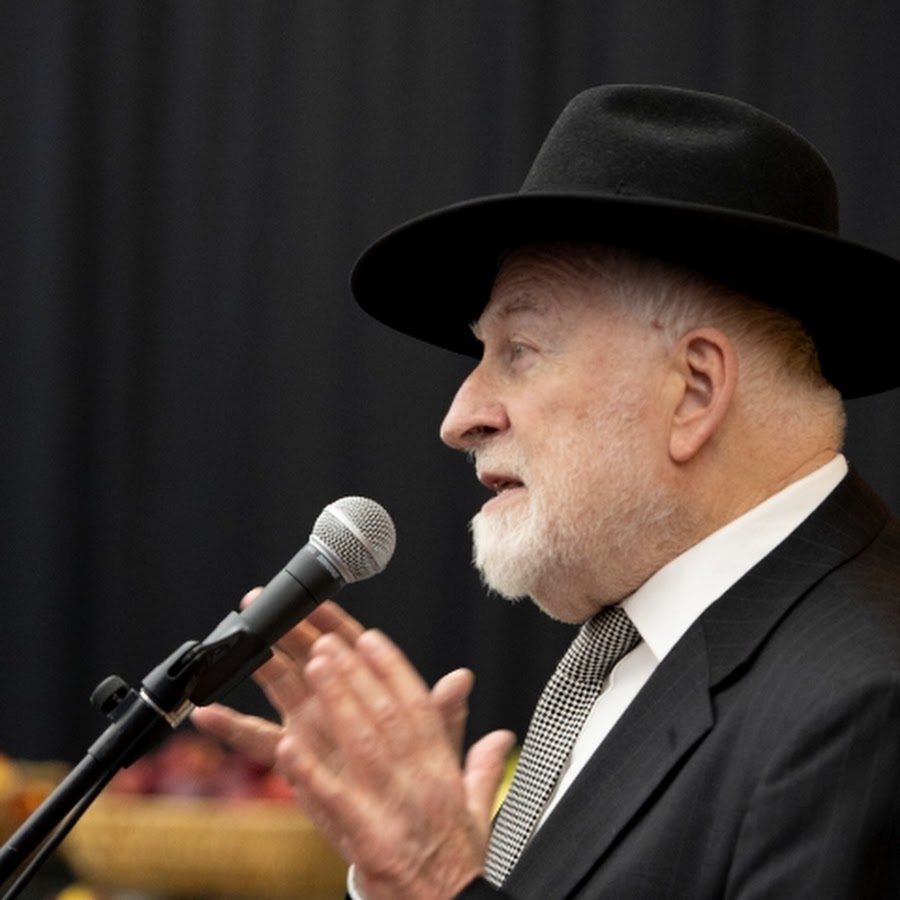
Rabbi Ike Sultan - Faith in Tomorrow (Pre-Purim)
200 views
Comments(0)
Transcript
Auto-generated transcript. Not time-synced to the video.
Thank
you for joining.
Okay, that's the Arabic for Mahar will I
am tomorrow we're not today.
In Esther we hear a lot of times.
The same phrase.
That Esther asks email email told you
not think I'm early you didn't not just
today we should fight but God today plus
tomorrow.
Another time it comes up.
I
request
you have a man on a ham locker and this
one opens up the Pandora's Box. Why
didn't Esther make one party then just
to make another party? That's just
Mahar. Just make one party and make the
request. What's the big deal about
Mahar? So it comes up three times in the
Mahar same thing.
That Haman when he repeats it over he
says came to give it a gun.
I was called today plus today plus
Mahar.
The measures notes that we have every
time when we have a fight between.
The Jews and
refrain of Mahar.
And it goes back to the first one we
have in
Moshe is saying that there is a fight
with Molly coming.
Attacking us so he tells you
Moshe
the same
but Molly Mahar. Now it's a question
which way the Mahar goes the has two
different opinions Mahar part of the
phrase we're going to fight tomorrow or
Mahar
tomorrow we're going to pray no matter
what Mahar is part of the battle plan
with a Malik.
Says the measures.
Measures
on Esther says my Esther Mahar as
tomorrow do what you want I'll call is a
must be there's a
that the measure says called Malik
and they pull the marker. Malik always
follows with marker. As it says it
quotes the passage in
in the Torah marker said marker and in
the town of Giver and also it says in
Samuel
that that Samuel picked
Saul to be the king marker
was going to come from Benjamin and
eventually he's going to try to wipe out
Amalek. Again this theme.
Here and here we see marker plays a big
role.
Question is what's the big deal?
So taking a step back something else I
think that's going to help explain this
is a measure is a measure is based on
the in Jeremiah that tells us
when the Jewish people ask Jeremiah what
are we going to do if we want to learn
Torah if we want to do mitzvahs
but we have to make
we're busy all day trying to figure out
what internships we're going to get what
interviews what am I supposed to put on
my resume says Jeremiah look Moshe told
Moshe was told by Hashem to stash away
some of the man in a jar put it in the
cottage
I tell him about my parties you Jeremiah
says to the people you guys are asking
what are we going to do how are we going
to have any food?
Go
look at the man this is the evidence
that can take care of us.
Your forefathers are in the desert and
nothing to eat and took care of you.
Just like they took care of them.
Take
one
vessel full of man and that man
is going to be forever we're going to
remember this miracle of the man.
Question is how does this instill how
does this help?
It's very nice wonderful. Okay my Brooke
beautiful they had the man they made it
fall from heaven
check every day ended at their door.
But Jeremiah I don't have that. How's
that a fair comparison? They learned
Torah because they had it coming to
them.
But I don't have the man. How is this a
good lesson
for every generation?
Says Eliahu Lopian, he says,
we have it wrong. When it comes to the
man, it's true they had the food they
could eat. And it tastes like whatever
they want, all the excitement of Rosh
Hashanah. But when they went to sleep at
the end of the day, could the mother
pack the
lunch for the baby for the next morning?
We were trying to dream about breakfast
and you look in the cabinets or you want
to have a midnight snack. There's
nothing there. You just get a portioned
exactly what you need. At the end of the
day, there's nothing left.
And is it going to come tomorrow, a
double portion when it comes to be
Friday? I'm trying to figure out what am
I going to make for the perm soda. Wait
a minute, I don't have anything in the
cupboard. I have nothing in the fridge.
There's nothing in There's no ice cream
in the freezer.
The man was The man in the sand was a
test. It was a tremendous test of our
emunah to know Hashem's going to provide
us like he took care of us today, he
will take care of us machar as well.
He's taking care of us tomorrow. That's
the outlook of a Jew is not just to
focus on what's right in front of our
eyes today. What we have to focus on the
machar as well.
And Yirmiyahu was telling them, "Your
forefathers were able to do that. They
had emunah. They saw what they had
today,
and they didn't saw what they wasn't in
front of them. But guess what? They had
emunah that, you know what? Hashem, just
like you took care of us now, will take
care of us tomorrow. If we learn the
lesson of the dor oclay haman, the
people were able to eat the man and be
able to be sure of themselves that
tomorrow everything take care of, we're
going to be able to be successful also
in learning Torah and doing mitzvahs and
not worrying about parnassah. When
someone gives a text or get an email or
something pops up on WhatsApp in the
middle of seder, say, "There's a machar.
I could deal with it after seder. I
could deal with it later. It doesn't
have to be right now.
I'll deal about the parnassah. I'll deal
about I'll deal with the meals later.
Right now,
I have to deal with the mitzvahs that
are in front of me."
Says Rabbi Lopian, that's the essence,
okay, of this lesson of machar. When he
quotes "How do you say about passing to
learn him? Shachain eretz re'a emunah."
We live in the land and we're supposed
to have emunah. So he says, "What's the
connection between the two?" He says, "A
lot of times life is getting
distracted."
And I think this is relevant to all of
the Torah, relevant to Or Azu Torah and
Simchas Bais Hasho'eivah. First we have
Torah and then we come to Simchas Bais
Hasho'eivah, but a lot of times life is
very complicated, we get distracted. We
don't feel the ahava. Why? Because I'm
dealing with 35 things. I'm trying to
remember to deal about this midterm and
this
whatever date and also trying to learn
night seder and trying to remember this
and trying to remember that. I don't
remember anything and I didn't learn
very much. And then it comes out there's
no ahava.
Ahava is something that says the Chofetz
Chaim, "Shachain eretz, you have to live
lie low in the land. Live in live on so
to speak like the Mishna Pirkei Avos,
sleep on the ground, eat bread and
water." If if life is simple, you're
living in the land in a simple way,
you're not focusing on everything else
in the in the gashmius in the world,
then re'a emunah, then you'll be able to
not be distracted and see emunah. The
same thing work comes about when we're
talking about simcha. We're talking
about Avodas Hashem or Avodas Hashem is
not just a
momentary
job, it's a relationship. Avak K'fi
Yedei Kochav Avah, it's something that
takes work. It's something that takes a
perspective of Mahar. And with that
we're able to overcome Amalek. Amalek
tells us, "Look, only focus in the
moment."
But it's limud, it's known, it's we know
"Zera Amalek l'ipol limud l'ipol be
Mahar."
Rebbe Willig spoke about this and
something in the Rav Hutner Pachad
Yitzchak Yom Kippurim Siman Hey where he
says,
"Mahar represents our focus on eternal
hope. That Hashem is going to take us
out of the troubles and the tzaros that
we're in right now with Iran sending
missiles or the fact that we have some
distraction coming up coming about. The
fact that we don't get bogged down and
distracted by that. The fact that we're
able to transcend that and learn Torah,
we're able to build up an Avodas Hashem,
we'll be able to tap into the auras of
simcha or the auras of Torah.
But if we're focused only in the hayom,
sometimes we eat, drink, and be merry
tomorrow we'll die. That's the the Greek
philosophy. That's
a chol hashem. When you focus on the
machar, of course we need to use every
moment we have in front of us. When you
focus when it comes to a parnassa, when
it comes to distractions,
push it off. Tomorrow, not today. It
doesn't need to be a focus
exactly at the moment.
And
that's the last sin. Of course the
matter has cool of a second cherish him.
Cool of ahava. The mishkan was built
with complete ahava, with complete love.
If you want to ever build a place for
avas hashem, it takes a lot of work, a
lot of dedication day after day. But
with our
with our work in in removing
distractions, claim a ray amuna,
focusing on the machar, we'll be able to
be successful in achieving this. One
other gematria that Achashverosh says,
"I'll give you ad chatzi malchus up to
half a malchus."
Rabbi Vinderbaum had a great gematria.
496 is malchus. Half of malchus is
machar. Machar 248 ramach mitzvos.
You're focusing says Achashverosh, "I'll
give you up to Amalek, up to machar. I'm
not going to give you machar." He didn't
want to give in. But our focus has to be
on machar, has to be on the ramach
mitzvos, has to be on
hayom hayom our day today olam hazeh is
to work olam haba l'kabel sachar um the
olam haba is the real place where we
enjoy, where we're able to appreciate
the mitzvos, to appreciate our
connection to Hakadosh Baruch Hu more
directly, but it takes all the work day
by day.
Yeshar koach.
B'ruchim haba'im.