Preparing video...
0:00 / 0:00
Should You Go Into Professional Kiruv?
571 views
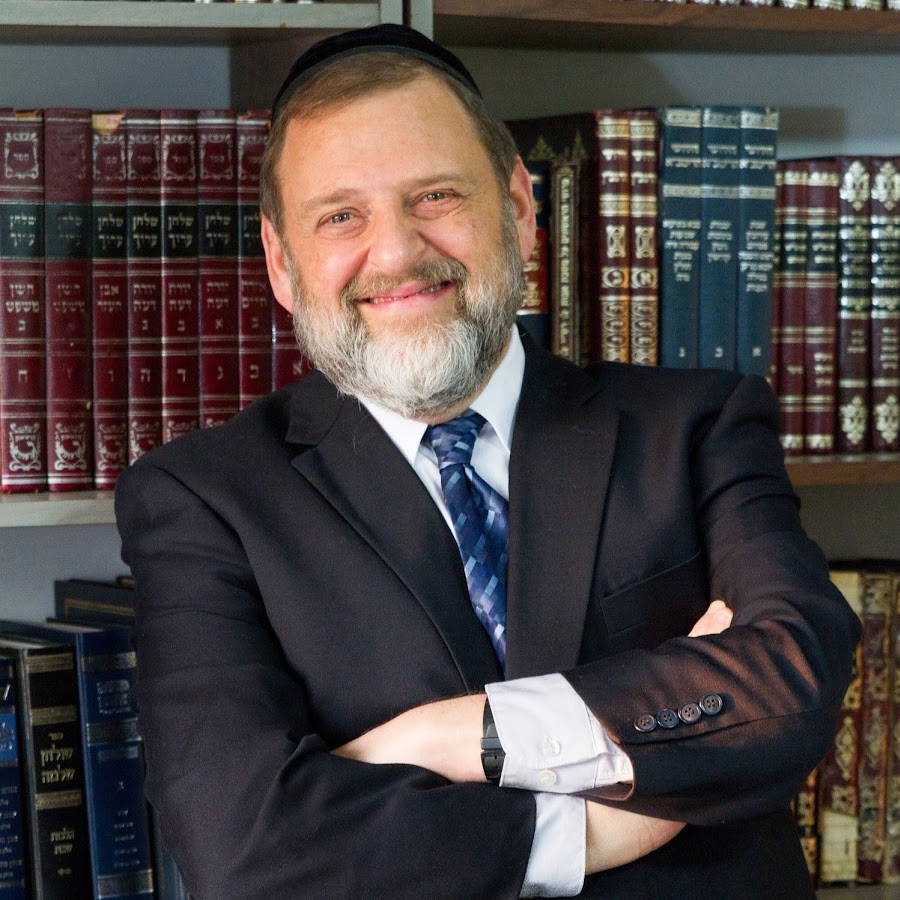
🟢 Join the Rabbi Orlofsky Show WhatsApp group: https://tinyurl.com/rabbiOrlofsky ✉️ Submit a question to Rabbi Orlofsky: rabbiorlofsky.com/contact 🎙️ Sponsor an episode: rabbiorlofsky.com/podcast ☕ Support the show: https://buymeacoffee.com/rabbiorlofsky 🛍️ Official Merch: rabbiorlofsky.com/merch 📞 Rabbi Orlofsky Hotline: 605-313-4799 📲 @realrabbiorlofsky on Instagram | @rabbidovidorlofsky on TikTok | @rabbiorlofsky on Facebook | @RabbiOrlofsky on X For videography bookings, contact Yaakov Shlomo on WhatsApp: +972 55-551-6236 #therabbiorlofskyshow #Torah #Jewish #jewishpodcast #RabbiOrlofsky #JewishInspiration #JewishWisdom #Shorts
Categories:Podcasts
Comments
Transcript
Auto-generated transcript. Not time-synced to the video.
Hi, this is David Alowski with that
question and answer series. How can I
know if I should go into professional
kira? What kind of person should or
shouldn't do it? What skills does it
take? What are the considerations or
concerns, the financial burden and any
other factors that play in? What does
the job really look like practically?
Everybody is m to do k. Everybody is m
to reach out to your fellow Jews. That's
not me saying this. This was the in
Europe at the agura convention
back in the 1920s where he said
everybody is now to do
and reach out to your fellow Jews. It
doesn't matter how talented you are. you
have to uh do it.
At some point they came up with
professional kirav workers.
Now there was a time when uh a rv in the
1950s said to me every ruv of an
orthodox shul was a kira of worker
because the majority of the people in
Yeshua were not from or if they were
from they definitely needed to be makaz
themselves. When NCSY started, it
started not as a cure of organization.
It started as the youth organization of
the Orthodox Union and MA. It was a cure
of organization because there were no
day schools around and all the kids who
dived in orthodox shores went to public
school. So, Mala turned out to be a cure
of organization.
But as time went on
uh they began what has been described as
the Kiraov movement. Most people uh
would say that the date of what we call
the Kira movement began with the six-
day war. The miracles of the six- day
war suddenly awakened in many many Jews
a sense of Jewish pride that brought
them to uh look into Judaism and be
proud of the fact that they were Jewish.
Ironically, another wave of uh of cure
vokum began um on
with the terrible tragedies that took
place when people suddenly realized how
much people hated Jews. They started to
look into their Judaism as well, people
who work in Kir. But as as it started
certain yeshivas began catering to
people who were not religious looking uh
for religion right
or the
diaspora yeshiva and they all started to
be able to serve as a place for this.
Um, additionally,
uh, people started making Kirav
organizations in America, some that
worked on campus,
uh, some that would be in communities,
they would make a Kiraov center. And,
uh, slowly they started to spread uh,
around the country. So that at one point
they actually started an organization
called AJOP, the Association of Jewish
Outreach Professionals to be able to uh
provide training and support for people
who decided to work in Kira.
What do you need to be successful in
Kirav? You have to really really really
love Jews.
Like really? Yeah.
As I said once, the most effective kira
technique you can develop is a sincere
smile. Once you can fake that, the rest
gets easy. Yeah. But people know if you
are sincere or not. They can see if you
really care about them. And therefore,
as much as a person cares about
somebody,
Words that come from the heart go into
the heart. So you have to really really
care about people. And if you don't care
about people, don't go into kov. You
could go in a supportive role. You could
raise money. You could handle technical
things, but don't go into Jewish
outreach dealing with people if you
don't love them.
And if you do, then nothing else
matters.
Many years ago, it's over 30 years ago,
um, someone came to me who worked with
Mayor Schusta. He was making a dinner
and he wanted me to be the guest speaker
and he [clears throat] says, "I'm asking
on his behalf because he's very shy."
I'm like, this guy stands at the Western
Wall, goes up to strangers all the time,
and engages them in conversation, takes
them to yeshivas, works with them. Ah,
come on. This is just a PR stunt.
Anyway, he came down to meet with me at
the house. He did not say a word. He
just sat there. It was an awkward
silence.
And I tried this way and that way, and I
couldn't believe it.
Um, he had no apparent personality
whatsoever
and yet he was unbelievably effective.
Someone told me when he first started to
decide he was going to do this, his
father-in-law said, "You're going to
speak to non-f people, you can't speak
to me."
One of his donors told me, he says, "I
always know when Risha is calling me
because I don't hear anybody on the
other side. If someone calls me I say
hello and I hear nothing I say oh is
that you Rabbi Shusta
and yet he was an unbelievable kayak.
You know why? Because he wanted to.
As the altar of Narik said I never asked
whether I could do something. I asked if
something had to be done and I knew a
would give me the power to do it. So if
you love Jews and you want to help them,
everybody can be a Kir worker. Having
said that, not everybody can make a Kirv
center. There are specific skills
involved. You have to fund raise, you
have to do administration, you have to
do all kinds of different things. And in
fact that has been the bane of a number
of Kira workers I know who they used to
just go around and make classes in
people's houses and and speak to people
and at some point they decided to make a
curve center and that was the end they
spent the whole time just raising money
and dealing with all these other kind of
technical stuff instead of actually
talking to people.
So when you say to be a professional
kira worker I guess it really depends
what you mean. If you want to work and
talk to people, etc., and make that your
profession, well, you have to figure out
if you can get somebody to pay you for
it. And if you can't pay for it, then
you have to see if you're have the
ability to be able to raise the money to
do it. And uh and if you think that you
have those to be able to raise money and
build something administratively, then
you can go and make a whole cure of a
center. If not then to find someone
who's talented at working with people
and like I say the talent means that you
love people. Then places like you know
that in the age they would give you
classes on how to teach a class, how to
organize, how to answer basic questions.
There are different kinds of programs
that can give you the help you develop
the skills. But the ultimate skill you
need is to really love Jews. And if you
do, you'll have siata desmay. Those of
us who worked in professional kiev can
tell you that sometimes we did
everything by the book and we had
nothing to show for it. And sometimes we
did everything wrong and the people
became firm because as Mosha Shapiro
said once, the advice I give to people
going into Kir is Msiach is about to
come and
is giving an opportunity to everyone who
is ready to come back before the end.
Your job is not to get in God's way.
He's allowing you to participate, but
don't ever think it has to do with you.
And that's why I've seen where I talk to
somebody and I'm arguing and we have a
whole discussion. Nothing ever comes
from it. But his friend who was sitting
there quietly suddenly shows up in
yeshiva. So you need
you need to really care about. And if
you have that level of love
means that what comes out of the heart
goes into the heart. The more sincere
you are, the more effective you will be.
This is Devon Dowski with that question
and answer