Transcript
Auto-generated transcript. Not time-synced to the video.
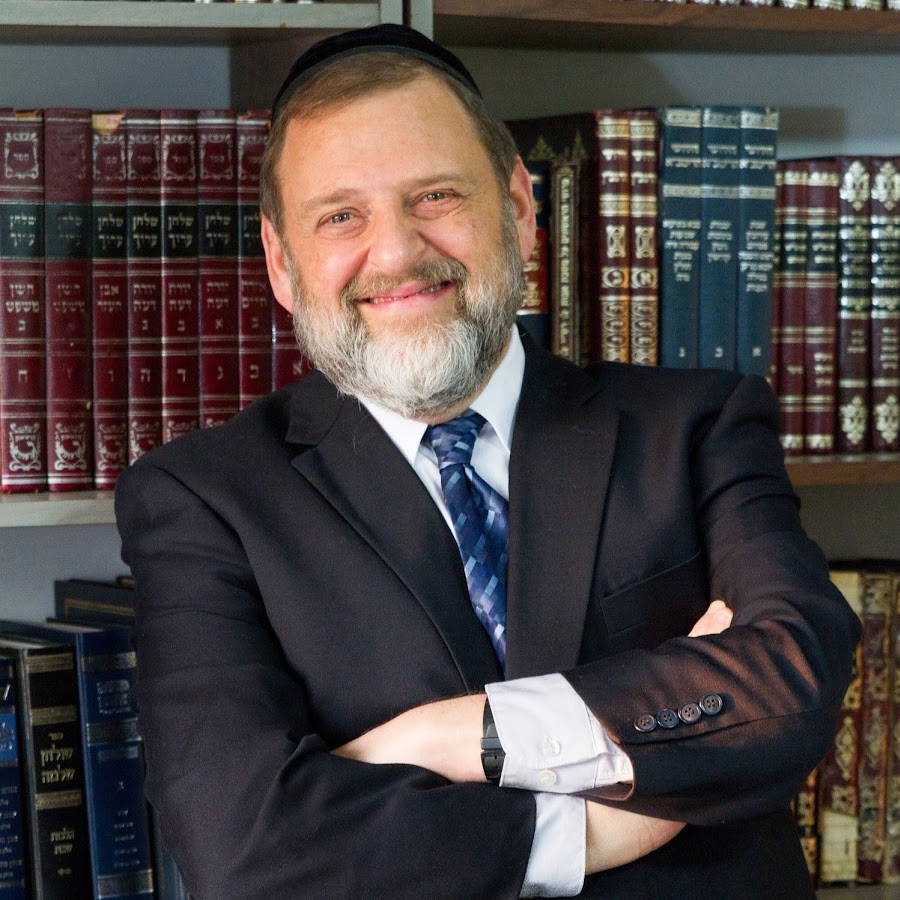
Hi, this is Rabbi Elefant with our
question and answer series.
This is a tough one.
Anonymous asks, "My son who is turning
18 tells me he doesn't know if he will
be firm when he leaves our home. He says
he is not sure it will work for him.
What can I respond as a mother?
The son is not in Yeshiva, has learning
issues, and is working."
Okay.
This is very hard.
Very hard.
Because as parents, we want our children
to get our values.
And we have expectations.
It's a well-known secret that kind of
experts are usually make mistakes when
it comes to their own children because I
can tell you what to do.
But when it's my kid, I have
expectations.
Because I see myself in that kid.
And so you have a parent who says to a
kid, "You'll go to Yeshiva
and make it in learning cuz I never
did."
That's not the right approach.
And so therefore, we have created a
society where
if somebody does not make it in
learning, they are cast off.
And this is one of the greatest
tragedies of modern life.
And I hear from girls they say, "Why
can't I just find a nice boy like my
father or from balabos?" Why?
Because we've created a system where
there's no such a thing as a good
balabos.
Balabos is a fake. Fake.
Only a guy who's in learning is worth
anything.
So when a person
can't make it in learning,
doesn't matter what else he does.
He's a failure.
And Klauss will make it clear, "We have
no use for you. We'll take your money,
but we have no respect for you."
I remember when I met Rabbi Kailash
from Waterbury the first time, he said
to me,
"I took to high school a rebbe.
Rebbe him around around America."
And I said, "Do you love your talmidim?"
And they said, "Of course."
And I said, "Do you respect them?"
And he said, "Respect them? They're a
bunch of bums. What is that a respect?"
And he looks at me and he says,
"But the rebbe is mechuyav [snorts]
to be mechabed his talmidim. What do
they do with that?"
And his success
comes from the fact that he is mechabed
his talmidim.
I was there in Waterbury, and there were
guys walking around without yarmulkes.
If it was me in charge, I would have
said, "Listen, guys,
at least put on a yarmulke.
Let's put on a yarmulke. Come on, a
little respect."
No.
I love you. I respect you.
And you'll find your way back. And he
has been the greatest catalyst of people
finding their way back to Yiddishkeit.
So, I will take a leaf out of his book
and say,
"I am going to love my son even if he's
not following my choices."
Rabbi Ordentlich once said, "Children
are not nachas machines.
They're not there to give me nachas.
They're Hashem's children, and I want to
raise them as best I can."
And so,
you know, if you've never had a kid go
off the derech, you don't appreciate it.
If you have,
then you know. It is so incredibly
painful, but you just stick to it.
Love them, understand them, accept them.
Your son is disrespected by a society
that doesn't appreciate that he has what
to contribute.
And we have to send him the message,
"You're a nice from boy. I don't care
what you do. I will always love you and
always respect you. And all I ask is you
always do good things to this world.
And we And we
>> [laughter]
>> Groucho Marx once said, "The most
important thing is sincerity. Once you
can fake that, the rest is easy." I say
the same thing. We have to work to
believe it.
And if we really believe it, and we
believe in our kids, they may make
choices that we don't approve of.
But most of the time they'll find their
way back. I told this story
when uh Rabbi Bulman's son was a rov in
Virginia.
He had a girl in his community who
intermarried.
And 20 years later, she got divorced and
she called up Rabbi Bulman and she said,
"Rebbi, I want to come home."
And Rabbi Allweil told over this story
and he said, "The genius of Rabbi Bulman
was
after she was intermarried for 20 years,
he still made her believe that she had a
home to come back to."
That's what we have to do.
I wish you hatzlacha. I give you a
bracha. I give you a son of bracha that
everybody should find their way back to
Hakadosh Baruch Hu.
This is David Eliavsky with our question
and answer series.