Preparing video...
0:00 / 0:00
Ki Sisa - Building a Home That Lights Up the World
306 views
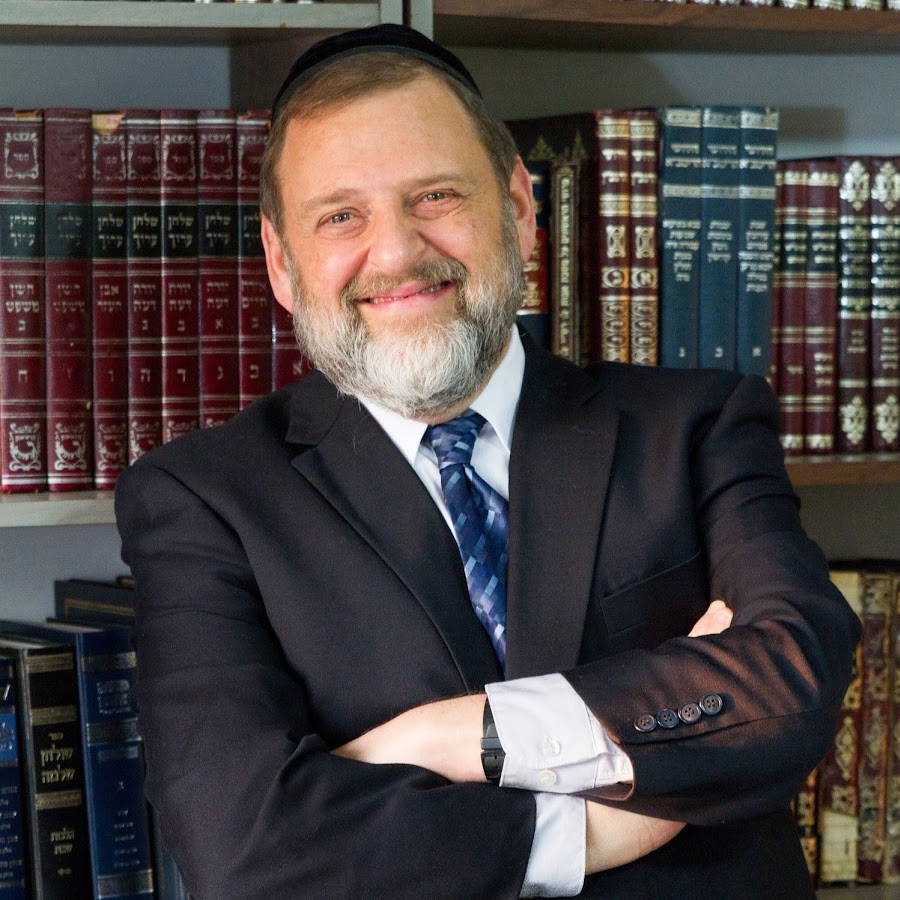
✨If you would like to support Rabbi Orlofsky, consider sponsoring an episode! Go to: rabbiorlofsky.com/podcast and click “Sponsor an Episode” ✉️ To have Rabbi Orlofsky answer your question on his new Q&A series go to: rabbiorlofsky.com/contact ✨Rabbi Orlofsky is FINALLY back on social media 👏🎉 📍Follow him on: Facebook: @rabbiorlofsky Instagram: @realrabbiorlofsky TikTok (YES TIK TOK): @rabbidovidorlofsky Please comment and share what you would like to see! #rabbiorlofsky #therabbiorlofskyshow #Torah #TorahThoughts #Jewishthought #inspiration #podcast #humor #shiurim #uplifting #motivational #inspiration #funnyreels #torahstudy #kindness #values #podcast #podcastclips #podcasts
Categories:Torah/Q&A
Comments
Transcript
Auto-generated transcript. Not time-synced to the video.
Hi, this is David Elmsky with the Parsha
in 5, where in 5 minutes I'll try to
give you a little insight into the
Parsha. And uh I'm going to do uh
Parshas Ki Sisa this week. And I want to
go right at the beginning. I know we
have a lot of really dramatic stuff in
the Parsha and on you know, we've spoken
about some of it in the past years. But
I want to go right at the beginning
where we start off with what is
essentially Parshas Shekalim.
And uh it says that everybody should
give a half shekel
in order to go and build the Beis
Hamikdash.
And when we talk about it, it uses the
word venosnu.
And venosnu, the Meforshim point out, is
a palindrome.
I love that word. Very hard to work it
in. A palindrome is a word that can be
read forward and backwards. So, for
example, mom is a palindrome. Uh the
name Bob is a palindrome. Not very
interesting. But there are much more
interesting ones. Uh they made a
palindrome out of supposedly when Adam
met Chava. Madam, I'm Adam.
That's a palindrome. When they were
building the Panama Canal, they made a
palindrome. A man, a plan, a canal,
Panama. You can read it forward and
backwards. So too venosnu. You can read
it this way, you can read it that way.
Why? Because when you give, you get.
Whatever you give, you give back. And
this is very important. And that's why
when we collect the half shekel, it's a
half shekel. Don't give a whole shekel,
give a half. Because your donation has
to be joined with somebody else
in order for it to be meaningful and
build the Mishkan. Because the Mishkan
is, as we spoke about back in Parshas
Terumah, echad. It's one. It brings
people together.
And that's why our homes
as Balaam pointed out,
Mishkan Israel, every home is a Mishkan.
We are building
a mini base on miktash when we get
married and we have a family. And so
when we build this Mishkan, we
understand that it's two people working
together. Each one giving a half a
shekel and when you give, you get.
It's so interesting that ahava is from
the word have to give.
The more you give, the more love you
there is.
And one last point I'll point out
and that's in the haftorah of Truma,
there's a pasuk. Vayaslu bayis chalonos
shkufim
atumim.
And the explain, the explain, what does
that mean? It means that when you make a
window in rock, it's like a skylight.
It's narrow on the outside and gets
wider so the light is diffused.
But the windows in the base of miktash
went this way. They were narrow at the
end and wide on the outside. Why?
Because the base of miktash didn't need
what was outside.
The world needed what the base of
miktash had to give.
And so we have to understand that the
base of miktash has a power to be able
to light up the world and Hashem, we
should be
that we should build the base of miktash
that will light up the world and in the
meantime, we should turn our homes into
that Mishkan that can light up the
world. Good Shabbos.
>> Mhm.