Transcript
Auto-generated transcript. Not time-synced to the video.
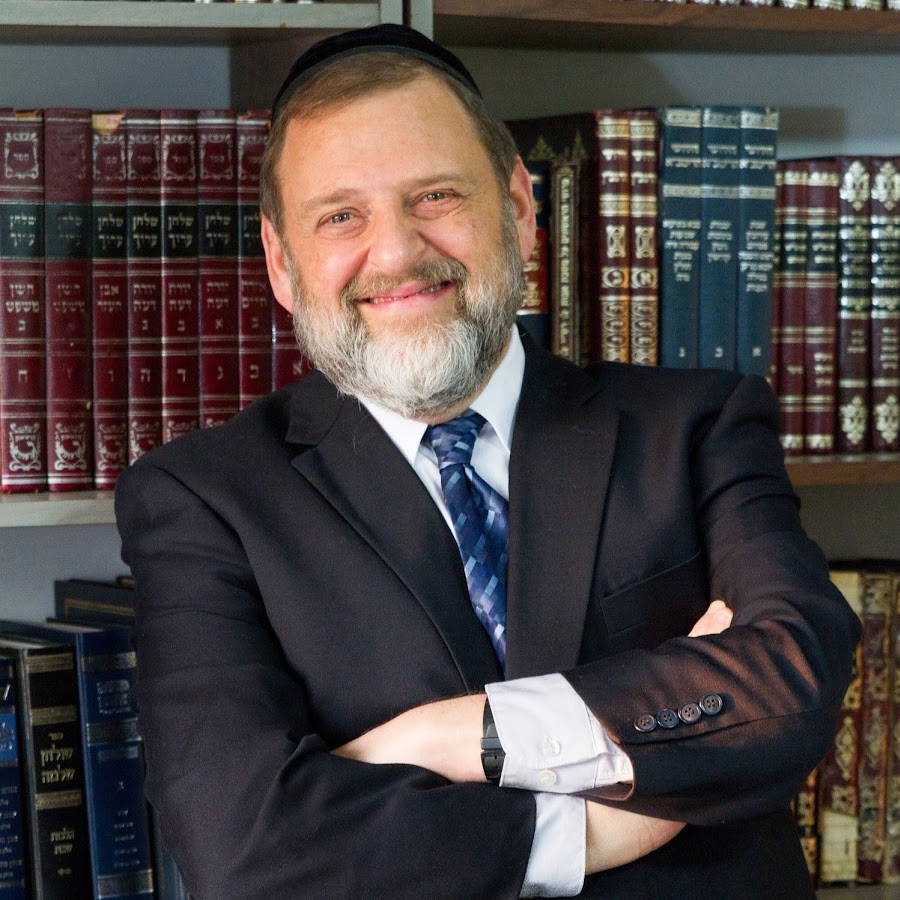
Hi, this is Rabbi Dovid Orlofsky and welcome to the Rabbi Orlofsky show
In the ever-changing saga of the sign you may notice that the sign actually has
changed. I asked the producer about this and he explained that he felt that the sign had
put on too much weight in the last show, and he
forced it onto a strict diet and as you can see now it has shrunk to its regular size, so
I don't know what this diet was that in a week was that effective but I think we're gonna market it
so just keep watching for that in future episodes and
whether you are listening on watching on TorahAnytime.com or YouTube or iTunes
Or wherever you listen to podcast. It's a pleasure to have you with us and
sponsorships! This week is sponsored by Beth and Mati Friedman in honor of their children Miriam and Shaya Hecht.
Here's what they wrote: "Who are reviving the from community of my hometown of East Meadow, New York." Now,
This is a tricky loshon. I have thought about this loshon.
I don't think they're reviving the frum community because I don't know if there was a frum community. Now, this is
this is such an interesting story because
When the Hebrew Academy of Nassau County started they were almost
no Orthodox kids coming. And Rabbi Fendel went out to Long Island. He went to West Hempstead. There was no Orthodox shul.
You know, he put an ad in a local paper: "Nine men looking to start a minyan".
He later wrote a book about his experiences and that's what he titled it
and
the majority of the kids who were coming
were not
not coming from Orthodox homes. Yeah, we have a...
Rabbi Fendel told me two stories that, that made such an impact on me to understand what it was like back then
He said that somebody said to him, they said, Rabbi you're making these kids wear tzitzis, you're making these kids wear yarmulkes,
you're not reflecting the values of the community.
Rabbi Fendel said, I told him the purpose of a yeshiva is not to reflect the values of the community,
it's to establish the values of the community.
And I thought that was
unbelievable
and he said surely if the school started a number of the Conservative rabbis asked to be able to be part of the board and
He reached behind him and pulled out a copy of Shulchan Aruch. And he said, this is our school's
constitution if you can adhere to it, we're happy to have you on board. Yeah.
So
so, at the time when I was,
my family were part of the East Meadow Jewish Center. They had the most
number of bus loads of children going to HANC.
I don't remember how many, but bus loads and busloads of kids going to HANC.
Downstairs in
the East Meadow Jewish Center was an Orthodox shul.
What does that mean? It means Friday night, they did Orthodox davening because the main shul did it later
so that people who were gonna come later came to a later service, but the actual davening that was done at
you know, Mincha/Maariv time on Friday night that was run as an Orthodox minyan. I remember going there and
and there were a lot of people who were shomer Shabbos and a lot of kids who are gonna hang a lot of people who've
come out of East Meadow who today are talmidei chochomim, rabonim. I know them
But you can't really revive the Orthodox community, the frum community, because although they were frum people there was never per se a frum community.
You're starting the frum community of East Meadow. I just, I wanna, I wanna put that into context.
Yeah.
You're starting the frum community of East Meadow. Just wanted to put that into context.
It was one of the most densely populated Jewish neighborhoods in Long Island and
They were a whole bunch of different synagogues, none of them were Orthodox when I was there
And so this is a tremendous thing, a tremendous, tremendous thing, and we're we're honored to be able to have those
sponsorships, and those sponsorships go a long way.
I got some emails.
People commenting on how they felt
that the lighting of the
video was much better.
What was strange is that I also got two emails from people who' only
listen to the show on a podcast and they thought the lighting was better. So go figure.
But that's because that lighting has been purchased with your sponsorships. So just look at how it's going. It's unbelievable.
This is becoming an institution. This is early episode 18 and
it's coming out Parshas Terumah and
What do we want to talk about? What are you going to talk about Parshas Trumah? Parshas Trumah is a very very special
parsha, because for many people it's mamish a siyum. A lot of people who stop doing
shnayim mikra v'echad targum this week. Yeah,
it's, that's it. They're done. (Laughing.)
There is something about the Mishkan that pushes people over the edge, yeah, I know,
I was one of them, it's... it's dramatic. It's a dramatic thing to watch.
So people got through Bereishis, they got through Shemos, then they hit the whole Korban Pesach with all the korbanos stuff in Bo.
Okay, you know, muddled through that, then you hit Beshalach. You have all those gigantic Rashis on
Az Yashir, those dikduk Rashis where only girls come to life and guys just walk away in a confused haze
You know, it's words like hifal, and pufal, and nufal, and gufal. We have no idea.
The yod turns into a vav on alternate Tuesdays if there was a peh in the neighborhood. I don't know, it's just absolutely impossible (laughing).
Then you hit Mishpatim where we, Rashi basically sums up all of Bava Kama, Bava
Metzia, Bava Basra, Sanhedrin, Makos, and a few other sundry masechtas
Yeah, throughout all the Rashis. And if you somehow pulled yourself through that
waiting for you on the other side is Parshas Trumah, the Mishkan. (Singing) bum ba dum
bum bum.
And you know if you make it through Trumah
Then you have Tesaveh then you have the first half of Ki Tisa, then Vayakhel Pekudei,
it's Mishkan as long as you can see. And when you finally finish with the Mishkan, you come to Vayikra, all of the
korbanos, tumah, and tahara, all those exciting things. So most people come back in around Parshas Bamidbar, when
you know, we start counting everybody, and there's very few Rashis, it's pretty easy to get through.
That's it, but, but now, people are just stunned. When you have a half of page of Rashi
explaining how they made the two little prongs sticking out of the bottom of the carriage, you know, you're losing people.
That's just the reality. Yeah.
So
There are picture books, there are models, I don't know why, people
just have this mental block when it comes to it. Yeah, and
I'm not gonna do it now. I when I used to teach parsha, I would do my
my walk through the Mishkan I would just explain to you the Mishkan in five minutes
And I had people who said to me. I studied this for years, I've looked at it,
and I've never had it as clear as you put it, but I kind of leave something for next year. Yeah,
or maybe Vayakhel Pikudei, we'll see but,
but the the idea of the the Mishkan is such an involved and complicated thing. Now,
I've, I've made this point before and I make it whenever I speak because I think it's, it's completely
essential and I do have, as I mentioned, the trip coming up at the end of February
I still have some dates available, but I do make this point. Yeah, very often. And
I point out that I travel the world, I travel the world.
For the most part English-speaking countries. Yeah, the United States, Canada, England, they speak a version
South Africa, Australia
Yeah, you saw my Aussie friends here
and
maybe we'll, you know, I
said I was gonna include some of the
some of my other
birthday wishes from Rabbi Pesach Krohn. And I'm saying this just so you can realize that I hang out with very important people.
Hello, Rav Dovid and your wonderful family. Mazel tov, mazel tov on this great birthday, the 60th birthday. I
consider you one of the treasures of Klal Yisrael and I'm really so honored to consider you a good friend.
So Rav Dovid, I just want to tell you something very interesting.
You know, if you ever have to speak at a sheva brachos or at a birthday and make a video
This is a wonderful sefer.
You see, this Gematrikon, because it tells you every single number
what kind of gematrias there are. So I was looking for 60 and the word gaon, like a genius is
b'gematria 60 and you are really a gaon in speaking and that's why I'm here, right
behind, or in front of, this picture of Rav Shalom Shwadron, who was the original gaon in our generation of speaking and you are just
like him. You're able to make people laugh, you're able to make people think, and bring across a great lesson.
He was the master, and today all the speakers,
they're all trying to be like you, Rav Dovid, who is able to connect to an audience in a tremendous way.
But there's another thing that I love over here.
It says that the word yedidi hatov is also b'gematria 60 and that's what I consider you, my good friend.
You're always so wonderful to my family. We've been to your home many times even Erev Shabbos
your wife got us
watermelon and potato kugel at a moment's notice and we'll never forget that, and the times you've been in my home.
But, the one that I like the best and maybe you could figure it out better than me
Chad gadya, chad gadya, right? All those four words is totally equal 60. What's that got to do with your birthday?
Well, you'll always be a kid, and one kid, one kid, chad gadya
You'll always be a kid at heart, Dovid, and that's why everybody loves you. Happy birthday, you're only halfway there.
You still got another 60 years. Keep on going, and be a role model for all of us. I love you, and mazel tov.
Okay, so
the...the idea is, of the, of the Mishkan, right? I travel all around and I always say,
the biggest problem in Jewish education today
is that people feel like it's not relevant to their daily lives. I see this all the time.
I don't feel like this is relevant to my life.
Yeah, and
that's the struggle
in Yahadus, is to make it relevant. I
always point out the Gemara in Kesubos
discussing a Takanas Ezra that doesn't apply anymore today. And it says, if it doesn't apply, says the Gemara,
who cares?! Ma d'haveh haveh? We're not studying history here.
Don't share with me insights from, you know,
2,000 years ago, what they used to do. If you are telling me something and I'm learning it today
it's because it has to have relevance to my life. And if it doesn't, then there's something missing in my understanding.
When I used to teach I gave a course in Vayikra
so people said, oh, you know,
very often when people learn Vayikra, you know, it means
they're gonna do kedoshim tehiyu,
veahavta lereiacha kamocha, I said no. First semester we're gonna deal with kodshim, second semester
We're going to deal with tumah and tahara. It's part of Judaism, and you have to know it!
There's a reason that God put in the Torah! That all these parshas are there.
Not just that we can study it to get insights into a
temporary home that was built for Hakadosh Baruch Hu for a short period of time.
Or as one of my students in Ohr Somayach once said to me, it's not even a house. It's a trailer.
What was God, white trash? We built him a trailer? (Laughing.)
that's a,
that's an inappropriate way of saying it, I would never say it that way,
but I share it with you because I'm sure he's expressing something that most people must have thought.
So much time goes in to describing the construction of this, now there are many things we don't mind sticking into
mishnayos and beraisos. So why don't we just say, and they built the Mishkan. And then have
like there is, a collection of beraisos called Maleches Hamishkan, and just put in all the details of the mishkan into there and
shalom al Yisrael! I have to sit and spell out all the details in all these places right here in the pesukim
so that I have to know how they made the covering and they made ten pieces and they sewed five and five and then they
hooked them together with loops?
Why is that essential? Why do I need to know this?
Something like, I don't know, let's say Shabbos. Comes every single week. Torah doesn't tell me anything!
And keep the Shabbos, keep the Shabbos, Shmarta mazuma Shabbos.
Yeah, observe the Shabbos, keep the Shabbos. And there are people who don't believe in the Oral Law.
So I said so Rav Moshe came down and said, keep the Shabbos. What did he mean?
What do you mean? Did he have an explanation on the spot?
What does this mean, Moshe? Whatever you think. Yeah, but it says if I get it wrong you're gonna kill me! That's riiiiight...
Easy guessing! (Laughing.)
Good luck! When the mekoshesh eitzim, when they collected him, you didn't see him anywhere, I didn't think gathering sticks is a melacha!
I didn't think that's what you meant.
No, he took it as pashut. That this means Shabbos. They knew what Shabbos was.
That means that they, Moshe Rabbeinu came down with all of the melachos, all the todos, everything that went into it, and
the Torah did not see fit to write that down?
That we stick into a Mishna on Shabbos?
And all the details of the mishkan in Terumah and Tetzaveh, and we repeat it again every Vayakhel Pekudei.
Yeah, all this is so essential for us that we have to read it every single year? Ah, those you who do, right.
So...
So I want to say like this, and it's not me, everybody says this, this is, I'm not sharing with you a chidush, yeah?
Um...
Years ago, I...
I...
was asked to speak at a seminary on the topic of platonic relationships. It was the first one of my
recordings to go platinum. It was all over the place. I was teaching in a boys' yeshiva, the next morning
I came in they had already heard the tape, you know? By the end of the week it was in every yeshiva and seminary
in Yerushalayim, and then it just started going around the world. It's an amazing thing
yeah. And there's a big talmid chacham, a Rosh Yeshiva, who also works in kiruv.
And he says to me, I've been saying this stuff for years. He just says it better. (Laughing.)
That is my goal. I don't mean to say any chidushim.
I just want to say what what everyone knows but I hope, I hope I'll say it in a way that'll make a little easier.
Hakadosh Baruch Hu rested on Shabbos.
How exhausted could he have been?
he said 10 ma'amaros. Vayehi or.
Whew!
Oh, that was a toughie. (Laughing.)
He spoke, He spoke ten times. Said ten expressions, that was it.
And of course He's infinite.
So came Friday night, that was it.
He just passed out, you know, made himself, uh, made himself a coffee, put his feet up, and said,
wow, that was, that was a week that I had. Did you take a look? (Laughing.)
Of course He doesn't mean that He rested, it means He stopped, vayishbos.
Yeah?
Shavas vayinafash, He rested, He ceased.
From what? From creating the world.
So what do we have to do on Shabbos? We have to cease
creating the world.
Now for most of us that's pretty easy.
I don't know about you, but I can go weeks without making as much as an asteroid,
you know what I mean? So how tired am I gonna be, that I have to rest from creating the world,
I don't create the world anyway!
So the answer is
because of that
Hakadosh Baruch Hu has to give us a world to, to create.
We have our own world. That was the Mishkan.
And everything that went into the creation of the Mishkan
reflected what Hakadosh Baruch Hu put into the creation of the world.
And that's why we learn out
what you can't do on Shabbos, Hakadosh Baruch Hu didn't just give a list of things you can't do on Shabbos.
He says anything that goes into creating YOUR world is what you have to stop doing on
Shabbos, just like I stopped creating MY world on Shabbos.
that's the...
that's the...connection.
In fact Rav Moshe Shapiro once said,
Adam Harishon was created into a world that was perfect.
Then he ate from the eitz hada'as tov vara, and he destroyed the world. When we got to Har Sinai
we reached a level of Adam mikodem hachet. The world was once again in perfection. And then we ate,
excuse me, then we did the chet haegel, and then it was destroyed again.
So now we have to build the world without any chet. And that was the Mishkan.
We built the world that existed with a new world.
That's where we go into that world to get a kapara. Because in that world there is no chet.
That world is perfect, and that's the world that we built.
The Big World was created on Tishrei, the Small World was created on Nisan.
That's the old Nisan/Tishrei: when was the world created? Now with two parts to it, but OUR world was created in Nisan.
That was the that was the power that went into it.
So, says the Chasam Sofer, ah, excuse me, says the Sefas Haemes,
It talks about the melachos of Shabbos, arbaim chaser achas.
Forty minus one, which is a fancy way of saying 39. Why didn't you just say 39?
So he says, it's a Kabbalistic concept called abiya.
There's four levels of existence: there's atzilus, there's briya, there's yetsira, and asiya.
Briya we're familiar with: Bereishis bara Elokim.
But the aleph before the beis of creation,
that's atzilus. And then there's yetzira, and then there's asiya, we find these terms being used.
Yeah, and each one of them have ten sefiros:
Keser, chochma, bina, and then the lower seven: chochma,
excuse me, uh, chesed, gevura, tiferes, netzach, hod, yesod, and malchus.
So that's 10 times 4 is 40.
One of those actions that went into the creation of the world, we have no shaychus to it, it's called yesh meayin.
Creating something from nothing, that we can't do.
So the 40 melachas that went in the creation of the world, that's what we can't do on Shabbos, chaser achas.
The yesh meayin, that's the one thing we can't do.
But
there is something that Hakadosh Baruch Hu put into the
maximum universe
that is represented by us doing ketzira.
Right?
Uh, harvesting. And there's something that went into the creation of the world that we do by
making a fire. And each one of these
melachass that we use the creation of the Mishkan is what Hakadosh Baruch Hu used in creating the world.
I don't know how it works, exactly. I can't line that all up.
I mean, I can't really reveal all my kabbalistic secrets to the general public.
You have to be on a particular level.
Anyway, but, uh, (laughing)
whichever one works for you, but, uh,
but that's the idea. The idea is that if you take a look in the Malbim
on Al Torah, you'll see he has a section code remazei
hamishkan. And he explains how everything in the Mishkan corresponds to the body of a human being.
the krashim are the ribcage,
and the...
aron is the skull, and the luchos and the broken luchos are the conscious and subconscious mind,
everything that's in the world is in a person because the person is an olam katan and
The Mishkan was a maximum version of a human being, and the minimum version, microcosm and macrocosm,
of a,
of the universe and a human being where they meet together.
It allows a person to be able to access that tremendous power.
That's the,
That's the idea of what we're able to,
to...
access what we learn about the Mishkan. And of course this takes study. This takes time.
None of this happens automatically.
So when we come to these parshiyos, and we're reading about the Mishkan, we see how
we're able to access these ideas inside of ourselves and inside of it. Now,
we don't build the Mishkan on Shabbos. We rest from it, just like Hashem did.
So,
the idea is that Shabbos is a Mishkan in time.
Because there's different existences that we live in this world. We live in place, and we live in time. Time and place.
What science refers to as the time-space continuum.
Yeah? Where things exist within
boundaries. Physical boundaries and time boundaries. When you're in Shabbos, you are in that Mishkan in space,
you don't need to be in the Mishkan in place.
An amazing, amazing concept of what we're able to accomplish on the Shabbos.
People have asked me this question many years: how do we make ourShabbos more meaningful,
especially for our kids?
Where very often people were asking me about their Shabbos table
Yeah? How do you make your Shabbos table enjoyable? Somebody asked me once, an avreich.
He had small children
How do you make your children sit at the Shabbos table?
I said, I don't! If you have to make your kids sit at the Shabbos table, there's something wrong.
Because you should WANT to be at the Shabbos table, and if you don't WANT to be at the Shabbos table,
You might have to change what kind of a Shabbos table you have.
Which unfortunately we know.
There are some times when it's not a happy place to be
If people are upset or people are angry, but it's more than that. It's more than that. You have to look at who is there.
I have a very difficult job
because I'm a speaker. If you're a plumber, you have an easier job.
All right? People pay you, they say, fix the toilet. Right? You fix the toilet.
So I say, I don't think you fixed the toilet well. Well, let's bring in another
plumber, let's check. Does it flush? Does it work? Everything's great, the things work. Great.
We can see if it's true.
But if you're a speaker, and people don't like what you're saying,
And afterwards they say, I didn't like the speech, and you say, no, no, no, I gave a great speech,
it's your fault that you didn't appreciate it,
you're not gonna stay in this business very long.
It's completely taleh on the people. People have to decide that you're interesting to listen to and
that's all siyata dishmaya.
Yeah? There are certain people who do everything right.
They prepare well, you know, they stand up straight, (laughing)
They, they have a deep resonant voice,
you know, they have, everything's great. People don't want to listen to them!
It's mazel! lt's mazel. Yeah?
My father, alav hashalom, it was just his yahrtzeit.
So my father he,
he used to remind me all the time that I'm a lo yutzlach.
He used to tell me, you will never succeed in life unless I take care of you, but I won't be around forever.
So
what I'm gonna do is try to find
a system to win at playing dice.
And I'm gonna give you the system. The other boys, they'll get my yerusha, they'll get my, the business, but YOU,
you'll get my dice system. So this way whenever you need, you can go down to Atlantic City, and make some money. (Laughing.)
Now as luck would have it, he never figured out this system. Never figured it out. That was supposed to be my final gift.
And so people say to me, they say well, you know, you're, you're very easy to listen to, people enjoy listening to you.
So I said, that's because I have a Father up in heaven and He said to me, you're a lo yutzlach.
Nobody, you're never gonna make it. (Laughing.)
Unless I take care of you. So I'm gonna make you interesting for people who want to listen to you.
That's just a gift. That's mamish a gift from Hakadosh Baruch Hu. Like I say,
it doesn't mean that you're any more talented than anybody else.
It just means that Hakadosh Baruch Hu...
Some guys from Yeshiva Chofetz Chaim
were going out to collect for the yeshiva. And they asked Rabbi Henoch (Leibowitz) for a bracha that they should be matzliach.
He says I can't give you a bracha that you should be matzliach, because everybody has bechira. I can't
give you a bracha to take away somebody's bechira that they should give you money, but I could give you a bracha of chein.
People should like you.
People should enjoy talking to you, because that's who very often we give money to.
We don't give money to a cause, we give money to a person. Yeah, and,
and hopefully this will
be matzliach in that way.
But,
but it means that when you get up to speak, you have to know who you're speaking to.
So I once when I was Long Island Director of NCSY, I prepared this
very elaborate educational program for the Shabbos, and I realized the kids who came knew nothing. But
mamish, nothing. And
I was smart enough to figure out to ditch the entire program and I switched it instead to talking about antisemitism,
Intermarriage, things that I thought might have relevance these kids.
But you have to understand that the goal
is to teach, is to speak to the people who are there, not to the people who you'd like to be there.
Did you ever go to a sheva brachos
Where the fellow gets up to speak, there a rosh yeshiva sitting there,
and he turns to the rosh yeshiva and he speaks to the rosh yeshiva the whole time. Says a whole pilpul, nobody's listening, nobody cares,
The end, he wishes mazel tov to the choson and kala, sits down,
he just wanted to show the rosh yeshiva how smart he was, you know, how impressive he was.
That doesn't make you a speaker.
Speaking does not make you a speaker. (Laughing.)
Even though people who speak are a speaker, but not everybody whose lies is a liar, you understand.
(Laughing.) You have to work at it.
So to, you want to be a speaker, you can't just speak. You have to speak to the people who are there.
Where somebody once said to me, darshanim don't understand the pasuk, this was Rabbi Lemel, who was in
Hebrew Academy of Long Beach for many years.
He said to me once, they don't understand the posuk, they have to read it as, einayim lahem v'lo yiru oznayim.
They have eyes but they don't see the ears. Yeah, you have to see who's listening. Yeah, and that's uh, that's
a tremendous thing. So people sit down at the Shabbos table and they prepared whatever they prepared. They're gonna say a dvar Torah, they're gonna this,
But is that what the people want to hear?
So sometimes kids are at an age where instead of preparing
divrei Torah, maybe you should prepare jokes, stories,
riddles. And in case you think that that's not bkovidik, I spoke in Stenecourt
Synagogue, in Manchester,
Reverend Brody,
and he got up to speak, and I saw he had in front of him a bunch of jokes he downloaded off the internet (laughing).
And he just started by telling a whole bunch of jokes, you know?
And when I finally got up to speak he says, you should really yell at this congregation because the agnostics in the room are terrible! (Laughing.)
So, hey, if that's what the people need, that's what the people need!
you know, or you give those kind of
puzzles and things: a guy pushes his car up to a hotel and tells the person in charge, I'm bankrupt.
Now you have to figure out what happened. You know.
Things like this. So you ask questions...So, is that the ideal Shabbos? No, it's not the ideal Shabbos, but it's a, it's a
something that the people who are sitting there want to be in.
You know, maybe you have to sing songs if you have little children. Like, I don't mean like, you know, zmiros, I mean sing songs,
you know?
Give out candies,
you know, play games, do whatever you have to do so that people think, wow this, I want to be at this Shabbos table.
When my kids got older, you know, they were more like teenagers, I
would ask a question.
I would ask a question
based on something in the parsha:
Do you think you should live in a religious neighborhood and protect your kids from the outside forces,
or should you let them be exposed to things, and see how they handle it?
So...
everybody gave their opinion. And whenever I would tell this story over people would say, and what did you tell them in the end?
I said, I didn't, that's the whole point.
Kids are always being TOLD.
Teachers will sometimes run a class and they'll ask everybody their opinion and then say, ok, here's the correct answer.
So, why'd you ask me?
I once heard somebody giving a...
shir, you know, and everybody else was doing a discussion and he wasn't.
So he says, I don't have to hear what they don't know, I know what they don't know.
I'm here to tell them the correct answer.(Laughing.) I don't have to hear them.
But you know, there's something glorious about people just being able to give their opinions, people love to speak.
Jackie Mason was doing a show and he says, we have to have an intermission now cuz Jews
can't sit this long without giving their opinion: What do you think of this guy? I never liked him. He's a loudmouth.
(Laughing.)
How much do you think he makes on a show like this?
(Laughing.)
How old is he? One second, how old was he when he was on Ed Sullivan?
But how old was he? Because everybody has to give their opinion. Here is your opinion. Yeah.
People love to give you an opinion.
The point is that when we work into Shabbos, Shabbos, is this unbelievable time,
but we have the ability to tap into the energies of the creation of the universe.
And to, in order to do that we have to take time to think about it.
Yeah? There has to be preparations.
(Singing) we're all dressed/in our best/ zmiros sung with zest/and everyone is blessed.
I don't if you chaped what that song was all about.
Everybody is blessed for the Shabbos angels.
That's a Gemara in Shabbos that says, if the malochim come come into the house and find the food is cooked,
the tables are set, the house is clean,
they give you a good bracha. And if not, they give you chas v'shalom a klala. It's the preparation that brings the bracha!
So we walk into Shabbos we have to say,
how am I going to make this Shabbos meaningful, and if we do, then we're able to
im yirtzeh Hashem tap into the power of the entire universe.
That's it for this week. We want to thank our sponsors again, Beth and Monty Friedman in honor of their children
Miriam and Shaya Hecht.
And if you want to find more about the show
Please go to RabbiOrlofsky.com/podcast, if you want to find out about this particular episode, or make a comment,
that's RabbiOrlofsky.com/podcast/18
If you want to find about upcoming events, RabbiOrlofsky.com/events
If you would like to contact Rabbi Orlofsky it's RabbiOrlofsky.com/contact
And if you would like to sponsor an event,
we're, we're sponsored for another month. So you'll have to get in line, I'm afraid. Yeah.
RabbiOrlofsky.com/podcast
and go to the sponsor and episode button. That's it. Thank you for watching. Thank you for listening.
I'm Rabbi Orlofsky. This has been the Rabbi Orlofsky Show.