0:00 / 0:00
Parsha Perspectives for Today (Acharei Mos - Kedoshim, 5781) - Also Being Sensitive to Hashem
1,653 views
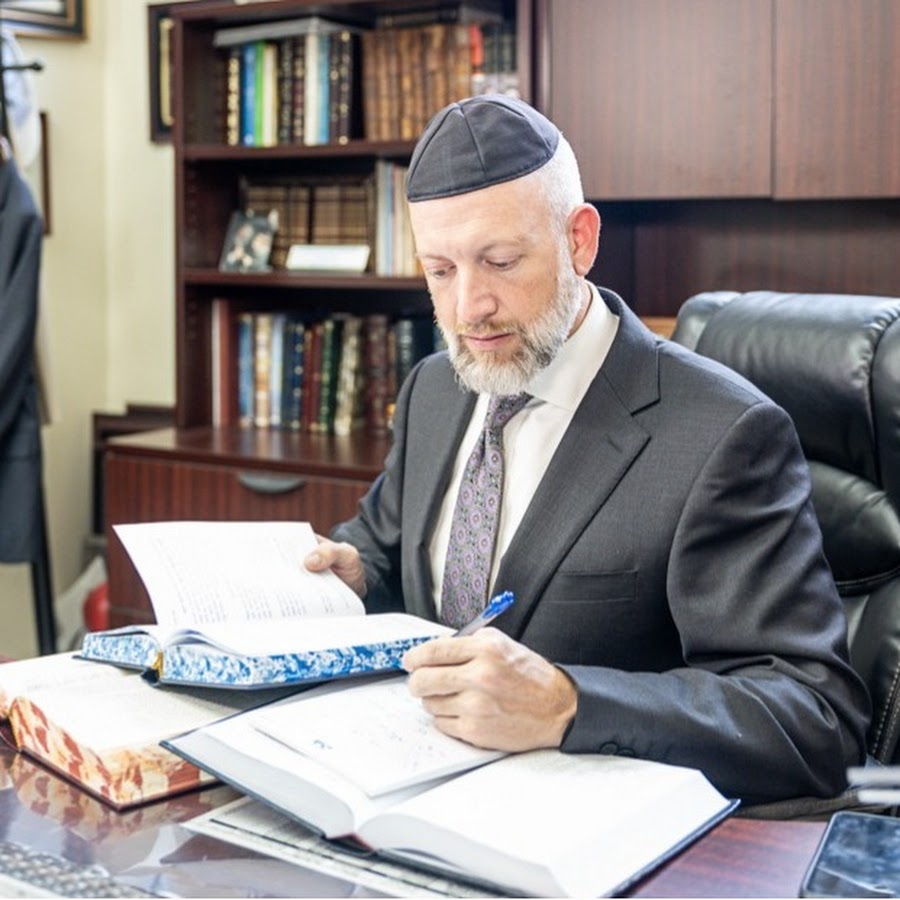
The Torah and its messages are timeless. Join me as we draw from the weekly Torah portion to extract lessons and inspiration for today from a wide and diverse range of sources and personalities. Featuring insights from: - R. Yisrael Meir Druck - R. Yisrael Meir Druck -Imrei Chaim - Kli Yakar - Baal HaTanya - R. Soloveitchik - R. Shimon Shkop For more content, visit http://www.rabbiefremgoldberg.org.
Comments(0)
Transcript
Auto-generated transcript. Not time-synced to the video.
Good morning, and welcome back to
Partial Perspectives for today, our
weekly analysis of the parsha with
contemporary lessons relevant
specifically for that year and for this
time. I want to thank our generous
parsha sponsors series for the year,
Becky and Avi Katz, our dear friends and
family in loving memory of Becky's
father David Grossman, Lee L'ilnishma's
David ben Menachem Manish. Also this
morning, class is sponsored by our dear
members and friends Pam and Prosper
Abidbol in commemoration of Pam's father
Lester Greenberg as his yahrzeit Eliezer
ben Meir on the 12th of Iyar. May his
neshama have an aliyah. If you'd like to
sponsor a future shiur, please email Lee
l e e at brsonline.org.
l e e at brsonline.org. This week we
have the privilege of reading and
learning two parshas Acharei Mos and
Kedoshim. An enormous amount of
material. We're not going to get through
it all, but we'll see how far we will
get. And as always, I encourage you to
listen to previous years' shiurim. You
can find them on our website
rabbiyefremgoldberg.org or on
yutorah.org or YouTube, our YouTube
channel. Page 636 in the Artscroll Stone
Chumash Vayikra. Sh'ma Moshe. Acharei
Mos shnei bnei Aharon b'korvam lifnei
Hashem vayamosu. Our parsha, which
teaches the detailed laws of Yom Kippur,
the unique and distinct role of the
Kohen Gadol in leading the Yom Kippur
service. In our time, Yom Kippur is
equally experienced by everyone. But in
the time of the Beit Hamikdash, the
overwhelming majority of the Jewish
people were spectators to the Kohen
Gadol who led the service on Yom Kippur
and achieved atonement for us all. But
it's introduced with a context, with a
reference. Pasuk tells us when are these
laws given? Acharei Mos shnei bnei
Aharon. A reminder, as if throwing in
Aaron's face, when is it given? After
the death of Aaron's two sons. Now by
the way, why doesn't the pasuk tell us
their names? Nadav and Avihu. Tell us
their names. Say their name. Why does
the pasuk leave it ambiguous? Shnei bnei
Aharon. After the death of Aaron's two
sons without mentioning their names.
I'll leave that to you as a question to
explore. B'korvam someone they tried to
draw close to Hashem inappropriately
without having been commanded to do so.
It was a capital crime. Vayamosu and
they died. One thing the Torah teaches
us, the pasuk is teaching us is Acharei
Mos. There is an Acharei Mos. There is
an after death. There is the notion that
we're able to continue. We're able to
rebuild. We're able to not only survive,
but we're able to thrive. It's very
interesting to note the way that a
mourner comes out of mourning, the
custom that we have. It's not halacha,
but the custom, the minhag that we have,
is we take the mourner for a walk. Why
do we take the avel? Why do we take the
mourner for a walk as the way in which
they emerge from shiva? So many answers
or explanations are given, but one is
just like when you go for a walk, you
put one foot in front of the other, so
too in life, as you emerge from the deep
grief and mourning, particularly of a
tragic loss, you put one foot in front
of the other. There is no magic wand.
There is no easy solution to be able to
re-engage, to be able to re-enter life
and society. But just like when you go
for a walk, you put one foot in front of
the other, so too in life, one has no
choice but to one foot in front of the
other. And perhaps that's part of what
the Torah is telling us here when it
comes to Aaron is Acharei Mos. There is
an Acharei Mos. There's an afterlife.
First of all, we don't grieve
excessively because we believe there is
a world to come.
And the largest
pain
of loss is our lack of access, our
inability to feel, touch, hear, connect
with the person who's no longer here.
But from that person's perspective,
Acharei Mos. There is an Acharei Mos.
Bodies die, people don't die, and rather
they ascend to heaven. Vayomer Hashem el
Moshe, daber el Aharon achicha, Hashem
tells Moshe speak to your brother Aaron,
v'al yavo b'chol eis el hakodesh lifnei
Aharon v'lo yamus. Why? Ki b'anan era'eh
al hakaporas. Aaron tells Moshe speak to
your brother Hashem tells Moshe, speak
to your brother Aaron and tell him he
can't just come in whenever he wants
within the paroches in front of the
cover of the Aaron that's on the Aaron,
because if he does, he'll surely die.
For in a cloud I appear I will appear to
him above the Aaron. We spent a lot of
time on this last year. If you want to
listen to last year's parsha shiur, what
does it mean b'zo lo yavo b'chol eis?
You cannot come whenever you want, but
rather the next pasuk, b'zo si yavo
Aharon. This is how he has to come. He
can't come however he wants, whenever he
wants, but b'zo, only in this way. Chaim
Shmulevitz, we spoke last year. V'lo
yavo b'chol eis. You know what the
killer to holiness is?
Familiarity. When a person is too
comfortable, too casual, too familiar,
it's hard to feel a sense of holiness or
a sense of sanctity. And that's what the
Torah is telling us. V'al yavo b'chol
eis el hakodesh. Don't become too
familiar. Don't become too casual. Don't
take it too lightly or too easily. Why?
Because then it won't remain kodesh. It
won't remain holy or sacred or
sanctified. And I think the same is true
in our marriages. The same is true in
our lives. We have an expression that
familiarity breeds contempt. I don't
know that it breeds contempt, but it
definitely loses the edge, the romance,
the fireworks, the excitement, the
energy. Don't be too familiar with your
siddur. Go buy a new siddur every few
years and mix up what siddur you daven
from. Don't be too familiar or casual.
Al yavo b'chol eis el hakodesh. Take
seriously, prepare, and uh and have a
mentality and an attitude which will
lead to a sense of sanct- of sanctity.
Ksones pasim kodesh y'ilbash. And then
we have the specific parameters of how
Aaron has to dress and what he needs to
do when he comes in. Perek Zayin, pasuk
vav.
What happens? Vayikrav Aharon es par
hachatas asher lo v'chiper ba'ado
u'va'ad beiso. We reference this in the
Yom Kippur davening in Mussaf that the
Kohen Gadol earns atonement. The Kohen
Gadol through this service earns
forgiveness, a fresh start, a new
beginning. For on whose behalf? First of
all, on his own behalf. He needs
atonement. He's made mistakes. He needs
to come close. Then ba'ad beiso. He does
so on behalf of his entire family. And
then the pasuk, if we skip to pasuk
Zayin, we've now progressed from earning
atonement for himself to his family.
V'chol adam lo yihiyeh b'Ohel Moed
b'vo'o l'chaper bakodesh ad tzeiso.
We'll get to this in a moment. No one
else can be in the Ohel Moed when he is
there doing his thing. Why? Because that
is the way in which v'chiper ba'ado,
he'll earn atonement for himself, ba'ad
beiso, for his family, u'va'ad kol
Yisrael,
and for the entire Jewish people. And my
question to you is very simple. Aren't
he and his family full members,
participants in kol Yisrael? Wouldn't it
be more efficient to say that he earns
atonement for the entire Jewish people?
And obviously included among them is he
and his family. Why so inefficiently
does the Torah list out separately that
the Kohen Gadol earns atonement ba'ado
for himself, ba'ad beiso for his family,
and then ba'ad kol Yisrael?
And I'd like to suggest to you this
morning, there's a very powerful lesson
for each and every one of us. You know,
management schools and professionals and
researchers and gurus have studied the
process of how you can change others.
How do we affect change in others? How
do we inspire and motivate and transform
and change the people around us? I once
saw an article published in the Journal
of Management Inquiry and the title of
the article was Changing Others Through
Changing Ourselves, The Transformation
of Human Systems. And the thesis, the
argument of the article was that the
number one mechanism to change others is
to change yourself. You want to
influence, you want to impact the people
around you? Don't lecture. Don't give
feedback. Don't give frontal direction.
But rather the number one way is to
change ourselves. And by changing
ourselves and modeling for others, then
we will be what we seek in others. And
what the management gurus only concluded
through their research now is what the
Torah knew all along. And perhaps that's
why the Torah suggests it in this
inefficient way. You want to earn
atonement for your family? Don't go
lecture your family. Don't give feedback
and criticism to your family. Where does
it begin? Ba'ado. On Yom Kippur, a day
that's characterized by growth and
development, we have to first commit to
change ourselves, ba'ado, and only then
can we change and impact others. G'mara
Bava Metzia,
Amud Kuf Zayin tells us, K'shod atzmecha
v'achar kach k'shod acherim. First
examine yourself, and then examine
others. Look in the mirror. Evaluate
your own life. Are you the change that
you seek in others? Are you living the
principles, the values, the ideals, the
life, the lifestyle that you are
expecting and that you're asking in
others? K'shod atzmecha. K'shod means to
examine. It also means to be truthful.
Like Oraisa k'shote in Brich Shmei.
Because describe Hashem is true and his
Torah is true and so on. So k'shod means
be true. Be honest with yourself before
you lecture others. The G'mara Shabbos
daf kuf or the G'mara Shabbos daf kuf
gimmel tells us, Harugel b'neir havyan
l'banim talmidei chachamim. A person who
customs themselves to be near the candle
will merit children who will be
righteous, who will be Torah scholars.
Many point to this G'mara as the source
for a custom that we have that women
daven for their children when they're
lighting Shabbos candles. They daven to
have children. They daven for the
success and the merit of their children
when they're lighting candles. From
harugel b'neir. Which candles are we
talking about? They're showing them
discuss. Are we talking about Shabbos
candles? Talking about Chanukah candles?
However, I saw a beautiful beautiful
insight. What it means is Harugel
Benair. You want bonim talmidei
chachamim? You want children who care
about and value and dedicate time to
study Torah? Harugel Benair. Then make
yourself time to sit at the candle and
study Torah. You can't just lecture. You
can't just tell them, "Did you learn
Torah today? Did you daven? Did you make
a bracha? Are you being kind? Are you a
mensch? Do you have derech eretz? Do you
not speak lashon hara?" You can't just
tell others what to say what to do, but
rather you have to model it. Ba'ado,
ba'ad beiso, ba'ad kol Yisrael. It
begins the change you seek among the
entire Jewish people. The change you
want among your entire community. The
change you want within your family
begins with ourselves. There's a quote
that's often attributed to Rabbi Yisrael
Salanter and others attribute it to the
Chofetz Chaim and others attribute it to
different Chassidic Rebbes, but if we're
being intellectually honest, it traces
itself back to the tomb, to an
inscription on a tomb of an Anglican
bishop in Westminster Abbey who lived
about a thousand years ago. It doesn't
mean that there's not truth to the
quote, but we have to give credit where
it is due. And listen to the quote.
"When I was young and free and my
imagination had no limits, I dreamed of
changing the world. As I grew older and
wiser, I discovered the world would not
change. So I shortened my sight somewhat
and decided to change only my country,
but it too seemed immovable. As I grew
into my twilight years and one last
desperate attempt, I settled for
changing only my family, those closest
to me, but alas, they had they would
have none of it. And now, as I lie on my
deathbed, I suddenly realize if I had
only changed myself first, then by
example, I would have changed my family.
And from their inspiration and
encouragement, I would have been able to
better my country. And who knows, I may
have even changed the world." You want
to change the world? It begins ba'ado,
ba'ad beiso, ba'ad kol Yisrael. The
change has to begin must begin with
ourselves. Let's take another look at
the possuk we just read. V'chol adam lo
yihiye b'Ohel Moed, no person can be in
the Ohel Moed, in the holy place, b'vo'o
l'chaper b'kodesh ad tzeiso, when the
Kohen Gadol enters in order to achieve
holiness l'chaper, when the Kohen Gadol
enters the kodesh, ad tzeiso, until he
leaves. Ki per ba'ado, ba'ad beiso,
ba'ad kol Yisrael. And that is where he
seeks and searches for that atonement.
Why is that? So Rabbi Soloveitchik
writes in the article in the OU Rav
Chumash, says the Rav, "A person cannot
be in the Tent of Meeting
when the Kohen Gadol comes in. According
to halacha, the revelation at Sinai
symbolizes erusin, the betrothal with
Knesset Yisrael to Hakadosh Baruch Hu.
We have two stages of marriage. Erusin
is the first part. It's where the groom
puts the ring on the kallah's finger,
and then nisu'in. Nisu'in is It's a
debate among the Rishonim what exactly
is the fulfillment of the second part of
the marriage. According to some, it's
being under the chuppah together.
According to others, Ashkenazim, it is
the experience of yichud, the fact that
they seclude themselves, which is
something only a husband and wife can
do. They act, they demonstrate marriage.
They are alone in yichud room. That is
the completion. That is the nisu'in. So
says the Rav, says Rabbi Soloveitchik,
that according to halacha, the
revelation at Har Sinai symbolizes the
erusin, the betrothal. The entire
Knesset Yisrael stood at the foot of the
mountain ready to enter into this
relationship. When they built the
Mishkan, the marriage, the nisu'in was
completed. In this view, erusin was
translated into nisu'in with the
building of the Mishkan. The Mishkan and
Beit Hamikdash then are the symbols of
marriage of Knesset Yisrael to Hakadosh
Baruch Hu. I will arrange my meetings
with you from there. And that is the
yichud. That is the chuppah.
The verse says the possuk says, "No man
shall be in the Tent of Meeting when he
comes to effect atonement." Why? Because
the service of the Mikdash is an act of
marriage. And since chuppah is yichud,
no one else can be present. The presence
of a stranger destroys the yichud. So
the image that we're meant to have when
we read this possuk, that no one else
can be there, is because the Kohen Gadol
is having yichud with Hakadosh Baruch
Hu. The Kohen Gadol is secluding
himself. There's not a casual
relationship. There's a marriage.
There's an intimacy. There's an
affection. There's a privacy. Uh Rabbi
Carlebach says, "Normally, we
think about ne'ilah, we're talking about
Yom Kippur, the learning the laws of Yom
Kippur. So normally, we think about
ne'ilah in a very punitive sense. The
gates are closing. They're going to be
locked. Quickly, sneak in. Daven. Pray.
Work hard. Earn merits. Ask Hashem. Why?
Ne'ilah. The gates are closing and the
gates are going to be locked."
Says Rabbi "Don't think of it as
the gates are going to be locked,
but think of ne'ilah as
the whole Yom Kippur, it's the tzibur.
The whole Yom Kippur, it's all of us
davening together. I look to the people
near me and around me. I feel connected
with all those others in the room. But
says Rabbi comes ne'ilah, when
the when the everything's on the line,
comes ne'ilah, the culmination of the
day, ne'ilah, I go into a room alone
with Hashem and I lock the door. The
image is not the gates are locking and
I'm outside of it. The image is I'm
going to a private room with Hashem and
I'm locking the door behind me. It's
time to be alone. It's time to be
earnest. It's time to remove any
inhibition. It's time to pour out my
heart. Ne'ilah.
I go into yichud with Hashem
and I lock the door behind me." That is
the opinion of Rabbi Soloveitchik, that
the reference in our possuk on Yom
Kippur to the fact that the Kohen Gadol
needs to be alone, that reference is a
reference to the fact of that there
needs to be a sense of yichud, of
privacy, of affection, of intimacy, of
closeness. But Rav Druck has a different
interpretation. Take a look at our first
Rav Druck of the day, of course, in his
wonderful work Eish Tamid. Mi possuk zeh
yeish l'hotzi hora'ah gedolah. From this
possuk, we can extract a very powerful
lesson, namely, Hatorah madgisha shekol
adam lo yihiye b'Ohel Moed k'she nichnas
HaKohen Gadol. The Torah emphasizes, the
Torah demands and requires that no other
person can be in the Tent of Meeting
when the Kohen Gadol enters to do his
work on Yom Kippur. In eiv zman zeh,
zochah Kohen Gadol l'salos l'darga
gavoha beyoser. In that moment, at that
time, the Kohen Gadol elevates. The
Kohen Gadol rises to a level that no
other person can achieve. Madua part zeh
chashuv kol part zeh chashuv kokach? So
why is this detail so important?
Shouldn't the Kohen Gadol be oblivious
to who else is around him? Shouldn't the
Kohen Gadol be so lost in his righteous
service that nothing else matters in
that moment? Why does the Torah demand
that no one else can be there? Says Rav
Druck, Eish Tamid, "D'arba inyanim hu
sheh ba Torah l'lamed, ki im y'vakesh
adam l'salos l'hagila dargas gavoha
b'avodas Hashem, l'lo shum p'niyos
zaros, bilti l'Hashem l'vado, yachol
l'hagila zeh rak k'she avodaso na'ases
b'seiser, harcheik mei'einam shel b'nei
adam." If you want to do a gut check, if
you want to really look in the mirror
and evaluate yourself, if you want to
know how sincere is your religious
growth spurt, what is motivating it,
what is driving it, how real, how
sincere, how authentic, then do it when
no one else is around. Then ask
yourself, are you doing it for others to
see? Are you doing it to impress? Are
you doing it to be praised? Are you
doing it for honor? Are you doing it to
be considered among the righteous? Or
are you doing it authentically to draw
close to Hashem? Such a powerful lesson
of religious growth. Such a powerful
lesson when we aspire for righteousness.
Shem k'she af echad ein ro'eh, yachol
l'avodas Hashem l'shem shamayim, l'lo
p'niyos acherim, v'al yedei zeh l'hagila
dargas gavoha. Because only when there's
no one else there, and that's what the
possuk demands. That's the language of
the possuk. "Kol adam lo yihiye b'Ohel
Moed." No one else can be there. B'vo'o,
when you come in order to atone. It
means physically nobody else can be
there. It also means mentally, in your
head, no one else should be in your head
when you are deciding who you want to be
and how you want to atone. You're not
living more righteously or religiously.
Is your Shemoneh Esrei a fraction of the
time when you're all alone than when
you're in shul? Who are you when no one
else is around? Do you learn when
there's no one else there to see and
applaud? I remember when I was in Rabbi
Yitzchak Elchanan, when I was in YU
learning, one night late at night, I
went to There was a shul in the basement
of the dormitory where I lived in Morg,
fourth floor Morg, best floor, great
roommates, great floor. So in the in the
basement of Morg, there was a shul. And
I remember being down there late one
night for whatever reason, and I saw a
friend of mine. And he was sitting in
the corner, he was learning. And I
always knew him to learn late in the
main Beit Midrash at YU. Baruch Hashem,
the main Beit Midrash at YU was,
probably is still, packed way past
midnight. So I asked my friend, "Why are
you here? What are you doing here? Why
not in the main Beit Midrash?" So after
a little pushing and prodding, he
finally said to me, he said, "You know,
late at night, I like to come to learn
here because I want to make sure that
I'm learning late at night. I want to
make sure that I'm staying up, not
because I want to be known as the guy
who's the latest in the Beit Midrash.
Not because I want people to be
impressed or praise me for burning the
midnight oil. I want to make sure I'm
learning for the right reasons, that I
am driven to learn." And that's exactly
what Rav Druck is saying the p'shat is
here.
V'chol adam lo yihiye b'Ohel Moed.
Nobody else can be there. Physically,
nobody else can be there in your head
when you are seeking righteousness. The
Rambam writes in
Even though we have a mitzvah of Torah
to learn both day and night, ain't Adam
wrote a letter to Aliyah. When is the
most ideal when is the most propitious
time when is the most um
the best time to be able to learn is at
night, not during the day.
Holy lost of Therefore, a person wants
to merit to wear the crown of Torah
should make sure to learn at night. But
lawyer I feel like a man
don't waste them. Don't binge watch
nourish guide. Don't waste them on
absurd activities.
I love it
night seder at your home in the base
medrish. Open up a safer, listen to a
sheer, read a book at night.
So the Rambam significantly encourages
learning at night and the benefits of
learning at night.
So notes you see that the greatest
benefit of learning is coming at night,
not during the day. Now the simple
understanding the simple explanation is
because at night you have the least
distractions. During the day we have a
whole to-do list. During the day you got
to earn your livelihood. During the day
there are people around. During the day
there's so much going on. So therefore
your learning will be with distractions
and it's hard to acquire, it's hard to
absorb and embed what you're learning if
it's competing against the background of
all kinds of distractions. So the simple
understanding of the Rambam is that the
Rambam is encouraging us the best time
to learn strategically is at night.
However, I drove offers another
explanation based on what we just saw in
our puzzle.
The answer is at night people won't see
you. Like my friends in YU
People are not going to observe or see
one another and therefore that will be
your best learning. Your best learning
is when it's not to impress. Your best
learning is when it's not to compete,
but your best learning is when it's
authentic and genuine, when it's
internally driven and it's not in order
to keep up with anybody else. Moving
right along. Character design puzzle
it's a puzzle we're all familiar with.
On Yom Kippur last year we spoke all
about the saving of Azazel. What is this
bizarre ritual of pushing the
one goat off a cliff? The other goat is
offered. We spoke all about that notion
how we see ourselves in that goat and
what it represents and that voice of
Azazel in our own head. You can listen
last year if you want to understand more
about a puzzle element.
We all know this from Yom Kippur. The
key by Yom Kippur by
the tire as him
the flame of Hashem to tar all. On this
day Hashem provides atonement to purify
from all of our mistakes before Hashem
we should be purified. What a beautiful
beautiful puzzle. What is it? What is
this puzzle getting at? So the I'm a
kind
first vision of the sort of the day the
I'm a kind says what does it mean the
flame of Hashem to tar all?
The flame of Hashem says the means to
tar all of the double shoe go Iraq with
me Hashem Hamakshava. It's a
continuation of the last idea from the
joke. The flame of Hashem to tar all.
Where is it that you really become pure?
Where is it that you really grow? Where
is it that is most important to do a gut
check? The flame of Hashem.
Namely, to tar all of the double shoe go
Iraq with me Hashem which is Hamakshava.
Ask yourself in your thoughts. Ask
yourself when your mind wanders. In your
motivation.
In your intent. Are you sincere? We're
living in a time where people are trying
to religiously one up, holier than thou,
compete with others. But that's not
right. That's not the right way. True
It's true that a competition among
scholars
improves or benefits wisdom. If a person
is motivated to publish a book a safer
because of
because of scholarly competitiveness,
then there's increased in the world.
However, that's true when it comes to
when it comes to
when it comes to the discipline of
But when it comes to our righteousness,
when it comes to who we are in our core,
we should not be driven by competing
with others. We should not be driven by
pursuing honor or glory, but it should
rather be pure, should be authentic, it
should be an honest and sincere yearning
and longing to come close to Hashem, to
be what's right and righteous, to do
what's true. So the flame of Hashem to
tar all says the
says the vision of Where is to tar all?
Where is the most important place to tar
all to become pure? The flame of Hashem.
In the aspect of our life that only
Hashem knows. In the deepest recesses of
our hearts. In our thoughts that no one
else has access to. That's to tar all.
That's where it's most important in
order to come close to Hashem. The
has a different interpretation. The
flame of Hashem to tar all says of
says of
the
flame of Hashem to tar all key
key
tells us that Yom Kippur works to atone
only for those who make the effort who
seek atonement.
Before you can appear before God and ask
him for a pardon. Before you appear
before God and ask him to wipe your
record clean. You ask him to forgive.
Ask him to forego any punishment. Person
has to put the effort in. The tire at
small.
Says the
The word
is telling us chronologically
if you appear before Hashem and you say
Hashem, I'm genuine, I'm real. I feel
such remorse, regret. I've made a
commitment not to repeat this again. I'm
confessing to you I've made a mistake.
Let it go. I'm asking you to let it go.
Says the
There's work that has to be done
beforehand and that's the
And here he's encouraging us take
advantage of Elul before you pour appear
before Hashem on Rosh Hashanah and Yom
Kippur first take advantage of the month
of Elul before Hashem before you appear
before Hashem to tar all. Put in the
hard work in Elul. Put in the hard work
to repair before you first appear before
Hashem. But I want to tell you a
beautiful thought about Tanya the
that I saw from
but Hashem in our wonderful
program. Says the the following. Take
another look at that puzzle.
Because on this day God
gives atonement
in order for us to be able to be pure
from
any of our mistakes. What word in the
puzzle is extraneous? What word in the
puzzle is extra? Doesn't seem to add
anything. The word is I like him. The
puzzle could have easily just have said
key by Yom Kippur by the tire On this
day you atone the tire as him so that
you're pure because
from all your mistakes and so on. What
does the word
add? So listen to what the
the said. Said you're punctuating the
puzzle all wrong. You're going to have
to pivot and adjust in the way that you
sing this puzzle on Yom Kippur. Don't
read it
by the tire as him comma on this day.
Just try to translate the words. It's
difficult to translate.
The I like him. I like him means on you.
On this day atonement on you. What is it
like?
Atonement blessings on your head.
What is atonement
atonement on you? What does the word
mean here? Says the
don't read it I like him. Read it
I like him.
The tells us that
teaches it's
Yom Kippur. The essence of the day
itself provides atonement. It is a
national forgiveness, national amnesty
day. Imagine it's not so hard to imagine
that our elected leaders legislate that
there's a day of amnesty. You owe money
to your college. You have college debt?
Hereby forgiven. Wipe the slate clean.
Start again. Imagine you owe money in
taxes. Amnesty day. We're forgiving any
back taxes. Just do better going
forward. Amnesty day. Turn in your
illegal firearm. Just drop it off.
Amnesty day. We're not holding anyone
accountable. So says
he says
it's Yom Kippur.
On Yom Kippur we have an amnesty day.
God says whether you work for it whether
you deserve it, whether you've earned
it, amnesty. It's Yom Kippur.
When you wake up on Yom Kippur whether
you find yourself in shul or not,
whether you're even fasting or not, it's
Yom Kippur.
You've entered the day on the calendar
called Yom Kippur. You have been
forgiven. You're granted amnesty. Fresh
start. New new beginning. So technically
in our chart upstairs that Hashem has
chosen to purge. He pressed control all
delete. Amnesty. That doesn't mean that
we have a life of merit or of meaning.
That doesn't mean that we have a life of
purpose. That doesn't mean that we're in
the right trajectory of life. So says
the
read the puzzle the following.
Key by Yom Kippur by the tire On Yom
Kippur you're forgiven. It's Yom Kippur
amnesty day.
I like him the tire as him, but it's on
you to purify. The
difference
talks about the difference between
Kapara and Tahara, two separate things.
There is on the one hand, when I do
something wrong, when I make a mistake,
there's the consequence, there's the
punishment, but then there's also the
impact. There's also the impact. You
know, the the Rambam the Shulchan Aruch
codified based on a Gemara
that a person who's a degenerate
gambler, that a person who lies or
cheats in business is ineligible to be a
witness, is possible to aid us. So, why
don't you say the day after Yom Kippur,
it's Yom HaShoah Yom HaKippur, amnesty
day. They were forgiven for whatever
they did wrong. So, can they be a
witness now? Are they a kosher aid now?
The answer is no. Why not? So, the Rav
says, because the impact of mistakes we
make, the impact of what we call sin is
dual. On the one hand, there's a
punishment, there's a consequence, and
on the other hand, it's metame. On the
other hand, it contaminates our soul. It
absolutely leaves a residual impact
Excuse me, on who we are.
So, there are two levels of chuva we
have to undertake in order to remove it.
Number one, we have to get rid of the
punishment. So, that it's Yom HaShoah
Yom HaKippur, amnesty takes away the
punishment. That's Kapara. But, we also
want Tahara. I also want to get rid of
the contamination. I want to get rid of
the residual impact. I want to get rid
of the way it transformed my soul. I
want to earn to be able to be a kosher
witness again. That's Tahara. See how
the chuva the Rav writes describes very,
very beautifully there. So, says the
Alter Rebbe, that's what's going on over
here. Ki v'yom hazeh y'chaper, it's Yom
HaShoah Yom. You want to get rid of the
punishment, you want to be off the hook
for the punishment, for the consequence,
it's Yom HaShoah Yom. The day itself
earns that. But, aleichem l'taher
eschem, if you want to achieve Tahara,
you want to elevate, you want to enrich,
you need to want a life of meaning and
of purpose, don't wait for the calendar
day. Don't wait for passively to happen
to you.
Aleichem, it's on us. It's on us. And
this is a theme that you see elsewhere
in our parsha when it talks about
Shabbos.
Parshas Kedoshim, we're going to talk
about Shabbos. Shabbos oso saito
tishmoru, there are two Shabboses that
we have to observe. There's an aspect of
Shabbos that happens automatically. It
happens to us. When the sun sets on
Friday, ready or not, says Shabbos, here
I come. Shabbos happens to us. But, then
there's the aleichem. There's the part
of Shabbos that we make. Do we prepare?
Did we cook? Do we set the table? Do we
come with divrei Torah, with zmiros,
with a great story, with a great
question? Are we going to play board
games? Are we going to laugh? Are we
going to enjoy? There's the aleichem.
Each of our encounters with religion,
there's what is provided automatically,
there's what the day brings, but then
there's the aleichem. There's what is on
us in order to create, there's what is
on us in order to produce. Okay. Perek
yud ches, pasuk gimmel. Moving right
along, we continue with the different
service of the avodah, of the dam, the
halacha, the place of the laws of blood,
and where the blood and covering the
blood, and then we move over to the
world of forbidden relationships.
Arayos, the world of arayos. Now, this
is a very complicated area. In our
times, in contemporary times, the line
has been blurred. There are no
boundaries. We are living in a time of
Sodom and Amora. We're living in a time
that the world is saying, be who you
want, see yourself how you want, declare
what you want, do what you want, as long
as it doesn't harm others, if it makes
you happy. And the Torah here telling us
that's not the barometer through which
we look at life. We're not We don't live
for happiness. We don't live for
happiness. The next parsha what Acharei
Mos goes right into is that we don't
live for happiness. What do we live for?
Holiness. It's a very, very different
standard. It's a very different goal. We
don't live for happiness, we live for
holiness. And one, if not the primary of
living a holy life, is the area of
interpersonal relationships, of
sexuality, of identity, of who we are
and how we see ourselves. Now, I don't
share these thoughts with you in a
insensitive way. I recognize that I and
I respect that we're living in
complicated times. As a community Rav, I
have and do engage regularly with people
who are struggling with orientation and
identity. People who are struggling in
these areas enormously. And anyone who's
flippant, anyone who is cynical, anyone
who is insensitive about such people and
the struggles they endure
has a special place for them. Because
there's it's absolutely intolerable and
unacceptable to act in a way, to speak
in a way, which is derogatory, to act in
a way which is insensitive. These are
very, very complicated areas that when
you speak in the abstract, and when you
speak academically, and you simply read
psukim in a Torah, you can dismiss. But,
when you meet real people, with real
neshamos, with real struggles, it
absolutely changes your perspective. And
so, through as we read these psukim
and we recognize the significance of
forbidden relationships, of orientation,
of identity, of this area, I just saw an
article this week that said there was a
movement to legalize incest with
consent. Why shouldn't, within a family,
if there's love, why shouldn't they,
with consent, be able to marry? Why
shouldn't they be able to have incest?
And the answer is, because there are
moral boundaries. There are moral
standards. There are right and wrong
which transcend a person's desire for
their own happiness. There is an
aspiration for holiness. There is the
word and the dictate and the blueprint
and the vision of the Almighty for us in
this world. And if we have inclinations,
I have an inclination, let's say, to get
angry. I have an inclination or I have a
drive, others for ego, for their id,
towards they're drawn towards their own
sexuality, even if it is not forbidden
explicitly here. And yet, we are
challenged to confront, to struggle, to
overcome. And so, I think what is the
driving
message or balance that we have to
strike as we read the psukim of arayos
and Acharei Mos, be it in the area of
mishkav zachar, be it in the area of
homosexuality, of orientation, of
identity, of practice, what what drives
us is to recognize that we have to be
sensitive and warm and welcoming and
make a place for those who don't fit or
don't feel like they fit. We have to
recognize and respect they too want to
remain part of our community and part of
our life and part of a Torah lifestyle,
but among those to whom we must be
sensitive is the Ribono shel Olam
himself. Sometimes in our pursuit of
being so sensitive that we warm and
welcome anything and everything in a way
in which we don't ever want to seem that
we have principles or values or
boundaries, we are in fact violating the
sensitivity towards the Ribono shel
Olam. We have to love him, too, and we
have to be sensitive to him, too, and to
his Torah, and to preserving it and to
representing it and to standing for it
and to having boundaries. So, our
mission, our job, our responsibility
as we relate to these topics and as we
relate to people in our own lives, I
have in my life and many of you in
yours, is to do so with respect, with
dignity, with love, with
dialogue, but also
with an awareness, I think, an acute
awareness of not compromising our
principles in a way in which it's
ultimately a chillul Hashem, and in the
effort to respect one, we're
disrespecting or being insensitive to
the others. Rav Soloveitchik writes
specifically on the pasuk yud ches,
pasuk gimmel. Torah here is telling us,
"K'ma'aseh Eretz Mitzrayim asher
y'shavtem bo bo lo sa'asu." God says, "I
took you out of Egypt. Egypt was a
morally corrupt, decadent, licentious,
lewd, morally depraved country. Egypt
was a place of billboards and magazines,
of pop culture. Egypt was a place of
dress and activity in public. Egypt was
a place that was so upside down in its
immorality. I took you out. I
emancipated, I liberated, I took you
out, I rescued you. Don't recreate.
Don't go back there. Don't embrace
"U'k'ma'aseh Eretz Kena'an asher
y'shavtem sham lo sa'asu." So, I want
you to be distinct and different. Just
because in contemporary times the moral
mores dictate that such a thing is a
civil right or such a thing is a value
or such a thing is a something doesn't
mean that that's the Torah perspective.
We have to educate ourselves what does
Hashem want me to believe and think? How
does he want me to execute on that
belief in a way which is warm and
welcoming, which is loving and
sensitive, which is dignified and
respectful? How does he want me to
execute on the belief? But, it has to
begin with not how do I impose on Hashem
what's my belief, but how do I listen to
Hashem, what does he want me to believe?
Not "K'vatah item l'Torah," but "K'vatah
Torah not K'vatah Torah l'item." It's
not that I make Torah conform to the
times, but "K'vatah item l'Torah." Do I
make the times conform to Torah? So,
it's challenging not to get swept up in
what is the culture. It's challenging
not to get swept up in what we're told
that we are disrespectful or that we are
violating other core principles. But,
how do we find and strike that balance?
How do we live in that perhaps very
narrow space that on the one hand
respects Hashem and respects people,
that is dignified in both directions,
that is principled, but principled with
a sense of perspective, with a sense of
respect. Don't be like where I took you
from. Don't be like Mitzrayim. And don't
be like where I'm taking you to. Don't
be like Kena'an. The Jewish people, we
are likened "V'yigdal ha'rov b'kerev
ha'aretz." We're likened to the fish
because the fish are willing to swim
upstream. We have to be willing to swim
upstream. We have to be willing to go
against that which is popular. We have
to be willing to It's unpopular in two
directions. In some communities, it's
unpopular to have a belief and a
principle that sees these things as
moral issues, as issues of sanctity and
holiness, as boundaries that Hashem has
placed for us. It's unpopular to swim
upstream. And in other segments of the
community, it's unpopular we're swimming
upstream if we say we have to be
respectful and we have to make a place
for everyone in our community to be able
to still live rich Torah lives even if
in one particular area they're choosing
not to. You know, the Torah uses the
word to'eivah when it comes to these
areas, when it comes to living
against us.
Person who's violating these moral
boundaries of the Torah arayos included
among them is zachar lo tishkav
mishkavei ishah to'eivah hi. That a
person who lies with a man the way one
is meant to lie with a woman, Torah
calls it a to'eivah. So, some
some use that word to'eivah as a weapon
in order to beat others, in order to
degrade and knock down others. But do
you know the word to'eivah is used many
times in the Torah? Person who eats
non-kosher, it's also a to'eivah. Person
who has dishonest weights and measures,
you cheat in business, you misreport
your business expenses or your tax
returns, it's also a to'eivah. You wear
shatnez, it's also a to'eivah. And so, a
person needs to know and you need to
have perspective that the word to'eivah
the word to'eivah, why does the Torah
specifically call these things? Once
heard from Rabbi Dr. Lamb, z'l,
beautiful explanation of why
specifically kashrus, business dealings,
shatnez, interpersonal relationships,
mishkav zachar, why to'eivah, why
abomination? Why are these specific
things labeled an abomination? But if
you're going to use the word abomination
in order to marginalize people from the
Jewish community, then you better
marginalize equally. You better
marginalize those who aren't entirely
honest on their tax returns. You better
marginalize those who aren't entirely
consistent in their eating of kashrus.
You better marginalize those who aren't
getting their clothing inspected for
shatnez. You better marginalize others.
You can't use that word to'eivah as a
weapon. Again, we have to strike that
balance and live in that narrow place,
principled, respectful to Hashem and to
others. So, Rabbi Soloveitchik writes,
"What does it mean k'ma'aseh Eretz
Mitzrayim? Don't go back to Egypt. Don't
be Don't walk like an Egyptian. Don't be
the way the Egyptians are, but also
don't be like the people in
Canaan where I'm taking you." So, says
Rabbi Soloveitchik, "The contrast
between Israel and the rest of mankind
is emphasized to an extreme in this
section. The key message of this
particular passage in the Torah is in
this introductory verse. The Jewish
people are separate and distinct from
the nations surrounding her. We must
uphold this unique identity. Under no
conditions are we to consider
assimilation. Egypt and Canaan are
mentioned specifically. These are
nations representing the two polar the
two poles of secular civilization in
biblical times. Egypt was the most
urbanized and technologically advanced
civilization of the time, while Canaan
was pastoral and primitive. The Torah
emphasizes here that as different as
they were from each other, neither of
these fundamentally immoral societies
should serve as role models.
Don't assimilate. Don't become
integrated into the morals and values of
those around us. It's a very very big
challenge for us. You know, you can be
observant of Torah and mitzvos. You
could be entirely observant but
assimilated in our thoughts, in our
perspective, in our attitude, in our
values, and our principles. We're
struggling with that. Not only those who
are assimilated in their lifestyle, not
only those who are assimilated and chos
v'shalom among those 75% who are
intermarrying, but even among those who
are observant, we are at risk of being
assimilated in the way we think, in our
attitude, and the perspectives that we
have. And that's why the Torah says the
Rav is telling us k'ma'aseh Eretz
Mitzrayim, don't be assimilated in your
values and your principles. Don't be
assimilated. Our values are not formed
and molded by the contemporary world
around us, by the mores around us. They
are molded by the Ribono Shel Olam, by
the creator of the universe, by the
infinite omnipotent being who created
all of us and among them with challenges
and with hardship and people who are in
positions that we should have tremendous
sympathy for, that we don't envy, who
are born feeling or struggling with
certain predispositions, with certain
identities, certain challenges, certain
ways in which it's difficult to figure
out how one fits in and how to fulfill
certain drives and desires in ways that
are not inconsistent with Torah.
Very very very difficult. And we have to
be sensitive, our heart has to go out,
we have to care. But ultimately we
cannot become assimilated in our
thinking. Neither, says the Rav,
k'ma'aseh Eretz Mitzrayim, nor k'ma'aseh
Eretz Canaan. Neither. We have to be
respectful. Perek Yud Ches, pasuk dalet
and hei. We'll finish acharei mos with
this and then we'll go over to Kedoshim
for a little bit.
It says es mishpatai ta'asu v'es
chukosai tishmoru lalechet bahem. Carry
out my laws and safeguard my decrees to
follow them.
Ani Hashem Elokeichem. I'm Hashem.
Ushmartem es chukosai v'es mishpatai.
Observe my decrees and my laws. Asher
ya'aseh osam adam that a person does
v'chai bahem. I think last year or two
years ago in the parsha class we
elaborated, we spoke more at length on
the words of v'chai bahem. This is the
source that other than the big three
cardinal sins, better to violate Torah
to preserve our life. V'chai bahem. The
whole purpose of Torah and mitzvos is to
enrich and enhance our lives, to live
with them. If it's going to cost you
your life, then what's the point? So,
v'chai bahem. Other than the three
cardinal sins, v'chai. They give us
life, they give us chiyus. If you're
going to die in order to observe them,
then what's the point of observing them?
So, better to violate in order to
preserve life and to go back to living
them. V'chai bahem. But what I want to
draw your attention to this morning is
what seems to be a total and absolute
redundancy. These two psukim, if you
read them in succession, you realize how
repetitive they are. Es mishpatai ta'asu
v'es chukosai tishmoru. Ushmartem es
chukosai v'es mishpatai asher ya'aseh
osam. Both we have chukim and mishpatim.
Both we have shmirah and asiyah. So, why
the repetition? It's as if you're just
reading the same thing over and over.
The Torah doesn't do that. Torah doesn't
waste space. We have to be sensitized to
ask such a question, to read such psukim
and wonder what in the world is it
doing. So, I want to move over to
parshas Kedoshim, but I bring this
question to your attention and I refer
you to Rashi who addresses it and I
refer you to the Or HaChaim HaKadosh who
addresses it beautifully and I refer you
to the Meshech Chochmah, Rav Meir Simcha
of Dvinsk, who addresses it. So, why the
repetition in these two psukim in a way
that doesn't seem to add anything? Uh
Rashi, the Or HaChaim, and the Meshech
Chochmah, all who elucidate, all who
point out that in fact the Torah is
adding even if it's difficult to see.
Okay, parshas Kedoshim, page 656.
Kedoshim tihiyu.
Vayidaber Hashem el Moshe leimor. God
spoke to Moshe daber el kol adas Bnei
Yisrael v'amarta aleihem. We'll see in a
moment why this needed to be given. In
adas Bnei Yisrael, gather the Jewish
people. Don't do this in isolation.
Don't do it separately. Don't send out
private emails or voice notes, but adas
Bnei Yisrael, gather the Jewish people.
And what's the message to them when they
are gathered? Kedoshim tihiyu. Be holy.
And why should you be holy? Ki kedosh
ani Hashem Elokeichem. Says God,
"Because I am holy." Our mission, our
mandate. We don't live for happiness, we
live for holiness. We are meant to
strive and to aspire to be a holy
people. Now, what does it mean to be
holy? What does it mean to be holy? It's
a challenge. What does it mean to be
holy? So, the Medrash in Vayikra Rabbah
chov dalid wonders if the mandate to be
holy means is our holy supposed to
holiness supposed to be as great as God?
After all, the pasuk tells us, "Be holy.
Strive to be holy." Why? Ki kedosh ani
Hashem Elokeichem. Hashem says, "I'm
holy and the greatest form of flattery
is imitation. So, therefore, if you want
to flatter me, imitate me. I am holy,
you should strive to be holy." So, the
Medrash concludes, "No." The pasuk ends
ki kedosh ani Hashem, kedushasi
l'ma'alah mikedushaschem. "My holiness,"
says God, "is categorically different.
It's on a higher level than yours." What
does that mean? What would we have
thought? What was the hava mina? What is
the initial thought that maybe our
holiness can be as great as God's?
And what is the conclusion?
No. Kedushasi l'ma'alah mikedushaschem.
"My holiness is greater than yours." Rav
Shimon Shkop z'l, who was for a very
short time a rosh yeshiva at YU, much
more better known as the rosh yeshiva of
Grodna, in his introduction to Sha'arei
Yosher
has a famous comment, a very beautiful
comment.
He says kedushah, holiness, is about
What is holiness? How do you define
holiness? So, I'll mention momentarily
Rashi, the Ramban, prishus. It is the
ability to be disciplined, to be
sovereign over our own desires, to live
without our wants and needs and
temptations. We just concluded Tuesday
Wednesday mornings, we learned Mesillas
Yesharim 10 minutes a week. For 10
minutes a week, we can be on a path
towards a better you. 10 minutes a week.
So, we just finished the middah, the
chapter of prishus, of living with
discipline, of how to say no, of how to
practice essentialism in our lives. So,
what is What is kedushah, holiness? So,
according to Rashi, the Ramban, it's
prishus. It's living with a certain not
asceticism, but it's living with the
discipline to be able to say no. But Rav
Shimon Shkop understands kedushah a
little bit differently. He says kedushah
is about how we speak and what we look
at and how we present ourselves, how we
conduct ourselves, how pious and how
righteous we are. But says Rav Shimon,
"At its core, you know what kedushah is
about? How much we care about and how
much we do for others." A life of
self-centeredness, a life of pursuit of
personal happiness is mundane. It's
profane. It is secular. It's chol. It's
chulin. You know what is kedushah,
holiness? Holiness is about caring about
others. Holiness is about being useful.
Holiness is about being of service.
Holiness is about making a difference.
Holiness is living a life that matters.
So says
I might have thought that I can be
giving and caring like Hashem. So the
answer is no. Hashem is absolutely
altruistic. Hashem is the ultimate of
benevolence. Could you the almighty is
able to give in a way in which he gets
absolutely nothing in return. Pure
goodness is given and perhaps we aspire
for that. That is our ambition. But
we're not capable of it. No,
says
my holiness is categorically different
than yours says God because Hashem says
my giving is purely benevolent, purely
altruistic. But we the human being are
designed to get from giving. It's the
way that we're made up. It's our psyche.
Every time we give, we get.
Even if nobody knows about our giving,
so we get from the fact the pride, the
joy, the satisfaction that nobody knows
that we gave. That's what we're getting.
But in every act of giving, there's some
getting that we get. So it turns out
that holiness and happiness are not
contradictory and they're not competing.
But when you act holy by giving, when
you act holy by being of service, when
you act holy by doing for others, that
is in fact the source of happiness.
There's countless research the hour is
late. There's countless research that
giving and caring and doing and
volunteering hardwires our brain to
generate pleasure. The benefits of
volunteering and
you know, there's a study that shows
that people were given a certain sum of
money. One group spent it on themselves,
others spent it on others and then they
measured happiness and there was more
happiness from those who spent on others
than on themselves. And further explains
the mission in this way. Mission says in
Avos who I am Omar in my only me me me
The mission says in Avos, if I'm not for
myself, who will be for me? When I'm
only for myself
money, what am I? If not now then when?
So says in the following. A person has
to care about themselves, not only
others. We have to care about ourselves.
We have to preserve ourselves. We have
to pursue our own life, our own health,
our own happiness, our own holiness. We
have to care about ourselves. But if we
exclusively care about ourselves, then
what are we? We have to broaden our
sense of who is myself. Who am I?
Who I am, my sense of self begins with
me. But then extends itself to my
spouse, my children, my grandchildren,
my neighbors, community, to people and
even to an extent the whole world. So
when doing for others, then we see
ourselves as really doing for ourselves.
If others are an extension of us, when I
do for you, I'm really doing for me.
Davenning with intent is important.
Being careful and vigilant with mitzvahs
matters. But holiness is not measured by
how hard you shuckle or how much you
give. It's not defined by what you do
for yourself, but rather by how much you
care and what we do for others. That is
the purpose, that is the mission of our
lives. In fact, in our davenning, we
reference Avraham, Yitzchak and Yaakov.
We invoke their character traits. We
begin the Amidah, we take those three
steps forward and we begin the dialogue,
the conversation with Hashem by invoking
However, we conclude the bracha Magen
Avraham. Why do we single out Avraham?
Why not Magen Avraham, Yitzchak and
Yaakov? Hashem, preserve and protect the
sense, the spirit, the DNA of Avraham,
Yitzchak and Yaakov inside me.
So I once heard from Yudin
Yudin, the great rabbi of Ferelon, that
the Torah is the our davenning rather is
reminding us every day three times a
day. Magen Avraham. Yeah, be like
Yitzchak and be like Yaakov. Follow in
the footsteps and absolutely try to go
in the character traits of Yitzchak and
Yaakov. But you know where holiness
begins? Magen Avraham. With the meter of
chesed, with chesed. Holiness is in all
the other arenas. It's not to suggest as
too many falsely believe. What matters
is I'm a good person, so I'm not so
careful with what I eat and I'm not so
careful with Torah and mitzvahs and I'm
not so careful with Shabbos. But you
know, I'm a good person, I'm a kind
person, I'm an honest person. That's all
that matters. No. Those other things
matter and they matter enormously. It's
not to suggest that all that matters is
are you a good and kind person. But in
the definition of kedusha, in the
definition of holiness for Shkop it's
about how we treat and interact and who
we are to others. Winston Churchill once
said that we make a living by what we
get but we make a life by what we give.
We make a living by what we get but we
make a life by what we by what we give.
So that is an alternative understanding
to what is what is kedusha, how do we
aspire to it, how do we achieve it. Rov
Druk has a different interpretation.
Let's take a look at Rov Druk on
kedusha.
So Rashi said
the called us in the Israel
This parsha was given while we were all
assembled. It was given while we were a
community. Why says Rashi? They should
turn to him but If you look at parshas
kedoshim, there are enormous amount, a
long litany of mitzvahs. And why was it
given while we were together? Because
such important mitzvahs were given, they
were communicated, it needed to be done,
it demanded to be done in an assembly.
So
then says Rov Druk one needs to
understand
What is it specifically about this
parsha? Which laws specifically? What is
it about this parsha that it needed to
be given together?
So the explained based on the Avos. The
miles of precious and Titus
You see, our parsha says how do you
achieve holiness? Push him to you. You
have to be able to be separate and
apart. In fact, before we see the Rov
Druk, let's go to the
Imrei Chaim says the
parsha of Avos Rome is the greatest of
Avos being a nation the
parsha of Russia This
parsha of
Russia being a nation It's a beautiful
Imrei Chaim. The Vision says we know
that there's a very big value to his
Avos. The ability to be alone.
On the one hand, we believe that we are
connected with others. Cover Avos
Friends, connection, Avos, community,
these are core values. But we also know
that people, we are built alone. We know
that human beings were built alone. Adam
Avos. We were built all alone. So his
Avos. We have to sometimes be alone to
recover, to return, to recalibrate, to
talk to Hashem, his Avos. So says the
Imrei Chaim, do you have to physically
be alone in order to experience his
Avos, to experience aloneness? No,
that's what it means. Parsha Avos.
Parsha. Parsha means Avos.
apart Avos Avos You could be alone in a
crowded room. Now sometimes we say that
you could be alone in a crowded room in
a negative way. You could be alone in a
crowded room means a person can feel all
alone, can feel the pain of loneliness
even when there are others in the room.
But here the Vision means it in the
positive sense. You can experience his
Avos even with other people around. You
don't have to be absolutely alone. So
back to the Avos
Shame on the Avos for being Avos Avos
God does not want us to go live on a
secluded island all by ourselves, to
withdraw from people. No, he wants us to
be among people, to live among people.
The
Torah of Hashem He wants us to connect.
So much of Torah is interpersonal
relationships. So much of Torah is how
to relate to others. We
should love people. We should want to be
connected with people.
We should want to bring Hashem's name
and to be
and to make
in the world and among people.
Should be precious.
A person might mistakenly think that
what is precious it means physically
living apart. Being a recluse, being
isolated, being alone. The
Avos
Israel I knew parsha Avos Avos She
Avos Avos So says the parsha of precious
was given where? Avos The parsha of
precious was given where? Among Avos
Israel to know that the mission and the
goal is to experience to find the
balance, to strike the balance between
the two. To not be alone physically, to
be able to be alone
mentally but among all the people around
us. Who I am Avos
In fact, whether Hashem has a positive
relationship and a favorable view of us
depends on the way we're thought of by
other people. We have to be
means integrated with like a Avos but
means sweet. Do people consider us
sweet? Is our presence among the
community adding sweetness? Are we
sweetening the world around us? So it's
given among Avos Israel We have to
strike that balance of precious among
Avos Israel. I wanted to get into the
laws of sharpness and so much more in
in
parshas kedoshim, a million mitzvahs. We
spent too much time in but we'll have to
pick it up next week parshas kedoshim.
Thank you for joining us. Tomorrow
morning 8:15, 10 minutes of meaning and
then 8:40 followed by living with
Tomorrow night a very special guest on
behind the beam at 9:00 p.m. Until