Preparing video...
0:00 / 0:00
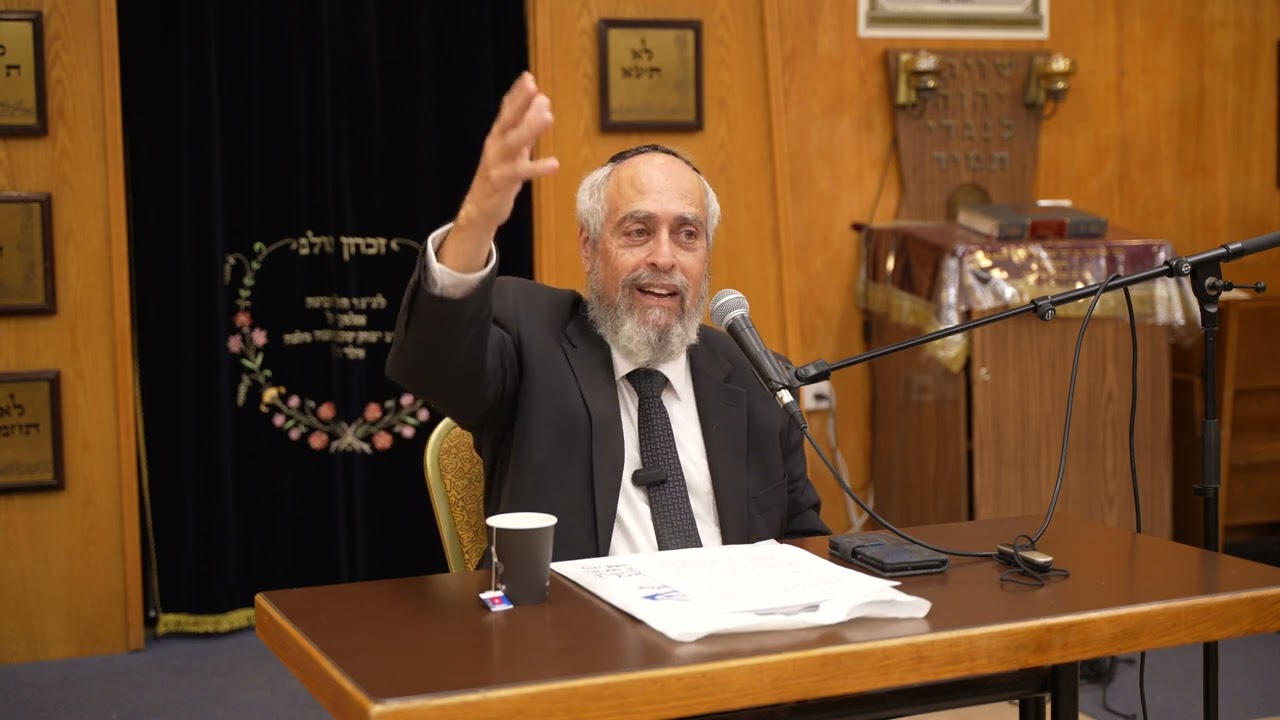
Mixing Meat & Milk With Chanukah Candles | Rabbi Dr. Aaron Adler | December 17th 2025
122 views

www.ouisrael.org facebook.com/ouisrael #OUisrael #torah #judaism #torahlectures
Categories:Torah/Yamim Tovim
Comments
Transcript
Auto-generated transcript. Not time-synced to the video.
Okay to boke to
>> this week's shum are dedicated by Rifka
and J Rifka Roseberg des Shapiro and
this is in memory of Jakob Ben and Ben
Abraham Hakohain
right parents
whose yard sites are near reviek
is tonight it's tonight and I just say
parenthetically that I had the news on
in the morning that is at 5:10 in the
morning cuz we go to Davin at 6:15 6:05
today. So the broadcaster, she said, "So
today is the um third candle and after
sundown will be the fourth candle." And
I told my wife, she holds like the
Rambam.
That's pretty good. We're going to get
to it in the year. She holds like the
Rambam. The question is, what time do
you light candles? from sundown or from
which is when stars come out and that is
approximately 20 minutes after sundown.
So there's a on this but apparently on
Israel and they hold like the Ramb
because she said that said
you know in my house that's the case
there's a minimum which emanates from
this neighborhood Shahid right next door
and that's the Minn of the Vagin who
adopted the Rambam's min for candle
lighting from sundown. So today it's uh
it's uh 4:37. So that's where it is. Bes
liked when your grandfathered lit, you
know.
>> Excuse me. Would like to say something.
>> Yeah.
>> I just want to do you mind if I just
make sure
>> just two very quick announcements. Uh
first of all I want to wish condolences
on behalf of the
>> and
amen
>> and uh please do remember to switch off
your phones for the duration of the year
>> and happy Khan to everyone.
>> Thank you. Thank you. This morning's
learning is also dedicated in loving
memory of user zelicans
Eisenberg passed away on the third day
of Khaneka and this is sponsored by Rif
and Sami Mark the share as we know for
the year is dedicated by the Frist
family in memory of Alishima Zman.
Okay. So last week was supposed we had
here at the center at the shul the yomun
for Kaneka and uh unfortunately I was
not able to attend u so I figured it's
Kaneka today I'm just going to do what I
planned to do last week. If anybody here
can guess what mixing milk and meat meat
and milk with Kaneka candles is you know
that's a $64,000 question right? Um but
I will
end with something about Moisur that we
did last year for our Khanekashir and
we'll see if anybody remembers because I
didn't remember everything. I had to go
back to my notes and um just to say
something we'll try to get it in towards
the end of this year. Let let's see what
we have here. Shayot chuvot responsoral
literature is the corpus of literature
of people asking questions
to raanim and their responses
to chuvot um actually begin I would take
a guess and say from the days of tan
when at the beginning of bayeni the
question was asked
now we're building the Second beta
mikdash. What do we do with tishab that
we've been fasting for 70 years? That's
a sham. Of course, the answer was
all of these fast days are going to be
well. What was the answer? Yes or no?
That we don't know. That that has
happened to me. My wife can testify.
Somebody called me with a shila and
after 20 minutes of me explaining the
issues I hung up and forgot to tell the
person what to do. So I actually called
back. So so you have to give a bottom
line. You have to give an answer. Beda
in the Gmorrah here and there you have
episodes of Shayot Chabot. But our
corpus literature of shalot shabot
begins it's about 1,200 years old from
the end of the period of the gonim
certainly in the days of theim the
middle ages and certainly after the
printing press and the modern days until
this very day shot trouvote today you
have shot truvot on WhatsApp you have
shot in emails and so on and sometimes
people still print the books of shay
trouvot the obvious importance of shayot
trouvot is to know the answer. Now, not
always the two does does a question
which may appear later on in history
which may seem similar but may not be
identical. So the answer may not be the
same thing. So also it could be that
some other RV had a different angle on
the way to approach a particular halaka.
So the same question arises and you get
more than one answer. So should we say
go after airplanes? That's a shear in
itself. So the answer isn't yes or no.
It's yes, no, and maybe. So there there
are three different opinions on how to
handle this and and and that becomes an
exciting study in Halaka of how each
pose approaches a particular modern era
problem based on the sources and how
they understood the sources.
uh RA professor Salvik the Raf's son
who's a great Tom and also a remarkable
historian
wrote a whole book on use of response to
literature for history for historical
purposes what we can learn and here
we're not looking at the answers we're
looking at the questions the shilless
because people ask questions not because
they woke up in the morning and had a
dream and they fabricated some type of
scenario The scenarios are real. They're
real life scenarios. There was one
particular pose who wrote a book Shayo
to Chuvot where that was his style. He
he knew what he wanted to say. So he
introduced it with a question. So we
knew the ground rules. He wrote it in
his introduction. So you know that
that's not a historic book. That's his
fa fascination. But most 99.999%
of Shayot Travot reflect some aspect of
history. So
>> what was the truvot doing? I was very
good. So the shot chot during the
holocaust specifically I'll mention chot
mimakim from oshri who was the rv 30
years old he was the rv of the kovna
ghetto if you want to know what was
going on in the kofna ghetto you read
the questions my brother would use that
book for the yoma shawah community get
together in ten new jersey where he
didn't read the answers he read the
questions and he could sit and cry and
rip ka just by reading the questions and
they weren't questions like you know I
forgot to say yalov in my you know onesh
those weren't the questions these are
heartbreaking questions where you s you
clearly learn what was going on in the
um in life in the kag ghetto so here
we're going to see something about life
which is so far from reality what we're
going to see here is maybe something
you'd see in in a museum not necessarily
next to the dinosaurs but um but let's
say history of let's say 2 3 400 years
ago go of life. Now, today when when um
you have bins for uh recycling, which is
a nice thing because people just threw
out garbage and the garbage was just
useless at the end. And then they found
out they can use glass from bottles,
they can use plastics, they can use
paper and all this stuff can be
recycled. So, we have these recycling
bins now for everything. In days of old,
people also didn't throw things out, but
they tried to make secondary use from
something. So, if I had a pan and um I
was going to fry meat and I put oil or
some type of parva, some type of fat
that that would make it uh you know,
whatever, you know, be able to fry it.
Fine. So what happens afterwards is that
fat that was used to to uh for for for
the frying process congeals. When it
cools down it congeals. So you get this
we call it schmaltz. And everybody know
what schmaltz is in Roman go there's a
store a meat store that's that's called
schmaltz except be careful because you
slip when you walk in you know schmaltz
all over the floor. The um schmaltz a
Jewish m a Jewish food is most probably
the most unhealthiest thing that you can
put into your blood cells. It's
artilliocerosis on rye but but Jews like
it. I mean rights tasty rights. So, so
the schmaltz, this congealed schmaltz,
if you put a wick in the congealed
schmaltz, you can, it makes a candle,
makes for a candle, and people would be
able to illuminate their homes. So, they
had these oil candles to illuminate
their homes. You've seen it in, you
know, Roman plays and things like that.
But here, you've got the fuel for the
homegrown candle, and it's just reusing
the schmaltz that was used to fry meat.
But what if by accident the schmelts
came from butter? And I'm not talking
about margarine. Butter by accident.
Butter was put into a fleshic pot and
they cooked up a steak of some. They
fried, you know, some meat on it. Okay.
So hopefully the problem was caught
before uh people ate that meat because
if they didn't then they ate basar. They
ate meat and milk. Fine. So let's assume
somebody you know rang the bell and said
whoa whoa one second can't do that that
was butter. So they throw the meat out.
Why did they throw meat out? Because
basaral meat and milk not only cannot be
eaten but you're not allowed to derive
any benefit from it. So that means you
can't go to your go neighbor and say hey
you want a piece of flesh? You know I
can't eat it because I did this and that
but it's tasty and everything and you
can eat it. So you might be able to do
that for other non-coosher foods for for
pork for for most of the forbidden
foods. It's just a prohibition for Jew
to eat it. But it's permissible for Jew
to derive benefit from it. And one of
the benefits is financial benefit. So
you can give it to a non-Jew. The Tawra
says it.
You have to feed your dog. So you can
feed the dog. you know, trafe food. I
mean, this is the famous uh story of 150
years ago in the where uh a guy was far
away from his city and and only twice a
year he saw his rough and he asked him,
"Give me an idea. What do I do when I
have tray food? I have no no telephones
obviously. Who what do I do with it?" He
said, "Very simple. If you have a Shiloh
on the on the meat, just put it next to
the dog. If the dog eats it, then you
know it's strafe. If the dog doesn't eat
it, you know it's kosher." So a guy
comes back six months later. He says,
"Rabbi, maybe you have a better." He
says, "What's wrong with the first?" He
says, "Yeah, yeah, it was great at, but
the dog is such a mahm." You know, he
had everything. You know, the the uh the
idea of of um giving it away. The Torah
says it in parhatra a you can give it uh
to a or sell it to a That's
called hana. You're allowed to have
benefit from it. There is a handful of
forbidden foods that not only you're not
allowed to eat but you're also not
allowed to have benefit. A classic
example is fruits from the first three
years of orah. So not only are they
forbidden to be eaten but also forbidden
to have any type of benefit. So let's
assume it's an edro tree that has a nice
fragrance to it. So you're not allowed
if it's or it's the first three years.
You're not allowed to smell it. You're
not allowed to enjoy the aroma and the
fragrance of a of a fruit of the first
three years. You're also now to give it
away as a gift. You're not allowed to
sell it and so on. That's called assur.
So basal
the cooked product of meat and milk
together is not only forbidden to be
eaten but also forbidden to enjoy
benefit. So there actually three
prohibitions in Basalav. One is the act
of cooking meat and milk together even
without eating it. That's already a
probation. The second is the eating of
the cooked product of because the eating
of meat and milk not cooked is only
rabbitic restriction. But the biblical
is not eating a cooked product of meat
and milk together. And the third is not
enjoying the benefit of the cooked
product of meat and milk. So now I have
this scenario. I have a frying pan and I
by accident used milk butter and I fried
meat in it and I threw the meat out cuz
somebody told me it was it was butter.
Fine. Can I now use the schmaltz for
lighting illuminating my home? That's
question number one. And question number
two, can I use it as a Kaneka candle?
Here we got the Kaneka. So let's look at
it inside. Source number one.
Chuva is a type of anthology of
responsive literature printed on the
yora sim.
This section of yadea of the second of
is studied intensely by anybody studying
for and these are the laws of those
doing are going to get to it in a few
months when they learn the ethic of
basar. So here it says and what this pit
chuva is it gives us different uh
insights into what's going on or I call
it highlights responsora literature
highlights. It doesn't give us the whole
thing. So if you're if you're not lazy
you go to the real book and you check it
out what's saying you'll see why that's
going to be important here. The the
opening word is it's quoting the words
from that is forbidden to have benefit.
Check out
Ephraim Sim.
Who is Mr. Shah Ephraim? So his name was
Rabi Refraim Hakohain. He's from the
17th century. He was a RV and Rashashiva
in Hungary. And I can tell you just by
checking Roberto Google Schlita that he
had a grandson an illustrious grandson
from his daughter. So it's like um Ben
Shelbito from his daughter who was the
rabbi Ashkanazi the father of the the
ivitz rack of so we're talking about
somebody who's uh very very very
important in his generation. Now most
people today never heard of the Shahim
nor did they hear of the
and I always quote the z from parhatal
au
everything is a masle thing even which
kaidesh we're going to use which safer
from the great became popular which
became less popular talk about that you
know sometimes there are real historic
economic social/political
reasons why a safer makes it and another
safer doesn't make it. So the sha fry
wasn't all that well known but he's he
is referred to here in the what is the
sha
he gave up
butter that was cooked and I'll use the
word here fried cooked in a pot kadra is
a cooked pot of meat bomo that means the
pot was clearly fleshek
because not maybe the person didn't even
cook fleshiks now with this but fleshik
basar was cooked in this pot within the
last 24 hours so if something is cooked
if it's meat or milk in a pot so the
first 24 hours after the cooking it
maintains its gender so if I cook meat
on 2 p.m. on a particular day so up till
2 p.m. tomorrow. It's like there's meat
there. The flavor of the meat is still
embedded in the walls. And therefore, if
such a pot existed in my house and now I
put butter in and melted it down. So
basically what I did was I cooked.
Where's the meat? The meat's not there,
but the flavor of the meat that's there
from within 24 hours is called meat. So
this is what I did. What am I left with?
I've got the melted butter sitting on
the bottom of this pan. So the frame
says
it is forbidden for me to recycle the
schmaltz to simply illuminate the house
what I mentioned before just to make a
homebaked um can lamp. What the reason
is you now have benefit from and
essentially I cooked
and then he says
maybe you want to suggest all right for
lighting up the living room that's no
good but to use it as a candle perhaps
perhaps this is going to be okay why
might I think that would be okay because
there's a principle in
There is a principle in that says that
Torah was not given for you to benefit
from the mitzvah. Food was given to
benefit. Other things were given to
benefit. The fact that you enjoy a
mitzvah is of no significance. The Torah
didn't give us the mitzvot. So we should
enjoy the mitzvah. If a person was eat
is eating matzah on sed night, you may
enjoy eating the matzah, but that's your
problem. You don't have to enjoy eating
the matzah. You're doing it because the
Torah says you should eat the matzah on
the night of the sedar. Sov.
So if the mitzvot weren't given for
purposes of enjoyment. So who cares if
this schmaltz now is stuck with the tags
forbidden to have benefit. I'm not
having benefit by lighting the khan
candles. I would have a benefit if it
was my homebaked lamp because I want to
read the newspaper. But if I'm using it
for kanuka candles, there's no hana. So
I should be able to use it. He's saying
even though
the mitzvot weren't given for purposes
of having benefit nevertheless
nevertheless it's still going to be pro
prohibited because there's another
problem. What's the second problem
for there's a need a requirement for a
minimum quantitative value. How long
does the kanuka candle have to burn? So
we all know it's about a half an hour.
Okay, we'll get to where the half hour
came from. But there is a type of
quantitative value which is measured by
the quantity of oil in the cup or the
thickness of a candle which if I take a
birthday cake candle which you know you
put in the birthday cakes right Jay had
to have 90 candles in the birthday cake.
>> No silver,
>> right? Soon you have to add another one.
I'm going to have 91 candles in the
birthday cake, right? So that's a heck
of a lot of candles, you know? So, but
these candles, they're small candles
like a toothpick, like a toothpick
candle. So, you can't use that for
Kaneka candle because um you know, it's
not going to give you the requisite
amount. It's not g the requisite amount.
Although, I'm just going to interject
for a second. Remind me where I'm up to.
The uh I heard once from a hol holocaust
survivor who was the director general of
Yadvashm that they this was Kdesh Hashem
for a month before Kaneka they they took
whatever little butter that was on the
half a slice of bread and scraped it off
the bread stuck it under the bed bed. It
wasn't a bed. It was a piece of wood.
And they used that for an candle. They
ripped off from their pajama, you know,
a wick. And they all got under the bed
and they lit it for 10 minutes and they
blew it out and everything. I don't need
Hakadoshu's, you know, uh, appribation
about it. I am sure that there was a
credit there if not for at least for
kdeshm
>> and the kids in the minhar also. Right.
Right. Exactly. These were acts of
keshm. So acts of keshashem have its own
context. But a birthday candle you can't
use. There's a minimum quantitative
value of how long the um the candles
have to burn. So what's the issue of
minimum quantitative value? So now I'm
just going to jump to the second source.
The second source says if you have a
lulaf
later I'll talk about the connection
between sukas and but if you have a
lulaf that comes from a tree that was
used to serve idolatry init
the says and it's aim
rather
you have to burn it. Okay. So you have
to burn a tree that was used the asher
was usually a date pump to be burnt.
Fine. Now a lulv has to have a minimum
quantitative height four
theim and have to be three. So is like a
fist. So if you just measure out three
or four fists you have three or four. So
our lul are usually longer than that but
that's the minimum height of a lulaf
forim. Fine. So the question is if I
have a lulv from this a well shouldn't I
prohibit it because it was used for
abodaz. So gumar tells us that the real
reason that is prohibited is because if
I burn it because I have to burn it. I
didn't burn it yet, but if I burn it,
then it becomes ashes. And ashes can be
crunched to the palm of my hand. I could
take the ash of four worth of lulaf and
just put it in my hand. So what don't I
have? I don't have the minimum forim
value. The sh and that's called we'll
see it inside.
The shear is quetched. The shear is
quetched. Which is an interesting
concept because I didn't burn this lulaf
yet. It came from a palm tree that was
used for Abu Darit Israel. Yeshua Benoon
comes in Israel. They come to all kinds
of beautiful palm trees and it's going
to be sukus and the guy rips off a a a
branch from a palm tree that in all
likelihood was used for Abu Dar. And the
answer is no. You can't use that lulaf
even though it's a beautiful lulaf and
everything. Why? Because the is if
they're going to burn something, the
looks at it as if it was already burned.
Yeah.
>> What about regular lul? If you burn a
kosher will go, right? Both have the
same.
>> Correct. But here, but but before you
burn a kosher lul, you can use it. Here,
you can't use the lul of the asher
before you burn it because it's going to
be burned. But of course, it's going to
be burned. Your your lulaf you want to
burn. That's your problem. But it's a
kosher. It's kosher. That makes no
difference. Here the says that it's
going to be burned and therefore it's
already considered burned and therefore
it's missing its quantitative value. And
that's why the this schmaltz that's from
comes originates from butter but it was
cooked in a pot that was fleshik and now
has meat flavor absorbed into this h
butter and hence has become forbidden
from h forget about the h the fact that
it's
I have to destroy it and if you have to
destroy it it has no quantitative value
to it even Though physically this
schmaltz will give me more than a half
hours worth of a kaneka candle halically
there is nothing there it's already
burnt and therefore you have nothing.
Let me just read it inside now in the
end of source number one. Even though
there's a of
four lines from the end of source number
one that I would say if I'm allowed to
have benefit from it so then I can use
it nevertheless is forbidden
because requires a minimum quantitative
value
with milk
because it's forbidden to have benefit.
This is the concept that the the
monetary the quantitative monetary value
is fetched is squeezed together and I
because it's going to be burnt or
destroyed and therefore I don't have the
minimum sh and then he says in
parenthesis
there's another p the pagadimo
quoted the same
who said that sh that actually it's
permissible for so what do we have now
two versions of the same posim.
Will the real Shah fryim please stand
up? So we don't know and the primagod
quoted the this and then he says
with with you know you know with
apologizing
the primag didn't look carefully enough
because I'm telling you that even the
shapim said it's assuran
it's assur So what do we have here?
We've got two opinions as whether you
can or cannot use this schmaltz. This is
a burning issue for us tonight, right?
>> It's burning issue. You got it. It's a
burning issue. It's a burning issue. Are
you going to use this schmaltz tonight
for your four candles? Well, no. We're
not going to we don't do that. But this
o this discussion this Shila with the
two possibilities opens up the whole
discussion as to what exactly is this
half an hour all about. So let's look at
source number three. Yeah.
>> What about the reverse? Right. Now if
the pot had milk in it, if it was a
milk,
>> right? Okay. So milk pot and then I you
know put so again and it was cooked milk
for last within the last 24 hours and
you put meat in it. You've created even
if the milk's not there, the milk flavor
is still in the pot for 24 hours. So
then you've cooked.
Look. Oh yeah. So the reason that our
great rebby did not see favor in
cautering a dishwasher because he
believed that in the pipes, the drainage
pipes, there's always residue food that
gets stuck in there. And let's assume
you did you had a milk, you have
fleshic, you know, cutlery and and pans,
pots and pans, and some particles may be
stuck there. The next time you run the
machine and you put
in it. He says, "You're actually cooking
meat and milk." That was his bigra big,
>> right? Okay. So, look, Raosha Pin has a
different take on it. So, you know, if
you want to know about this, ask
somebody else. Okay.
Let's look at source number three. This
is the beginning of the laws of Kaneka
in Shabbat in the so I'll just say a
word that some have suggested you know
there is no Mishna that deals with
Kaneka and some thought that this was
political that the house of Rabuda Hani
had a running brogue with the
descendants of the Kashm descendants who
eventually morphed into Hordard.
and Herod and obviously they didn't see
favor with him at all. So maybe it was
censored out of the Mishna. It's not
true at all. It's not true. There are
eight references to Kaneka in the
Mishna. It's true. There's no particular
and my humble suggestion is based on
something the Rambam wrote in his Mishna
commentary to
was that those areas of mitzvah
performance that were so popular
didn't have to dedicate time for and he
says take a look the
how you davin is not mentioned in the
Mishna because people knew how to den
what's mentioned in the Mishna are
things that may have differences of
opinion or things that ordinar the
ordinary person may not be aware of but
things that were highly popular there
was no need to talk about it. Apparently
Kaneka was pretty popular already in the
days of Kazal. But all right, there are
eight references in different contexts.
U the list of read Torah reading on a
Yam. So it talks about Pesak so Kaneka
and Purum. I mean it's there's no
excommunication of Kaneka as a YT in the
mission itself. But the laws of lighting
candles it waits for the So what happens
the editors of the you know the game pin
the tail on the donkey they like
sometimes pin something on a topic
that's related so where could be a good
place in the to talk about the lighting
of khan candles the lighting of Shabbat
candles so you have the parrot the
second chapter of Shabbat
we say Friday night in Ashkanaz lighting
of Shabbat candles and there it tells us
about all the oils and the wicks that
are kosher and not kosher for Shabas
candles. Then in Shabbatar says, what
about Khan candles? So there's an
opinion that says whatever is off limits
for Shabas candles is off limit for
Kaneka candles. And then the qualifies
not necessarily the case because on on
Kaneka you're allowed you're allowed to
um uh you know relight the candle if it
gets blown out in Friday night. If it
blows out you can't relight it. It's
already Shabbat. And that disqualified
some of the bad oils. But on Kaneka
candles, it's not such a terrible thing.
It's a weak night. So if it blows out,
but then the says that you know what,
even for Kaneka candles, you don't have
to relight it if it blew out as long as
when you lit it, it had the potential to
go the distance. So that's that's where
this kamar opens up.
You mean to tell me that if it blew out,
the kan candles blew out? You don't have
to relight it. I'm going to ask a
question based on the following.
The mitzvah of candles
from sundown
until people have left the marketplace.
Which means because there's a mitzvah to
publicize the miracle to the public
domain. So once people are off the
street, that's the end of the mitzvah
really. That's the end of the mitzvah.
So says, "My love, apparently the if it
blew out,
you have to relight it until the time
that people are off the street."
Gammorra says, "No, your in inference is
wrong. The e the com the idea is that
you should begin lighting candles from
sundown, right? Tonight 4:37." But if
you didn't light candles until from the
moment of sundown, you still have to
light it as long as people are still on
the street.
If you didn't light yet, so go ahead and
that's one response. And the second
response in the is if perhaps you'd like
to suggest that this business of
from the sundown until people are off
the street it teaches us an amount of
time that Kaneka candles had to be lit.
Which means that even if let's assume
at at 5:30 just just throwing out
there's nobody on the street and and
it's after sundown and you didn't light
yet but at 5:15 there was still a guy or
two on the street you'd still have to
light it for a half an hour even though
because it's a it's a it's a
quantitative value. What you see from
this two possibilities here? Two
possibilities. The possibility number
one is that this of
when the sun sets until
people are off the street coming home
from work or from the marketplace
technically is a in the person lighting
the candle. He has to do it exactly at
sundown. But if he was faulty and it's
five minutes later, okay, so the people
are going to come home when they come
home. So let's just use the term half an
hour. And he lived five minutes late. So
he has to light for 25 minutes. The next
guy was 10 minutes late, so he has to
light for 20 minutes. The next guy was
25 minutes late, so he has to light for
5 minutes. The idea is
that's it. There's no more, according to
the way we're reading the now, there's
no more candle lighting after that time.
But how long does the cand have to burn?
From the moment that you lit after
sundown until regular. So for one guy
it's 30 minutes. From the yes guy next
guy it's two and a half minutes.
Whatever it is it is. The other opinion
says no no no no no. This has nothing to
do with you the lighter. It has to do
with the amount of oil or candle that
you're going to have. The duration of
the light the sh the quantitative value.
It's two different aspects or two
different things. If you want to turn on
your lambdan from brrisque the way the
the the solvatrix would think one is the
gavra and one is the kza. What's a gav
andza? You got to go to yeshiva and and
and learn these terms because this is
oxygen. This is brisk 1.1.
Um and it's derived rapim salvic the
rough and brisk the rough's grandfather
didn't invent the terms. It's straight
out of
first page, right?
What's a nether and what's avu?
What's a nether and what's awah? Right?
We have we have so what's the
difference? So says a nether if I make a
nether not to drink Coca-Cola today, I'm
not drink Coca-Cola today. If I make a
not to drink Coca-Cola today, I'm not to
drink Coca-Cola today. Sounds like the
same thing. The difference is in a neair
I've created the Coca-Cola to be a piece
of pork. It is for me, not for everybody
else. For me, it's private pork. It's
trafe. It's strafe. And why am I not
drinking Coca-Cola? Because it's not
kosher. In
even to myself, the Coca-Cola is still
kosher, but I'm distancing myself from
drinking it. Now, you might think, but
this is crazy. It's the same thing. No,
the same thing is that both cases you're
not drinking it. But the definition of
nether and one is that the object or the
word or in Aramaic and in the second
it's the person. Gavra doesn't mean man.
It means person, man or woman. And it's
the prohibition is on the person. I'm
not I'm distancing myself and not
drinking it, but it's still kosher to
me. It's still kosher and so on. It's
it's a world of a difference if I view
it as kosher or not kosher because if I
drink something that was only avu it's
going to be less serious than I drink
something that was nether because in the
nether I'm drinking non-cooser it's not
kosher for you it's not it's only
non-coosher for me but I created a
non-cooser scenario in I'm not supposed
to drink it but if I drank it I didn't
drink non-cooser there are two full mto
mc
just explain all the ramifications of
the difference between
but the opening number found on the
first page in is
and is an issue
this means that when the tells us you
have to light candles from the time of
sundown it's referring to the ga the
person Who's lighting the candle? If
that
refers to the amount of oil, that's the
it's on the object. It's on the candle.
It's a different nature. And this is
going to be very important for our
frying pan because if
if there is a problem with the object
itself, if we want to say that the
object of the oil is the half an hour,
then I can introduce the concept of
the sh the quantitative value. now gets
fetched and I don't have a half hour's
worth of oil because in a bus of
situation where the congealed schmaltz
has butter and meat embedded in it I
have to destroy it. So in theory I don't
it's like lighting a birthday candle
where I don't have enough filament to
give me a half hour's worth of a light.
So that would be that and therefore I
would say sorry I can't use that
schmaltz for my
however if I say that when the talks
about
has to do with the person lighting has
nothing to do with the minimum
quantitative value I step back and say
okay the only thing left is hana I'm now
to have benefit but a mitzvah was never
given for benefit
and this is a mitzvah and therefore I
would be allowed to use it. So we've
actually done here was we've analyzed
a
>> it's really a
>> it's a it's a
to analyze the two possibilities in the
chuvot shim
whether you would be able to I'm sure
you were losing sleep over this already.
What are you gonna do tonight? And now
you know that it's well depends how you
see the in Shabbat. Now let's take this
a little further. Source number four.
So we have the answer already with the
schmaltz. Okay, it's a depends how you
look at it, right? If it's
then you can't use it because the
quantitative value is going to get
fetched.
But if it's only an isogra or an
obligation of the person, then it's
gonna be fine because I don't have to
deal with this
anymore and all I'm have is the problem
of but
mitzvah weren't given for benefit and
therefore I'm doing a mitzvah even
though there's a isur on the meat and
milk schmaltz that I have here but I'm
using as a candle that doesn't affect
me. I'm allowed to use it for a mitzvah.
Fine. Source number four. So number four
is the tovo tovote right middle ages
in the yeshiva they refer to tovot in
the singular tovot asks tovot answers
tell the rebi tovot is 200 years it's a
conglomeration of different people it
does start with rashi's grandson
raenutam and his kav the ria zakim but
it to goes for almost 200 years all the
way up to Maram Rutenberg at the end of
the 13th century so
That's the way you should say the bal
the authors of the tovote say because
it's plural the say on the phrase
and if you didn't light yet so go on
lighting but seems to say only until the
last person leaves the street
says and that's it you missed if you if
you didn't light according to this line
invot if you didn't light candles and
there's nobody body on the street. We'll
see you tomorrow night. But tonight, you
missed it. Omare hari harat.
Rip parat is not the reason why parat
was his family name. And we know people
by that name and they may be
descendants. Reporat
you should be careful
immediately at the beginning of the time
framework.
you shouldn't delay because it's not a
long time framework here.
Nevertheless, in if you were late, you
were delayed for whatever reason.
Doesn't mean you were in the emergency
room, God forbid. For whatever reason,
you got a phone call, you know, you you
were talking and talking and talking and
talking and talking and talking. So, you
you realize, you know, people aren't on
the street anymore. To say the riat
says,
Lick you should light your name. Say you
know what mis means without a braha
means without a bra. Why? Because the
gives the alternate understanding the
responds
a secondary answer and that was that the
when the garra says
simply teaches us a quantitative amount
of time. So even if you light at 10:30
at night, you still need the
quantitative. So because that answer
exists in the so you can lie but it
might not be correct. So therefore don't
make the bra. And then it says
this is
from the earliest balot in in northern
France. It appears the today which means
now now 12th century 11th century 12th
century France.
You don't have to worry about when
you're going to light.
We only have to consider
our family indoors.
We light indoors. Why do we light
indoors in France?
>> Afraid of the
>> Afraid of the Afraid of the
Sound familiar?
You know, the first time I ever saw
people light Kaneka candles like the
Gomorrah says by the outside door
opposite the side of the muzza is here
in Erit Israel. I lived in a Jewish
neighborhood, right? Benet Brock West.
It's called Burough Park, right? Ben
Brock West.
Nobody ever Maybe today you have it a
little bit, but I don't know. No, I
never remembered it. People lit by the
window.
>> It was too cold.
>> It was too cold. Okay. By the window. By
the window. People let that. That's what
they did. But not uh outside. I mean,
you'd never find your kanukia the next
morning, right? It would take had
>> found in the
>> in my box.
>> In the box, right? Okay. So, maybe my
didn't see it in New York. But here,
Toss is telling us something that Digara
says as a possibility.
you know in the times of danger
you can light inside that's all you
don't have to be you know to have you
know rocks thrown in your windows even
the windows they would light indoors and
once we're lighting indoors so
the people outside becomes nonrelevant
yeah
>> that's true even like whether now it's
windy outside
>> they would blow out right blow out okay
so you can light it next to the window
already but let's see what happens now
in with all this in source Number five,
don't light candles before the sun sets.
And I'll just say parenthetically
that there is what's called you can
light in an emergency situation from
plaga which is about an hour and a
quarter before I think it's 3:30 and and
in essence that's what we do Friday
night. We have to light before sundown
obviously. So we like have to plug them
in the and there are those who say
right here it is if you are busy and you
know you're not going to be around for
sundown.
So today is about 3:30. That's if
person's in a crunch
means there you can't just have a small
candle. You got to have a long shabas
candle or you have a lot of oil because
it still has to burn until a half an
hour until people are still on the
street. Now the business of half hour on
the street to just jump down to source
number seven. The Rambam what I just
read almost is word for word from the
Rambam.
Don't light candles before sundown.
Light it with sundown.
Not early, not late. Question is, what
does the Rama mean? What does he do
Friday night? But that not our issue
right now.
He forgot or even in deliberately
and he didn't hit the 437 time to light
exactly at sundown.
He can light until there's no people
left on the street.
How much is that time?
It's a half an hour or more. The ram
doesn't say it's a you know grave it's
it's engraved in stone 30 minutes it's
you know what we call ber right in
Frankfurt the raom would have written
that
>> right it says oh right could be a little
bit more in others basically with rahams
opening up and saying check out your
local scene and see to people our d in
New York City when he was there for
Tuesday and Wednesday nights giving shir
in the week of Kaneka he light lit
shabas candles because he said it's
means rush hour and rush hour means uh 2
hours from 5:00 to 7:00. So he wanted
the candles to be burning for over two
hours every single night and he actually
asked the question what about the
theater crowd and he said we don't have
to worry about the theater crowd. Okay.
So he said about that's what he said
about two I know I said it before but
not everybody was here. So this I'm
looking at my wife she was already
saying you said this already you know
said
that according to the Rama if you lit 10
minutes after sundown. So you don't need
a half hour's worth. You need as much
that's left for people to outside
if you lit and it blew out.
You don't have to relight it.
If it's beyond the light candles are
still lit and there's just nobody out
there,
you can do whatever you want. You can
blow it out. You can remove the whatever
you want to do with it. The mitzvah is
over. According to the Rambam, the
mitzvah is over. But if you go back to
the now to on where it's in source
number seven, but the second paragraph
and here's where says
it says second paragraph of source
number seven of source number five. I'm
sorry. Source number five.
If you forgot or even deliberately you
didn't light with sundown.
Keep lighting until people are still out
there.
It's almost a quote from the
people are still out there.
And there's still publicity for the
miracle. As long as people are out
there,
the amount of oil will be determined by
how much time is remaining for people
who are still out there.
If you put more than that
after that time has elapsed, you can
blow it out.
You have extra oil and and and there's
no longer people on the street and you
want to fry some schnitles or use it for
the extra spare oil, you can do it. It's
yours. And that comes the ramo. That's
Ravio Caro. That's Ravio Caro. But now
we jump from
to Krakow
is solister raiml
is the switch track to the rafim
others say
today
we light indoors 16th century crocow we
light indoors
you don't have to worry about
it's as we say in Chinese in Israel
It is not relevant any longer.
You have to be careful.
Nevertheless,
it's good to get used to lighting at the
original time. Even though you're
lighting in your living room or your
dining room or your kitchen and has
nothing to do with the outside people,
it's good to get used to lighting at the
original time, which is the beginning of
sunset. However,
that's what you should do.
You can light the candles the whole
night.
You didn't light a particular night.
There's no makeup. You can't light
another candle the next night. Forget
it. We'll see you tomorrow with the next
night. That's all. And and and Mishura
basically goes along with with this
idea. I I Okay. So, we have we have a
clear understanding of what happened. Am
Israel were in a situation that they
feared repercussions, anti-semitism. I
know not everybody in the world likes
that word to you, you know, use. Right.
in in in Sydney, Australia, it was a uh
security um situation and then it became
a hate crime until they came around. It
took a few days because they're slow
took a few days till they realized this
was an anti-semitic attack. At first,
you know, it was near attack was near,
you know, some some Kaneka get together,
whatever. Okay.
In Israel, it was reported from moment
one this was a pigua at Khaneka. We knew
it. We unfortunately knew it, but the
world it took a while for them to come
around. So, you know, Jews have always
been worried. I actually heard a um a a
a a woman from England um interviewed on
Sky News, who Sky News is, I mean, in
relation to CNN, much more pro-Israel. I
mean, pro pro you're never going to get,
but certainly not anti-Israel, not
anti-Israel, Sky News. And this woman
was interviewed and they said, you know,
what's going to happen? And she said,
you know, Jews might take off their
muzzas. Jews might remove their muza.
Now, I remember visiting years ago in
Antworp, uh, where people had their
muzas inside the house, and they told me
two reasons. One was they didn't need
possible anti-semitic attack, and it
also prevented the Schnuras from Israel
to know.
And I wasn't sure which was the real
reason, which was the secondary reason.
Yeah. Yeah. They weren't even
embarrassed to say it, you know. Yeah.
Mazou is supposed to be outside, right?
But all right. They said that in in an
emergency situation, you can put it on
inside also. The um the idea of uh and
then this woman said people may just
have to go to the only safest place for
Jews in the world and move to Israel.
She said it and I'm glad she said it.
This is a woman sitting in London
interviewed on the Sky News. She said
it. So having said that, let us just
take a look at
um source number three. The last two
lines.
The last two lines,
two and a half lines. It quotes the
until the people leave the marketplace.
So how long is that? So here the never
said a half an hour. The first one to
use the word half hour was the Rambam.
That's 12th century you know North
Africa Egypt. The Gmorra doesn't say
that says
in the name of Raan said
the until the
feet have left the shook left the
market. Who is the tmuda in? Raji says
it's a Persian. They were who used
to be the last ones to leave the
marketplace to close up the marketplace.
The last ones there. So most people
understand that if these goyam are
closing up the markets there obviously
no Jews on the street anymore for
pursuanes. comes and says from here you
see that the mitzvah of pum is also to
go
>> is also to go that we have an obligation
to broadcast the story of purim to the
world
to the world as opposed to purim where
it's indoors you read the migill indoors
you read the migill at home as the
migilla says
it's an indoor thing But Kaneka is an
outdoor thing, right? As Labavage,
right? It's it's an outdoor thing. And
it really is an outdoor thing. And and
and you know, people now, Davka, because
of the Pikua, people are explaining on
these news shows what Kaneka is. I mean,
it has received more publicity than than
ever before. Unfortunately, with
unfortunate circumstances for sure, but
the idea that the Kaneka candles are lit
until the last go is off the street
because we have something to say to the
nations of the world as well. And the
remember the rough saying and the
message is no matter what you do, you
know, we are still going to be here. We
we are here to stay. We are here to
stay. So my wife and I were last month
in London when I um spoke in Henden and
we went to the British Museum and and
there was the statue of Ramsees II. So I
looked at him and I said I know you from
somewhere. I meet you every year at the
sedar that's the parro that we talked
to. And I looked at him and I said, you
know, you're going to stand stay here as
a goam in this British museum and I'm
going back to Shallay because Amil is
alive and kicking in. You can stay
there. You know, I told this to Ramsey
straight in the face. I mean, no, it's
very important. You had to hear it.
>> No.
>> I'm sure he heard it. You know,
>> he made you.
>> What did he say?
>> He he acknowledged. He wked. He wedded.
I'm sure Ramsey is the second. Sure. I
mean you know it's all stolen goods over
there in the British Museum. All right.
But but this is
I just want to on this subject say just
a word about what we did last year. Just
we have just a few minutes because the
mosur follows the acrostic of Morai. We
don't exactly know which Morai although
it might be the paran the the one of the
great rishonim from the days of the
moramutberg. the morai as many people
know about it in the but the last stanza
which doesn't have the morai you have mo
the me
the racho is the dalid kumat is the
kanimiku
is the yud but then it says zero
that spells out and many times many
times they would spell out the word the
last idea was
we ask to like roll up his his strong
stretch out his strong arm, his holy
arm, reveal it and bring the Yeshua
closer.
God should take revenge from the nations
of Russia.
It's taking such a long time.
It's unending. This was written at the
time of the crusades in Europe and they
felt it. And they started they said it
started there was parro
and it went to the days of Bayeni. We
had trouble and it went to the days of
Hmon and we had trouble. We had trouble
in all these times and we had trouble
with the Ivanim all these times. We're
not we're not out of the Torah. We
recognize that they were partial Yeshua.
Partial but not out of it. D said all
the others were Yeshuaote
is Yot Mashiach.
He should push. Who is the admi? It's as
direct reference to Christianity.
Salmon in the shadow of the Talem is the
crossim.
He should establish for us the the the
shepherds. The seven shepherds. The
seven shepherds is mentioned in the book
of Mika and they are says per
shalom ashobenu
vakimonuavim.
Who are the seven? It's Abrahamov. It's
all theen all the names of Moshe Aron
and Davidid and um
>> and Yseph and Yoseph. all of the seven
they are the seven we ask kadesh that
the spirit of the shivim should um
should come back to all of us today and
will give us this great yeshua so I
think that's a fine word to close the
share next week in mashem we'll get back
to some uh poem of some sort I
Up next
24 recommendations shown