Transcript
Auto-generated transcript. Not time-synced to the video.
we've made quite a few lectures
thousands of lectures thousands of uh
short clips thousands of ways to get
close to am Israel get Amazon close to
academic
and at times I would talk about
different things sometimes it will be
Allah sometimes musal sometimes
sometimes a combination thereof
answering questions uh questions about
the different mid regime different
confusions ideology different things
that are happening in the world try to
get people to stop being crazy
expose the wicked people that are really
crazy but nonetheless no one sees it
until we bring it out
so we've done well Hashem we've done but
there is one thing that I've tried to
teach
I've tried
um and I've had even a couple of
lectures about it I think
uh my if my memory serves me right
but
um
the reality is is that
you really can't teach this
there's one thing
that I can't teach you
and it doesn't matter
how many of my lectures you've watched
and it doesn't matter how loyal of a
student you are or friend or follower or
even an enemy
it doesn't matter I can't teach there's
one thing I can't teach you and don't
worry
it's not Kabbalah or the other things
the time will come for everything
it's one thing I can teach you
one thing that
it's really impossible to teach
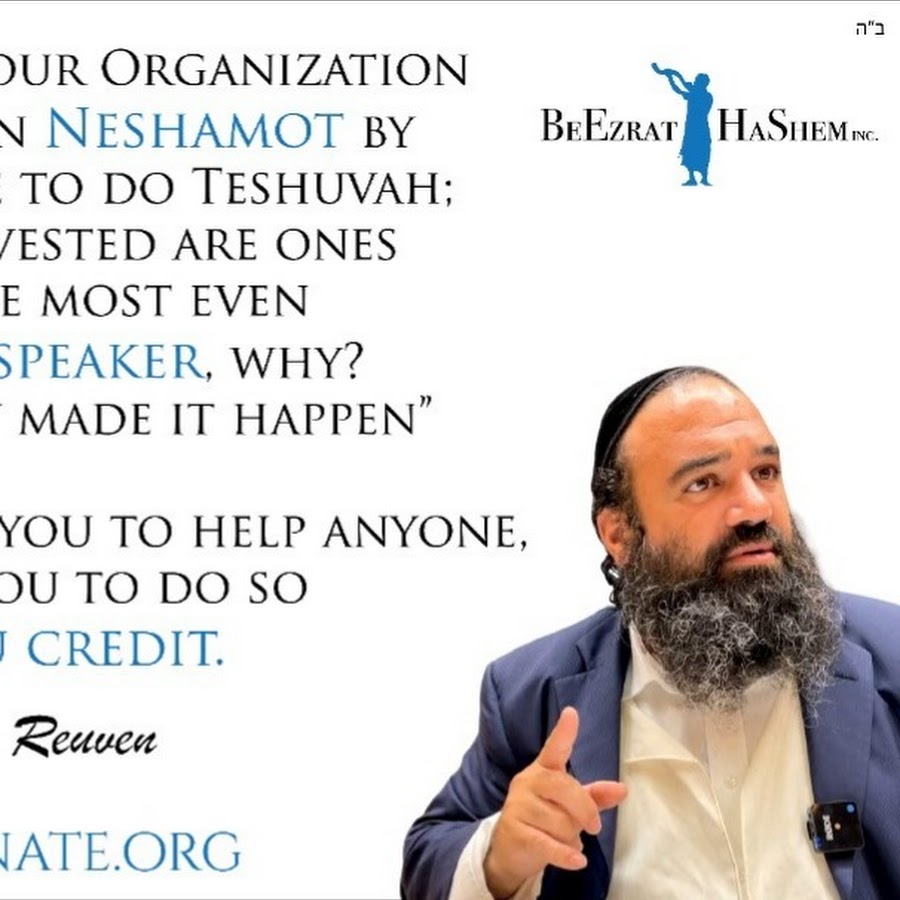
and that's messy with nephesh
self-sacrifice
you can
tell people about it
you can tell stories about it
personal stories stories of telekin that
have done it
different examples
theorize to different uh situations and
circumstances
as the truth be told is that you cannot
teach
you can't convince somebody
to sacrifice themselves sacrifice their
time sacrifice their livelihood
you can't teach somebody to do such a
thing
you can't teach or convince somebody to
do it because self-sacrifice
is not a
one-time thing usually
self-sacrifice is a lifestyle
self-sacrifice is an ideology
that is in addition to your current
ideology
it's like the extra credit
the little extra superpower
that some people possess
and everyone would love to have
self-sacrifice is one of those things
where
you either have it or you don't
you either are willing
to sacrifice
thank you very much
oh you're not willing to sacrifice
there's no way that you can
teach somebody about self-sacrifice
and thereby that person says okay now
that I know what it is I'm gonna do it
that person
may hear your stories
may like the things you say in the
examples but when push comes to shove
it's either in them or it's not
and even if they're able to do it one
time still doesn't mean that they're
living a life of mercedesh
because making a one-time sacrifice
could simply mean you went crazy for a
moment
or you simply weren't thinking
or a lot of other different things
self-sacrifice is not a one-time thing
self-sacrifice which in Hebrews
is something you
program into your neshama
that this is the only way to be
this is why the rambang
writes that
when somebody makes a donation
it's not necessarily a good indication
of whether they're generous or not if
they meet a single large donation
if they made us you know if they make
regular donations then that shows their
generosity
but if they made a one-time donation
it's a very large donation it's not
necessarily an indication that they're
generous could simply be they went crazy
that one day could simply be they had
you know excitement of the moment
but the next day they go back to being a
scrooge the next day they can go back to
being a stingy little sting
and they won't even want to share a
bottle of water with you
the one that's generous typically does
it regularly but again just because
somebody donates regularly doesn't mean
that they're generous why because it
also has to be relative if a person that
has you know a few hundred thousand
dollars in a bank donates I don't know a
dollar a day
he's not generous he's actually a very
arrogant stingy person
stingy for obvious reasons donating uh
365 dollars uh you know it's not exactly
a uh
uh relative to the amount of money that
he has so obviously he's very stingy
but arrogant because he's really only
doing it not because he actually
believes that this one dollar is helping
anybody but rather he wants to give
himself the good feeling of someone
that's generous and rather he wants to
get the attention
of someone that gives
by giving every day every day the person
that he gives to says thank you or the
company sends them a automatic email
that says thank you and he likes it he
gives him good feeling but this is
unfortunately not a very good uh very
good indication of his generosity but
the rambam does combine the two things
where he says that if you want to
overcome stinginess
When you pray you have you just have one
of those diseases spiritual diseases
where you're very stingy then get
yourself
acclimated to giving by giving a little
bit every day decide a certain amount
that you can give that you could uh uh
let yourself part with and divide it up
into small portions and give it up over
a period of time if let's say it's a
hundred dollars then divide it up into I
don't know let's say 100 different uh
homeless people or or 50 different
homeless people and so on you know
sometimes I see people donate to our
organization where they'll
donate one dollar or uh you know in uh
in stalker or sometimes maybe I don't
don't push themselves and get a dollar
fifty and again if this is truly what
you have then there's obviously no uh no
harm in doing so it's a very good idea
but many times it's not many times
people donate that one dollar just
because they want to check out they feel
like it's a stalker box now for my
recommendation if you only if if you
only have one dollar that's all you have
to your name keep it to yourself because
of the Shem Hashem will give you more
blessing don't keep don't make yourself
homeless don't make yourself so poor if
you do have a lot more then and you
simply can't allow yourself to give more
than a dollar then give the dollar to
the local synagogue give the dollar to
the local homeless person don't donate
on donate it online the reason why is
because there are minimum charges that
each uh Merchant Bank that processes the
credit cards charges and by the time
that dollar goes through all of the
different banks you know almost half of
it is gone that this is on not because
they take fifty percent of every
transaction quite the opposite usually
the uh Banks take somewhere around three
percent maybe four but that's it they
don't take uh 50 but they also have a
minimum and that minimum usually is
somewhere around 40 or 50 cents which
means that if you're donating one dollar
that one dollar is not what uh is
actually getting to that uh that
beneficiary let's just say
but the point being is is that if
someone is going to try to get
themselves to sacrifice to change their
ways to to to help others change their
ways
they have to know that sacrifice is
required for all of us it's not
necessarily a suggestion but it's just
one of those things where you can't
teach somebody
they have to simply be willing to do it
you can tell them theories you can tell
them stories
but this is not one of those things
where I teach you the Allah and
therefore you'll know exactly how to
light the menorah or build the sukkah
self-sacrifices not like that
[Music]