Preparing video...
0:00 / 0:00
Nissim Black Defends Rap to Ben Shapiro
869,751 views
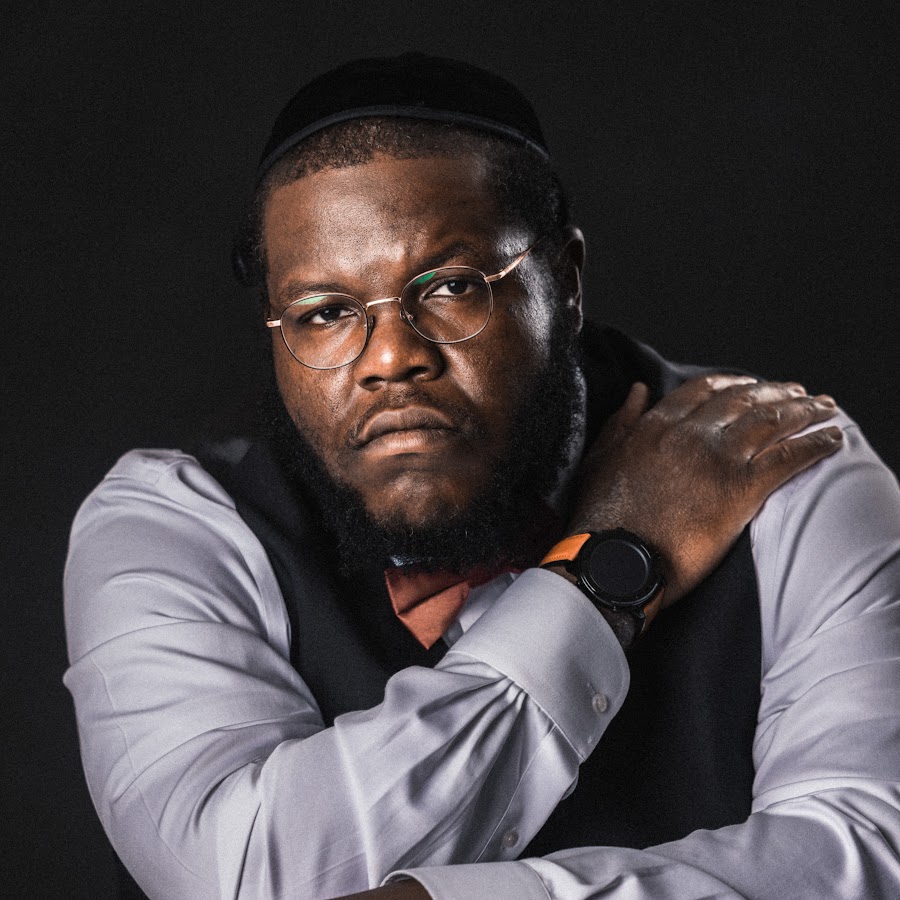
Ben Shapiro discusses the validity of rap music and its affect on music culture with black hasidic rapper Nissim Black. Connect with Nissim Black online: Instagram - https://www.instagram.com/nissimofficial Twitter - https://twitter.com/nissimblack Facebook - https://www.facebook.com/nissim.music/ TikTok- https://www.tiktok.com/@nissimblack Official Website - https://www.nissimofficial.com/
Featuring:Nissim Black
Categories:Music
Comments
Transcript
Auto-generated transcript. Not time-synced to the video.
that motherland
folks. So, you've been listening to
Motherland Bounce. I know it's something
different here on the Ben Shapiro show.
That's because we're joined by the
creator of Motherland Bounce, former
gangster, rapper, gang member, and now
faith seeker. Today, he's an
African-American Orthodox Jew whose
recent faith infused rap music videos
have millions of views worldwide. His
name is Nissim Black. And I thought we'd
do something different here. Nissim,
thanks for joining the show. Appreciate
it, dude.
Man, thank you for having me on, man.
Long time coming, Denny.
I appreciate it. So, okay. I I have been
critiqued for my own genuine dislike of
of the rap genre. So, I will give you
the opportunity. Inform me why I am
wrong uh about the rap genre of which I
have been so critical for these many
years.
Listen, you could be very very critical
of the content, right? The content is
definitely a problem. Um in terms of it
as a art form, for sure not. You know
what I You could use anything to be able
to spread light and to spread positive
messages. It just matters what the
person does with the actual with the
genre, you know. So, you may not be
wrong in in terms of the content that's
going out uh uh from the rap music, but
you know, definitely rap could be used
for for beautiful things. It has been in
the past.
So, let's talk about the sort of your
own personal transition in that way. So,
you started off as a a gangster rapper.
Obviously, you didn't start off as an
Orthodox Jew. Now, you are. So, maybe
you can tell that story. I think this is
kind of a fun pre-roshana story for our
Jewish listeners.
Uh it's amazing actually, you know. So I
grew up exposed to a lot of gang
violence. Uh I got into everything very
very early myself. I started smoking
pot. I was 9 years old. By the time I
was 12, I was already dealing. And it's
a very interesting thing because I did
have two parents in the house. My mother
and my and my uh stepfather, you know,
was my dad. He he raised me. Um but I
was exposed to everything in the house.
My house was like a trafficking house.
So I got into it very early. Now moving
on, the first introduction to religion
was actually Islam. My grandfather was a
Sunni Muslim and after after he ended up
in prison, um I had friends who brought
me to a missionary group that had a
hip-hop program. Um and that's what got
me interested in Christianity. I
eventually converted Christianity from a
missionary camp. Um, and then years
later, you know, the rap just sort of
took over my my life and consumed me and
I got into a altercation with another
artist and that led to a kill or be
killed situation as I would call in. And
after I was uh able to squash that beef
and put it behind me, I really started
seeking like, you know, what's what's
going to be next? And, you know, I just
grabbed all the Bibles. I I wanted to
know about I wanted to know about the
Jewish religion because I grew up very
close to the Jewish neighborhood and I
didn't know anything about Judaism. So,
I had a JPS Tanakh. I had a few
different versions of the Christian
Bible, a Quran, and I sat down for eight
hours a day until, you know, my soul was
satisfied. And, uh, Judaism was what
really stuck out to me out of them. I
think it was just sort of the honesty of
the story. You know, so many ups and
downs, so many screw-ups. And I was
like, I've been doing that my whole
entire life. You know what I mean? And
to see that after everything, God says,
I'll never reject you. And so, that was
the relationship with God I wanted to
have. So let's talk about some of the
messages that you promulgate versus some
of the messages that you know you were
talking about earlier that that rap
genre tends to to promulgate. Obviously
I've famously been critical not only of
rap as a music form but as I mentioned
before rap content you I trended on
Twitter just a couple of weeks ago for
having the temerity to criticize Cardi
B's new music video which is uh gravely
concerned with the moisture state of her
genitals. Uh so what what do you make of
uh number one what kind of themes are
you trying to push in your music and
number two what do you see as sort of
the negative themes and what are the
impact of those negative themes that
that you see so much in in rap. So I
guess you know myself I want to be able
to one of the biggest things is like I
don't know if you know how much you've
been paying attention but I really made
an effort to um broaden my message you
know uh which means that sonically
things have to be uh in a place where
everybody can understand people that
already listen to the genre um and at
the same time I wanted to be able to put
a message inside of that and that
message is really that a person can
overcome and conquer. I often times
speak in a very vague way about my
relationship with God that somebody else
could take and and look at it and make
that relationship their own and it could
be about a friend or or a parent or
something like that. But I think the
biggest thing is is that, you know, just
not only in rap, if you look overall,
black entertainment, you know what I'm
saying, is really gone down the tubes.
And I think that that's affected society
for the worst for sure. You know, those
records raised us as a kid. You know
what I'm saying? the Tupac and the Big E
and everything else that was going. So,
those raise us um as a kid and and it's
very very hard as it is to have enough
positive black male role models. Um so,
I sort of wanted to take on the mantle
of that leadership, you know what I
mean? And and try to run with it.
So, in your own personal life, obviously
you've had a really interesting kind of
up and down life as you've talked about.
How have you dealt with the issue of
racism? So, obviously this is a very hot
issue in the United States right now. A
lot of accusations of things like
systemic racism. Um, but racism is a
real problem for a lot of folks. How
have you dealt with racism to try and
raise yourself up uh over the course of
your life?
So, I think the biggest thing for me is
like, you know, what is, you know, when
we talk about racism, first off, every
person is going to experience something
different, right? Kids that come from
the inner city, um, that were not
privileged to be raised in the suburbs
and and probably had more diversity or
less, whatever the case is, they're
going to have a different perspective,
right? Um, so for me myself, I
definitely would say I've experienced it
on on the system side. I would say, you
know, I went to high school that we
didn't have books, you know, uh, we had
to protest and go out for books, but
somehow in some way um, every year we
had brand new football uniforms, brand
new basketball jerseys, and we were
killer in sports, but we were last in
academics, you know, and and and to say
that that was a coincidence, I don't
think so. Um, for me myself personally
though, I I think the more and more you
pay attention to it, the more and more
it pays attention to you. You know what
I mean? And that's that's that's sort of
the way that it has always flown. Even
as going into Orthodox Judaism, right,
where not everybody's my color, you
understand what I'm saying? But I try to
tell people at the same time, you know,
I myself, I'm not looking for people to
be racist towards me. So I don't exper
I'm going to experience that way less
than a person who's looking for you know
every person that has something wrong
with them. So I think a lot of those
things a person could conquer them you
know what I'm saying in their own mind
because you have such a unique personal
situation nim uh one of the things that
I was wondering about is you know when
we talk talk about racism but but also
about anti-semitism by by polls there's
a lot of anti-semitism disproportionate
uh in the black community of the United
States. Why do you think that is and how
can that be healed?
I think the biggest thing is a
misconception, right? So you look at it
for for most African-Americans
um for sure. Um they're there obviously
in America. So in their mind when they
think about a Jew, they think of
European Ashkanazi jewelry because
that's what they're faced with. They
don't even have that they have no idea
that there's a diversity um in Judaism.
Uh and I think that that's one of the
biggest things that there's there's
there's different colors. No, it has not
been expressed African-American
community that is just not one. And I'm
not even talking about black tani
safari, you know, you have Jews from
Misrai. Um, so when they think of Jew,
they think of only this. And it's
already a wool put over their eyes that
anybody that is of European descent is
your enemy, right? And a lot of times in
in in America, the Jewish community and
the black community is very close in
proximity to each other, right? Um, and
you have a lot of Jews that are wealthy
and we already know about the staggering
numbers of poverty and the
African-American community. The whole
thing to me feels like a setup, right?
And when we put it all together and we
look back and everybody's history, the
Europeans kicked both our butts. So, you
know what I mean? So, what's the what's
the real story? The whole thing feels
like a setup to me. And I think that
that's what it is.
Well, Niss, really appreciate your time.
You can check out his music over at
YouTube. He has recent hits including
Motherland Bounce and Rerun. Good to
talk to you. Really appreciate it,
man. Good to talk to you also. Really
have a wonderful Roshana. All righty.
Coming up, we're going to be taking your
phone calls at 8552363228.
That's 8552363228.
You're listening to the Ben Shapiro