0:00 / 0:00
Nasso-Behaaloscha - Becoming Chosen
24 views
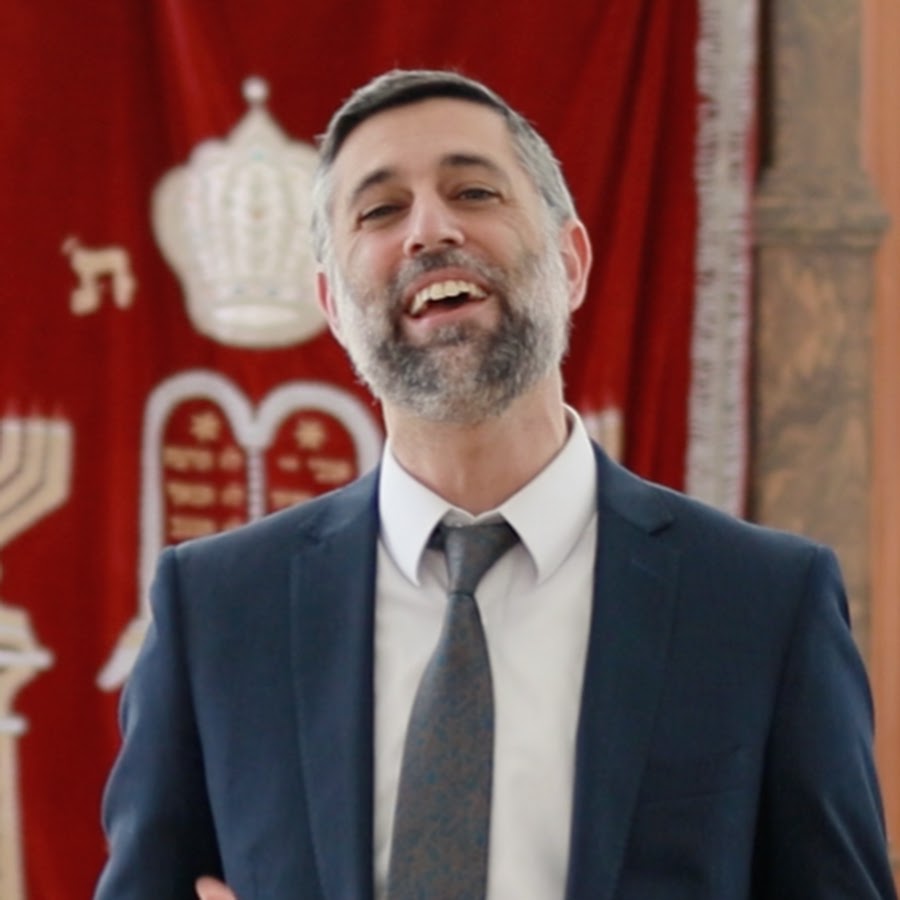
Why was Moshe commanded to specifically choose the Levites and Kohanim (priests) for service of Hashem and leadership of the Jewish people? What is the concept of the seven stringed harp that the Levites played? What is the idea behind Dovid and Shmuel directing the Leviim and Kohanim to their specific tasks, a directive that was still carefully kept 500 years later? How does the concept of faithfulness and integrity apply to becoming chosen? What is the concept of the tests of the righteous that bring about Hashem's love, as opposed to those who disconnect and bring about the opposite? Find out in this week's Parsha Podcast.
Categories:Music
Comments(0)
Transcript
Auto-generated transcript. Not time-synced to the video.
You're listening to the weekly partial
podcast with Ari Goldwag, recorded with
Hashem's never-ending assistance in
Ramat Beit Shemesh, Israel, 5786, 2026.
This week's parsha, if you're in Eretz
Yisrael, is Behaalotecha. If you're in
Chutz L'Aretz, it's Parshas Nasso. And
I'd like to share with you a thought, a
Medrash in Parshas Behaalotecha. And I
think that it definitely has an impact
on stuff that's going on in Parshas
Nasso. In Parshas Nasso, we have the
obligation, the uh
the responsibilities
of the Kohanim.
End of Parshas Bamidbar, we had the
responsibilities, the different things
that they would carry
beginning of Parshas Nasso as well. And
in Parshas Behaalotecha,
there's a talk of the responsibilities
of the Levi'im, of the Levites.
And the Medrash is speaking about the
responsibilities of the Levites. "Kach
es haLevi'im", the pasuk says, perek
ches, pasuk vov.
It speaks about choosing, taking the
Levites. And our topic is going to have
mainly to do with what it means to be
chosen.
What it means to to step up to having a
a sense of responsibility and having a
sense of a a chosenness.
What does it mean? How does one get
there? What is What is required of a
person who is a leader?
Who is a leader? So,
that's going to be our conversation.
That's going to be what we're going to
speak about. The the Medrash,
it talks about a few things before it
gets to it. And I would like to read the
beginning part cuz it interests me. I'm
a musician, as you might know.
And um
it says like this, "Kach es haLevi'im",
"Take the Levites." Okay, so the
Levites, they would play musical
instruments in the Beit Hamikdash, in
the Temple, in the Mishkan, in the
Tabernacle.
There was a few different jobs, as we'll
see, that they were responsible for.
Among them was the music,
uh watching out at the gates of the Holy
temple of the base of Migdash
being involved in carrying
I'm sorry, not being involved in
carrying. It says love with the maso. It
does say that. Okay, we'll see what
exactly those things are.
The different
uh
the maso v'lashir v'lashmor the marizu
says are the three jobs that they have.
They're involved in carrying. Maybe it's
referring to the to the Kohanim as
Kohanim are also Levites, right? All
Kohanim, all priests are from the tribe
of Levi. They come from Aaron. Aaron
Aaron was a Levite.
So
Now that the Medrash talks about the
music
first, before we get to the chosenness,
we'll get to there.
That's going to be the center of it, but
first it talks about
something interesting.
The The instruments that they played in
the base of Migdash. How many strings
a guitar has six strings. A harp, I
don't know how many strings it has.
But how many strings
did those did those instruments have in
the base of Migdash? Come and hear all
you Kohanim, show you the way in a
monogamy.
How many strings were on
the harp or the lyre that they would
play on? All right, maybe you would show
me how you would begin with me.
We know that that there were seven
strings originally
on those harps. And we're going to see
that in the future times there'll be an
eight-string harp and a 10-string harp.
Shana amar service machos b'nei Yisrael
Posuk says in Tehillim, King David
who was the one who laid the foundation
for the temple
and he was the one who composed the
songs that were sung in the base of
Migdash.
He He speaks about service machos b'nei
Yisrael. When it comes to coming in
front of Hashem with song, with sweet,
pleasant singing
so service machos one needs to be full
of joy. The word soiva, which means joy
al dikara soiva al sheva simchos
You can read the word soiva as a sin. It
can also be read as a shin. Instead of
being soiva, which means full, which
means satiated,
it can be read as sheva, which means
seven. And generally speaking, I heard
from my rosh yeshiva, Rabbi Perr, that
the number seven represents a full
amount of times. Like sheva yipol
tzaddik v'kum, seven times a righteous
individual will fall, but he gets up.
There's an idea of it means a full
amount of times, like endless times.
A tzaddik falls, but he gets up, right?
We're here to make mistakes, as we said.
But soiba simcha is So what we're saying
is you want to be full of joy, you want
to sing in front of Hashem, so you need
sheva, you need a full measure. Right?
What's the full measure of counting in
this world? So tzava, as we know, the
number that indicates the concept of
fullness is the number seven. Seven days
of the week, Hashem created the world in
seven days.
And that's how many strings there were
on the instrument of the of the Levites.
And it represents the fact that when
we're singing in front of Hashem, we
give it our all. We go all the way. And
we see that that really is the
foundation of why Levi is chosen, why
the Kohanim are chosen.
They go all the way.
We have King David I America. King David
also says,
interestingly, in perek kuf yud tes of
of Tehillim, chapter 119, which is the
longest chapter in Psalms,
and it's the chapter that describes the
joy, the happiness, the greatness of
Torah. So there it says, "Sheva b'yomi
lo tichacha mishpatzei tzidkecha."
Seven times in a day I praised you.
On the statutes of your righteousness.
Okay, so that means to say Dovid
Hamelech is saying,
"How do I praise you?" Which means, "How
do I sing to you?" Which means, "What
How many strings are there on my
instrument?" Seven. Seven. Seven times a
day. I'm doing it seven times a day,
which means a full measure, as much as I
possibly can. Over and over again, I'm
praising you, Hashem. Over and over
again, I'm using all my capacity to sing
to you, to praise you, to
recognize the greatness of your Torah.
Yemos Hamashiach nazish maina. Okay, so
what happens when the Messiah arrives,
we're going to get an even deeper level
of of serving Hashem. It's not going to
just be seven. Seven is as much as we
can here in this world, but there's a
supernatural way of serving Hashem,
which we don't yet have. We will have in
times of the Messiah.
Right? When the times of Messiah come,
we'll have an eighth note. We'll have an
even deeper level of spiritual dimension
to our serving Hashem, a depth.
She came to the army of Ben Egon.
King David says
in the helm chapter six verse one I'm
going to say but I didn't even say
Shminis.
To the conductor
in the songs, the Neginas
on the eighth.
On the eight-stringed harp. So there's a
a harp that has eight strings, which
indicates that there's an even deeper
level, more all-encompassing way of
serving Hashem.
Not just with all of my physical
capacity, but all of my spiritual
capacity.
Blessed love I not say Saser.
In the future time, which means in all
of my bar, which is the time that starts
in the year 6,000 or 6,001.
After the most of Messiah, after the
Messianic age, there's an even deeper
level. We get to eight.
And the eighth aspect represents the
Neshama, but there's a Neshama of the
Neshama and there's a Neshama of that
Neshama. There's an even deeper aspect,
which is represented by the number 10.
So there's going to be a 10-stringed
harp to indicate that we enter into an
even deeper way of serving Hashem. Not
just with all of our physical capacity,
not just with all of our spiritual
capacity, but with all of our deepest
deepest spiritual capacity.
Okay.
That's just an introduction. That's how
That's the kind of
serving Hashem that we're after.
All of our All of our ability.
Physical, spiritual, everything, all the
way in.
That's who the Levites were, all the way
in.
We ask in the hymn, interestingly
Who was the one who established
these musical instruments? It's David.
Samuel the prophet and King David.
It's a positive in
which is very interesting because if you
look at the there it's in
311 1 Chronicles chapter 9 verse 22.
So I'm pretty sure
I looked at it. I'm pretty sure it's
speaking about when the Jewish people
returned to the land of Israel
after the Babylonian exile.
Right, the Jews returned small numbers
but increasingly larger numbers just
like what's going on today.
About 50,000 Jews returned to Israel at
the beginning
after the times of Esther.
And
the second describe who they were, where
they came from, who were the Levites
that returned, who were the Kohanim that
returned. It gives them their It talks
about their lineage. And it says in the
second
They might use David and all of them
It talks about the different Kohanim,
the different Levites and all of their
tasks and jobs that they had in the
temple.
It speaks about their specific jobs.
And it says and let's let's recall,
okay, thinking about it. The first base
of English
lasted approximately 400 years. I don't
remember if it was 410 or 420.
And then there was a 70-year exile. So
we're talking about about 500 years
after David and Samuel.
A little bit more.
Approximately 500 years after David and
Samuel
the Levites and the Kohanim knew who
they were
and knew what their jobs were based on
the original
um
direction of David and Samuel.
Now David and Samuel
they overlapped for a short time because
Shmuel passed away pretty soon after
David was anointed.
So,
there was a small window, and David was
not yet the active king of the Jewish
people at that point.
But, Shmuel died before Shaul died quite
soon before.
As we spoke about in weeks past.
And
so, David and Shmuel together directed
and gave clear instructions to the
Levi'im
what their job would be. What to the
Kohanim what their job would be, which
is interesting because our P'sukim are
talking about that in Parshas Naso in
Parshas Balak.
Giving them their jobs, but David and
Shmuel in their time gave the direction,
and that direction was passed down
from generation to generation to
generation. 500 years later, they still
knew who they were. It's pretty amazing.
Imagine that you knew from your father
and your mother who you're supposed to
be in life. What your job is. What your
specific talents, how they're supposed
to manifest in this world, and how
you're supposed to serve Hashem and
serve Hashem's people. Imagine you knew
that. But, they knew that for 500 years
they had passed it down.
So, Hema Yis'u David U'Shmuel R'aya
B'emunusam.
These were established by King David
and Samuel the Prophet, the Seer,
Haroeh.
B'emunusam, interesting word. In the
Pasuk B'emunusam,
so, I'd like to read to you the the
I think it's the Metzudas David. Or was
it the Ralbag?
I think it's the Ralbag. Rashi
Lemashi'as She'yis'adeilam Shomrim Es
Ha'eis B'zalzalim
Yasu David U'Shmuel.
The foundation of these different groups
of Levi'im and and Kohanim
was done
by King David and and the Prophet
Samuel. V'nehe'eyasam Ne'emonim
La'Hashem Yisbarach.
R'ol Hasader Zeh Yis'avod B'veit Hashem
Shalem. Okay.
Okay, so we're getting an introduction
here, by the way.
We still got some some more interesting
information to find out, but this is the
intro.
What made the Levites
prepared? What gave them the ability to
know what their job is in the world?
It was their amunah sum.
The possuk says they were
they were faithful to Hashem.
They were faithful to Hashem. We'll see
what that means in the next piece of the
magish, but they were faithful to
Hashem, and because of their
faithfulness
Dovid and Shmuel said, "We can tell
these people what to do. We can give
them their instructions for now and for
all time."
And 500 years later, they're still doing
it. They're still they still and they
had a 70-year break when they weren't
doing it. They weren't involved in the
base hamikdash.
So, Dovid and Shmuel were able to
give them the order of the avodah.
The order of their particular service
life and shalom in a complete way.
And it's very interesting. The Rabak
says something very fascinating. The
There was one small window that Dovid
and Shmuel could have done this
together.
It was before Dovid had become king.
Shaul was still the king. Shaul was
chasing after Dovid to kill him.
So, Dovid is on the run.
And Shmuel and Dovid at that moment
definitely needs explanation, but at
that moment Dovid is on the run from
being killed by Shaul. He is
directing and giving
giving
um
precise instructions to the Leviim and
the Kohanim who they're supposed to be
and what they're supposed to do.
Shmuel and David together are figuring
that I mean that's pretty interesting
and you know if you try to think about
it like what would be the p'shat why
that's the moment in history
where their jobs were given out. And
maybe
when a person is running
why was David running? Because he was
anointed to be the next king.
Shaul knew that.
So
David is not yet
not yet fulfilling his job, but he knows
what his job is.
Right?
So that's a good time to help others
figure out what their job is.
It's like this moment where you have the
vision on you.
You have the vision and you are not yet
doing it.
You have the vision. You know where it's
supposed to go.
You can help others.
Maybe. I don't know. Just a thought.
Says the Medrash, back to the Medrash
V'heim me do
chalukei ha'shir.
They established how the songs were
distributed.
Okay? Which means to say
you play this instrument, you play that
instrument, you sing this solo,
you're part of this choir, you do this
harmony.
Everything was
delineated by David. I mean that's very
interesting. David Hamelech was the
sweet singer of the Jewish people.
So
>> [laughter]
>> if there's anyone who's going to
distribute the solos correctly, maybe
it's him.
So it's very interesting.
Vayalu ha'Levi'im al hamizbei'ach v'al
hamizrach u'vnei Yishai ha'Levi'im
And so the Levites would get up onto the
platform. The in the Beit Hamikdash they
had
a platform, a stage.
They would get up there and they would
sing in front of Hashem.
Right? Which means to say for us, I
don't know if everyone out there who's
listening is a singer.
I assume not.
But what it means for us is that
they got their purpose.
They got their their job, what they're
supposed to be doing in front of Hashem.
Rebbe Akiva says Hashem says to Leviim,
"See the great
love that Hashem showed to the Leviim."
Hashem says to Moshe, "Harbe Leviim are
beloved in front of me." This is what
Hashem said to Moses. Moshe was also a
Levi.
He was also a singer. Az Yashir Moshe
u'Bnei Yisrael, right?
He He led the Jewish people in the song
of the sea.
And he's going to lead us again when
Mashiach comes.
So, this is what Hashem says to Moshe,
"I want you to see how precious
how precious
the Leviim are." Kacha Hashem says to
Yisrael.
"Take them to me, to my name
for leadership."
Right?
Says the Marizu, "What is the
leadership?"
Negidim v'sarim munim al avodas
Hamikdash. They were leaders. They were
princes who were appointed over the
service in the Beit Hamikdash.
She'omer kacha Hashem says to Leviim
l'chol inyan She Olam u'Mikdash
u'Mishkan masah u'shir u'shmirah.
Right? Some of the Leviim the priests
were the ones who would carry the
different parts of the Beit Hamikdash
the Mishkan.
Some of them were singing. Some of them
were were acting as guards.
But they each got their job. Why did
they get their job? Because they were
beloved in front of Hashem. Why were
they beloved in front of Hashem?
U'minyan hamishgerim b'nei Kahat
u'Leviim we see it.
The fact that Hashem says, "Take the
Leviim."
We see that they're they're chosen.
They're beloved. But why are they
beloved? So, we got that hint in the
pasuk in Divrei Hayamim because of their
emunasam because of their faithfulness.
Because
you can be given your purpose in life.
You can be given your
um stewardship in life
if you're someone who demonstrates that
you're a faithful person.
If you show that
come what may, you do what's right?
Hashem says, okay.
Here we go. Here's your job.
Here's your job. I know I can trust you
with it.
So, I think with that's what I think it
says here.
And they're the full on people. They
have the seven stringed harp. The full
on people, they're doing it all the way.
They're playing full full music.
Says the Malbim.
And here the Malbim really brings out
the point
very strongly, very clearly.
Kaga Salviem. Zesham Hashem Sadi give us
a value of son and ashay.
This is what the possuk says in
Tehillim. Possuk says in Psalm chapter
11 verse 5.
Hashem tests
Hashem tests the righteous one, which
doesn't mean exactly tests.
It means he's ba'al klayos v'lave means
he
can determine and understand what's
going on in a person's heart. How do How
do you know what's going on in a
person's heart? Cuz see people what they
do. They see their actions. Hashem says,
I want to see your actions. Let's see
what you do when push comes to shove. Do
you
do you come through? Do you come through
in a pinch?
Hashem sees that. Hashem recognizes
that. Ba'al klayos v'lave.
Rasha v'lave son and ashay, but the
wicked person, the one who loves
evil, loves stealing, he's not
responsible. He He wants to take other
people's stuff.
Someone else has earned something, he
takes it. He grabs it.
Son and ashay.
Son and ashay exactly what son and ashay
means. It either can mean Hashem's soul
hates him
or it can mean Hashem hates his soul.
Not sure. But either way
we can say it uh loosely for today's
generation, Hashem does not appreciate
those
who do not show fidelity.
Do not show have integrity. Do not show
integrity.
Now, what does it mean? It means the
Levites have the special character trait
which we all must emulate.
As the Rambam says, "Who lay share me
lay me le vad?" Right at the end of
Where is it? Hilchos Melachim? Not sure.
Hilchos Ma'aser?
Famous Rambam. It's not only for the the
for the tribe of the Levites. Anybody,
any human being in the entire world,
Jew, non-Jew, anyone can dedicate
themselves to Hakadosh Baruch Hu.
Here's what you do.
In Hakadosh Baruch Hu Malis Adam Yisrael
Achav Ben Avodah K'siddah K'hilah. You
want to know how to know what your job
in life is, how you can
serve other people,
you got to pass the test.
You got to pass the test.
Hashem
tests the person, checks the person.
Does this person have integrity?
K'mo she omer ben Siyani u'malis
Yisrael.
When a person
stands up to his tests, that's when
Hashem raises him
to greatness. You know, one of the
things that we see by Yosef HaTzaddik.
Yosef was somebody who
endured tremendous suffering. His
brother sold him into slavery.
He was chased by
Potiphar's wife.
Then he spent 12 years in jail.
It was a tough time.
But after he came out of those 13 years
of of challenge,
he had become a Baal Bitachon and he
become somebody who truly trusts in
Hashem.
You got to be that kind of person before
you can be a leader.
Machinat Moishe Rabbeinu. Says the
Medrash, we find this by Abraham. You
saw Hakadosh Baruch Hu as soon as he saw
Abraham.
Abraham was tested with 10 tests and he
withstood them all. V'ach kach b'rachli.
And afterwards, Hashem gave him a
blessing. She amar Hashem b'rachos
Avraham Akol.
Which I think is saying, the Medrash is
saying, afterwards he got a blessing.
What does that mean? It What does it
mean to get a blessing? Right, I about
it. When you when Yakov Avinu takes the
blessing
from Yitzchak, so what is he getting?
He's getting his youth, he's getting his
direction of purpose.
Right? Esav had pretended to be somebody
who was interested in spirituality. His
father thought that he would carry the
purpose of the Jewish people, but he was
wrong.
Yakov was the one. So, receiving the
blessings means Avraham Avinu gets the
blessings, why does he get the
blessings? Yakov gets the blessings, why
does he get the blessings? It means that
he gets the direction, right? The
blessings that a person has person is
talented in some area.
Person is a has leadership qualities.
Person is whatever it is.
Good at learning, good at teaching,
whatever it is.
Those blessings guide the person towards
what they're supposed to do in life.
But you only get the blessings when
you've
proven that you can use those those
talents
with integrity.
Avraham got that. Yitzchak
Yitzchak came to Avimelech and he said
Avimelech came to Yitzchak.
Yitzchak also had a test. He stood up to
the test, he was blessed.
Yitzchak came to Yitzchak
and Yitzchak blessed him.
After the test
he planted and then he had tremendous
crops.
He had tremendous blessings, which means
to say
he had direction.
Jacob had tremendous amounts of
challenges with with his brother trying
to kill him, with Lavan
changing his his uh
his paycheck many times.
Esav came to Dina and he said Yitzchak.
Rachel died, Dina was
abducted.
He lost Yosef for 22 years.
I felt I have a lot of challenges and
Yitzchak came to Yitzchak and Yitzchak
blessed him.
I see.
>> Right? Jacob went through all of his
trials and tribulations. In the
beginning he had nothing, in the end
he had tremendous blessings.
Tremendous direction. He had a family.
In the end
he saw in his lifetime his great
grandchildren.
He gave his grandchildren blessings.
The
Joseph also, as we said, he had his
challenges and the how with the with the
wife Potiphar
he was in jail for 12 years.
You know, a person thinks that the
challenges are going to get me out of
these challenges, but the challenges are
what makes a person into being that
great person.
It's the withstanding of the challenges
which shows his integrity and greatness.
Sham says, "If you're a person who can
do these things, you're a person that I
can give
jobs to."
You're a person that I can give jobs to.
The
Sham says, "You know, so he afterwards
comes out of jail and he becomes a king.
Why? Because he withstood his
challenges."
And Sham said, "I give this to the
person who says the righteous one that
Sham tests I've shifted to Levi."
This was the case with the Levites
bringing it back to the Levites to the
Kohanim.
Why were they chosen?
They were chosen
They gave themselves over.
They completely gave themselves over,
completely with all of their guts
to the name of Hashem.
The Israelites were in Egypt.
It was a very difficult time and the
Jewish people
they stopped doing certain things.
They stopped learning Torah.
They stopped giving their kids the bris.
Ezekiel tells us about this uh uh
>> [sighs]
>> The possuk says
when I was angry at the Jewish people, I
made myself known to them in the land of
Egypt.
Angry at the Jewish people? They were
slaves. What did they do wrong?
Possuk says there are Ezekiel and the
Jewish people, they defied Hashem.
And Hashem poured out his anger upon
them.
Most of us have a mitzrayim. So she had
three days of darkness in Egypt.
Why?
All of the Jewish people of Israel, the
wicked of the people of Israel, the ones
who defied Hashem, rebelled against
Hashem,
they died then.
She came over to make
a push and be Hashem says I'm going to
I'm going to separate out all those who
defy me.
She knew that they know how to forget
the shame of Israel by the fullness of
the world.
The shame of the Jewish people is coming
low.
Possuk talks about in Shir Hashirim
there's parts of Klal Yisrael that get
that get thrown to the side. Why?
Because they reject Hashem. The parts of
Klal Yisrael they
are purified and chosen. Why? Why are we
chosen?
We chose them because we remain
in integrity. We remain
with fidelity to Hakadosh Baruchu.
Kumi lach rayasi yafasi lach shari giya
ketz hagoula. Possuk in Shir Hashirim
perek bais possuk yud gimmel talks about
who merits to see redemption. It's those
who hold on to their faith.
Those who hold on to their connection to
the redemption and to Hakadosh Baruchu,
to God.
V'shivti shivti shivti kol tzaddikim
hayu.
So part of Klal Yisrael lost it.
Part of the Jewish people in the land of
Egypt
lost their connection they're going
Baruchu, lost their fidelity, but the
the Levites, the tribe of of Levi, they
were righteous, they retained that
connection. They proved themselves
worthy by
they kept the tire of
in Cairo.
So I mean they kept the tire, they kept
giving their kids the circumcision.
And we see by my show of a menu.
He was called to task on his way from
Israel's house back to Egypt because he
hadn't yet given his kids a mirror but
he did. He did give them a mirror.
I don't know what you show show us what
you show
show show Levy.
When the Jewish people did the sin of
the golden calf, the tribe of the of of
the Levites did not partake and never
show me show me also love Levy.
You know my wish is similar to have also
some of the most upon him.
Right, so they were able to
stay true to this world who they had
integrity. They were chosen because of
that.
When it came to what was right, it
didn't matter it didn't matter what
anybody else said. I'm kind of I'm not
translating precisely here, but that's
the gist. You know I could show them
that they came and I show them so that
they were all righteous and they saw
them in the sea and them. They he tested
them and they stood up to their tests.
Show me show me show me my soul.
But he says about them they were tested.
You know how you leave us so he says the
Levites are mine.
I can I show me show me show me so they
give for this. Fulfills that which it
says in the show him tests the righteous
of all the show him
show him show me show me show me. Those
who are wicked means those who are
lagging fidelity, those who cannot
keep their connection to this world who
alive. They don't have the integrity,
they don't stand up to their tests.
They're rejected. I'm going to call you
show me show me show me. Therefore, King
David says praise worthy is the one who
fears who goes in his path. Bottom line.
You want to get to your purpose in life,
stand up to your neshama.
When we stand up to our neshama, when we
face our challenges with integrity, we
are
full. We are full. We have seven strings
on our harps.
Soon to be eight strings. We've got it.
We're fully there.
Giving it our all, standing up to our
neshama.
will show us who we are, what we're
meant to be. I want to bless you. I
bless you. I ask you to bless me.
should help us to indeed see who we are.
should help us to stand up to our
neshama. should help us to be strong, to
give it our all, physically,
spiritually. Thank you so much for
listening. Have a wonderful shabbos.
This podcast was made possible [music]
through the gracious donations of
listeners like you.
For more podcasts like this, please
visit www.arigoldweg.com
or search on iTunes, [music]
Ari Goldwag.