0:00 / 0:00
Missionary Attacks Rabbi Singer on Sin and Atonement — Gets Exposed
420 views
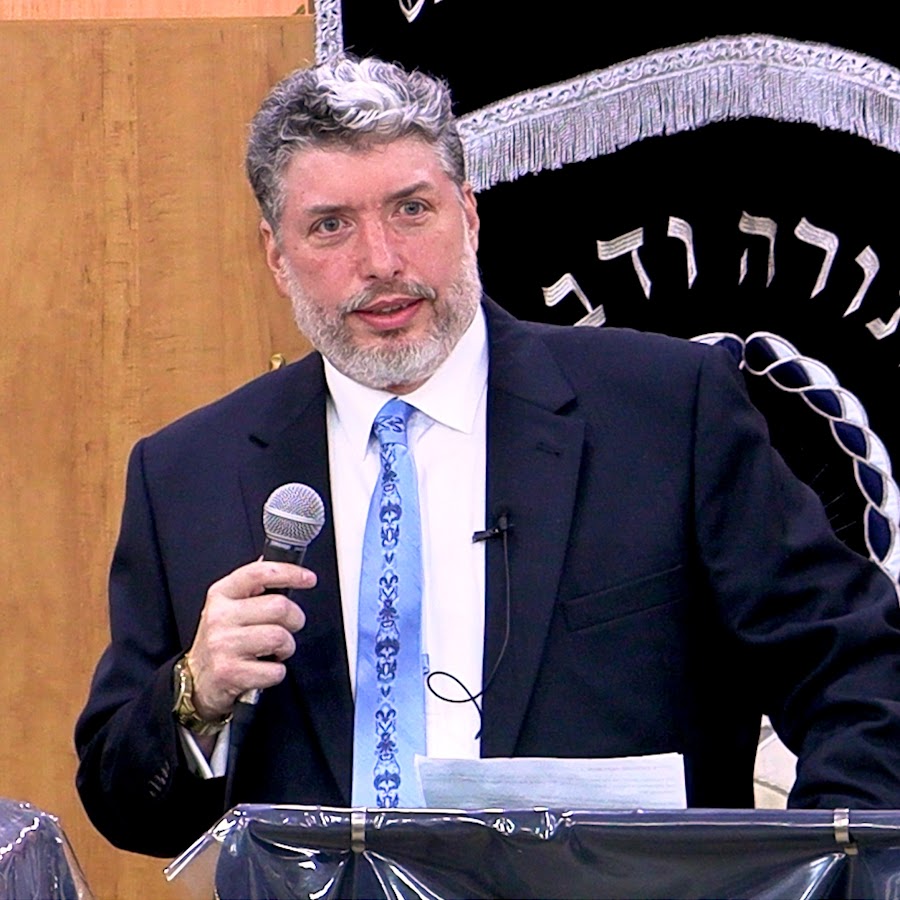
Help us combat aggressive Jewish evangelism in Israel: https://outreachjudaism.org/partners/ Let’s Get Biblical Study Guide (Volume 1 & 2) https://outreachjudaism.org/shop/lets-get-biblical-expanded-2-volume-study-guide/ https://outreachjudaism.org/ www.videvo.net https://www.youtube.com/user/tenaktalk Music: https://www.purple-planet.com Use in accordance with Israel's Copyright Law 5768-2007 section 27a. Music at the end: Adon Olam https://youtu.be/a6oS9N0hJTY http://www.toviasinger.tv/ #toviasinger #Judaism #Christianity #Messiah #joerogan
Comments(0)
Transcript
Auto-generated transcript. Not time-synced to the video.
Daniel a blessed memory. He didn't bring
sacrifice on Kipur. What did he do?
Please missionaries, I asked the Vatican
to step forward and explain how did one
of the people who you the Vatican
consider a saint? You at Dallas
Theological Seminary call him a saint.
How did he do it? There was no
offerings. There was no sacrifices. This
is all silly. Does it say Calvary? No.
Does it say the blood of the
unblenmished lamb? No. Does it say
Galgtha? No. Does it say the cross? No.
Say God so loved the world that he gave
his only begotten son. No.
This short of video is well making
claims about the Hebrew Bible, about sin
and atonement. We wouldn't show it to
you unless it was something that really
we hear repeatedly from missionaries
seeking to convert Jews to Christianity.
>> Torah says in Leviticus 16 that the
blood sacrifice of Yom Kipur, the
Sabbath of Sabbaths, is the only God
orained method of atonement for all the
sins of the people. Not prayer, not
fasting, not good deeds.
And this shall be an everlasting statute
unto you to make an atonement for the
children of Israel for all their sins
once a year. There comes a long Tovia
singer teaching that atonement can be
achieved without blood through prayer,
repentance, and charity instead.
>> You know, it's interesting that most
people
would be embarrassed to just lie and
make up things that aren't there.
I mean, I think I would like you just
have a fear of getting caught, but
apparently
these people have no fear of just making
up verses that don't exist or conflating
two separate passages into one as though
they're the same, and they're not. So,
there's no passage that says what this
missionary insists it says. There's
nothing like it, but he's smashing
together two passages.
And I think just a point Ni made before
we look at the most important chapter in
the Torah that discusses Yam Kipur.
Leviticus 16, the beginning of the
chapter opens up with sacrifice. The
first sacrifices are brought by the
priests and the priests will bring a
katas. Whenever you hear the term katas,
that word really means to miss. And what
it conveys with regard to offerings is
unintentional sins. Just so you know
this, the priests are given a mandate to
guard the sanctity of the sanctuary.
It's their responsibility. They bear it.
It's in the Torah. Therefore, they have
to bring offerings because invariably
people get things through TSA. It's like
La Hava going into an airport. TSA in
the United States is responsible for
keeping the other side of you know the
security check sterile right so the
kohanim are kind of in charge of keeping
the bas mikdash sterile means free of
anyone who's contaminated invariably
mistakes are made they bring this
offering now what happens we have a
series of offerings we're going to speak
about but when the Torah talks about
that this is an eternal
covenant, an eternal practice. It's a
statute you must keep forever. We don't
see that until Leviticus 16:29. This is
all smoke and mirrors. The first time
you find forever that this is an eternal
covenant or an eternal commandment is
verse 29. That's the break.
And this will be to you an eternal
statue to you. You shall afflict.
It literally says, "And you shall
afflict your soul." Meaning, and what do
we do? Those that breaks down to five
parts. Meaning, we don't eat, we don't
drink, we don't engage in marital
relations, we don't bathe, and so on.
And we don't anoint ourselves. So there
are we let's just take not eat. And in
case you think
should calm down in case you think the
rabbis invented it, the fasting on kipur
is actually brought up in Tanakh in
other places. So you see this is not
going to be the topic of this discussion
the oral Torah in Isaiah 58 for example.
It's interesting or in say inant that
the part of Leviticus
16 again the kiper chapter which says
hey this part is for always means you're
always going to be doing this is the
part of afflicting your soul why because
we can always afflict our soul that is
fast not eat not drink not anoint
ourselves bathe and so on we could
always do that and we do that every
young kipur we don't bathe we don't eat,
we don't drink and so on. We don't
engage in these kinds of practices for
one full day starting the eve of young
kipper
col until until the until mire of the
next night basically 25 hours. So it's
so I I hope you've noticed that when
Leviticus 16 takes off when it shoots
that that that booster rocket is saying,
"Hey, this part is forever." It's not
the part about the blood because the
blood part meaning the sacrificial
system which is very significant in
Leviticus 16 is big but that's not
forever because you won't always have a
temple you won't always have a sacrifice
as an example Daniel a blessed memory
who was holy and he was sacred he was
pure
he didn't bring sacrifices on kipur what
did he do and the bible openly says that
he was a holy man. He was a righteous
man. God called him my beloved. Please
missionaries, I ask the Vatican to step
forward and explain how did one of the
people who you the Vatican consider a
saint? You at Dallas Theological
Seminary call him a saint? You at the
Church of the Holy, whatever you call
it, consider him a saint. How did he do
it? There was no offerings. There was no
sacrifices. This is all silly because it
says openly in the Tory openly. It says
openly that no one could die for
anyone's sins. Deuteronomy 24:16. And in
2 Chronicles 6:36, it says openly that
when you're expelled from your land and
you're in exile in the land of your
enemies far and near and you rethink
yourself, you pray to heaven and confess
your sins and God will forgive you for
all your transgressions. It's so simple.
Moreover, and this is something
that no Christian can answer, like
sometimes they can give a smoke and
mirrors, but this you can't even begin
to have it. We have a messianic prophecy
in Isaiah 1, and I'm I'm deliberately
selecting Isaiah 1. Why would I bring
it?
Because I I wanted to say it's a hostile
witness. And I want to explain that.
Meaning of course Isaiah is one of the
greatest nim that ever lived. He lived
right here. He walked down the streets
near my home, preached there. But Isaiah
1 is one of the most burning. It may be
said that Isaiah chapter 1 is the most
painful, the most
excoriating
chapter in all of Tanakh. In fact, we
read Isaiah chapter 1 before tisha of
the ninth day of the fifth month, the
saddest day of the year. We read that in
the haura on the Sabbath prior to tisha.
We read it with the
with the sounds of lamentation with the
music of lamentation. It's very painful.
So, I I am deliberately going to a
chapter that's it's so explosive most
people can't get through it cuz it rips
the Jewish people apart. But in the
midst of it, Isaiah says, "Look, we can
work this. I mean, God is speaking.
We can work this all out. Let's reason
together. If you feed the hungry, take
care of the poor, the widow, the orphan.
Although your sins are red as scol, I'll
make it as white as snow. Intriguing.
Then Isaiah soarses into the messianic
age. And he tells us explicitly. So
remember, where are we now? We are now
in a time when we don't have a temple.
We don't have offerings. We don't have
sacrifices. We don't have that. Right?
So Isaiah literally tells us, does it
say Calvary? No. Does it say the blood
of the unblenmished lamb? No. Does it
say Galgatha? No. Does it say the cross?
No. Say God so loved the world that he
gave his only begotten son. No. It says,
which means that Zion will be redeemed
through justice and through repentance
openly. No blood, no sacrifice, nothing.
It doesn't say a word about it. This is
all
made up. Meaning Christians are under
the belief because they're reading Paul
that you need a blood offering. You need
a blood sacrifice in order to atone for
sin. Quoting a book, they don't even
know who wrote it. Hebrews chapter 9:22.
Now, Leviticus 16:16 would be the
response that missionaries would use.
Leviticus 16:16. However, it says
and you should make an atonement for the
holy place because of the sins of your
people. But what is that referring to?
That an offering is brought for you.
That's not an offering for everything.
That is specifically, and I beg you,
it's easy to remember this. Leviticus
16:16.
All you have to do is remember the
number 16 twice. It says explicitly,
this is how you make an atonement for
the sanctuary. What does that mean? Did
the sanctuary, meaning the temple, the
bisha mikdosh, did the temple went and
smoked the cigarette on chabas, did the
temple eat pork? What does that mean?
Why? How does it So, what is that?
What's going on there? When this is how
one atones for sins against the
sanctuary, against the temple, very
specifically during the year, if
somebody went into the temple
impure, which is forbidden, means going
to the muk mikdosh in a state of
impurity, either unintentionally or
intentionally. Undeniably means he
walked through
over graves and he didn't realize he was
walking over graves and he should have
known. Okay, but he didn't know and he
should have known or he deliberately he
went through a cemetery and he didn't
tell anyone because he took a shortcut
and he went on to the mak is a very
grave sin. How do you atone for that
sin? The way you atone for that kind of
sin is you do the same thing
but you do it in a state of purity and
that's where the goat is brought in a
state of complete purity and therefore
it atones davka specifically explicitly
only for sins against the sanctuary
either knowingly or unknowingly. It's
not if you went and I don't know had
pizza on Passover,
right? If you had bread, if you ate
bread on Passover, it's a very grave
sin, right? But you can't bring an
offering in order to atone for that sin.
There are other ways to deal with it.
And in fact, we're told explicitly
explicitly in Isaiah
chapter 55 verse 6, but seven is very
important, very very important.
It says there that if the wicked man
turns away from his sins, I will
completely forgive him. No blood, no
Calvary, no son, no church, no pope, no
nothing. You ask a question, why would
God forgive the person who repents?
Because I'm able to do that. There are
people in your life, it may be we don't
know each other,
but there's probably people in your life
that you have never forgiven.
And we might make the mistake of
thinking that maybe we we create God in
our image and we assume that God will
never forgive me just like I don't
forgive him or her. He'll never forgive
me. So God says, "No, I don't do
business like you. My ways are higher
than your ways. My thoughts are higher
than your thoughts. The heavens are
higher than the earth. So too are my
ways higher than your ways." Ha had no
hose. When did he live? He lived the
same time as Isaiah. Whereas Isaiah
Yeshayahu
lived here in Yuslam or I am Hosa. Hosea
lived in the northern part of
he was preaching in the north together
with Amos. They were both in the north
preaching here in
yet many many prophets but the two that
you really know about is Isaiah and
Micah Yeshua and Miko they were all
contemporary live at the exact same time
in the ne during the neoassyan empire
now this is very important why am I
giving you a geography course of where
they live what they live it's very
critical because Hosea is speaking to
the northern kingdom primarily although
he's addressing Judah as But he says a
very important thing. He says, "Israel,
you have stumbled in your iniquity."
Hosea 14 verse 1 2 3. It depends on
which kind of Bible you take with you
words. So he's speaking to a people that
don't have a temple and return to the
Lord. Say, "Let us render for bulls the
offering of our lips." He openly says
that.
I'm not kidding. It means you pray
instead of bringing offering. I didn't
say that Jose and the NIV changes it.
Let us render the fruit of our lips
because it plays with the letters. It's
mind-blowing. We have Micah chapter 6 or
67 and 8 that God doesn't want
sacrifice. He doesn't want the Don't pay
attention to Hebrews that says without
the shedding of blood there's no
atonement. That's a miscode in Leviticus
17:11. I because I know all the
Christians are going Leviticus 17:11.
Leviticus 17:11 is explaining why you're
not allowed to eat blood. And what
happens is Christians take it out of
context. And people who are not studying
Leviticus 17 are fooled by this
chicainery.
In Leviticus 11, as an example, we're
told we're not allowed to eat unclean
animals. And there's really no reason
given for it. mean we're not told, we're
just told it's an abomination for you.
You can't eat a whole bunch of creatures
with knowledge, but there's no real
reason given. In Leviticus 17, we're
told it's forbidden to eat blood, to
consume blood. That's Leviticus 17:10.
And unlike Leviticus 6 chapters earlier,
here we are told why you're not allowed
to eat blood. You're not allowed to eat
blood.
And that's Leviticus 11. And just so you
know, the first word of Leviticus 17:11
is key because, you know, it's
explaining the previous verse and
missionaries rip it out of context. So
the Torah is telling us the reason
you're not allowed to eat blood. You
actually have to cover it up with dirt.
So no one can eat of it is because blood
can only be used to make an atonement
because that's where the life force of
the flesh is. So therefore, you can only
use blood to make an atonement. But it
doesn't say without shedding blood is no
atonement. That's Hebrews 9:22. So I'm
telling you now, when you're enga
engaging with a missionary, I'm getting
too heated up. I don't want to. Most of
the Christians you're going to meet are
sincere. Some of them are really bad
faith actors and but most of them are
people this is what they're told every
Sunday. right now.
Right now, there are a billion people
around the world in church right now.
That's very safe. At least a billion
people are in church right now. And this
is what they're being told.
And they don't know any better. The
majority of them are Roman Catholic.
Roman Catholics with very rare
exceptions do not read Tanakh. I mean,
it's very rare exception. They really
don't. And Christians are usually
reading the Christian Bible and then
using that as a theological filter with
which to understand the Hebrew Bible. So
they're doomed. It's a big big problem.
And that's why what I'm saying sounds
odd. It sounds strange. And that's why I
beg you, my dear friends, please,
please, please look it up for yourself.
You have to read it in context. See
Hosea 6:E 6. See Psalm 51. God doesn't
want these sacrifice. See Jeremiah
chapter 7. Jeremiah explodes when people
start talking about sacrifice. The
temple of the Lord. Temple Lord. He says
in verse 21, "When when I took you out
of Egypt did I tell you I'll bring
offerings."
So make sure that you read it for
yourself. Daniel, I'll finish this off.
Daniel chapter 4 verse 24 or in the
Christian Bible 27 when Nvanzar
is told about his dream and what the
consequences of his dream. The dream
regarding the great tree that feeds
everything is destroyed
which means the Vanessar is going down.
Daniel says to him, "So this guy said,
"I'm a big liar because I said charity
doesn't atone for sin." That's what this
guy just said. Okay, test me out. Please
test me out. Please look it up for
yourself. Daniel again is chapter 4
verse 24 in the Hebrew Bible, 27 in the
Christian Bible. Just look it up. Daniel
tells
directly, "If you give charity, then God
will forgive your sins openly." That was
Daniel, not Tovia.
It was the Novi Daniel, not Rabbi
Singer. So I say this, my brothers and
sisters, if you're going to read the
Christian Bible, you're going to read
Paul, you're going to read, you're never
going to know. And then you're going to
read a few verses from Tanakh, which the
pastor tells you to. You're just reading
the Hebrew Bible through the prism of
the New Testament and you're gone. Let
alone you're not reading it in the
original language. Go back to the
original. If you enjoyed this program,
please like and subscribe. I don't know.
I share my love.