0:00 / 0:00
Lag Bomer Blessings הנה מה טוב ומה נעים שבת אחים גם יחדA New Kabbalah class Rabbi Yitzchok Minkowicz
247 views
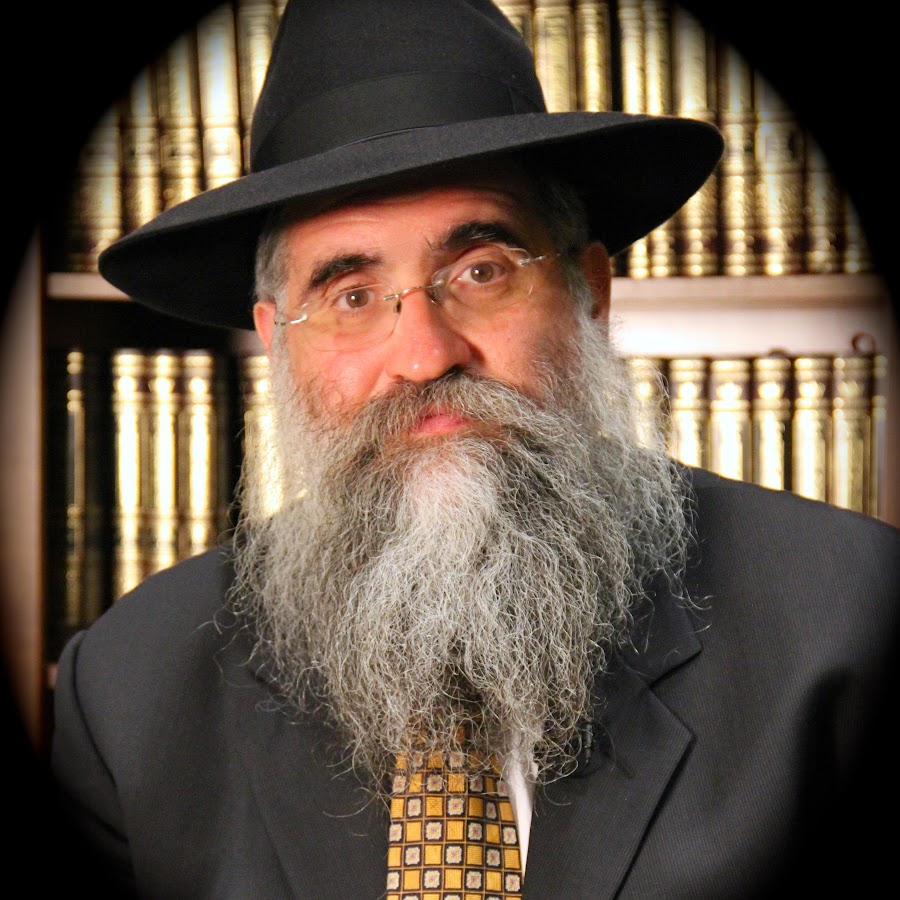
The Chasidic insight of psalm 133 שירהמעלות לדוד הנה מה טוב ומה נעים שבת אחים גם יחד מאמר שיר המעלות תשכ"ב קונטרס ל"ג בעומר - תש"נ Learning Chasidus creates Unity amongst us that reveals the oneness with us & Hashem that draws down the greatest blessings. Learn the Power & Spiritual Energy of: Miracles Blessings Torah Study Prayer Studying Chasidus / Kabbalah / Mysticism Learn about the relationships of: Unity Oneness The rewards of true oneness. Infinite & impossible Blessings materializing. A Project of Chabad Lubavitch of Southwest Florida 5620 Winkler Road Fort Myers, FL 33919 239-433-7708 www.Chabadswf.org [email protected]
Comments(0)
Transcript
Auto-generated transcript. Not time-synced to the video.
Welcome to this week's class on Seder.
Today is a very very special day for us
here as it's Arab Lag B'Omer and in
Israel already it's Lag B'Omer. Lag
B'Omer as we know is the passing of
Shimon bar Yochai and Shimon bar Yochai
said on his day of passing we should all
be joyous, we should be happy and we
should celebrate. And there's no greater
greater celebration and there's no
greater way to connecting to Shimon bar
Yochai by learning one of his teachings
and especially the way it's explained by
the Rebbe. So there's a famous teaching
of Shimon bar Yochai on Psalm 133 kuf
lamed gimmel on the verse where it says
shir hamalos l'Dovid hinei mah tov uma
na'im achim gam yachad. How sweet it is
sheves achim gam yachad. And we'll see
in the Seder discourse where the Rebbe
brings this teaching and the way the
Rashbi explains it and the Rebbe adds
beautiful insight and we'll appreciate
and understand the whole chapter of
Psalms in a very very beautiful
spiritual way where I can and pray you
never ever appreciated or understood it
before. Also we're going to learn very
very powerful ideas in this Seder
discourse about the whole idea of
blessings. A lot of people always have
questions how blessings work and how
prayers work and how Torah study and
about the importance of studying
mysticism and about unity
our relationship with Hashem. Very very
beautiful Seder discourse that the Rebbe
gave
in tough shin kuf bais which is 58 years
ago and it was actually certified and
edited by the Rebbe in tough shin nun
30 years ago. So the the Seder discourse
is based on as we mentioned before on
the verse shir hamalos l'Dovid hinei mah
tov uma na'im sheves achim gam yachad.
And the Rebbe quotes from his
father-in-law the previous Rebbe that he
asked a question. What does it say in
the verse sheves achim that the brothers
are sitting
together. So if you're sitting so why is
the verse say gam also yachad in
oneness? Seemingly it's redundant. And
the previous Rebbe explains that sheves
achim is a reference to male and female
chasan and kallah. And sheves achim is
referring to the first stage in the
relationship the way they're they're
they're only engaged they're not married
yet. Sheves achim. Gam yachad is once
they get married so now they become
really really one and gam yachad is
where the the relationship gets upgraded
into from engagement to marriage.
Then the
previous Rebbe quotes from the Zohar and
the Zohar says a different insight to
the same verse and the Zohar says
sheves achim is a reference to the
relationship with Hashem and the Jewish
people.
Gam yachad is not only the way the
Jewish people exist on a spiritual level
but even the way the Jewish people exist
on a physical level down here the
relationship with Hashem is one and
unified. And the Rebbe says the truth is
they're really connected because this
whole idea
that we have chasan and kallah that are
connected is
it's a extension from the chasan and
kallah maila above which is Hashem and
Hashem and the Jewish people and that
creates that unity. So it's really
saying the same the same idea those
obviously on different spiritual levels.
But the Rebbe goes on to say that the
truth is even though we mentioned that
the
it's chasan and kallah it's the Hashem
and the Jewish people but the simple
definition is that achim sheves achim is
referring to brothers sisters the Jewish
people getting along. So the Rebbe says
there's two different levels in getting
along. There's sheves achim where we get
along but we have relationships but it's
me and you. But then there's gam yachad
we all get along with literally we're
literally as one.
And base and and based on that the Rebbe
says that how do we how we able to be
one? Because when we connect to the idea
that Hashem and us are one and we really
we really connect to that idea that
we're one with Hashem we're not two
separate entities we're really one gam
yachad that will allow us to have true
love and friendship one with the other
we really become one. And based on this
the Rebbe will explain later on the
Seder discourse what the verse in Psalms
the second verse where it says k'shemen
hatov al harosh like this good oil on
the head which goes down drips down on
the beard of Aaron which goes down onto
the middos and the emotions. But again
in detail later on in the Seder
discourse. So the Rebbe begins off and
he says and he brings a piece from the
Zohar.
And the Zohar quotes the famous story
and this is possibly the main reason why
the Rebbe is saying this Seder discourse
on Lag B'Omer and was and edited on Lag
B'Omer because the story is about Shimon
bar Yochai. The story was that the
Jewish people needed to have rain. There
was a there was no rain there was a
drought. So they came to the Rashbi. So
the Rashbi went ahead and he took out
the book of Psalms and he said a
Kabbalistic insight into the book of
into into the into a a verse in a
chapter in the book of Psalms this
specific verse where it says hinei mah
tov uma na'im sheves achim gam yachad
and the the verse taught a Kabbalistic
teaching which we're going to learn
later the teaching a little later on and
all of a sudden rain came down.
Which is awesome. Can you imagine? You
got a problem you walk into your rabbi
he pulls out a book he tells you a
Kabbalistic teaching and all the
problems go away. That's awesome.
So that's the story in the Zohar. So the
Rebbe says we all know the question on
this it's the simple simple question
because we all know it's brought down in
many places especially in Shulchan Aruch
that what happens God forbid if there's
a drought and there's no rain so we know
that we add certain
blessings in the Shmone Esrei there's
certain fasts that you fast there's
actually specifically you add six
blessings in the Shmone Esrei there's
actually 13 fasts that you fast and we
all know the famous story with Choni
HaMa'agel when the there was no rain he
made a circle and he stood in the circle
and he prayed he a lot of effort went
into it. And here the Rashbi doesn't do
anything. He doesn't add an extra
prayers he doesn't go ahead and tell
people to fast he doesn't make no
circles he he sits where he is and what
it seemingly what seems to us without
any tremendous effort he goes ahead and
gives a Kabbalistic teaching on
this verse and all of a sudden
the the the rain comes down. So question
what is that all what is that all about?
So the Rebbe explains as follows.
He says why is it what we just say that
when there's a when there's when when
there's a tremendous need for rain so
what do you have to do? You have to add
six blessings you have to fast a lot of
effort goes into it. What why is that?
So the Rebbe explains because basically
what's the whole idea of prayer? Prayer
is that we are making tremendous
spiritual efforts we're opening up our
heart we're pouring out our soul we're
we're we're turning to God. In Kabbalah
the world of Kabbalah that's called
milmata l'maila which means from down
here we're reaching out to Hashem. Now
normally we do it every day in prayer
services it's always milmata l'maila but
now when you really want something which
is not there it's a it's been there's
been a drought there hasn't been any
rain so you have to put in extra effort.
And when you put in the extra effort and
there's an expression l'ma'aseh yedecha
tifsaf when you put in effort into
something Hashem pays back. So when you
put in the effort in prayer then it
comes down. So that makes sense why when
you're coming to pray and you want
something special you have to put extra
effort into it an extra blessing in
terms of rain or fasting or obviously
more kavanos just in general more
meditation that will cause tremendous
blessings. Now
but on the other hand the Rashbi didn't
do that. He just pulled out the
Psalms taught us some Kabbalistic
teachings and it came down. So the Rebbe
explains because what do we say?
Tefillah how does tefillah work? It's
milmata l'maila. You put the effort in
and the tremendous blessing comes down.
Torah on the other hand the Torah is
from Hashem.
We didn't write the Torah. All we do is
we open up and we study Torah. Torah
spiritually is called a gift milmaila a
gift from Hashem l'mata. So since Torah
comes from Hashem it's not our initial
effort. It's basically it's a gift from
Hashem we're studying but what are we
studying? We're studying Torah of
Hashem. So then spiritually it's called
milmaila l'mata. Therefore you don't
have to put in the extra effort. Take
out a take out a Chumash prophets the
writings and just learn so the effort is
you're learning but really the big
effort was Hashem gave us this
tremendous gift. That's why it was able
to come down automatically. Now
um
So what happens?
Rashbi so if that's the case why did he
have to go ahead and give give a special
teaching? Because the Rebbe explains
that what happened was like this.
There's no rain. So you need and you
want there should be now a change
because even though naturally there
should be rain all of a sudden when
there's no rain so you want to be there
should be a change in the world. Now so
in order for there to be a change in the
world you have to put in effort. Like
the in Tanya it says that through prayer
and when you put effort into prayer and
special meditation into prayer or like
we mentioned before extra blessings or
extra fasting that causes the the the
blessing the blessing to come down. But
however by by by the Rashbi his teaching
of Torah had the the same quality of
prayer. And because it had the same
quality of prayer, it was able to affect
change in the world that caused rain to
come down um through Torah. So, here we
see something really really profound.
Prayer, because it's tremendous work and
tremendous effort, it causes change in
the world. Torah, on the other hand,
it's a gift from above, so normally it
shouldn't cause change in the world, but
the Torah of of of R' Shimon bar Yochai
was able to cause change in the world.
And the question is, how is that so? It
was factually we know it's so cuz we saw
it work with R' Shimon bar Yochai, but
the question is how how is that so? So,
the Rebbe explains, based on we know
there's different ways to connect to
Hashem. One way we mentioned before is
through Torah, through studying Torah.
You study Hashem's Torah, you're
connecting to Hashem through Torah. Then
there's another way to connect to Hashem
through through prayer.
So, we we have to understand the
difference between Torah, the way the
way how that works, and the way prayer
works. So, the Rebbe first gives an is
introduction to understand the way Torah
and and prayer works. He says, "Let's
first try to understand the difference
between we all know a bracha, a
blessing." So, a lot of times you come
to someone, "Give me a blessing."
Whether it's a simple person or
a more spiritual person, and we all know
it says in the Talmud that even a simple
person can give you a blessing. You
shouldn't
look down, God forbid, any blessing from
a from the simplest to the most greatest
human being. So, we know there's a power
of blessing.
Now, what is the difference between um
between
a blessing and prayer? So, again, as we
mentioned before, that tfila, in the
words of Kabbalah, is called milmatta
l'maala, which means you're here, you
don't have it, and you're beseeching,
you're doing a lot of spiritual work,
where you meditate and you prepare
yourself, and you pour your heart and
soul out, milmatta, and then you that
prayer goes to Hashem, it opens up
a special place in Hashem, and all of a
sudden Hashem gives you tremendous gifts
of whatever you need.
Blessing, on the other hand,
is something which is called milmaala
l'matta,
which means, we all know that Hashem,
for example, gave Abraham the power to
bless. What does that mean? He gave him
the ability that he has the power, if
someone needs something, go to Abraham
and Abraham's descendants, and ask them
for a blessing, and they'll bless you,
and you'll receive what you need.
Or, for example, we know that the
priests were were commanded to bless the
Jewish people. So, when you go to a
priest, a a kohen, and ask him to bless
you, it's milmaala l'matta. He has in
his storage house a lot a lot of
blessings. He has a lot of opportunities
to help people, and you ask him for a
blessing, and he blesses you. That's
called
milmaala l'matta. Now,
so again,
a prayer that we work on for ourselves,
and Hashem showers us down with with
with with whatever we need, and when he
obviously when he wants to, and blessing
is it's there, and all you have to do is
go ahead and command, and the blessing
should come down.
So, the Rebbe says like this, so what's
the difference?
By a blessing, seemingly, the person
giving the blessing is in a much higher
place. Why? Cuz he has blessings, he's
showering you with gifts, he's showering
you with whatever you need,
which is true.
Prayer, tfila, I'm a poor person, I have
nothing, I'm I'm beseeching you, Hashem,
Hashem, help me.
So, the Rebbe says very simple,
by a blessing, even though it's a
blessing, so to speak, automatic,
but nevertheless, it doesn't reach so
high.
It's automatic. It's a
it's a push, but it's it's not it's not
a major gift.
However, through tfila, through prayer,
you can reach a very very very high
place. So, in other words, a simple
example the Rebbe says very simple, if
you go to someone for a blessing, and
you ask him to bless you, as long as he
has the blessing in stock, he can give
it to you.
And he'll give it to you, and you'll
have it right away. But what happens if
he doesn't have it in stock? He says,
"Oh my gosh, it was not I don't have
that blessing for you. You're coming to
me to ask me for this blessing, I don't
have it." Then could he help you? He
can't help you. On the other hand, the
power of prayer is that you can affect
something totally new. That means even
though in the source there's no room for
that blessing, in other words, as the
Rebbe says, for example, there was a
decree
there was a decree that someone should
God forbid be sick,
so therefore, that's what's in the
cards. A blessing is not going to help
you there. But through prayer, you can
affect, and I'll
the quote from the Rebbe, a new
hamsacha, a new drawing down of light
and energy from ohr ein sof, from the
infinite Hashem, which is higher than
anything that's in store for anybody.
And that's why the Rebbe says, when it
comes to a prayer, it says "Yehi
ratzon." It should be the will of
Hashem. What does that mean, "Yehi
ratzon"? That you have the power to
create a new will.
And again, why does that work? Cuz
l'maaseh yadecha tichsof, cuz we have
the power, Hashem gave us the power that
we put in maaseh yadecha, we put in the
effort, we will see tremendous work
tremendous rewards. So, in other words,
through the avodah, our avodah, we can
reach the infinite Hashem, which is
higher than hishtalshelus. So, again, to
recap,
blessing, on one hand, you come for a
blessing, boom, it's available right
away. But it's only available what they
have. Prayer, on the other hand, you
don't just walk in the shul, "I'm here."
No, you have to meditate, and you have
to pray, and sometimes people fast, and
sometimes people pour their heart out,
and it's not necessarily there, but
you're able to draw down blessings that
did not exist, and God forbid there was
decree against you or against what
whoever it may be, you have the power to
draw down tremendous tremendous
blessings. Now,
so that is the difference between what?
Prayer and blessing.
So, the Rebbe says, this power that
prayer has, that it can draw down new
blessings that doesn't even exist, cuz
you're going into ohr ein sof, which is
higher than hishtalshelus, and you can
draw down powerful new blessing that
never really existed before, so the same
thing happens by by by by learning
Torah, or for example, by a rabbi that
gives a psak din, a ruling that you can
literally through the ruling you can can
change reality in the world. In other
words, the Rebbe says you can make a
davar chadash, which does not even exist
in the world. Now, why is that? And the
Rebbe explains very simple, because we
all know that Torah is higher than the
source of the world. You have the world,
oilam, but Torah is much higher. And
through Torah, you're able to draw down
power and blessings from a high place
that doesn't even exist in this world.
So, in other words, like this,
in Torah, you have two components. On
one hand, you have the power of just
like prayer, that you can draw down a
new energy,
but also
you can also do it also has the power of
blessings, that it that it comes
automatically.
So, in other words, like this,
there's pros and cons
in prayer, and there's pros and cons in
a blessing.
The pro in a blessing, boom, you got it
right away.
The con is, you can only get what's
available.
The pro in a in a in a prayer is, you
can draw down blessings that did not
exist and don't exist. The con is, you
have to work hard for it, and it's not
automatic.
Torah, the Rebbe says, has both.
One hand, it's automatic, but on the
other hand,
it's also can draw down brand new
blessings.
And as the Rebbe says, that we know it
says "Man malcha d'rabbanan." Who are
the kings today in the Jewish world? Are
the rabbis. Why? Because when they learn
Torah, how do they learn Torah?
One of the key ingredients of being a
rabbi
is being a God-fearing human being.
In Kabbalistic language, it's called
holding having bittul, having humility.
Because what happens is, when you're
teaching Torah with humility, so if you
really have humility, who's teaching the
Torah? Not you. If it's humility, if you
don't exist, I'm just sharing what
Hashem has to say, so who's really
teaching? Hashem is the one teaching.
The Rebbe says, the melech himself,
melech malchei hamlachim, Hakadosh
Baruchu, Hashem is the one that's giving
off the ruling. And since Hashem is the
one that's giving off the ruling, so
then it comes brand new, and it comes
automatically.
And based on this, the Rebbe explains,
that's why we have many many stories of
of of a tanna and amora, people from the
Mishna and from the Talmud, that through
their learning Torah, again, cuz they
had the component that they were able to
draw down brand new blessings, and it
was automatically cuz they learned with
humility, like the famous story the
Rebbe quotes of Rabbi Pinchas ben Yair,
where he came to the water, he said,
"Hey, split the water." And guess what?
Since when does water split? It happened
huge miracle when the Jewish people left
Egypt, but for him it split. Why? Cuz
again, he was coming from a place of
Torah with humility, so therefore, it
happened, even though it's not natural,
and it happened right away.
Which basically affected a real change
in the world,
which is the power of prayer, but it
also happened based on his command,
which is basically the power of
blessing. Now, so again, so what do we
see from here? So, you have blessing,
which happens automatic. You have
prayer, which makes a change in the
world. But then you have what? Torah,
which has both. What do you mean it has
both? It has the aspect where it happens
automatic, and it has the aspect that
what? That it changes it it it's able to
change the world. So, the Rebbe says,
"One second."
So, seemingly, Torah is much greater
than prayer. Sit and study Torah all
day. Why? Because prayer
it accomplishes what prayer and it
accomplishes it accomplishes everything.
But the Rebbe says, "The truth is, there
is a power in prayer over Torah." Why is
that? Cuz what is Torah?
Torah, we know, is Chochmah.
Yes, Chochmah of Torah.
Now,
Chochmah, we know, is one of the
Sefirot.
Even on the high level of Sefirot, it's
still a Sefirah.
Ohr Ein Sof is the infinite light.
Now, when a person prays,
where do you draw down new change in the
world? Where do you draw down blessings?
From where? From Ohr Ein Sof, from the
infinite light.
When a person learns Torah, where you're
drawing down light from? Chochmah.
Which is one of the Sefirot.
How can you compare Chochmah to Ohr Ein
Sof? There's not even a comparison.
Chochmah is one Sefirah, and Ohr Ein Sof
is the infinite light.
So, in other words, like this. So,
through Chochmah,
through Torah, you're only able to go to
Chochmah. Through Tefillah, on the other
hand, you're able to go to Ohr Ein Sof.
And that's why through prayer, you can
literally get and well, quote, a Ratzon
Chadash, a brand new will, which comes
from the infinite light, which is much
higher than Torah. Now,
however, so that is in generally between
Torah and prayer. So, you see that
prayer is prayer is much higher. But
here is the novelty of the Rashbi.
When they came to the Rashbi,
it wasn't in store to have Torah.
It wasn't in the place of Chochmah that
the way the other rabbis, they found a
place in Torah that they can reveal this
blessing to come down to the world. They
needed rain. There was a Gezeirah, there
was a decree. So, the power of the Torah
of Rashbi was that he was able to draw
down rain,
which is a huge huge miracle.
In other words, all the miracles that we
find in the Talmud
was
basically through Chochmah of Torah.
They were able to get They were able to
get that through the level of Chochmah.
However, the Rashbi, when he said the
Torah and Hinei Ma Tov U'Ma Naim Shevet
Achim Gam Yachad, he There was no room
to to have rain. However, he was able to
reach through his Torah to Ohr Ein Sof,
which is higher than the normal Torah,
which is on the level of Tefillah. Now,
so the question is very simple. So, we
have like this. We have blessing.
Blessing, basically, as we said, if it's
there, you can have it.
Prayer, on the other hand, what's
prayer? Prayer can draw down something
new, even if there's a decree against
you or against the community, you can
abolish it all through proper prayer.
Torah, on the other hand, has the
benefit of blessing and prayer, where it
comes right away, and it can change
things. However, there's one small
glitch in Torah, there's one small thing
that's lacking where prayer has the
advantage, is that prayer can only reach
Chochmah. If you need to bring in
drawing greater blessings, you can't
bring it in. But Tefillah, on the other
hand, goes to the highest. Rashbi, on
the other hand, through his Torah, was
able to A, it came right away, and B, he
was able to draw in where prayer reaches
into Ohr Ein Sof,
which is higher than obviously than
Chochmah. So, the question is, how was
he able to do that?
And the Rebbe explains very simple.
Because the Rashbi didn't just teach
Torah.
He taught, and this is key, Pnimiyus
HaTorah. He taught the inner secrets of
Torah. He taught Kabbalah, Chassidus,
mysticism, whichever way you know it in
English. He taught Pnimiyus HaTorah. The
power that Pnimiyus HaTorah has, that in
Pnimiyus HaTorah, the light of Ohr Ein
Sof is totally revealed. So, when you're
learning Chassidus and you're learning
Kabbalah, you're learning mysticism, you
are connecting to the Ohr Ein Sof, and
it's revealed, and through that you can
channel in the greatest and most
powerful blessing that exists.
And therefore, when the Rashbi said the
Torah, he was able to get guaranteed a
return, guaranteed blessing, and
obviously from the highest um places.
Now, and now the Rebbe explains
practically how it works, why that's so.
And the Rebbe says like this.
Because what happens is, what happens
when you pray? Why is it that prayer is
so powerful? So, there's something which
is called in the world of Kabbalah,
Man. Man stands for Mayim Nukvin, which
means feminine waters, which means when
a person puts in the effort. There's
Mad, which is Mayim D'churin, which is
basically that's the easy flow of
energy, but Man is Mayim Nukvin, where a
person puts in a lot of effort. When a
person puts in a lot of effort, so it
does two things. And that's what happens
by prayer. One is it draws down the Ohr
Ein Sof, which is higher than the
Shta'alsos, that's number one that it
does. And also, it makes you a vessel to
receive the light. Because if you draw
down this powerful light, and you don't
pray first, you're not going to be a
vessel to receive it. So, you need to
accomplish two things. So, prayer
accomplishes two things. Number one, it
accomplishes that you can you're drawing
down this powerful light. And the second
thing it does is, and just as important,
it makes you a vessel for it. Can you
imagine you have all these blessings,
but you're not a vessel? Or you imagine
you're a vessel and you have no
blessing. The prayer does both. It draws
down the powerful light, and it makes
you a blessing for it.
And the Rebbe says that um the Rashbi,
by teaching Chassidus, by teaching
Pnimiyus HaTorah, he was able to do two
things. Drawing down this powerful light
through Chassidus, and also making you a
vessel to be able to to be able to
receive it.
And that's why
the Rebbe says interestingly, what what
did he What What did the Arizal cause to
happen? He caused Yeridas HaShemen. He
caused the power for rain to come down,
which basically is the same idea of
Tefillah. Why? Because what's the whole
idea of prayer? Prayer does two things.
It draws down from the highest place,
and it refines you that you're a vessel.
How does How does rain work? So, we all
know it says in the in the Torah, "Ve'ed
Ya'aleh Min Ha'aretz Ve'hishkah Kol Pnei
Ha'adamah." Which means that when the
earth becomes moist, so then the rain
comes down. So again, think about it.
The rain is coming down from heaven. But
why is it coming down? Because the
because the ground is ready for it. So,
that's why he was able to cause the rain
to come down, to to send us a message
that through learning Chassidus, what
you do is you draw down the powerful
light from above, but also you bring
down
you make yourself a vessel to be able to
receive
to receive the light. In other words,
you refine yourself. So, by learning
Chassidus, it's supposed to do two
things. Number one is it brings in this
powerful light,
but more importantly, and as important,
the two components, it makes you a
vessel to be able to receive it.
And
and the Rebbe goes on a step further,
and he says like this.
So, in other words, like this. Just to
recap and then before we go a little
further. Again, a blessing brings down
light automatic, automatic, but only
what it has.
Prayer takes a lot of effort, but you
get the infinite light.
Torah study has a blend of both.
Regular Torah study, where it comes
automatic, and you're able to get create
new things to happen that's in store, at
least up to Torah in the sphere of
Chochmah.
When you learn Chassidus, you have the
power of it comes out automatic, like
the blessing, but also it has the same
effect of prayer, where it draws down
the light from the Ohr Ein Sof, and as
we learned, another component is it
makes you ready and able to receive that
powerful bless powerful blessing. Now,
the Rebbe says goes a step further, and
he says like this.
Why is there a difference between in
prayer we say that I have to work real
hard, and it comes down from the
infinite light, but it doesn't come
right away.
In
blessing, it comes automatically, and
only what's in store. In regular Torah,
it can only come from Chochmah. So, the
Rebbe says, "All these differences is in
the level of the Neshamah,
the way we are in Metzius." What does
that mean we're in Metzius? The way the
Neshamah is enclosed in a body, and this
is I'm me, and you're you, and he's him,
and she's she. So, once you have a
Metzius, then we have different levels.
There's me and you. So, we have Once
you're creating levels, you're saying,
"Okay, this is the level of Torah. This
is prayer. This is a blessing. This is a
regular Torah study. This is Chassidus."
Over there, you have all these different
levels. And when levels, you don't get
everything.
However,
once you deal with a Neshamah, not as a
level, but the way the Neshamah, your
soul, is connected to Atzmus, to Hashem
Himself, then what's the difference?
If you're connected to the neshama is
connected to Atzmus, there's no
blessing, prayer, Torah study, you're
reaching the level of chochma, Ein Sof.
You're connecting with Atzmus, you're
connecting with Hashem himself.
Now, where do we come to the realization
that we and Hashem are really, really
one? That's specifically where in
Chassidus. When you learn Chassidus,
when you learn Kabbalah, when you learn
Mussar, and what do you realize? Hashem,
us, everything is one. So, once you
learn Chassidus, what do you realize?
It's all one. So, if it's all one, then
there's no levels. And then you get the
blessing automatically, and you get it
right away. And that's why the Torah of
Rabbi Shimon bar Yochai, when you learn
the Torah of Rabbi Shimon bar Yochai,
when you learn Chassidus, you come to
the realization that we are connected
not only to Ein Sof, we're connected to
Atzmus. And once you're connected to
Atzmus and you're learning Torah on that
level, then the light comes right away.
It comes from the greatest places, and
we get the greatest blessings.
Now,
Now, the Rebbe explains, why did the
Rabbi Shimon bar Yochai choose
specifically to give his teaching on the
verse Hinei ma tov u'manayim shevet
achim gam yachad? If you're saying is
it's all about Chassidus and learn
Chassidus, you connect it to light, why
did he choose this one? He could have
chosen anything. Obviously, he chose
specifically this verse, there must be a
reason. The Rebbe says two reasons.
Number one is because this verse speaks
about in that psalm, in the third verse,
about the way through shevet achim gam
yachad, k'tal Chermon the dew comes down
from Mount Chermon. So, you see there's
a connection between rain and obviously
that verse. That's what on a very, very
simple level, on a revealed level. But
then the Rebbe says that um the truth is
he gives a a another reason,
because
what is the whole whole idea?
That what we say the Zohar says. The
Zohar says that
what is shevet achim referring to? It's
referring to the way
Hashem and the Jewish people are one.
Gam yachad, the way even the way we're
down here in this world, we get
distracted with the world, we we stay,
we remain connected with Hashem on the
most powerful level. In Hebrew, it's
called the yichud of Kudsha Bricha
u'Yisrael, the way the Zohar says. The
Zohar says shevet achim is Hashem and
the Jewish people.
Gam yachad, we're totally one. Now, so
what what what did the what did the what
did the Rabbi Shimon bar Yochai try to
accomplish? He tried to accomplish that
we should be connected to Hashem on what
level? Shevet achim gam yachad, we're
totally one with Hashem.
And that's why specifically in this
teaching that he taught, he actually
spoke specifically about the idea of
Ahavas Yisrael. That people should love
each other. And he and he and he taught
in the teaching that in the beginning
people were literally,
I hate to say it, going to kill each
other.
There was so the opposite of Ahavas
Yisrael, the people were going to kill
each other. Physically, spiritually,
they were going to kill each other.
But then, after he taught the teaching
that we're really one,
we're one, shevet achim, one with the
other, we're one with Hashem, there was
such a level, and I'll tell it to you in
the Aramaic words, in the words of the
Rabbi Shimon bar Yochai,
b'richimusah d'achvah, there was such a
compassion and such mercy and love one
for another.
So, he was able to create through this
teaching true Ahavas Yisrael,
which through Ahavas Yisrael it created
the real oneness between one another,
which created the oneness between us and
Hashem.
And because of that,
so he he explains the words like this.
Hinei ma tov u'manayim, how beautiful
and how sweet it is, shevet achim, who
is shevet achim referring to? The love
that one had for each other. Now,
how did that come about? Because we
realized the greatness of Hashem, so gam
yachad we were able to draw down the
oneness of Hashem, that Hashem should be
with one with be two within us.
So,
and then he could continue on to explain
the rest the rest of the verse where it
says, k'shemen hatov, the Rebbe
explains. What is shemen? We know shemen
is what is chochma.
Shemen hatov,
what is the good chochma? Pnimiyus
haTorah. So, what happens is when a
person learns Pnimiyus haTorah,
and we know the Zohar says that shemen
hatov is referring to Yesod in the
Sefirah. Starting from chochma down to
malchus, it's the second to the last
Sefirah, Yesod. But Yesod of where? Of
Atik. We know in Kesser there's two
levels, there's Atik, the higher level,
and the lower level, Arich. So, so
Pnimiyus haTorah is connected to where?
Not even chochma, it's actually
connected into Kesser, the higher level
of Kesser, Yesod. Yesod of Atik is
Pnimiyus haTorah. And the revealed part
of the Torah, Mishna, Talmud, etc., is
connected to
Arich, the lower level of Kesser. And
but the Pnimiyus haTorah is connected to
Atik. So, in other words, the shemen,
this oil which is chochma, the tov, the
better one which is obviously in Atik,
which is referring to Pnimiyus haTorah.
So, when shevet achim, when we get
together and we love each other, how do
we love each other? Not because we just
say we love each other, through learning
Pnimiyus haTorah and we're connected on
a very, very deep level, so then we
cause yoired has al hazakan shemen
ha'tov, she yoired al pi midosav, that
we cause it to go down on the beard of
Aaron, goes down on the midos. And the
verse says twice it goes down, which
means it goes down
into our chochma, binah, v'daas. That
means we understand Chassidus, we don't
just learn it. We learn it, we meditate
on it, we understand it. And it goes
down onto the midos, on our emotions.
And as the Rebbe says specifically, it
goes onto our our levushim, our
garments, where we're totally permeated
in an intellectual way of Chassidus and
emotional way of Chassidus, then what
happens is we have true Ahavas Yisrael
in a way of shevet achim, we're getting
along, ya, and up to the level of yachad
where we totally become one with each
other, one with Hashem. And when a
person does that, you become a vessel
ready to receive the tremendous
blessings of Hashem. Which blessings?
The blessings from Ein Sof that do not
have a limit.
Not even the limit, as the Rebbe says,
of chochma of Torah, because we said
Torah only goes to chochma, which is a
limit. But but no, so there's no limit,
which means we're not getting something
from a limited place, from chochma or
Ein Sof, we're getting from Hashem
himself. And Hashem will give us, and
the Rebbe says, rav tov, a lot of good,
but not just good in the spiritual
level. And the Rebbe says, b'tov
hanireh v'hanigleh, in a revealed way.
And what kind of revealed blessings?
B'vanah, with children, chaya, life,
which means sustenance, whatever you
need to support your family and your
community and your organizations.
U'mazonah, food, revicha, with
tremendous abundance. And that's how the
Rebbe finishes off the Chassidic
discourse. So, you see this Chassidic
discourse is an extremely powerful
Chassidic discourse. Why? Just to recap
on the on the verse. The way that the
Rebbe explains based on the Zohar is
that Hinei ma tov u'manayim, how
beautiful and how great it is, shevet
achim, we get along, everyone gets
along. Why do we get along? Because we
love each other, we realize we're
really, really one. Gam yachad, then we
draw down the infinite light of Hashem,
Ein Sof,
which and and we do that by learning
Chassidus. And what happens when we
learn Chassidus? K'shemen hatov, the
shemen hatov, the Chassidus that we
learn, it comes down into our intellect
and our emotions. And that causes us to
receive and achieve the greatest
powerful blessings. So, let's hope and
pray that today is Erev Lag B'Omer here
in America, and in Eretz Yisrael today
is Lag B'Omer, we should connect to the
teachings of Rabbi Shimon bar Yochai,
the teachings of Chassidus, the way the
Rebbe explains it, and we'll all be
blessed
by getting along, loving each other
unconditionally, drawing down the
oneness of Hashem in our lives, and
we'll have the greatest blessings, and
as the Rebbe says, without limits,
straight from Hashem. Physical
blessings, spiritual blessings. Today is
a tremendous day for blessings. I want
to wish everyone
not only a blessing, but a blessing of a
Pnimiyus haTorah, that we should all
have right away in a revealed way. The
greatest blessings, any change that we
need within ourselves, within our
families, our communities, we should be
blessed with the greatest blessings of
Chassidus, and we'll all have the
greatest blessings of Mashiach coming,
we'll be reunited with all our
people that we love, that are here with
us or not here with us, and we'll all
merit to the greatest blessings of being
with the Rebbe in a revealed way. Thank
you so much for joining us for our class
on Chassidus in honor of Lag B'Omer.