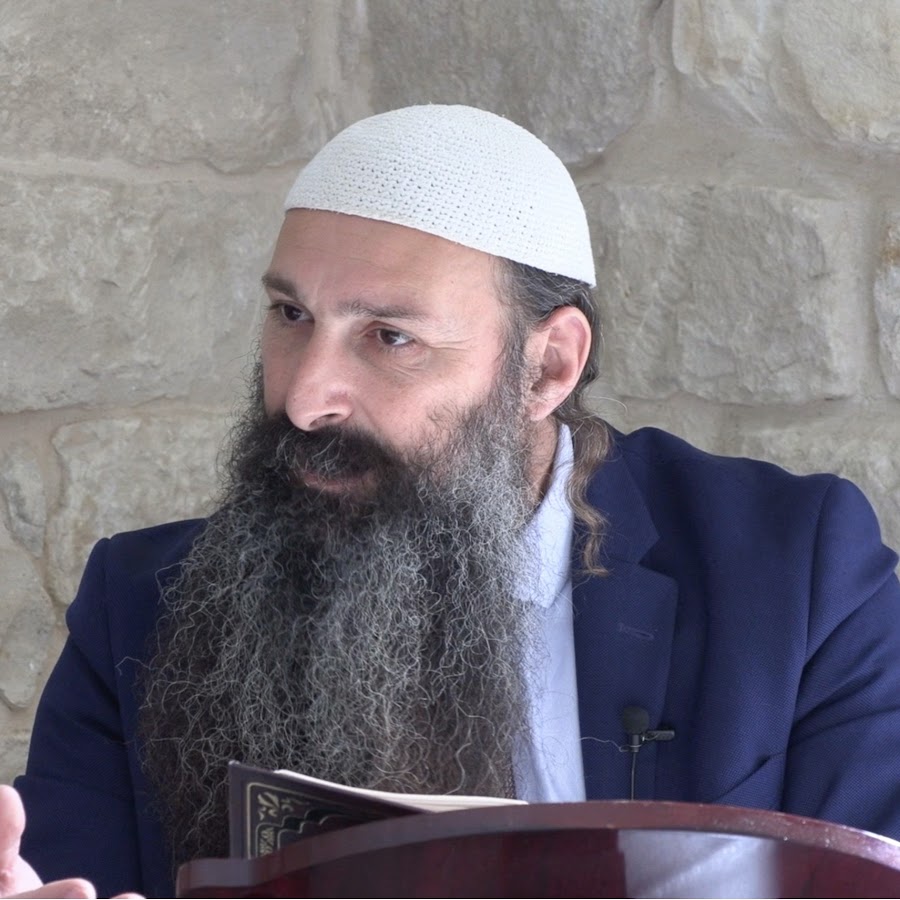
Transcript
Auto-generated transcript. Not time-synced to the video.
So, the kuna bridge is one of the
hardest ones and you need
one needs to really concentrate on
especially on that one.
And the thing is that a lot of people
tell me, "Listen, no, every day I fail.
So, I would one day I hold, two days I
don't, one I one time I fail."
Okay, fine. You're human, but in the
meantime, why why feed from the other
end? There's no you know you don't don't
miss out something from here cuz here it
didn't work out.
I think I told you once that I had this
guy who used to So, he came to one of my
lectures. He got very inspired.
Started coming to all the shirim.
Then he started coming to pray with us
every morning. Every morning.
And I would
means this guy came every morning pray
shacharit with us, put the tzitzit on
the tefillin everything.
One day he didn't come.
Call him up. What's going on? Were you
sick today?
Tells me, "No,
I'm done with this.
That's it."
I go, "What do you mean you're done with
it?"
He says, "I'm a I feel like a hypocrite.
I can't do this anymore." I told him,
"Why?" He's like, "You know where I was
yesterday?"
Told him, "I don't care where you were."
He's like, "I'll tell you where I was. I
went to party."
I don't know. Okay, fine. No. He goes,
"You know what I did yesterday?" Told
him, "I don't care what you did
yesterday."
He goes, "I'll tell you what I did
yesterday."
And he starts telling me what he did
yesterday.
He's like, "I can't, you know, I last
night I did all the sins in the book.
Now I'm going to show up to the shul and
put tefillin on?
I feel like like a hypocrite."
So, I told him, "You must suffer from
some rare disease of stupidity."
Ma kesher? What's the connection even?
The fact that last night you did a sin
doesn't allow you to miss the prayer
today.
You're not exempt. You didn't get a
discount now.
On the contrary.
Last night you did a sin and now you're
not waking up in the morning, so you're
mevatel
so many mevatel is not to do so many
positive mitzvot? What?
Stop it.
When you come in the morning to pray in
the shul,
let's count. You put tefillin on, it's
two mitzvot to say. Positive mitzvot
from the Torah, tefillin of the head and
tefillin of the hand.
You have Shema Yisrael, another mitzvah
from the Torah. You put tzitzit on,
another mitzvah from the Torah. So, four
mitzvot derabbanan from the Torah. You
pray, another mitzvah.
While you pray, you'll put some charity,
another mitzvah.
You'll learn a few lines, you say a few
pray chapters of Tehillim, another
mitzvah. Look at how many mitzvot you're
missing.
So, what if you sinned last night? So,
wake up in the morning, go to the
mikvah, do teshuvah, b'ezrat Hashem
Hashem will forgive you.
Why would you miss here so many things
that you have to do because yesterday
you failed? So, what's that? So, what?
So, what? So, do teshuvah.
And I told him, "You know, let's say
hypothetically right now, let's say
hypothetically, today is the day you go
up. That's it. An air conditioning falls
from the sky,
buries you in the ground.
You're going to go up now
with with a bag full of sins.
Don't you want to go up there with a
barrel full of mitzvot?
They said you kind of balance it out.
One has nothing to do with the other.
And especially, you know, I was once
also a baal teshuvah.
What do you think I didn't battle with
this? I I became religious when I was 28
years old. I friend for 28 years I lived
like a Lenny Kravitz man. The whole
thing, girlfriends, smell friends, the
whole thing. It's not that I came from
Mars and I don't know what it did what
it what what it means.
I also had time. Yeah, it's not easy to
get rid of this habit.
But at least in the back of my mind I
was like, "Okay, now I'm not perfect,
but at least
I I fail here, I'm going to right away.
I'll go to the mikvah. I'll say Shema
Yisrael. I
balance it out. Yeah, I fix it right
away.
It's like a credit card debt. You don't
pay the bill once a month,
in a year you'll have a $20,000 debt.
You pay it every month, the minimum,
yeah,
you pay it up.
So, I'm not telling you it's okay, it's
fine, do whatever you want, just say
Shema Yisrael before you die. That's not
the advice.
But the advice is it's, you know, if you
must sin,
fine. You know that's part of the
sinning, that's part of the process.
Sometimes Hashem wants to see how you're
going to deal with the sin.
Sometimes Hashem gives the permission to
the yetzer hara to push you.
Cuz he wants to see how you get up.
He doesn't want to see how you fall. He
knows you're going to fall. He gave
permission to the yetzer hara to put to
push you.
He gave the the pass.
But now Hashem says, "Now you're on the
floor, let's see how you get up."
Let's see if you're going to fall into
despair
and stay on the ground and wake up in
the morning at 12:00 with your blanket
over your head and I'm not waking up
today.
Or if you get up in the morning and
says, "Okay, fine.
I did a problem I did a
I messed up yesterday. Okay, I woke up
in the morning, let me do teshuvah."
Every erev Shabbat we read in Lech Dodi,
look at the fourth fourth verse in Lech
Dodi. It says, "Itna'ari me'afar kumi."
The translation is
sh- get up from the dust and shake up
all of the dust from you.
Itna'ari me'afar kumi.
First Hashem pushes you
to the klipot, to the dirt, to the dust.
Now get up. Get up.
Don't stay on the ground like a loser.
Get up.
That's what Hashem sometimes wants. He
wants to see how you're getting up.
If you're going to get up and brush the
dirt off and says, "Okay,
and the continue of the verse says,
"V'ilbishi bigdei tiferet amech. Wear
the garments of the glory of our
nation."
Why? If you get up, you won the the
battle.
You know, it's funny. It's actually
ridiculous, but almost any man in the
world
enjoys seeing two men in a ring beating
each other up.
Any man. I don't know many men that
don't like it. Put two guys in a ring,
start let them they start hitting each
other, everybody's like, "Wow!"
You know? Why? What are you sadistic? Do
you enjoy seeing two guys hitting each
other? No, it's action. Let's see, you
know, this guy does this move, the other
guy moves, you know, have the movies,
it's just fighting. The fighting is the
best part of the movie.
Why?
It's some type of a thrill seeing the
action.
And if it's you know, fancy moves, it's
even more
thrills.
So, Hashem wants sometimes he puts an
opponent in front of you. He wants to
see how you wants to see your moves.
He doesn't want to see you like a like a
worst falling on the floor.
He wants to see you like a fighter
getting up. Itna'ari!
You got to shake that off. Like a round
one. So, what if you got knocked down?
Sometimes some guys, you know, in the
ring they get a punch, they're on the
floor, right away they
they they get they'll give up. No, get
up like a fighter.
You know, I'm not joking.
Hashem wants to see a fight.
Not that I'm saying that Hashem likes
the the the the the I'm not comparing it
chas v'shalom, but sometimes Hashem
wants to see
he wants to you to prove yourself.
He wants him you for you to prove it.
Yeah, fight the yetzer hara. What's the
big problem?
You know, the Zohar says, you know, you
know why you were created? Very simple.
Kadmei kafya sitra achra. You have to
subdue the sitra achra, the evil
inclination. You have to subdue it. He's
your fighter.
That's it.
You were created to fight your yetzer
hara all day long.
Now most people they they get
they get, you know, in despair. Ah,
again the yetzer hara, again the yetzer
hara, another day. No, you were created
to fight him.
If you're fighting him, that's you're
doing the ultimate kavana, the ultimate
meaning why Hashem created the world.
You were created to fight your yetzer
hara.
You are this fighter. MFF, FFF, how is
called?
MMA?
MMC? Also all these acronyms.
UFC? Whatever. Hashem wants you to be a
fighter.
The Zohar is talking about it in many
places. It's kafya sitra achra. And if
you do that, if you win,
then the result is it's shocher l'no'ar.
You're transforming the darkness into
light.
Umariru l'mitiko. And the bitterness
into sweetness. That's you That's why
you were created. To overpower your
yetzer hara.
So, you walk down the street,
a hundred beautiful women pass you. You
look at 99 of them. One time you put
your eyes down, you didn't look, that's
it. One time you won.
Now, 4th of July in shamayim, they're
opening champagne bottles. He didn't
look! He didn't look!
All right.
99 he failed. So, they're like, they're
putting the bets in shamayim. They put
bets.
He's not looking today. He's looking.
He's not looking. He's looking. I'm not
joking. I'm saying it in a funny way.
One time you overpowered your your your
your ta'avah, your yetzer, your your
desire,
you won.
The crowd
HE DIDN'T DO IT!
YOU KNOW, THE nachat ruach the the
the the happiness the the How do you say
nachat in English? The the joy the
Hashem is like, "Wow!
I put the yetzer hara in front of him.
He didn't He
He punched it out. Did you see the flip
he gave him? He gave a fancy move and
knocked him out."
Yeah.
That's how it works.
And then the result, you take something
dark and you transform it into light.
That's it.
You bring light into this world.
This is how powerful you are.
There's a story in the Zohar that it
says that the king wanted to see how
strong his son is before he becomes
king.
So, he hired a prostitute to go and
seduce him to see if the son will be
strong or the son will be Allah.
So, the prostitute said, "You know, even
though I got a commandment now from the
king, I don't want to make the
prince fail.
I don't want this responsibility."
So, she went and hired another one and
told her, "You got to go to this guy and
seduce him.
It's the son's king. It's a test here."
So, the second one said, "I don't want
to be the one I don't want to be one
taking responsibility here."
So, she hired another one.
And hired another one and hired another
one.
And before you know it, it was like the
30th in the line, but the one on the
bottom line, the 30th one that was got
hired doesn't know it's the son of the
king, doesn't know it was a mission from
the king. She's just out to get the guy.
This is our generation.
In the beginning, it was the first
prostitute.
Forgive me how I'm talking, but that's
in the Zohar says that word Zana.
Prostitute, somebody who does for money.
So, then many generations ago, it was
the first one. In our generation, it was
already the hundreds prostitute. She
doesn't even know it's coming from
Hashem. This clip of the Sitra Achra
just totally
totally doesn't know that it's coming
from Hashem. That's why it the Sitra
Achra in our generation is so powerful.
The darkness
choshech kful u'muchpal
It's a double on a double darkness
in this generation.
Because this
prostitute is like generations already.
She doesn't know that she's working for
Hashem. The clip of the Sitra Achra
generation, they don't even know that
that they're owned by God. They're their
own entity. Mamash metzius bifnei
atzma'i. It's a It's their own entity.
Doesn't even know
that there's a
a master to the universe. That's how
powerful it is.
So, when you overpower it,
you know what it is when you overpower
it one time?
10 times?
It's
You can't imagine. You can't imagine the
the joy that's happening in Shamayim.
So, we were created to fight this
ta'avah, this desire.
It can be for men, can for from for
women, it can be for money, can be for
food, it can be for money, it can be for
any little thing. And we were all day
long we're fighting our ta'avot.
And you know what's the the the advice
for that?
If you sanctify yourself
with the small things
and you're practicing on
subduing the yetzer hara on the small
things, that's when you have the power
to battle the big things.
What do you mean by the small things?
I'll give an example.
It's
It's not a mitzvah to eat.
During the week, you eat in order to
have power
to sustain yourself so you can pray, you
can learn Torah, you can serve Hashem.
It's only a mitzvah to eat on Shabbat.
On Shabbat, it's a mitzvah. Every bite
is a mitzvah.
On Shabbat, it's a hidur mitzvah,
beautifying the mitzvah when you buy
special food,
best food, better wine. This is all
mitzvah. During the week,
it's not a mitzvah. You have to eat the
minimum of the minimum.
Now, if a person has a habit all day
every day eating steaks, shawarma, this,
kabobim, hamburgers, why is he eating
that? Ta'avah. It's It's a desire. It's
It's an inclination to eat a lot of
meat.
You stop yourself from that, you
segregate yourself, you you you making
yourself holy. What's holy? Holy in
Hebrew is kadosh.
Kadosh is not necessarily kadosh like
something holy. Kadosh is muvdal,
separated.
So, if I separate myself from world
worldly pleasures,
then I'm subduing my You know, I'm
walking in the street. I feel like
buying now this ice cream. What do you
need the ice cream right now?
Buy ice cream on Shabbat.
You know?
Spoil yourself on Shabbat. In my house,
only Shabbat we have chocolate and cake
and ice cream. It's My kids don't eat
this junk in the week. Shabbat. Only
Shabbat.
Why? Cuz when you're practicing, you
know, your your avodat Hashem is like a
muscle.
You practice your muscle more more more,
the muscle becomes more
you know,
re-
used to it. You know the word in English
in Hebrew is called
I don't know the In Hebrew it's called
sibolet. You know, you you work it.
You go into shape. Take now some guy
didn't work out for 10 years. Tell him
now go to the gym. He's After a day,
he's like, "Oh."
But when you work out all the time, you
build this
ability. So, same thing with avodat
Hashem. So, when you practice constantly
to
this refraining
of not taking,
then you when it comes to the real
things, it's easy for you. You're
already trained.
This comes from the midat ha'gvurah.
Gvurah is is severity. Gvurah means that
you're pushing away something from you.
So, you have to know how to balance
yourself. So, if you're constantly
working on the emotion of the action of
refraining,
"I don't need this right now. I don't I
can live without this right now. I'll
minimize my pleasures during the week.
Shabbat, everything you do that brings
you pleasure is a mitzvah.
During the week, it's not a mitzvah. You
just do it cuz you have to do it. I'm
just giving you one example out of many.
So, the more you you you practice during
the week, you don't enjoy things that
you're permitted. This is a kodesh she
atzmo b'chol b'mutar lach. Sanctify
yourself with the things that you're
permitted.
So, if you're doing
if you if you're practicing it, when it
comes to the time to deal with the big
thing,
you're ready in shape.
You're working on the small things on
the refined things, by default, the
harder things will be much easier.
So, it's
it's It's easier said than done.
But the thing is, if you have the right
tools and the right guidance, then you
you know how to
make yourself this warrior. The How do
you say MFA AAA? MMA. MMA. You want to
be a world champion. You want to be the
the one the one who wins.
Cuz that's what you were created for.
And every time you fail, then you know,
in in Shamayim,
you know, they
they they lose the bets. They lose the
bets on you.
Then they don't want to bet on you
anymore.
So, the thing is that, you know, the
only way you can acquire the knowledge
how to, you know,
deal with this world, you have to go and
learn. You have to go and learn a lot of
Torah.
Have to not just reading the parashat
shavua. That's That's It's nice, but you
have to mamash learn how to deal with
this world.
And the only thing that will really
teach you how to deal with this world,
especially in our generation, also only
Hasidus.
You have to have tools. Learning
parashat shavua is very nice. You have
to learn it.
What is the difference Hasidus? The
thing is like this. Many many years ago
came the Zohar. The Zohar is what's
called the razin de Torah, the secrets
of the Torah.
But for many years, it was concealed for
many many reasons.
Then about 500 years ago came the Ari
Zal and he started taking all this
Kabbalah
and started teaching it.
But even then, it was very very hidden.
It wasn't
wasn't accessible to anybody.
There's reason for that. But then came
the Baal Shem Tov
and he brought down
the razin de razin, the secrets of the
secrets. There's a story that the Baal
Shem Tov on Yom Kippur went up to the
chamber. Went up to Shamayim different
chambers in Shamayim.
And he went to the chamber of Mashiach.
And he saw Mashiach and he told him,
"Where are you going to When are you
coming?"
So, he Mashiach told him, "Whenever your
well springs will spread out. Shefa
tzumimcha chutzah."
You have to teach the world this
Hasidus. Hasidus is taking the secrets
of the secrets. This is how it's called
razin de razin. The secrets of the
secrets. Now, if now you open a book of
Kabbalah,
I guarantee to you you're not going to
know You're not going to understand one
word there.
Not you, anyone.
Open now any book of Kabbalah, you're
not going to understand nothing.
Why?
Cuz I don't know enough to begin
It's not you I'm saying. When I'm saying
you, I'm saying anyone. Me, too. Think I
understand something when I open a book
of Kabbalah?
Talking about all these things.
Hasidus comes and takes Kabbalistic
terms and Kabbalistic
principles
and concepts and it dissects it.
Opens it up.
And it It chews it for you. It dissects
it for you. It comes and tells you,
"Here. No. Here you have the secrets of
the secrets." What What is a book of Ari
Zal called?
Tanya. Yeah, Tanya's Hasidus.
Sha'arei Teshuvah.
No, that's Musar.
Uh Likutei Moharan is Hasidus.
Tanya is the the the the
the basics of the basics of Hasidus, but
there's so many. There's
bookshelves full of Hasidus books.
Thousands.
The thing is that it says about the
Zohar now why now everybody starts
learning Zohar.
50 years ago, ask any Sephardi person,
ask their their father or their
grandfather, the Zohar, that was like
the book that you weren't allowed to
touch.
The grandfather would pull it out on
Shabbat.
Concentrate on the words. Don't get
close. Don't get close.
Ask your parents.
No, don't get close. Now I read small
words. It doesn't know that I understand
anything. It doesn't matter.
Why?
It says in the Zohar, Rabbi Shimon bar
Yochai says, "With this book, you're
going to go out of the galus with the
secrets you know that the entire Torah
the Kabbalah the the teachings of
Kabbalah, that's how we were going to
serve Hashem and Messiah is going to
come.
It's a way of life Kabbalah.
Kabbalah it wasn't invented a couple
hundred years ago. Adam Harishon wrote
the first book of Kabbalah. He got all
the secrets. He actually didn't write
it. He got it and then he passed it on
to Sheth and Noah and then Abraham Avinu
who came and wrote it. This is Sefer
Yetzirah. The first Kabbalah book. They
had Kabbalah books before that. Just
nobody taught nobody learned it. You
know all the Shvatim.
You know, we learned it a few a few
weeks ago that Yosef came and told
Yaakov about all the things that the
Shvatim would do.
It's a question what Yosef Hatzadik,
that's his title, Yosef Hatzadik.
You know, all our sages they have a
title. Not the sages they they they are
forefathers Abraham Avinu.
Moshe Rabbenu. Moshe was our rabbi. He
taught us the Torah. You know what was
the title of Yosef? Yosef Hatzadik. He
was a tzadik. The tzadik went and said
lashon hara about his brothers? No.
It says that Yosef used to go back to
Yaakov and report.
But he did it for No, they no.
But the sod here is that the Shvatim
they knew Kabbalah. They knew Kabbalah
Maasit. Practical Kabbalah.
So they were doing things
according to Kabbalah.
Yosef Hatzadik saw it.
He knew what they're doing. He's not
stupid. He used to come to Yaakov and
says, "They're doing Kabbalah Maasit,
practical Kabbalah. People are looking
at them and it looks like they're doing
witchcraft and idol worship and all
sorts of things. You got to tell them to
stop."
So
Yosef didn't say lashon hara. He just
worried what's called mar'it ayin.
You know, sometimes you're not allowed
to do things.
You're permitted according to halakha to
do it. But if somebody would look at you
and think you're doing something wrong,
this is called mar'it ayin. Somebody
looks at you.
I'll give you some an example. According
to the din in Shulchan Aruch, you're not
allowed to start for example a washing
machine 5 minutes before Shabbat.
Okay? Why? You're allowed to.
Because you did you started the melacha
before Shabbat. The fact that the
washing machine is going through Shabbat
Yeah, I did it before Shabbat.
But only because mar'it ayin, if my
neighbor will pass down the hall and
hear the washing machine doing a noise
in Shabbat, they'll be like, "What? He's
doing laundry on Shabbat?"
Just because of that you're not allowed
to do that. This is called mar'it ayin.
Somebody would look at it you're doing
something even if you're permitted, but
he will interpret it the wrong way. So
just because of that you're not allowed
to do that.
So in the particular case with the
Shvatim with the tribes they were they
were doing they were doing nothing
wrong. You know, they they were eating
ever min ha'ai, they were eating the a
piece of a live animal, but they were
doing what's called Kabbalah Maasit.
What the real mekubalim they they take
the Kabbalah and they do all sorts of
magic. Not magic, but they they they
know the secrets of the universe. They
know how to manipulate the code of the
world. It's called Kabbalah Maasit.
You're not allowed to do that.
So Yosef Hatzadik was worried that
people would look and say to and say,
"Hey, what are they Look what they're
doing."
The sons of Yaakov, that's what they're
doing.
So Yosef understood what they're doing.
So Kabbalah we already had already had
4,000 years ago.
Even says Moshe Rabbenu all the plagues
that he did, he used to say all sorts of
sukkim from Kabbalah. That's why he was
able to do it. You know, Moshe Rabbenu
talked lashon kodesh to Pharaoh. Now we
learned it now last week.
Moshe Rabbenu would talk to Pharaoh in
lashon kodesh and Aaron was translating
so Moshe and Pharaoh would understand.
But it says Moshe Rabbenu would say all
sorts of
combinations in Kabbalah Maasit and
brought the plagues.
So they had Kabbalah even then. It was
just concealed and hidden. There's
reasons for that.
The generation was not ready for that.
But Rabbi Shimon bar Yochai says in the
Zohar, "With this book we're going to
go out of the galus."
So came and she we had to wait 1,500
years for the Ari Zal to come and then
all his disciples
started teaching writing books. The Ari
Zal didn't write books. It was the
Kitvei Ari Zal, the scripts. But came
Rabbi Chaim Vitalis his processor his
talmid started writing books and then
came more talmidim and write more books.
But even up until today nobody really
learns very few people learn
books of Kabbalah. It's our mind doesn't
really understand this.
All this terminology all these books
it's talking about things. What are we
what are we What are we going to do with
it? Came the Baal Shem Tov started
teaching Chassidus. You ask what's the
books of Chassidus? It's the even the
Baal Shem Tov. That's Keter Shem Tov.
Really it's amazing amazing gems.
Came his processor the Maggid of
Mezritch.
Maggid Devarav le Yaakov. It's a book
unbelievable gems. Unbelievable gems. A
book this thick.
This book Keter Shem Tov? Keter Shem Tov
is from the Baal Shem Tov. There's all
sorts of books from the Baal Shem Tov,
but his processor the Maggid of
Mezritch, he has a book Maggid Devarav
le Yaakov. It's this book like this
thick. Unbelievable Chassidus.
Came the Alter Rebbe, the Baal HaTanya.
Chassidus from here to the
the moon.
There's so many books of Chassidus that
fixes the mochin.
Chassidus is general for everybody.
You have to learn everything else. You
have to learn nigleh, you have to learn
gemara, Shulchan Aruch, Mishnayot. You
have to learn everything.
But the secrets of of the secrets, razin
derazin, Chassidus in our generation
gives you the tools. Tools how to deal
with the world. How to deal with what's
going on. I'm going through a lot of
emotions. A lot of things are going
inside me. How am I dealing with it? How
am I dealing with the fact that I'm
constantly failing?
I don't want to fail.
I don't want to lechallel the brit. I
don't want to do this. I don't want to
lie. I don't want to Why am I failing
all the time? Most people they fall to
despair.
They mamash fall to despair. They fall
into yeush. They they they don't know
how to get up.
They don't have tools.
So comes Toras Chassidus gives you
tools. Tools how to deal with this
world.
Isn't anytime somebody davening is
unlocking the codes or also? Davening is
a completely different thing.
Davening first of all
three times a day you call home.
Hi Abba. Hi Dad. I'm good.
Can you send me some money? I don't have
money in my account.
Can you help me? Can you take me? Can
you give me? Can you provide to me? You
call your you call your father. It's a
time that you
call. Simple time. You do you private
time you and your and your father.
More than that, you know what really
tefillah means? What it does?
You have back pains? Where do you go?
Chiropractor.
He adjusts your back.
Ah. You go out like a
That's davening. You go to a spiritual
chiropractor.
That's it.
Adjust you.
You know what holds your entire body?
Your back.
If your back is out, you can't move.
Tefillah is what it corresponds to the
vertebrae. It holds your body.
It's the only time you connect to Hashem
in a way that he can actually give you
what you need.
I talked about it the other time. We
talked about it that you on Rosh
Hashanah you get a bracha.
Hashem writes a check on Rosh Hashanah.
Mi yichyeh u'mi yamut, mi ani, mi asher.
Who's going to live, who's going to die,
who's going to be poor, who's going to
be rich. Everything is written on Rosh
Hashanah.
And then you have three times a day to
start
transforming this blessing into this
world. Hashem can give you a $10 million
check on Rosh Hashanah. If you don't
materialize the blessing, it stays
there. Doesn't go to waste.
You don't do that, you go up to
shamayim, they'll give you the checks.
But you need to materialize it in this
world. How you materialize it? With 18
blessings.
Refa'enu Hashem venerafe, barchenu Avinu
kulanu ke'echad.
You you materialize it with your mouth
on a shell maparim s'fateinu. Our mouths
are going to be like the bulls on the
altar. Once they used to do the the the
Ad Bais Hamikdash. You didn't have to
pray.
Now we don't have Ad Bais Hamikdash. We
don't have the sacrifice. We do it with
our mouth. Three times a day you bring
down this bracha to the world. If not it
stays up there. You can't get anything
without praying.
Praying you're opening a channel that
Hashem can give you your sustenance,
parnassah, your health.
Everything.
Your peace of mind.
We're asking Hashem. We're praying.
Praying is a very powerful thing. Maybe
not next time we'll do a shiur about all
about praying. If a person doesn't pray
three times a day he's
going to have a problem.
It's almost like calling your boss and
telling him, "I don't feel like coming
to work this week. Can I still get
paid?"
He's going to tell you no.
I'm writing it off your vacation.
Now there's a contradiction between
different sages if it's a mitzvah from
the Torah if it's not a mitzvah from the
Torah. Rambam says it's it's a d'oraita.
Avodah shebalev.
Avodah shebalev it's tefillah. Work of
the the heart. Avodah is tefillah.
Mitzvah d'oraita. It's a mitzvah from
the Torah. You have to pray.
Ahavtem es Hashem bechol levavchem.
Pray.
A man that doesn't pray three times a
day, he's lacking
everything that he needs to get. He's
not doing a connection.
You know, in Hebrew, the word praying is
tfilah. Comes from the word tafil. Tafil
is something that is
uh
How would you
translate tafil?
Secondary?
Tafil is something that is a null to
something that is more important than of
it.
Kind of. I don't know how to really
translate tafil.
But it's the not the main thing. It's
the least main thing. You become one
with Hashem. You become a null to
Hashem.
You become tafil to Hashem.
You're able to get the bracha. That's
why you say in the end of the Shmona
Esrei
When nafshi kafarta kol tehei, I'm
nothing. I'm shh.
I'm nothing.
Tfilah is a very powerful thing. If you
If you look in the beginning of that
tfilah, right from the beginning, you
say Elokei Avraham,
Elokei Yitzchak, Elokei Yaakov.
Every one that you say, you say Elokei
Avraham,
you're trigging
I don't know if that's a word to say.
Trigging.
The power of chesed of Avraham. You're
bringing You're trigging it in you. Trig
trigging?
Trigging.
Elokei Avraham, you're trigging the
power that the middah of chesed in you.
You're opening it.
You're revealing it. Elokei Yitzchak,
you're bringing in you. You're You're
enlivening the power of gevurah. So,
you'll have the power to be
able to stop your yetzer hara.
Tfilah is not a That's not to make your
life annoying.
Nothing Hashem gave us is to make our
life annoying.
Every word that comes out of your mouth
during the tfilah has power.
If you just look at the text,
there's a book. It's called Pirush
haMilot, the explanation of the words.
Learn that, you'll see what it means.
What's tfilah?
It's not easy. I know it's not easy.
It's annoying. Three times a day, go to
the shul, same text. It's boring every
time. Standing, sitting, standing,
sitting.
You know?
There's a reason why a lot of people
say, "Why can't you give me every day a
different text? Let's make it
interesting."
There's a There's a a reason why it's
constantly repeating the same thing.
Tfilah is a very very powerful thing.
You can't sustain in this world without
tfilah, without praying.
Our forefathers, you see Avraham,
Yitzchak, Yaakov, each one
Each one, I don't know, how do you say,
instigated? He made He created one of
the tfilot. How would What word would
you use? Excuse me?
Instigated.
Avraham Avinu instigated the Shacharit.
Yitzchak, Mincha.
Yaakov, Arvit. He They They prepared it
for us. They were able to do it without
talking.
What we learn from tfilah is we learn it
from the from the dream of Yaakov that
he had the the ladder.
Sulam mutzav artza umagia shamayma, the
ladder stands on this ground, but it
takes you all the way up to the heavens.
This is tfilah. You're building a ladder
that connects the supreme world and the
lower worlds.
The physical world to the spiritual
world. You create this ladder.
So, it's a It's a fundamental part of
our our our day. Have to do the tfilah.
So,
the thing is a lot of people spec-
prefer
I women think that they're that they're
exempt from tfilah. Women are not
exempt. They have to pray at least once
a day.
You know, in the Ashkenazim, they have
to pray twice a day.
But a man has to pray three times a day.
You have to pray four times a day. Kriat
Shema al haMitah, there's no exemption.
There's no discount. The only
a prayer
that is It's not a chovah is benching,
same Birkat Hamazon.
But it says clearly in in in in Shulchan
Aruch, you pray,
you learn,
and then you eat. But to Shacharit, you
have to eat it.
You You know, it's it's a mitzvah. You
don't have to, but you But a person that
says Birkat Hamazon every day, that does
it as part of his day, it's a huge
mitzvah. I'm not talking right now of
the mystical part behind it.
Like we talked about it last week that
the this power of emunah,
the faith. A lot of people, they have a
very
the power of faith and trust in Hashem
is very
not so strong. Why?
Cuz the emunah, the power of faith is
built in your soul from the day you were
born. It's built in. You just have to
dig in deep to reveal it and pull it out
to the surface.
And one of the ways of doing it is
Birkat Hamazon, saying benching.
What Avraham Avinu did with his guests,
he made them bench.
Has the power to pull out from the depth
your power of emunah.
So,
praying is one of many It's just your
way to connect to a God, to Hashem.
Praying is very very important. Be'ezrat
Hashem, maybe one time we'll do a shiur
about praying and its powers,
and why we do it, and why you don't want
to miss it.
But I think for now,
or is this is it? That's the time?
One?
We have time. You Maybe you have time.
Be'ezrat Hashem,
you're going to say Kriat Shema al
haMitah tonight.
Amen.
Machar baboker, you're praying You're
praying Shacharit.
Then Mincha, then Arvit.
And learn Torah.
You got to learn Torah.
As much as you can.
Any questions?
No questions mean you didn't listen.
Mhm?
You mean standing on the bed?
Sitting on the bed?
Better not to. Al When it says Al
haMitah, doesn't mean Al on, rather
samuch, right before you go to bed.
Yes. That you have to say. Once you say
Shema Malchut, you can't walk, you can't
eat, you can't talk, you can't nothing.
The thing is that different nosachim
have the order different. In many
Sefardi nosach, the Mapil is in the
beginning.
So, if you're saying it right before you
go to bed, so sit on the bed, say the
entire thing, and then go to bed.
But if you want to do some more things
before, then don't say it with Shema
Malchut.
Then before you go to bed, you say it,
and you go to bed. Don't don't talk
after that.
Better not to talk.
It's a hefsek. You know how times when
you wash your hands for bread, and
everybody sits at the table? Mhm.
You can't have a hefsek between the the
action and the bracha and the actual
action.
When you say a Mapil, that's it. There's
a hefsek if if you talk. If you If you
say a Mapil, and you're about to go to
sleep, and then you can't fall asleep?
No, bathroom is fine. Listen.
Uh you don't have to. If it's you If
you're only doing number one, don't say
Asher Yatzar. Just go to bed.
So, cuz you anyway you say it first
thing when you wake up in the morning in
Birkat haShachar.
Same thing in the middle of the night
when you wake up, you don't say that.
But the thing is that this
Yeah.
Even if you didn't do anything. The
thing is that most The thing is that
most people wake up, they go to the
bathroom.
No. No. No. No. The thing is that if
you're saying Birkat haShachar in the
shul when you pray Shacharit,
and you're
First of all, you can't say anything in
Torah before you say Birkat haShachar.
You can't say anything. That's why in
Birkat haShachar, there's Birkat
haTorah.
You can't wake up in the morning and say
Asher Yatzar,
and then go to the shul and say Birkat
haShachar. You can't.
If you want to
If you're davening
nets,
or you go from the shul right right from
your home right straight to the shul, so
okay. So, say Birkat haShachar. But if
you wake up in the morning, and you know
it's going to take you another hour
before you come to the synagogue, you
have to say Birkat haShachar at home.
You can't You can't say anything divrei
Torah without saying Birkat haShachar.
So,
If
No.
The best order is you wake up in the
morning,
you open your eyes, you say Modeh Ani.
First of all. You don't get off the bed.
You don't start walking around. You get
up, you say Modeh Ani lifanecha melech
chai vekayam. Most important.
Then you put a bucket with water next to
your bed. So, first thing you wake up in
the morning, right away you do
washing of the hands.
In halacha, it says that you can't walk
arba amot.
But it doesn't necessarily mean I
sometimes see people, they wake up in
the morning, they go, you know, like
They make these huge steps.
I had one night time, this guy,
he slept over. I see him in the morning
going like this.
You know? And I was like, "What are you
doing?" He's like, "Arba amot. Four
steps." I told him, "No. It's the time
that will take you four amot. One, two,
three, four."
That's how fast you have to do the
netilat yadayim.
You don't just walk four steps.
It's how long will take you to four take
four steps. That's how fast you have to
do the netilat yadayim that you can that
the ruach tum'ah starts going crazy. The
spirit of impurity. If I remember
correctly, I read somewhere that if it's
a little bit far away from you, you
could take four steps, stop, take
another four steps.
That's if if there's a lot of ifs, but
you don't want to get to that if. Let me
tell you the reason why you don't first
thing in the morning. When you go to
bed, we just said, you put guards around
your body.
Right? Now, you I think my mom says that
sleeping is 1/60 of a death.
So, there is a lot of impurity on the
body. It's called tumah, a spirit of
impurity cuz the body is like kind of
dead.
Then you come back in the morning, the
soul comes back into the roof.
Now, the soul in the shamah doesn't go
into entire roof. The shamah only comes
till the risks
until your
uh
ankles.
The nefesh goes into the fingers into
the feet.
So,
the all the spirit of impurity moves
away from the shamah from the body cuz
the shamah come in, but it doesn't move
from your hands cuz the shamah is not
here. The shamah comes all the way to
your risks.
So, right away you do
netilat yadaim. Why? Cuz you wake up in
the morning, you have spirit of impurity
on the hands. All you need to go like
this.
That's it. It's on your eye.
You go a little bit like that, like
this, like this.
You you're full of tumah. It's not It's
It's not funny.
People wake up in the morning, straight
away they go like that. That's it.
A spirit of impurity is on their eyes, a
shield on their eyes.
So, they don't see things clear.
Their eyes get drawn to impurity.
It's little things that if you really
sanctify yourself, you make a dish of
that smell. You bring this
holy spirit on you.
So, you want to wash your hands right
away when you wake up in the morning cuz
there's a very strong impurity. The
tumah, the power of impurity that's on
your hands in the morning is extremely
powerful. You say netilat yadaim also?
No, no. You just wash it. It's not clean
water. It was was standing there the
whole night. It's just to to at least
give you the the the the time to go to
the to wash your hands.
Let's say I have the bowl I have the
bowl of water there. I wash my hands
right away when I wake up and I go to
the bathroom, wash them again and say
netilat yadaim. Yeah, but no. But, you
don't wash it in the toilet. You can't
wash the water in You can't do the
netilat yadaim in the toilet. The best
thing you go to the kitchen or
something. You wash First of all, you
wash your hands.
Leave the bowl next to the bed now. Go
to the kitchen.
Some houses they have the the wash
outside, but you go Make sure you don't
wash it on on plates in the in the sink.
You wash your hands. Then you go, you
throw the water in the toilet.
Don't say any yet. You can't say any
when your mouth is dirty. So, you brush
your teeth.
Then you wash your face, you clean
yourself up a little bit, you get
dressed. Then you go to the kitchen and
then you do all the
So, all this is like 5 minutes after you
woke up, but you can't say any cuz
before you wash your face, you you have
to You have to wash your mouth too.
You brush your teeth, you get ready,
then you say
the shahar.
Now, again, I know people that from they
get dressed, they go straight to the
shul.
They don't do anything. They want to say
in the shul, fine. But, till you say
you you can't talk anything in Torah.
Bring me the for a second. I want to
show you something.
And that's all the in. If you look at
the shahar.
It says for how long?
Yeah.
See?
This is in the bathroom with the toilet
Uh better not to.
If you don't have any other option,
then close the bowl.
But, it's it's not really the same.
Better not to do it in the bathroom.
Look, if you stuck
you dry your hands and you come out the
bathroom and say the the bracha? No, the
actual netilah. Not good to do it in the
bathroom.
For anything, what about shaharit?
Cuz you do number two over there, you
want to It's not good to do netilat
yadaim in the toilet.
Look now here in the bathroom. I went
now to the bathroom, the sink is
outside.
That's not good to do netilat yadaim in
the bathroom. Bathroom is a very dirty
place.
You don't want to do a mitzvah in the
bathroom. Now, look, if you stuck,
you're in the airport. I now fly every
day.
I don't have a tap outside.
So,
so I go to the furthest away sink.
But, in your house, you go you spend the
extra
30 seconds to walk outside. Don't not
good to do it in the toilet.
Close the the top is like if you don't
really don't have an option.
Look in the
shahar. This is a Sephardi
uh siddur.
First you say shahar, but right away it
says
You
cannot say any Torah before you say
baruch
You
If you don't say that, you can't say
anything.
So, you can't say cuz
Technically, you can't do anything. You
can't say nothing. You can't hear
anything. You have to say You have to do
This is at least right away.
And you have another one here. The thing
is that if you go through all of it, you
you understand what it means.
The reason why you say this one,
you have to say something right away
first thing in the morning. So, you say
you got and all this. But, if you didn't
say the Torah
right in the morning,
you can't say nothing without saying
this one. This triggers This allows you
to start saying So, you can't wake up in
the morning say
uh shahar.
And then an hour later go to shul and
say the Torah.
So, once I finish all uh everything I do
in the morning, shower, brush my teeth,
everything, then I would say
the whole thing.
Say shahar also, right?
If you didn't say that before, you can't
say it twice.
So, I'm not supposed to say it Exactly.
So, then you say the shahar.
Look, the ultimate way is to get up in
the morning, get dressed, wash brush
your teeth, go straight to the mikveh,
from the mikveh to the shul, and whether
it's after the mikveh or or in the shul
say the shahar. But, the normal people,
they don't do it right away. I wake up
in the morning, I do exactly what I told
you.
Washing next to the bed, going to the
kitchen, washing my hands, going to the
bathroom, brush my teeth, wash my face,
get dressed,
go to the kitchen again and say all the
shahar
right away. Then I go
to the mikveh, go and pray. But, till I
get to the to the shul, what if it takes
me now 2 hours to get to the shul? Not
everybody prays nets.
Most people don't pray in the nets.
So,
the how you start your day is very very
important. You start your day on
the whole day will be
You want to start the day good.
And the thing is that the power of
impurity that you have on your body at
night is a very powerful
tumah.
It's very very powerful.
So, right away you want to wash your
hands.
Right away.
Then right away you want to say
Why? To say something right away, bring
some into your body.
So,
that's exactly what I said before in
your body is like a corpse on the bed at
night.
You wake up in the morning, you want
right away to bring on the body. And for
sure till you wash your hands with clean
hands, don't touch anything.
Don't touch any parts of your body. It's
on your on your hands.
And the the people Most people wake up
right away, they you know, they
go like that.
It's It's scratching here, scratching
there. You have tumah. You have impurity
on your hands.
So, when I first became religious and
they told me that they that we that they
put the bucket next to the bed, I
thought
crazy.
Bucket next to the bed?
I heard once from my rabbi
that when you put the you know the
buckets next to the bed,
you know, when you say I just said
before we say
we put the angels around the bed,
the bucket next to the bed is the
biggest angel.
It's angel standing like this next to
the bed like the biggest goon from all
of them.
Doesn't let anybody come. Just the fact
that you have this bucket next to the
bed.
The fact that you prepared in the
morning
the power right away to to clean the
tumah.
Cuz I asked him, should I put these
buckets to my kids?
So, I do it to my kids for
for educating. That my
little kids they they're auto pilot
already. They put the This is the We
have a ceremony when they go to bed.
They brush their teeth like every normal
kid. They put pajamas, all this. Then
they take the bucket to the room. They
have their names on it. They have their
drawings on it. They say
and they say everything. My 3-year-old
says shahar.
A
A lot of people say it's a kid, he
doesn't need to do anything. Yeah,
you're right, he doesn't. But, if I
train him
when he's 3 years old to say
shahar,
when he's going to be older, it's going
to be a normal It's going to be part of
his day. He's not going to be able to go
to sleep without saying shahar. It's
going to be in his system.
Besides, our kid is holy. Why shouldn't
he say shahar?
He's a holy shamah. Why shouldn't he
bring into the world? You want to again
It's not really a mitzvah for him, but
in in in
the mystical part of it, yeah, a kid has
a lot of power.
There's a question in if a kid needs to
if a
a kid says a bracha, if you say amen.
Yeah?
No, there's a question in A kid now says
a bracha, do you say amen?
A lot of poskim say no. You don't say
amen. It's a kid. It's dumb.
But, if I'm not mistaken,
I don't remember if it was this the the
the current Lubavitcher Rebbe or the
previous one.
I don't remember which one of these is.
No, you have to cross your salmon.
His bracha is more powerful than yours.
So,
No, because our kids
his mouth doesn't have lashon hara.
His mouth never sins. He he he doesn't
have any sins. His bracha is more
You we don't see Hashem. We don't even
understand We don't understand We do it
like robots.
Kids are so naive, they're so temimim,
they see Hashem. They They They
relate
with Hashem.
Their bracha is more sincere.
It's a more sincere bracha.
Yeah.
So, my little kids, they come with a
bucket next to the the bed. So,
I first was doing it for chinuch, for
teaching them.
Yeah.
No, don't don't worry about what your
parents think.
Just don't put it under the bed. That's
not good under the bed at night.
But with my kids when then when I asked
my rabbi, he told me don't only do it
for the education. Do it because
spiritually you're placing a guard next
to the bed. Doesn't touch the kid.
The thing is that when you are very
particular with all these little things,
you bring so much kedusha on you,
then you start reducing all the dirt
from you.
So, it's much easier for you to guard
your eyes and not to look at the wrong
place.
It's much easier for you to
relax. Okay, I'm not going to lie now.
I'll be more honest.
Cuz the water that was sitting next to
the bed the entire night, they're also
getting some type of a
mekabel tumah. Water gets tumah.
Yeah, with the bracha.
Yeah.
And don't be cheap with the water. Pour
a lot of water.
No, a lot of people they you know, they
do it like as if we're under siege. No,
pour a lot of water. Wash all the tumah.
And the thing is you want to twist your
hand a little bit so it will touch your
entire hand.
I fill up the whole quart.
The thing is that a kabbalist explains
that why we do it three times. First of
all, when you do it three times,
you do it on the right hand, the tumah
jumps on your left hand.
You do it on your left hand, it jumps on
the right hand. It jumps, but it after
three times it gets canceled.
But kabbalah teaches us that if you take
80 ml or cc or whatever you call it,
it's enough power
to push away the tumah.
That's why if you look at the cups that
you buy in the the it's exactly the
amount of water that makes to cover the
hands. But some people are very cheap.
They you know, they pour it like you
know, like
as if we're in like a year of famine.
No, pour a lot of water.
But the thing is like this, you know,
now the other day I'm now traveling
here. I'm not in my home. So, I slept
somewhere and there were we we shared a
room, me and another guy.
And we only had one bucket.
So, we put it in the middle of the room
and we said, "Whoever wakes up first
brings to the other."
So, the guy woke up before me
and he brought me water right away.
So, I don't need to go to the bathroom
again. It's fresh water.
He just went to bring it to me.
Yeah. Water they get tumah. It's not
good. Like for example, in the olden
days they used to they used to
There's still a din in Shulchan Aruch to
do it. I do it. But
fruit fruit fruit gets tumah. Fruit
especially.
So, this is dinim in Shulchan Aruch in
regards to maaser and and and and
hekdesh and all this that if it's such
water in it it can get tumah.
One time they used to never eat
wet fruit.
There is a din in Shulchan Aruch. I
always dry my fruit not to eat it with
water cuz mekabel tumah.
Water can get tumah.
The only way how water washes off tumah
is if you wash it. Like you can put your
hand under a sink under a tap.
Has to be koach gavra, hand that
pours the
the water.
The thing is that I was taught right
from the beginning that if you're very
particular in all the small things that
bring purity on you,
then you elevate yourself to a higher
level of service of God than than by
default you are
more holy, more kadosh.
And then it's much easier for you to to
do all the little things.
So,
you know, try to try to do it once.
That's I practice it.
Not to indulge food during the week. Not
to eat treats during the week. Not to
enjoy things
during the the week. It sounds like a
little bit fanatic. What I'm not going
to eat now and I'm not going to enjoy.
Yeah, eat. You don't have to enjoy
steaks all day long. I see sometimes
people all day long.
You know, if you do it kaf here with the
very small things, it's easier to do on
the big things.
So, I constantly do it kaf here on my
little thing. I want a third cup of co-
cup of coffee. I will literally fight my
tava to get now my third cup of coffee.
And one might say, "I know coffee. Just
take the
cup already. It's coffee." No, it's
practicing the motion of I have this
desire for a cup of coffee. It's not a
sin.
But I'm practicing the the the the the
motion of
of not taking it. And I really want it.
Yeah, I really want this cup of the
third cup of coffee now. No, hold it.
I take a cup from one of the kiosks.
You know what I do in the airports? I'm
now a professional cuz the last 3 weeks
you know I'm here on tour. Every almost
every day I fly somewhere. So, I go to
one of the stores.
I get a ask for a cup. You got to be
careful. Some stores if you take a cup,
you might be failing in gezel. It's not
your cup. You have to come and tell,
"Can I take a cup?"
I not not too long ago went to one of
the stores. I said, "Can I take a cup?"
He's like, "Buy something."
Like, "Okay, how much is a cup? A
quarter? I'll give you a quarter." He's
like, "No, you have to buy something."
So, I bought a bottle of water.
You don't want to be failing on gezel of
stealing because you didn't get
permission. But I take a cup. I go to
the bathroom. Now in the airports they
have these fountains
to drink water.
It's outside.
So, I stand. I fill up the fountain and
I
So, I I did the mitzvah. And you know
what? This is where Hashem is looking at
you and seeing, "Oh, look how much he's
going the extra mile
to do the mitzvah the right way."
You know? So, yeah, it's not the most
convenient. And people looking at me
like I'm
like But anyways, I look like weird. So,
I don't care. I'll do another weird
thing.
So, I pour the from the fountain a whole
cup. I wash another one, another one. I
don't care.
I I go with food with me. So, you know,
before I go on the plane, I don't want
to do it on the plane cuz in the plane I
can't do netilat yadayim to eat my
bread.
Cuz the only tap is in the toilet. Here
now you have a problem in the plane
if you're already stuck. Then what I do
is you know, first of all, what I do,
but again, this is being fanatic. So, I
don't drink before I go on the plane so
I don't have to go to the bathroom on
the plane.
So, I'm not going to have a problem with
doing netilat yadayim and then I can
learn continue learning on the plane.
Now if I have a long flight, 12-hour
flight to Israel,
then you can't be 100% perfect.
You can be a little bit of chutzpah and
go to the stewardess and tell them I
can't wash my hands in the toilet. Can I
wash it in the sink here?
But look, sometimes the en breira.
Sometimes You know what? I some You know
what?
I don't think I have it on my phone.
Somebody emailed me a picture
of this chassid who's sleeping on the
plane like this. And he had the tray
down and he had the bowl of the netilat
yadayim on the plate.
So, you know what? He he if you
if you have the place, yeah, take the
bowl. Do the hands and then dump it in
the toilet. I have this picture.
Somebody emailed it to me.
You know, I couldn't stop laughing.
I might even have it. Let me have a look
at my phone.
But you know, there's
Hashem always wants to see You know,
I'll give you another example. You know,
there's a din in Shulchan Aruch that if
you
if you like let's say, of course, this
is in the time of Shulchan Aruch when
they used to have
a
uh how do you call it?
How do you call it that they used to
like when somebody would travel from
city to city,
then the whole group of people would
leave. I'm talking about 2,000 years ago
when they used to go on camels. It's
called shayara.
Everybody leaves at one shot.
Uh
No, no, no. There's a word for that. I I
I remember reading it.
But in the olden days if I would be in
town A and I had to go to town B and the
entire
uh trail they're all going. And if I
will not go with They would They would
do that because there were robbers on
the roads.
And if I would ride by myself on my
donkey, I would get robbed like that if
not killed. So, they used to go in in a
shayara like a trail like
Yeah, like a whole pack. Why? They would
It would be much harder for a robber to
rob 100 people or to They would kind of
guard it. And there's also, you know,
they help each other. They support They
go in a trail.
So, there's a din in Shulchan Aruch that
if I'm not going to make it,
if I can't daven quick enough and I'm
going to miss the shayara,
then I'm allowed to daven shmone esrei
on the camel on the donkey or on the on
the wagon sitting.
So, technically one might say, "I'm on
the plane now.
Um it's time to
to pray. Sometimes, you know what
happens sometimes? You go transatlantic,
within 3 minutes, it's time for for
Mincha, for Maariv. You know, you just
crossed One time I flew to Australia,
there's a place that you cross,
you know, you're going in light,
you're going through the light It's in a
second it's dark.
So, you know, when you're going from
North America to Israel,
it's very tricky with the time how you
daven.
So, you know, you can be in the air and
and you it's time I happened to me where
now in my travels, I was I I
I knew that if I'm waiting for the plane
to land, I'm going to miss the time of
of shkiah. I have to pray Mincha.
Technically, technically, according to
the din, I can sit and say Shmoneh Esrei
sitting down, cuz I'm I'm an oones. I
have I don't have to do it.
And if I stand up, it's a small plane.
You know what happens if I stand up? I'm
like that.
I can't
What do I do? Do I block the aisle now?
For minutes? What do you do?
Sit.
No,
I said to myself, according to the din,
you can sit down,
but if you go out of your way to find
the place where you stand for those 3
minutes,
you not only that you did the mitzvah of
praying, you went so much out of your
way,
how much more so is the power of your
mitzvah?
You know?
though, if you're standing, you might
bother somebody before So, that's for
sure. So, you have to be very smart. So,
I went to the stewardess. I told him, I
I have to pray.
Can I stand here in your spot for three
It takes me 3 minutes to pray.
And you mind if I stand here for 3
minutes? You know, you served already
the food. You know, in the back of the
plane, they have the place where the
stewardesses, they're all sitting there.
You know? So,
imagine how much more power you have to
the mitzvah when you really will go out
of your way. You don't care about now
what people are going to think of you.
You know how many times I daven in the
in the in the
in the airport, and everybody's like
like, what is this guy doing?
So, you daven and you do kiddush Hashem.
The Arabs, they put a rug in the middle
of the world. Yeah, Arabs in the middle
of nowhere, they pray they pray. Yeah.
Yeah.
They they do it on purpose. This is
shiflooni anash. Look at me, I'm I I
don't care about what you think. Why
should I do that? Why shouldn't I pray?
So, the thing is that you have to use a
lot of your common sense when it comes
to serving Hashem, but you also have to
sometimes lead a mitzvah. You have to go
out of your way to get something done.
And our natural inclination, our our
nature, is so
Like you said, you I I'll wash it in the
toilet. I'll close the top.
It's not the right way. If you don't
have other option, fine, close the top.
You know, it be even be better, maybe
put a towel over it.
But
uh if you don't have an option, but if
you do have the option, why why should I
not go out of my way?
That's a lot of times where Hashem is
looking at you.
Are you going to go the extra step to do
it the right way? Are you going to
Let me just do it.
Whatever. Just let me just do it.
So, you know, Hashem, you know, it is a
parsha in the Torah it says Eikev. It's
parshat Eikev. Eikev is a heel.
Eikev asher tishme'u el mitzvotai asher
anochi metzaveh etchem. So, Rashi says
Eikev hamitzvot she'adam dash ba'akevav.
The mitzvot that a man like pushes it
with his feet, like, eh, eh. The mitzvot
of I call them the eh mitzvah. Eh. So,
that's what's important.
Rashi says not davka these are the
important ones.
Chazal says in maseches in the Mishnah
maseches Avot, "Yehei aziz kemitzvah
kalah kemitzvah chamurah."
Be very particular with the with the
mitzvah kalah, a very simple mitzvah,
kemitzvah chamurah, one that is severe.
Ken chayav adam l'varech al harah k'shem
she'hu mevarech al hatov. You don't know
what is it the reward or the power or
the severity of the simple one and the
extreme one.
We don't know.
Some people say, "Ah, this is nonsense.
This is a little thing. Ah, Hashem
doesn't really care. He cares about
Shabbat, tefillin, you know, but this,
eh."
So, Hashem sometimes is looking how
you're treating the little things.
Especially the things that one might
say, "Ah, it's not so important. It's
But especially the things that are dear
to Hashem.
One thing that drives me insane, you
know, there's a din in Shulchan Aruch,
you're not allowed to drag the tzitzit
on the floor.
It says bizayon lamitzvah, a disgrace to
the mitzvah.
Some shuls you go to, people sweep the
floor with their tzitzit.
It's black. What about when you fold it?
When you're folding it, the tzitzit
sometimes So, so don't make it fall on
the floor.
Right.
There's a difference if 1 second it fell
and you picked it up, that's But some
people, they just literally sweep the
floor with their tzitzit.
You sit down, I fold my tzitzit, I hold
it, I cover myself, I don't let my
tzitzit fall down.
So, it's a it's a mitzvah. It's a holy
garment. Why you sweeping the floor with
it?
Then you see sometimes people with their
tefillin, you're not allowed to let
tefillin to touch the floor, the the
string, the retzuah. Straps. Straps.
Sometimes you see people like
It's like flying everywhere. What are
you doing? It's tefillin.
It's holy.
The Ben Ish Chai says that when you
throw the strap on the floor, it's like
you slap Hashem in his face. That's how
bad it is.
And you see people like
Sometimes I see people coming to the
synagogue with a bag that, you know,
they throw it on the table.
What are you doing? It's tefillin.
Hashem looks at these things, how you're
treating his gems.
How you're treating things.
So, you know, Hashem tests you with all
sorts of things. He wants to see how
you're treating the the little things
that has to do with kedusha. There's a
din in Shulchan Aruch, you can't put the
siddur or the book like this on its
face.
You can put book over a book over a book
whatever order you want. You can't put a
Chumash and a siddur over the Chumash.
Chumash is more
in the hierarchy, it's much more
important or more
uh I don't know how to say
pri- How do you say? Priority. Priority,
let's say. You can't put a siddur over a
Chumash. Can't put a book of Tanach of
Nach like Nevi'im u'Ketuvim over the
Chumash. There's order.
And some people are like, yeah,
so it's all like one big mess.
We're totally sidetracking, but the
bottom line is that Hashem is very
particular with with the with the little
things that you do, and he's looking at
the little things, and the little things
are also important. A lot of people,
they don't do the little things cuz
they're like, "Okay, I'm not so
particular with the big things." So, why
shouldn't they do the little the little
things?
The thing is that we are a holy nation,
and everything that you do
that brings on you more kedusha, more
holiness, then you elevate yourself. And
the more you bring on yourself tumah,
impurity, then you lower yourself.
That's why when you work on the little
things, you by default make yourself
more holy, more you're more receptive to
kedusha, and you become a more of a
vessel for kedusha.
Kabbalah explains that how you behave,
how you conduct yourself,
excuse me, you become the you become the
chariot, merkavah.
The same way that the jockey goes on the
horse and it rides on the horse, and if
the jockey goes like this, then the
horse will go like that.
Or the guy who drives the wagon,
so you want to be the chariot for
something holy to ride on you. That's
the merkavah, that the chariot, the
jockey that rides on you is holy. If you
make yourself
the chariot, the vessel that's for
impurity to ride on you by your behavior
and your thoughts and your acts, then
that's what's going to ride on you.
But you want, you know, to be a merkavah
likdusha. That's what the the fathers,
the forefathers, they were called the
chariot, merkavah. They were totally
annulled to Hashem. So, they bring
kedusha to ride on them.
So, you want to constantly concentrate
that you're making yourself a chariot to
kedusha.
Chavrei, have a good night.
Zei a kol tuv. Wish you great success.
B'ezrat Hashem, you take out from this
door a lot of good little things to
incorporate in your life.
Try to take the time in the day to learn
a lot of Torah.
Don't don't let the yetzer hara come to
you with excuses.
Learn a lot of Torah. That's really
the the the the secret of fighting
everything.
Somebody who learns Torah a lot,
he he he brings on himself a lot of
kedusha.
No excuses. There's always you can
always find
time to learn more Torah.
B'ezrat Hashem, there's no time.
Mashiach is coming any day. Chas
v'shalom,
should not be more than a week or two.
Yeah? You don't want to be caught with
your pants down.
Literally.
And and metaphorically.
It's not going to be fun when, you know,
Besides that every
one of us, every little act that we do,
brings the geulah, the redemption,
faster.
We we have a very big piece in the
geulah. We Our actions count. Our our
thoughts, our talk, our everything.
You want to be part of the process. You
know, when Mashiach comes, each and
every one of us will have a meeting with
the king.
You know what it means to go into the
king?
To the room?
King is going to tell you, "What's your
name?
Yossi.
Where are you from?
Where did you go park?
What do you do for a living?
Nothing.
Then he's going to tell you with the
million-dollar question, "What did you
do to make me come faster?"
What are you going to tell him?
If you're not going to have what to tell
him, you're going to be in It's going to
be a problem.
What are you going to tell him?
"Let me see. I was on Facebook 2 hours a
day.
Then
you want to tell him, 'Oh, I woke up in
the morning,
even though it was cold,
I went to pray,
and I learned,
and I did a lot of acts of kindness, and
then I went to mincha, even though it
was annoying, and then I bent even more
it was long, and I didn't even want to
eat the zlot, but I bent.'
So, at least you're going to you're
going to get a lot of recognition.
If we would know what we're missing by
the fact that we're in exile, we will
all day long run after mitzvot.
So, bezrat Hashem,
should have the koach to run after
mitzvot all day long and
with our power bring Mashiach.
Should happen very speedy in our times.
Should all be zocheh to see the geulah
emitis bashleimah right now.
And you can come with me to Eretz
Yisrael.