0:00 / 0:00
Judaism Without Apologizing - Episode 2 - Reb Yitzchak Breitowitz
4,098 views
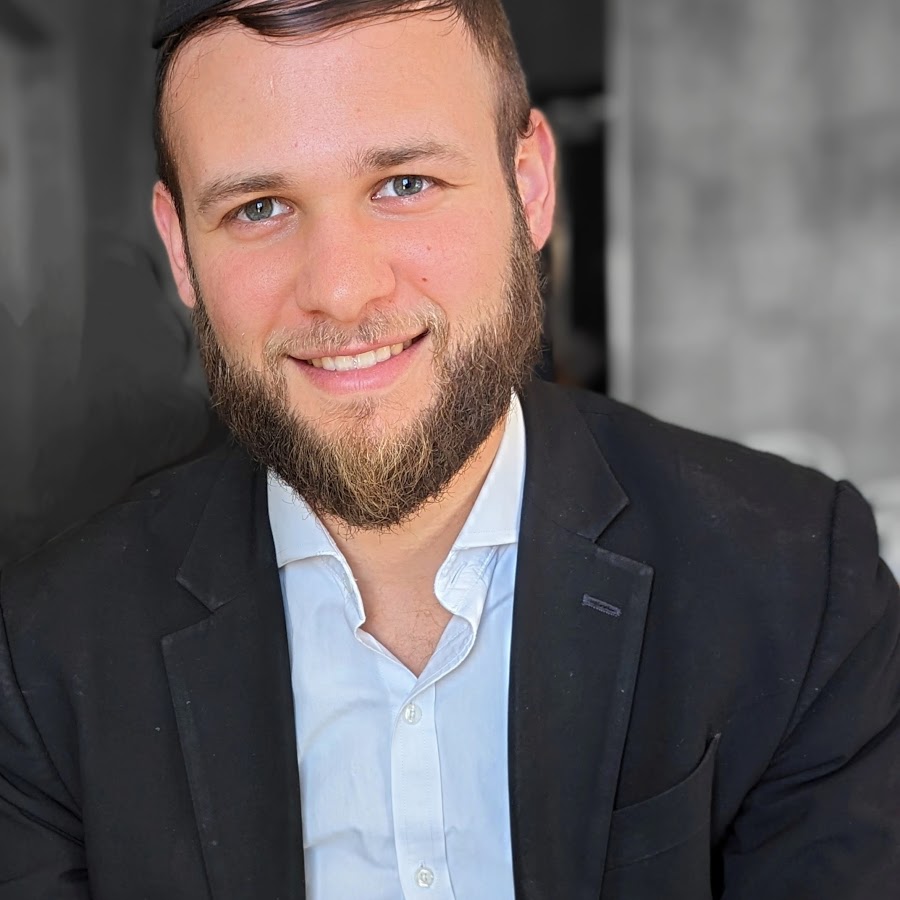
Do enough people do kiruv nowadays? How are we to address the 90% assimilation rate amongst Jews worldwide? What exactly is Ahavas Eretz Yisrael? What is Zionism?
Comments(0)
Transcript
Auto-generated transcript. Not time-synced to the video.
Hi everyone, it's Hila Eisenberg here
back with another episode of Judaism
without apologizing. This episode I had
the honor in interviewing the great
Rabbutak Bidowitz, someone whose wisdom
and humility and piercing hashkuffic
clarity has touched hundreds of
thousands of people around the world.
Rab Bowitz is a Musma of Yeshiva Sur and
a Talmud of Reb Rutderman. And
interestingly enough, he is a graduate
of Harvard Law School as well as a
former law professor at the University
of Maryland before shifting into
full-time Rabonus where he was a RV for
a long time in Silver Spring, Maryland.
He eventually moved to where he is now a
senior magir and lecture at Arsame where
he teaches Gimara and philosophy and
ethics. sort of a rare blend of depth
and warmth and razor sharp insight. And
he also hosts probably the most watched
hashkafic question answer session in the
entire Jewish world. And whether he's
discussing complex halic issues or
philosophical questions or the practical
struggles of everyday Jewish life, Ram
Bowitz brings a voice of authenticity
and compassion and unwavering dedication
to Torah truth. And we had a fascinating
slightly politically incorrect
discussion about a wide variety of
topics including whether or not more
people should be doing Kirv. We talked
about Zionism. We talked about
censorship of podcasts. And I think
you're really going to quite find it
quite thoughtprovoking. So without
further ado, let's dive into a
discussion with one of Torah Judaism's
greatest minds, Rivets Bridowitis. In a
world where everyone seems to have not
just a microphone but a megaphone, the
voices of our gadim or raanim and Russia
yeshiva far too often seem to get lost
in the noise. This podcast is here to
change that. I'm your host Hillel
Eisenberg. Join me as we sit down with
our nation's leaders as they address the
Ashkafic challenges that matter most
without the fluff and without the drama,
with truth that doesn't flinch. Buckle
up, cuz this isn't your typical podcast.
This is Judaism without apologizing.
Rabbi Brightitz, it's an honor and a
privilege and a pleasure that you are on
the Judaism without apologizing podcast.
It is
Thank you. Great. It's a great title and
I appreciate it.
I wanna I want to dive right in. I think
your your basic story is pretty well
known and I want to dive right into to
asking some questions. I think that you
have been at the forefront of answering
hashkuffic questions, answering m
millions maybe at this point in your
lifetime, perhaps answering more
hashkuffic questions than any single Jew
in the world at this point. So I think
it's appropriate to start with that
topic of the concept of hashkuffa and we
live in a world where there are a
million opinions that fly everywhere and
everyone has a podcast and everyone
writes blogs and articles and unlike two
300 years ago where you could have
someone in the hoscala movement a
reformer write an article. Okay, so you
have Rab Shamun Rafo Hersh will counter
with an article of his own, but we live
in an age where any everyone's h has a
fancier podcast than the next.
Everyone's got a microphone and a
megaphone and the Rabundance sort of are
are relegated towards the technological
age of the of the 1700s and it's
difficult for their voices to get out.
So my question to you is do you think
that we are at a point in time where
it's it's a confusing hashik time where
the rabban and the rash the need to
express their opinions perhaps louder
than they than they did in previous
generations.
As Charles Dickens said in a um a tale
of two cities, it's the best of times,
it's the worst of times. I mean on one
hand I I view the internet as a blessing
in many many ways in terms of the
dissemination of Torah uh in orame
itself. So many of my shimm and really
other shore are available for you know
thousands of people to see theoretically
millions of people to see. So on one
hand the accessibility of Torah thoughts
is actually a great blessing uh but at
the same time it has great many many
great disadvantages. the information
overload. There is so much stuff out
there and a lot of it is not authentic.
A lot of it is kafira. A lot of it is a
courses. Uh a lot of it is just
worthless. Uh there's good stuff and bad
stuff. And uh a lot of times the
truthful voices can get drowned in the
plethora of all of the other stuff
that's out there. Uh so that creates a
tremendous burden on the consumer to be
able to be mafin ben kodes or worse and
it does create I think a certain
responsibility on the part of Russia
yeshiva on the part of bal hashkafa on
the part of bal misora uh to find some
type of avenue in which there could be a
greater greater clarity of what a Torah
perspective is now again I'm the first
one to say that The concept of uh Torah
perspective is not monolithic. Within
the framework of Torah, there are many
many legitimate shitos. And I don't mean
to say at all that there's only one
correct answer uh to any given question.
Nevertheless, there are lines that are
drawn in the sand. There are red lines
between EMS and Sheckcher. And
unfortunately, those lines are getting
blurred. Now the problem is of course
that uh rash shivas andim
uh don't have the time or the
inclination to spend their whole time
perusing the internet or doing podcasts
or or or whatever whatever it is and
many are not technologically savvy in
any event. So part of the job of people
like you is to try to identify
mechanisms by which uh some type of
emistic dashra could somehow be uh more
available more accessible uh to a
general public that is looking for some
type of guidance in very important
Tashkuffic matters.
Do you think podcasts
or musical albums should need hoskamos?
Meaning you have a guy, he sits in a
base medish for two decades. He puts out
a 12page contress on babakama and he has
13 huskas and you have an influencer who
has a podcast with 600,000 followers
saying anything they want to about every
topic under the sun with and we don't
bat an eyelash in consuming it. Do do
you think there should be some sort of
systemized standard where this singer
singing topics about hashkafa and amuna
and life or this podcast delving into
and these are from well-meaning people.
In no way am I saying they're not
well-meaning but they're not rooted in
Torah. They're not learning in the base
major for for three decades.
is should there be some sort of system
where there's a hash hashama a a heer
given we put hashim on jelly beans but
when it comes to our hashkafa we seem to
be sort of you know in the marketplace
on our own do you think that's like
communist Russia or we should have some
form of censorship
that's a very very tough question I mean
in many many ways um I am against
censorship to a large degree
uh I could mention podcasts for example
that sometimes we'll have very very
controversial guests uh not for the
purpose of espousing their hashkappa but
that the from people should be aware of
what's going on there etc for example
sometimes uh they may interview an off
the derk you know bent a former bent
tyra who went off the derek now yeah the
guy might be an epicurus or a covert but
there may be something useful to
understand the dynamics
of what makes a person go off the derek.
So proceed with caution, but I wouldn't
automatically be in favor of total
censorship. Um, so I don't think uh I
would encourage, you know, active
rabbitic oversight as a formal matter.
Uh, I think a podcaster should have a
huskama on his own shamayim so to speak.
Meaning if a if if you write a say or
somebody writes a book in English or
Hebrew, whatever it is, there'll be a
hashama. Now a has typically maybe I
shouldn't say this does not mean that
the muscum read every single page of the
book very often a hashama means a person
went over the book generally and a
person may know the author and can
affirm that the author is a
knowledgeable and responsible Ben or
boss Torah who is able to communicate
Torah ideas in a good way. I could
imagine that that type of system ought
to exist for a podcast. Somebody ought
to get at least one reputable rabbi or
who can say this guy is not an apicorus
and therefore I think what he says may
be worthwhile although I cannot
necessarily agree with every single
thing that he says. Uh I don't think
that's too much of a burden and I don't
think that would turn into censorship
either. Uh so I think censorship would
be both a problem of time uh and I think
inherently I think there would be very
very significant costs with censorship.
I mean I don't want to rehash
controversial things but you may
remember years ago the uh biography of
Ravakov of the making of a god which was
written by his son
who himself was a rash and
for a whole variety of reasons that book
did get censored and many many people
feel including myself that that may have
been an unfortunate step in not giving
uh the religious world access to
information that might be very very
useful and helpful in dealing with the
struggles of their own lives. So I think
censorship per se is often too blunt a
weapon to deal with uh kira because I
think it'll attack other things as well.
It's kind of like a labbotomy where you
take healthy brain tissue along with
diseased brain tissue and uh no that's
not always going to be a good thing but
I think I I would think a podcaster
should at least have a rabbitical husk
that he's considered to be a reliable
capable person who generally uh
accurately represents a Torah
perspective.
Do you think there is a growing gap
between the hashkafos being taught in
yeshivas in seminary and the hashkafos
being absorbed or being lived through
media of people 10 20 years out of
seminary or yeshivas and if there is in
fact such a gap who is responsible for
closing that gap
this is a very very difficult question I
mean I mean listen the world of podcast
is a very very wide world and uh there
are podcasters who are very solidly in
the yeshivisha world and I wouldn't
necessarily see any great disconnect
there and then there are podcasts who
represent themselves as orthodox who are
very very far from the hashkafas of the
yeshiva world uh so uh if the question
is is there a disconnect the answer is
with respect to some there is with
respect to others there is less now
Why that's so uh there could be a lot of
reasons. Uh one is that within orthodoxy
itself. Uh we have the rise of what you
might call more left-wing movements uh
such as um open orthodoxy which now I
think goes by the name modern orthodoxy
because modern orthodoxy now goes by the
name centrist orthodoxy. whatever the
name is uh the hashkafas of Torah which
again I'm not here to condemn anybody
but but but to simply to note that that
type of hashkafa is very very very
different than the hashkafas of the
yeshiva and the bash yakov so as more
and more rabbis from those institutions
get pulpit and more and more students
are out there who are graduates of these
institutions you're going to see more
and more and more of a disconnect
But the truth of the matter is on the
other side of it and here I may get in
very very big trouble. Uh some of it is
actually a healthy process of
maturation.
Meaning as one grows up and one deals
with family, one has a family and one
deals with the outside world, one
understands that although the core of
their beliefs and the core of their
hashkafos is the misura that we got in
yeshiva, but it has to be I'm using
dangerous words here, but it does have
to be modified and applied to scenarios
that are very very different than the
world of the issue. Shiva and that's
going to create a certain disconnect uh
talking about how to integrate a working
life with learning etc. Uh so as I say
so one factor is the left-wing
movements. Uh the other factor is as
people leave yeshiva they are dealing
with different types of experiences that
are different than they faced in the
more cloistered world of the yeshiva. A
third phenomenon is uh the need to deal
with off the derek people. meaning to
say there are brooke I'm not going to
call it a tremendous number but there is
a significant number of orthodox people
not only balichua but even FFPs and even
people who have learned in co-le who go
off the derek in various ways and uh
part of the challenge is to try to
do things that can help them bring them
back and sometimes uh the mahalim that
they got in yeshiva are are not
necessarily ally going to be the mahalim
that are going to speak to them. And the
big challenge that we have is can we
develop mahalim that are still faithful
to the messiah that are still based on
Torah sources that are affirming of the
amuna but at the same time in a certain
language and terminology
that can be understood and accepted uh
to people who might reject might have
rejected the way it was presented in the
yeshiva world. I mean one example would
be how you deal with conflicts of
science and religion. How do you deal
with these issues like evolution? How do
you deal with the age of the earth? It's
one thing you went to e yeshiva that
simply told you evolution is trafe and
anyone that says the world is more than
57 now 85 years is an apicorus and
that's a mahalik that maybe a high
school student can just hear. problem is
as you get more scientifically
sophisticated the questions become more
acute. Now there may be different
mahalim within the messiah how to
address it and the yeshiva world tended
to choose a particular mahal within the
messiah but sometimes we may have to
revive other mahalim
again I'm just talking out loud so to
speak I'm not here to issue any any
final pronouncements but I'm just giving
various reasons why there may be a
little bit of a disconnect between the
Torah hashkafos of the uh of the
internet of cyerspace versus the pure
torahkas of of of the yeshiva world. I
also want to mention too another aspect
and that's
kabala uh in the traditional lit yeshiva
world. Um so we emphasized Gomorrah and
halaka and and muser uh but even
authenticas had very very little role.
Uh and certainly of kabala were not
talked about uh today and really the vil
nagon predicted at the not notas but in
terms of um cabala as we approach msiach
the light of cabala will be more learned
and more accessible to people in various
ways. So as a result uh part of the way
things were taught 20 30 40 years ago
are not necessarily uh going to be the
way things are going to be taught today
because different types of ideas come to
the forefront but that's been the
history of Israel I mean in theory if
somebody comes up with a totally new
idea uh that's bad I mean how can you
have a totally new idea but what happens
in Yiddish kite is that everything is
there but sometimes certain ideas recede
into the background other ideas come to
the forefront other times uh a different
process takes place in the reverse so
that I think is what we see with
podcasts and and um various other ways
of communicating information
very interesting so I'm I want to pivot
to another topic
in the 1700s I think historians estimate
that around 90% of Jews were either
religious or traditional. And I think
the complete opposite is true now with
around 90% of Jews worldwide being
irreligious and the assimilation rate
around the world is reaching
astronomical numbers. So my first
question is what would you say caused
this problem and should the typical
religious Jew care about this problem or
do anything about this problem or even
think about this problem? It is an
interesting phenomenon and again it's
something that's very very tragic that
we often don't think about when Napoleon
uh was invading Russia and uh Napoleon
really promised that the Jews would be
liberated from anti-semitic restrictions
the fall of the ghetto walls etc. So
many many people were praying that
Napoleon should be manak over the over
Russia because that would be much better
for the Jews. The Balatana said, "As
oppressive as thesar was, the Jews will
do better in Russia than they'll do
under Napoleon." Because it's precisely
when Jews are not given civil rights and
they're not given access to secular
education and they're not given access
to assimilate with the non-Jewish world
that they turn their kos inward. In many
many ways, as difficult as this is, this
is kind of a hidden blessing of
anti-semitism. Robert himself said it
was easier to be Jewish in Siberia than
suburbia. Uh so in many many ways what
has called a precipitous decline in
spirituality
was the fact that Jews were liberated
from the ghetto. I mean 300 years ago if
you are a very very intelligent Jew uh
young man uh you could not go by and
large I'm simplifying a little bit but
generally speaking you could not go to
university. you could not go to medical
school. Again, there were exceptions
even then. So, your co-host were
directed into Lima Tora. There was
literally no other avenue for you to go
to. Uh but once we have all of these
opportunities opening up, so now a
bright person says, why should I be aim
and live in poverty? I could be a
lawyer, doctor, and make a good living
and be respected among the etc. So
I would have to say that a lot of the
precipitous ureida in the religiosity of
Kali Israel came in the aftermath of the
French revolution and the Napoleonic
wars the 19th century essentially where
the ghetto was collapsing and when the
ghetto collapsed uh like we saw cilantro
once gave a mushel it was like wild
horses that are simply released from the
carriage and they're going downhill
there's no way to stop them till they
hit
That's why he thought he could do Kira
in Germany more than in Poland and
Russia because Germany, he says the
Yidden had already hit bottom with the
reform movement. Uh Poland and Russia,
they were still wild horses going down
uh going down the hill. Now, should Jews
be concerned about this? Well, you know,
it's interesting that um if you would
have asked the question 50, 60 years
ago, maybe uh 70 years ago, many would
have said that there's nothing we can do
about it. Unfortunately, we have to
write off 70 80 85% of Kali Israel and
we have to concentrate on the Sha Pla,
the faithful remnant that remains stark.
But I think we've discovered uh with
institutions like or like a
uh many institutions like that that
there is a thirst out there. There is a
pintid that there is a spark of Judaism
even among people who have been removed
from Torah for many many generations.
And as a result, for us to simply write
them off and not care would show a
callousness, would show an indifference,
would show a lack of a Israel. And as
the Rambam says, it's also a lack of aas
Hashem. Because if you truly love
Hashem, you're not going to let Hashem's
children wander away because how does a
parent feel? You tell a child, you tell
a parent that had 10 children who lost
eight of their children that, well,
don't feel so bad. you have two of your
kids left. Well, what about the eight
the eight out of 10 that aren't there?
So, you know, uh in Orsame just a few
months ago, we lost our our beloved
Rashiva, the founder of Orsame, Rav
Schiller, Zol.
and uh he with Rav Noah Weinberg and Rav
Mandal Weinbach and Rav Yakov Rosenberg
uh they did they were visionaries in the
sense that now a thing that is so
accepted in Kali Israel to create a
Torah education framework of Jewish
outreach to the unaffiliated. Well, 50,
60 years ago, this was a bizarre idea
that many, many people did not accept.
And I think Barack Hashem uh were trying
to come to the plate and deal with it.
Uh and again, there's so much more to
do. With all of the successes of the
Baltruva movement, it's still only a
drop in the bucket. So, there's much
much more that we have to do. My
follow-up question to you is that would
you say even despite the tremendous
success almost unprecedented success
that the Baltuba movement and Asian
arsame etc have had in the last 50 60
years
I would throw fryeld in there
the the typical I'm I live in America I
learn in in a large large ish that has
10,000 bakram in it or yungalite no one
does kir no one has I shouldn't say no
very very very few people have a kuso
once a week with someone on the phone
you don't have to see them you don't
have to go to their house you don't have
to meet their wife it's very taboo it's
not on the forefront
and something as simple I know in in
erit was very adamant that every single
person in panovich should have an hour
kuso once a week with an unaffiliated
person but the for whatever reason in in
in America either felt not that way or
never spoke about it. And the current
situation in America is certainly an
indifference at best or a laziness at
the at the least. And my question to you
is, is this good? I mean, there's
obviously tremendous focus on lie, which
is fantastic. My question is, does there
need to be a a a heightened
focus on Kira and many many many
thousands of people would benefit from a
one hour a week learning
on the phone but the Rabanam and the
Rashish Shiva at least in America do not
stress that whatsoever. Well, you know,
it is very interesting and I remember
when I was in yeshiva many many years
ago uh there was uh a letter from
Rabinstein
in which he talked about the idea of
mser bisman that just as a person gives
10% of their uh income to stuck a bentra
should give 10% of his learning time
towards kiraikim to bring people to
yoskite. So this was a letter that I
believe was issued already in the late
1960s or at least the early the early
70s. So I think it was recognized and
the truth is if I assume the issue
you're talking about is Lakewood right
that that base metal.
Yeah. I I mean the truth of the matter
is I don't know I I mean you're there so
you know better than me but I hear of
numerous different types of outreach
initiatives that Tomum or certainly
graduates of base medaya do. I mean we
have the community kolim throughout the
United States uh that in addition to two
learning sedarim do have active outreach
programs. See Raarin's cutler's hashkafa
overall was the famous hashkafa of the
overflowing kdishkap. In other words,
Raarin felt instead of telling a bentra
go out and be mariff raarin had the
shittita that learn and fill yourself up
with tyra till there's so much that's in
you that mima it overflows
onto onto others and I have to say that
the emmesis that's a hashkaf that I
myself subscribe to I wouldn't tell a
guy first year base medish to go out you
know and in kira of so what Ravaran said
is very wise and very very true. Uh but
but at some point you're correct the
guy's been learning for for a long time.
Uh so nobody is telling him go out and
join as or stay in the basement or stay
in the kyo but find some way find some
in which you can also help a fellow a
fellow Jew become close to a kadesh. So
it may very well be that what's going on
here is not necessarily indifference but
they simply don't know what to do and
how to do it. So if perhaps within the
yeshiva world different yeshivas could
have tier of coordinators like shatanim
people who can kind of match up and
offer opportunities even if it's a a
shabas meal uh or learning one hour a
week I think more people would take it.
A lot of people really do want to help
but you know they just don't know what
to do. uh they and they also figure that
oh in order for me to do kirav I have to
uh give all of the tutumim about uh
evolution or age of the earth or or what
or proofs for god but people and people
don't want to do that because you're you
know bentra typically does not for right
or for wrong that's another question
typically does not get that involved in
those questions so the one message I
want to give is don't think that that's
the only thing that matters yeah uh
those of us in
We got to do that stuff. That kind of
goes with the job. But you know a lot of
the ways you're mar of a person is by
warmth is by friendship is by showing
hospitality by showing them the
sweetness of Tyra the nas of Tyra and
yeah uh not for everybody but for many
many people just learning a lot of
bakama uh with the shaka betaria is
going to be so fascinating and eye
openening for them. So I think the bent
tyra needs to understand that they don't
necessarily have to go beyond their
comfort level in order to connect to
someone. Uh so I think if they would if
they wouldn't have that fear that
they're going to have to answer you know
how does the Torah deal with evolution
or or something I think many more people
would be actually willing to get
involved and we need to increase that
for sure.
So some people make the argument they go
even one step further from ribbarin and
they say that learning tyra in and of
itself is the biggest to be macar of
someone and I could be learning in my or
in Brooklyn or in Lakewood and
automatically somehow metaphysically
someone in San Jose will become more
inspired. So my question is first of all
is this true? And second of all, is the
fact that there's a 90% assimilation
rate or something like that, does that
mean that it's not true? Is that
indicative that this is incorrect? Or is
that perhaps indicative that the limitra
that we're doing is is maybe perhaps not
as good or holy?
Well, yeah. There's a famous statement
attributed to the where he says the
intensity of the learning in Ren affects
the sneas of the fashions in Paris.
meaning there's kind of a metaphysical
ripple effect of the kaduca satyra that
comes into the world that somehow lifts
up uh the belt to a certain point. So
yeah, I I do believe it is true meaning
uh brings kaduca into the world. On the
other hand, you obviously see that it's
not taking us as far as we need to go.
Right? But even the didn't say you learn
ty roden the guy in Paris will be a
shabas the said the the skirts will be a
quarter inch lower you know now there's
there is a ripple effect but the ripple
effect is can be attenuated it could be
relatively weak and I think we're mv to
engage the same way we engage in
ishtadlas for pasa or ishadus in going
to a doctor for medical treatment even
though it all comes from hashem so cure
involves a certain certain amount of a
certain amount of of caring a certain
amount of
uh so I think everything is true the
learning brings kaduja into the belt but
we then have to augment it by actually
reaching out to people that would be
part of the almost
uh that you need to open up the senor of
braha in many many areas
is it safe to say or or maybe unsafe to
say that someone could go through his
whole life learning
and then go up to Shmayim and be loa
because he had six cousins who were
unaffiliated who he never really reached
out to or he could have picked up a
phone and and made some sort of
initiation and losa
I I think is no less referring to the
nishama that it is to the gof and if
this is the case should this be
publicized just to save innocent and
Jews for a very good point. Many in fact
say explicitly
that part of the of trying to bear of
someone to is
because
uh in in a way uh sinning can even be
worse than dying in some ways. So when
we uh do not stop people from sinning,
it's as if we're not saved. we're we're
we're we're indifferent to them killing
themselves.
uh so I I I think uh it should be talked
about I hope at maybe on a GA convention
or various other forums but again I'm a
little reluctant to talk about this as a
an absolute on everybody
because I think in many many ways uh
people do have different tough kedum in
life meaning I think everybody can do
something and the fact that you can't be
full-time kira maybe you're not supposed
to be full-time kov you you know maybe
your main toughk is the base medish or
your family your parnasa whatever it
might be everybody can do something uh
but as I say I I don't want to be misal
in any way at all of the importance of
of solid liatur
uh both because of idea that eventually
you'll be able to be a bigger mashpa
and's idea that it brings kaduca into
the world so I'm not going to sit and
tell a guy in kyo said you know you're
Ira
every second that you're not going out
and being mar. But I would say that you
need to look out a little bit and see
what is going on in the Jewish world and
ask yourself if there's something you
can do even if it's small because uh
every small gesture does help uh even if
you reach only one person I'll say
it's not a numbers game every Jew is a
world every Jew is a universe
And you if you could bring another Jew
to Tyra and then of course it's not just
that Jew but the ripple effects his wife
his children his grandchildren etc. All
of that becomes your
writes way before there was a movement
or a
that one has to understand if you're a
person to
all of the mitzvos that their family
does atos
becomes your mitzvah. He says a no. What
what that what that is the tremendous
tremendous olabar the tremendous that
never stops until the end of end of
time.
So I guess the challenge always is that
we we don't want to god forbid
we don't want to diminish the of
but I think within the framework of
learning that there is more that can be
done to be macar people as well. one
hour a week messer and man shabas guest
but again as I say um you I think you
portray it a little more negatively than
I would have portrayed it but again as I
say I I don't know I'm not there so I'll
have to rely on you
so here's another question there seems
to be a lot of ballet chuva out there
and I know you work with a lot of
balchuva
there seems to be at least in America a
lot of balich chuva with nowhere to go
and they feel sort of like outcasts in
their own communities.
Uh this is a huge huge huge problem. Uh
and uh this is even given a name in the
profession. This is called like the
problem of second stage k meaning the
bala yeshivos or whatever chappels uh do
a very excellent do a very excellent job
taking the non shr shabas sky making
them from uhem so we have another notch
on our belt or or what whatever it would
be but then uh the person goes back uh
the person does not necessarily have
that much family reports gets married
and his wife may be in the same
situation and they're no longer in a
yeshiva setting and it sometimes may be
very difficult for them to feel
comfortable in a community of uh in a
well-established from community uh where
there's family connections and the like
and I have to say that sometimes there's
even some bitterness attached to this in
which they feel that their yeshivas that
were so nurturing and trying to make
them from kind who forgets about them
once they're from we then go on to the
next person to try to make them from. So
it is a very very serious issue. Uh in
fact Raf Schiller Zatal used to say that
the sign of success for it would be that
you wouldn't know he's a bala meaning to
say that the uh transformation into a
bentora is so complete that they fit in.
They fit in just like any other uh
benyra. So in truth, yeseshv, in truth,
uh there are many many many baluva who
have kind of fully integrated into the
froom community and they're doing fine.
Meaning I don't want to paint this as a
crisis in which every balcha feels
alienated or not part of a community.
But the the fact that there are brashem
many successes does not negate the fact
that there are some who have much
greater difficulty in making the
adjustments. So the question would be
this and I'm really really I'm really
thinking out loud more than giving an
answer. Is it worthwhile
to create separate institutions meaning
separate bate medish for the alumni of a
given kira of yeshiva or for bali chuba
generally create special minyanim
special programs uh in which they would
feel comfortable they would be with
people with similar backgrounds and that
would be a much more comfortable
environment or he again I'm thinking out
loud he maybe that's giving giving them
a crutch in which they'll never learn to
walk if they can't be integrated into
the broader community. This is very
similar to a problem of aliyah and erit
Israel. if I could switch gears for a
moment that if you're an American or an
Anglo speakeraker coming to Erit Israel
uh and it's a totally new environment uh
is it better to send your kid to an all
English-speaking
in which it'll be familiar and
Americanlike and they'll play basketball
during recess or leak you want to raise
your child in Israel they should get
acculturated to the norms of Israeli
religious society which is very very
different so it's kind of a similar a
similar problem. I I see the mileus in
both ways. I certainly see how many guys
will be much more comfortable in a type
of minion of people who have gone
through similar experiences.
Now one solution would be uh and this is
an on raanim that Rabanim should create
schoss that maybe foster an integration
of both types. Meaning uh create a shaw
in which baluva are welcome in which
FFBs from from births are welcome.
Create events uh both separate events
for different groupings and events in
which people uh work together. And I
think over time as the barriers collapse
and as people get to know each other
better so some of the fear and some of
the hostility uh can uh can vanish. So
this would be an aaras on synagogue
rabbis to create welcoming environments
uh for baluva. And I would also say too
there's a big aas on the yeshivos
themselves that they have to deal with
their alumni. uh you know
yeshiva like has been around for more
than 50 years. A Torah has been around
nearly that long. Uh there's quite a lot
of alumni. The question is what are we
doing for them? Are we staying in touch
with them? Uh is it that once they leave
that's it we're on to the next person or
we need to still maintain that that
cases and I think there needs to be a
lot more alumni programming than perhaps
there there is.
What would you say to a Balachuva that
has enormous challenges in their lives
and begins to feel a little bit of
resentment towards Hashem because hey,
look at all the sacrifices I made for
you and now this is what I get. I get a
life where I'm estranged from my family
or I don't have the financial backing
that my parents originally promised me
or whatever the challenge may be.
Yeah. So first I I want to go backwards
a little bit and that is I I think one
of the big problems that we sometimes
have in in Kira programming is we
overpromise
uh we kind of tell the guy you become
from you'll have a wonderful marriage
and wonderful kids and your parents will
love you and admire you etc etc etc and
then when these things don't happen
there's be there's a lot of resentments
a lot of anger uh people feel they were
lied to and the like. Um, so I think
it's important number one not to
oversell your product. Meaning Torah is
wonderful. Torah is Torah gives you a
connection to the
it does not automatically guarantee that
you're going to have an easy life in
this world. Uh life does have challenges
and part of a good is not to make
believe there's not going to be
challenges but to discuss them and try
to give a person coping strategies that
when things are not perfect what do you
do plus of course being available for
them as they go through as they go
through a a crisis. Uh the other thing
that's important to stress is that uh
the baluva it's very important in a
chuva process to maintain as far as
possible a good relationship with
parents and non-religious family. Uh
that it's not always possible. I
understand that. But to whatever degree
possible this this situation shouldn't
arise in which you're estranged from
your parents. Why would you be estranged
from your parents? Uh if you treat your
parents with respect and they see that
you're a mench and they see that you're
a caring person, then by and large, most
of the time, again, not all the time,
most of the time, they're going to go
along with it. They're going to accept
it. They're going to admire you. So my
two points before the the person is in
crisis is number one don't oversell your
product by uh by making these
representations
uh that are just not polyianish
representations and number two uh try to
focus on the importance of maintaining a
good family relationship uh and don't
allow the frunkai to create walls and
barriers. Now once the person is in a
situation where they're facing crisis
where they're facing real real problems.
So once again um the role of the rabbi
the role of the rebi uh the role of the
spiritual mashpia is to provide number
one empathy compassion.
Don't don't delegitimate
uh the pain that the person feels. Uh
and then talk about the practical things
that can be done. I think one should try
to have a very practical orientation.
What can we do to make this better? Be
basim
and in many many ways if a person feels
that somebody cares
that just makes it easier that's called
no say be old. I carry the yolk with
somebody that makes the yolk lighter for
the person that's bearing it.
I heard you talk recently about your
adoption
and if it's okay with you, can I ask you
some questions about infertility?
So my first question is what practicaliz
can you give to someone who is waiting
years and years to have children? And I
don't mean before the intellectual uh I
mean the more practical um things that
you've seen from other people that have
worked or sigula's areas invashem to
work on brahos from particular people
because everyone obviously is scrambling
for something and everyone's trying
anything and everything and before the
giving up stage before the adop even
before the adop consideration of
adoption
Have you seen, and perhaps you haven't,
you just were in your own little cocoon,
but perhaps you have seen things that
have worked or seen what brought success
to other struggling couples in this
regard.
The technologies that are available for
the treatment of of infertility
have drastically improved over the
years. So as a result the situation
today is medically much more promising
than it was whatever it is 30 40 years
ago and that's a great of a kadesh that
obviously the ability to advance in
technology ultimately comes from the
aster comes from akadesh bor and we have
to be very very grateful uh for those uh
opportunities
uh so uh I think there's a lot available
then that was not available now rather
that was not available uh then. Uh but
one of the points that um I try to make
and I in my own life I try to live is
that even though having children is a
great great great great thing. It's a
great joy and it's the first mitzvah of
the Tyra and the Nvi says
God did not create the world to be
desolate. He created it to be inhabited
and of course the dream of every parent
is of every person who gets married and
if you're not married you hope to get
married and then have have children of
course that's but one has to know that
when kazal say that when there's between
husband and wife the shina is there
that is even if they don't have children
one has to know that the relationship of
husband and wife is holy, is sacred, is
godly even if it for whatever reason
does not produce a biological child. And
therefore one has to understand that
there is something in the marriage
itself
that is kadesh that has to be nurtured
and has to be developed. That's a very
hard mindset to absorb because we're so
used to the idea that you get married
and you have children and
for most people that's how it does work
but but not always. So as a result
therefore you're living on two opposite
sides of the fence at the same time. You
pray, you davin, you make hish toddlers
to have children. And at the same time,
you recognize the beauty and depth and
holiness of your relationship, even if
there are no children. And you can't
live your life on hold while you're
waiting for something to happen. You
have to take every minute that gave you
and use it in the best way that you can
use it. You can't kind of say well when
we have children then we'll really have
a family. You have a husband and wife is
a family is a family as well. I saying
adoption is obviously bringing a child
into your home but even if one is not
ready for a full-fledged adoption there
is foster care which is a you know
temporary arrangement. You still are a
mak you know you still have a child that
you're taking care of. Uh there are
things like
uh learning with kids uh who don't have
a father etc. you know, children of
Almanus,
taking them to Shaw, meaning there's all
sorts of what you might call quai
parenting in which a man and a wife,
even a a couple can have a certain
shikus
to being a major factor in a child's
life, even if it's not totally their
child. And remember say that if you're
I sit and I learn with a kid whose
father is not alive anymore. I do a
subun with the kid
say it's he is my child. So one has to
be different ways in which they can
still contribute to a child's life.
How is it expected on a man or a woman
who's waiting seven years at this point
to have a child not to be jealous of
their neighbors? Because there that is
an expectation that Tyra does not allow
jealousy. Is that a herculean ask? Is
that even physically, emotionally
possible?
A very, very, very hard thing. I
remember years ago the old Jewish
Observer magazine
uh used to uh used to publish open
letters. Somebody wanted to bring out a
certain issue that someone was behaving
a certain way. And I remember that one
of these open anonymous letters was uh
written by an a woman without children,
an infertile woman who complained that
her friends are always talking about
their kids and don't they realize how
much pain that causes me? So, she
expressed that pain, but I understand
that pain and maybe they should be more
sensitive. But I I I I think she was I
think ultimately she was wrong. Although
I can't judge her. Maybe I would have
behaved the same way because what you
have to understand is this. This is a a
deep thing that's hard to understand.
But if if all of Israel
is
and as the bal says all of our are
rooted in anus in Shayim
then when any Jew has a
it's my
if I'm a single person who's want you
know who's been going out on and my
friend gets a shak first I should be
missed.
another couple has children when I've
been trying so hard with my wife I
should be miss
and I should train myself even though
when I first think this it's not going
to be sincere
that Hashem gave this bra into the world
and you know says
our thoughts and our emotions get
affected by our actions you Say it
enough, you'll come to believe it.
I am so happy that they have a child.
Another Jew was born into the world.
Very hard. It is very hard. I'm ask him.
But I think ultimately the
Hashem wants us to do is we should be
have in the good fortune. Now Simka the
writes somewhere that it is much harder
to rejoice in somebody else's sim than
to feel sorrow for their pain.
I feel sar somebody suffers I feel
empathy I feel compassion but to rejoice
in their simkha that's even a higher
madria and that's what we should try to
do.
Okay. So to pivot to our last uh subject
here, I think it's very apppropo to
discuss a little bit about arrit
especially with the barrage of rockets
and uh the ongoing war. Um but I want to
clarify certain things that I think a
lot of people could use clarification
on. And that is
what exactly is a havas eritz? Is that a
darisa a mitzvah that we just gloss
over? Is it an emotion? Is it a
lifestyle? Is it a political identity?
Is we we see extremes on both sides of
the aisle. We have people who will march
and die to the flag of Israel and will
say that it's a havas. We will have
people who will never utter the words
Israel or never discuss it for fear of
Zionism or whatever.
What is Ahavas Erit Israel?
Without getting into Zionist debates,
obviously Erit Israel is not the same as
Medinat Israel. Medina Israel is a
political entity and there are those who
were against Hakamat Medina like Carta.
are those that were positive for it and
that's a major debate that that to some
degree still goes on even today. Uh but
Israel as the land of Israel uh aas well
first of all there is a maklo reonim
according to the raman there is a
mitzvah the oisa to live in Israel
according to the ramam there seems to be
no mitzvah of living in Israel but he's
still mishabak the holiness of living
here uh the nivish in a in a letter
actually says that those who live in the
gola are by definition following the
that there's no like the Ramban there
would be uh Raos Feinstein on the other
hand uh took the position that even like
the Ramban it's only a mitzvah meaning
if you live here you have a mitzvah but
you're not to live here so there are
many many different opinions regarding
Israel but in terms of Israel well it's
a good question what does it mean to
love Erit Israel I mean do I love the
land. Well, the work who would kiss the
the the dirt itself. But I think aaserat
Israel is to recognize that this is the
land in which Hashem makes his presence
more manifest and therefore a person
might feel I want to live here
because this is where Hashem wants me to
live. This is where more mitzvah of the
Torah can be maky
like Shmita, etc. And this is where I
can have a deeper connection to the
rebal.
And therefore, my love of Eric Israel
comes from my love of aeshbu wanting a
deeper relationship with with aeshb.
Again, it has nothing to do in a sense
with Zionism. It has nothing to do with
the state of Isism. Now, again, I happen
to be somewhat of a Zionist and I I
support the state or at least I, you
know, I want to help the state do
defense and everything else. Uh but but
the point I'm making is that love of
Eric Israel does not have to be
connected at all with your stance on
Zionism or Medina Israel. Those are two
separate issues. Many characters live in
Israel.
My question would be then
if that is true then why is it
historically the just for lack of better
terms the more leftleaning more modern
communities have ran towards quote
unquote aava Israel or a Israel and I
mean ait Israel and the more yeshivish
more rightwing it's just not a focus
because if it in fact a is essential to
being a from Jew, being a religious Jew.
So then why is it that one puts a focus
on it, one doesn't and and as this is
all assuming that the focus that they do
put on is in fact real genuine love of
Hashem that's being manifested through
the love of his land as opposed to love
of a land and Zionism and finally being
a country like every other country and
and Zionism is really a front for just
being like everyone else. So
if it in fact is essential.
No no you know it's it's a bigar you
know the Grebby I think they the B
Israel once remarked that uh we've lost
three things that were stolen from us by
the non-religious Jews. Uh they stole
Tanakh or they stole Nak because Nak
became identified with Tazcala. So now a
from Jew can't learn Nak anymore. uh
they stole so that was stolen by the
masculin
uh chuva was stolen by the bal chuva
meaning to say all of us should be doing
chuba we think oh that's a balcha thing
and zionism which is a Israel was stolen
by the zionist it got hijacked zionist
took over zionism and baluva took over
chuva and the masculum took over which
means part of what's going on is that
because the the the the endeavor ever of
settling the land got so identified with
a political ideology
much of which was against the Torah. So
the whole idea became tra the whole idea
became pussle the whole idea became
something you can't associate yourself
with guilt by association to be frank
now if you go back to the early years of
the zionist movement you had the
nitivion
and the like you did have you know real
real gdole who were endorsing moving is
to agricultural settlements and the like
but as the political zionist movement
got more and more powerful uh and they
kind of took over Israeli society. So
the whole idea of of Erit Israel became
kind of tra it became kind of leftwing.
It became identified as connected to
kilonim and secularism and as a result
as the gabbi said Zionism was hijacked
by the Zionists and that that's a
question is can we claim it back? I was
going to say, should a religious Jew
celebrate Yomat's food?
It depends what you mean. If you're
talking about saying halo with the
braha, I would say I would say no
because we don't create new holidays and
new scenarios beyond those of uh should
a religious Jew feel uh a certain sim
a certain
toku and even a sat to the medina for
creating an infrastructure. I believe
the answer should be yes because in
spite of all of the fighting we have
with the state in in spite of all of the
tightness and disagreements we have
laisa an infrastructure was created that
enables the flourishing of Torah and for
that we have to have a
uh you know if the Rambam writes that
part of why is a yumpt is because we're
grateful for the kashi
even though the malus kash
eventually disintegrated and they
persecuted and even murdered
but were still grateful for having a
Jewish malus. I think that would
indicate according to the Rambam a
certain
as well. That doesn't mean we ignore the
and that doesn't mean we agree with
everything the Medina does and that
doesn't mean we're not going to have
makus with them when we need to have a
makus but some basic notion of I think
is appropriate and the con the pot of
gold at the end of the rainbow is that
if we are maker
to uh the other side so to speak they
will come to be mak what we stand for as
well. This is
in
as water reflects the face that you show
it. I I I show the water a smiling face.
I get a smile.
A person will feel that which I show
them. I show them gratitude. I show them
respect. They're going to feel gratitude
and respect for what I stand for. And
that's the absence of that is why the
makloin between religious and secular
never get resolved in Israel because
each side looks at the other in the
worst possible light instead of seeing
them in a positive way.
What what what does it mean like what
practically would it look like for a Jew
to demonstrate Hakar Satov?
Well, uh I'll give you an example. I was
walking I was walking with an A
yesterday and uh we passed some soldiers
and I you know I didn't say it's a tiny
I actually didn't say anything but he he
made a point of looking at them in the
eye and saying you know in Hebrew thank
you very much for all you're doing we
appreciate it
and they were a little surprised and I
thought that was a very very nice thing
to do
I wish I would have thought of it uh I
didn't think of it at that particular
moment. But those are little things, you
know, police, garbage men, you know,
there's a lot of infrastructure here
that the Torah world wouldn't be able to
really flourish without all of that
infrastructure. And we need to have
used to say this a lot. You know,
obviously one of the hot issues in
Israel right now, a very important hot
issue is the drafting of Benetra and
Kared into the army. Right? This is a
bitter, divisive issue that may even
bring down the government, although
probably in the middle of a new war, it
probably won't won't come to that. Of
course, this is an issue that we have to
fight over and and and do what we can.
But somehow it got turned into
disparaging soldiers and saying who
needs them and they're useless and
they're doing nothing. And that's an
ava. That is a novelt
during the six- day war and other wars
always made the point that we have
whether we're whether we encourage going
into the army or we discourage going
into the army we have to have hakaras
hat for people religious or not who are
endangering their lives for Israel and
for Eric Israel and when you turn the
issue of in the army into disparaging
that's a lack
And that is a mida.
Just in in in closing, can you give a
for the hundreds of thousands of regular
Jews out there who are just trying to be
good people and make a living and live
in today's confusing world? Can you give
them an piece of advice that would keep
them on fire in their Yiddishite
throughout their lives? Life is tough
because Hashem wants to bring out
goodness in us that otherwise would not
come without these challenges. But
Hashem is ultimately a God of love. He
loves every Jew. He's Mak of every Jew.
Every Jew has a purpose in the world.
And when times are tough, speak to
Hashem in your own words besides and
besides to him, in your own words,
things are very rough for me. Can you
help me? Can you give me the strength?
Can you give me the insight?
And although it's not likely you're
going to hear Hashem speak to you,
you're not going to hear it in that way.
But I think you know you your heart will
be lighter and you'll feel that you have
the wherewithal to go ahead and do what
you need to do. And that's also Hashem
answering the prayer. Hashem is
answering your by giving you that kayak.
So don't give up. Don't give up. Try to
appreciate life. See the blessings even
in the difficulties. And when
difficulties come, always ask yourself,
how can this make me a better person?
And then you're taking the difficulty
and you're making it a gift.
Beautiful. Rabbi, thank you very much
for for joining
and continued.
Thank you so much. You should have much
in your rabbi
and you should go.
[Music]