0:00 / 0:00
I was distracted depressed and devoted until I met Judaism
2,877 views
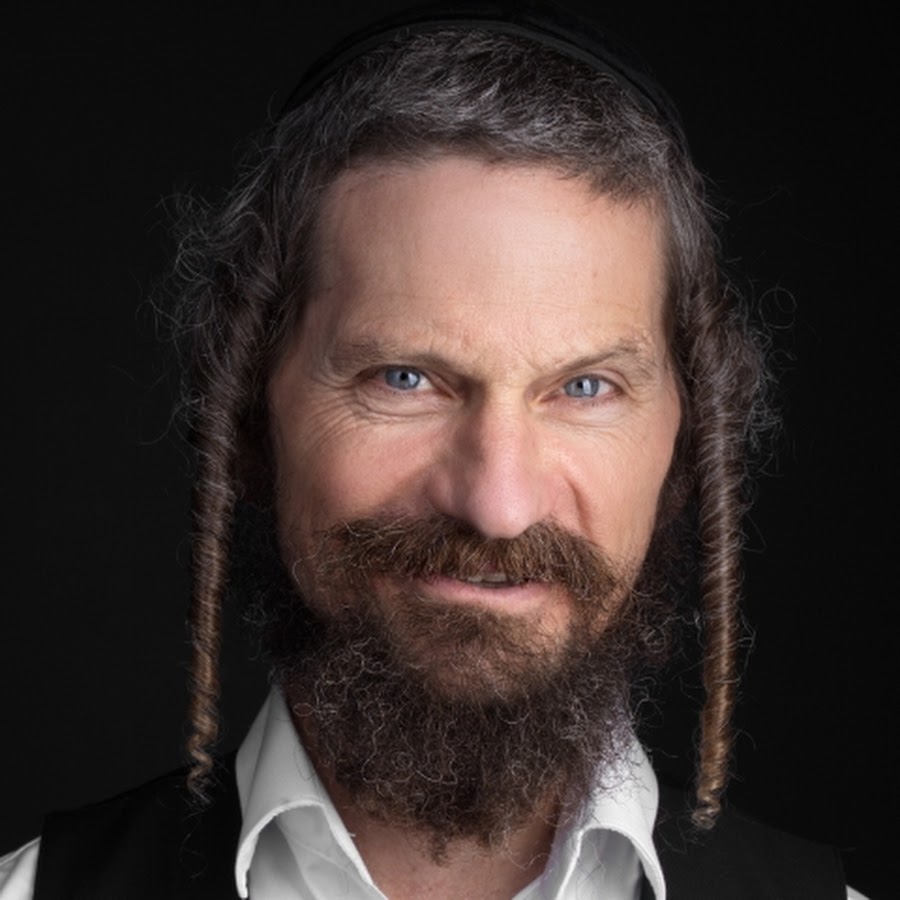
In this video I tell my story into how I became Jewish and how that made me realize there is meaning in life. Judaism helped me to stop distracting myself, to get over my depression and to become devoted to a bigger cause! Join the Yom Tov Media club for exclusive releases https://www.yomtovmediaclub.com/ More information on the Possible You seminar: http://www.thepossibleyou.org/ Follow me at: https://www.facebook.com/Imaseaoflove https://open.spotify.com/artist/5H8cmsWdWYuOTffFvlU9vH
Comments(0)
Transcript
Auto-generated transcript. Not time-synced to the video.
Shalom, shalom. So, happy to be with
everyone.
Um
I'm sorry it has to be, you know,
two-dimensional, but I will try to be as
three-dimensional a speaker as possible.
You know, I'm uh I'm I'm kind of an
action figure. Spend a lot of my time in
uh heavy action situations. And I'm
actually pretty pretty excited even
tomorrow, Friday, in Jerusalem, we have
two things going on. The waves are big.
Olas grandes.
Yeah, we got big waves coming in then uh
uh
and we've also got um
you know, on on the way to surfing in in
Israel, you have uh mountain bike parks.
You know, multiple mountain bike parks.
So, uh you could see uh
if you saw my mountain bike, you just
wouldn't believe the uh this amazing
bike,
you know, that I ride down these super
steep terraces terraces in Jerusalem.
Yeah.
Say hello to my little friend. And
that's my that's my big mountain bike.
And um and I got my guitar over there.
I'll play for you a little later.
And um
and uh
it it'd be cool if any of the any of the
I've I've three people who are possibly
on my screen,
uh
whether it's uh
Rabbi Touitou
or I have Shimon Edri or Isaac Siton. If
any of you put on your cameras, it'd
make life wonderful cuz you happen to be
at the top of my screen besides the um
besides the translator. Oh, Isaac, yes.
Yes.
So,
So, yeah, cuz I I need all I mean,
speaking into a camera, oh my gosh. I
can't believe this has happened to us.
Anyway, I'm blessing all of
Wow, look who is here.
Um all of my friends came up on the top,
all the rabbis.
Um thank you.
The rabbinos, los rabbinos, hahamim.
So,
anyway, so I was born a poor black child
in uh America, the US. I don't mean
literally black.
I was not black.
And I wasn't poor either. But what I
mean by a poor black child is that
growing up in the mansion I grew up in
with a father who's I think my father
probably has the most in common with
Donald Trump.
You know, he he was a real capitalist
numbers guy, you know, and it was all
about, you know,
you know, making money. And And so we
grew up in a mansion in a place called
West LA, a place called Brentwood. And
that's where uh uh you might have heard
of certain people from there, O.J.
Simpson. Um he he's in jail now, but I
don't know, maybe he's out of jail. I
don't know where he is. But O.J. Simpson
was a famous football player. He lived
around the corner from us. I went to
school with his kids. Um
Dustin Hoffman actually lives in my
house. He bought the house from my
father.
And
Anyway, but we were we were living in
that kind of situation. And why was I a
poor black child? I was a poor black
child because because I was I don't mean
black child like black life matter child
like like in America, like the US. I'm
talking about Ethiopian. Meaning
African. You know, like like swollen
distended belly, swollen skull,
toothpick arms with like flies
everywhere.
And what I mean by that is is because
I'm a Jewish
I was a Jewish boy growing up in a world
that was uh
you know, I had I had a massive hard
drive for Judaism, you know, massive
hard drive, like multiple terabytes of
hard drive, but the only program I was
given growing up was calculator. How to
make money, you know.
And my And you know, the computer was
constantly blowing up because like you
know, you don't need a terabyte of hard
drive for a calculator on a computer.
Um what does play well with the with the
hard drive, and I call it the Sinai hard
drive cuz I had a hard drive from Mount
Sinai from Har Sinai and uh what plays
what what runs well there is Torah
software.
And and
I didn't was erased with Torah software.
I only learned the olive bet when I was
23 years old in Jerusalem when I came to
Aish HaTorah where I met Rabbi Toussia
actually. And I know I always tell this
story but Rabbi Toussia was coming to my
classes every day and and
I know he looks like he's 18 but
I didn't know he was actually married
with a bunch of kids. So so he after
each class this kid came up to me
saying, "You come to my people. You
teach Torah."
And you know, I've heard that before. I
paid no attention to him but after about
a couple weeks
of once he got back to Mexico I they
already sent me a ticket. Next thing I
know I'm in Mexico City teaching.
He's a real get get it done guy with a
team of get it done people and I really
appreciate that.
And I and for me growing up a surfer in
California where like I didn't have to
take responsibility for anything. I mean
literally I with if you
if you finished wearing something you
take it off you throw it on the floor
and the housekeepers come and pick it up
for you. You know, and they my people
had to explain to the housekeepers that
they have to start putting my t-shirts
like in different levels cuz otherwise
I'll keep taking the clean one off and
I'll wear the same shirt every single
day. This is why I love this outfit that
I can wear the same thing every day and
no one ever knows the difference. You
know, I
I grew up not wanting to think about
these things and I and I still don't
have to think about these things.
You can wear the same outfit. It's
wonderful. I love it. You know, most
people think people ask me, "Doesn't it
cramp your lifestyle to be Haredi, you
know, with the black and the white and
everything?" And I'm like,
"If you knew me growing up, I was like I
was like Donald Trump's disaster son."
Yeah, who like he only wanted he wanted
real things, relationships and
connectivity and spirituality and and
like, you know, I was a disaster of a
son for my father. And uh um but our uh
you should know though our love for each
other was amazing. We were very very
very connected and still are. He's 90
years old now. And he after he sold his
house to Dustin Hoffman, he now lives on
the cliffs of uh
of the of Malibu overlooking the Pacific
Ocean and a beautiful home there. So if
you ever want to make Shabbat on the
overlooking the ocean in LA, you know,
look up look me up. I'll see if they can
have you. If you don't mind waiting till
the pandemic ends, that'd be much
better.
Okay. So um
anyway, so I grew up there.
And uh and my father kind of lived
vicariously through me. He was a
workaholic businessman manufacturing
clothing and he lived through my
adventures and he sent me on all all
these amazing adventures throughout my
life and um
and but but what I discovered, I mean, I
know this now but at the time that
there's a that Jews are like 3D Jews.
3D. You know what the 3Ds are?
Distracted, depressed and devoted. So I
lived all three. I lived the years of
distraction, you know, I was out there
surfing and and I've also surfed in
Mexico many times by the way and I'm I'm
I'm still waiting for When are you guys
inviting me for a shabbat to Puerto
Escondido? Yeah, I've surfed Puerto
Escondido, you know,
what do you you do meters there or or
feet?
I surf
meters?
Yeah, I've done like uh I've surfed
Puerto Escondido. I was at a Puerto
Escondido in uh about 10 m waves.
There. Insane insane wave. I mean, just
one of the scariest days of my life.
And uh and in fact uh everyone on the
shore was screaming the whole time. We
could hear them screaming with Why are
they screaming? Maybe we're supposed to
go deeper out. There's is wave coming.
So we're going deeper out. You know
what? They were screaming. They were
screaming that there was a 25-ft shark
between us and the shore.
Which maybe it's good that we're going
deeper. They were saying, "Come in." And
we were thinking they're screaming
there's a bigger wave. So, we're going
out more. So,
anyway, the
so, I I
I grew up with this just extreme
distraction. So, so, when you have this
Torah hard drive, when you have this
Sinai in your heart, so, you got to
distract yourself with something. And
so, I I distracted myself mostly with
surfing and mountain biking and and and
lots of big parties. And I really love
that the Jewish community of Mexico
knows how to party, by the way. Because
that's how I grew up. I grew up we like
we partied all the time. I mean, we were
we knew how to party. And
I remember once I was crossing the
Mexico border in Baja. I surfed in
Mexico in Baja a lot. And like every
month I'd be down there. And and coming
back we wanted to bring back Corona. And
the
Sorry to mention the pandemic, but we
wanted to bring back Coronas to to LA.
And and um
and we uh
we Oh, so, I I had a four-wheel drive
truck called a Toyota 4Runner. And we
figured out how to get into the panels
of the truck. Now, we didn't want to
smuggle drugs. We just want to smuggle
beer.
And it was the old Coronas, thinner
bottles. You Can you still get like the
old Coronas in Mexico? Yeah, they're
kind of like you can like chew gum.
They're like you can blow bubbles with
it. You know, you kind of wonder if they
even clean the bottles.
And uh
And so, it was a it was cases of 20. Can
you still get a case of 20 Coronas in
Mexico?
I doubt it. So, anyway, but those were
the Coronas. It was totally different
animal today. I mean, Corona today is
like Budweiser compared to that stuff.
That stuff was unique beer. You know how
much how much beer can you like blow
bubbles with? So, so, we um anyway, we
lined the my truck with uh my whole
truck the panels of the truck were all
beer bottles. And so, every when we're
driving up to the border it was like
ching ching ching ching ching ching
ching
with all the bottles. So, we had to
drive around Tijuana for a while just to
get the bottles to settle in place.
And uh one time they actually had me
open up my truck. I'm like, "Oh, no." We
open up the back of the truck and you
could see like the panels of the truck
was kind of folding in towards the
inside the car cuz the bottles were
pushing in.
And you could see even a little of the
glass bottles, but and we're just like
And then thank god they're like, "Okay,
go ahead."
And we took off
with another you know, five, six cases
of Corona in my in my truck.
Anyway, but that was all distraction as
well.
The parties and the surfing and we're
just trying to distract ourselves as
best as we could
because if you don't distract yourself,
so then then you get stuck with dealing
with meaning in life.
And and for some people having no
meaning in life
is fine, but but for the Jewish people
it's it's not fine. And in fact, there's
a great book, very
simple book to read called Victor
Frankl's um
Man's Search for Meaning where he he's a
great therapist and he discusses the
meaninglessness being the source of
depression.
And that leads us to our next D. First D
is distracted. Second D is is depressed.
And and that is that
if you weren't good at distracting
yourself, I was very good at distracting
myself, but after enough years of it it
like I couldn't be distracted anymore.
So, what happened was I got to the point
where I was
where I
I was depressed because I had I had this
like incredble desire for there to be
meaning meaning I deep down believe
there was something more meaningful than
what meets the eye than the material
physical world. Like I believe that
there was something more meaningful out
there. There was something There had to
be.
And now that kind of kept me going for
years.
Except when I got to university.
And in university, you know, they were
teaching us a very what they call
materialist philosophy. Materialist
philosophy doesn't mean
um it doesn't mean that you're into
shopping. That's also materialist
philosophy. But there's a but the
intellectual college university
materialist philosophy means that the
material world is all you get. What you
see is what you get. There's nothing
beyond the physical.
And here I was studying in university
and we had like
you know, it was like
you know, it it was it was it was
basically a
education in atheism. And and I took a
lot of these philosophy professors to
task and they knew what they knew more
than I did I did and I I basically lost
and came up with the fact that it's
meaningless.
And that the world is meaningless. And
that was cool for about a day, you know,
well, the world is meaningless. Like
make your own meaning, you know,
existentialism, you know.
That they you know, make your own
meaning out of life.
And that was cute and sweet for a few
minutes, maybe a few days, maybe a week,
but after a while I was like, wait a
second.
I had a dream that there was something
meaningful.
Like way beyond way beyond my own the
you know, the couple inches between here
and here. You know, I I believe there
was something more meaningful than that.
And now that I've been to university and
met all the professors who believe
there's not, you know, and and we're
pretty good at arguing it. So I was like
I was defeated in my dream. My dream was
gone and then I got I got depressed. I
was despondent. I was like
uh you couldn't reach me. I was so I was
gone. And so here I was in Santa Barbara
in university and
and uh and then the Gulf War broke out
where uh
uh George Bush invades um
Kuwait.
And uh you know, there was a whole war
going on and and I'm thinking the only
real thing I know is love. I mean, there
there I know what it feels like to be
hurt, you know, I know what love is. I
don't know if anything else is real, but
love is real. And meanwhile, the US were
like, you know, they had
you know, today we have masks, they had
they had red, white, and blue blindfolds
like, you know, "Free Kuwait! Free
Kuwait!" You know, they
"Hey, honey, go get an atlas. Let's see
where Kuwait is." They didn't know where
it was. Who'd ever heard of Kuwait? You
you'd have to be like in the oil
business to know where Kuwait was cuz
that was about the only reason the US
went there. And the
and so and so they here they are freeing
Kuwait. America's got its army, you
know, the whole like war machine is like
turned on. And here I am, this like
existential hippie in Santa Barbara
wondering why we're get why we got to
fly thousands of miles away to go kill
people who invaded a country that has
somehow
you know, gotten in the way of a gas
pipeline for the US.
You know, with with some like "Oh, free
Kuwait!" You know, "How about freeing
all the African nations that got invaded
in the last year?"
Nah, we're not going to free them. You
know, we're going to free Kuwait, you
know, our new favorite place. So so the
uh
anyway, so I was protesting the Gulf War
at university that year.
And I I was going into classes with like
500 people and screaming, you know,
against the war and covering myself with
ketchup and dying in the middle of the
campus, you know.
And but in deep down in my heart, I was
pain and pain, deep pain, you know, I
wanted I wanted something real. I wanted
something meaningful. I wanted I wanted
something something true.
You know, give me something true.
Give me something real. And
and real was not available, so that's
how that went. Now, here's the amazing
part. This is the best part of the
story. My father's business goes
bankrupt.
He loses everything.
All his competitors went overseas, and
my father actually was was faithful to
his factory in Yuma, Arizona, which is
right over the border from El Centro,
Mexico, and he he was faithful. He He
actually saved the town during a time of
depression 20 years earlier by building
his factory there. And he didn't want to
drop all the people there. In the end,
they got dropped, and we got dropped,
too, which is how I got to Israel, which
is incredible. You know, it was all
meant to be. But the best thing that
ever happened to me and my family,
including my father, who, you know,
again, who lost his business,
the greatest thing that ever happened
was this bankruptcy. Why? Because my
father promised me that when I get my
university degree, that he's sending me
on a world tour
surfing.
And I can go I've already toured all
over, but I can go for like years at a
time. I can just tour, go surfing around
the world, and like never come back.
And
and here I was, though. It was my last
year of university.
I'm I'm I've realized I don't even I
don't even know if I want to tour, you
know? I'm like it's like more
distraction that's not even working
anymore because you know, if you ever
felt depressed, that people try to
distract you. It doesn't work.
And
and what happened was my my oldest
brother, Sam, who if you've ever checked
out Sam, go online to check out Rabbi
Sam Glazer. He's a He's a character. Go
on YouTube and check him out. So, you
you should see all my brothers. I have
another brother, Aaron. He's He's vice
president of Chase Bank in Beverly
Hills. He's a Breslover Chassid. Okay,
he's Breslov.
And anyway, our family had this like
incredible transformation because of
this bankruptcy. But the uh
anyway, the
So, my brother, Sam, he was at He was
not a He was not a religious Jew at the
time. He He was He but he was at Aish
HaTorah, the same program that I met
Mosha, Rabbi Tusia, Tusiak. He was at
that same program 7 years earlier.
And he never told me about it. You know
why? He told me later. He said he was
afraid if he ever told me I would never
come back.
If I if he ever told me what was there,
I would go, check it out, and I would
never come back. He was right. I never
came back. In fact, I'm speaking to you
all right here in Jerusalem 2020
Oh my gosh, June 24th. Are we near June
24th? June 20
4th is the day I made I made aliyah,
that I came to Israel with my 100 payot
coming down my back. I Is it Is it Does
anyone know what date it is?
Is it Is it near
What's today's date? Is it the It's
25th. 26th is I flew out the 24th. So,
oh my gosh, I can't believe I'm teaching
this class on my 29th. That was 1991.
It's 2000 It was 29 years ago.
Right?
Does that make sense? 29? So, it's
Today is my 29th anniversary of making
aliyah to Israel.
Wow, that's cool that I'm teaching this.
We'll make a l'chaim with my lemonade.
L'chaim, everybody. And also in honor of
the the yahrzeit of the Lubavitcher
Rebbe, today is Rabbi Schneerson's
yahrzeit. And actually I have a son
who's at an event right now here in
Jerusalem in that in the honor of that.
And l'chaim, everybody.
I don't have any booze. I'm sorry, guys.
I have my lemonade.
I could put some tequila in it later if
you want. If you really want.
I hope through this video you realize
that I got my joy back. Is that clear?
Yeah, I got my joy back. And and and I
did not have to I did not have to
suspend logic. What I had to do was meet
rabbis who knew a hell of a lot more
than those professors. That's what I had
to do. You understand like it was not
it's not leap of faith, you know, it's
not Christianity. This is this is
Judaism and Judaism the more you use
your brain the better. I remember when
we were when we were first in Jerusalem
we were with these rabbis like some of
these kids they didn't understand the
rabbis arguments, you know, they were
like
they're like they're not used to these
kind of argument I was used to this kind
of stuff but a lot of the students who
came were not. So one of them felt like
wow he's starting to keep Shabbat, he's
starting to keep kosher, he's starting
to do everything. So but he got scared
in one of the classes and one of the big
rabbis there he raises his hand
and he says to the rabbi he says how do
I know you're not brainwashing us?
You know what the rabbi said back? He
said first let's see if you have a brain
then we'll talk about washing it.
So so in other words like we needed to
use our brains, yeah.
And another student in the class was
coming from LA as well. He was like I
need a lot of washing.
A lot of washing.
Yeah, my brain very dirty. My dirty
brain this
this kid was saying.
So so the
anyway
the the um
uh
I got to keep an eye on the time cuz
we're going to do several things as well
not just the story.
But the
So I so my father's bankruptcy turned
out that my brother Sam called
Jerusalem. He called the the rabbis at
Aish HaTorah who were now rabbis for
they were his fellow students at the
time but he called them and he said you
know, remember me Sam Glazer and they're
like yeah, we remember you. You know,
and he's like well listen I've been
saving this for seven years but I want
you to bring my brother
Yomtov to Jerusalem. My English name was
Johnny.
Yeah. I want you to bring my brother to
Jerusalem.
And he needs a scholarship. My father's
business went bankrupt. Now my father
promised me a round the world tour but
because of the bankruptcy he couldn't
pay for it.
And I'm telling you the last place I
would have gone
was Israel. I mean, think about it. I'm
I'm protesting the Gulf War, the US
involvement in the Gulf War, which is
protecting Israel from the Scud
missiles. Like, I don't even I'm not
even thinking Jewishly. I would have
been like a BDS guy, you know, those
millennial left-wingers who want to like
divest from Jerusalem, you know.
So, so that's the kind that's where I
was at with atheist philosophy.
And
and so
you know, that's that's where I was
going, and I would never have gone to
Israel, but because of I didn't know my
brother called them even. I didn't know
my brother called Jerusalem. He but they
agreed, they gave me the scholarship.
And and I get a phone call from my
brother. I'm in Santa Barbara, he's in
LA. Calls me up, he says, "How would you
like a free trip to Israel?" I said,
"That's Sorry."
"How would you like a free trip to
Europe?" I said, "Yeah, of course, you
know. I'll go to France, Spain." I just
surfed with the professional tour of
France, Spain, Portugal the previous
year. So, I'll go I'll go back, France,
Spain, Portugal, Morocco, South Africa,
and then I was going to renounce my
citizenship to the US and move to
move to
Australia. Once I got to, you know, the
southern hemisphere, I was going to move
to Australia.
Anyway, so so I said, "Yeah, I'll take
that ticket for sure." And
anyway, I I
um
I got the ticket. The only catch was
going to Israel for 6 weeks. I packed
all my surfboards, flew off to
Jerusalem.
And uh
and within days, I was, you know, I was
I was up every night,
you know, almost all night. Many of the
nights I saw sunrise talking to the
students at Aish HaTorah and and
discovering the the Oh my gosh, my
brother my brother Aaron's on Facebook.
Hey, bro.
I don't know if I'll tell part of my
brother's amazing story here, but I
think we we won't have time, but they
Anyway, all night long speaking to these
rabbis
and
and sorry, speaking of the students all
day long with the rabbis. And I was just
like, yes. Yes.
And there was a whole other thing that
that was amazing for me. That's a deep
insight. And that is that the
limitations
See, a lot of us think of Judaism as
restrictive.
And my upbringing was the opposite of
restrictive.
But the problem with not having no
restrictions is that there's no context
to things.
There's no mean like meaning. See,
restrictions bring context to things.
For example, in marriage, restrictions
You know, if I'm out if if you're out to
dinner with your wife but you stare at
the waitress on her way back to the
kitchen. So, that's breaking a
restriction that ruins the ruins the
atmosphere. Your wife's going to turn
cold when you do that. So, when you go
to a movie theater and people keep their
phones on, so there's a restriction,
turn your phone off.
You know, and that's that helps. That
makes things possible. Shabbat, you
restrict yourselves from from the from
the 39 creative acts of malacha.
So, so
that when you restrict yourself from
that, that creates the conditions for
families to connect for families to
truly bond and for connection to God,
which is the point of Shabbat. So,
restrictions are really our best friend.
You know, we like I'm sure Mexico has
some highways with no lines on it, but
it's good to have lines on the highway.
It restricts the cars, so now you can
you can go even faster. I mean, without
those lines, I would be slower. With the
lines, hey,
pedal to the metal, you know? Thanks for
the restrictions. Now I can move. Now
I'm comfortable. Now I'm Now I know I'm
safe in this lane and now I can go 85
mph knowing that I'm you know, that I'm
in my lane.
So, so restrictions are are actually an
amazing thing and I I up without them.
Okay, there were very few restrictions
in my life growing up. I think my
father's only What was my father's only
rule? Uh maybe my brother. Hey bro. Uh
Aaron, can you He's sending a message.
He said, "Hey bro, so maybe can you send
me one of the rules we had growing up?"
Do you remember a rule? Okay, right. I
don't think we had any, but um
I think one of the rules was was not to
smoke uh
not to smoke uh weed. I think that was
one of our rules, not smoke weed.
And I I don't I don't know.
I don't think we kept that one. So So
the So the you know, once in a while my
father would ask us why why don't you
quit smoking weed? We'd say, "You taught
us never to quit."
So anyway,
listen, the uh the point is is that that
without those restrictions, I'll tell
you something interesting.
That if you too much restriction, you
feel unsafe when you're on the other
side of the fictional walls. You know,
because if you make if you make for your
children fictional walls, and that means
it's safe on the other side of that
wall, they're going to feel unsafe
there. But if you give them no
restrictions at all, they're also going
to feel unsafe.
And I think sometimes I think about
this.
My brother sent a restriction on
Facebook. He He wrote, "Don't hit
Johnny."
You don't hit me.
That was our That was his restriction,
not to hit me.
And um
anyway, but I do believe that my desire
for bigger and bigger and bigger waves
was was and all the crazy partying and
like pushing the envelope, pushing the
envelope, I was looking for the edge cuz
my parents never showed it to me. There
was no edge. There were no restrictions.
And so I always felt the boogeyman was
like right on the other side of the
world, and I had to like push through
limits to see where the edge of life
was. And I And I just pushed in every
way I could. I pushed. I think it was
good for me, but then again, you know, I
had the kind of father who could bail me
out of anything, you know, I told you,
he has a lot in common with Donald
Trump.
And so, he was very good at bailouts,
you know, and he he bailed me out of
every kind of situation. I think he
bailed out my brothers as well quite a
few times. But uh but no restrictions at
all is is dangerous. So, when Now, I
wouldn't have ever accepted
restrictions unless they were true.
And once I realized there was a God,
like there's God,
so okay, there's God, and once I
realized Torah is divine, like Torah is
not a man-made document, it's actually
God-given. Oh, limits that are true,
that I'm in. You want to tell me there's
true limits? That I'm in. And once I got
those limits,
well, first of all, once I found out
that God that there's God, that means
there is meaning in life. There's a
purpose. There's a purpose to life.
There's purpose to history. It's called
It's not called history for nothing. His
story. It's his story.
Yeah, capital H. Yeah, that there's a
purpose to life. Everything like we
don't always know what's going on, you
know, sometimes sometimes our nose is
pressed against the you know, the the
screen, so we can't get any perspective
like Corona, why did that happen, you
know? But then you back out. You back
out a bit, and you suddenly see
everything, and you understand God's
plan for creation. But it's not just
that, there's a plan for your life.
Like there's a plan for your life.
There's a plan, there's a reason why
you're the way you are. You know,
there's a reason why I couldn't, you
know, survive school, you know, like I
was terrible in school. Um it was
because my brain, it wasn't that I
didn't have a good one, it just doesn't
work that way. My brain's for different
applications. And and thank God I've
been able to touch so many people around
the world, including now, with you all,
is because my brain works specifically,
not in a way not in a generic way that
the education system believed it should.
And
and there's a place for every Jew in
Torah. Like I found my place in Torah.
My place in Torah was more cabalistics,
Hasidut and and the the secrets of
Torah. Like that that was much more my
speed. I was a I'm a searcher, you know,
like you too, yeah.
And I still
haven't found
what I'm looking for.
Do do do do do do do do do do do do do
do do do do do do do.
Yeah. I have climbed
highest mountains.
Yeah, so so I've been searching and I'm
still searching. The search never ends.
But finding out there was a God meant
there's meaning. And all of a sudden my
search for meaning was was answered with
me with joy.
And my joy came.
And then the And then the Torah, I have
restrictions? You mean You mean like I
can create stuff inside the boundaries
of of divine
heavenly law?
Like, wow, that's that is amazing. And
I've been using it ever since.
You know, I'm very careful with the
restrictions. I love them. I think I'm
more into the restrictions than most
people.
But there's something I want to tell you
since we just spoke about restrictions.
There's something I want to share with
you.
And that is that a lot of people believe
Torah is Torah will like take away the
things you love. And I'll tell you the
who we have to blame for that a lot is
the the people with the black hat
attitude. Yeah, no no offense to people
in black hats and black coats and all
that. What do they call the Haredim?
Yeah.
They're react They were reacting to the
you know, the enlightenment movement and
you know, about 200 years ago Jews just
left Judaism like like it was like some
old old thing that you don't nobody
needs anymore. 200 years ago, right
after the Industrial Revolution was the
enlightenment movement. And Jews left
Judaism like boom, gone gone gone gone
gone. They assimilated very very
quickly. And so what they what the the
Jews who wanted to hold on to the Torah
and the beauty of Torah and the and the
relationship with God, they created this
like black hat style called the Haredim,
which is like a very strong station
identification where with dress and with
code and with with uh
being even more strict in such a way
that it's very clear to our children
growing up that which team they're on.
Because you see, throughout history,
there was Jews and Gentiles. You don't
need team colors for that. Like, you
know, if you're a Jew, you're literate,
you can read, you're you know, there
were kings who couldn't read throughout
history. Gentiles were like toothless,
illiterate buffoons. So, you didn't need
the Haredi movement to delineate who you
are. It was quite obvious who you are.
But for the first time ever, Jews had
left Judaism
in major numbers. Not so much in the
Syrian community, but the Ashkenazi
community, forget about it. They took
off like they just dropped Judaism like
a hot potato.
And they And so, what they did was the
Haredi movement was to create
station identification for their
children.
And but the thing is is for you for us,
we look at that and we're like, "Wow,
you know, that's like that's like it's
un-American. It's not very, you know, it
doesn't look like fun. It doesn't look
loving. It doesn't look caring. In fact,
it looks if anything judgmental." And
you know what? I feel judged by these
people.
And I don't want to be anywhere near
somebody who judges me.
But the truth is is if all you have to
do is have one Shabbat dinner. Go to
Shabbat one time to any of those
families, even the one you thought was
the most judgmental, you know, they walk
around the street like
And you go to them for Shabbat, you'll
see. They don't have a They don't have a
a a a
tiny millimeter of judgment inside of
them. There is no judgment. They've made
some moves to give their kids a sense of
safety and belonging, but judgment?
They don't have any judgment. There's no
judgement for anybody. I mean every once
in a while, you know, one in a hundred
is some kind of nutcase, but but but
he's a nutcase that
one in 100 people everyone in the world
are nutcases. So, I mean once in a while
you get a nutcase. We actually in my
community here in Jerusalem, we have a
rule that no one's allowed to sell or
rent to a nutcase.
Meaning one of these super judgemental
like crazy guys who wants to make uh
you know, he wants to
make uh what do they call Hafkano
protests, you know, keep Shabbat, you
know, or don't drive, you know. They
they you're not allowed to rent or sell
to any of anyone like that in my
community.
And if you saw the people in my
community, you'd be thinking like
like wow, these people are like, you
know, they probably all want to like
throw rocks at cars. Nobody wants that.
So, here's what I here's what I wanted
to share with you is that
is that
Judaism's not here to take away the
things you love. Okay, repeat with me.
Judaism is not here to take away the
things you love. Let's do that one more
time. Judaism is not here to take away
the things you love.
I sometimes I think that's just the
yetzer hara.
Like people like that the yetzer hara
says, oh wow, let's see how can I keep
her away from Judaism? Oh, I know.
Let's make her think that Judaism's
there to take away the things that she
loves.
Yeah, that that that'll be a good way to
get her not to study Torah or something.
So, so
it's not like that at all. Judaism does
forbid certain things, but but one of
them is not joy. Another one is not
guitar, you know, and music. Another one
is not beer, services, yeah. Another one
is not um not
uh
sports and music and everything. Like
you might People with someone once asked
me like, you know, I had someone raise
their hand in my class here in Jerusalem
overlooking the you know the Kotel and
they said uh so Rabbi Glazer what was
the hardest thing to give up? What was
the hardest thing to give up in your
change of lifestyle?
And so I thought for a second no one
ever asked me that before so I was
thinking hmm
What was the hardest thing to give up?
By the way I couldn't figure it out. I
figured out later late like a week later
I figured out what was the hardest
thing.
Um but there I was in class I couldn't
figure out what it was.
And then I finally said to them I didn't
give up anything I only added. I've only
added the whole time.
I've added.
And
and you know I made a whole list on the
board of everything I loved you know
growing up in my secular life in LA. I
made a list of every single thing.
And and I said to like I do all this
stuff. There's nothing I don't do here.
And all I've done is add wisdom and
Shabbat and kaddish and and and singing
and tefillin and I've added a lot.
I have not subtracted anything. Now
again I wasn't crazy about lobster.
And I didn't you know
I mean I I don't know what else. So so
someone raised their hand and they said
what about girls?
What about girls?
And I said
well I mean you could
take a little
walk with me to the other side of
Jerusalem and I'll introduce you to my
girl. Yeah my woman.
You know so
so like I don't think I gave that up
either and you know
those eight kids didn't come from
nowhere. Yeah so so I didn't give up
I didn't give up girls either. I maybe
gave up girls but I didn't give up girl.
And and that restriction has given my
heart the chance to be held fully by
somebody.
Which is all we really want is someone
to hold our heart. And so wow what a
what a difference to have your heart
held.
You know where it's not about being
popular or looking good in the eyes of
others, but it's
How about someone just holds your heart,
someone you could be transparent with,
share your whole life with,
and uh and be one with somebody. So,
like, what did I give up? So, Judaism
really just wants us to enjoy.
And when we enjoy it, there there's an
added level and this is like why I'm
saying I love Kabbalah. The added level
is is that well, how are you enjoying
it?
You're enjoying it with um
with God. You're with God enjoying it.
You know, I'll tell you a little secret.
I hope I won't get in trouble for this,
but uh
but the Kabbalists teach us, including
Rav Yosef Karo in the Shulchan Aruch,
the Kabbalists teach us that that um
you know, I'm not going to get graphic
about this, but let's say at the cli-
the climax moment
in intimacy
is to be in the pitch black for that
moment.
Why?
Because when it's pitch black, it's like
Shema, you can't see anything.
And when you know that Hashem Echad,
Hashem is one and there's nothing else,
Ein Od Milvado, there's nothing but
Hashem. Ein Od Milvado, Ein Od, there is
nothing Milvado, but Hashem.
And you're in the pitch black,
and you're talking about the the Brit
Milah here, the covenant between you and
God.
So, so, who are you making love with?
You you understand that that And if And
if it goes for the Brit, right, the
Brit, then it goes for everything. Like
New York, New York, if you can make it
there, you can make it anywhere. If you
can bring God into that, you can bring
God into music, you can bring God into
food, you can bring God into into
touring, go see the Swiss Alps and enjoy
Elohim, like the the the godliness
inside the Swiss Alps. And God wants you
to see that. Great rabbis went to see
some of the beauties of the world, the
wonders of the world like the Swiss
Alps. And they asked him, "Rabbi, why
are you going there?" He says, "I'm
afraid I'll get to shamayim
to heaven and God's going to ask me,
"Did you see my Alps? Did you see them?"
Judaism's not here to take away our
pleasure. It's here to maximize our
pleasure. How do you maximize pleasure?
You need to limit it a little bit and
then you can maximize it. Every pleasure
you get is always through a limitation.
It's got to be some kind of limitation.
You know, I'm my studio here, I got
these these incredible JBL studio
monitor speakers here. Yeah, they're
limiting things all over the place to
get the sound perfect. And that it it's
just the frequencies. It's that
frequency, not more. That frequency. The
tweeters are that frequency, the mid
mids
are that frequencies and the subs are
that frequency. And and it's got to be
limited to get the pleasure of the of
the speaker system. Everything is this
way.
And that is the beauty of of God's
world, but but when you try to live
limitless, a millennial, you know, like
everything's meaningless and it doesn't
even matter if you're boy or girl, it's
all the same. Everything's everything's
meaningless, you know. So,
that's going to that's going to take
everybody down. That's going to destroy
our world that we live in.
And nobody needs that.
Nobody needs that. Now, I understand,
you know, that there What's their
alternative, you know, the Catholic
Church or something, you know, like,
"Okay, maybe meaninglessness is better
than that."
But it's not better than Torah. It's not
better than God and Torah
and the life of Torah.
The meaninglessness, no,
not better than that.
Not at all. And um
So, I'd like to lead you all in a little
meditation.
Uh we have a few minutes for a
meditation. I'll grab my guitar and then
we'll finish with a little song.
So everyone relax.
Close your eyes.
Breathe.
Close your eyes and breathe
in and out.
Release all your breath through your
mouth.
Releasing all the breath as your stomach
contracts.
Tightening the stomach muscles.
And inhale through the nose
as you expand the stomach muscles like
you're filling a balloon.
And now hold your breath.
And with your eyes closed, let your eyes
wander upward between your eyebrows.
Exhale through the mouth now slowly
as the stomach tightens.
Slowly releasing your breath.
Tightening the stomach muscles as you
push out the air.
And now inhaling
through the nose as the stomach expands.
Holding your breath now.
And even though your eyes are closed,
you're focusing your eyes upward between
your eyebrows.
Exhale now through the mouth slowly.
Make your lips small like a straw as you
slowly release the air.
Stomach contracting.
Inhaling
through the nose as the stomach expands.
Holding the breath, eyes up.
Exhale.
Slowly releasing the air.
Inhale through the nose.
Holding the breath.
Eyes up.
Exhale slowly as you release all of your
air.
As the stomach contracts, releasing any
tension.
And when you have no more air in your
body,
hold your breath for a moment.
And when you need to breathe,
inhale.
You know our deepest desire, breathing
normally now,
our deepest desire is love.
We want to love and we want to be loved
and we want to have that love. And what
is love?
Love is connection.
It's to be one.
You know you spent the first 9 months of
your life
in the undifferentiated oneness of your
mother's
womb.
Total oneness.
And ever since you were born,
all you have ever wanted is to get back
to that oneness.
Hopefully you had a good and beautiful,
warm, loving, safe family to be one
with.
But nevertheless, your deepest desire is
to be
to be one, to be loved, to be cherished,
respected,
recognized,
significant,
to be one with
others.
But unfortunately,
something stands in the way of love.
Love is often blocked.
The path to love is
is blocked.
And what blocks our path to love
is our own lack of love for ourselves.
You see,
you believe that you're loved only
conditionally.
Even though when you were a little
2-year-old toddler, a beautiful little
child,
loved unconditionally,
when you got older, you began to become
loved
conditionally, that love only comes
conditionally.
So, it has many categories, those
conditions.
There's how smart you are.
There's your body weight.
There's your looks.
There's your abilities.
There's your financial standing.
And you'll notice when you meet
somebody,
it's very hard to feel that love.
Rather, you feel anxiety.
It's an anxious experience.
Because you don't know this person yet,
you're just meeting them.
And there's all these categories
that you don't know about.
Wealth,
smarts,
wisdom,
abilities.
And so, it's really hard to love that
person because if they were to outdo you
in those categories,
you would feel very unsafe.
You wouldn't feel good about yourself.
This is why our Torah says,
the haft love like you more than you.
Love your neighbor
like you more as yourself.
Because only in as much as you love
yourself can you love another person.
Meaning if you find out that in the
categories of life that they are your
equal or below you, you will love them.
But if they are above you,
you will not like them very much. You
would prefer to talk to somebody else.
Because they remind you
of the holes inside your system, inside
your heart.
But the Torah gives us a great key
to how to love all people.
V'ahavta l'reacha kamocha Ani Hashem.
Love your neighbor as yourself that only
in as much as you love yourself can you
love your neighbor.
But then there's Ani Hashem, which means
I am God.
Now, wherever the Torah says Ani Hashem,
I am God, it's usually referring to I am
God to pay the reward for this mitzvah.
But the Kabbalists teach us
Ani Hashem there means I, meaning you,
are Hashem, because you were created
with the neshama.
And the neshama is part of Hashem.
And when I generate from the neshama,
when my generator
is neshama,
so this person and me are the same. We
are equal.
There are no categories.
We are the same.
And so when you realize
that you, who you really are, is this
neshama,
your soul,
you start realizing certain things about
yourself. One of them is that you're
wanted.
God wants you here because if
if he didn't want you here, you wouldn't
be here.
And that you also have a purpose.
And you're loved.
As God creates you with eyes, a nose,
and a mouth.
Blessings everywhere all around you.
A body that perfectly interfaces with
the environment around you.
And he watches every step. You're a
safe.
He loves you and he's
securing you.
And he also gives purpose for your life.
There's a reason you're here.
Which also means that you're capable.
Cuz he would not create you with a
purpose if you were not capable of
fulfilling it.
So love begins with you.
So many people look for love outside of
themselves.
When love begins with you.
Only as much as you love yourself can
you love another person.
And how do you love yourself?
By knowing that God
creates you
with a neshama.
A chelek elokah mima'al, a portion of
God from above.
That's who you are.
And when God creates you as a portion of
God from above,
that means this beautiful child inside
of you
can shine his or her light.
I am love.
I'm a sea of love.
Whisper the words.
I'm a sea of love.
And you'll notice as you relate to
yourself,
your identity as the neshama,
straight from God.
You're beautiful.
You're good.
You're uniquely brilliant and capable.
You will find a deep wellspring of love
for yourself.
And you will feel safe to love others.
And you will become a sea of love.
Whisper the words, I'm a sea of love.
And everyone can come swim
in my sea of love.
I
am.
Open your palms. You can lay your palms
on your arms, sorry, on your legs or on
your table,
desk.
Open them towards the shamayim.
And sing,
I
am.
A sea
of love.
I
am.
A sea
of love.
I
And now see that beautiful child that
you were 2 years old
standing in front of you.
Put out your arms to that beautiful
child
and let the beautiful child jump up in
your arms.
And hold your child, that beautiful
child,
wrap your arms around that child.
Whisper the words I love you.
Hold the beautiful child.
Realize everything you ever thought or
believed negative about yourself
is not true.
That beautiful child
is you.
Hold the child.
Get in touch with the child's heartbeat.
It's beating strong.
Whisper to the child, "I'm sorry I let
you go.
I should never have let you go."
Get in touch with the child's heartbeat.
Beautiful child.
Whisper, "I'll never let you go."
It's okay to cry.
Tell the child it's okay to cry.
Whisper.
Take a smaller step.
Take a deeper breath.
Let your motor cool.
Slow down to a crawl.
It's your defenses fall.
Feel your soul refuel.
Everything you thought about yourself,
all that you believed negative,
hold it in your hands
and let
it go.
Nothing left to fear.
Open to receive.
Setting free the child,
the beautiful child
in you.
Do a little dancing.
Sing a simple song.
Laugh so hard you're crying.
Chase a butterfly.
Climb a mountainside.
Once again, you're flying.
The person of your dreams
is coming into view.
Nobody can take
that dream
away.
Somebody who trusts,
somebody who shares,
someone like the child,
the beautiful
child
in you.
Everything you thought,
all that you believed,
hold it in your head
and let
it go.
Everyone you love
wants you to achieve.
They want to meet the child,
the beautiful
child
in you.
The beautiful
child
is
you.
You.
And as you hear the numbers one through
five, the number five opening up your
eyes. Coming up one,
two,
three,
four, and five opening up your eyes.
So, we're actually um it's amazing that
we just did this together because um
starting uh just a few things you can
know about things I'm doing and I'd love
to be there for you with you. Um uh
Sunday um I've moved my seminars, one of
which I ran in Mexico City. It's all
about how to find your beautiful child
again and generate from that power
source
of the neshama. It's very deep work, but
that's that's going on every other week,
men's and women's. This Sunday is a
women's one.
And um you can just go on my website and
get a free
um free uh
you know, a free trial of the first day.
It's Sunday, Monday, Tuesday, Wednesday,
Thursday. Tomorrow it's going to be uh
Mexico time 2:00 to 2:00 to 4:00 p.m.
It'll be going on a
sorry, Sunday 2:00 to 4:00 p.m. will be
the women's one. And you can just go on
to rabbiyomtov.com
and sign up for that. Um I don't think
you even need to sign up for that, but
you can sign up for the week if you
want. If you sign up by tomorrow,
there's a coupon with a discount. And um
and then there's um
And every night for free, I run a uh ask
the rabbi at this time every day to uh
uh Mexico time 1:00 p.m. I have ask
Rabbi Yom Tov and it's uh that's on Zoom
every day.
And that's also on my website
rabbiyomtov.com.
And and there'll be men in two weeks if
the men would like to come. It's also
men who are into making money, you know,
it's very very good for breaking out of
your the things holding you back.
And there's one more thing. Oh, yeah.
You know, I developed this program with
Latin Americans actually
from Chile.
That's called desire. So, I'm running a
a four-part series called desire. That's
also on my website. It's going to be
every Sunday 2 hours a day on Sundays
called desire and it's how to get cuz
everything comes from desire. Like like
you're only on this webinar right now
cuz you want it. You desired to be here.
So, everything comes from desire. So, so
it's how to really master desire and
make sure you're harnessing it
appropriately.
Okay, so questions and answers. We have
some time for some questions, please.
And please
from the Yeah, please.
Um well, amazing and I know you for like
3 years.
And you have changed my life.
But I have I have somebody a friend, a
good friend of mine
that he wants to ask
he wanted to ask you something live.
So, he's in screen already.
Oh, great. That's Avram. Okay. Hello.
Hello, Rabbi. How are you? Fine, Avram.
Shalom.
Follow meditation. Thank you very much.
You're welcome. Uh Rabbi, this morning I
was studying next week's parashah Balak.
Yeah. And uh I I read
this blessing from from Bilam.
Uh who can count the dust of Jacob and
the number of
of the seed of Israel? Okay?
My question is this. What sort of
compliment and blessing is comparing
Jacob to dust? And what virtue
is joining the fact that no one
can count them. What is the deep meaning
of of this blessing?
Excellent. So, um so there's uh two
there's two ways that we are
um referred to, either the stars of the
sky or the dust.
And he he did he went for the dust. So,
so the the dust of of there's couple
understandings. So, one of them is that
when the Jews aren't doing that we're
still going to be multiplied plied
throughout history. There's going to be
meaning we'll be we are always going to
be few in number that you can count on
Earth. Jews will always be few in
number, but we're going to be um what
we're going to be massive when you look
through all of history cuz we'll never
go away. Other nations will come and go.
The Jews will be here forever till the
end of days. It's cuz we are an eternal
nation.
And so so that you can never count
because it's it never ends. And we keep
in every generation we're more. But when
we do God's will, we're like the stars.
And when we don't do God's will, we're
like the dust.
So that Yeah. Yeah, it's not a not great
to be counted like the dust. So, and
then you obviously notice that. Like,
why the dust? So, so when we
yes. Yeah, so when we do Why why this is
referring
is is is like
they said that this is one of the
blessings that Balaam gave to to to our
Jewish people. Yeah.
Yeah, but he sneaks in the dust cuz
remember Balaam doesn't like us very
much. So, he's he's sneaking in the word
dust instead of stars. And he's also
bringing up the fact that we will make
mistakes throughout history and that we
will we will be like more like the dust
than we are the stars. Instead of being
light, we are
opaque like the dust. And um
and the the other thing about it is that
you cannot count. You mentioned not
being able to count. So, did you know
that it's forbidden to count Jews?
And
And the reason is because they There's
many reasons, but one of the main things
is that we're not countable because what
you see is not what you get. There
There's a
There's a universe inside of each one
and we're You can't count us. Yeah,
because you can't You can't There's no
number.
Okay.
Nice
Nice to meet you. Look me up when you're
in Jerusalem.
Okay. Sure, I will. Thank you very much.
Welcome. Any other questions?
Yeah.
One question only.
Your Your favorite book
and one book that you can recommend us.
Oh, wow.
Um my favorite book, so
um
I imagine you're talking about Jewish
books, yeah?
So Anything. Anything.
Yeah, so So, my favorite book
is a book called Shaar Yichud VeEmunah.
Shaar Yichud VeEmunah.
Uh means the gate of uh of oneness and
faith. Shaar Yichud VeEmunah. And it's
easily found because
in every um
in every Every Tanya is is three parts.
And the first The second part is called
Shaar Yichud VeEmunah.
And Shaar Yichud VeEmunah is uh is
all about how
how God is immanent in creation. Meaning
he's not just outside, but he's inside.
And it explains detail after detail of
how God actually fills the world, not
just is outside, but he's also in. It's
like a burrito, yeah? He's not just the
tortilla. Yeah, he's the rice and the
beans inside. So, that's one of my
favorite books and it's a good one to
read.
Um people who like Kabbalah, though,
they can always get Aryeh Kaplan books.
Which are uh explain the Kabbalah quite
well.
Okay? Any other questions?
Yes, Rabbi. There is
Orly Salamish, who wants to ask somebody
she wants to ask live.
So, we're putting her on camera.
That's great that you can
you can choose different people.
That's wonderful.
I'm going to put to everybody the
just my website.
I'll also put my WhatsApp in case anyone
needs me. I'm going to put my WhatsApp
on the chat.
Um if anyone ever has a private issue or
question, they need something from me,
um I'm here for the world, you know, I I
live and breathe the Jewish people. So,
if you ever have a question, you can um
just go plus 972
and send me a WhatsApp.
Yes.
live.
She's coming live.
Okay.
Bom bom bom
bom bom.
There she is.
Orly, namaste to camera.
Uh there she is. Yeah, she has to turn
on her camera.
Hi Orly.
Hi. And your her microphone also. Oh, hi
Orly. Yes.
Yeah, hi. Thank you so much all of this
speech. I really enjoy it. Thank you.
Any any type of book secular but kosher
that you recommend?
Um sure. The
So, I found a book that's There's two
books that are very powerful.
Um
and in this order is what
What? They can be in English, so Yeah.
So, one I think they're both in Spanish.
I think they're both in Spanish, too,
but they
the the one the the teacher is named
Eckhart Tolle.
You might have heard of Eckhart Tolle.
And the book is called A New Earth.
Um but you have to know if you read his
books, two things. One
is that he's a Buddhist.
And so, everything he says is going to
come from Buddhism.
And two is that um
is that he's going to quote other
religions trying to, you know,
be like, you know,
like so they would listen, but he's not
a
he doesn't believe in any of those
religions. And oh, he was Oprah
Winfrey's rebbe, by the way. Oprah
Winfrey, the famous Oprah. So, he's her
rebbe.
And she actually when she became his
student, she renounced Christianity
publicly in front of the whole world.
Which I don't think he wanted her to do.
I think he She didn't know you have to
ask your rebbe if you want to do
something crazy. So, she did that.
Anyway, but he's But you have to know
he's Buddhist. The reason I bring up his
book is because
it is a it's a super super special
way to become healthy inside so that
you're no longer so that your ego is no
longer getting in the way of your joy.
And that's really important. Because
even if you know all of the Torah, but
your your ego's making you unhappy.
So, then it's This is one of the best
written books. Anyway, it's called A New
Earth. But you have to read it
carefully, and you have to be careful of
his
Eastern
uh,
type of stuff.
Got it?
When you finish that book, you can read
The Power of Now. He wrote a book called
The Power of Now. Thank you so much.
You're welcome.
Uh, any other questions?
Um,
no, there is something in the chat. I
don't know if you can read it.
Uh, yeah. How is punishment of some edge
to eat dust
uh, related to the comparison
to Balaam's blessing. Oh my gosh. Um, I
don't know what some edge means. Does
that mean the snake? The curse of the
the punishment of
Uh, maybe yes. Some edge means Oh, oh,
okay.
So,
I got it.
Um,
so the snake
the snake's commanded to eat dust now.
Now, dust
is cabalistically represents the past.
That's the past.
And
and what what it means that the snake
eats the dust is that it's constantly
it's letting the past constantly run his
life. He's He's, uh,
he's eating the he's eating the
memories, nostalgia. He's
He's He eats the past.
And
and whenever you get held back by the
past
the dust so so that's that's basically
meaning don't be a snake.
Move on. Move on with your life. Don't
let the Don't let the past run your
life. Don't let it rule your life. And
you you move on. And so what the
connection of Balaam's
Balaam's blessing
um,
of the Jews
if you want to make it connected to the
to the past is, uh,
Yeah,
you got me on that. I wasn't expecting
that. You know, I don't know how to
relate it to to that. I mean I we could
sit down over a beer and I could
probably figure it out
after a while. I don't see it so
practically connecting those two.
Okay, um
any others?
I'm teaching in a in at 4:30 in the
morning at 5:00 in the morning
to New York. So, the men's possible use
seminars on Zoom are regular hours, you
know. They're uh you know, it's 9:00 to
11:00 Mexico time next follow not this
coming week, next week. So, I have to
wake up at 4:30 to do it.
Thank you so much, Rabbi Yitzchak.
Sure. It was amazing and we have so many
commentaries that they were so connected
to.
Mhm. We thank you so much and hopefully
you can do an experience in Puerto
Escondido.
Yeah, we got to do a we got to do like a
whole program there with a big house for
the boys, a big house for the girls and
and uh I'll spend a few hours with each
during the day. They'll travel the other
times. Have a gorgeous Shabbat and then
go back to Mexico City.
Yeah.
That's it. Thank you. We got to do that.
you so much, Rabbi Yitzchak. It was
amazing.
You inspire us so much and we thank you.
Thank you. For your time and effort.
Thank you.
miss you so much. Okay, I miss you guys,
too. I love you. Okay, bye.
Bye-bye. Thank you so much, Rabbi
Yitzchak. Thank you. Thank you. Bye-bye.
And please everybody join next week's
seminar. Let's do it.
Okay. Shalom.