0:00 / 0:00
How to be an expert Jewish Guitar Player - Yossi Piamenta 1999
811 views
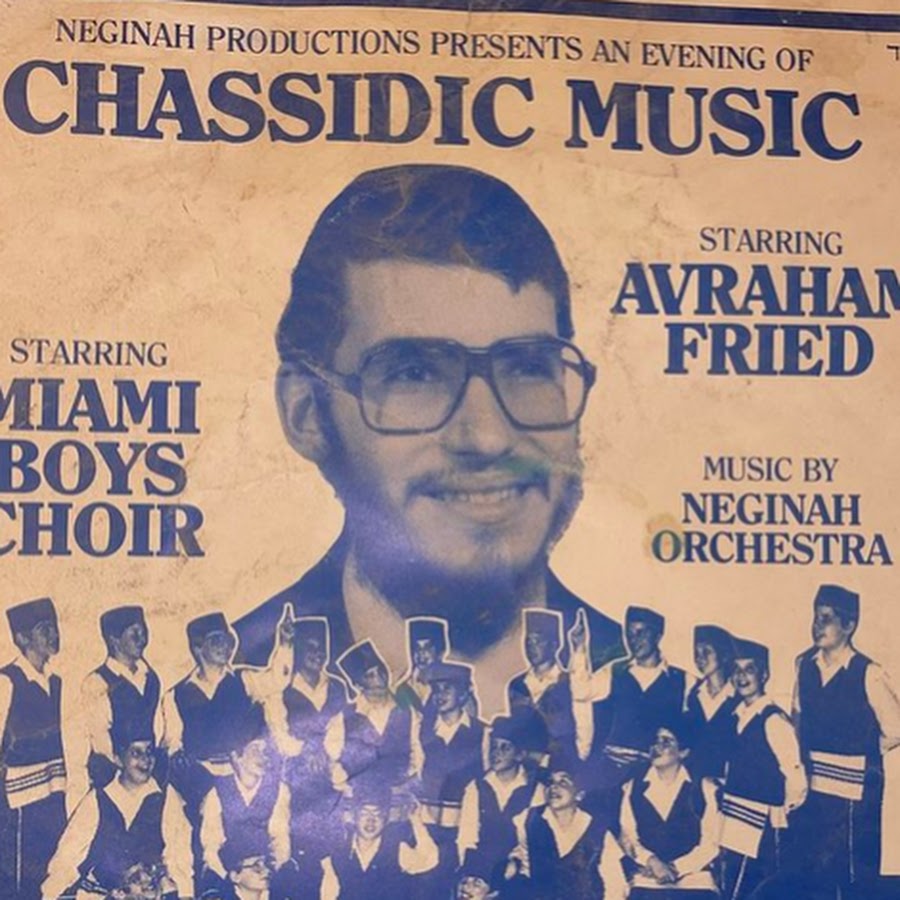
The great late Yossi Piamenta as you have never seen him before, showing his tips and tricks in the late 1990s. Described as the jewish Jimi Hendrix - there will never be another Yossi Piamenta
Comments(0)
Transcript
Auto-generated transcript. Not time-synced to the video.
[Music]
Heat. Heat.
Okay.
See
Yes. Now this
is
Okay.
It's
now you don't need help on the right
hand. You just
[Music]
So,
yes,
you're doing right. Can you turn a
little bit so I see your fingers? Yeah.
My fingers not so strong.
Can you use your third finger first?
You have to
be able to bend the string and think
like violin. You know, there's nobody
who gives you up. You don't have frets.
So, you have to know to do this.
You have to be able to feel and that
will will take you practice. So I show
you some exercises how to bend to the
right one. You have a tone here and you
want to bend this to
then you both of them. Both of them.
Which not?
>> Every note. It's not which note. Every
note if you want to reach with bending.
>> Yeah.
>> You have to learn to feel when did you
get to the right tone and hold it there.
So the exercise for that would be
that you take the scale
that's flish.
So
[Music]
Look.
M.
[Music]
If you can do on every scale that you're
playing, if you want to reach a note and
go to it by bending thing. It's It's the
key. It's It's the key to to to be able
to to do it on tunes
like uh
Okay. How do you
>> on the higher not easier?
>> It's easier. No. No. You have to bend
this.
You have to bend every string. It's
really harder on the first. And it's if
I have to bend here, I would go here.
Here.
Heat. Heat.
[Applause]
You you you pick with this not with this
beat.
>> Yeah.
>> Why?
Can you go
fast? Like this? Like this fast?
No.
Look again.
Why don't you reach with the pinky all
the way? Better
>> voice here.
If you if you pick with the string with
the pick up and down, you double your
speed
>> because Yes. But then they have to sound
exactly the same.
you have to. So that's an exercise if
you want to warm up your uh technique
for me.
>> Take from the beginning of the scale
till the very end.
>> Yeah, I that's the thing I should do. I
had bought a books different uh
>> books showed up.
>> Yeah.
>> I don't know this book. I don't know
books but
yeah. two and you got all the frets and
backwards and then do different 2 3 4 1
2 3 4 1 and 3 4
>> like
that's all
>> and the first one is
and the next and then back and then the
next one is
next one
They're all different.
>> And it starts to do that on each fret.
Uh-huh. Go. Keep on going up.
Why do you push this and not?
Yeah. You should you should reach this
string from up not from inside.
Yes.
Okay. See to it that you don't touch the
soft pillow, but you touch this edge
where the bone is behind.
>> Yeah.
>> After 2 weeks, it's going to be hard
enough that you don't feel the strings
anymore.
First time it's going to hurt a little.
>> Not a little, but
>> so I'm telling you
up
and up and down has to have the same
voice. Now if you can't do it fast with
the same voice, slow down. I mean there
will be a speed where you can do it with
the same
and don't use a little voice.
First the pinky always is louder than
the rest. Do it again.
See this one is less loud than this one.
Can you tell?
>> Not really. Let's
>> do it again.
Maybe because I'm holding it longer.
>> No, because you're pushing harder here.
But you learn that a minute ago. You
have to see to it that they when I do
It's this exercise that you
up and down.
[Music]
Yeah. That's your pinky. No. Yeah.
Not this one. Yeah.
Now take a look at the right hand.
What's the
up down?
You see what I mean?
Up down up down.
Now once this is work for a month
but once you do up down
up down Huh?
and back.
[Music]
You know the secret of your personal
voice
once you develop that is in the right
hand. The way you hit the string that
gives the that's the tone that Santana
has different Eric Leon has different
you can tell who's playing by and it's I
mean it's not the only
element that shows the sound but it's
the most the attack now
you know do do two on each string and
see how it works.
Now, can you hit softer?
[Music]
Okay. Okay. Let's go further because
that's the kind of exercises that
the more you do them, you do you have to
do it with scales also.
[Music]
Okay.
One.
[Music]
What's that one?
>> I I'm I'm doing it clean. You You adding
one note. It's no problem on improvise.
You may
>> No, I think that's Watch this note.
Which note did I add? This
>> do it.
That's additional.
>> Yeah. Okay. Okay.
>> All right. Do the three.
>> Yes.
Okay. So now, same thing you do.
It's 2 one 2 one 2 one
>> two two on one one
>> two one. You don't go You don't go 1 2 3
4 5. You do 2 1 3 2 4 3
>> I skip around the notes.
You don't understand what
Yeah.
Make up your own exercises. How? Without
the book, just your own. You
Let's take pentatonic. It has five
notes. Yeah.
That's it. Now is this.
That's the same already. So you only
have five
>> Yeah.
>> tones. Now do
[Music]
just go back and forth between the
chords.
You
Okay. I
What you need to do is to work slower.
It's a big secret balian music that to
be able to play something really fast,
you have to be able to play it really
slow.
And that means this you have 1 2 3 4. So
now
[Music]
And what do you gain by that? I saw when
you did it fast that some tones are
shorter than the others.
So if you play slow and you take the
time of every note
good so
now to now
if you
uh Yeah.
Well, I'm sorry.
Now, three tones.
No.
What is this note? That's That's 1 2 3
4. So I do I do So what what did I show
you to do? 2 1 3 2 4 2. Now three three
of them is 1 2 3 1 2
and then
and then you can H.
[Music]
You do all the combinations that you
make up yourself. Then you take four
notes.
So what is this accomplish? This will
give you a feel of the next tone. And if
you improvising,
you
you won't have to think which is the
next tone in a scale you're going on.
You will reach it. You can build up
sentences. It gives you more words in
your vocabulary when you're trying to
say something. For instance,
That's a line from Led Zeppelin,
but it's an exercise really. It's a
[Music]
>> You heard that before?
>> No.
So he he starts a solo with this
>> just a scale.
>> It's just a scale but it's a nice line.
So suppose you're improvising now.
[Music]
All
[Music]
right. Heat.
[Music]
Heat.
Heat. Heat.
Heat.
[Music]
Heat.
Okay.
It can be louder than me if I if you do
rhythm. One, two, three, four.
[Music]
Heat.
[Music]
Heat.
It's very hard to to explain how to
improvise. It has to come from the
fingers.
>> Exactly. Now that I want to know how
>> there's one thing
the more you exercise the technical
exercises that I gave you in the
>> be able to go on the more you can move
>> no the more you have moves on your hand
that are ready to go and then what's
your job is to forget all about them
when you improvise and try to tell a
story try to make a melody
around the theme.
[Music]
So that's
along the harmony,
you know, there there are steps about
it. Because
you you what you have to do with the
try the start to
say take
the chord
chords. Oh,
[Music]
a
heat. Heat. Heat. N.
Heat. Heat. N.
[Music]
Heat. Heat. N.
Heat. Heat.
[Music]
It's it's a big secret
to be able to move along a harmony
and um
and make up your own melody to it.
You'll have to
think now I'm composing a melody
and what's given on this melody is that
the harmony belongs to this song.
So the theme of that song should lead
you into making another thing that
you have to think melody. You have to
think
[Music]
It's hard to describe
the way you build up. You have to feel
it. You have to
And I would say if you just try,
you know, how to make a loop on on a
tape that will just follow and do again.
put it on a keyboard that will just
repeat those chords.
>> Yeah.
>> And then improvise sit for a half hour
just to improvise
>> playing along with the tape is the same
with the regular tape.
>> Yeah.
>> With the with the lead on it
>> the same.
>> No, no. What I meant was different. If
you can
>> of course.
>> Yeah. If you could lock a loop.
>> How do you do that? I don't know if the
DX7 does that, but
>> Oh, on the keyboard.
>> There are keyboards that will give you
just a harmony.
>> Yeah.
>> And you improvise on top of that.
>> Now,
like after messing around with that for
like 10, 20 minutes, listen back.
There will be spots where you like it
very much. There will be spots that you
don't like at all.
So then you start to be selective with
your own taste. I cannot tell you how to
improvise
because improvise means compose on the
moment on the spot.
>> Yeah. And that nobody will tell you. You
will have to make it up
yourself.
You know you following me? Once you make
it up yourself, you develop a taste of
your own that you do.
And the only the best offer for that is
to jam with other people.
>> They sell a thing that takes out the
vocal from uh from tapes.
>> You know, you attach a tape recorder to
a machine and takes out the the lead
vocal, the lead guitar.
>> The lead vocal never bothered me. I
would go along with him. So what? So I
can play with the regular tape.
>> Yeah.
>> And now then I could solo over that.
>> Exactly.
But you should solo on everything that
where you know where you are at the
melody at all times.
>> You can't get lost.
Fall down on a different chord or
something if you know what I mean.
>> Yeah.
>> You have to be sort of you can create
your own exercise.
Oh
[Music]
yeah.
Heat. Heat.
That's the right way to do
This is the you
>> I'm just going I was just going up and
down the scales.
>> Up and down the scales. Mess around with
them. And little by little you're going
to develop lines of your own that you
that become your own taste about it. You
know what I mean?
>> Yeah. And then you will alone be able to
create
melodies on every harmony that you hear.
Should
know every every
ki song has that kind of round
harmonic. the repeat always
get a harmony on the song.
>> Yeah.
>> So pull a car
and first do the melody and then start
to improvise.
[Music]
you know, try to bend the string
and and
get the I see that you already get this.
>> That's good. Can you do it on a bending?
Right there.
So
when do you do it? When you know how
that you on the right.
[Music]
Heat. Heat.