0:00 / 0:00
Emor - Gratitude for our Lot
367 views
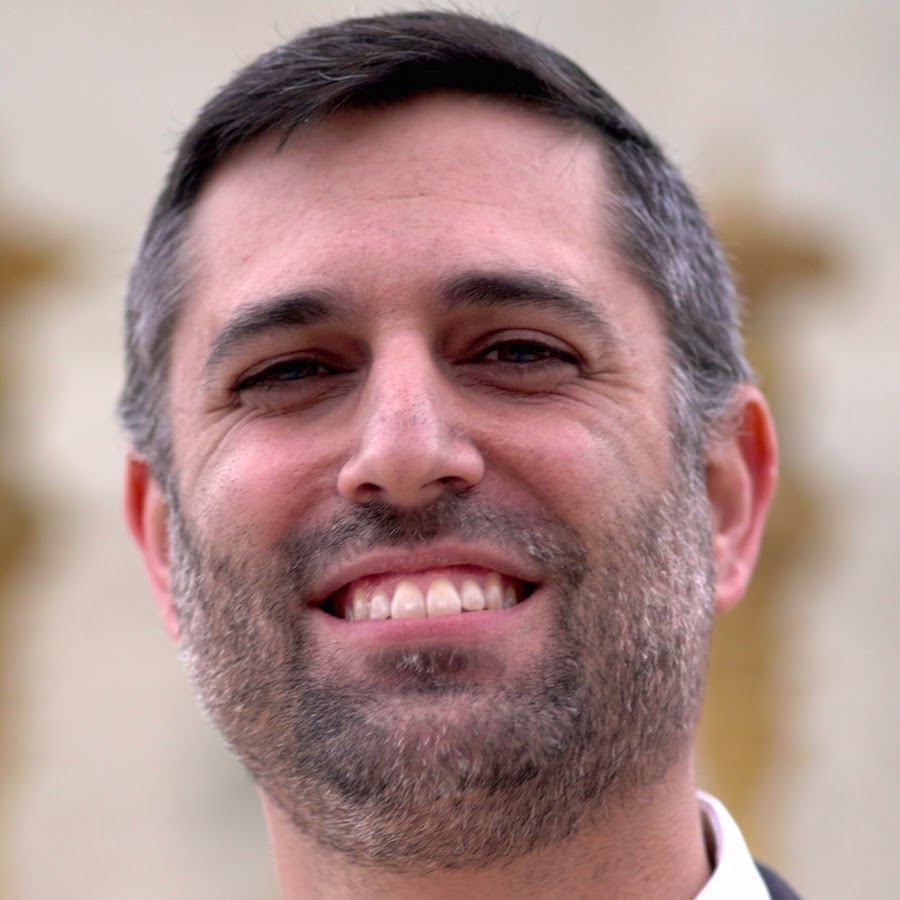
What was the reason for the curse of the man who was a son of an Israelite woman and an Egyptian man? How can we come to terms with the life that Hashem has given us when it does not meet our expectations? What is the lesson from the brothers of Yosef in regards to the many questions they had and the great reveal that occurred when Yosef said who he was? What tools can we use to not only come to terms with, but to have great joy with our lot in life? Find out in this week's Parsha Podcast.
Comments(0)
Transcript
Auto-generated transcript. Not time-synced to the video.
You're listening to the weekly partial
podcast with Ari Goldwag, recorded with
Hashem's never-ending assistance in a
rubbish in 2019.
This week's parsha in Chutz L'Aretz is
parshas Emor.
And in Eretz Yisrael, we've got Behar.
I'm going to speak about Emor.
I like to share with you this thought
from the end of the parsha.
And it's a beautiful idea which I came
across this week
while studying Madreigas Adam, the Alter
of Novardok.
The possuk tells us Vayeitzei ben Isha
Yisraelis u'ven Ish Mitzri. The Torah
tells us the story of the Mekallel, the
person who cursed
Hashem, chas v'shalom.
And so he went out, this this man, the
son of a Israelite woman went out.
And he was the son of an Ish Mitzri.
He was the son of an Egyptian man, okay?
So his mother was was Jewish, his father
was Egyptian. Toch benei Yisrael, he
went out amongst the people of Israel,
the children of Israel. Vayeinatzzu
ba'machaneh benei Yisraelis.
Yish v'ish Yisraeli.
So there was a there was a conflict of
some sort, which the verses don't
specify exactly what it was. Vayikov ben
Isha Yisraelis es Hashem vayekallel. He
took God's name, and he cursed.
Vayavi'uhu el Moshe. And they brought
him to Moshe. U'shem imo Shelomis bas
Divri l'mateh Dan. His mother's name was
Shelomis bas Divri.
And she was a member of the tribe of
Dan.
But his father was an Egyptian.
Vayeni'chenu mishmar k'dei she'yishalu
es Hashem ki fi Hashem ki kilel. Because
he had used God's name to curse, and our
sages say that he actually cursed God.
So in the end the Torah tells us that he
had to be killed
because of this terrible terrible thing
that he had done.
Now, what was the story exactly? What
happened? What was what was he all upset
about? So Rashi gives us some
information.
First thing that he tells us is that
this person, this man, was somebody who
uh his father, who was this Egyptian, it
was the same man that when Moshe
Rabbeinu came out, he saw the Egyptian
striking a Jew, so he killed the
Egyptian. This was the father of this
young of this person who had come out
and cursed.
That's information number one. The
second point of information which we
receive from Rashi is that what was the
issue exactly? What was the fight about?
What was Why did he curse?
So, the answer that Rashi gives
is that what had happened was his mother
was from the Shevet Dan, was from the
tribe of Dan. But, since his father was
not Jewish, so the way that it works is
like this. When it comes to a person's
Jewish identity, so the halakha is
Jewish law states that of course some uh
Jewish man is only allowed to marry a
Jewish woman, and a Jewish woman is only
allowed to marry a Jewish man.
If for some reason somehow it occurred
heaven forbid that a Jewish uh man
married a non-Jewish woman or the
opposite, so then if the mother is
Jewish, the child is Jewish.
And in this case, so the mother was
Jewish, but when it comes to a person's
tribe, when it comes to the identity,
the place of the of the person in Klal
Yisrael, it goes by the father's side,
the mishpakha is avisa avisa. That's the
general principle.
So now, if a person has a non-Jewish
father, so he doesn't have a tribal
connection.
Even if the mother is, let's say, the
daughter of a kohen or the daughter of a
Levite, so that child will not have the
status
of a kohen or a Levi, it goes by the
father, so he just has no tribal status.
That's the that's the halakha.
What happened with the Mekallel? So, he
came in and he said, "Look,
I my mother is from the tribe of Dan. My
mother has a yichus. My mother has a
familial line. I want to I want to place
my tent
amongst the people of Dan. This is where
I want to place myself.
Now, there was a Jew who saw him doing
this, meaning a someone whose father was
from the tribe of Dan, and said you
can't place your tent here. You need to
place your tent outside of the Machane,
outside of the encampment. It's very
interesting because to the modern ear,
this might sound like something that's
not politically correct. However, what
we see here is an amazing thing.
First point. We see that I'm I'm sorry,
before we get to what we see, the result
was because of this fight, so the the
man who had no Jewish father ends up
cursing with the name of Hashem.
And he ends up being killed. Now, what's
the what was the what's the concept
here? What's the idea? What's the lesson
here of this story? So, first of all, we
see number one, we see that that every
person has a place. Every person has a
place and it's defined interestingly by
the father's side. It's defined by the
tribe. Every person has a certain
purpose within the Jewish people. We've
spoken about this in the past. And it is
often ascribed to or or it's defined by
the tribe that a person is in. Right,
each tribe had its own flag. The flag
denoted the special quality of that
tribe. So, if a person wants to place
his tent
both literally and and
you know, figuratively in a certain
location, that means that he is he
connects to a certain purpose. But, the
person has to re- be aware that in order
to be connected to that purpose, to be
connected to that tribe, they actually
have to have that connection. They have
to be honest and real. So, when when
this person who didn't have that tribal
connection tried to place himself
amongst the tribe of Dan, even though
his mother was from Dan, but it doesn't
go by the mother, it goes by the father.
Okay? So, he made a mistake. He had to
place himself outside with other people,
let's say the the the other
you know, people who were gerim, who had
become part of Klal Yisrael, it doesn't
mean that they don't have a place, they
do have a place. But, their place is not
within the tribal uh the
specific particular tribes of the Jewish
people. They have their own place, they
have a significant place, of course.
Torah says that we are to honor the ger.
We have to 24 times the Torah says that
we have to be careful with the feelings
of a ger. We were gerim, we were
strangers as well in Egypt.
Right? But, l'maaseh, the place of each
person
there's a particular specific place for
each person, physically and spiritually.
And
what we see over here
is that when someone tries to enter a
place where he doesn't belong,
right? When when someone tries to enter
into a place that he doesn't belong, so
then the result is a dangerous one. They
could end up coming to curse Hashem.
They could end up having to be killed as
a result. Now, this is this is the story
of the of the Torah,
but I think that it's true to a great
extent for each and every one of us.
And we need to understand it's so
important to understand that that it's
possible and and it happens to us often
that we could believe that we're
supposed to be in a different place than
we are. We fight with Hashem, as it
were,
over what's going on in our lives,
whether it's what's going on with our
spouses, with our children, with our
communities, with our level of honor,
with the amount of money that we make,
all of these different things.
So, we also fight with God, as it were.
We get upset at God
when it comes to these issues as well
in our personal lives, of feeling or
sensing that uh perhaps it's not fair
what God is doing to us. Perhaps the
place that we have in the world is not
where we're supposed to be. Hey, why is
God doing this to me? How come I can't
plant my tent
in in the Why did he curse at God? Why
didn't he get upset at the guy who was
doing that that was saying to him, "You
can't be here?" Because there was
something true about it. There was
something
uh objectively true about the fact that
he couldn't be in that location. So, he
cursed that guy because he was angry at
his lot in life. That's the higher
that's the pshat. That's the even the
simple understanding of what's going on
here. And you know, reading this we can
think and take to heart
about how it applies to each and every
one of ourselves, this issue, and how we
can deal with this issue. And I came
across this week an amazing piece as I
mentioned from the Madregas Adam from
the Alter of Novardok. I want to share
with you because it's very beautiful,
very powerful.
Okay?
He is talking about
the story of Yosef Hatzadik. And he says
an amazing insight into the story
with the brothers.
And he says an amazing insight which
helps each and every one of us can help
each and every one of of us
come to terms
with the reality because we would all
wish, myself included,
that we should we should have this
thing. We should have that thing. We
should Right? Things should be more the
way we would like it to be.
Especially when we see others who are
who are perhaps more successful than us.
You know, it sparks within us a desire
for something that we don't have.
How is a person able letmaded to come to
terms with the reality of a person's
situation
and and the fact that Hashem hasn't made
him exactly God hasn't done my will,
right? I'm trying I'm striving to do
God's will, but God hasn't seemed to do
my will, right? So, how does a person
come to terms with that?
So, he points out something amazing.
I'd like to read this inside. This is in
chapter Darkei Chaim. This is at the end
of the fifth chapter of Darkei Chaim in
Madregas Adam.
Meishavum Mitzrayim va'ad sheshamu mipiv
ani Yosef. From the time that the
brothers came to Egypt
until the moment that they heard from
Yosef, they didn't know all of the whole
the entire story. They were not aware
that they were standing in front of
their brother Yosef.
Until the moment that they heard the
words, "I am Yosef."
They had numerous questions about the
way that this this Egyptian
ruler was dealing with them.
First of all, they didn't understand all
of the confusing things that were going
on. Yeah, all of them actually so many
people came, they knew this. Many people
came and weren't accused of being spies.
Only
they were being accused of being spies.
Second of all, this Egyptian
ruler asks them to bring Benjamin.
It comes out your question of him and
was so strange to them.
What does he need this the the other
brother for? What does he want from
this? Third of all, they should have
known
When they found that golden goblet in
the bag of Benjamin, they got they they
they were they were extremely afraid.
They didn't know how to judge the entire
situation.
And the questions kept coming until they
heard two words, "I am Yosef."
The
moment that he revealed to them that
this was that it was Yosef talking to
them,
so called questions
All
the questions were gone retroactively.
All of the all of the
um
All of the all of their suspicions
melted like snow.
And immediately they understood that the
entire the entire story, all that Yosef
had done to them was for their benefit.
And as he explains, what was the
benefit?
Because
Joseph knew that no matter what,
Benjamin was going to have to bow down
to them. It was going to It would have
It would have extended much further if
Joseph had hadn't hastened the story by
doing all these tricks in order to bring
down Benjamin. The thing would have
taken much longer if it had happened on
its own. So, that's why he explains it
was for their benefit.
Okay?
So, what do we see from here? An amazing
thing. And this comes back to the point
that we were speaking about.
A person can complain about many things.
He could say that, "Look, everything
that's happening to me is terrible."
God
is trying to to to to upset me. He's
doing things to bother me.
Right? When we look at the story of
Joseph, we see his intent was not to
bother them. His intent was not to hurt
them. His intent was to to to move the
story faster. His intent was perhaps to
bring them a tikkun, to bring them a
rectification through it. That they
should stand up for the one of the sons
of of Rachel Imeinu. Whatever the
understanding of it is.
But it's the exact opposite of what the
person thinks. The person experiences
all the troubles in his life.
And he thinks, "Say, I'm not getting
what I want. I'm not as rich as I want
to be. I don't have the kind of car I
want. I don't have this. I don't have
that."
Hashem just wants to bother me. Hashem
is is out to get me. Has v'shalom,
heaven forbid. But it's mamesh the exact
opposite.
Says the Alter of Novardok, we we have
to be careful not to judge things the
way that the things seem.
Because all we see is the present. We
just see this moment.
We can't connect the past and the
future. We don't know how it's going to
be. We don't understand our place. We
don't understand our purpose in life.
Think about the the Makol, right? Is it
his fault that his father was Egyptian?
That he didn't have a Yachas, he didn't
have a connection to a particular tribe?
It's not his fault.
But he has a certain place. Hashem
reserved for him a location, specific
location that's meant for him. Right,
there's a Halacha as an example that a
non-Jew is not allowed to study Torah.
He's allowed to study the parts of the
Torah that have to do with him, right?
There are Sheva Mitzvos Bnei Noach, the
seven commandments that apply to
Noachides, to non-Jews. So, they're
allowed to study those laws, but other
parts, the things that don't have to do
with a non-Jew, they're not allowed to
study those things. But we find the
Gemara says that a non-Jew who studies
the things that have to do with him, the
things that are specifically for him, so
they're that non-Jew is considered like
a Kohen Gadol, he's like the High
Priest. The High Priest is a very holy
Jew. He's able to come into the Kodesh
Hakodashim, the Holy of Holies. When a
person does what they are supposed to
do, when they are who they are supposed
to be, without trying to be somebody
else,
it doesn't matter where they are, if
they have a if they're within the
tribes, or they they have a different
location that's outside of the the 12
tribes, it's not important. That's just
his holy, it's all the way inside. If
you are who you're supposed to be, if
you are able to accept the place that
Hakodash Baruchu has given you, not just
accept it, but maximize your potential
within that place, so then you've
reached the highest levels. You're in
the Kodesh Hakodashim, in the Holy of
Holies.
So, a person thinks, person doesn't
understand, doesn't see the whole
picture. Hashem sees the whole picture.
Hashem knows what's going on.
Okay?
We
can't connect the past, the present, and
the future. We don't We look at the
present moment and we see, "Oh, things
aren't the way I would like them to be."
We don't know the whole picture. Hashem
knows the whole picture, the whole way
that it's supposed to be. And Hashem is
the one who has placed us in this
position.
A few of you should have made a mistake
volumes is the author of the even
somebody who's on a higher level and a
higher spiritual level.
Nevertheless, such a person also doesn't
really understand the true reasons.
Why is it let's say that that person
became a Rosh Yeshiva? Why didn't I
become a Rosh Yeshiva? Why is it that
that person has had a certain success
in certain areas of Torah learning, but
I haven't? Or that person is successful
in working on his middos, perfecting his
character traits, but I haven't been
able to overcome them.
Right? A person can be upset even in
spiritual matters.
But a person needs to know
that
person needs to know that that each
person has his place, his tikkunim that
he needs to to rectify. His purpose in
life, his special things that he needs
to accomplish.
They weren't able to figure out what was
going on in this story and what was the
intent of this equal Egyptian leader,
who was actually their brother Yosef.
You have so many questions
come up all of they had so many
questions
for for an extended amount of time.
And then when he said, "I am Yosef."
They understood that everything that had
happened until now wasn't just an
Egyptian ruler.
It was their brother Yosef. It took on a
completely different perspective. It
wasn't someone who was cruel and out to
get them.
He was somebody who was
having compassion on them. He wanted to
hasten their redemption so to speak. He
wanted to hasten the completion of the
fulfillment of the dreams.
Okay? You see points out here
we shouldn't think that what Joseph was
doing was in order to get revenge
against them. That wasn't the idea at
all. But rather as we explained it was
in order that that that the dreams be
fulfilled.
Okay?
Yes,
we will
never
have an amazing teaching from here.
We
could have a situation we can we can
experience a situation where we're going
through something in our lives that
seems like the situation is terribly
terribly cruel, terribly difficult. Why
is this happening?
It's problematic. You look at it from
any side you can't figure it out.
The truth is that it's completely the
opposite. It's completely good and
it's all Hashem's compassion on us and
so we call it sudden and really it's for
our ultimate benefit and we don't
realize it.
The person just sees a superficial view
of what's going on.
Excuse me, if you would just have a
little
understanding, a little insight into the
inner aspect of what's going on
it would explain everything.
If you would see that point you would
see a completely the opposite. Okay?
That's the story. He expands on he talks
about it much more. I'm not going to get
into it completely.
But I but I want to share with you
something that I thought about when I
was discussing this with a good friend
uh
as we we looked at this together.
And that is that and I spoke about this
in the Be Talking podcast and I like to
speak about it again because it's very
powerful and and it's inspiring me right
now and I want to share it with you.
And that's the concept of gratitude.
I read recently
in the Betachon Weekly, which is a a
weekly ex
divrei Torah on the parsha, a booklet.
Beautiful I beautiful
divrei Torah. If you're interested in
Betachon Weekly, you can get it at
[email protected].
And it's not connected to me. It's just
something that I've that I'm enjoying
and I would love to other people to get
benefit from. He mentions there a story.
This is Rabbi Yudel Mandel of Lakewood.
He says a story that he met a particular
person who was learning in in a kolel
and he said to him, "I have no
problems."
"No problems? No nisyonos? No
challenges?"
"What's your secret?" And the guy said
that everything that he does, his whole
relationship with Hashem, everything
that he does in his relationship with
Hashem is about gratitude. Whenever he
davens, gratitude. Thank you, Hashem.
Thank you, Hashem. Thank you, Hashem.
That's the focus. It's thank you,
Hashem. How can I How can I recognize
all of the good things that are in my
life?
And I was thinking
you know, what if
what if when the brothers had
experienced this challenging situation,
they had come down to Egypt, they'd been
accused of being spies. They had left
behind their brother Shimon. He had been
incarcerated. They have to go back to
their father now and tell him that they
can't come back without Benjamin.
What if
they had said, "Hashem, thank you that I
have food in my bag and I can feed my
family."
What if they would have said
"Thank you, Hashem, that I'm I'm capable
of traveling from Egypt all the way back
to Eretz Yisrael. I'm healthy."
"Thank you, Hashem, that my father
Yaakov Avinu is so He's He's very old,
but he's healthy."
"He's 130 years old, but he he's he's
well."
"Thank you, Hashem, that I have a a
beautiful family. There are 70 Jews."
"Seven We have a beautiful nation."
"Thank you, Hashem, that I have the
money to be able to pay for this food."
"I don't understand why you, Hashem,
have made this challenging situation,
but thank you, Hashem. I know that every
single thing that you do for me is good
for me.
I know that this situation somehow I
don't know how, but I know that
everything that you do is good for me
and this somehow is good for me as well.
Imagine that the brothers have been able
to say that. You know, obviously it's
easy for us to say that cuz we we know
the whole story. But they were inside.
But what if they had said that? What
would have happened when Yosef said, "I
need Yosef."
So when he said that, they were
completely embarrassed. It was It was a
total shock.
But if they would have said all along,
imagine. And again, I'm not saying this
is Hashem Atina. We're talking about
Sadiqim Gedolim, tremendously righteous
people. But I'm just trying to bring out
the point.
If they would have all along said,
"Thank you, Hashem. I know this is
somehow for my good. I don't
understand." It wouldn't have been such
a shock when he said, "I need Yosef."
And it wouldn't have been They wouldn't
have had It wouldn't have been such a
You know, it wouldn't have been the same
situation. It would have been a
completely different situation.
They would have been able to let him out
dead, to come to terms with it much
more.
And I think that this is a tremendous
lesson for each and every one of us. And
I'm trying to incorporate this in my
life and I and I encourage you to
incorporate it as well. So many times we
think, "Hey, it's not fair. Why did
Hashem do this? Why did God put me in
this situation? Why did he Why Why this
problem? Why that problem? Why Why am I
not as rich as? Why don't I have this?
Why don't I have that? How come that
person has two cars and five homes and I
How come that person has purchased their
home already and I I'm still renting?
Whatever the Whatever the situation is,
whatever it is that feels like it's not
fair. Why has God done this to me?"
What if I switch it around and say,
"Hashem, I know that everything that you
do is for my good. Thank you for giving
me this challenge."
What if I start noticing, "Thank you,
Hashem, that I'm healthy. Thank you,
Hashem, that I woke up and I'm able to
breathe. I'm able to walk. I'm able to
smile. I'm able to open my eyes and see.
I have a beautiful family. I have a
beautiful spouse. I have a beautiful My
parents, they're there to support me."
What if I notice all the things in my
life that are so great? And I say I
shall I know that this is also even the
challenge that you give me somehow are
to help me. Somehow are for my benefit.
What what an amazing what a different
life I would have
if that was my approach. What if the the
Mekalel instead of saying, "Hey, I
belong over here. I'm my mother's from
Dan."
And instead of cursing at God, he would
have said, "You know, I belong in my
place.
I belong where I am and there's a
special thing that I know I shall I
don't understand why. I wish that I was
here. But I know that I shall put me in
this place for a different for a
different purpose. I have my special
purpose.
Yeah, I might not have the Yachas. I
might not have the not have the lineage.
But I but my mother is from Dan. I'd
like that to put me over here, but it
doesn't. But it's so where I am there's
something for me to do there. I have a
special and important and not just
important, but it's just as holy as
everybody else's purpose. Amazing thing.
What if he would have thought that? What
if he would have turned it around and
looked at things positively?
It would have completely changed the
picture. He wouldn't have ended up in
this place of destruction. The result of
not being happy with what we have and
where we are and our special lot in
life.
Looking at somebody else and wishing
that we had what someone else had, the
result is destruction. I can have a type
of a covet. Might see us out of the
world. When a person is jealous of
others, when he desires something that
he doesn't have, when he when he's
running after honor and higher social
status, those things pull a person out
of the world.
Because they can never get enough.
Really, they can never get enough. It's
always about what the other person has.
But you didn't need it until now. It's
it's it's human. But it's very immature.
This is the most mature amazing
approach. It's Hakaras Hatov. It's
saying, "Hey, thank you I shall for what
I have. Thank you I shall for my
challenges. I know that even my
challenges are for my good."
I want to ask you to bless me. I'm going
to bless you. I shall help us that we
should be that we should merit to be
able to look at things positively, to
have gratitude, to work from gratitude,
recognize all the good things that we
have, so much good, so many blessings.
Hashem should help us to recognize that
even the challenges and difficulties,
the things that we don't have, those
too, that it's possible to thank Hashem
for those things as well. And all all
that we don't even understand how,
somehow, we have we can have a faith the
faith
and the the bitachon, the trust, the
assuredness that those things, too, are
also ultimately for our best. Thank you
so much for listening. Have a wonderful
Shabbos.
This podcast was made possible through
the gracious donations of listeners like
you. For more podcasts like this, please
visit www.arigoldwag.com
or search on iTunes Ari Goldwag.